-
-
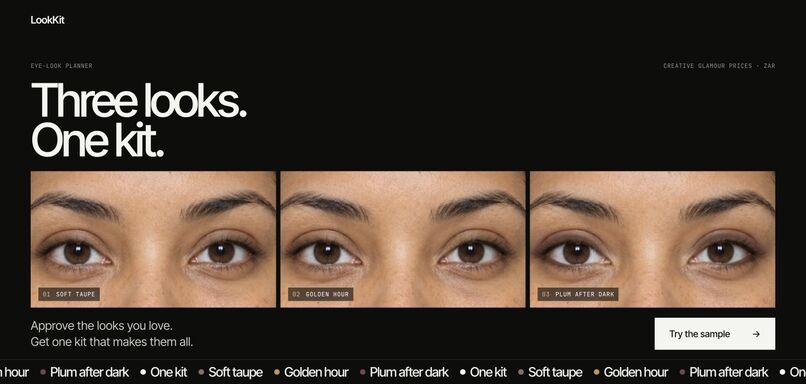
LookKit local demo, 2 Nov 2026. Synthetic sample face; saved YouCam previews. Prices are a dated ZAR estimate.
-
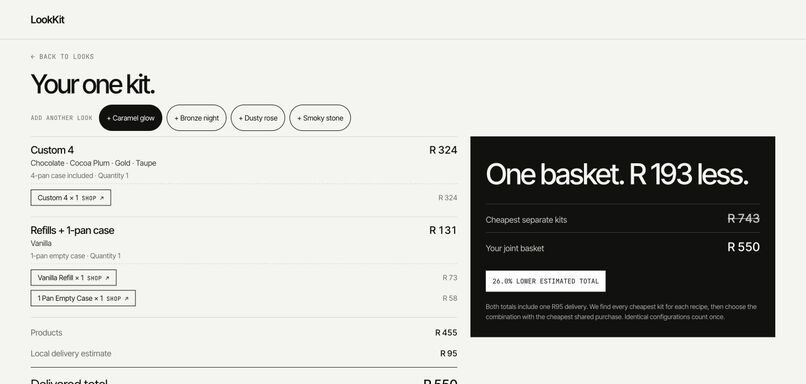
LookKit local demo, 2 Nov 2026. Synthetic sample face; saved YouCam previews. Prices are a dated ZAR estimate.
-
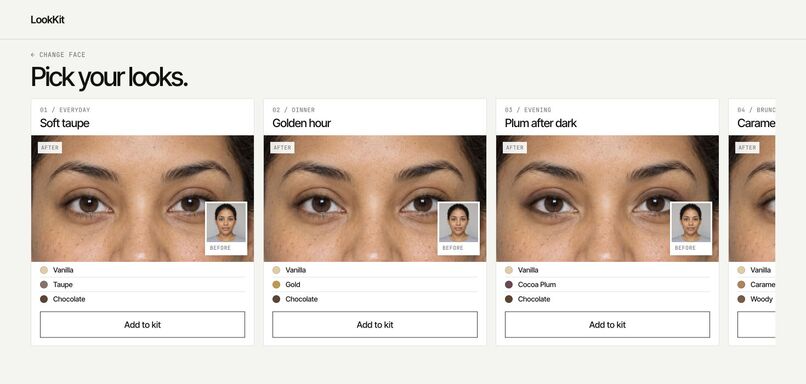
LookKit local demo, 2 Nov 2026. Synthetic sample face; saved YouCam previews. Prices are a dated ZAR estimate.
-
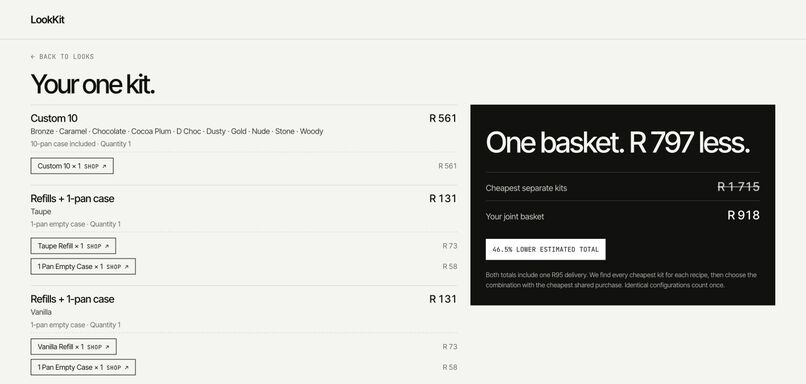
LookKit local demo, 2 Nov 2026. Synthetic sample face; saved YouCam previews. Prices are a dated ZAR estimate.
Inspiration
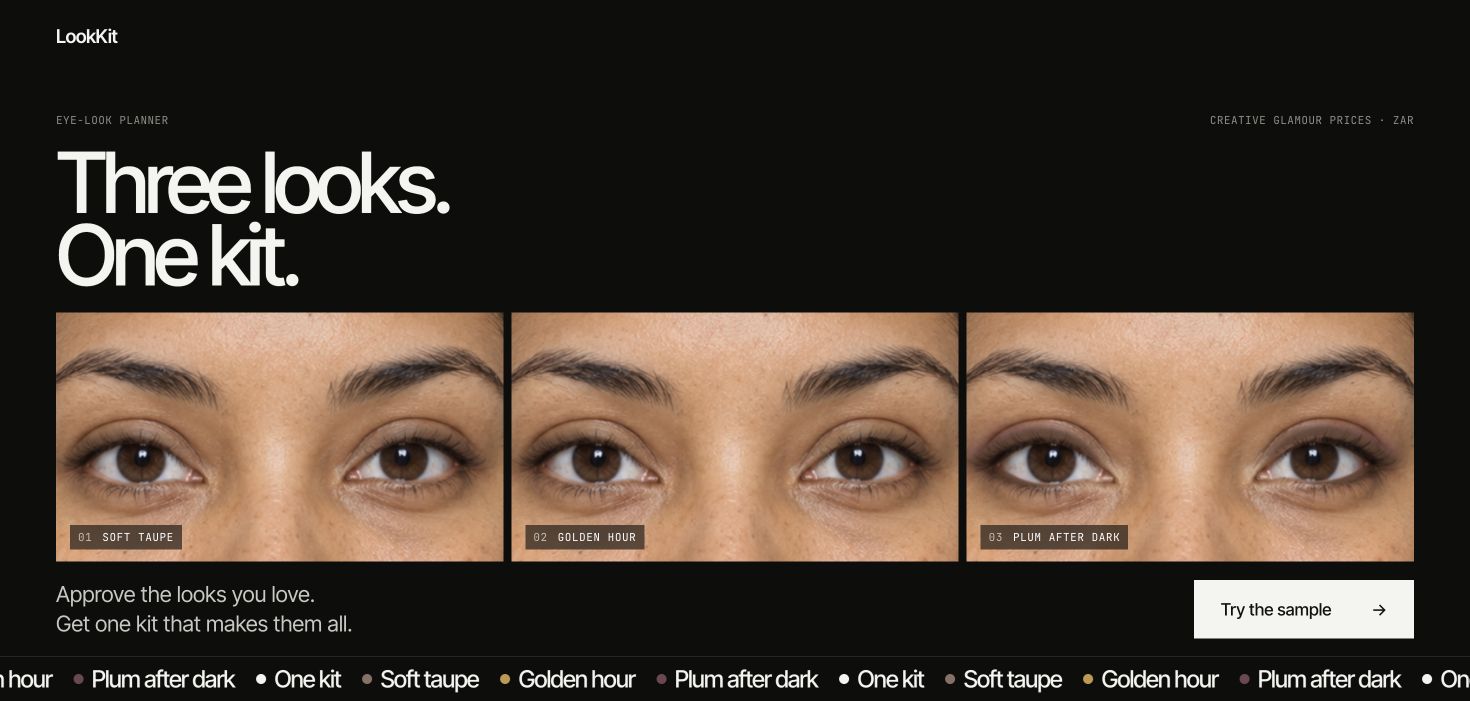
Choosing one makeup product is only part of the purchase decision. Several eye looks can share shades, while cases, refill choices and delivery change the complete cost. LookKit connects the looks someone chooses with the products needed to make them.
What it does
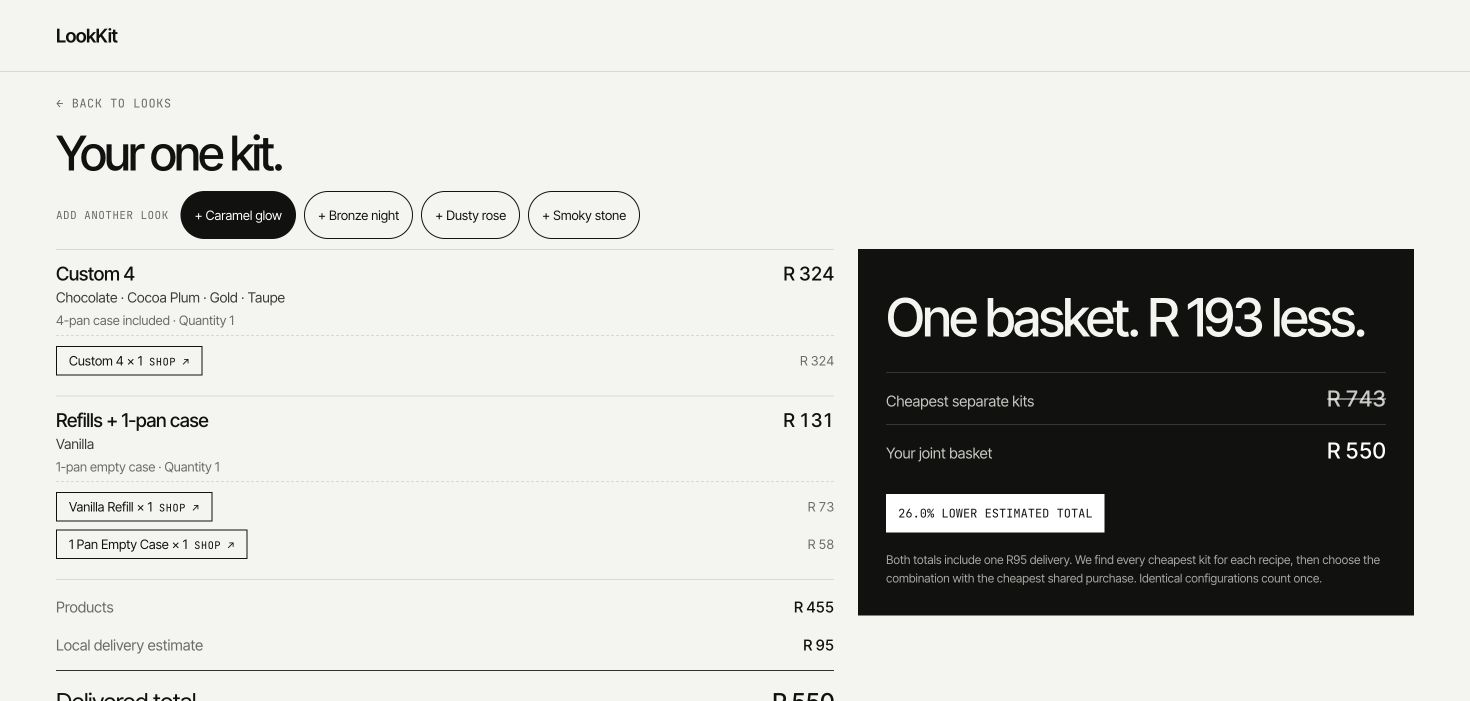
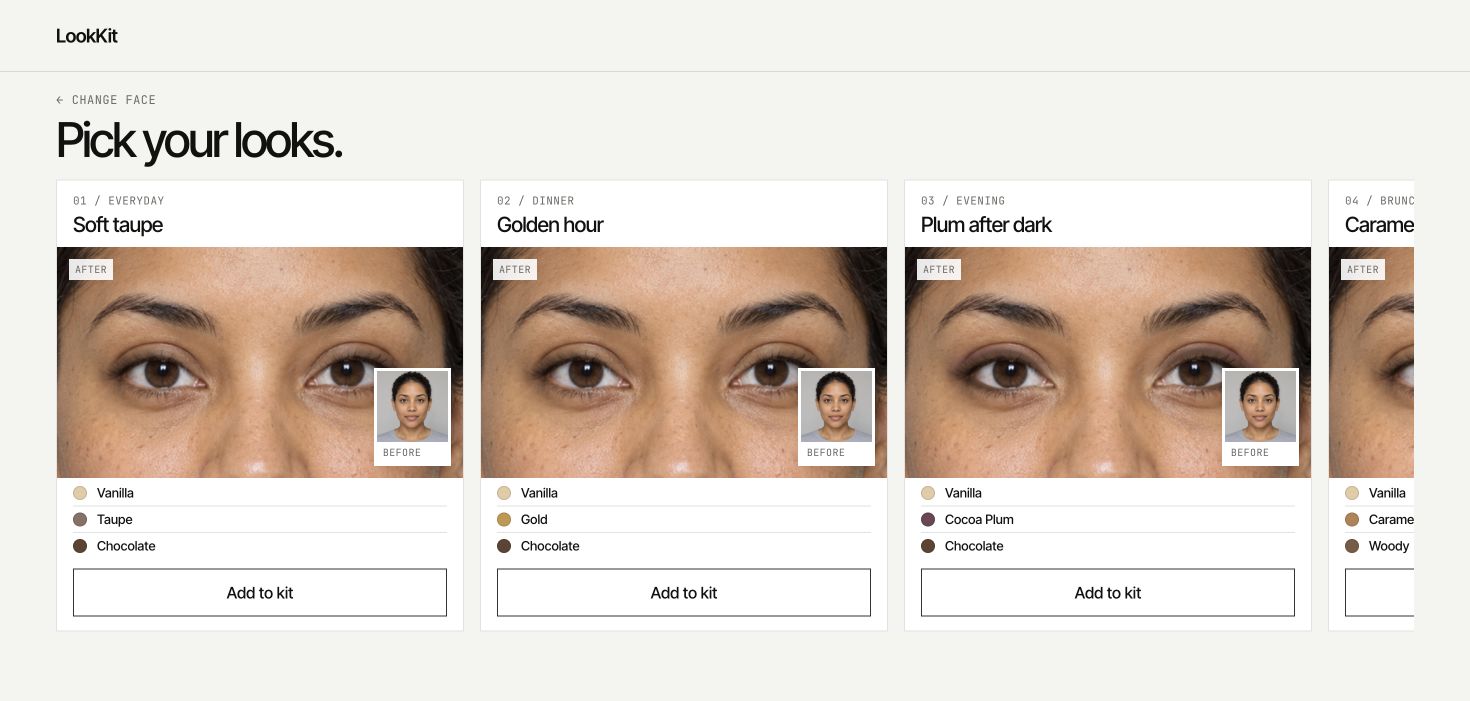
Explore seven eye-makeup looks on a synthetic sample face, approve the appearances you like and add them to one kit. LookKit finds the lowest-cost complete basket within its dated catalogue, buying shared shades once. Product links and shade lists explain what to buy.
For the three core looks, the catalogue calculation gives R550 delivered versus R743 for separately optimised kits: R193 less for the same looks. These are catalogue calculations, not measured shopper savings. Prices are a 26 October 2026 VAT-inclusive ZAR snapshot, with an estimated R95 local delivery charge. They are not a worldwide price or delivery quote.
How it uses YouCam
The sample uses genuine saved outputs from the YouCam Makeup Virtual Try-On API, all on the same synthetic face. These are pre-generated previews, not live renders. Appearance approval is bound to the source photo, rendering parameters and output image hashes. Missing or changed preview assets fall back to a labelled recipe-only mode.
The optional personal-photo path sends a supplied photo through a server-side YouCam integration. It requires separate deployment configuration and an enabled usage allowance; the sample does not require visitors to supply a key. API credentials must remain server-side.
How it was built
JavaScript, HTML and CSS provide the interface, with Node.js for the server and Sharp for image processing. A deterministic catalogue optimiser compares complete purchase configurations, including cases, refill choices and delivery. The comparison uses the same selected looks on both sides and preserves equally cheap filler options.
Challenges and lessons
The difficult part is keeping the visual choice, approved recipe and priced products consistent. A cheaper different look is not a saving on the original look. Image identity checks and a same-look purchasing baseline make the comparison inspectable.
Verification and limitations
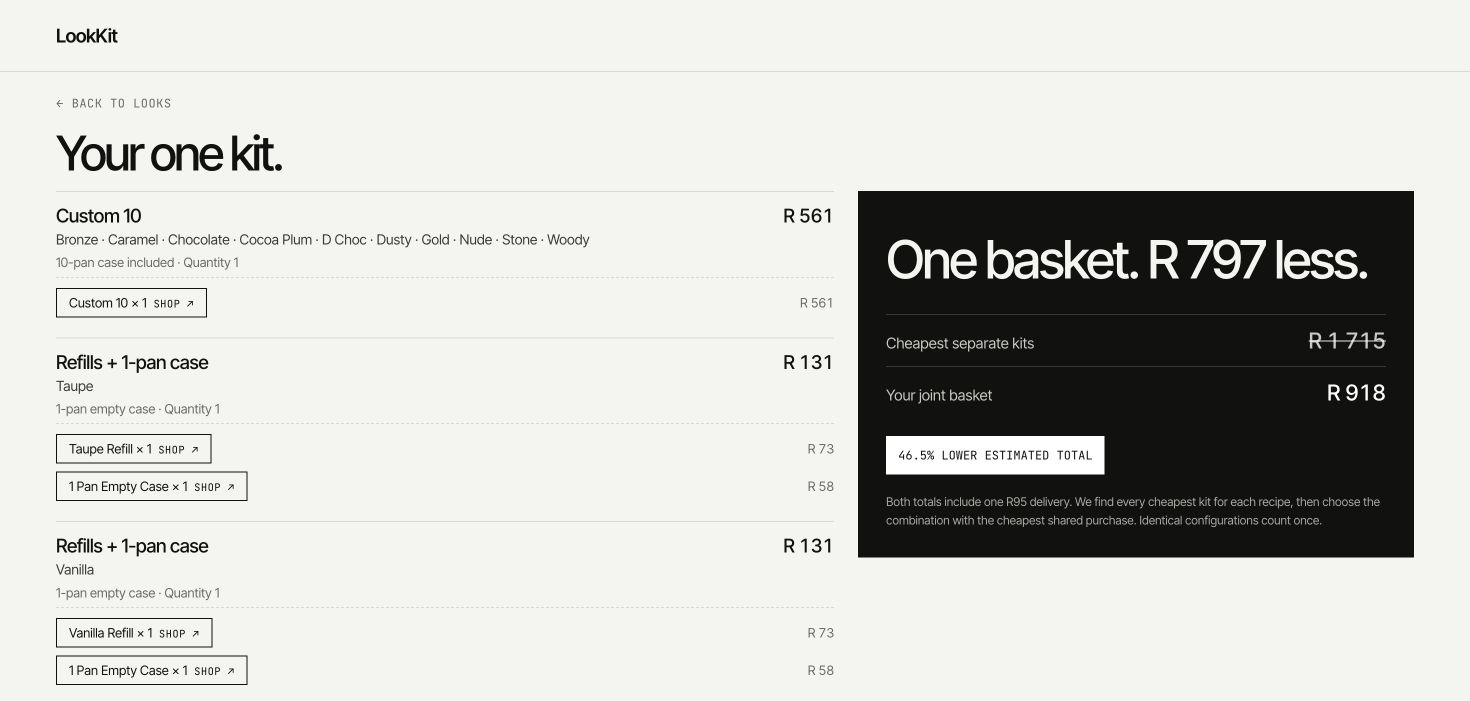
The local npm test suite passed all 37 tests on 2 November 2026, including approval identity, optimiser and upload safeguards. The local desktop journey was also checked from sample selection through all seven looks: the core trio showed R550 versus R743, and all seven showed R918 versus R1,715. This does not establish customer demand or physical colour accuracy. Nine shade colours approximate retailer swatches. Screen appearance, lighting, application technique and skin can change the real result. There is no checkout, retailer partnership, live-stock guarantee or shopper-validation claim.
What is next
Validate the experience with shoppers and expand the catalogue only when product compatibility, prices and appearance references can be documented. Keep each purchasing comparison tied to the exact looks selected.
