-
-
Logo
-
Introduce
-
Overview
-
Monitoring
-
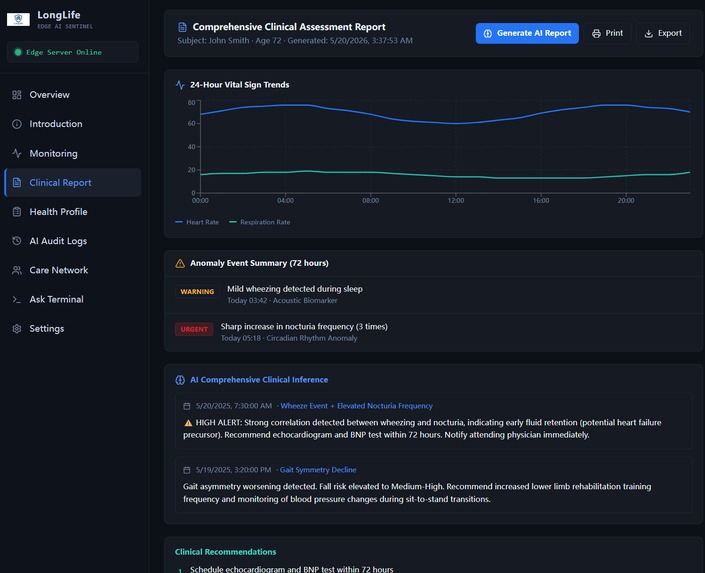
Clinical Report
-
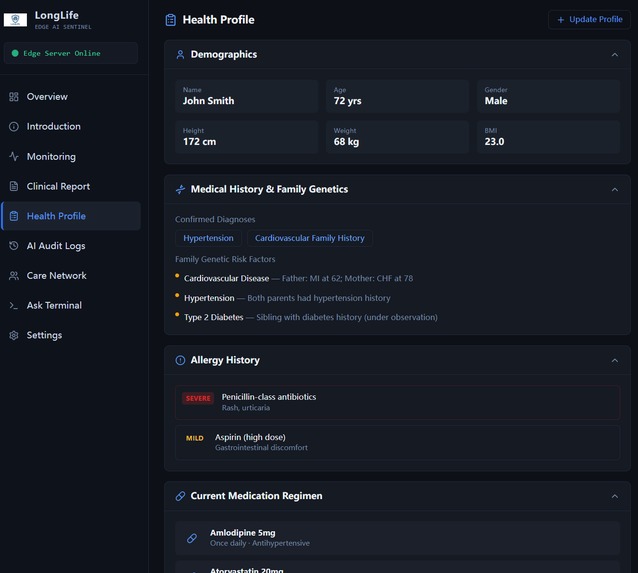
Health Profile
-
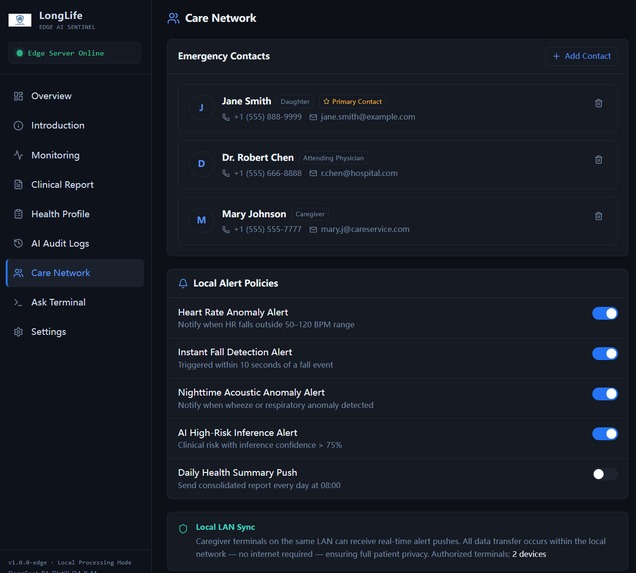
Care Network
-
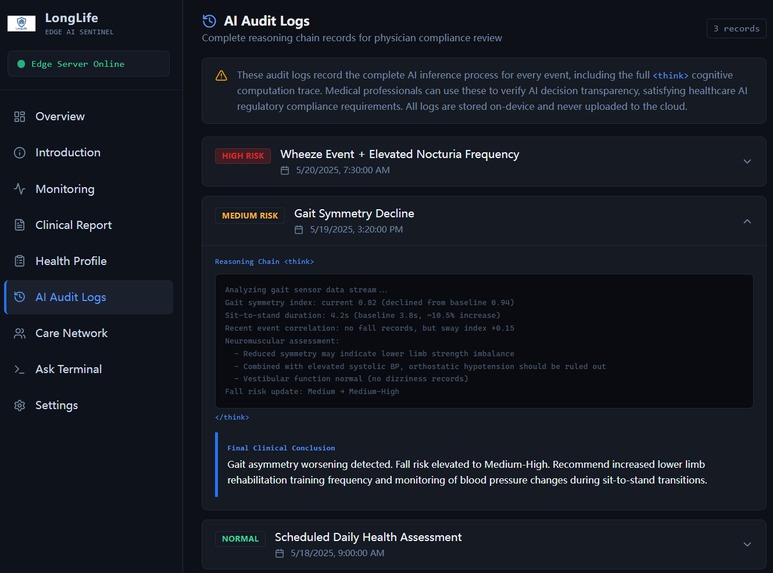
Al Audit Logs
-
Ask Terminal
-
Settings

💡 Inspiration
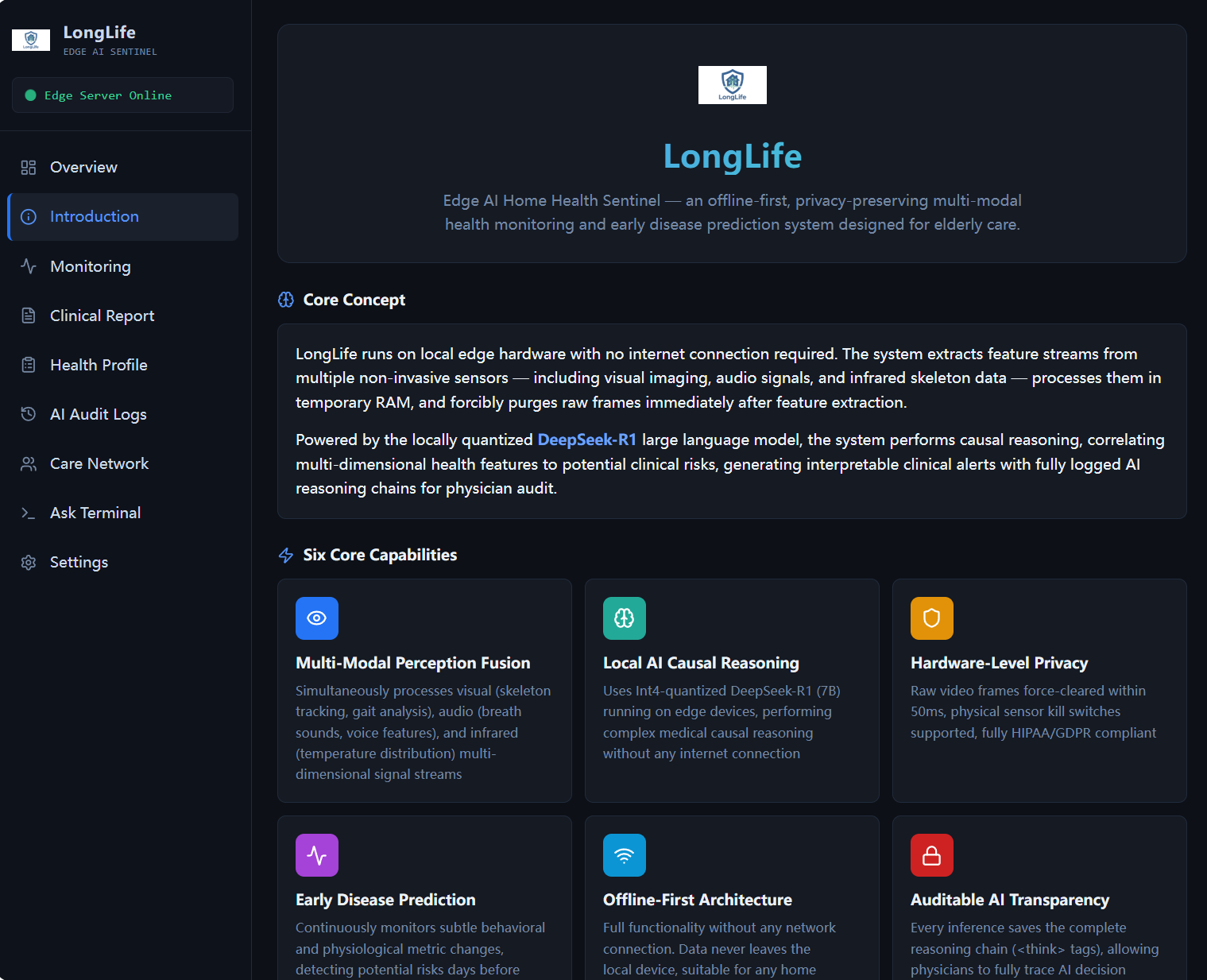
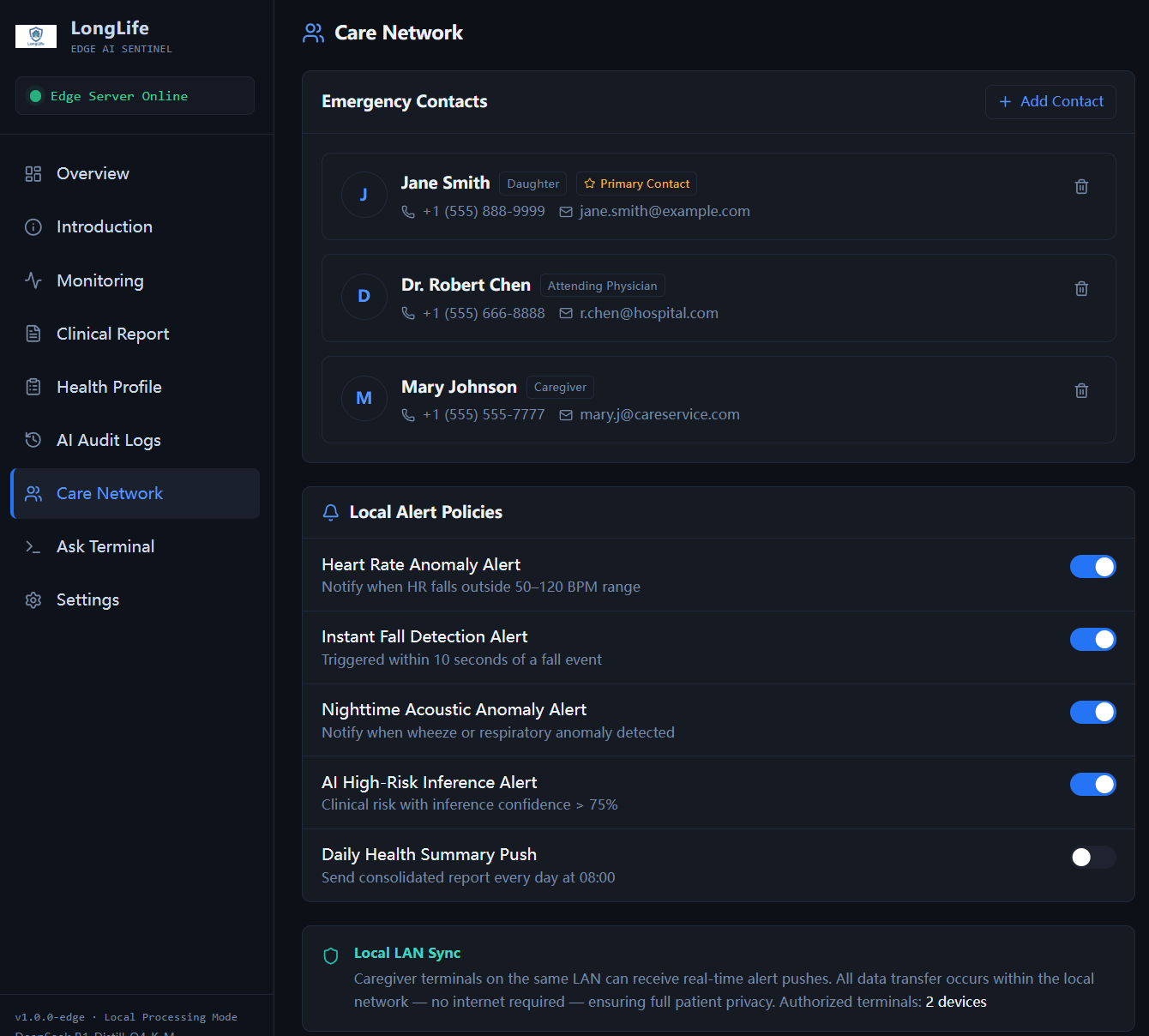
Continuous health monitoring for the elderly often relies on intrusive wearables or cloud-based cameras that severely compromise privacy. The dilemma is clear: how can we achieve clinical-grade, 24/7 preventative monitoring without sending sensitive video and audio streams to the cloud? LongLife was born from the idea that advanced AI should process data where it originates—at the edge.
⚙️ What it does
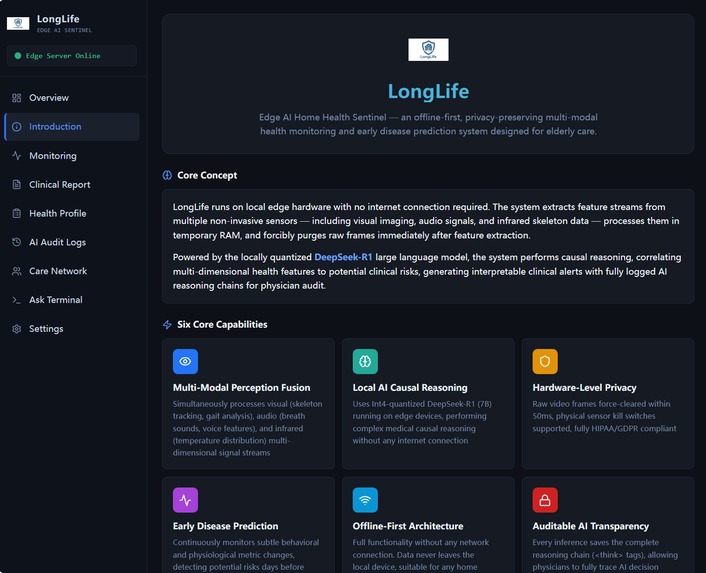
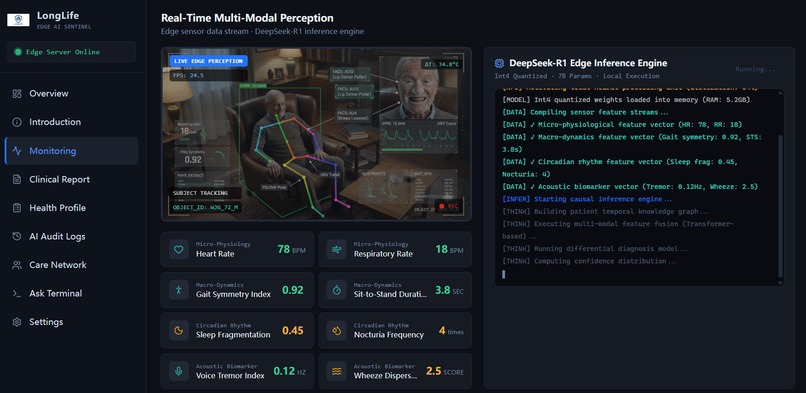
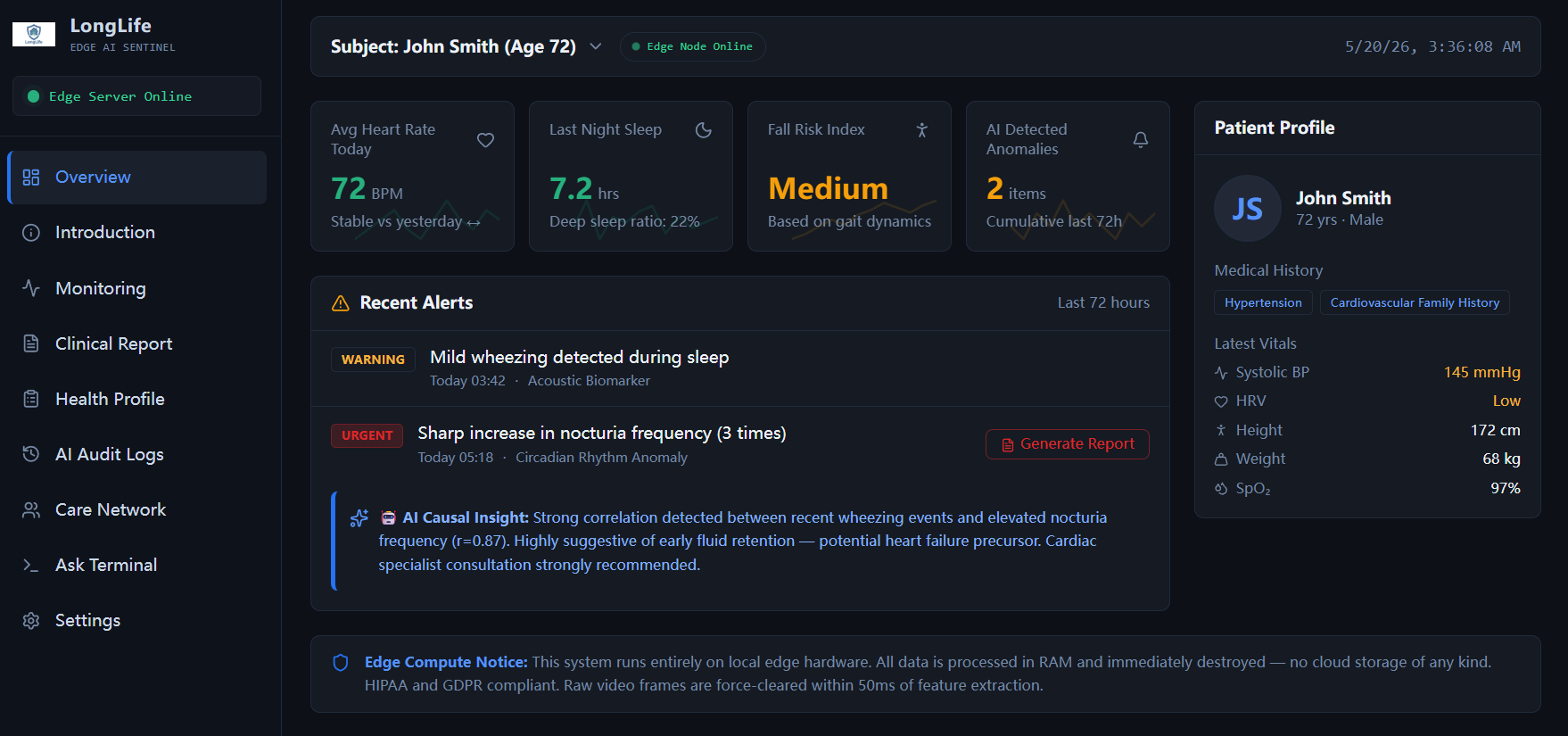
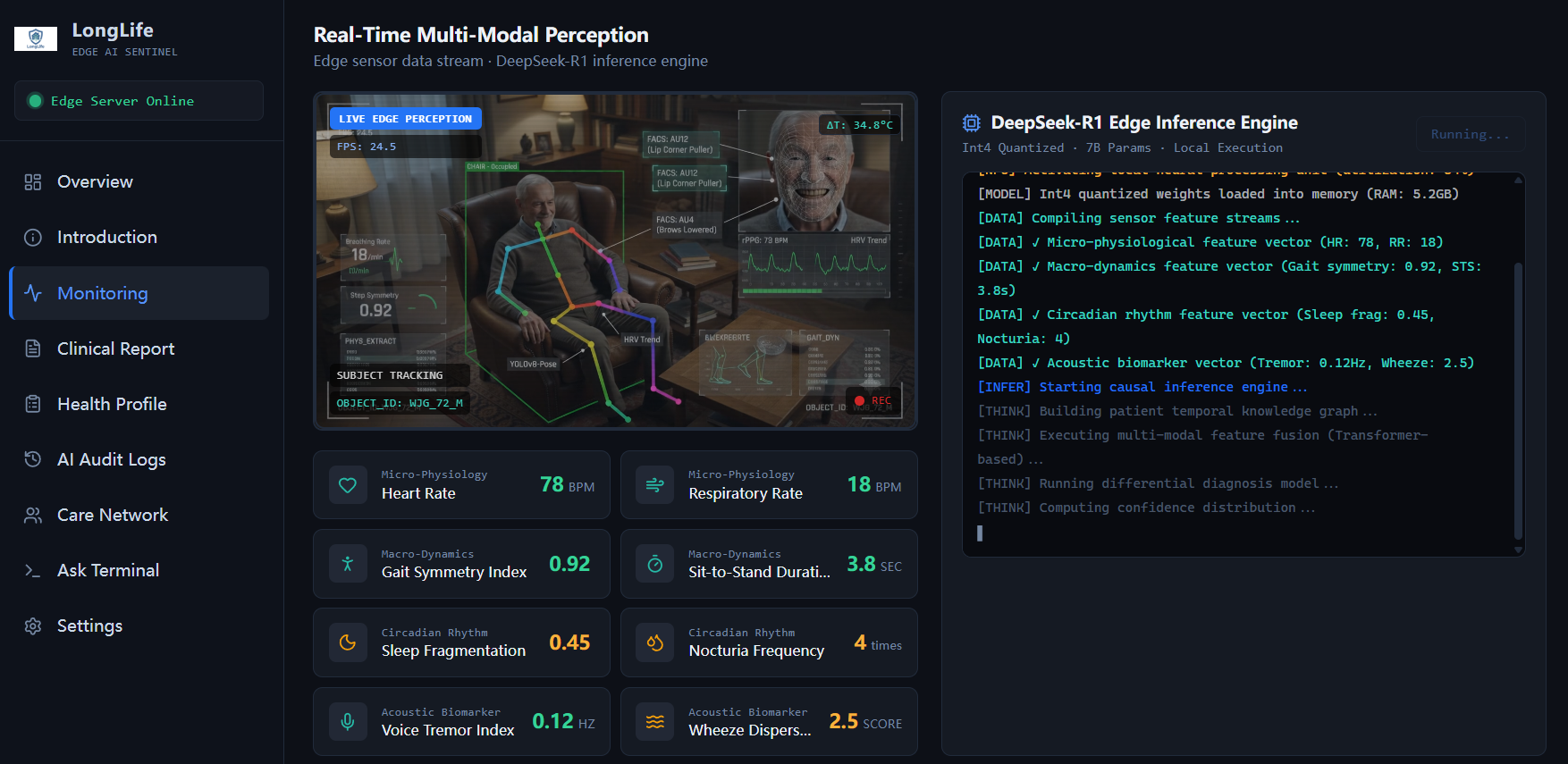
LongLife is an offline, multi-modal home health sentinel. It operates entirely on edge hardware without an internet connection. By extracting discrete features rather than raw media, it builds a comprehensive patient time-series profile across four dimensions:
- Micro-physiological & Facial: Extracts HRV via rPPG, resting breathing rates, and micro-expressions of hidden pain.
- Macro-kinematics: Uses skeleton extraction to monitor gait dynamics and sit-to-stand transition times to predict fall risks.
- Long-term Circadian Rhythms: Tracks sleep fragmentation and bathroom visit frequencies.
- Audio Biomarkers: Detects discrete acoustic events like wheezing or speech tremors.
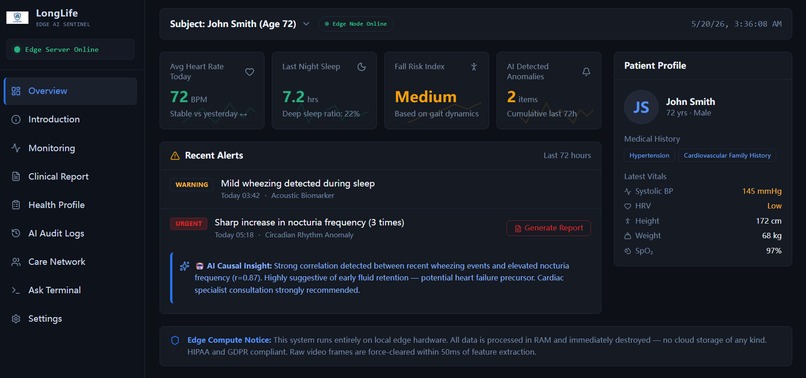
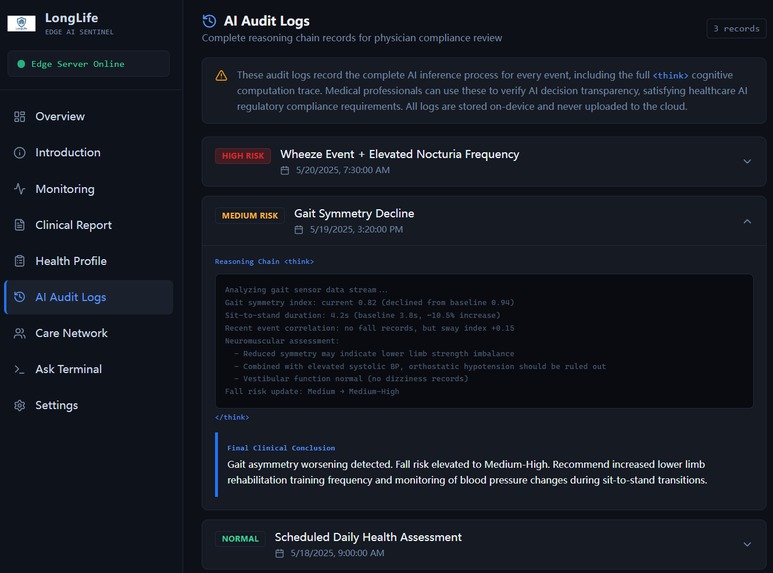
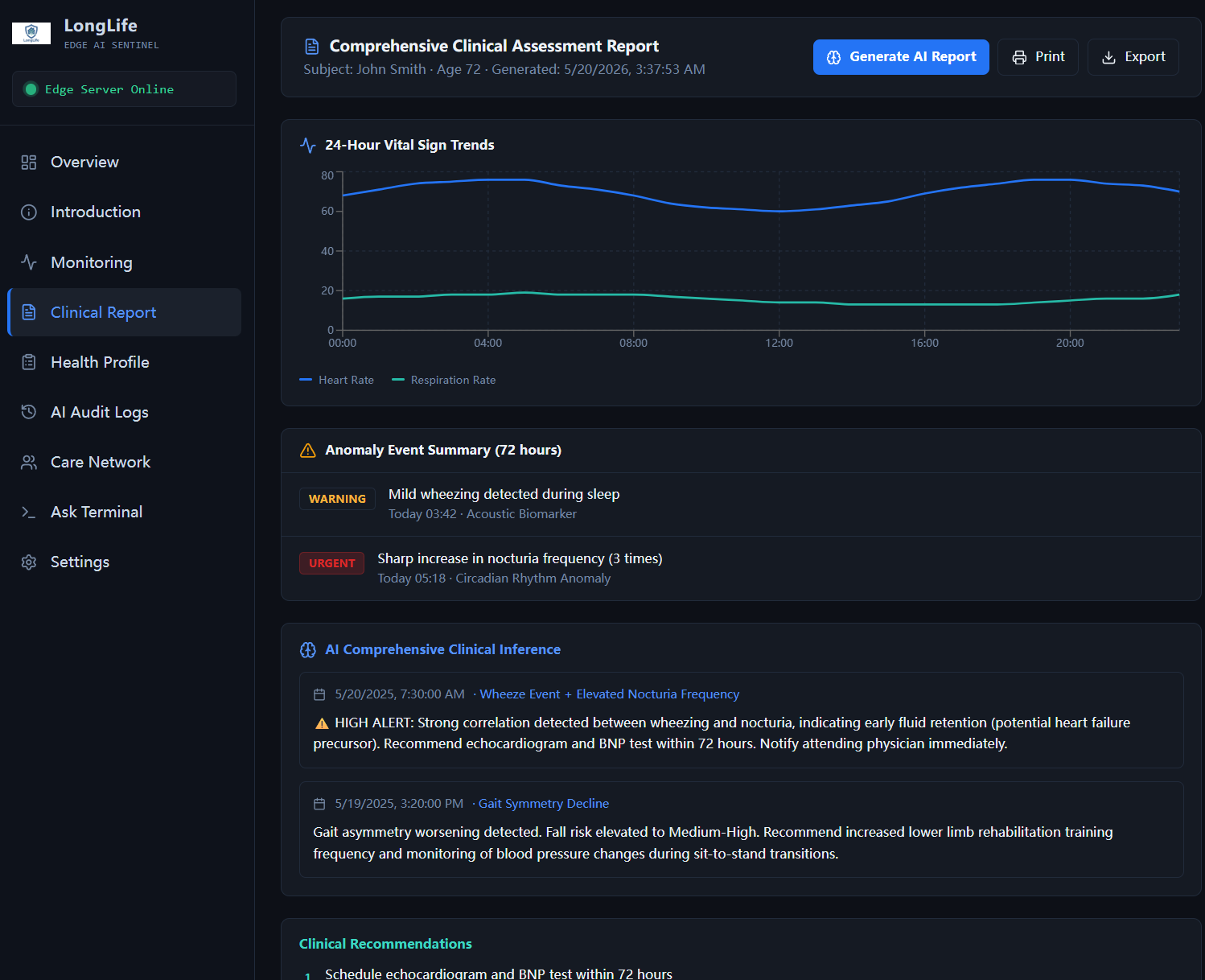
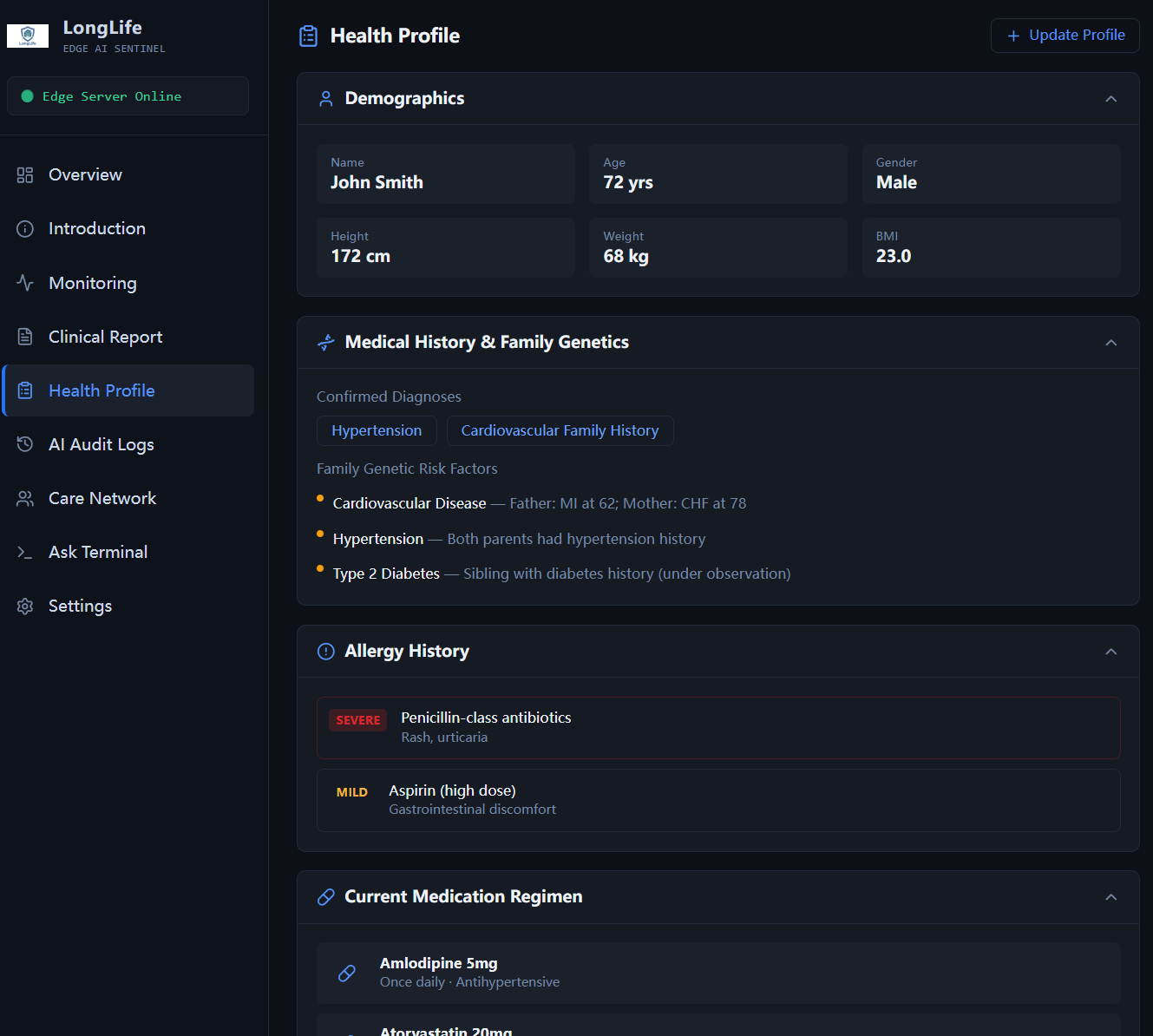
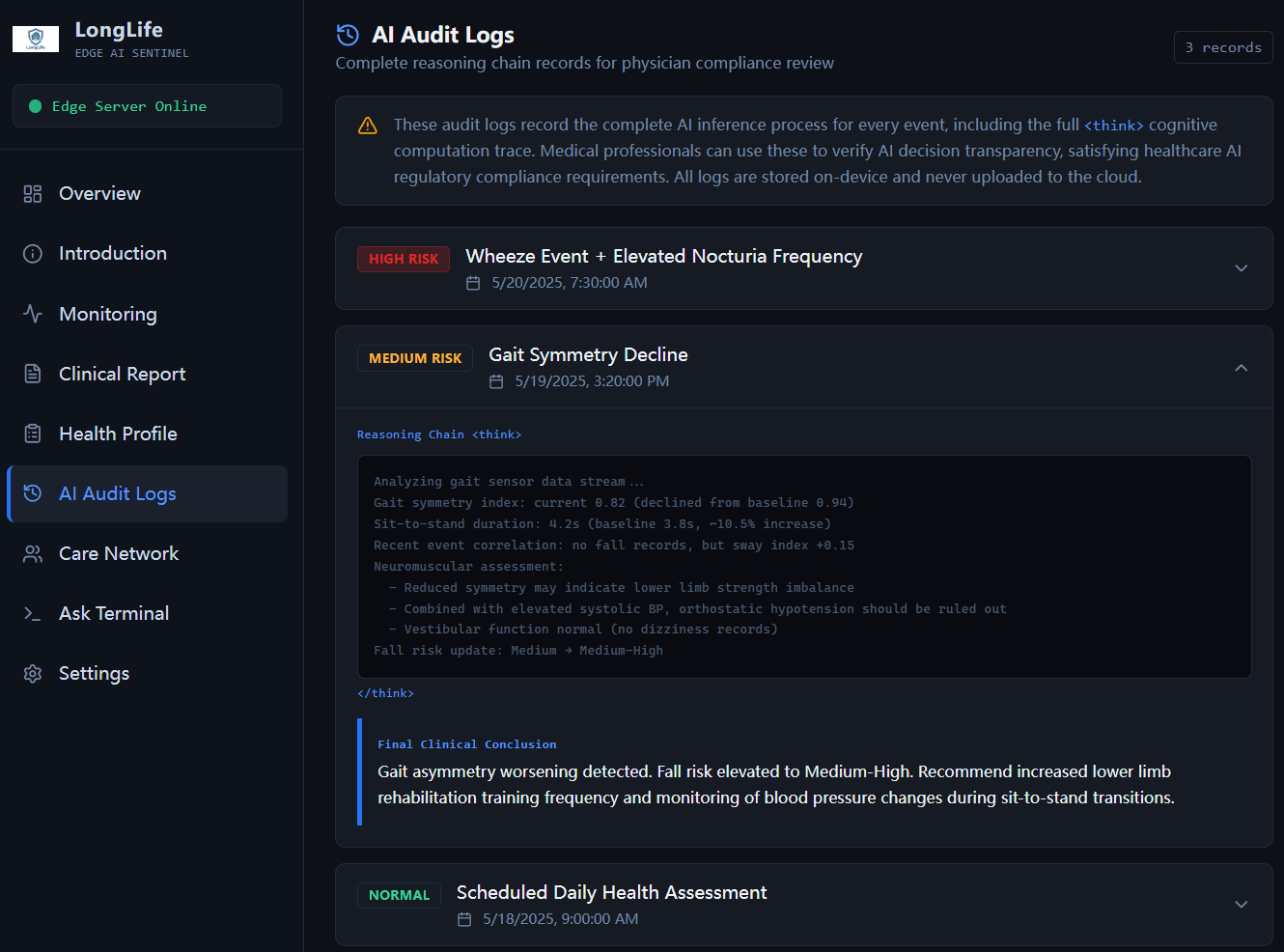
These features are fed into an edge-deployed causal reasoning engine (DeepSeek-R1 distilled model). Instead of just showing data, the engine uses chain-of-thought (<think>) reasoning to combine medical history with real-time anomalies, providing actionable early warnings (e.g., predicting early heart failure from increased night urination + mild wheezing).
🛠️ How we built it
For this MVP demonstration, we built a full-stack dashboard using Next.js and Tailwind CSS, prioritizing a medical-grade, tech-forward UI.
- Frontend: We implemented a real-time visualizer for the simulated edge multi-modal streams and used Recharts to plot 30-day physiological time-series data.
- Backend/Inference: We created Next.js API routes to simulate the local edge server. The core feature is the integration of the simulated DeepSeek-R1 engine, where we engineered a custom typewriter UI effect that renders the model's transparent causal reasoning (
<think>tags) before delivering the final critical alert.
⚠️ Challenges we ran into
The biggest challenge was architecting the Input Feature Space. Structuring unstructured multi-modal data (video/audio) into discrete, causally linked nodes (like HRV, gait speed, and acoustic events) that a Large Language Model can actually interpret logically required deep domain research into clinical biomarkers. Additionally, designing a web MVP that authentically conveys the "offline edge-processing" nature of the final physical product required careful UI/UX considerations.
🚀 What's next for LongLife
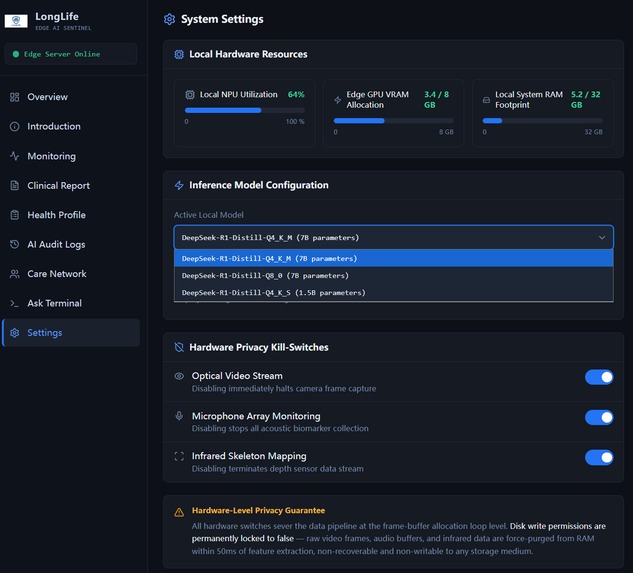
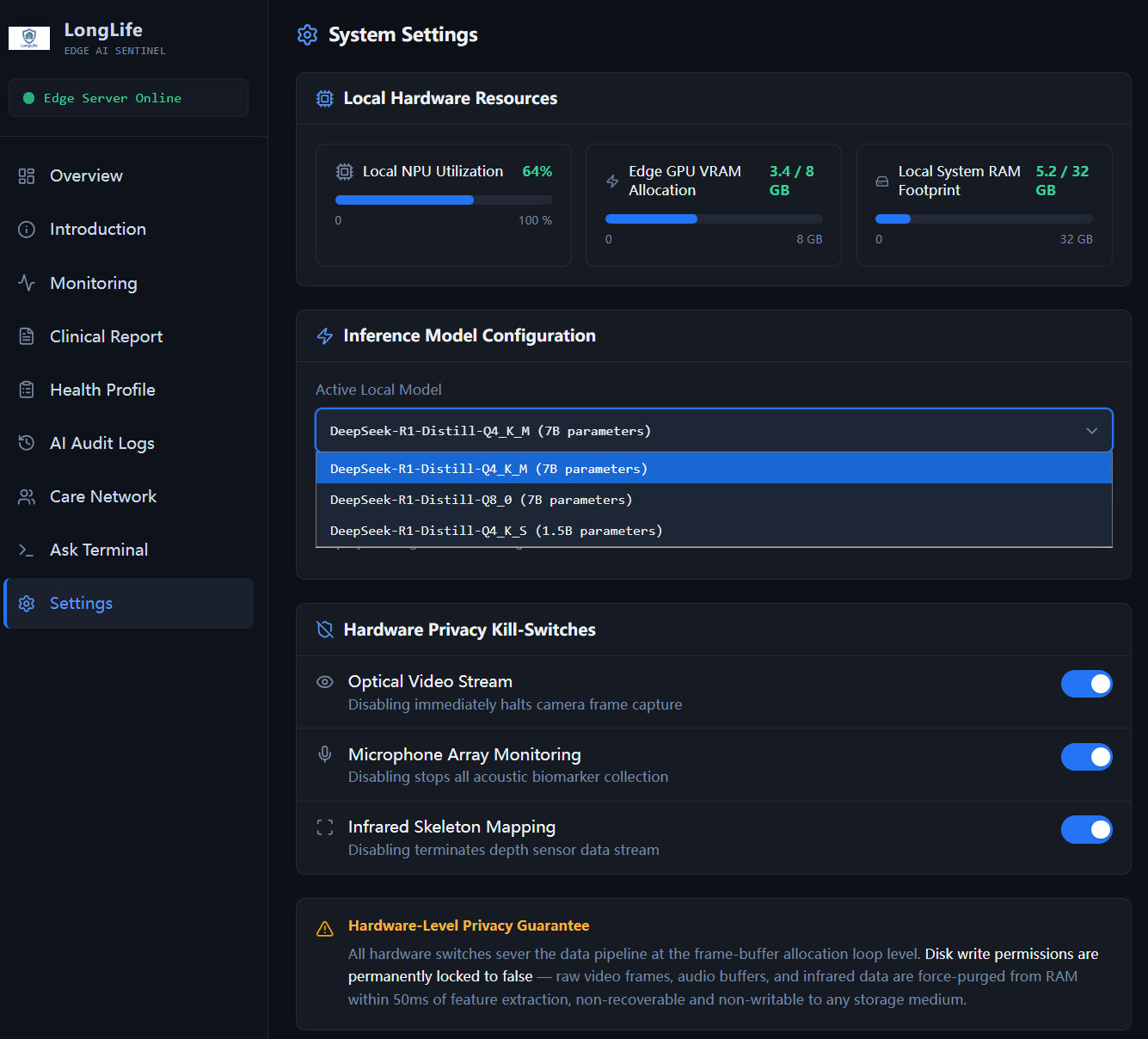
The immediate next step is transitioning from this web-based MVP to actual physical edge hardware. Leveraging embedded systems, we plan to deploy the multi-modal extraction models alongside a quantized version of DeepSeek-R1 onto an edge computing board, validating the causal reasoning engine in a real-world, completely air-gapped physical environment.
Built With
- computer-vision
- deepseek
- edge-computing
- machine-learning
- next.js
- react
- tailwind.css


Log in or sign up for Devpost to join the conversation.