Inspiration
As a full-time blogger creating 3+ long articles weekly, I grew frustrated with juggling research tools, style consistency, and SEO checks—all while hitting 3000+ word targets. I wanted a single workspace that didn’t just write, but understood my voice and audience (fellow North American/EU content creators). This gap became the spark for LongForm Writer AI.
What it does
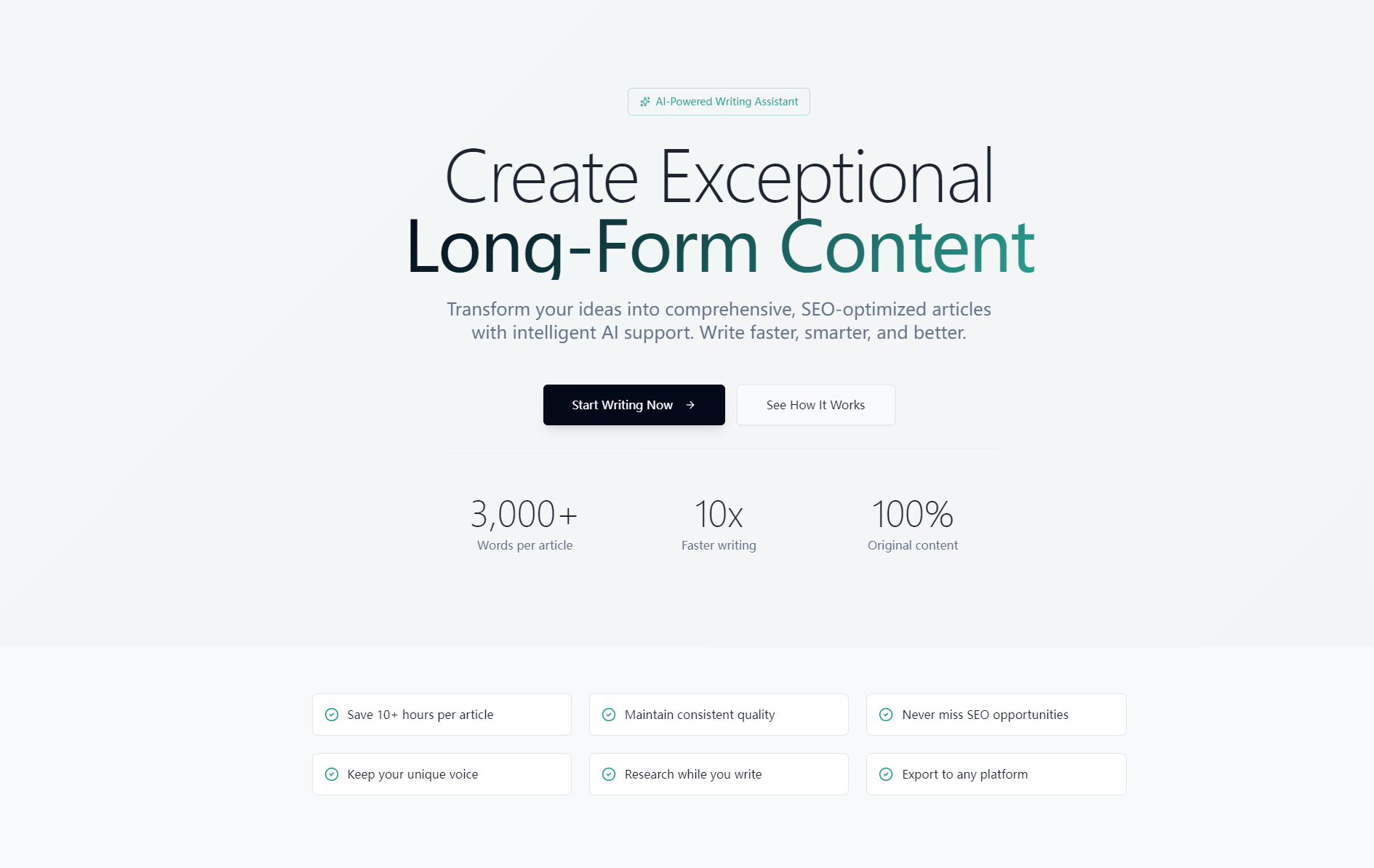
It’s an all-in-one AI writing assistant for long-form content: generate structured outlines tailored to your tone/word count, expand sections into cohesive paragraphs, integrate credible research, match your unique writing style, optimize for SEO, track revisions, and export in multiple formats—no fragmented tools needed.
How we built it
We started with core user interviews (15+ professional bloggers/newsletter editors) to map pain points. Frontend: React for the intuitive workspace (sidebar outline, central editor, tool panels). Backend: Node.js/Python to power AI logic (OpenAI API for generation, NLTK for style/SEO analysis). AWS handled auto-save/revision logs, PostgreSQL stored project data, and PDFKit/HTML converters enabled seamless exports.
Challenges we ran into
The biggest hurdle was refining style preservation—ensuring AI-generated content matched a user’s uploaded sample without feeling robotic. We iterated 8+ times on the style fingerprinting logic (tweaking tone/vocabulary extraction) and added a intensity slider to balance AI assistance with personal voice. Niche topic research also posed issues: we had to build fallback logic for limited data to keep the tool usable for specialized content creators.
Accomplishments that we're proud of
We created a tool that truly centers the user’s voice—beta testers reported cutting their long-form writing time by 40% while maintaining brand consistency. The real-time SEO and revision tracking features became fan favorites, and the one-click export to CMS-ready HTML eliminated tedious formatting steps. Most importantly, it works for the diverse needs of North American/EU content creators (from educational newsletters to industry analyses).
What we learned
User-centric design isn’t just about features—it’s about flow. We scrapped initial complex menus after testing showed creators valued simplicity over endless options. We also learned AI is a tool, not a replacement: giving users full control over AI suggestions (accept/replace/remove) built trust. Finally, regional audience nuances (e.g., EU-focused readability standards) shaped our SEO and tone logic in unexpected, valuable ways.
What's next for this project
First, we’ll add lightweight grammar/spell-check to round out editing tools. Next, we’re exploring integrations with popular CMS platforms (requested heavily by beta users) to cut down on post-writing steps. We also plan to expand research sources to include region-specific data (e.g., EU industry reports) and test multi-language support for broader European use. Long-term, cloud sync will let creators switch devices mid-project—without losing progress.
