-
-
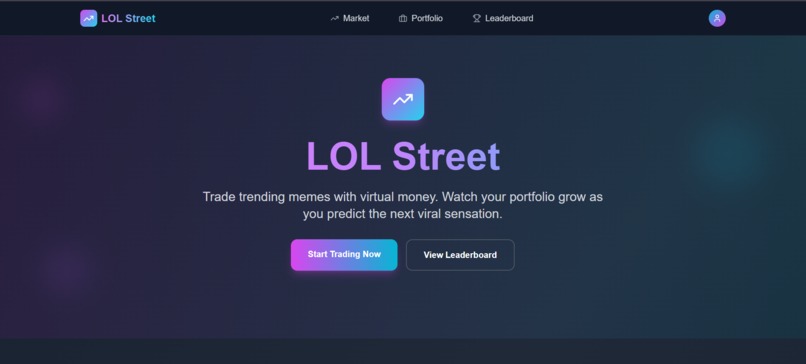
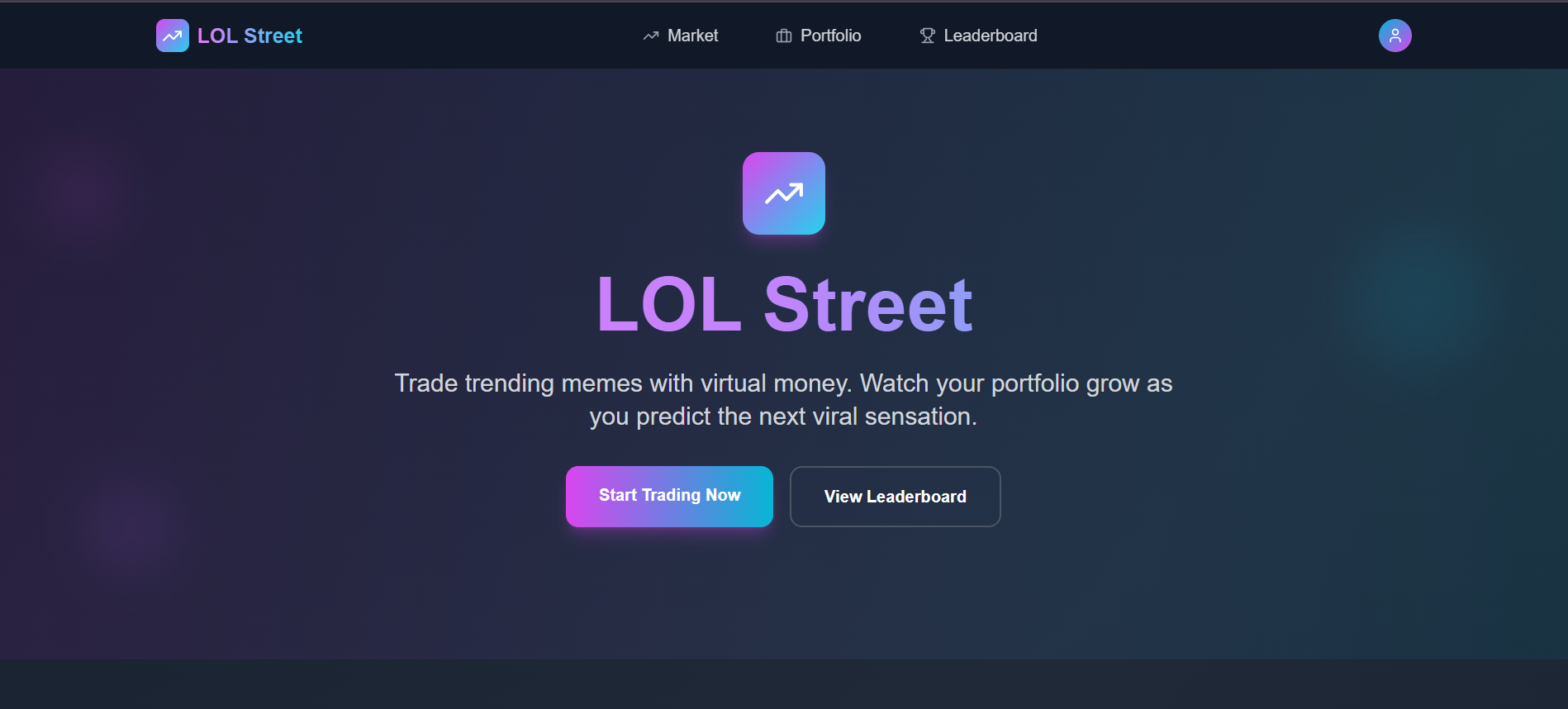
Landing Page
-
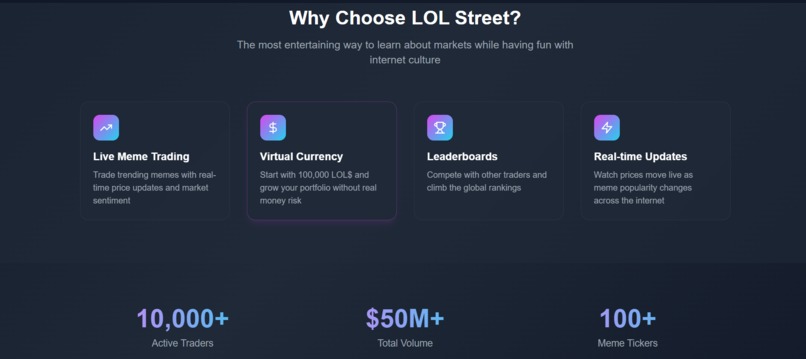
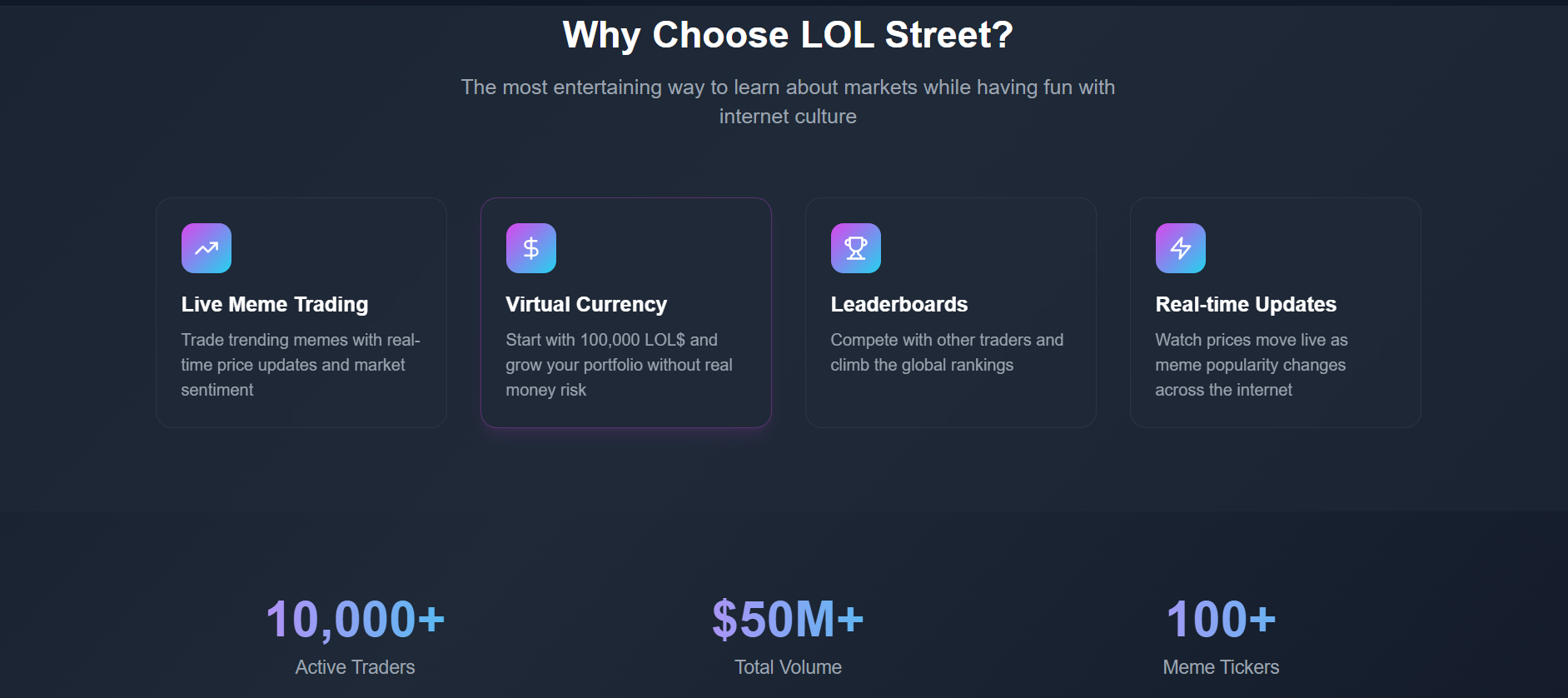
Why LOL Street
-
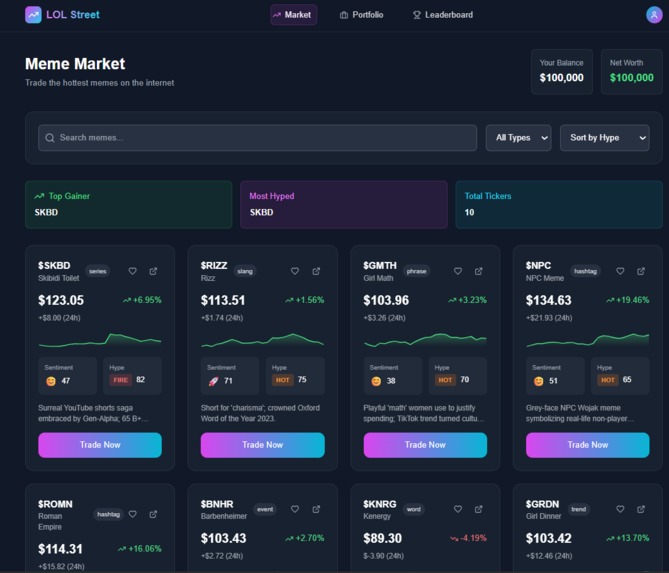
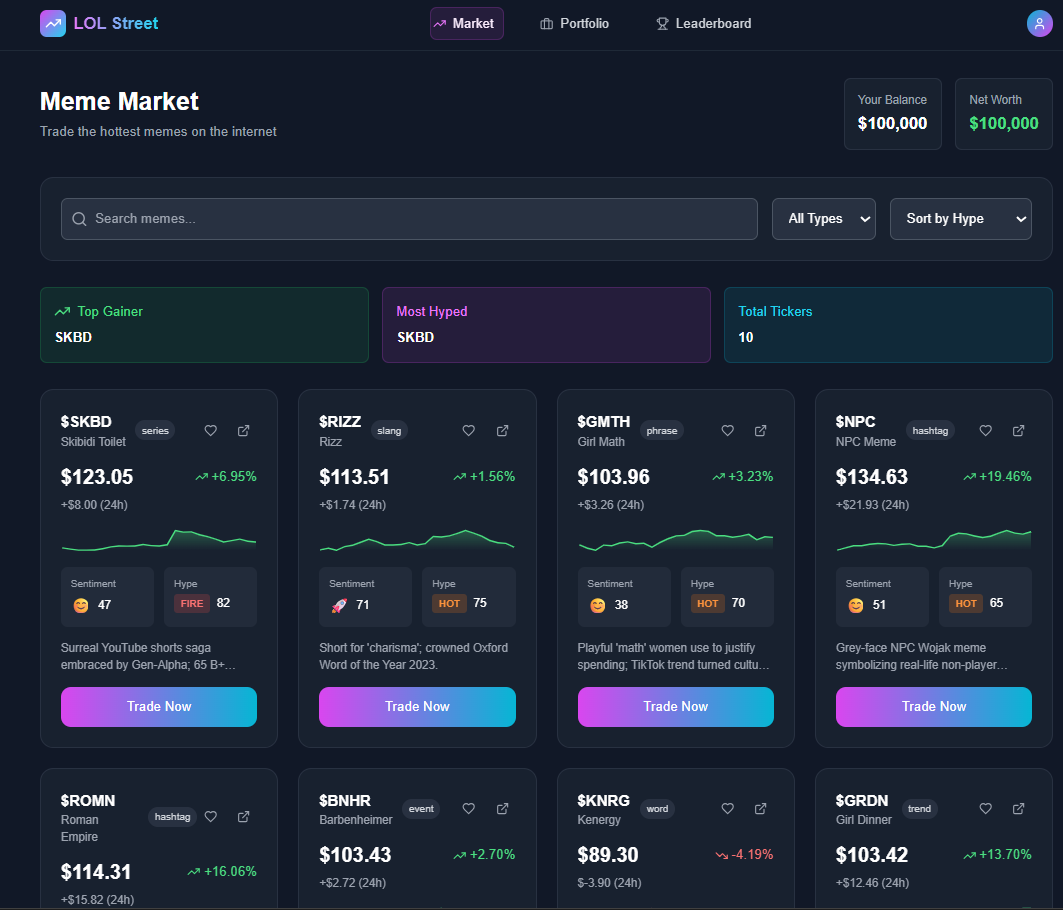
Market Section
-
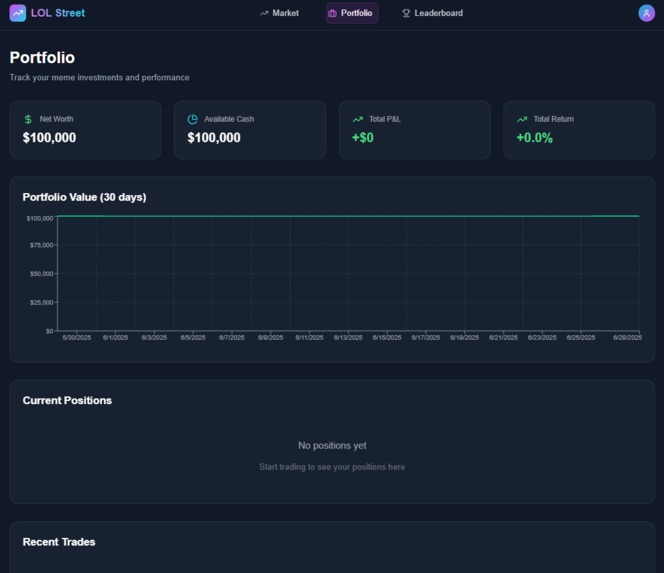
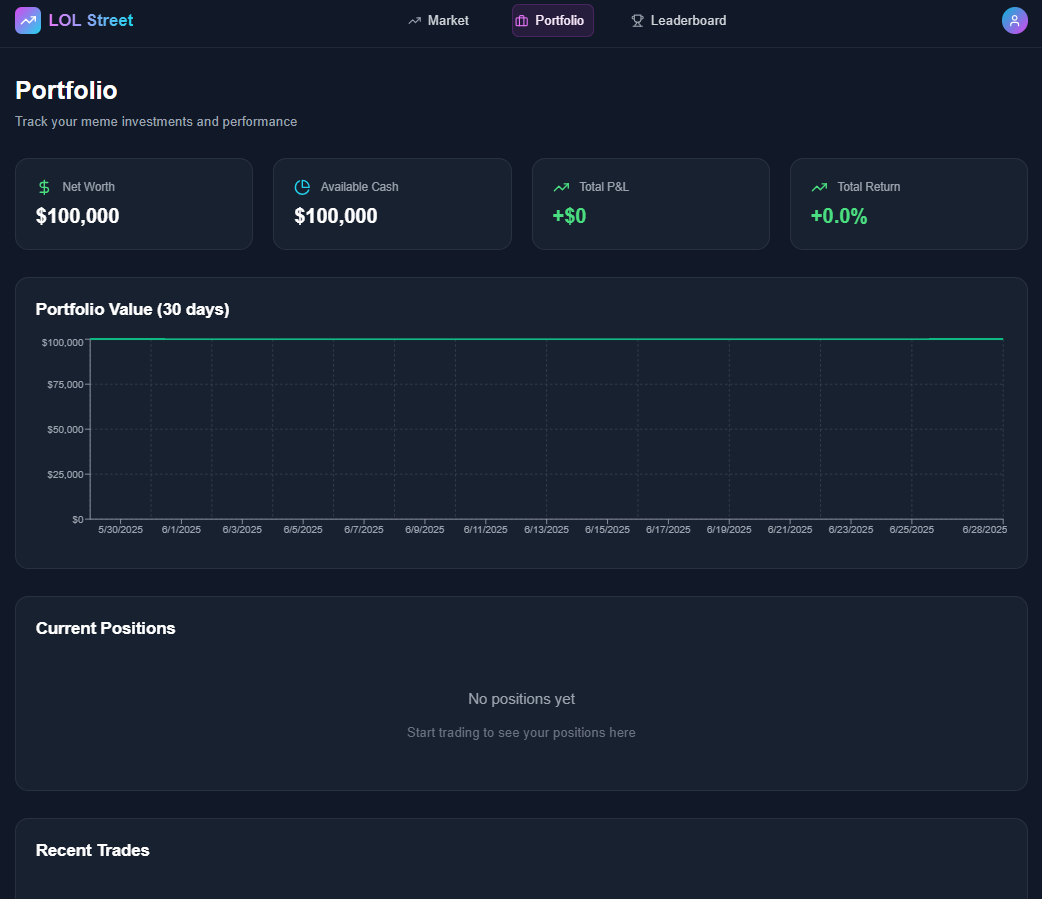
Portfolio Tracker
-
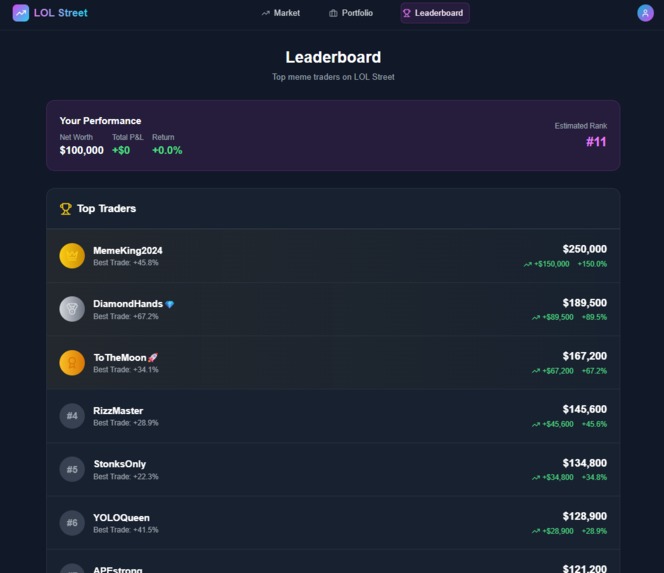
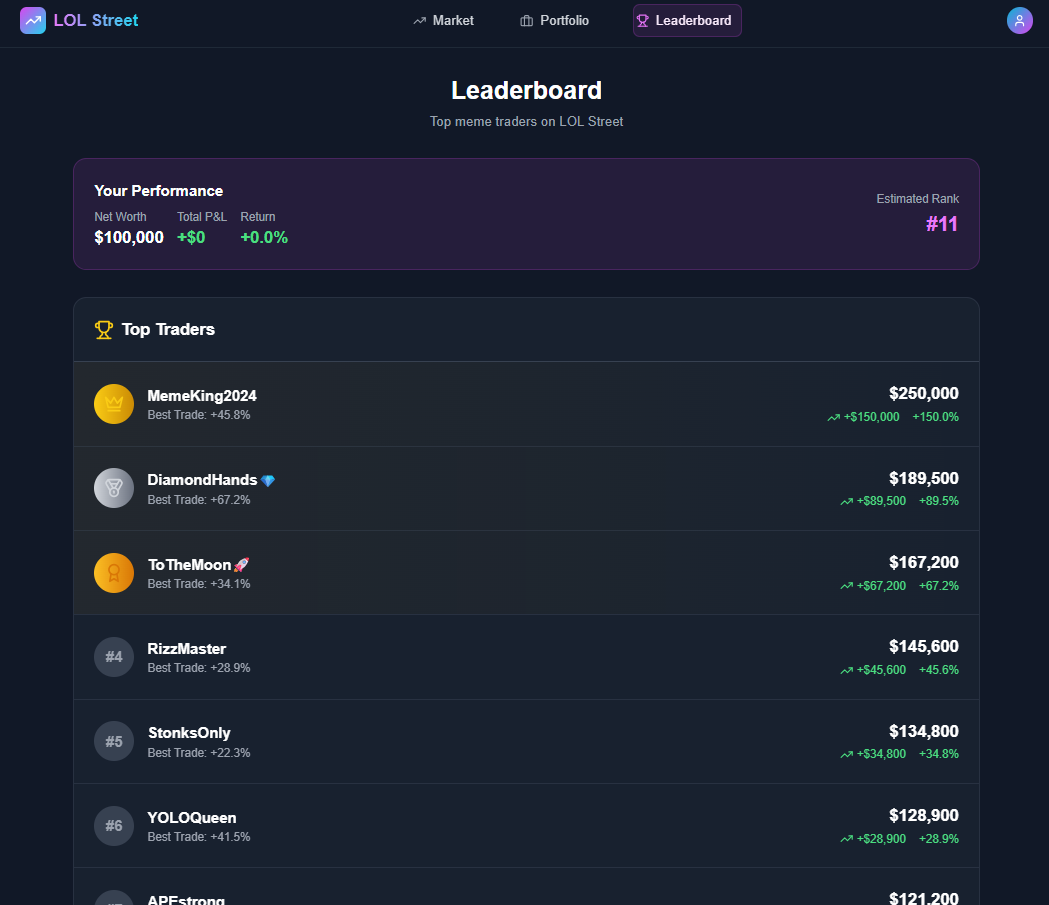
Top Traders Leaderboard
Inspiration
When the One-Shot Contest was announced, I was scrolling through my usual mix of TikTok memes, Reddit threads, and Twitter trends when it hit me: what if we could trade viral content like stocks? Instead of investing in Apple or Tesla, imagine buying shares in "Girl Math," selling high on "Ohio," or going long on the latest TikTok dance trend.
The idea felt perfect for our generation's obsession with internet culture – turning our collective FOMO about missing viral moments into a playful trading game.
What it does
LOL Street is a fantasy stock market for internet culture. Users can:
- Browse a market board of trending memes, viral sounds, and internet phenomena
- "Trade" these cultural moments with virtual currency
- Track their portfolio performance as trends rise and fall
- See their paper profits from correctly predicting what goes viral
Think fantasy football, but for memes. The interface mimics real trading apps with price charts, buy/sell buttons, and portfolio tracking, but everything revolves around the cultural moments we all experience online.
How we built it
With only one hour to work with, I had to be extremely focused:
Technology Stack:
- Next.js for the frontend (fast setup, great developer experience)
- Tailwind CSS for rapid styling
- React state management for portfolio tracking
- Mock JSON data for all content
Development Process:
- First 15 minutes: Used Anthropic Claude to probe and brainstorm around the idea
- Next 30 minutes: Researched different sources and trends for mock data generation
- Final 15 minutes: Created the landing page and application with one prompt on Bolt
Key Technical Decisions:
- No backend – everything runs in the browser with local state
- Hardcoded market data with realistic-looking prices and trends
- Simple component architecture focused on the core trading experience
- Responsive design that works on mobile and desktop
Challenges we ran into
Time Constraints The biggest challenge was ruthless scope management. Every feature idea had to pass the test: "Does this help someone understand the core concept in 30 seconds?" Many cool ideas like real-time price updates, user accounts, and social features got cut.
Making Mock Data Feel Real Creating believable price movements and market trends without actual APIs required creativity. I had to manually craft data that felt authentic while keeping the development time minimal.
UI Polish vs. Speed Balancing a professional-looking interface with rapid development meant choosing battles carefully. I focused on the visual elements that would immediately communicate "this is a trading app" while keeping interactions simple.
Accomplishments that we're proud of
Captured the Core Experience Despite the time constraint, the demo successfully communicates the main concept. Users immediately understand they're trading internet culture, and the interface feels familiar to anyone who's used a trading app.
Clean, Intuitive Design The UI feels polished and professional, using familiar design patterns from real trading platforms while maintaining a playful vibe appropriate for meme culture.
Rapid Prototyping Success Proved that a compelling demo can be built incredibly quickly when you focus on the essential user experience and cut everything else.
What we learned
Constraints Drive Focus Having only one hour forced me to identify what truly mattered for the user experience. This constraint actually improved the final product by preventing feature creep.
Polish Amplifies Impact Even with mock data, spending time on visual design and smooth interactions made the concept feel much more credible and engaging.
MVP Thinking Learned to think in terms of "minimum viable demo" – what's the smallest thing I can build that proves this idea has legs?
What's next for LOL Street
Near-term Enhancements:
- Real social media API integration to track actual trending topics
- User accounts with persistent portfolios
- Basic leaderboards and social features
Long-term Vision:
- Live price movements based on real social media metrics
- Advanced trading features (short selling, options on viral content)
- Mobile app with push notifications for trending opportunities
- Community features like sharing trades and creating custom "meme portfolios"
- Integration with platforms like Discord for social trading
- Prediction Market Evolution: Transform into a full prediction market platform similar to Kalshi and Polymarket, where users can trade on real-world outcomes like:
- "Will this TikTok creator hit 10M followers by year-end?"
- "Will this meme trend for more than 30 days?"
- "Which YouTuber will have the most viral video this month?"
- "Will this celebrity controversy impact their follower count by >20%?"
- Pop culture events, award show outcomes, and viral moment predictions
The Big Picture: Transform LOL Street from a fun demo into a genuine prediction market platform that bridges internet culture with real economic incentives. By combining the engagement of social media with the mechanics of prediction markets, we can create a platform where cultural intuition becomes tradeable expertise – turning everyone's knowledge of internet trends into a competitive advantage.
The one-hour sprint proved the concept works – now it's about building the infrastructure to make it a living, breathing platform that grows with internet culture itself.
Built With
- anthropic
- bolt.new
- localstorage
- nextjs

Log in or sign up for Devpost to join the conversation.