-
-
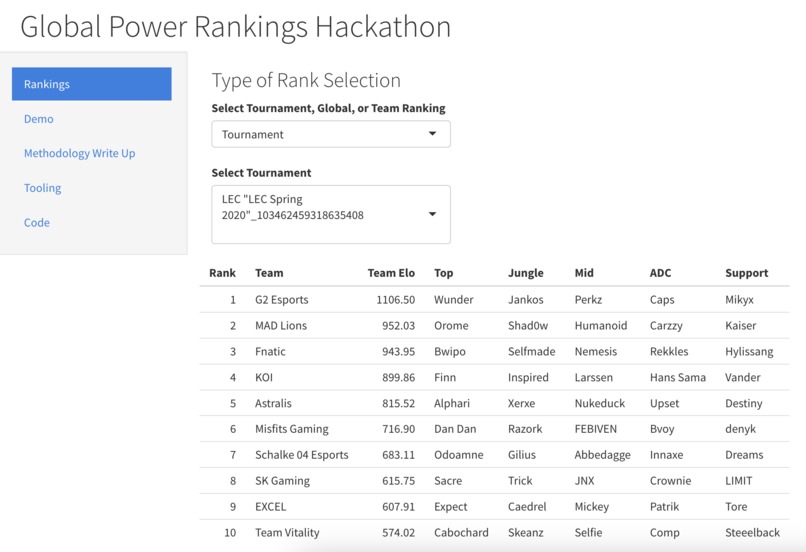
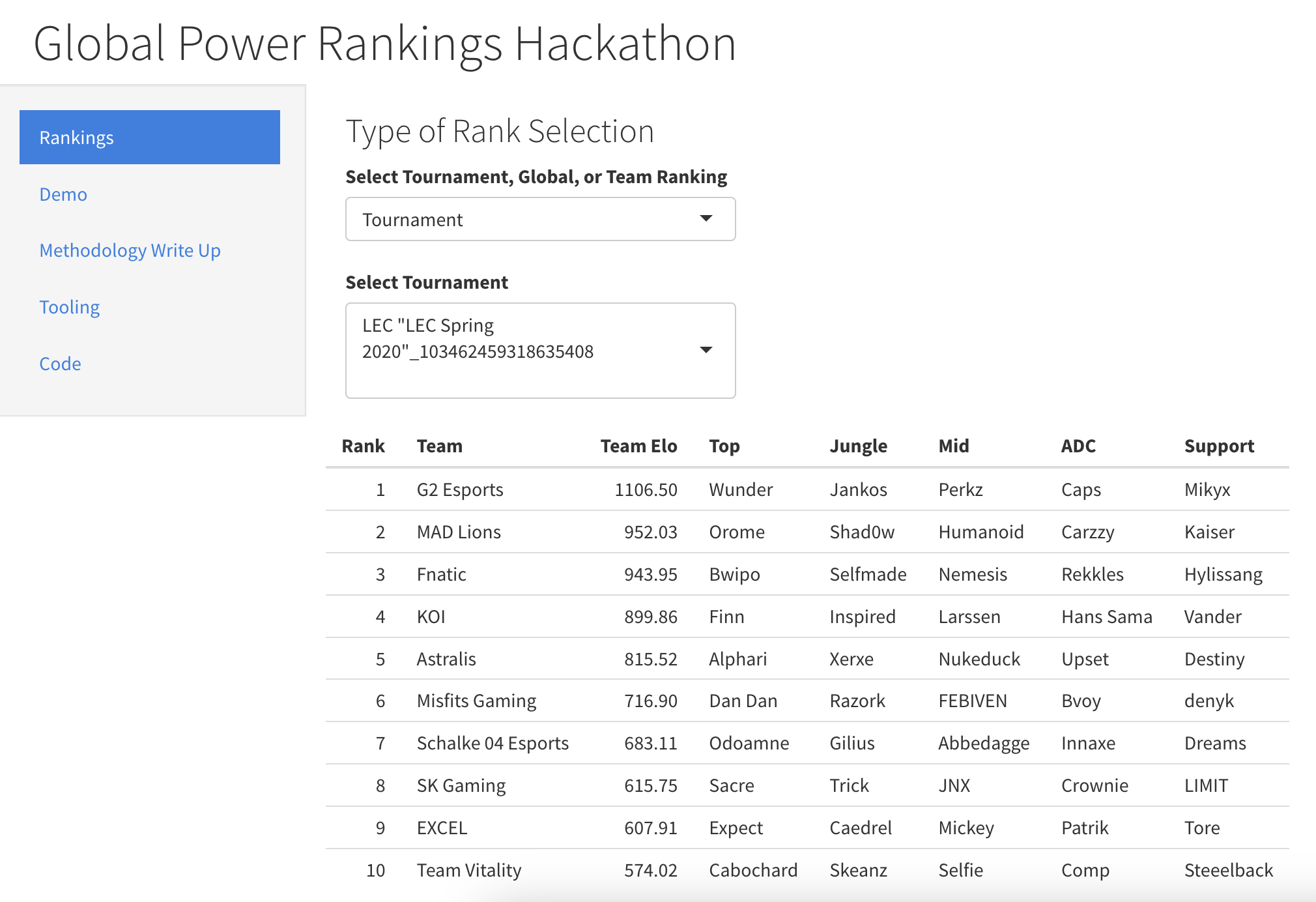
Screenshot of project homepage
Inspiration
I built a project similar to this for Division 1 Baseball back in 2022. I thought I could translate my understanding of the Elo system into a refined power ranking system for league of legends as well.
What it does
This Elo model takes player level data and sums each participant on a team to get team ratings. Every win or loss splits the rating individually by 20% for each player.
How we built it
I built this in R using the Elo package created by Ethan Heinzen. The data was stored and queried in AWS using Athena and S3, and the web application was made in Shiny and hosted on an EC2 instance.
Challenges we ran into
I had issues with learning new AWS services, querying complex nested files, hosting the web application, and setting a proper initial rating for each player. Regional difference were difficult to accommodate without inducing personal bias.
Accomplishments that we're proud of
I am proud of building this all on my own. From ingesting the raw data to web app development. I think the rating system does a good job of representing where any team stands at any given time frame.
What we learned
I learned that rating systems will never be perfect. Even though every team is playing the same game, there are differences in every game that make judging a team's power difficult.
What's next for GlobalPowerRankingsSamEhrlich
This project will be taken down shortly after as to not rack up a large AWS bill. I will have the code stored on my github and a walkthrough on my Youtube channel. As a personal project, I may return with historical data from later than 2020 to try to give teams a proper initial rating where data was lacking.
Built With
- amazon-web-services
- athena
- ec2
- r
- s3
- shiny
- shiny-server
- youtube

Log in or sign up for Devpost to join the conversation.