-
-
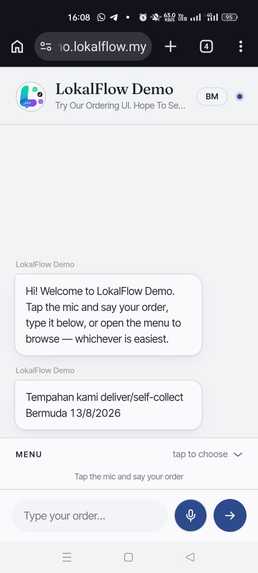
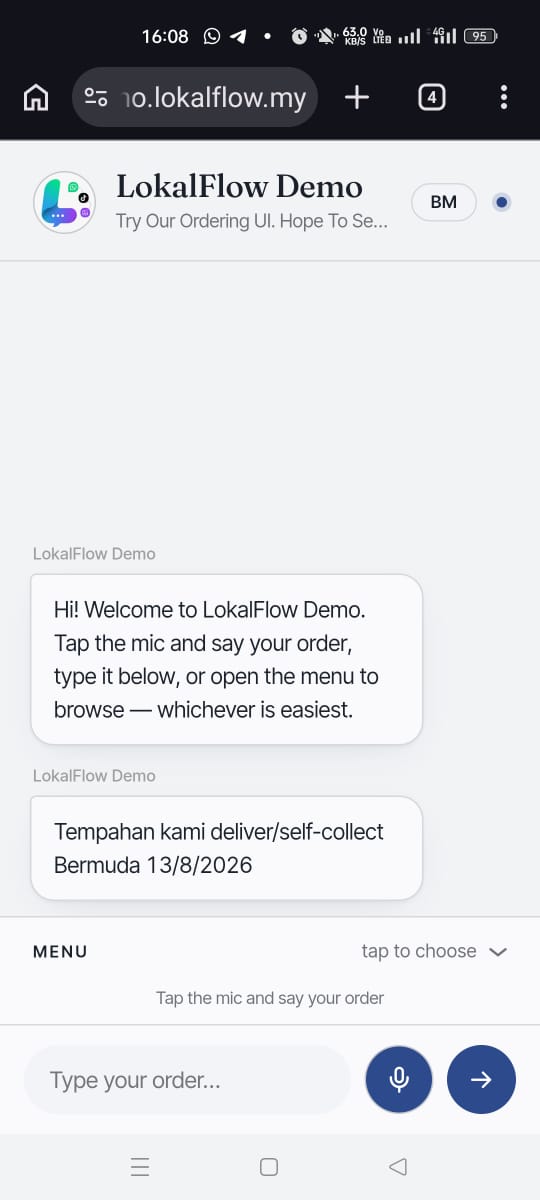
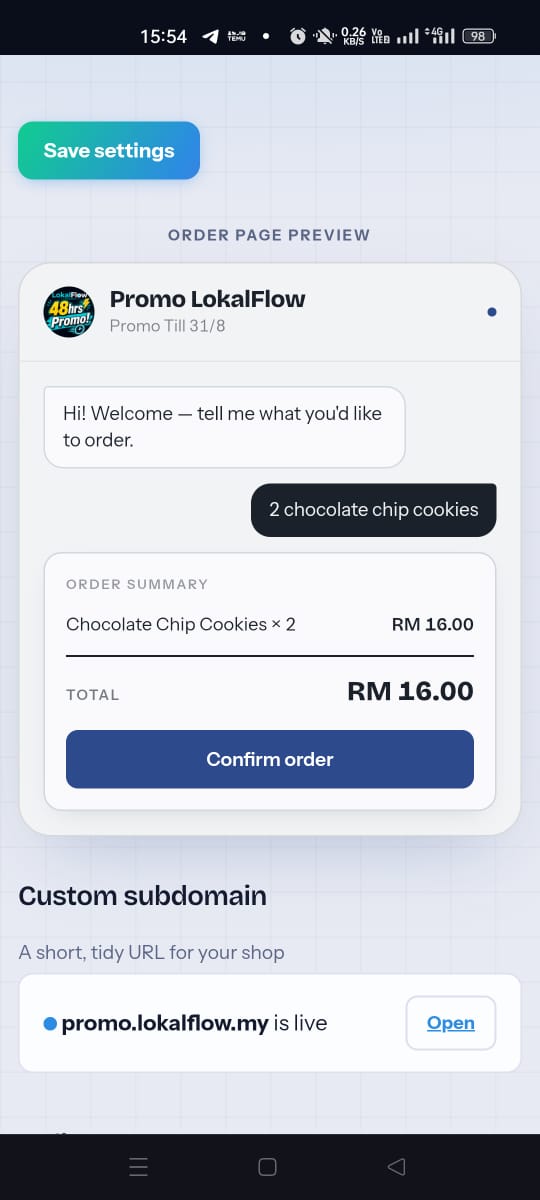
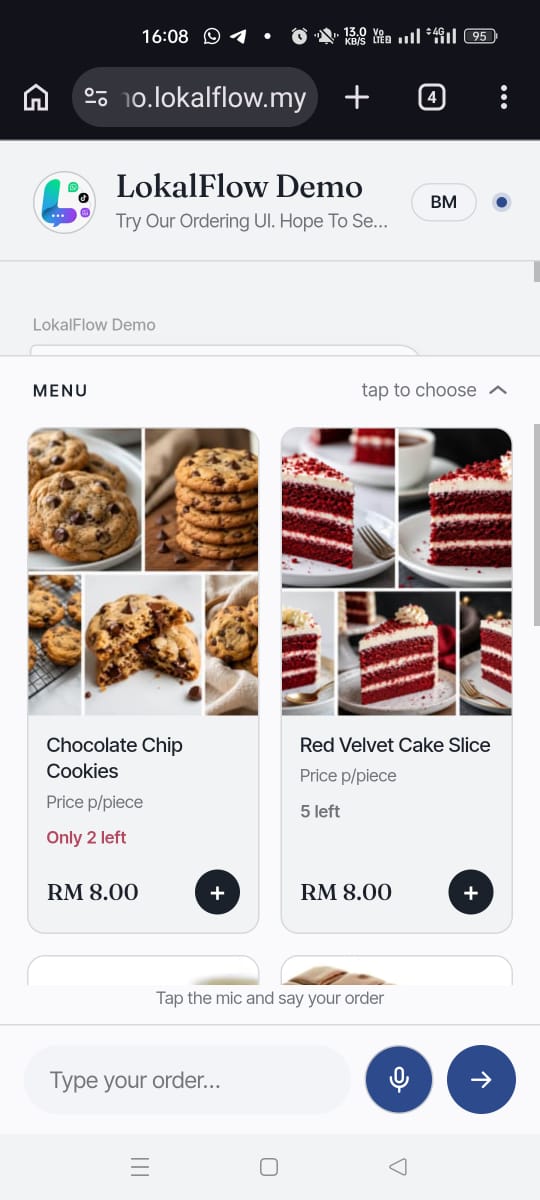
Ordering UI. Similar to any chat UI.
-
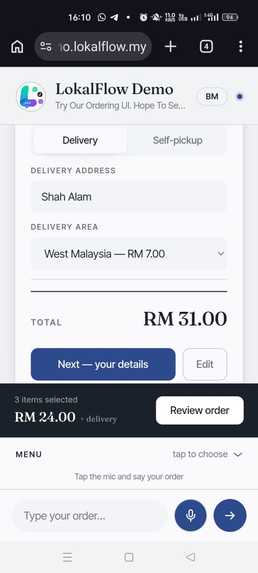
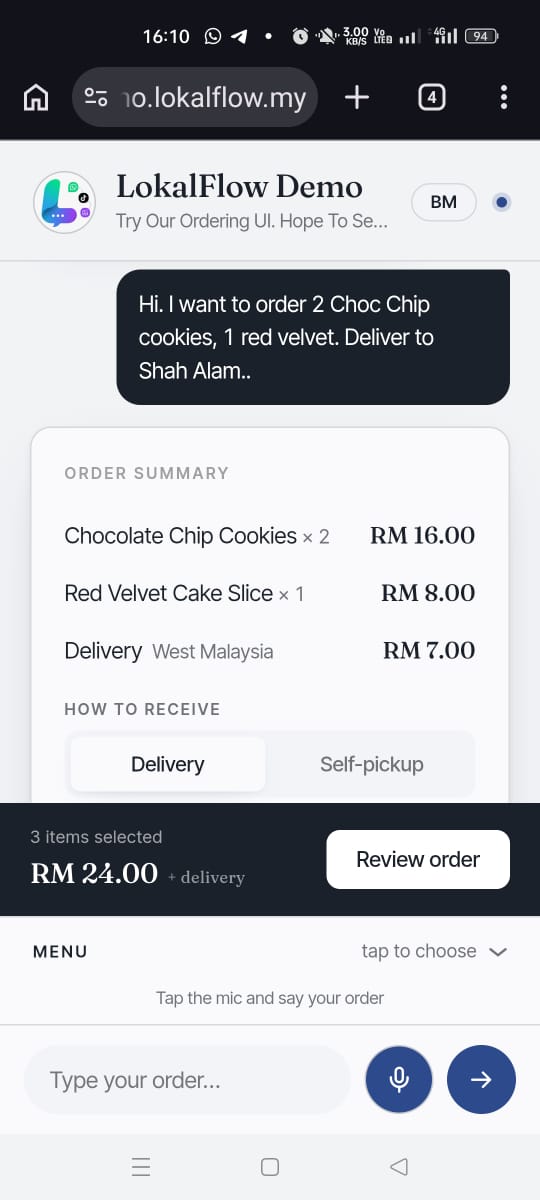
Ordering UI - Gemini parses & captures menu details
-
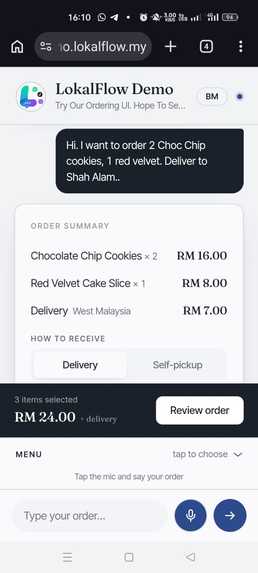
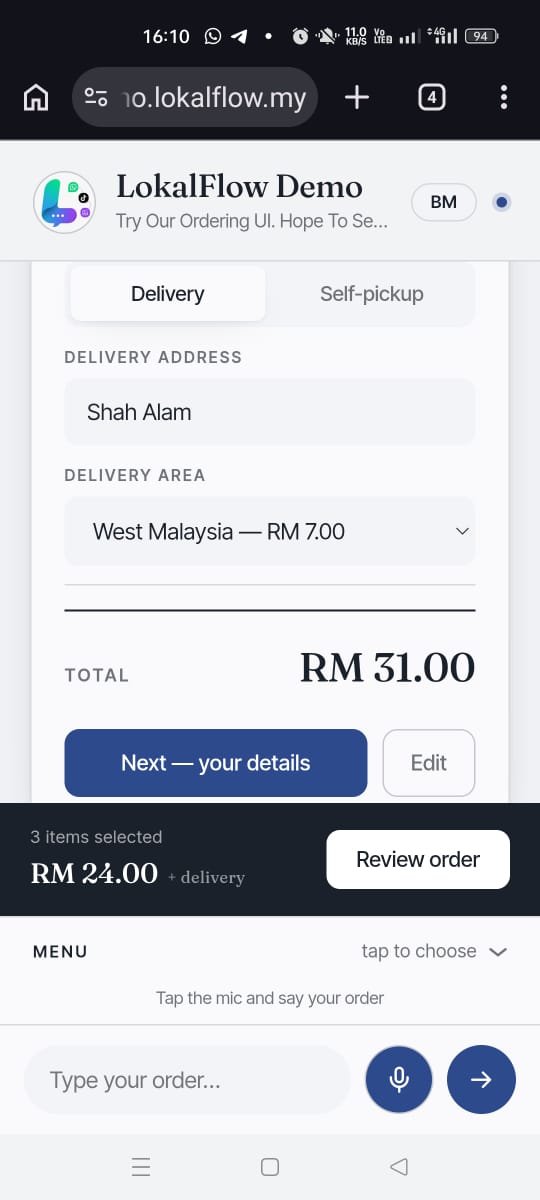
Ordering UI - Gemini parses & captures delivery location
-
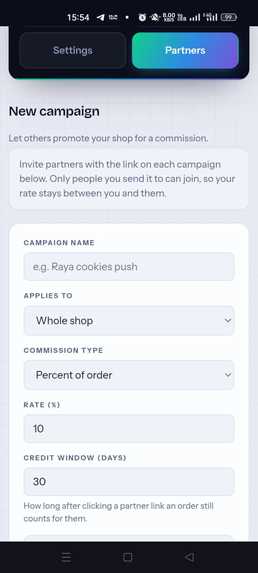
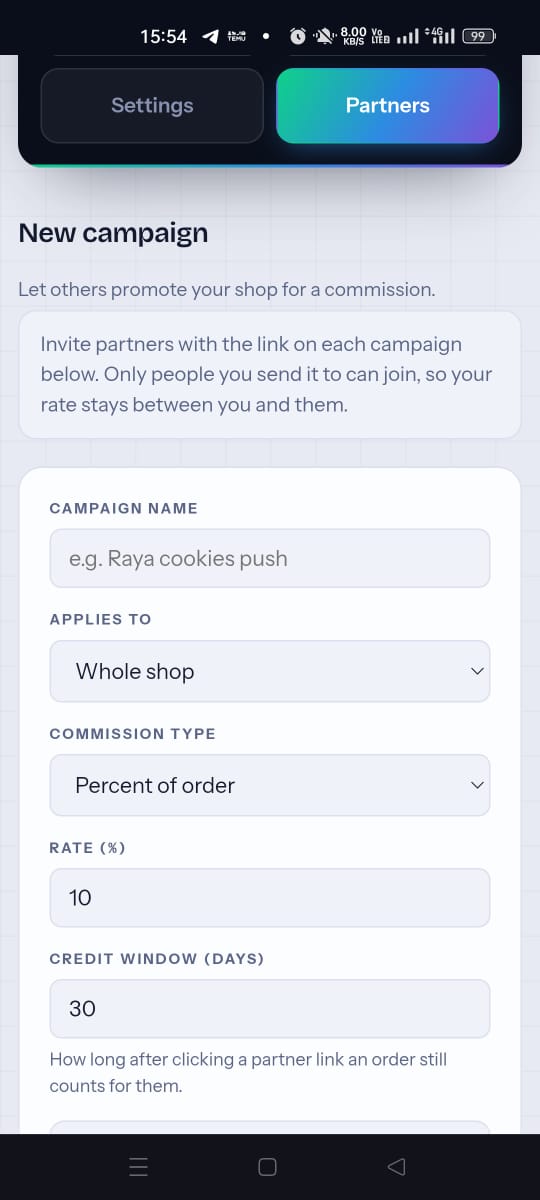
Seller setting Affiliate Campaign
-
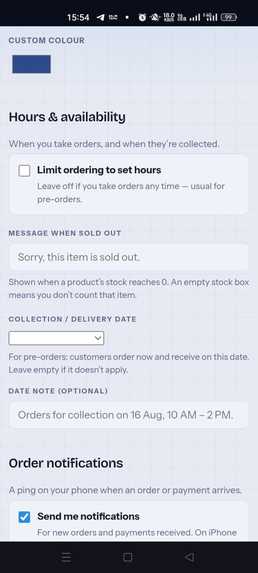
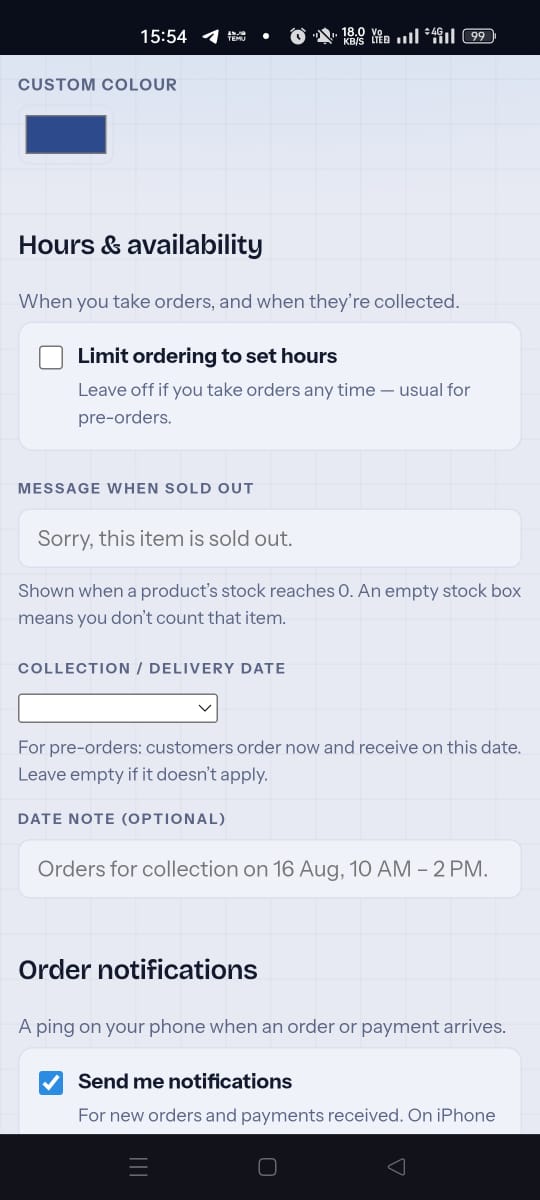
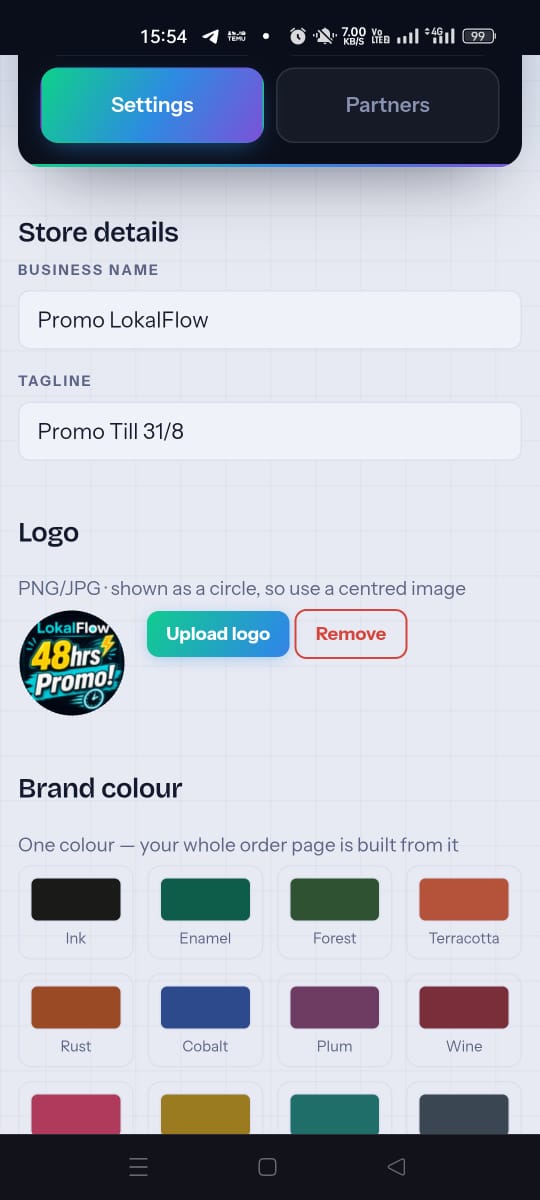
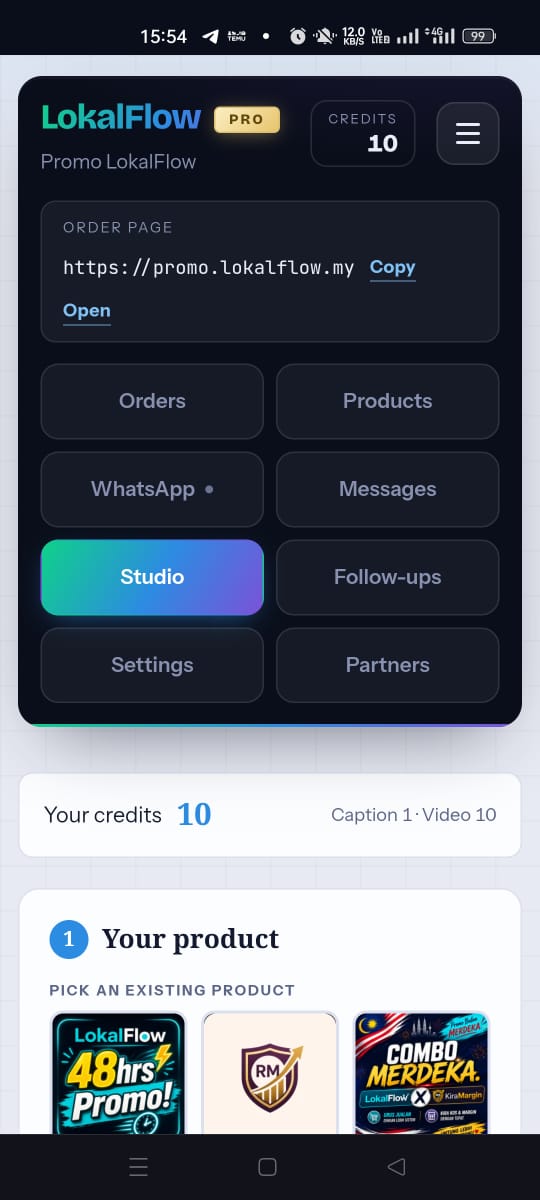
Settings UI in Seller Dashboard
-
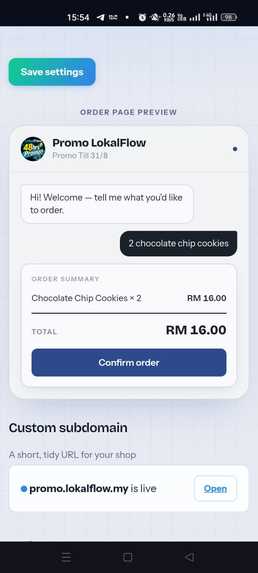
Place order once order is confirmed.
-
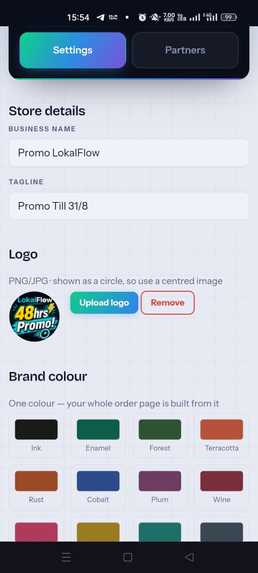
Settings UI in Seller Dashboard
-
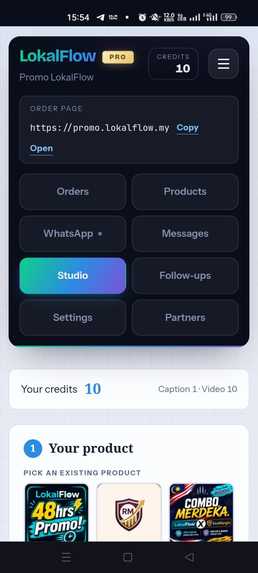
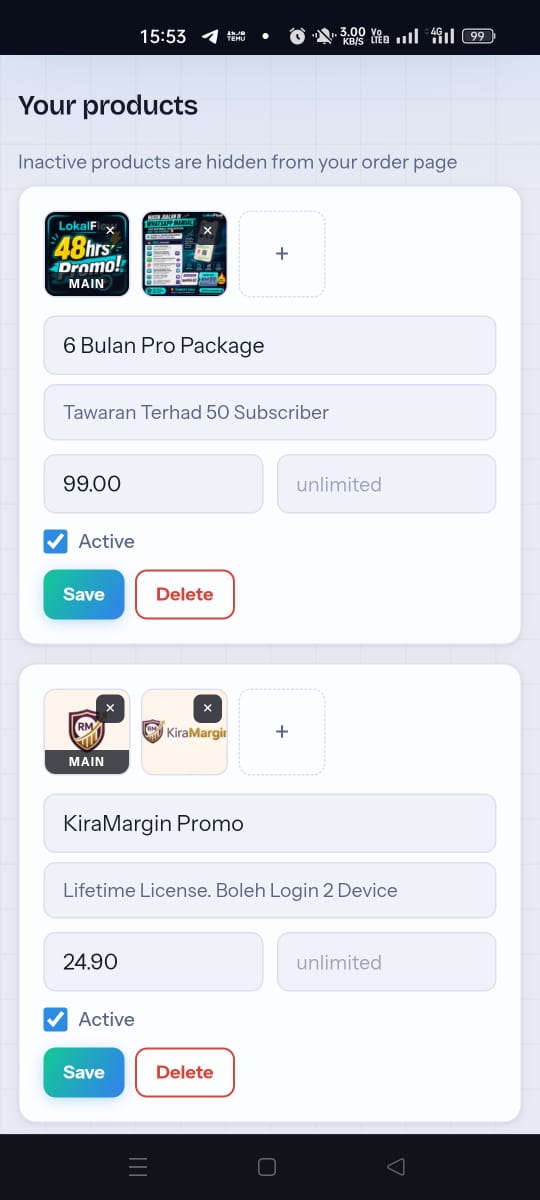
Product Page in Seller Dashboard
-
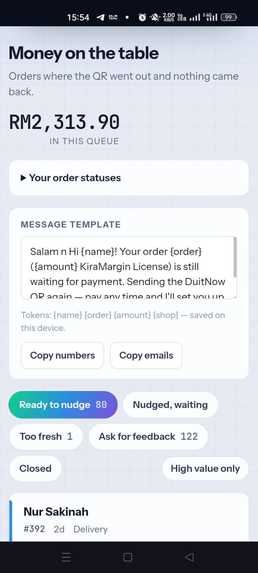
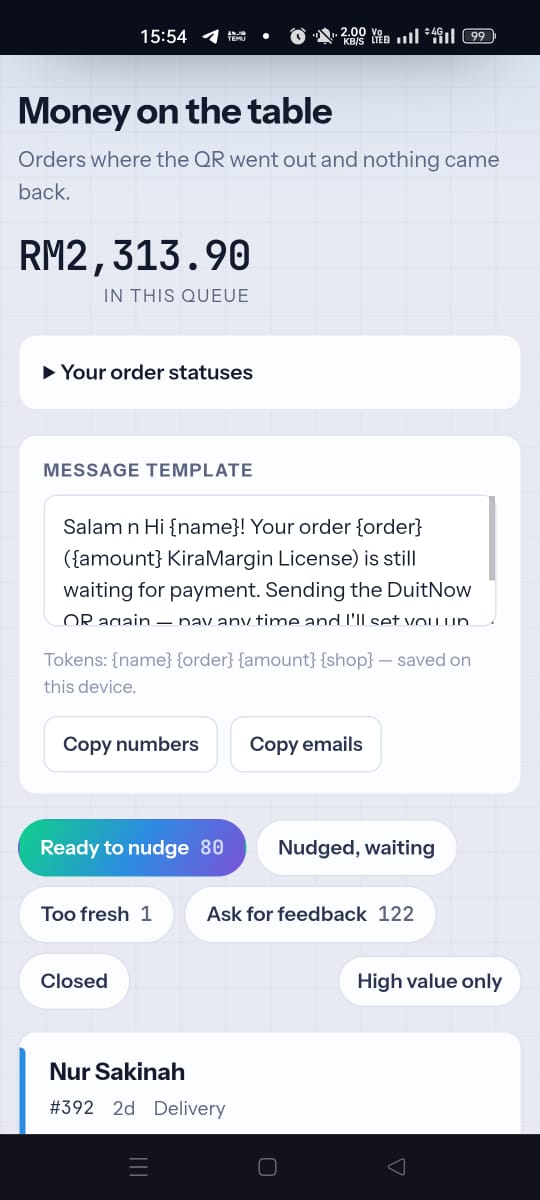
Follow Up Function in Seller Dashboard
-
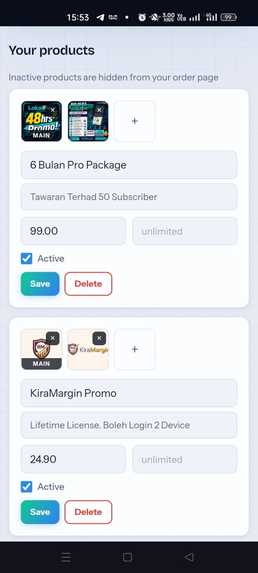
Product Page in Seller Dashboard
-
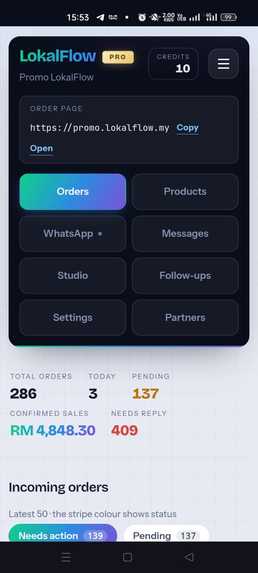
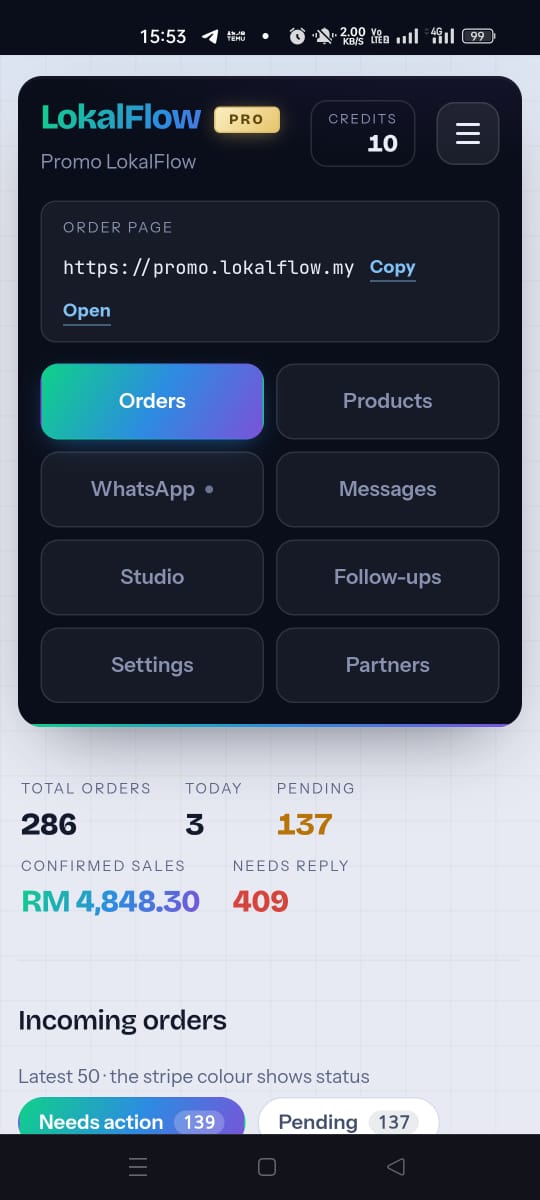
Seller Dashboard
-
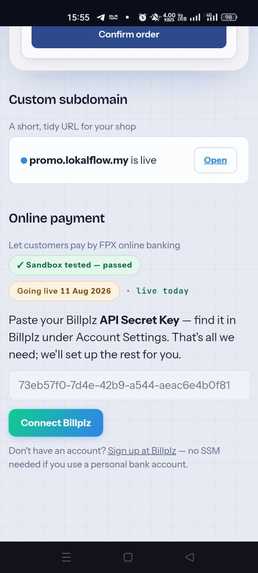
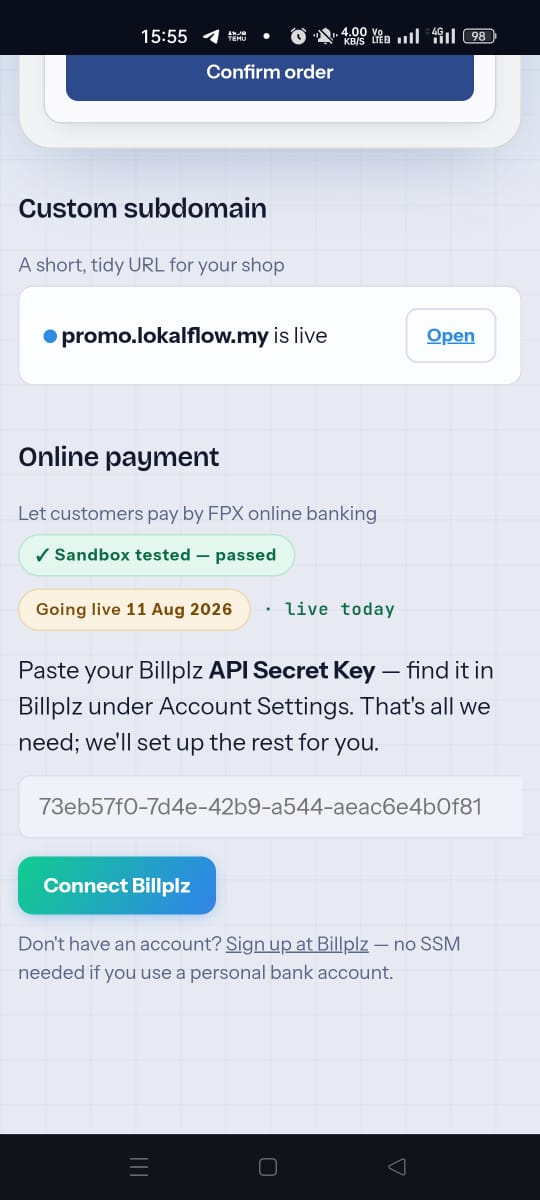
Billplz Integration
-
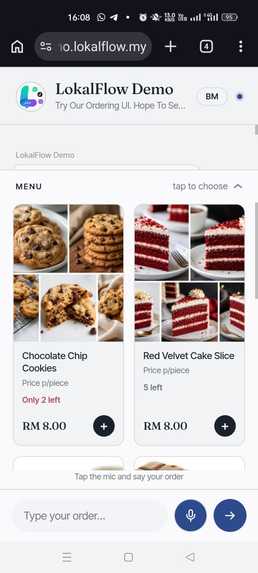
Ordering UI. Menu cart. Max 50 products insertions
About LokalFlow
Inspiration
LokalFlow came directly from my own experience running a home-based food business with my wife.
We sold a product called ChewyChoc, and at one point it went viral. Orders started coming in by the hundreds per day.
That sounds like a good problem to have, until you are the one trying to manage it.
Customers were ordering through chat. We had to keep track of who ordered what, calculate totals, send payment details, check payments, confirm orders, answer repeated questions, and make sure no customer or order disappeared inside a long WhatsApp conversation.
There was no proper system behind it.
The more orders came in, the more time we spent doing admin instead of producing, selling and serving customers. It became obvious to me that many small Malaysian businesses do not have a sales problem first. They have an operational problem once the sales actually arrive.
A lot of home-based sellers do not begin with Shopify, a POS system or a CRM. They start with WhatsApp, TikTok, Instagram and a DuitNow QR code.
LokalFlow was built for that reality.
I wanted to create the system I wish my wife and I had when ChewyChoc went viral: something simple enough for a small seller, but organised enough to handle serious order volume.
What it does
LokalFlow turns a very manual chat-based selling process into a simple order flow.
Customers can browse products, select what they want, see their order total, provide their details and proceed with payment through a mobile-first ordering experience.
For the seller, orders are collected into one dashboard instead of being scattered across conversations.
LokalFlow currently includes features such as:
- Mobile-first customer ordering pages
- WhatsApp-friendly order flow
- AI-assisted order parsing
- Automatic order totals
- DuitNow QR payment support
- Stripe payment support
- Order management dashboard
- Receipts and order records
- Push notifications
- Affiliate campaign management
- Seller-controlled products and ordering settings
The goal is very simple: reduce the amount of repetitive admin work required to complete a sale.
How we built it
LokalFlow was built as a lightweight web application designed specifically for small businesses that may operate almost entirely from a phone.
The product was developed iteratively. I started with the core ordering problem first, then added features only when they supported the actual selling workflow.
Google Gemini is used as the AI reasoning layer where unstructured customer order information needs to be understood and converted into something useful for the system.
The rest of the platform remains conventional application logic where deterministic behaviour is more appropriate. Totals, payments, order records and business rules should not depend on an LLM guessing the answer.
I also designed LokalFlow as a Progressive Web App so sellers can use it more like an installed application without requiring a traditional App Store or Play Store deployment.
AI tools were a major part of my own development workflow as well. I use AI as an extension of a small product team for coding, debugging, product decisions and iteration, while I remain responsible for what actually goes into production.
Challenges we ran into
The biggest challenge was deciding what not to automate.
Small sellers want less work, but they also need control over their customer relationships, payments and orders. I did not want LokalFlow to become an overly complicated automation platform that makes decisions the seller cannot see.
Another challenge was keeping the experience simple.
Many business tools become powerful by adding menus, settings and configuration. LokalFlow needs to be powerful while still making sense to someone who has been running their entire business from WhatsApp.
Payments were another area that required careful work. LokalFlow needs to support the way Malaysian sellers already collect money, particularly DuitNow QR, while also allowing more structured online payment options such as Stripe.
Finally, building a production product quickly means constantly balancing speed with reliability. Features such as notifications, payments, affiliate tracking and AI-assisted workflows all need to work together without making the core ordering experience fragile.
Accomplishments that we're proud of
The biggest accomplishment for me is that LokalFlow did not stay as a hackathon prototype.
It became a real product.
The system now has a working customer ordering experience, seller dashboard, payment flows, affiliate functionality and push notifications, and it is being introduced to the same small-business community it was originally designed for.
I am also proud that LokalFlow solves a very ordinary problem.
It is not trying to replace every business system a seller owns. It simply takes one of the most common workflows among microbusinesses — receiving and managing orders through chat — and makes it more organised.
As a solo developer, being able to move from idea to a working commercial platform this quickly is also evidence of how much leverage AI-native development can give a very small company.
What we learned
The biggest lesson was that small businesses do not necessarily need more software.
They need less friction.
A technically impressive feature is useless if the seller has to learn an entirely new way of doing business before they can benefit from it.
I also learned that AI works best in LokalFlow when it handles ambiguity.
Customer messages can be messy, incomplete and written naturally. That is where an LLM provides real value. The moment we already have structured information, normal application logic is often faster, cheaper and more reliable.
Another lesson was that local context matters.
A Malaysian microbusiness using WhatsApp and DuitNow QR operates differently from a company that begins with a traditional ecommerce stack. Building around those existing behaviours makes adoption much easier.
What's next for LokalFlow
The immediate goal is to get more real sellers using LokalFlow and learn from how they actually use it.
From there, I want to improve the AI layer so LokalFlow can understand more natural customer ordering behaviour while still keeping the seller in control.
I also want to continue improving integrations, analytics, payment options, affiliate tools and the seller dashboard as the user base grows.
Longer term, I see LokalFlow becoming the operational sales layer for small businesses that have outgrown managing everything manually but are still too small to want complicated enterprise software.
The ambition is not to make small sellers behave like large companies.
It is to give them the tools to operate professionally without losing the simplicity that allowed them to start in the first place.
Built With
- api
- billplz
- cloudinary
- gemini
- javascript
- mysql/mariadb
- php

Log in or sign up for Devpost to join the conversation.