-
-
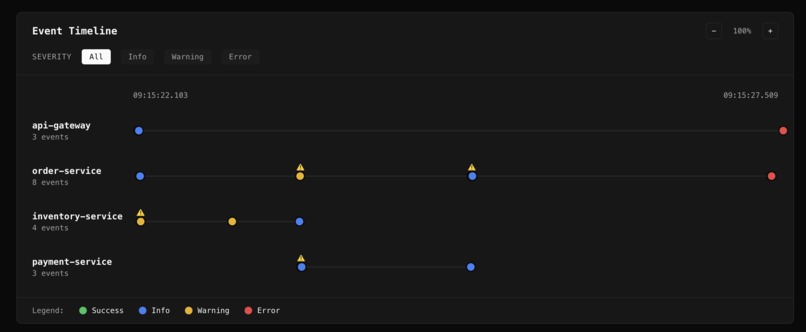
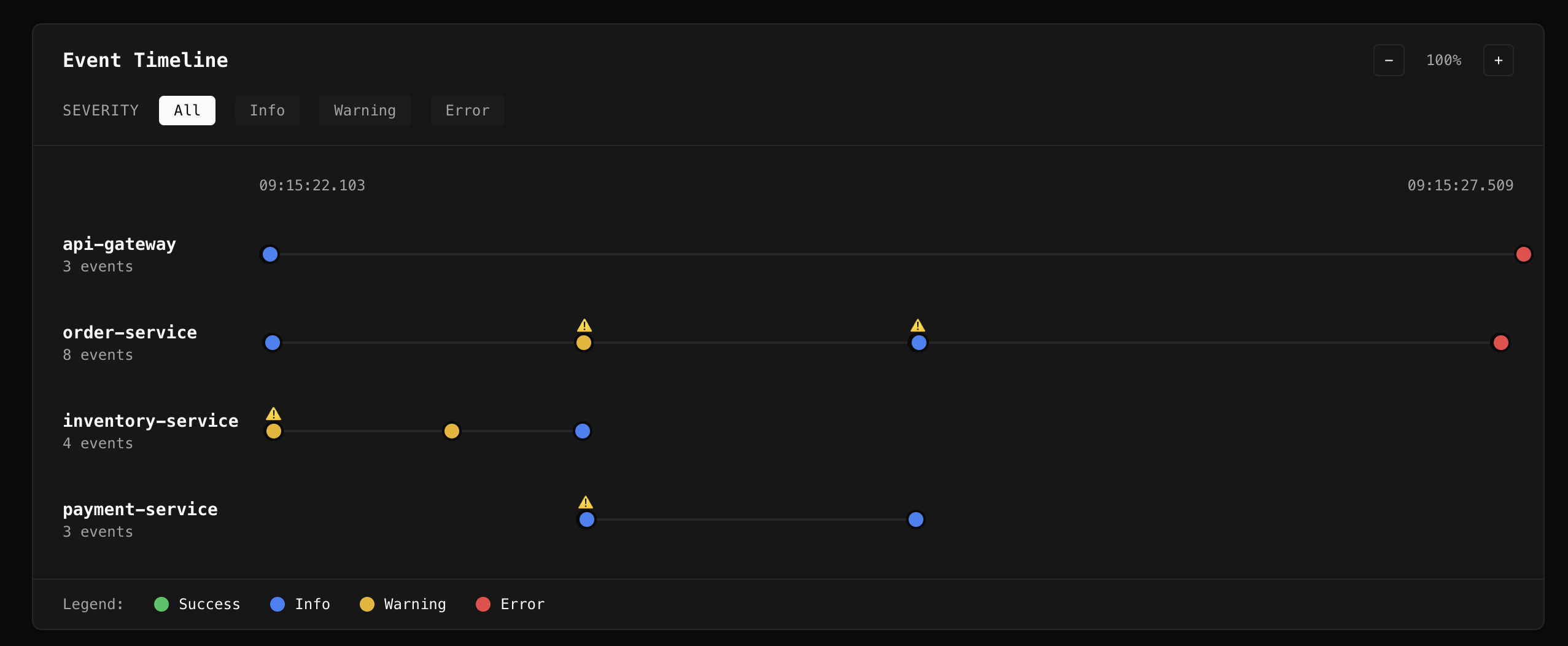
Analysis Middle - Event Timeline
-
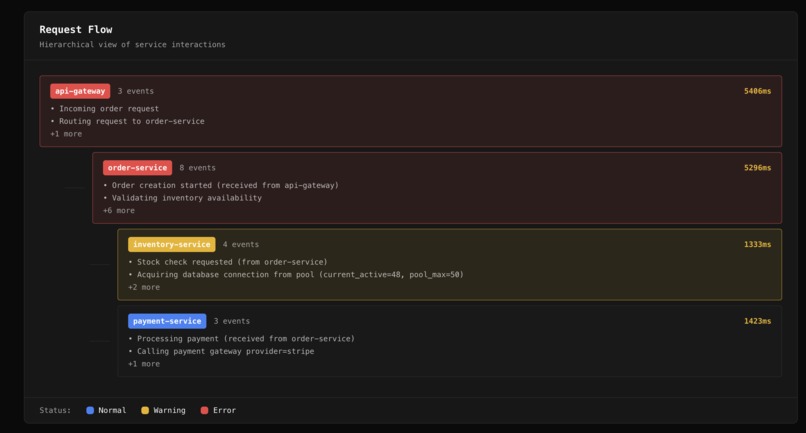
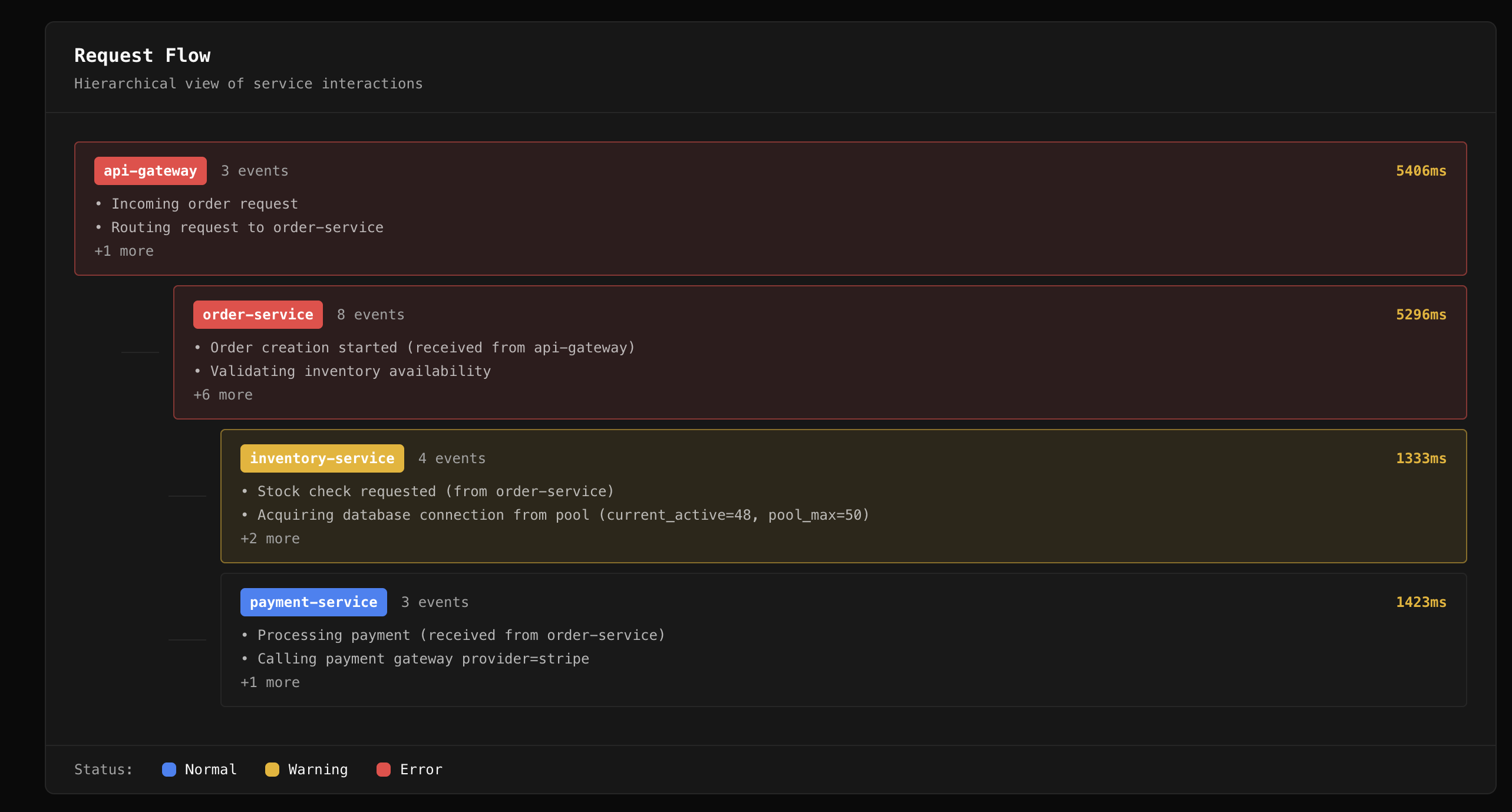
Analysis End - Service Hierarchy View
-
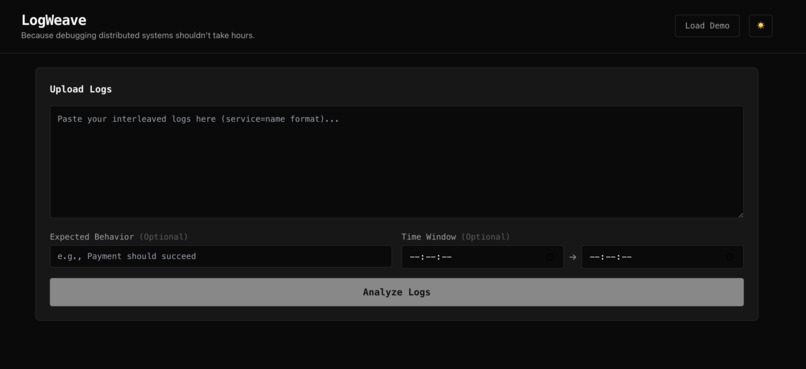
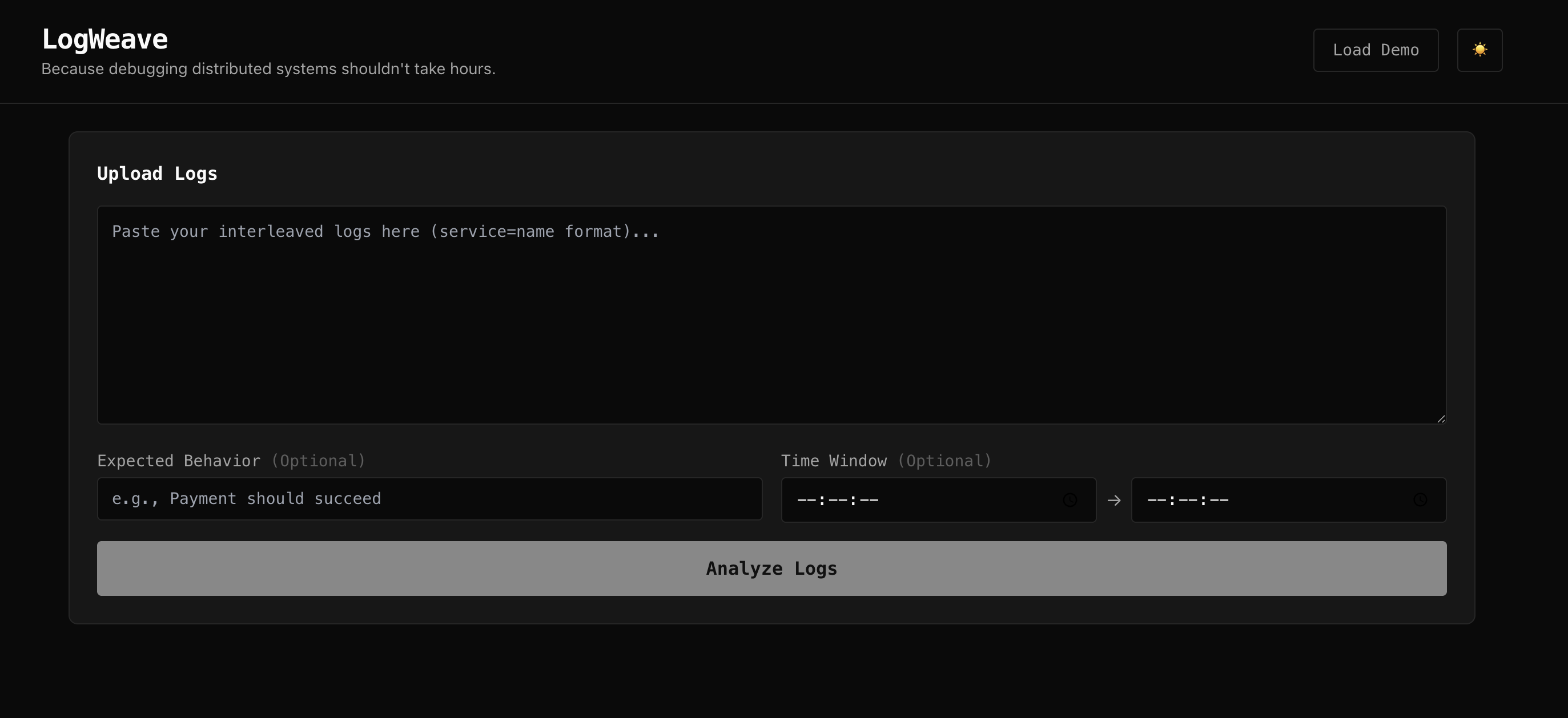
Landing Page
-
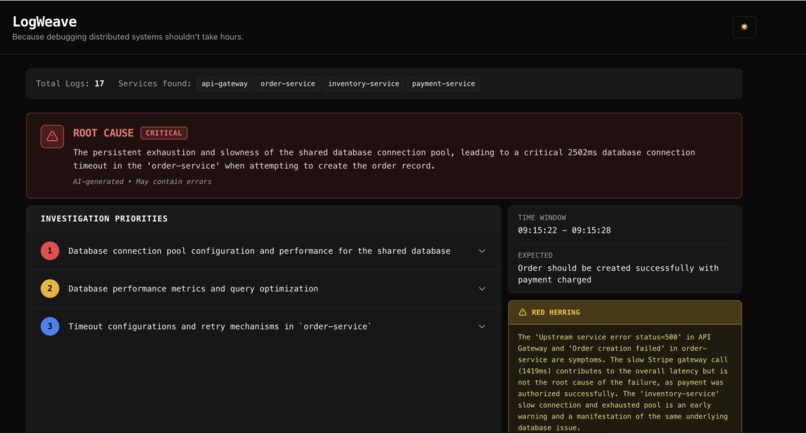
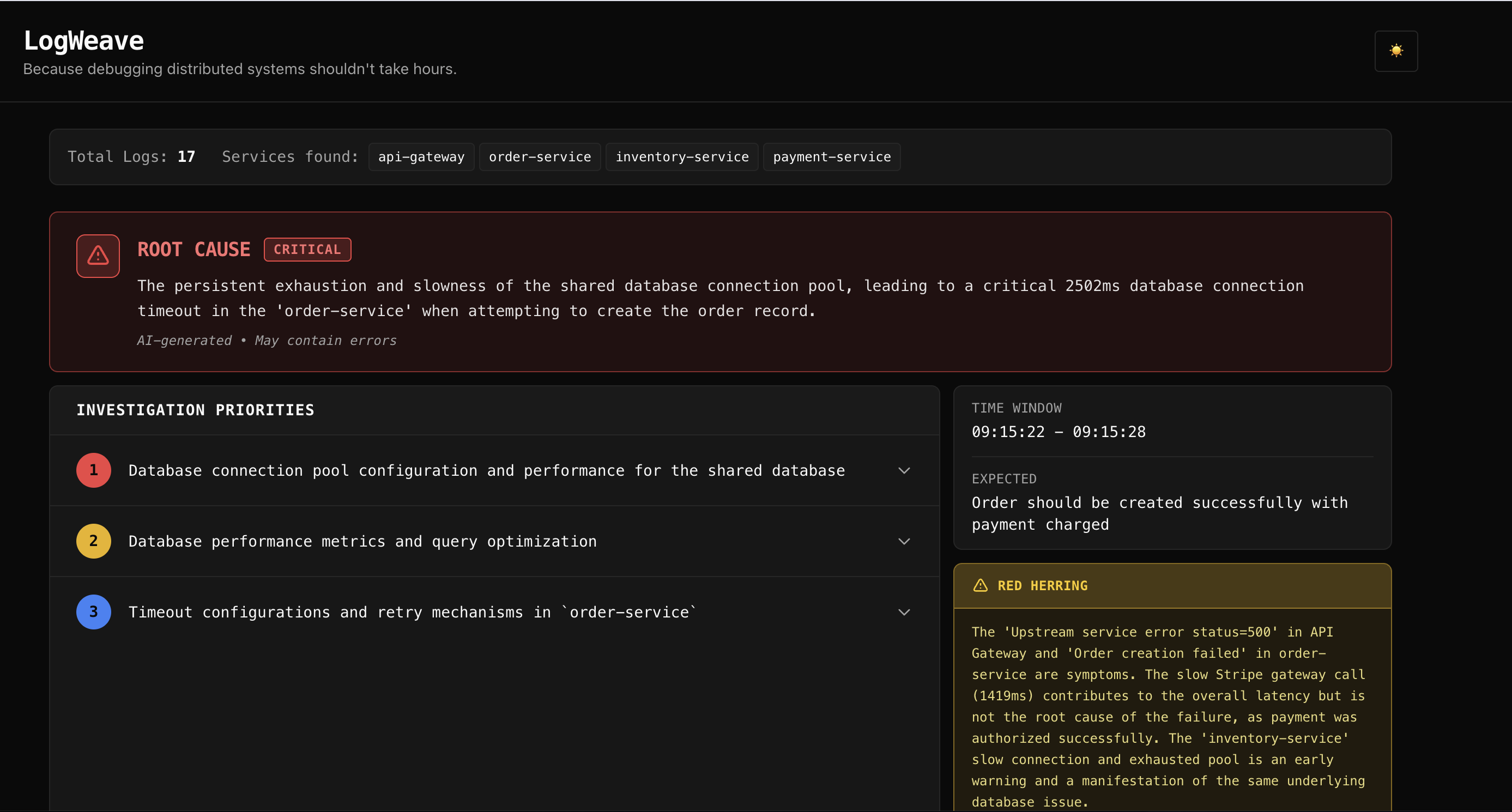
Analysis Header - Root cause, Red herring
Inspiration
Engineers waste hours triaging distributed systems failures across interleaved logs from multiple microservices. And sometimes what you need is some visualization to better understand the flow and connect the dots. Why not let Gemini do its own reasoning to identify issue in seconds. Because debugging distributed systems shouldn't take hours.
What it does
LogWeave uses Gemini 3 to:
- Reconstruct chronological timelines across services
- Detect ambiguous event ordering and clock skew
- Identify root causes vs misleading symptoms
- Visualize request flows through distributed traces
How we built it
Tech Stack Next.js 14, TypeScript, Tailwind CSS Gemini 3 Flash API Prompt engineering, log parsing & trace correlation
Architecture Flow: Engineer → Upload Logs → Parser → Gemini 3 → Root Cause + Timeline + Flow → Analysis UI
Challenges we ran into
If logs are poorly construcuted it is hard to get meaningful result - so good logging should include timestamps, log level, debug logs, trace id, and span id is bonus for hierarchy view and have good context on error message.
Accomplishments that we're proud of
- Gemini identifying Red herring -- cause this is what makes most issue triaging complicated.
- Visual representation - event timeline, hierarchy -- As a software engineer I wish this service would've existed couple of years back!
What we learned
- Writing great prompt,
- Deploying demo projects fast
- Making ideas a live!
What's next for LogWeave
- One click import from company centralized log service (Elsatic Search instead manually typing)
- More integrations with other real services even before the issues happen.
Built With
- next.js
- tailwind
- typescript

Log in or sign up for Devpost to join the conversation.