Inspiration
As a small Etsy seller, I was drowning in manual shipping tasks—comparing rates across carriers, printing labels in batches, and chasing down tracking updates. I saw other small business owners struggling with the same pain points: shipping was eating into profits and time better spent growing their businesses. That’s when I set out to build LogisticsAgent—an all-in-one tool that takes the hassle out of shipping for sellers moving 50-500 packages a month.
What it does
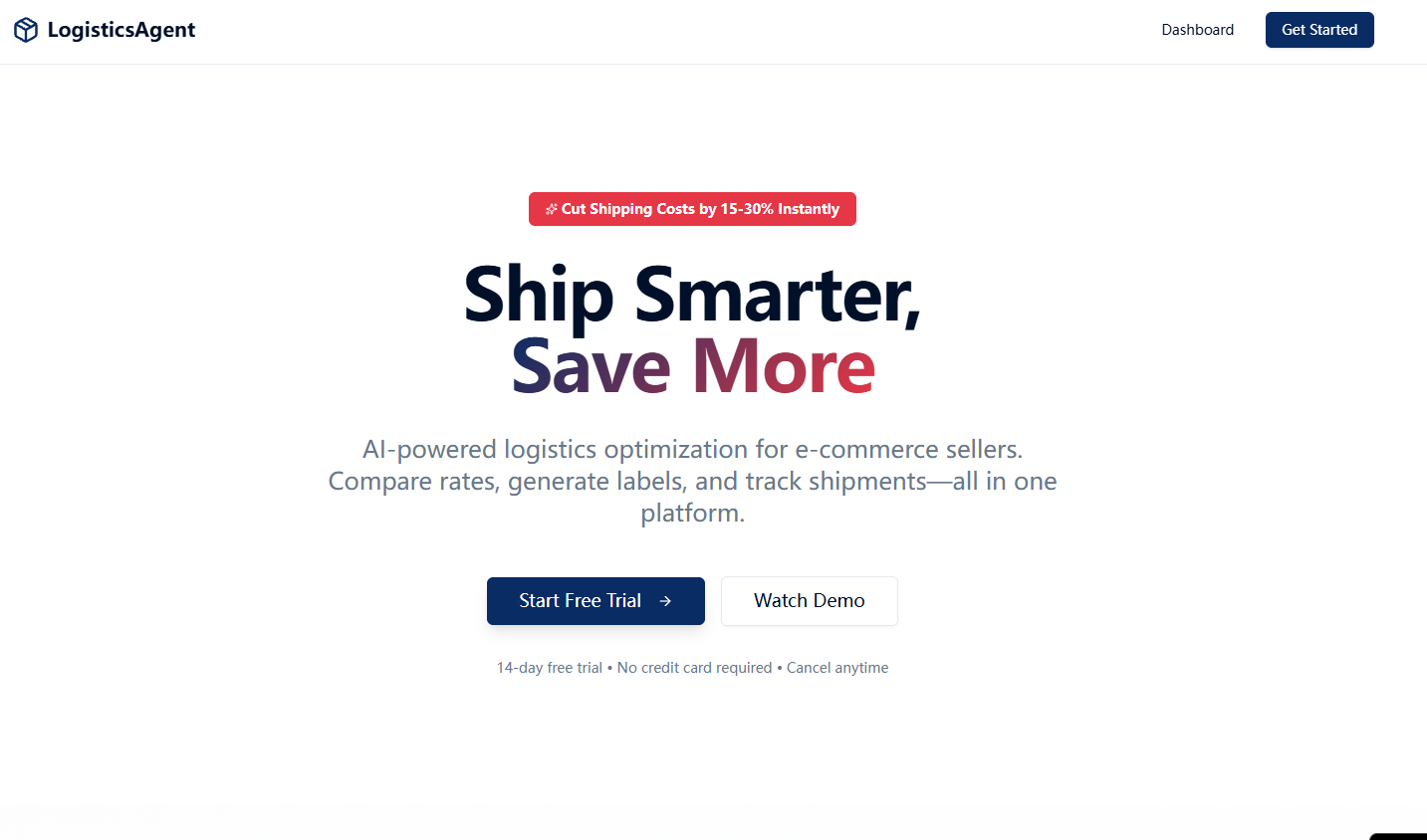
LogisticsAgent automates shipping optimization: it syncs orders from Shopify/Etsy/eBay, compares real-time carrier rates to find the cheapest options (powered by AI recommendations), generates bulk shipping/return labels, tracks deliveries with visual timelines, and sends automated customer notifications—all with smooth, intuitive animations and real-time analytics to show cost savings.
How we built it
We started by mapping core user workflows (rate comparison, label generation, tracking) and designing a UI focused on visual clarity and interactivity. The frontend was built with React and Tailwind CSS, using Chart.js for animated data visualizations. The backend (Node.js/Express) connects to carrier/e-commerce APIs for real-time data sync, with MongoDB storing order/shipping data on AWS. We integrated WebSockets for live tracking updates and Stripe for billing, prioritizing smooth animations and responsive design for small business users.
Challenges we ran into
The biggest hurdle was syncing real-time rate data across multiple carrier APIs—each had different rate structures, timeout rules, and error handling. We also struggled with optimizing animation performance on lower-end devices, and ensuring address validation worked seamlessly across US/EU address formats. Bulk label generation often hit rate limits with carrier APIs, requiring us to build batch processing with progress indicators and retry logic.
Accomplishments that we're proud of
We built a platform that cuts average shipping costs by 15-20% for early users, with a UI that’s intuitive even for non-technical sellers. The AI rate recommendation engine consistently picks the cheapest reliable option, and the bulk label tool processes 100 labels in under a minute—saving users hours weekly. We’re proud of the real-time tracking timeline and automated notifications, which reduce customer support queries about deliveries.
What we learned
We learned the critical importance of API resilience—building fallback logic for carrier API timeouts and errors is non-negotiable for a tool that relies on real-time data. We also realized small business users prioritize simplicity over complexity: even advanced features (like savings analytics) need to be presented with clear, animated visuals, not spreadsheets. Finally, we learned that addressing regional nuances (EU vs US address validation, carrier options) is key to serving our target market.
What's next for this project
First, we’ll expand carrier support to include regional European carriers (DHL, Royal Mail) to better serve EU sellers. We’ll add basic customs documentation for cross-border shipping (a top request from users) and refine the AI engine to include predictive cost forecasting. We’re also testing a mobile-responsive web app (no native app yet) and plan to add role-based access for small teams. Long-term, we’ll integrate basic inventory tracking to tie shipping to stock levels—filling a gap our users have highlighted.

Log in or sign up for Devpost to join the conversation.