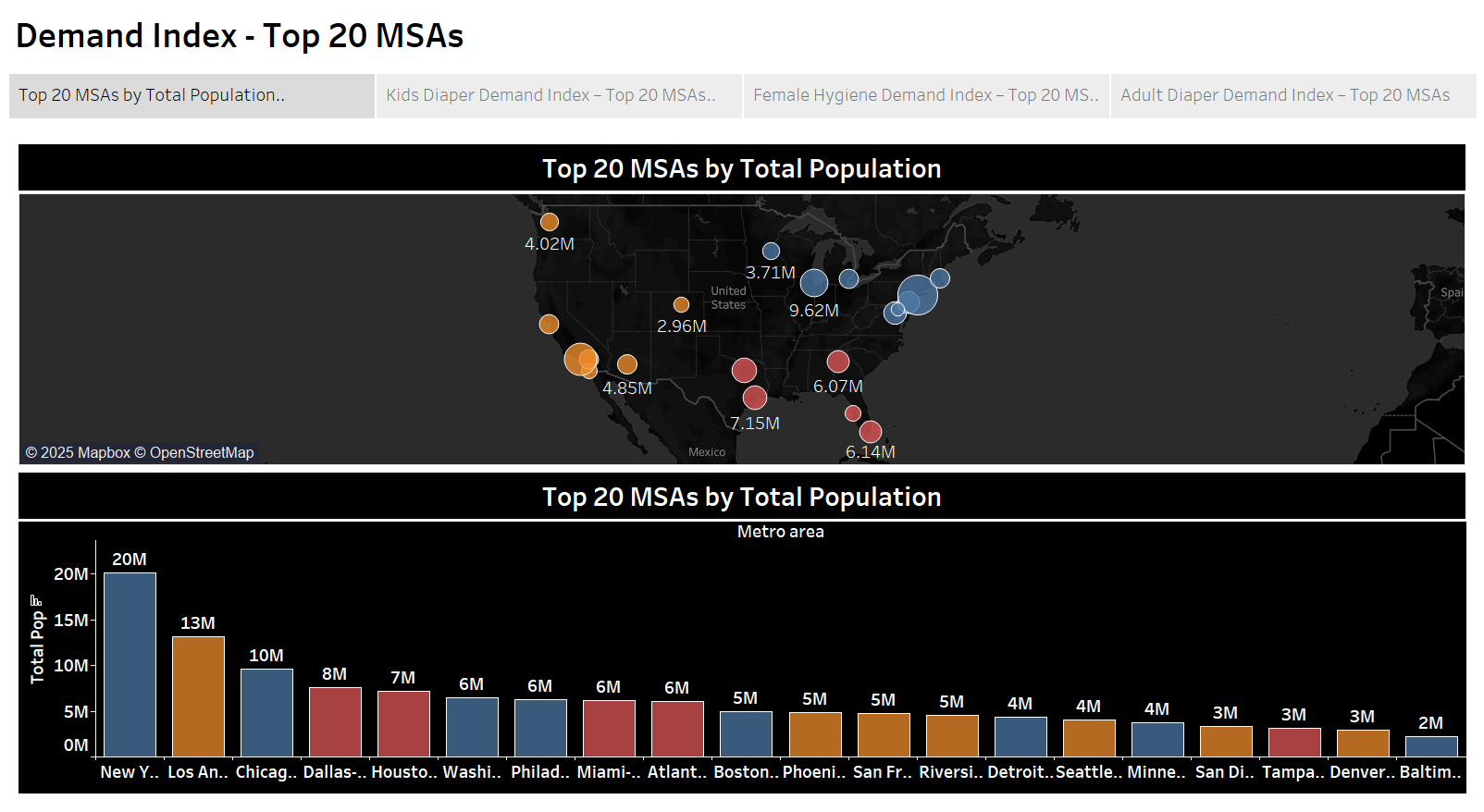
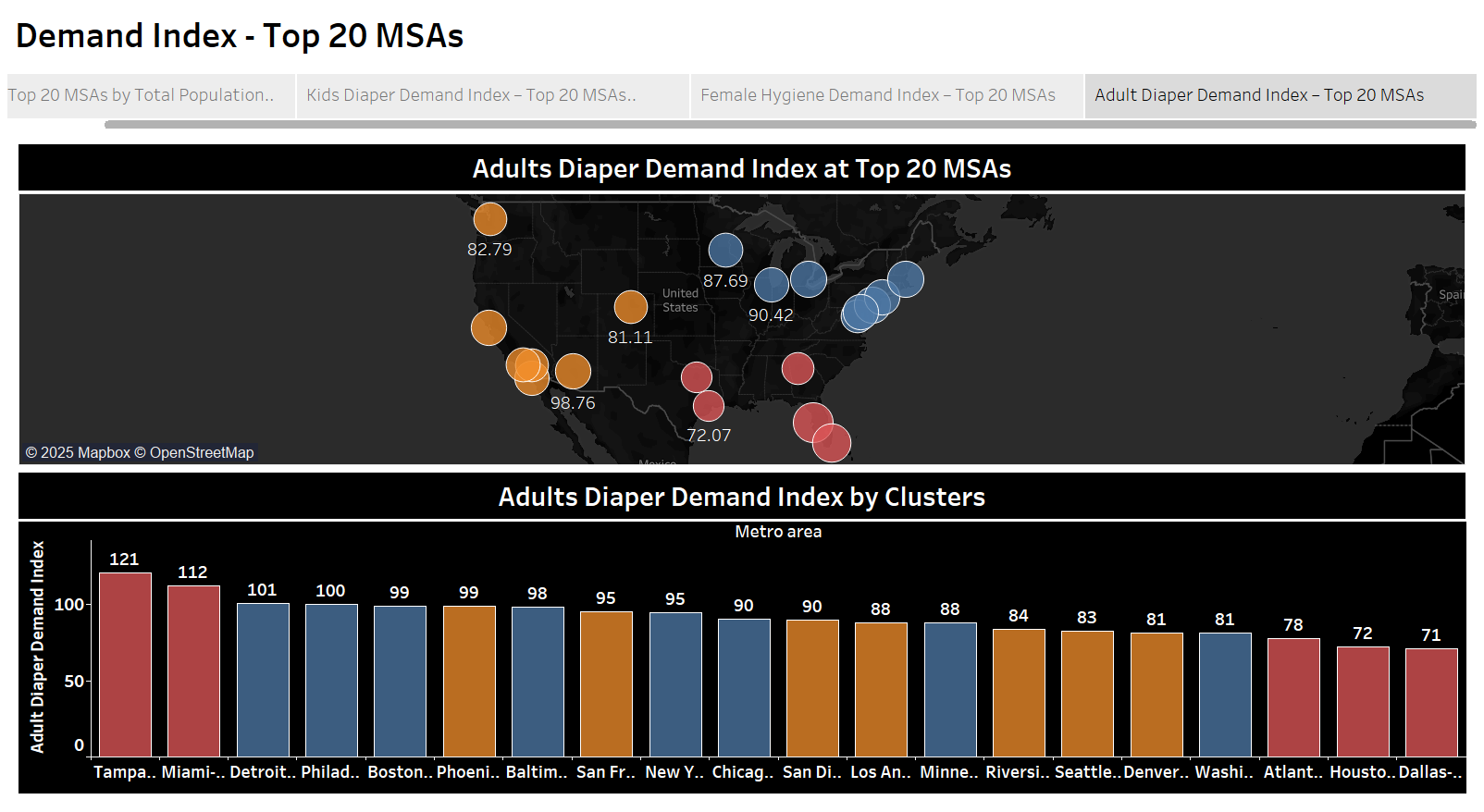
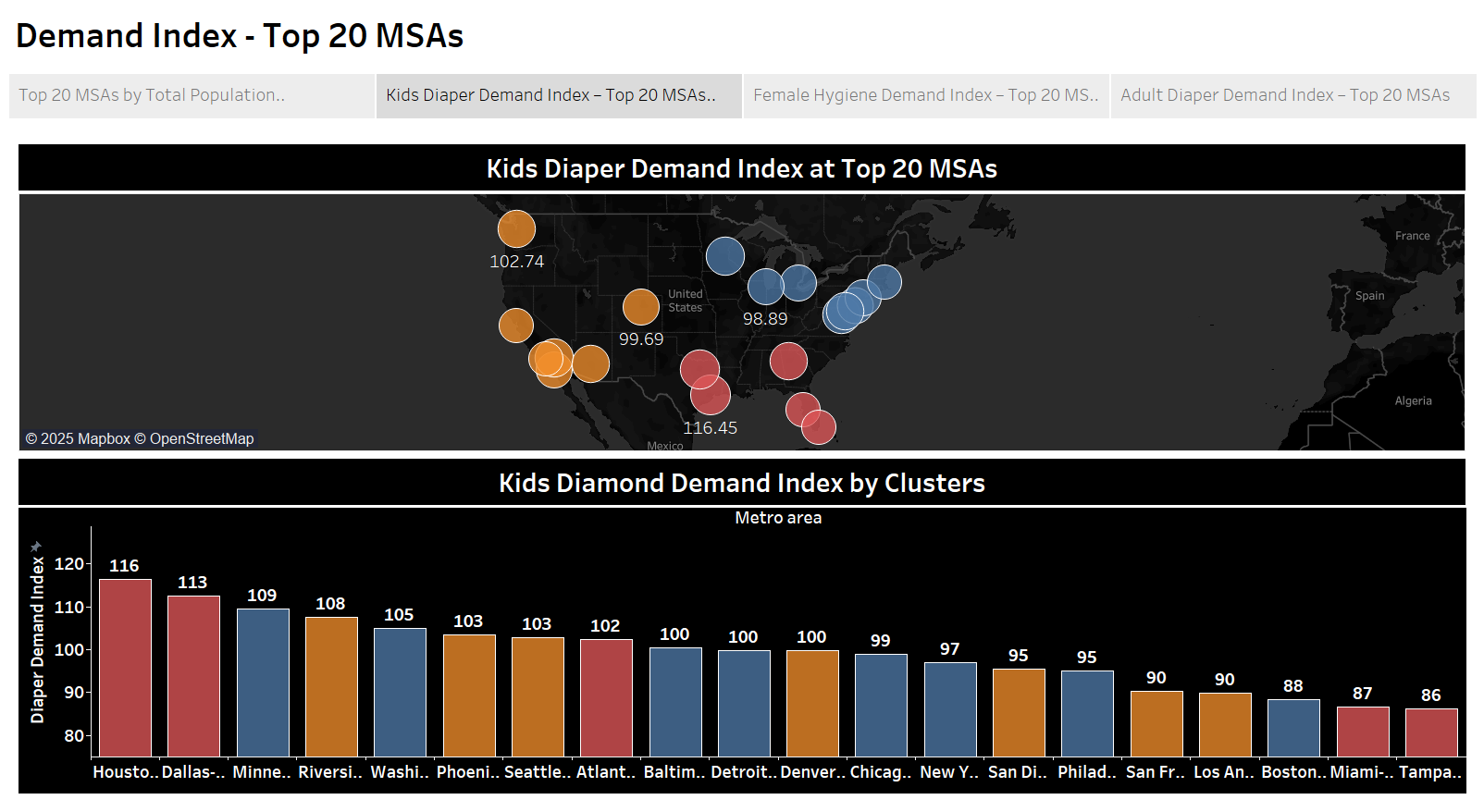
Project Story: Optimizing Tissue Mill Locations for Kimberly-Clark Our project began with identifying the top 20 U.S. metropolitan areas based on Kimberly-Clark’s shipping priorities. Instead of analyzing demand at a general county level, we enriched our model using census data specific to metropolitan regions—capturing deeper insights on population density, household size, income, and age distributions.
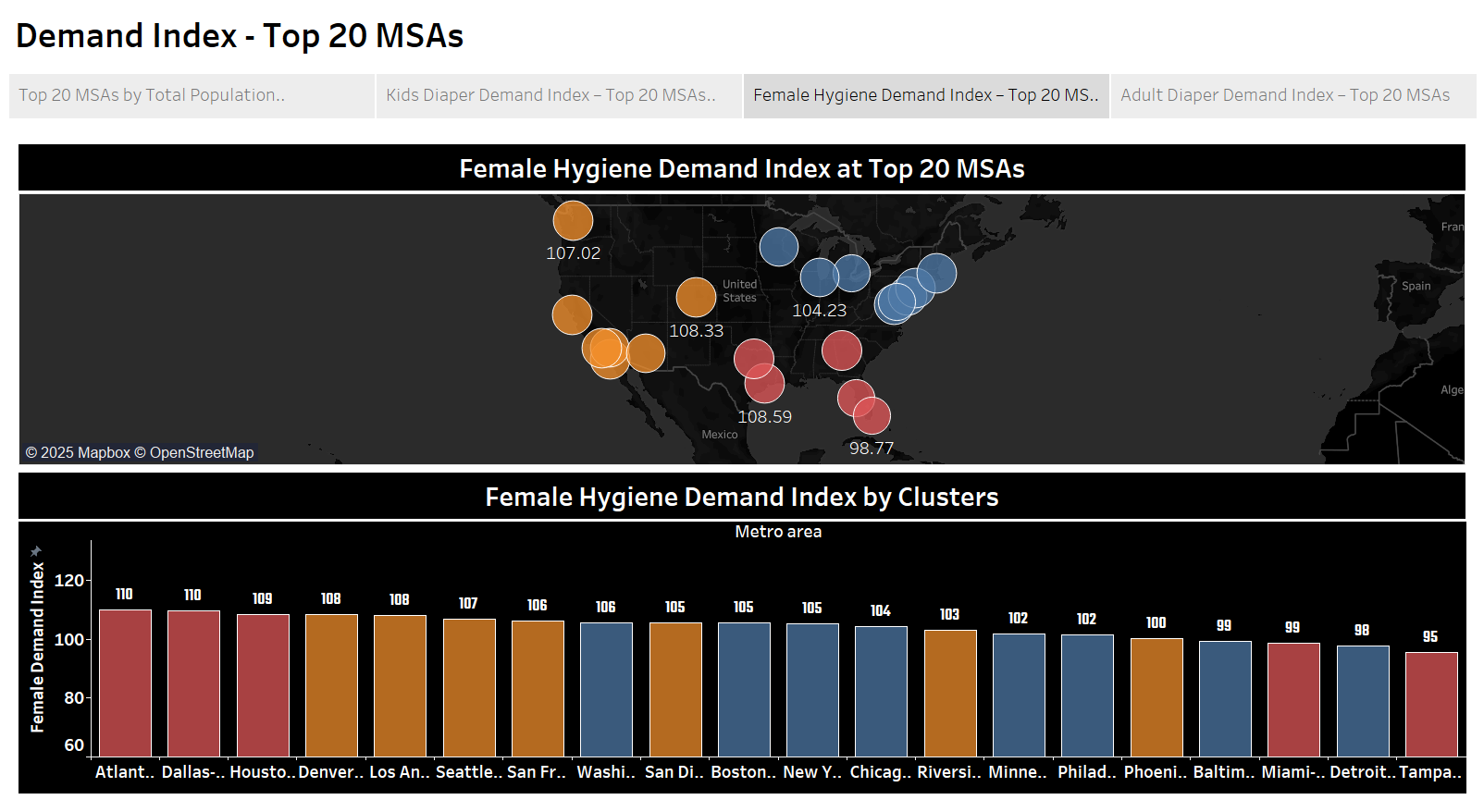
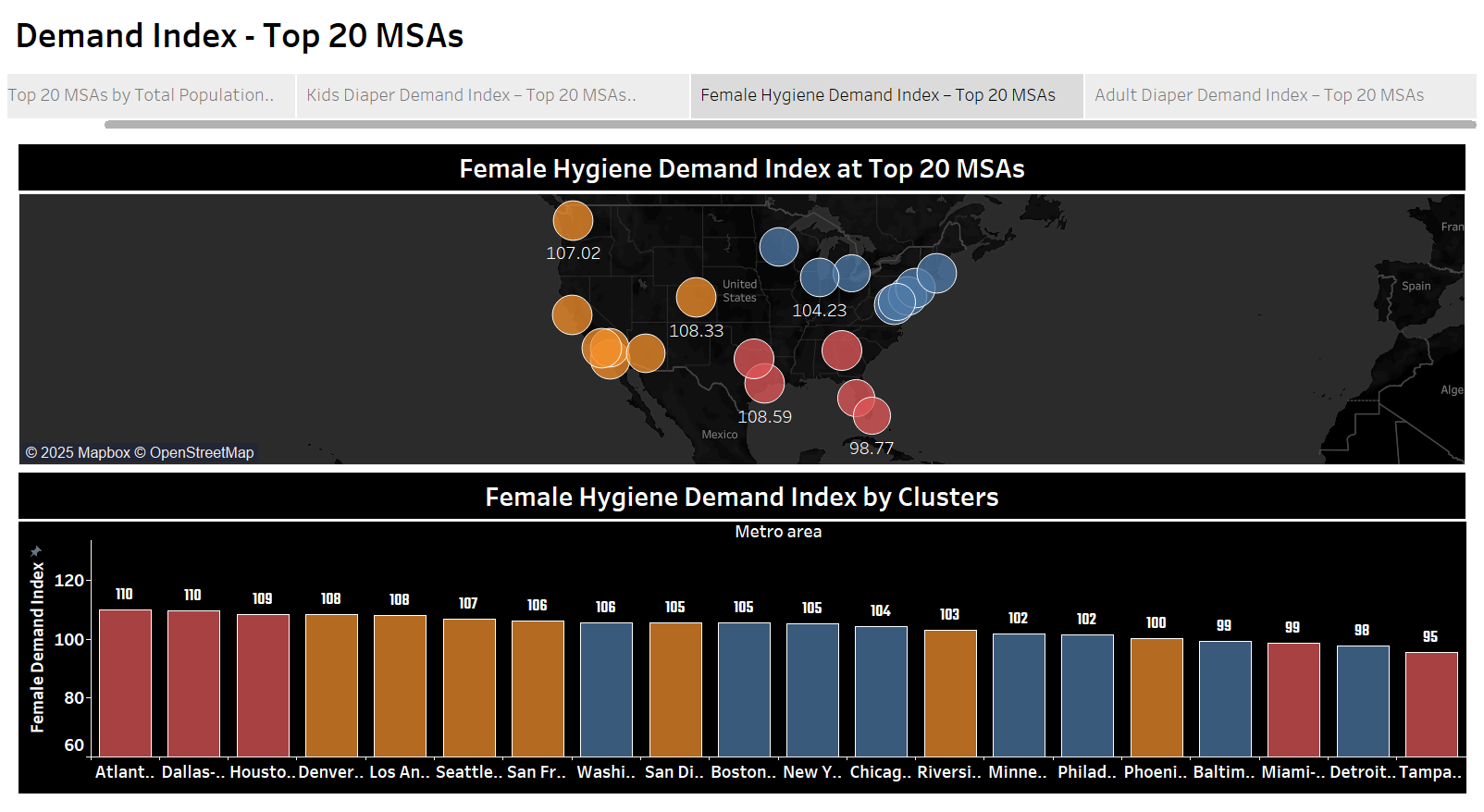
To structure the analysis, we divided the country into five demand clusters, weighted by population and regional spread. From these, we advanced with three priority clusters based on strategic gaps and supply chain needs.
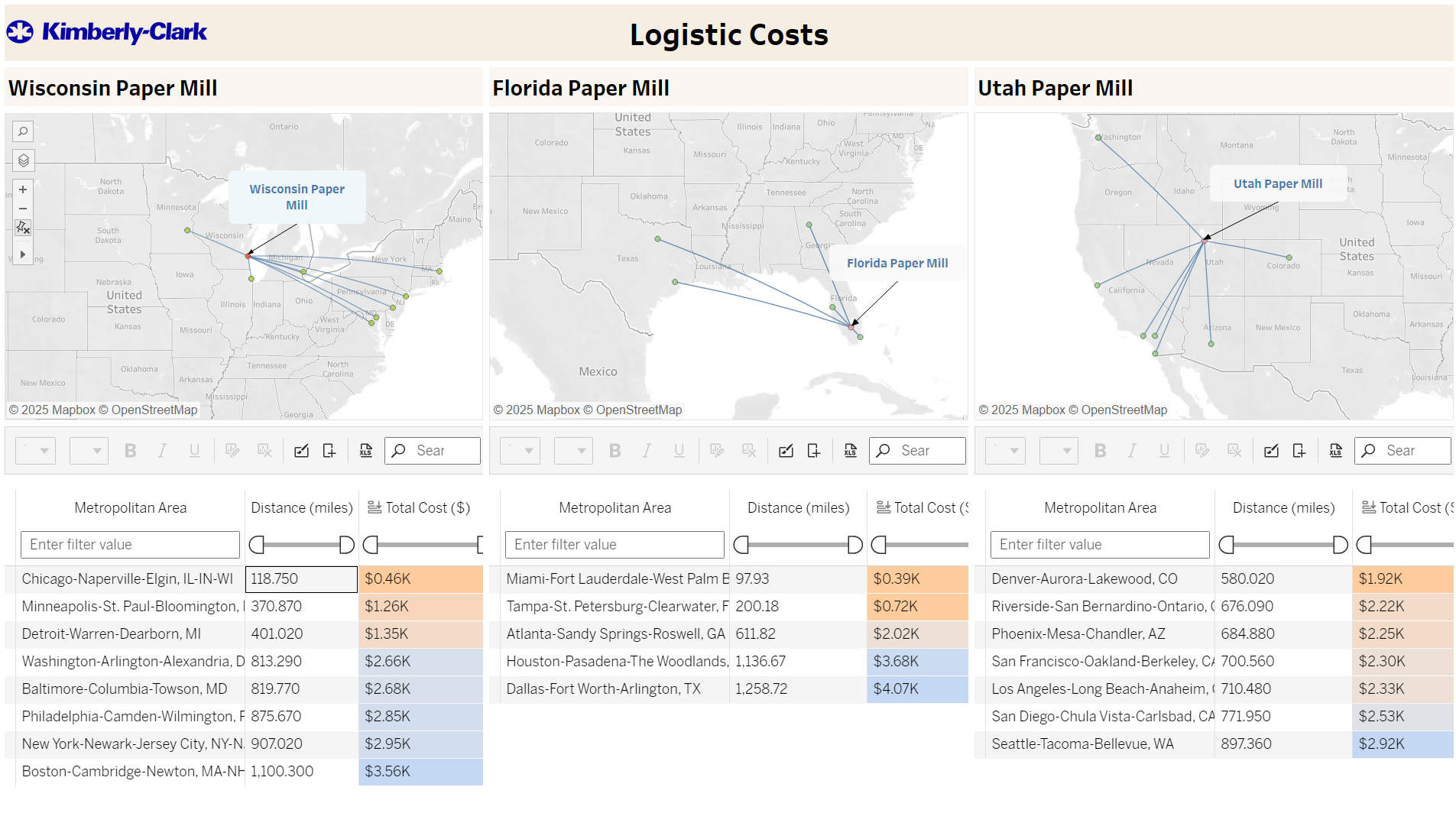
We then developed a demand index per cluster using demographic variables to quantify tissue product demand. With the help of the Google Maps API, we calculated freight distances from hundreds of counties to the top 20 metros and Kimberly-Clark’s existing converting plants.
Following this, we narrowed down candidate counties by analyzing not just logistics but also industrial zoning availability, independence from current mill regions, and regional expansion potential.
For Utah, we went a step further and conducted land parcel detection to identify areas meeting the ideal characteristics for a tissue mill—flat topography, highway access, zoning compliance, and future scalability.
This multi-layered approach allowed us to recommend three optimal mill sites—each backed by data, grounded in strategy, and built for Kimberly-Clark’s next phase of growth.

Log in or sign up for Devpost to join the conversation.