-
-
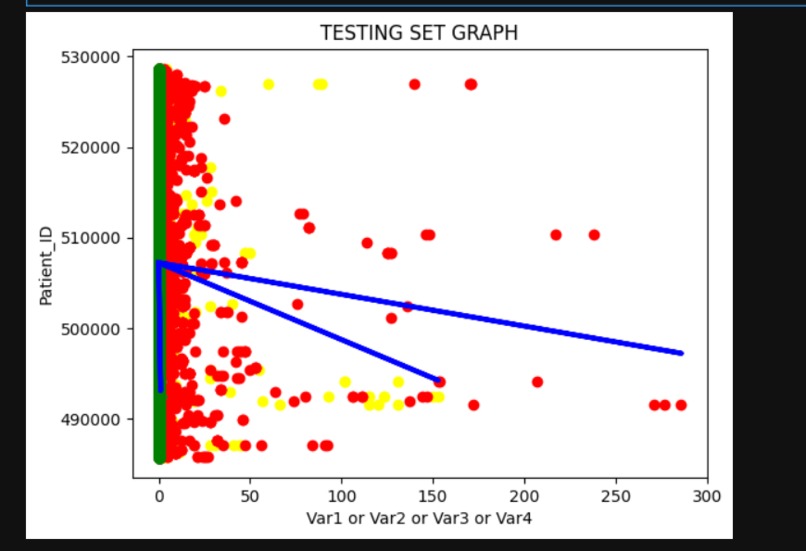
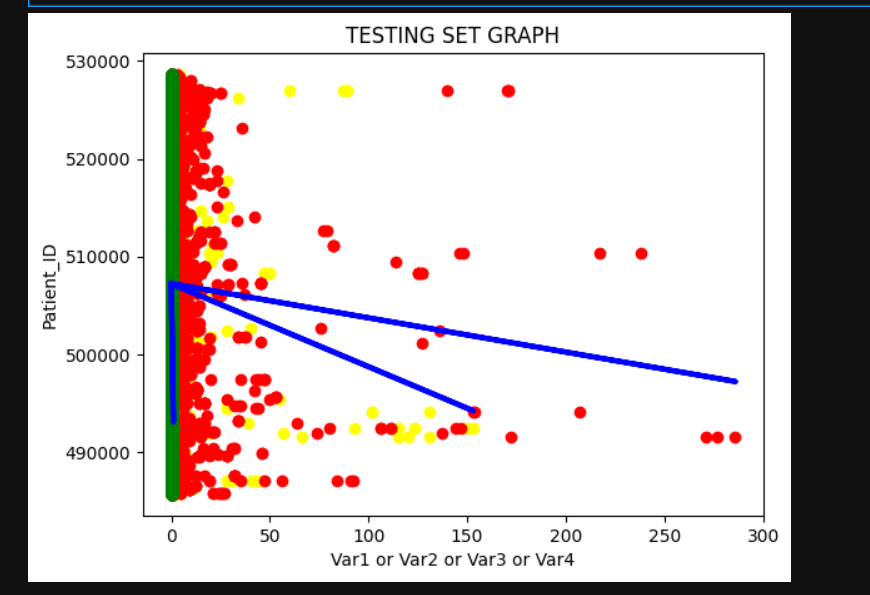
testing set graph - linear regression model
-
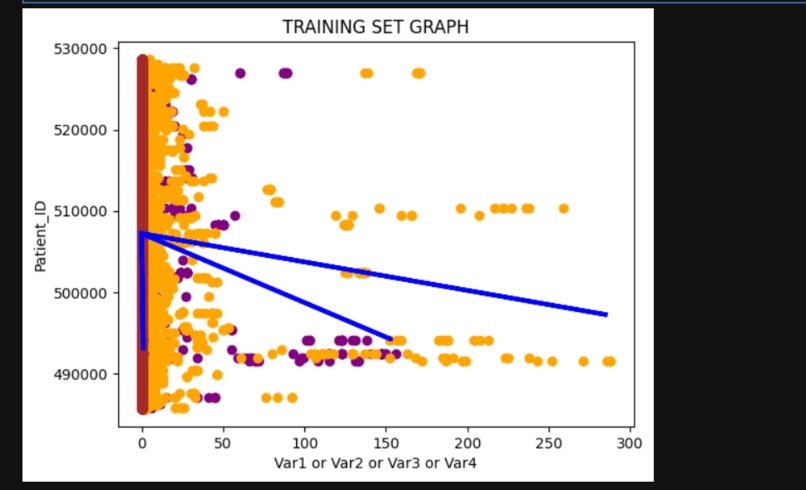
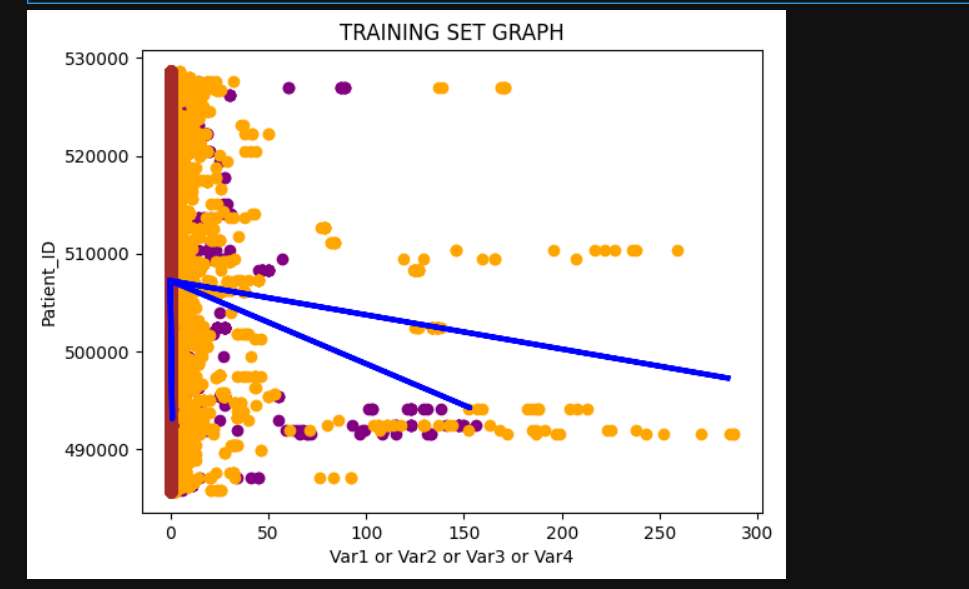
training set graph - linear regression model
Inspiration
The inspiration behind this project was to create a tool that could effectively identify and classify various diseases based on their symptoms. By using logistic regression, we aimed to build a model that could help in accurate and timely diagnoses. We analyzed patient health records to identify patterns in healthcare data that could facilitate improved patient care and management. By using linear regression, we predict patient outcomes for better healthcare planning.
What it does
The logistic regression model uses a dataset comprising various diseases and their corresponding symptoms. It predicts the likelihood of a particular disease based on the symptoms exhibited by a patient. It assists the healthcare professionals to make decisions and providing appropriate treatments. The linear regression model analyzes patient profiles and health camp records to predict trends in patient data and healthcare providers to make easy decisions.
How we built it
We built the regression models using Python and its libraries, including NumPy, Pandas, Matplotlib and scikit-learn. We preprocessed the dataset, checked for duplicates and then trained and tested the model on the processed data.
Challenges we ran into
One of the main challenges we faced was finding a to suitable dataset. We cleaned and preprocessed the dataset to optimize its efficiency. We encountered challenges related to data preprocessing and model optimization.
Accomplishments that we're proud of
We are proud to have successfully developed a reliable logistic regression model that demonstrates high accuracy in classifying diseases based on symptoms and to have created a linear regression model that effectively predicts patient health indicators.
What we learned
Through this project, we gained a better understanding of regression models and the importance of data preprocessing in building models. We also learned about optimizing model performance and various data preprocessing and cleaning techniques, including handling missing values, addressing data imbalance etc.
What's next for Regression Models: Disease Classification & Patient Records
We plan to integrate more machine learning techniques to enhance the precision and scope of disease classification. Additionally, we aim to expand the patient record analysis to include a various other health indicators, facilitating better healthcare. Our focus will be on developing a user-friendly interface and integrating real-time data of patient health for continuous monitoring and healthcare management.
Built With
- matplotlib
- numpy
- pandas
- python
- scikit-learn


Log in or sign up for Devpost to join the conversation.