Inspiration
India has millions of small online sellers operating through Instagram, WhatsApp, Meesho, and local e-commerce stores. While large companies use advanced logistics intelligence systems, micro-sellers still struggle with expensive shipping, delivery failures, manual courier selection, and poor shipment visibility.
We realized that logistics is one of the biggest operational pain points for small businesses. Most existing solutions are either too enterprise-focused, too expensive, or lack intelligent automation.
That inspired us to build LogiSahay — an AI-powered logistics intelligence platform designed specifically for Indian micro-sellers to simplify shipment management, reduce operational burden, and improve delivery success.
What it does
LogiSahay acts as a smart logistics co-pilot for sellers.
The platform allows users to:
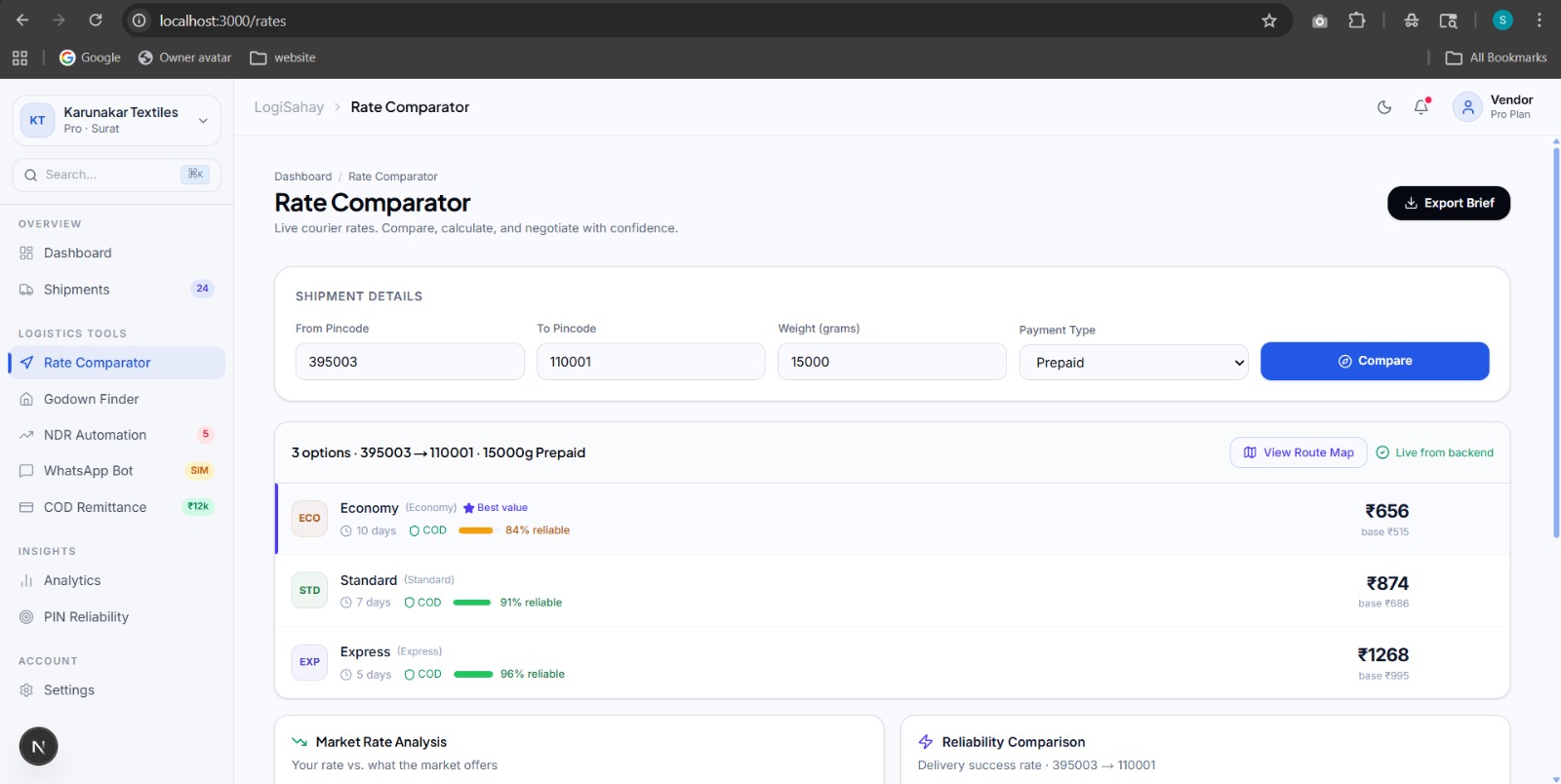
- 🚚 Compare courier rates instantly
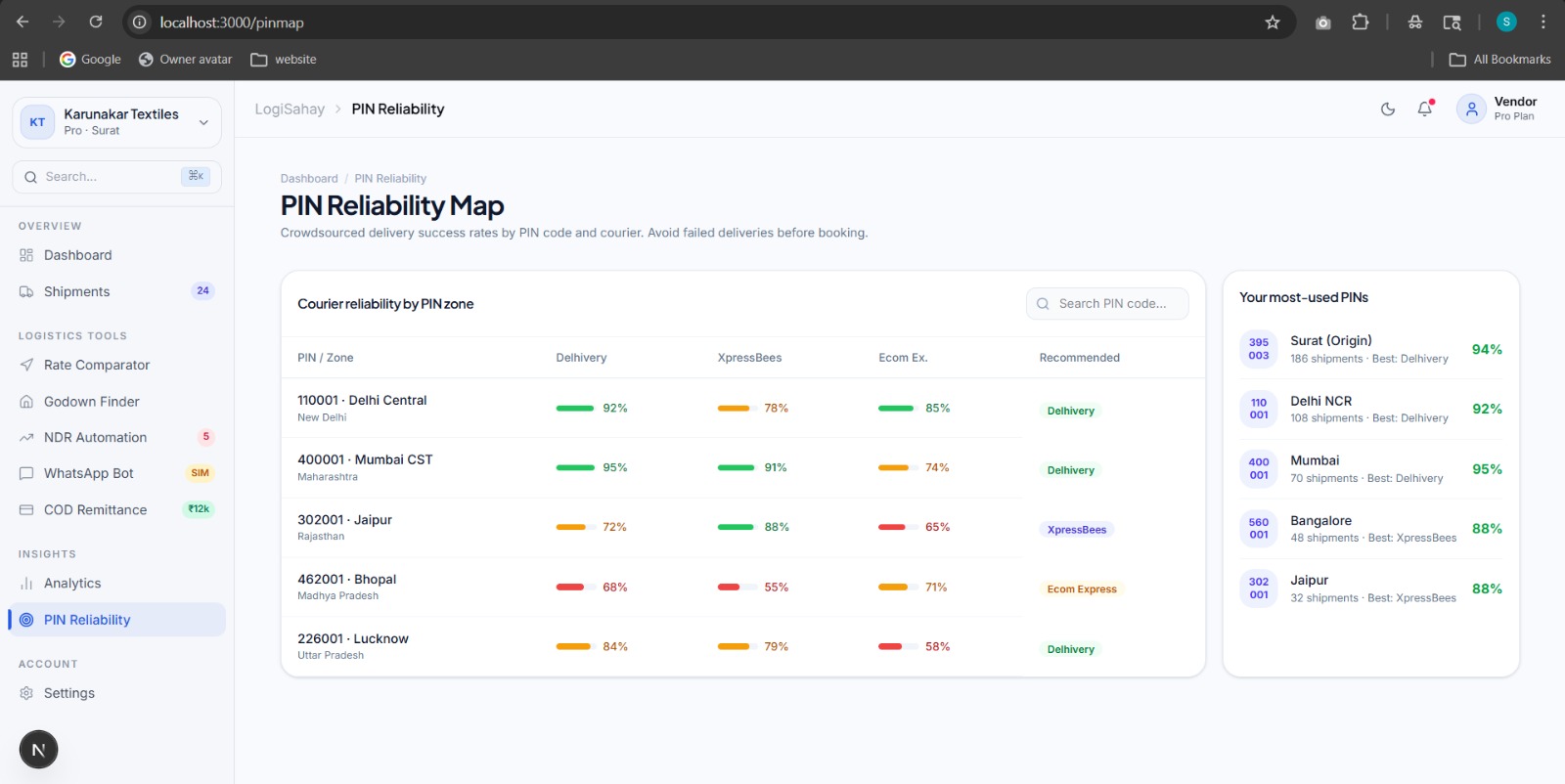
- 📊 Analyze shipping performance and delivery metrics
- 🤖 Get intelligent courier recommendations
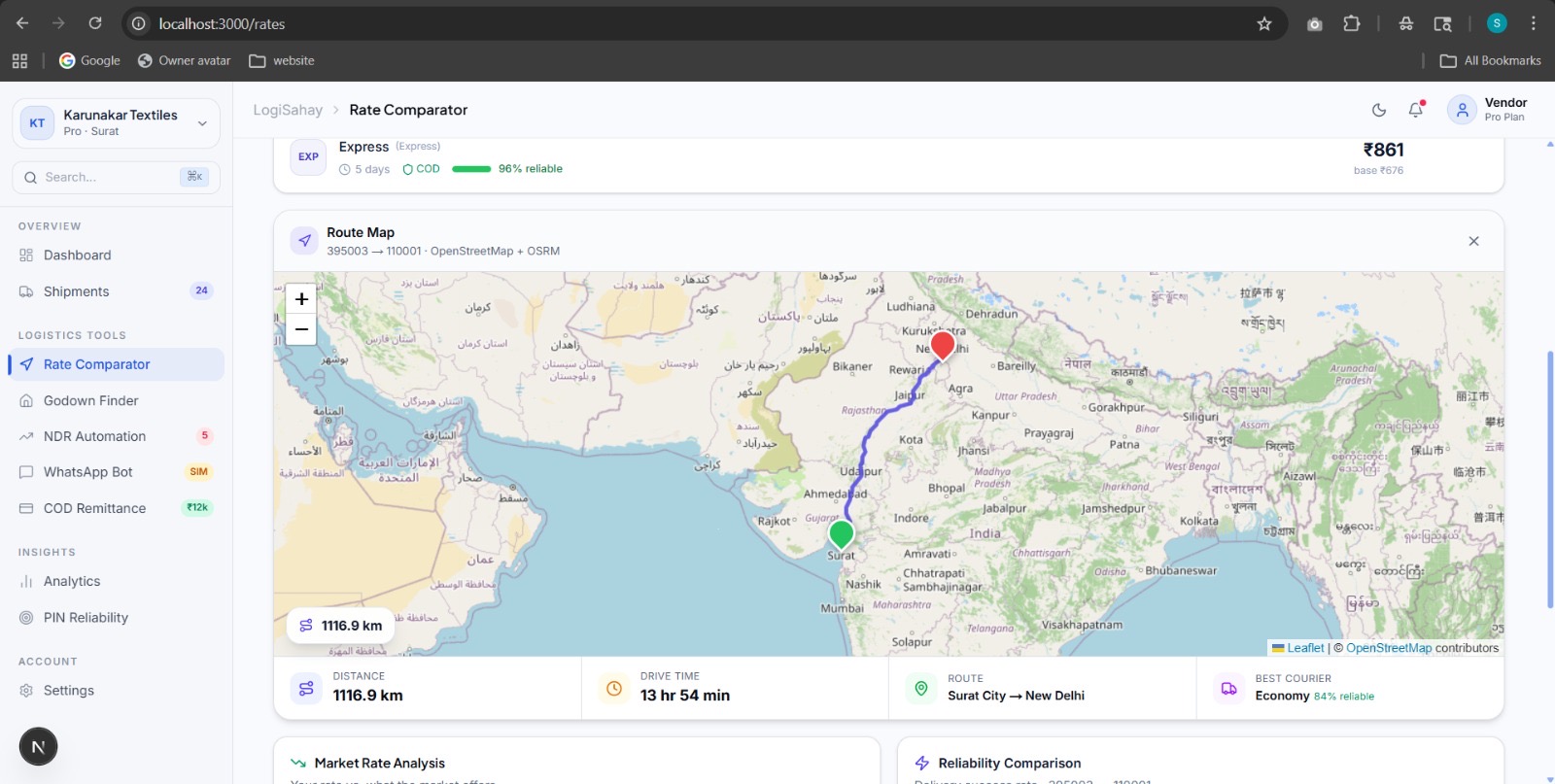
- 📍 Visualize shipment routes using geolocation
- 📦 Manage shipments from a centralized dashboard
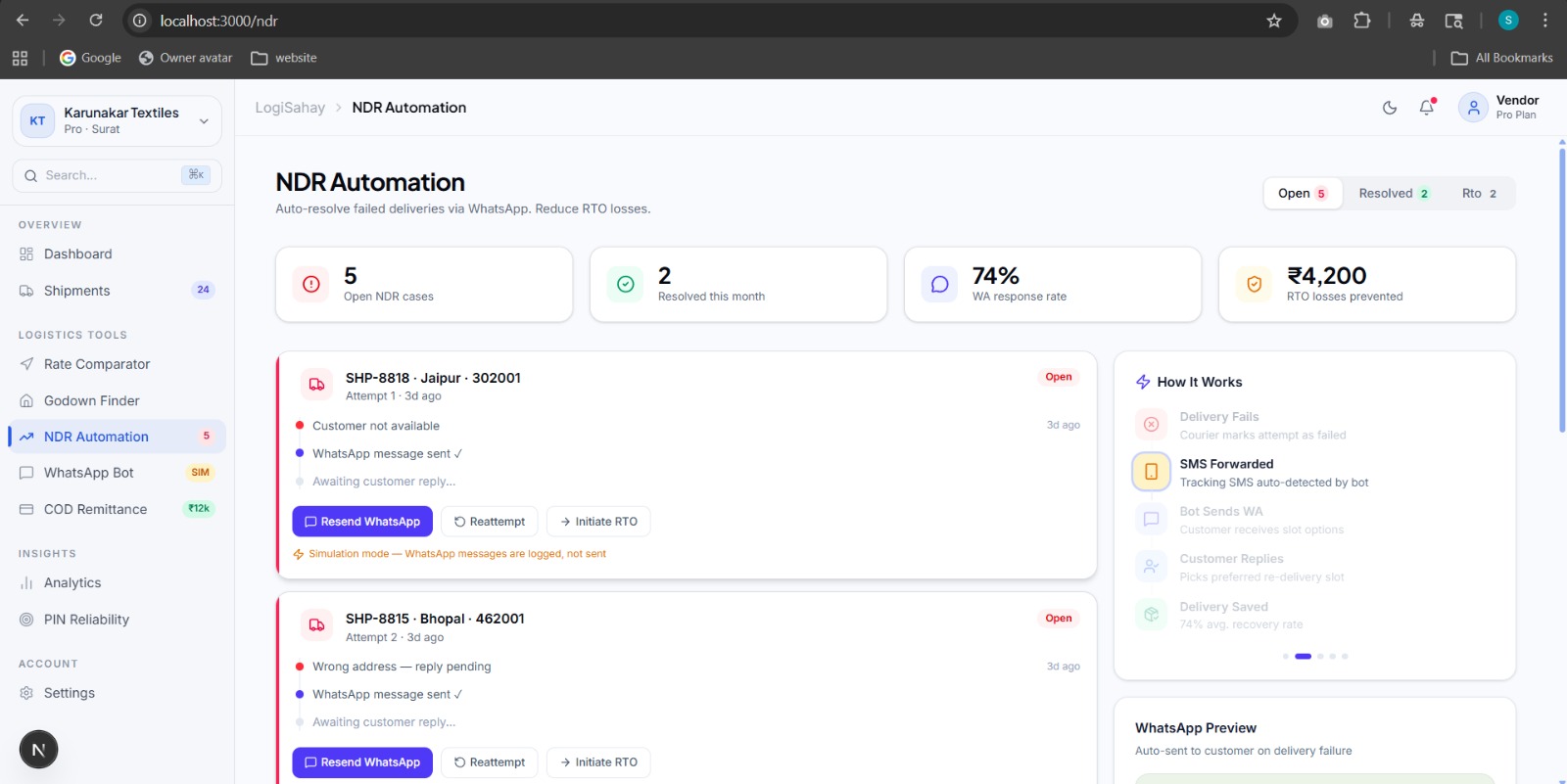
- ⚠️ Handle NDR (Non-Delivery Report) cases efficiently
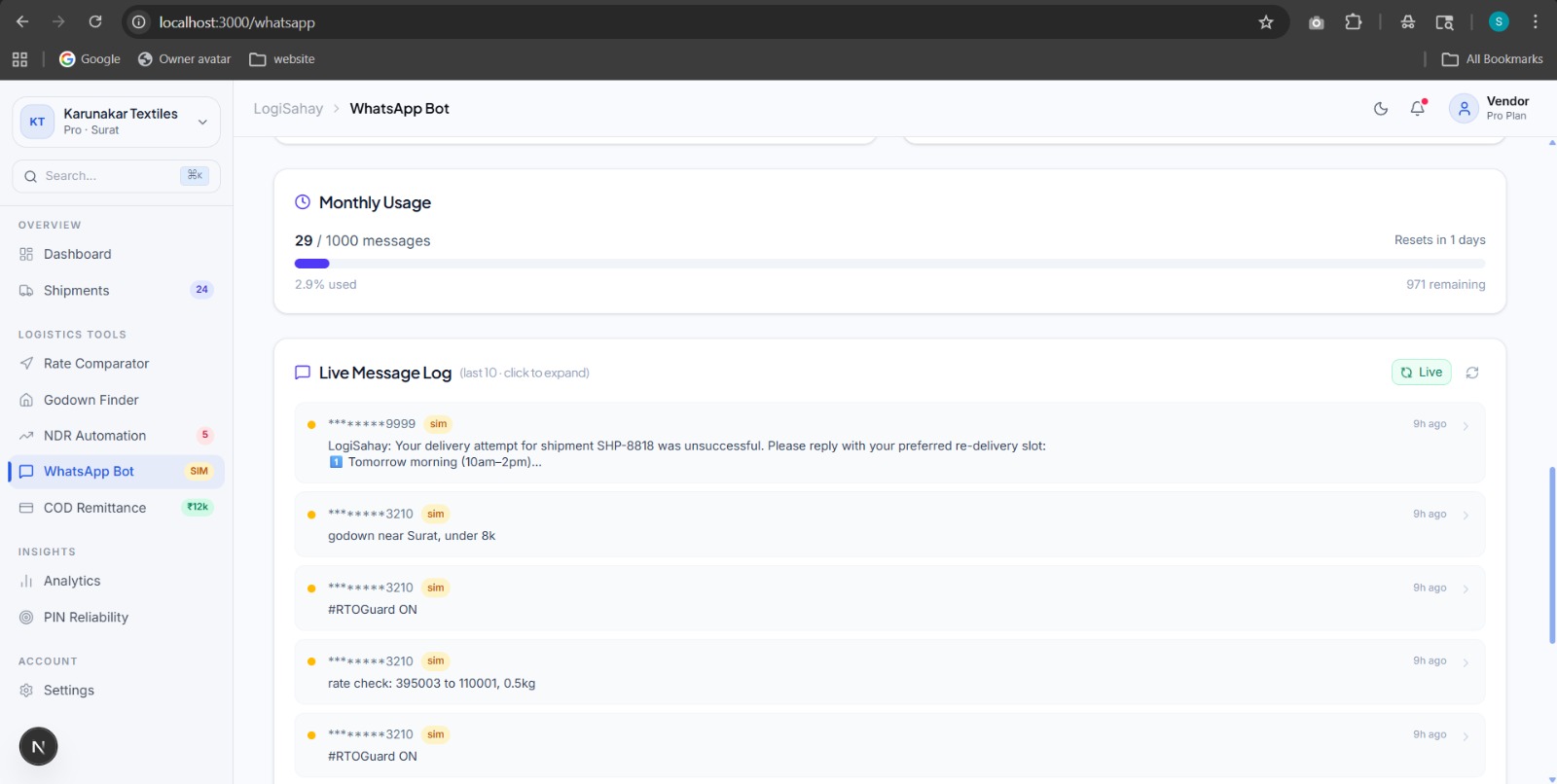
- 💬 Automate WhatsApp communication with customers
- ⚡ Monitor logistics operations in real time
The system combines analytics, automation, and intelligent decision-making into a single lightweight platform.
How we built it
We built LogiSahay using a modern full-stack architecture with a clean separation between frontend and backend systems.
Frontend
- Next.js 16
- TypeScript
- Tailwind CSS
- Shadcn/UI
- Zustand for state management
The frontend provides a responsive dashboard for shipment management, courier comparison, analytics, and route visualization.
Backend
- FastAPI
- Python
- Pydantic
- Uvicorn
We followed a Clean Architecture / Domain-Driven Design approach to keep the backend scalable, modular, and maintainable.
Infrastructure
- Supabase PostgreSQL for database management
- Redis for caching and performance optimization
We also implemented:
- API-based courier comparison workflows
- NDR automation pipelines
- WhatsApp messaging integration
- Geocoding services for route visualization
- Redis-powered dashboard caching
Challenges we ran into
One of our biggest challenges was designing a scalable backend architecture within a hackathon timeframe.
We also faced challenges while:
- Standardizing courier rate data from different providers
- Designing a modular API structure
- Managing state efficiently on the frontend
- Handling caching and dashboard optimization
- Structuring the system using Clean Architecture principles
- Building realistic logistics workflows for NDR handling
Another major challenge was balancing performance, scalability, and simplicity while keeping the platform beginner-friendly and deployable.
Accomplishments that we're proud of
We are proud that we built a complete logistics intelligence ecosystem instead of just a simple dashboard.
Some accomplishments include:
- Built a fully modular full-stack application
- Implemented intelligent courier comparison workflows
- Added WhatsApp automation features
- Created NDR management pipelines
- Integrated route visualization and geocoding
- Used Redis caching for optimized performance
- Designed a production-style Clean Architecture backend
- Built a scalable and maintainable codebase
Most importantly, we created a solution that directly addresses real-world problems faced by Indian micro-sellers.
What we learned
Through this project, we learned:
- How to design scalable backend systems using Clean Architecture
- How frontend and backend systems communicate in production-grade applications
- Real-world API integration workflows
- State management using Zustand
- Database structuring with Supabase
- Performance optimization using Redis caching
- Importance of modular and reusable code
- How logistics workflows operate in real businesses
We also learned how important problem understanding and practical usability are in building impactful products.
What's next for LogiSahay
We plan to expand LogiSahay into a complete AI-powered logistics operating system.
Future improvements include:
- 🤖 AI-based delivery success prediction
- 📈 Demand forecasting for sellers
- ⚠️ Fraud and RTO prediction models
- 🌐 Multilingual seller support
- 🎙️ Voice-enabled logistics assistant
- 📍 Real-time live shipment tracking
- 🔄 Automated courier switching
- 📊 Advanced business intelligence dashboards
- 🧠 Machine learning-driven logistics optimization
Our long-term vision is to empower small Indian businesses with enterprise-grade logistics intelligence tools that are affordable, accessible, and easy to use.
Built With
- 16
- api
- apis
- architecture
- async
- caching
- clean
- css
- ddd
- deployment
- design
- domain-driven
- fastapi
- frontend
- geocoding
- git
- github
- integration
- mechanisms
- modular
- monorepo-style
- next.js
- node.js
- npm
- postcss
- postgresql
- processing
- project
- pydantic
- python
- radix
- redis
- rest
- shadcn/ui
- supabase
- tailwind
- turbopack
- typescript
- ui
- using
- uvicorn
- vercel-ready
- zustand


Log in or sign up for Devpost to join the conversation.