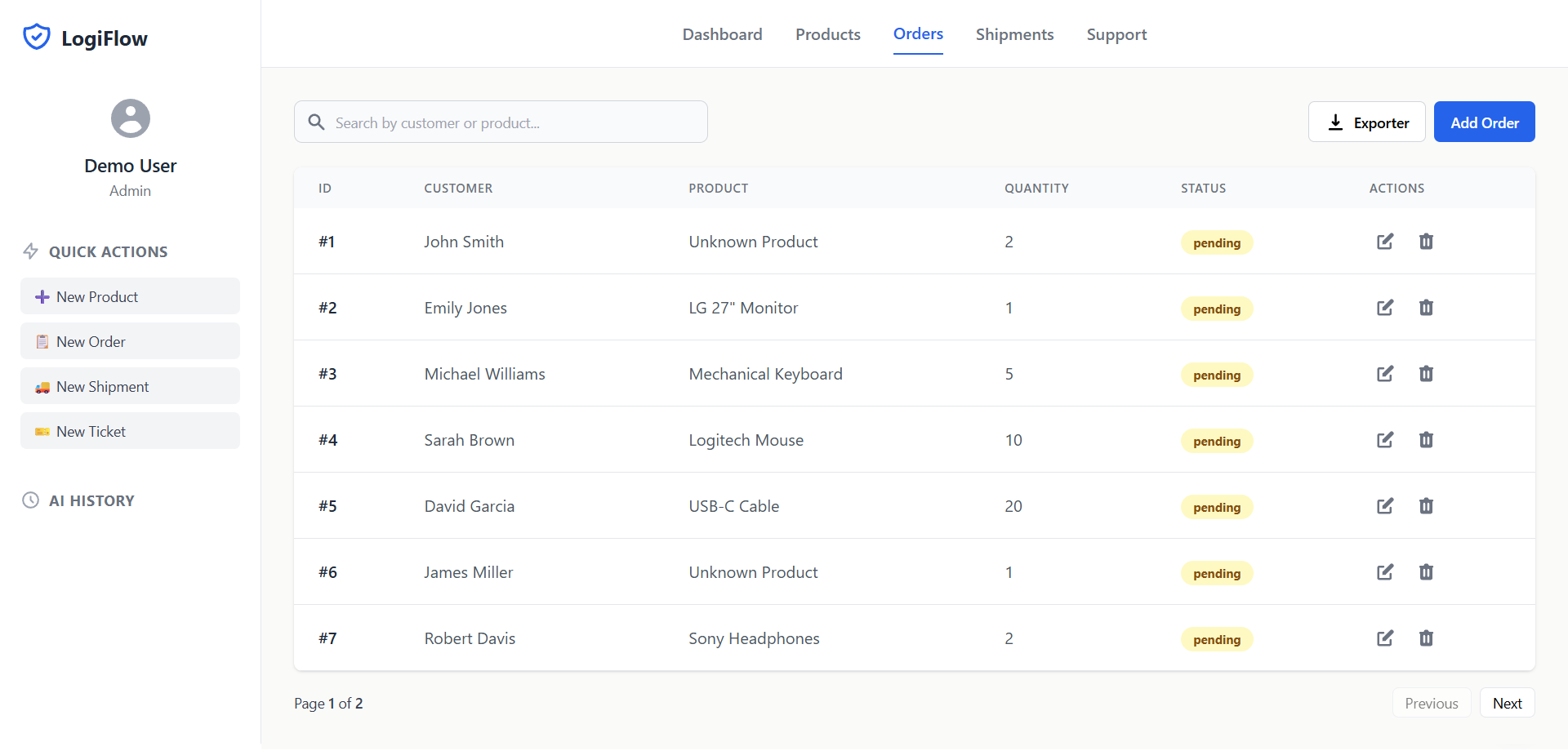
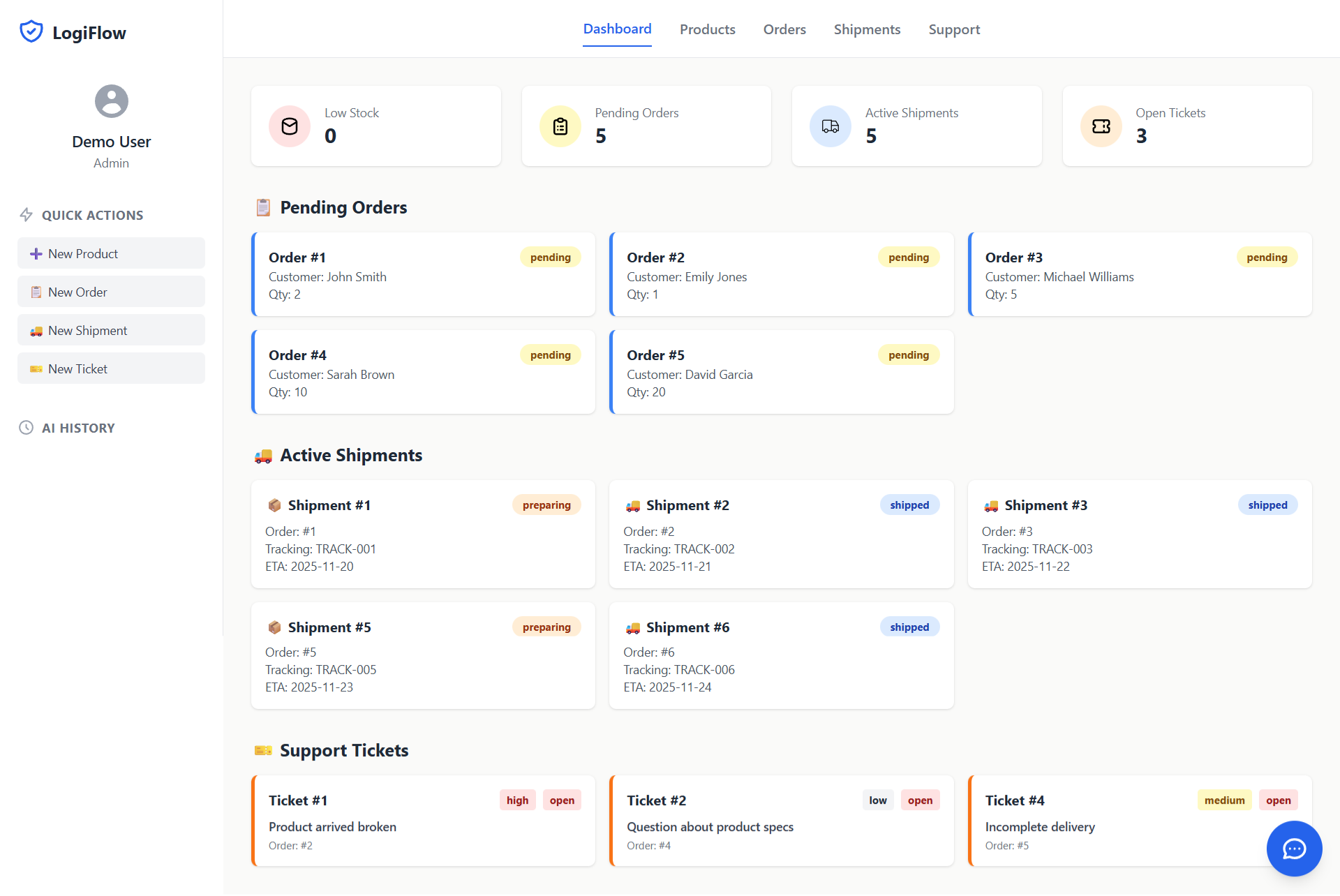
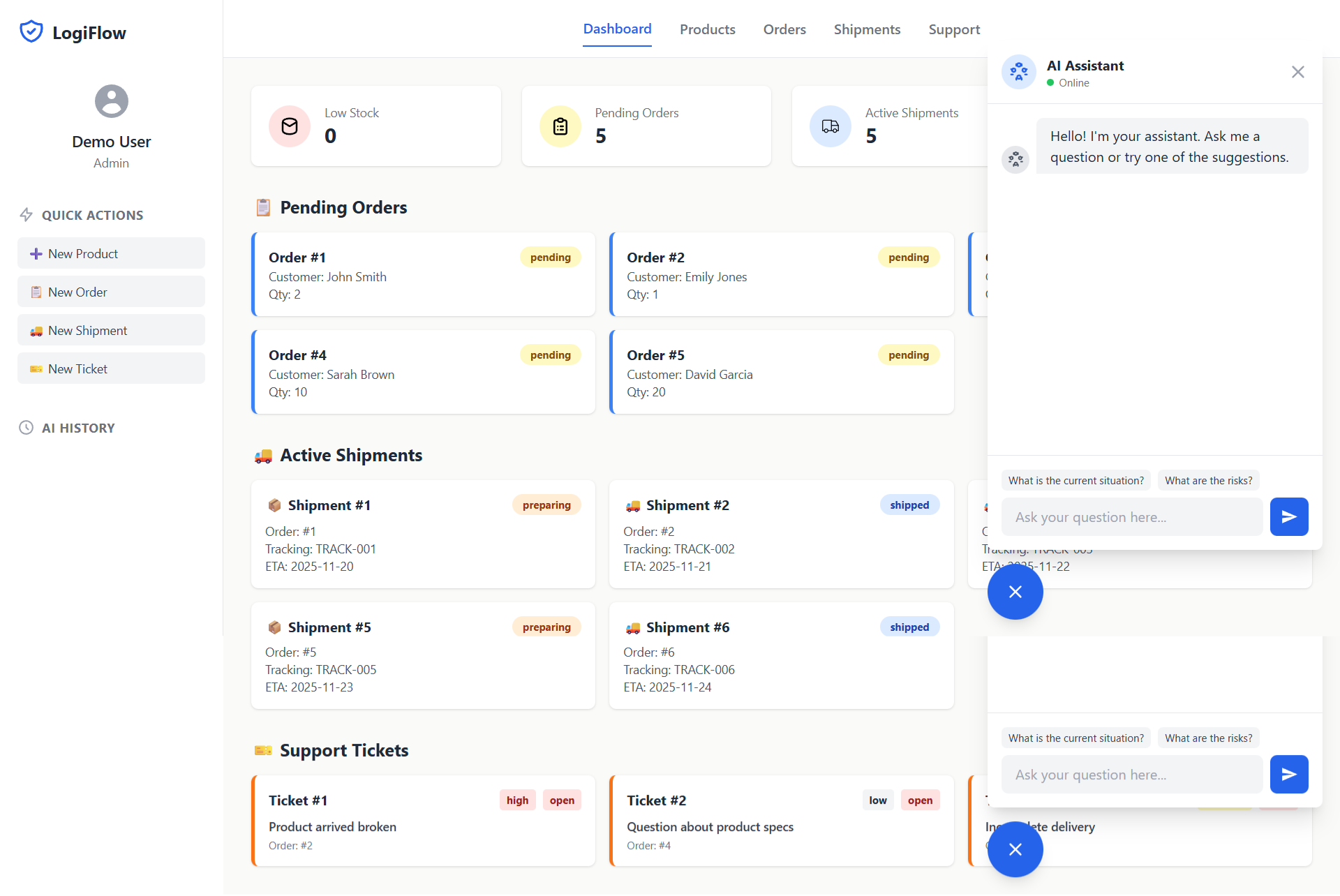
💡 Inspiration Many small and medium businesses still rely on Excel sheets or overpriced ERP tools that are too complex for their real needs. I chose to focus on the logistics workflow (inventory → orders → deliveries) It’s one of the biggest daily challenges small businesses face.
However, the concept behind LogiFlow is broader:
It’s designed as a general-purpose, lightweight ERP foundation that can adapt to any small business sector — retail, services, workshops, logistics, or local stores.
The goal is to bring clarity and structure to companies that don’t need a full corporate ERP.
🛠️ What it does LogiFlow centralizes essential operations into one simple interface:
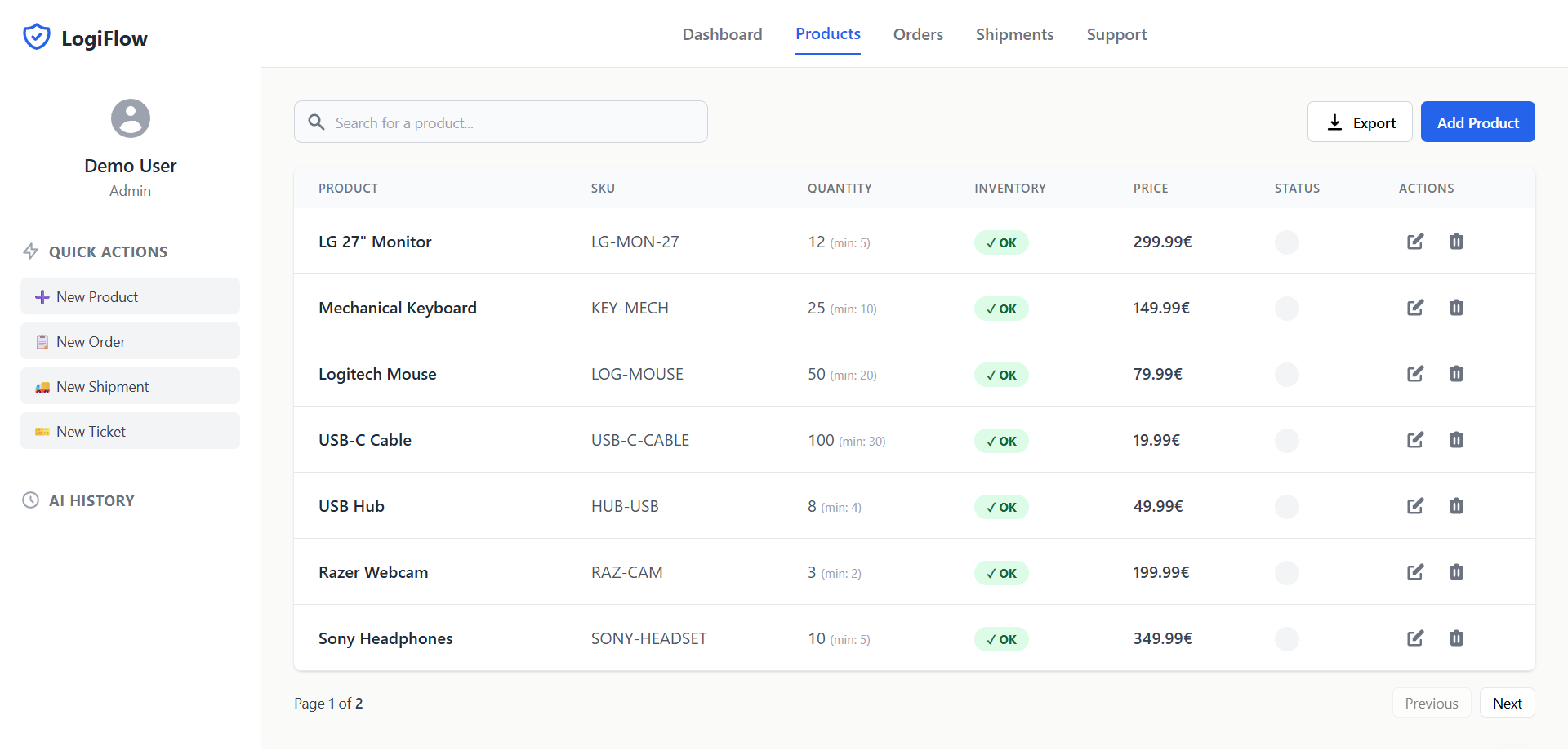
Inventory management
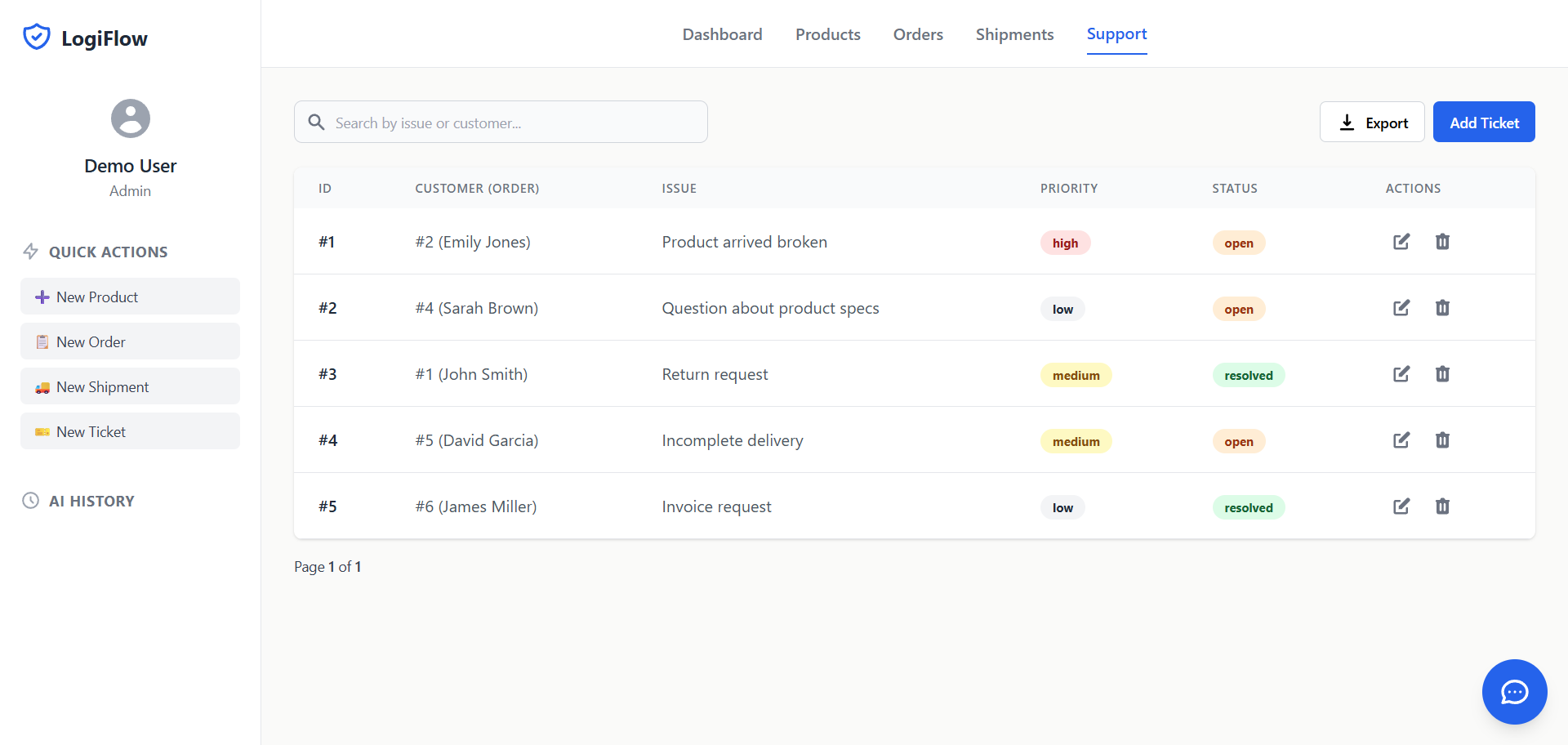
Orders & customers
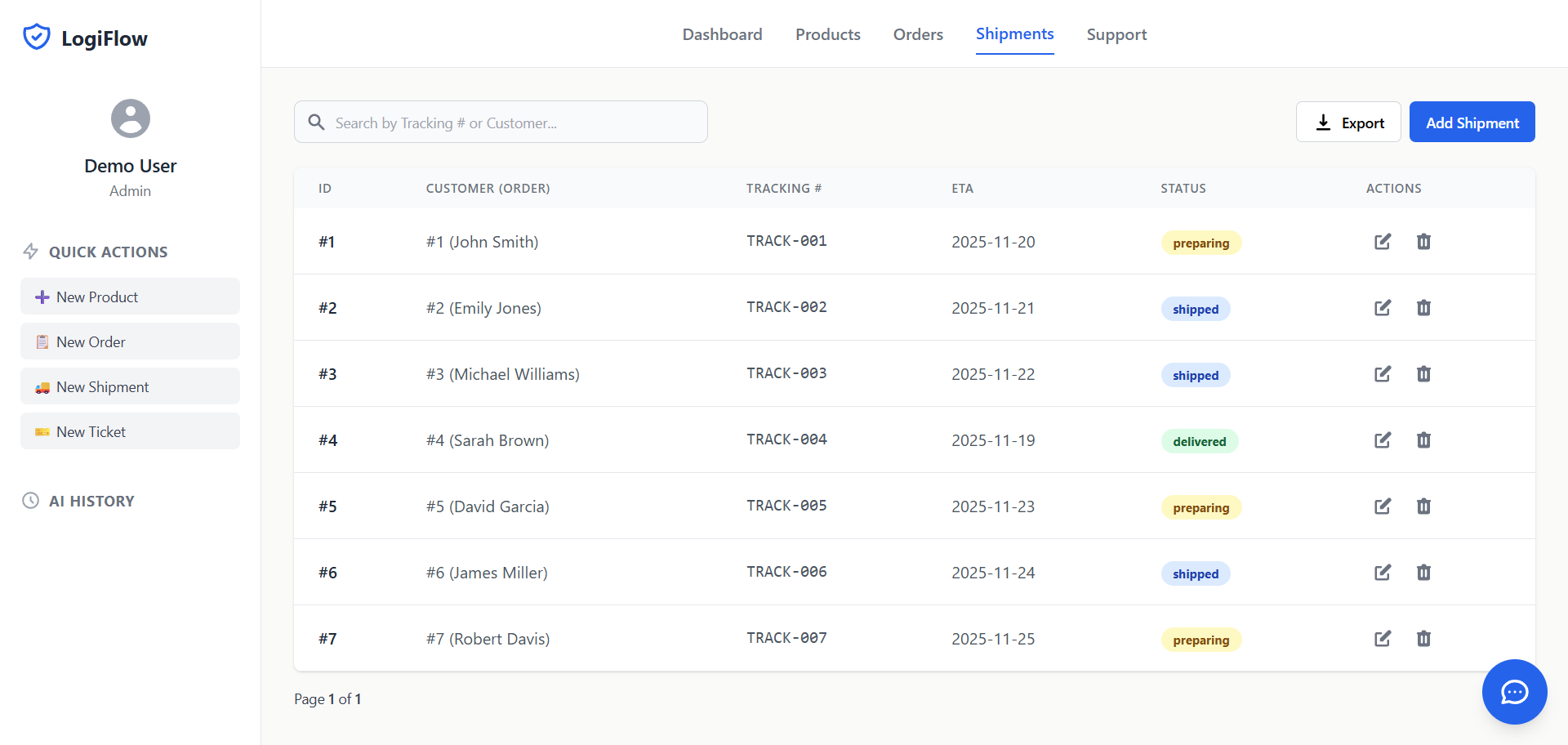
Deliveries & returns
A clean and intuitive dashboard
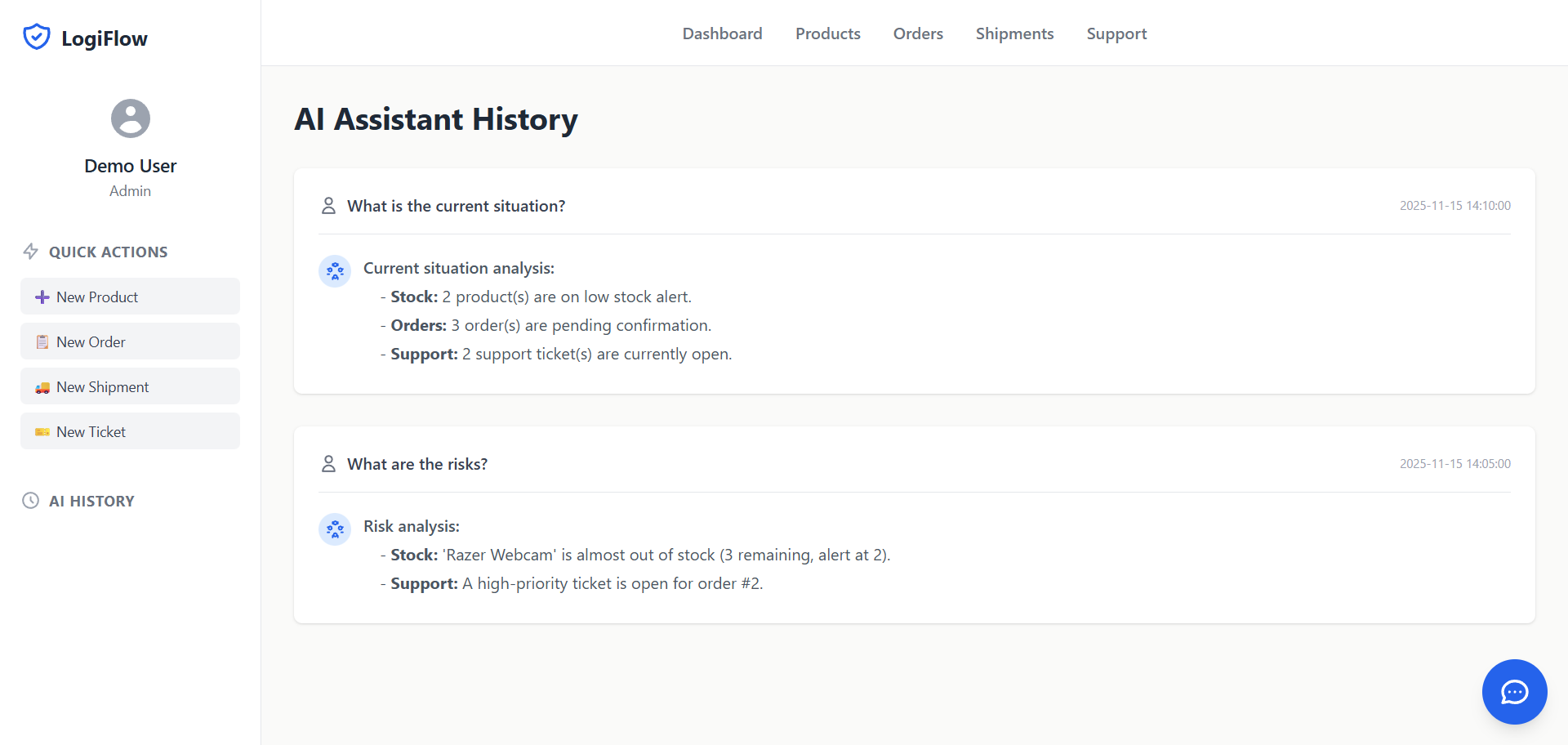
Optional AI assistant that analyzes data and answers key questions
🚧 Challenges Designing something simple but truly useful
Keeping the workflow intuitive without unnecessary features
Integrating the AI assistant smoothly
Building a flexible structure that can scale to multiple business types
🧠 What I learned I learned how to structure a minimal ERP system, design a smooth workflow, and focus on clear UX.
I also explored:
Lightweight backend architecture
Clean REST API conventions
Data-driven feature design
Built With
- express.js
- node.js
- react
- sql.js
- tailwind
- vite

Log in or sign up for Devpost to join the conversation.