-
-
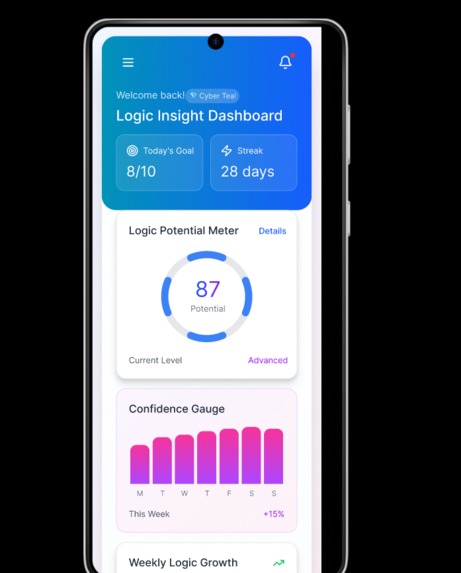
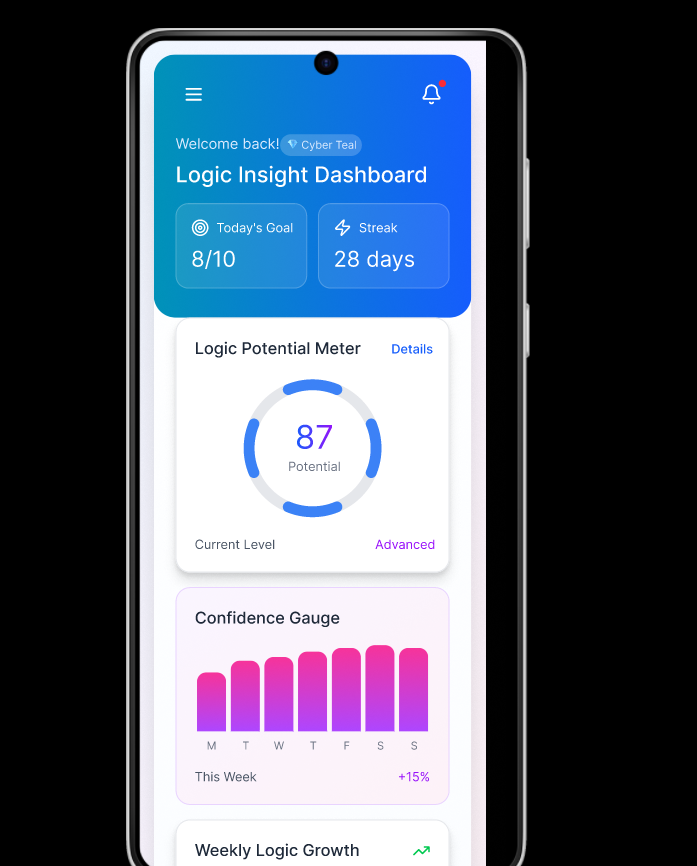
Dashboard of my Logic Lens
-
Inspiration
Many students learning programming or logical problem solving believe they are bad at logic, even when they actually have strong reasoning ability. Traditional learning platforms only show whether an answer is correct or incorrect, but they do not show how a student is thinking. This inspired us to create LogicLens — a tool that helps students visualize their thinking process and build confidence while solving problems.
What it does
LogicLens is a cognitive awareness tool that helps students understand their logical thinking ability while solving problems.
The system visualizes insights such as:
logic potential
confidence level
reasoning patterns
weekly logic growth
By showing these insights, LogicLens helps students see the difference between their confidence and actual reasoning ability, encouraging them to keep trying instead of giving up.
How we built it
LogicLens was designed using Figma and Figma Make to create the user interface and interactive prototype.
The design includes:
a login interface
a cognitive insight dashboard
data visualizations such as logic potential meters, confidence gauges, and growth charts
The prototype demonstrates how students can log in and view their logical thinking insights through the dashboard.
Challenges we ran into
One challenge was translating an abstract idea like thinking ability into clear visual elements that users could understand.
Another challenge was designing a dashboard that shows meaningful insights without overwhelming the user with too much information.
We also had to carefully consider privacy and ethical use, since cognitive insights are sensitive data.
Accomplishments that we're proud of
We are proud of creating a concept that introduces a new idea called Cognitive Confidence Awareness, helping students perceive their thinking ability.
The LogicLens dashboard successfully visualizes logical reasoning insights in a simple and intuitive way.
We are also proud of designing a prototype that demonstrates how such a system could work in real learning environments.
What we learned
Through this project we learned how UI/UX design can transform invisible processes into understandable insights.
We also learned the importance of balancing data visualization, usability, and user motivation when designing learning tools.
Additionally, we explored how speculative design can imagine future technologies that improve how people understand their own abilities.
What's next for LogicLens
In the future, LogicLens could evolve into a more advanced learning assistant.
Possible improvements include:
integrating AI to analyze real student problem solving behavior
providing personalized hints and learning recommendations
tracking cognitive progress over longer periods
integrating with coding platforms or educational tools
The long-term vision is to help students better understand their thinking process and build stronger confidence in problem solving.
Built With
- figma
- prototype
- react-native

Log in or sign up for Devpost to join the conversation.