-
-
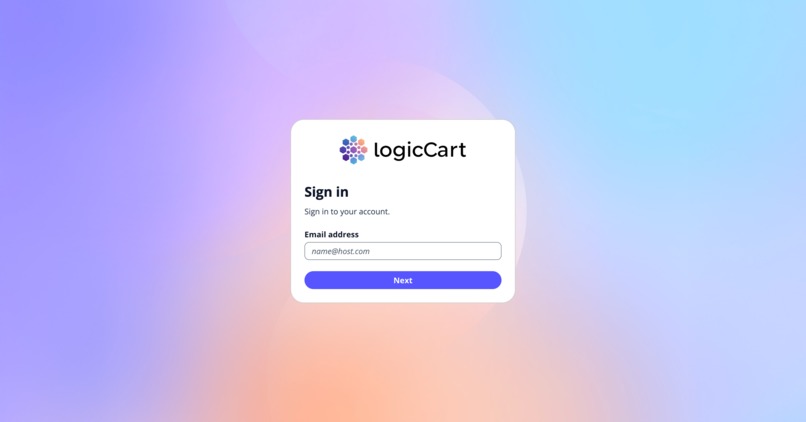
LogicCart Login Page with Amazon Cognito
-
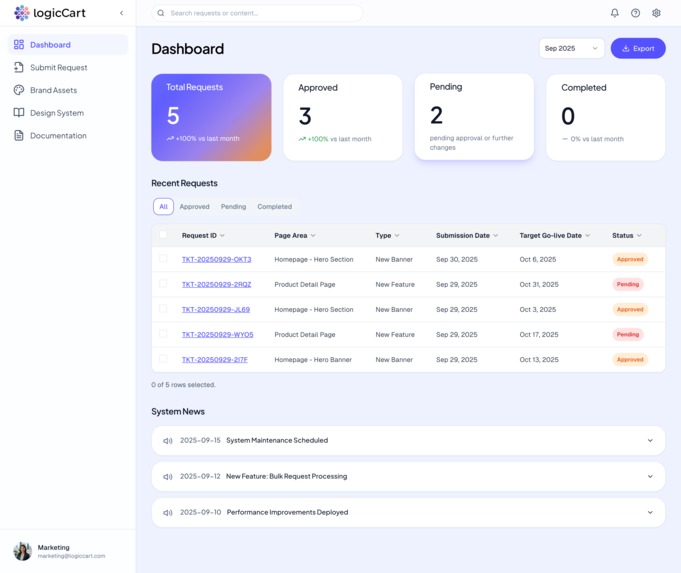
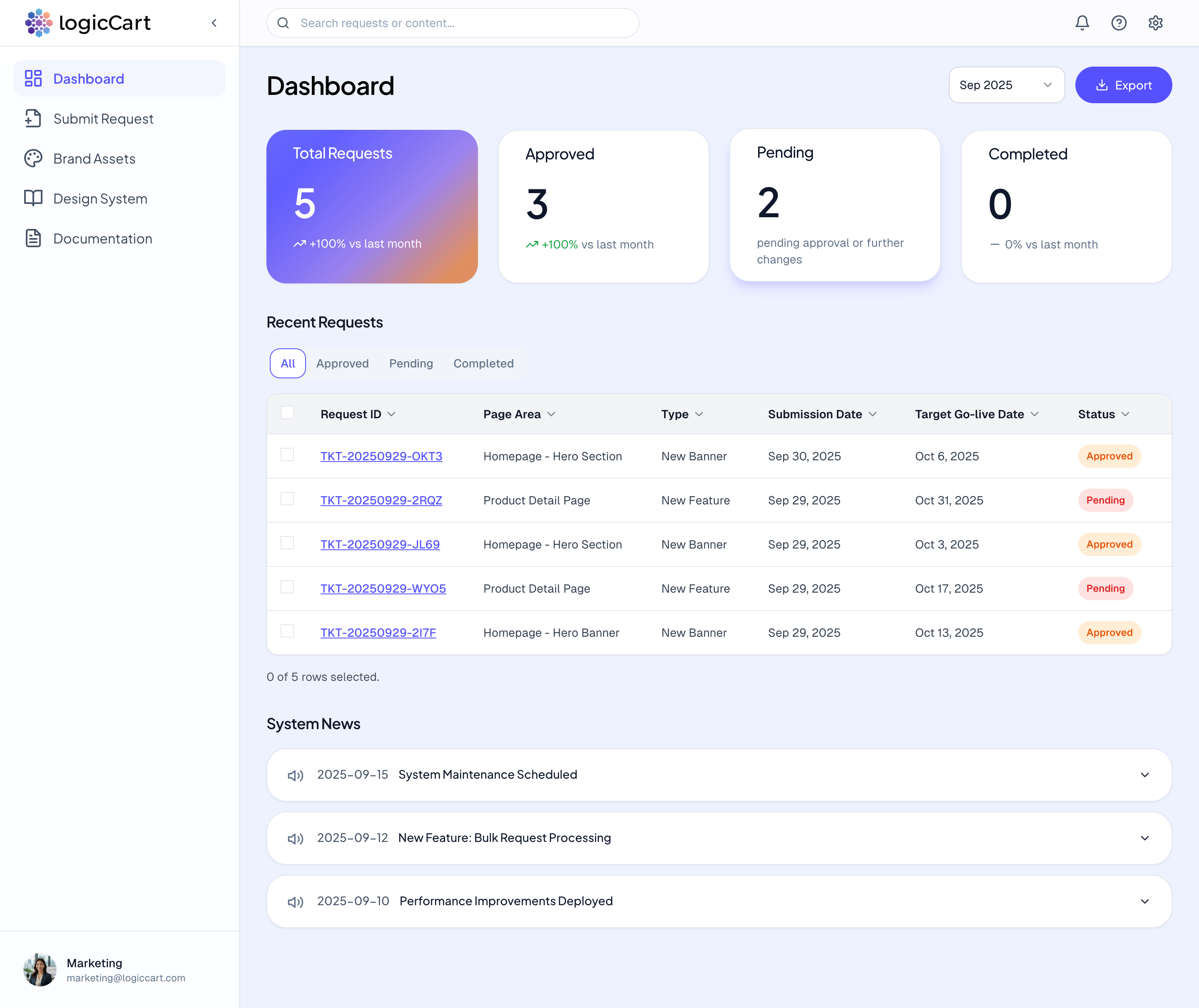
LogicCart Dashboard Design
-
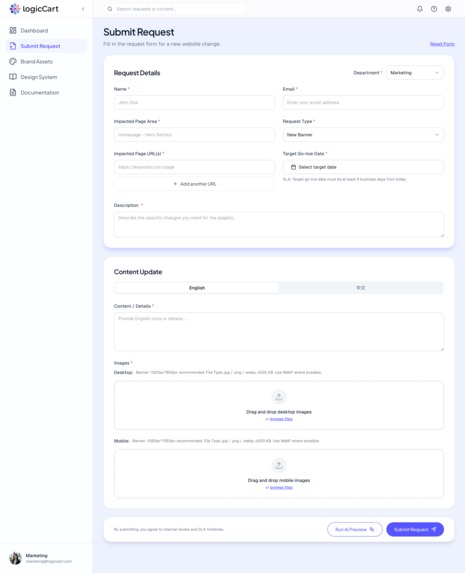
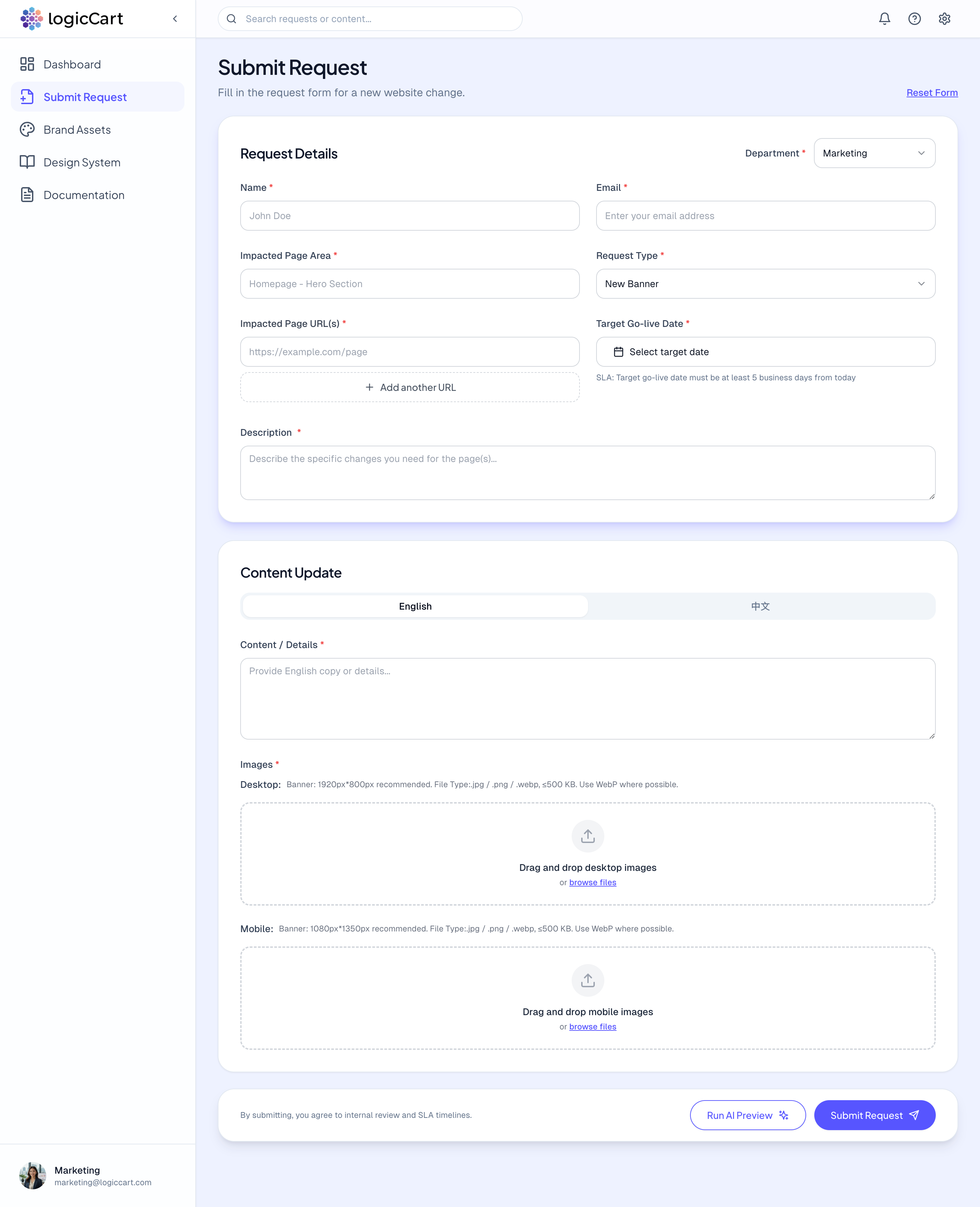
LogicCart Submit Request Page
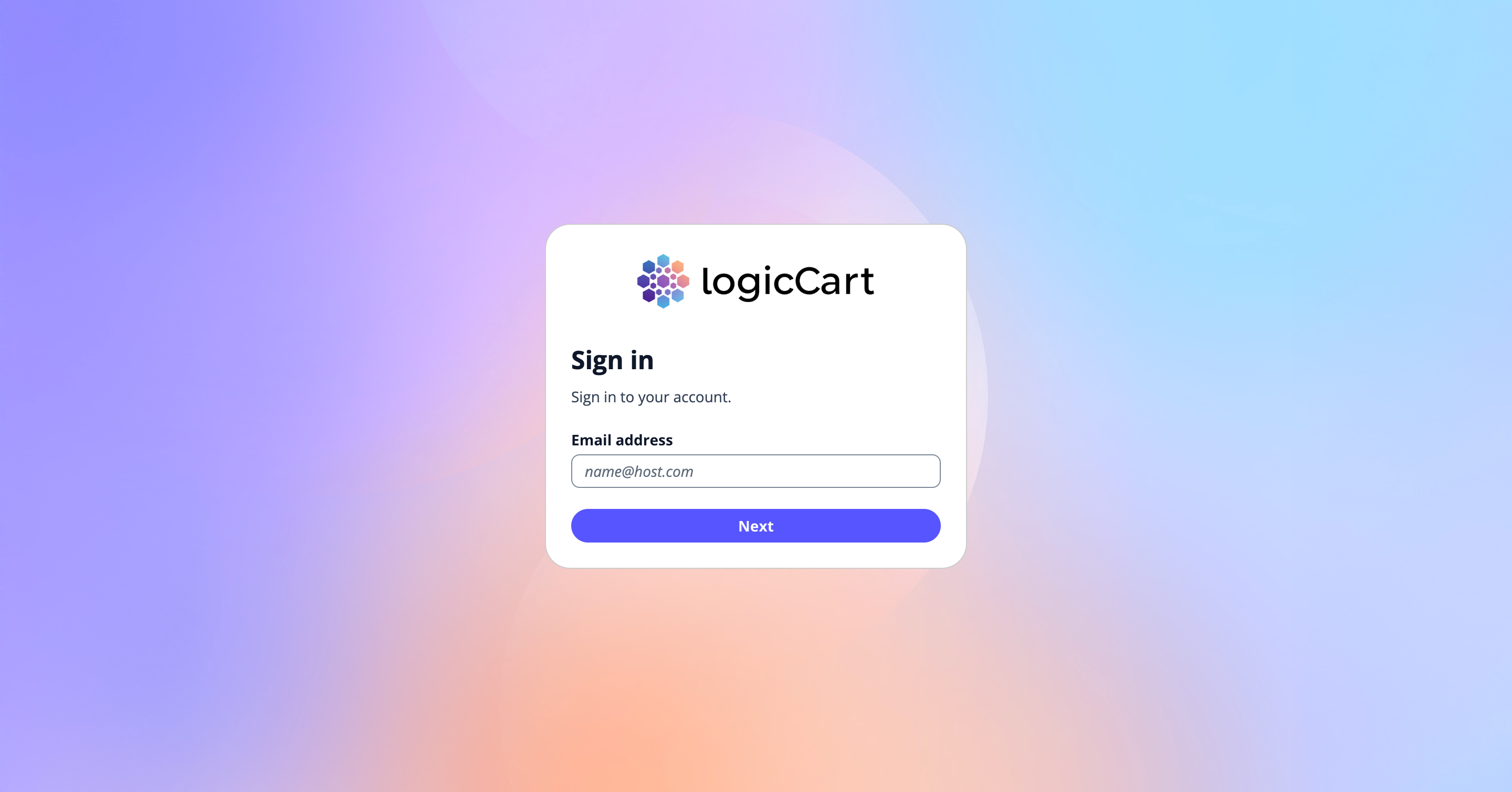
LogicCart Website Change Request Hub
Inspiration
This project was inspired by a real-world pain point observed in cross-functional e-commerce teams:
Requesting website changes via email often leads to confusion, delays, and inconsistent formats.
As a UX/UI designer, I’ve experienced how small miscommunications can derail timelines, especially when developers lack clear, structured input. I wanted to solve this with AI-powered clarity and a streamlined workflow.
What I Built
LogicCart is a secure, serverless platform that allows team members to submit website change requests in a structured form, receive real-time AI feedback, and view request statuses instantly on a dashboard.
Key innovations include:
- AI Preview Analysis powered by Amazon Bedrock Nova Lite, providing policy compliance checks, missing info detection, and acceptance criteria generation.
- Post-submission AI decision making powered by Amazon Bedrock Nova Lite, integrated with SNS for automated approval or clarification emails.
- A serverless architecture with 6 AWS Lambda functions, API Gateway, DynamoDB, and S3 buckets for secure image uploads and policy documentation.
- A real-time dashboard that pulls live request data, enables CSV/PDF export
- Secure user login using AWS Cognito, with session validation via CloudFront Functions and PKCE flow.
What I Learned
This was my first end-to-end AI project using Amazon Bedrock + full AWS infrastructure, and I learned:
- How to design and invoke Bedrock Runtime API via Lambda for real-time decision making
- The importance of clean IAM permissions and security measures
- With AWS Kiro, I managed to execute secure S3 upload via presigned URLs, API Gateway, Cloudfront and Cognito authentication integration.
- Real-world prompt tuning and UX optimization using Kiro to co-build Lambda logic, UI flows, and Bedrock prompts
Challenges I Faced
- Security setup: Configuring CloudFront, Cognito, and session validation was challenging.
- Data integration: Mapping user-submitted data, image metadata, and AI analysis results to a unified schema in DynamoDB.
- UX polish under time pressure: Ensuring responsive design, mobile-first layouts, and accessible UI while building a functional full-stack system.
Final Reflection
This project brought together UX/UI, AI, and serverless engineering into a working prototype that could be adopted by real teams. Watching the AI suggest improvements before mistakes happen, that’s real impact.
I hope this project demonstrates the power of Amazon Bedrock + Kiro for rapid, real-world AI agent development.
Built With
- amazon-acm
- amazon-api-gateway
- amazon-bedrock
- amazon-cloudfront-cdn
- amazon-cognito
- amazon-dynamodb
- amazon-lambda
- amazon-nova
- amazon-sns
- amazon-web-services
- next.js
- shadcn/ui
- tailwindcss

Log in or sign up for Devpost to join the conversation.