-
-

Home Screen
-
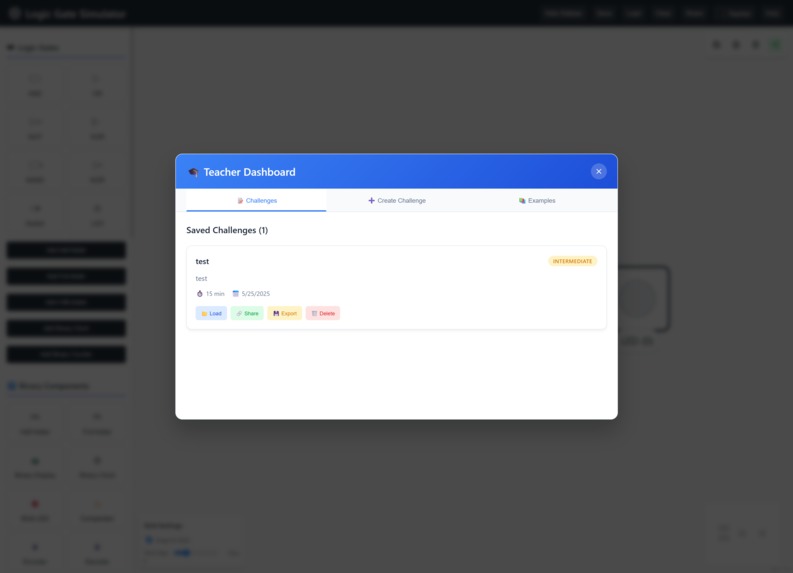
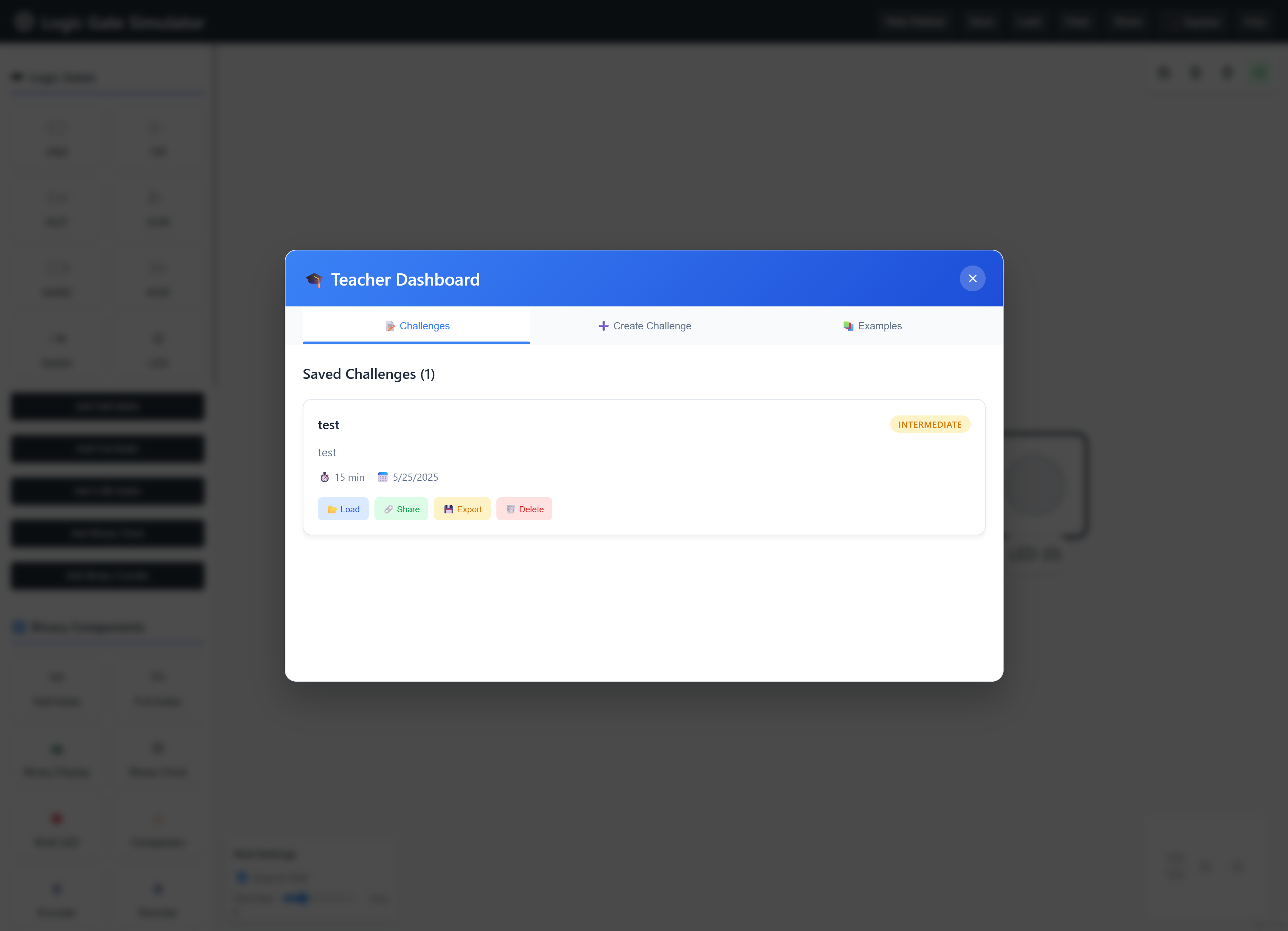
Teacher Dashboard
-

Sharing Screen
-
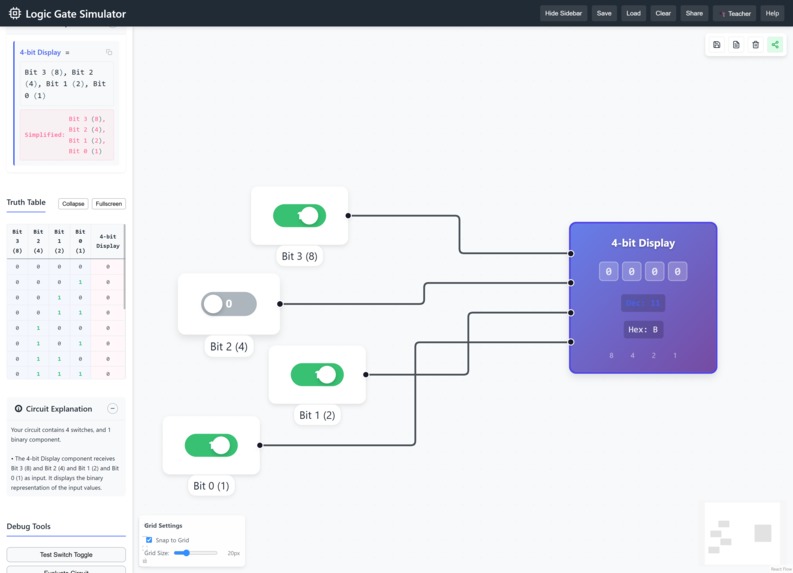
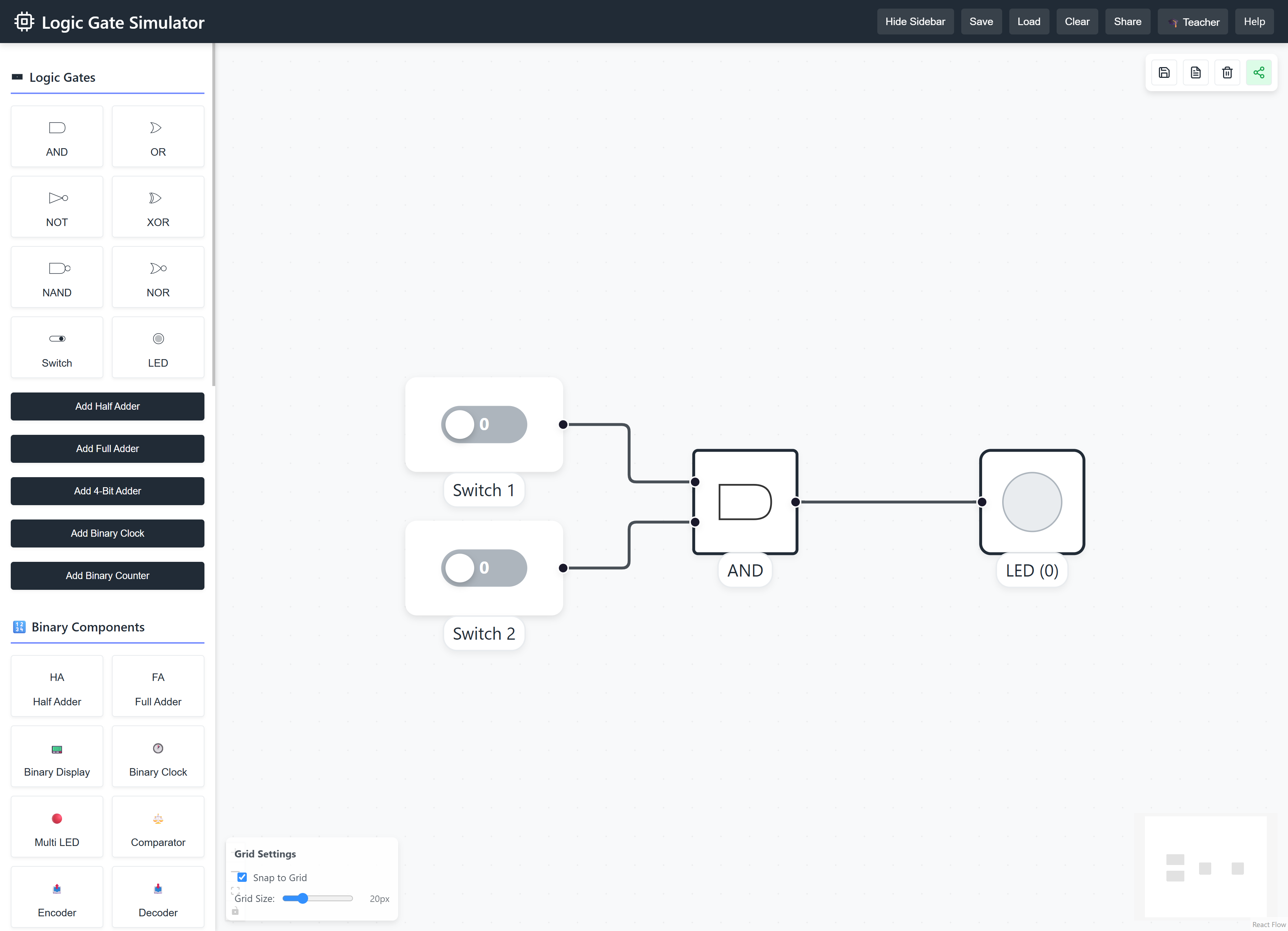

Logic Gate Simulator - Hackathon Division
Inspiration
As a computer science student, I often struggled with understanding digital logic concepts when they were taught only through theoretical diagrams and truth tables. I realized that many students learn better through interactive, hands-on experiences. This inspired me to create a visual, interactive logic gate simulator that makes Boolean algebra and digital circuits tangible and engaging. I wanted to bridge the gap between abstract theoretical concepts and practical understanding, especially for students who are visual learners.
What it does
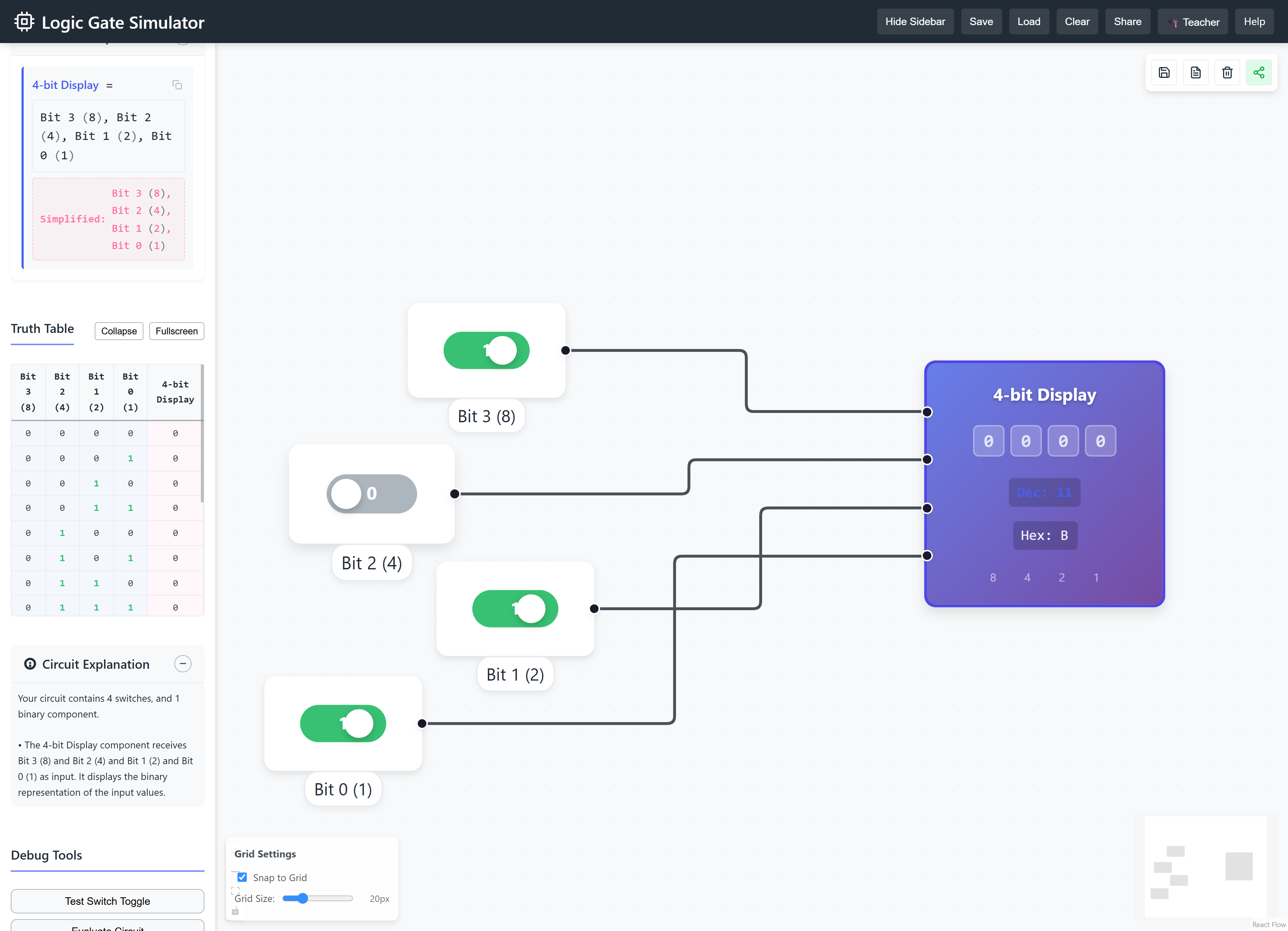
The Logic Gate Simulator is a comprehensive web application that allows users to:
- Build Interactive Circuits: Drag and drop logic gates (AND, OR, NOT, NAND, NOR, XOR) onto a workspace and connect them with animated wires
- Real-time Simulation: Toggle input switches and watch signals propagate through the circuit with visual animations
- Educational Tools:
- Automatic truth table generation for any circuit
- Boolean expression display showing the mathematical representation
- Real-world examples explaining how circuits are used in everyday technology
- Advanced Components: Binary calculators, adders, multiplexers, displays, and even a binary clock
- Teacher Dashboard: Educators can create custom challenges, manage student circuits, and share pre-built examples
- Circuit Sharing: Export circuits as files or generate shareable URLs with QR codes for easy distribution
How we built it
Frontend Architecture:
- React 18 with modern hooks for component state management
- ReactFlow for the drag-and-drop circuit builder interface
- Vite as the build tool for fast development and optimized production builds
Core Technologies:
- Custom Circuit Evaluator: Built a recursive algorithm that handles complex circuit evaluation with cycle detection
- Signal Animation System: Implemented a sophisticated animation manager that shows signal propagation with realistic delays
- Boolean Expression Parser: Integrated boolean-expressions library to generate mathematical representations of circuits
- Component System: Modular React components for each gate type with standardized input/output handling
Key Features Implementation:
- Smart Grid System: Snap-to-grid functionality for precise component placement
- Connection System: Intelligent wire routing with visual feedback and validation
- Local Storage Integration: Automatic saving and loading of circuits
- Responsive Design: CSS Grid and Flexbox for mobile-friendly interface
- QR Code Generation: Integrated QR code API for easy circuit sharing
Challenges we ran into
Circuit Evaluation Complexity: The biggest challenge was creating a robust circuit evaluation system that could handle:
- Circular dependencies and infinite loops
- Complex multi-input/output components like adders
- Real-time updates without performance issues
- Solution: Implemented topological sorting with cycle detection and memoization
Signal Animation Synchronization: Making the visual animations accurately represent signal flow was surprisingly complex:
- Calculating proper delays based on component types
- Preventing animation conflicts during rapid input changes
- Maintaining visual consistency across different circuit sizes
- Solution: Built a centralized animation manager with priority queues
ReactFlow Integration: Learning and customizing ReactFlow for educational use presented unique challenges:
- Creating custom node types for each logic gate
- Implementing proper handle positioning for multi-input gates
- Making the interface intuitive for students unfamiliar with circuit design
- Solution: Extensive customization and user testing to refine the interface
Cross-platform Compatibility: Ensuring the app works consistently across devices:
- Touch interactions for mobile users
- File sharing limitations on different browsers
- URL length restrictions for circuit sharing
- Solution: Progressive enhancement and fallback mechanisms
Accomplishments that we're proud of
- Educational Impact: Created a tool that makes abstract concepts tangible - watching a logic gate light up an LED is much more engaging than memorizing truth tables
- Performance Optimization: Achieved smooth 60fps animations even with complex circuits containing 50+ components
- Teacher-Friendly Features: The teacher dashboard has already been tested by educators who found it intuitive for creating assignments
- Comprehensive Component Library: Implemented everything from basic gates to complex components like binary clocks and multiplexers
- Accessibility: Added keyboard navigation, screen reader support, and high-contrast modes for inclusive learning
- Real-world Connections: The "Real World Examples" feature helps students understand how logic gates power everything from elevators to smartphones
What we learned
Technical Skills:
- Advanced React patterns including custom hooks and context optimization
- Complex state management for real-time interactive applications
- Algorithm design for graph traversal and cycle detection
- Animation programming and performance optimization
- Progressive Web App development techniques
Educational Design:
- The importance of immediate visual feedback in learning tools
- How to balance feature richness with interface simplicity
- The value of scaffolded learning - starting simple and building complexity
- How gamification elements (like challenges) can enhance engagement
User Experience:
- Iterative design based on user testing with actual students and teachers
- The critical importance of responsive design for educational tools
- How small details (like connection animations) significantly impact user engagement
What's next for Logic Gate Simulator
Short-term Goals:
- Mobile App: Native iOS/Android versions for better touch interaction and offline use
- Collaborative Features: Real-time multiplayer circuit building for group projects
- Advanced Components: Flip-flops, counters, and memory units for sequential logic
- Assessment Tools: Automated grading system for teacher-created challenges
Long-term Vision:
- AI-Powered Hints: Machine learning system that provides personalized learning suggestions
- 3D Visualization: Three-dimensional circuit representation for complex systems
- Hardware Integration: Connect to actual hardware platforms like Arduino for physical circuit building
- Curriculum Integration: Partnerships with educational institutions to create structured learning paths
- Multi-language Support: Internationalization for global educational access
Research Opportunities:
- Study the learning effectiveness compared to traditional teaching methods
- Develop adaptive learning algorithms based on student interaction patterns
- Create assessment metrics for digital logic comprehension
The Logic Gate Simulator represents my commitment to making STEM education more accessible and engaging through technology. By combining solid computer science fundamentals with thoughtful educational design, I've created a tool that not only teaches digital logic but inspires students to explore the fascinating world of computer engineering.
Built With
- css
- flexbox
- html
- javascript
- node.js
- qr
- react
- vite


Log in or sign up for Devpost to join the conversation.