-
-
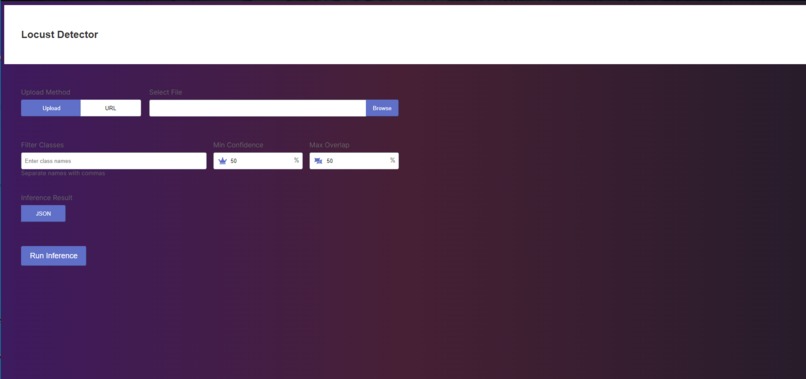
UI
Inspiration
The impetus for this project arose from the urgent need to address locust infestations affecting agricultural ecosystems globally. Witnessing the destructive impact of locust swarms on crops and livelihoods, I embarked on a mission to leverage technology for a sustainable solution.
What it does
The project unfolded as a proof of concept, starting with the development of a locust detection web app. My learning journey encompassed diving into computer vision, machine learning, and the intricacies of drone technology. Gaining insights into image recognition algorithms and neural networks became paramount to creating an effective locust detection model.
How we built it
The initial phase focused on crafting a web-based prototype for locust detection, employing cutting-edge technologies like OpenCV and TensorFlow. While the current iteration is a static web app, the envisioned trajectory involves seamlessly integrating the technology with drones for real-world deployment.
Challenges we ran into
The journey was not without challenges:
Data Quality: Obtaining diverse, high-quality locust images for model training proved challenging, necessitating collaboration with experts.
Real-time Processing: Ensuring real-time processing on drones with limited computational resources requires ongoing algorithm optimization.
Drone Integration: Future work involves addressing challenges related to drone navigation, obstacle avoidance, and efficient pesticide spraying.
Environmental Adaptability: Fine-tuning the system for diverse environmental conditions, including lighting and weather variations, remains an ongoing challenge.
Accomplishments that we're proud of
Successful Proof of Concept: Achieving a functional locust detection web app demonstrates the feasibility of using AI for identifying locusts in images.
Effective Machine Learning Model: Developing a robust machine learning model for locust detection, showcasing the ability to train an accurate classifier.
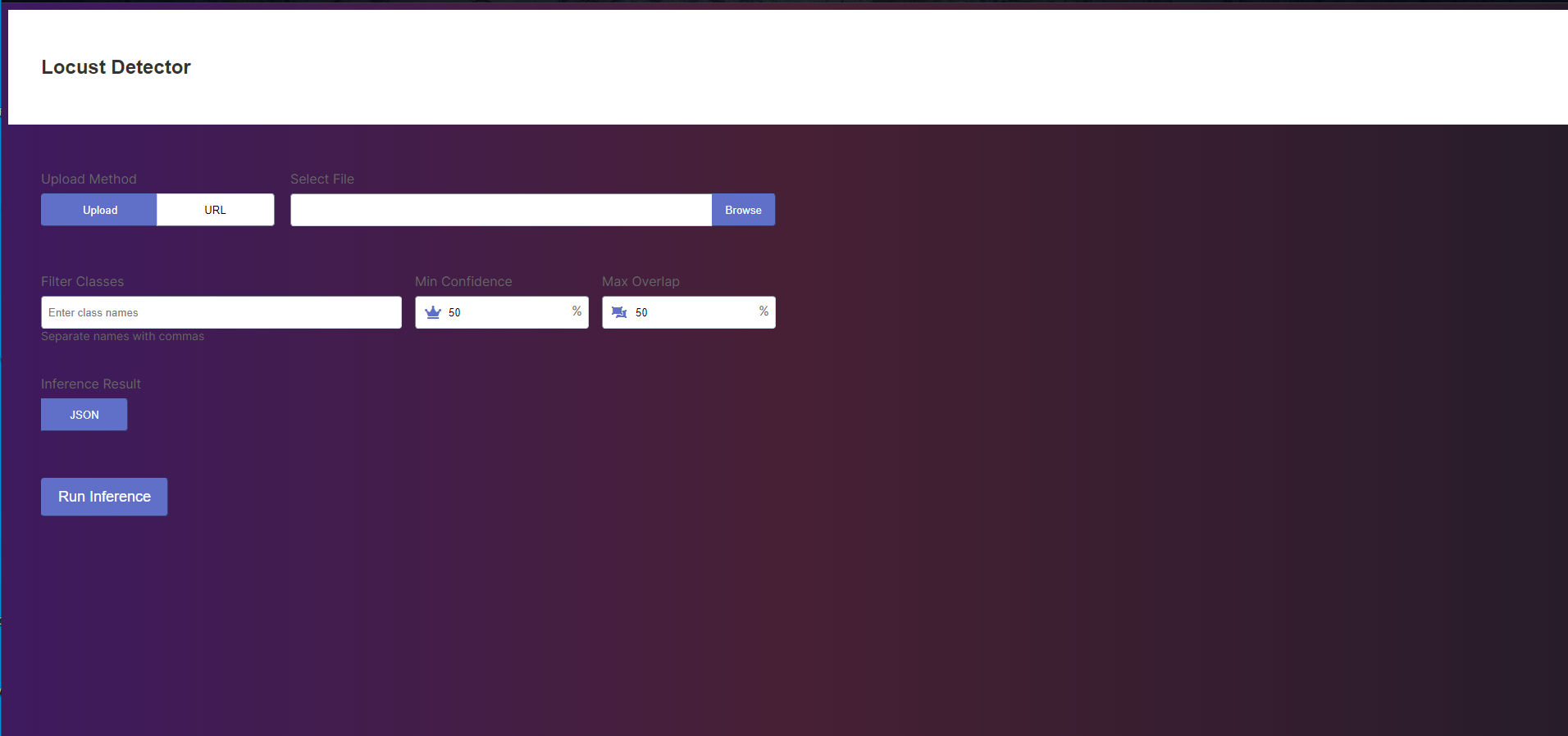
User-Friendly Interface: Creating an intuitive and user-friendly interface for the web app, ensuring accessibility for a wider audience.
Knowledge Expansion: Gaining expertise in computer vision, machine learning, and web development, laying the groundwork for future endeavors.
What we learned
Image Recognition Algorithms: Gained a deep understanding of various image recognition algorithms and their applications in locust detection.
Model Training Techniques: Acquired knowledge on training machine learning models, optimizing them for accurate locust identification.
Web Development Skills: Developed proficiency in web development languages such as HTML, CSS, and JavaScript for crafting interactive user interfaces.
What's next for LocustDetectionUsingAI
Drone Integration: Future plans involve extending the technology to drones for real-world locust detection and automated pesticide spraying.
Algorithm Refinement: Continuous refinement of the locust detection algorithm to improve accuracy and adaptability to diverse environmental conditions.
Data Collaboration: Collaborate with experts to gather diverse and high-quality locust images for further enhancing the machine learning model.
Field Testing: Conduct extensive field testing to validate the prototype's effectiveness in real-world agricultural settings.
Community Engagement: Explore opportunities for community engagement and collaboration to ensure the technology aligns with the needs of farmers and agricultural communities.
Built With
- css3
- html5
- javascript
- ml
- restapi

Log in or sign up for Devpost to join the conversation.