🧭 Locus: AI Travel Ecosystem
✨ Inspiration
Most travel apps stop at maps and bookings. But travelers crave context — from what to wear and how to stay safe to understanding local culture and language nuances. With Google’s Agent Development Kit (ADK), we envisioned Locus as a living, conversational travel companion — not just an app, but a voice that guides you through every part of your journey.
💡 What It Does
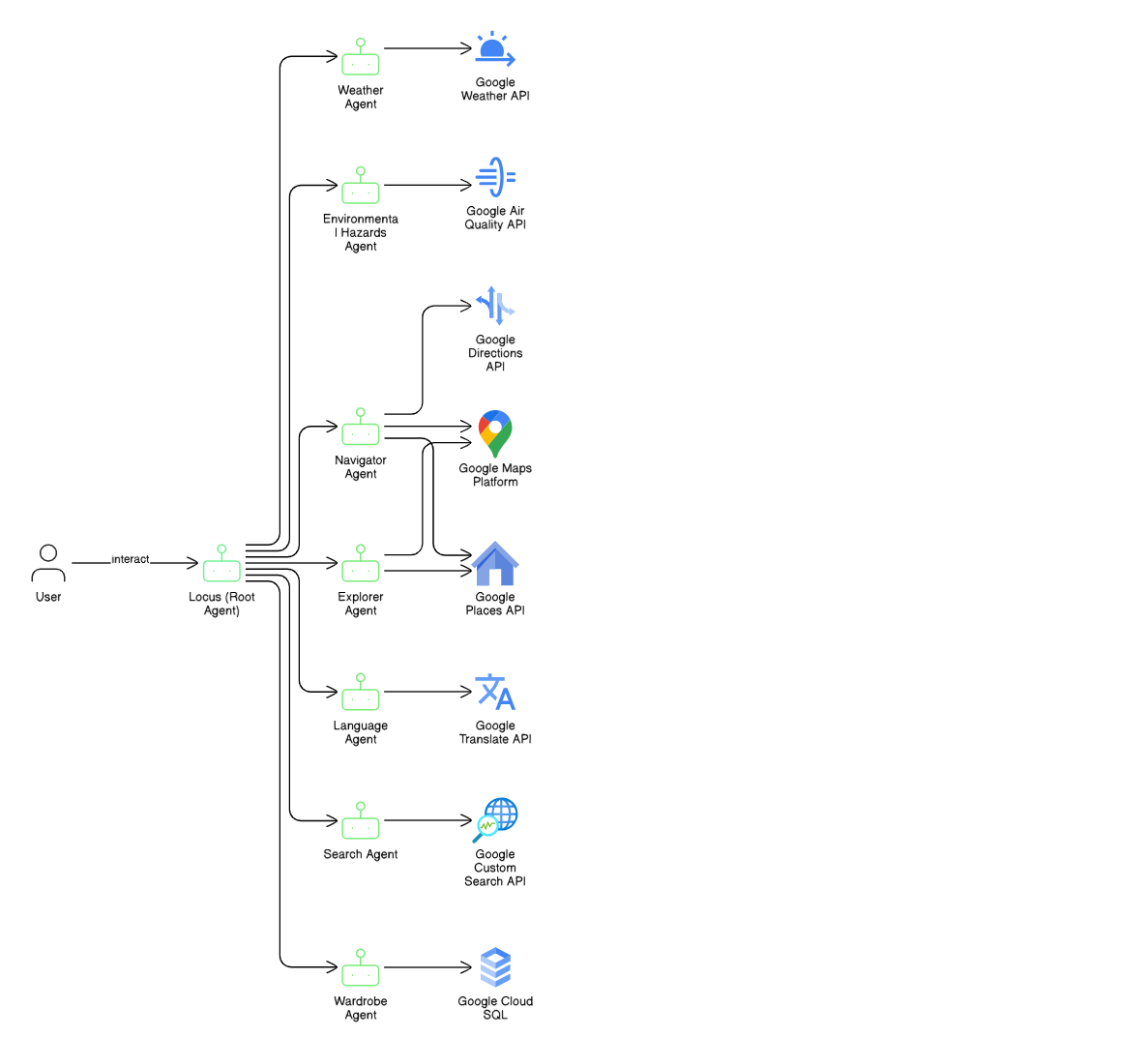
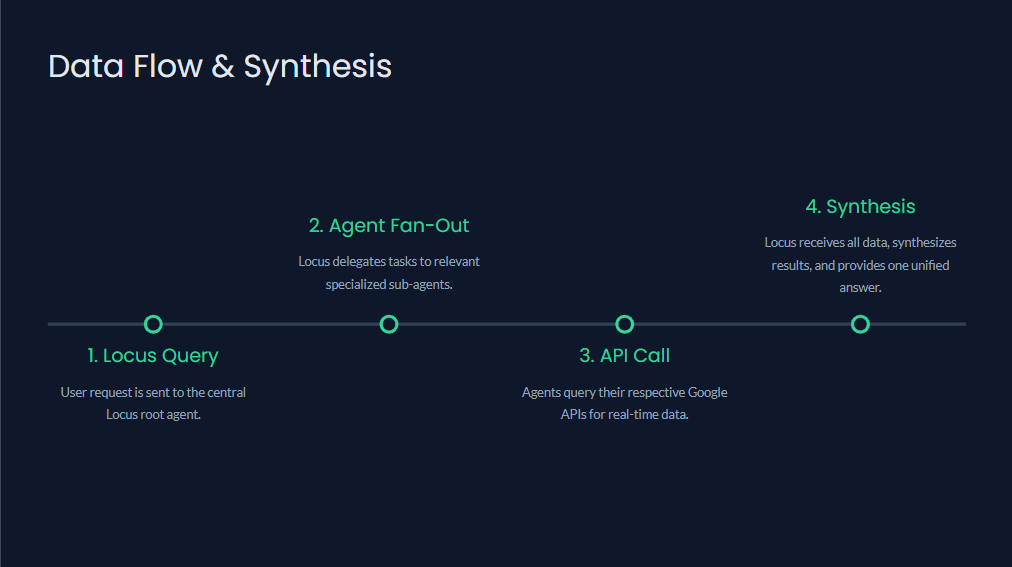
Locus is a multi-agent, voice-enabled AI travel assistant powered by Google’s ADK. It combines multiple specialized agents to plan trips, guide travelers in real time, and help them adapt as they explore new places.
Core Features
- 🗣️ Voice Interaction – Speak naturally with Locus for directions, translations, outfit ideas, or safety tips.
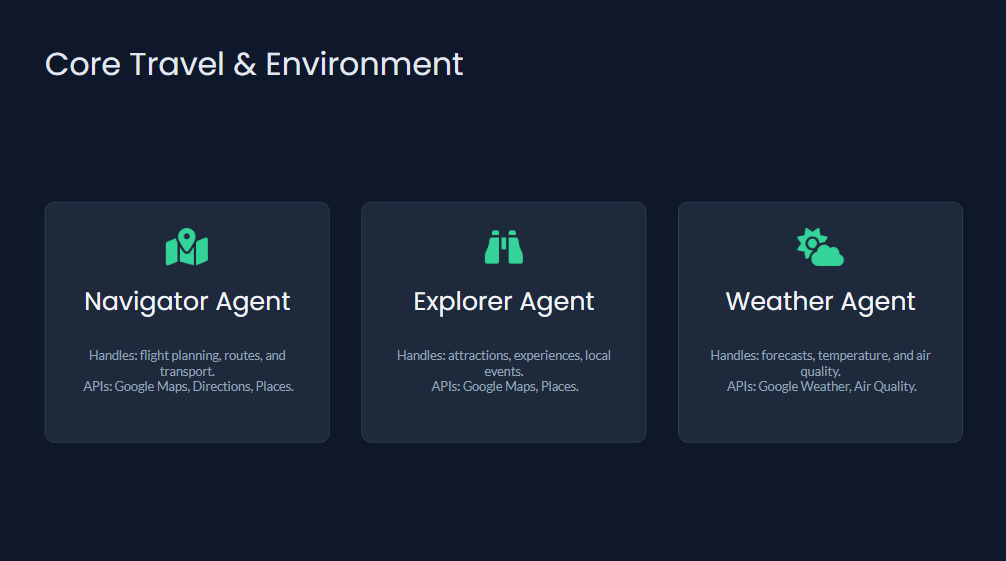
- 🌍 Navigator – Handles flights, routes, and local transportation with Google Maps and Directions APIs.
- ☁️ Weather – Provides hyperlocal weather forecasts and air quality monitoring.
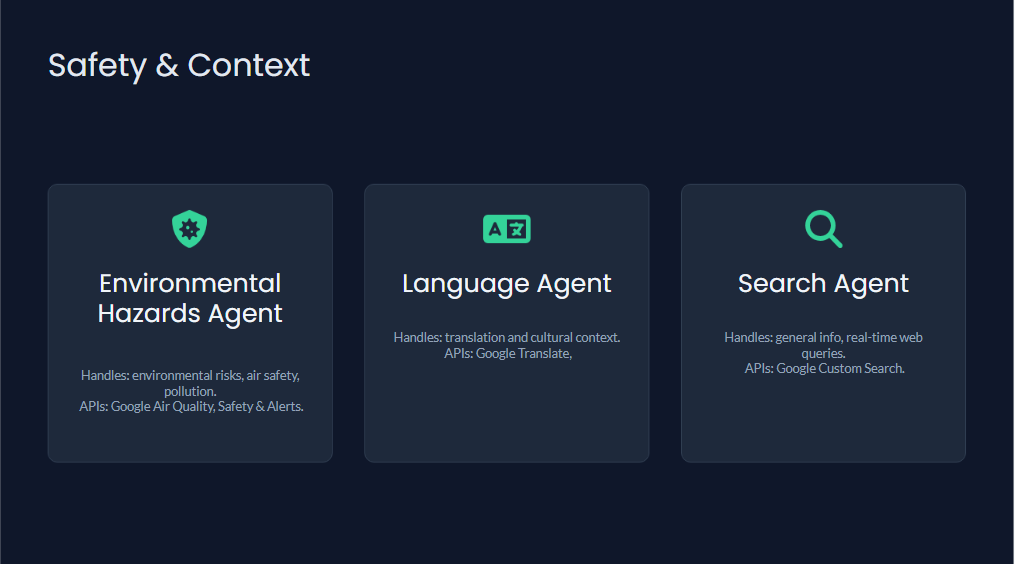
- ⚠️ Environmental Safety – Detects hazards, pollution, and travel warnings using Google’s environmental APIs.
- 🗣️ Language – Offers real-time translation and cultural etiquette guidance.
- 🎒 Explorer – Suggests hidden gems, activities, and local experiences.
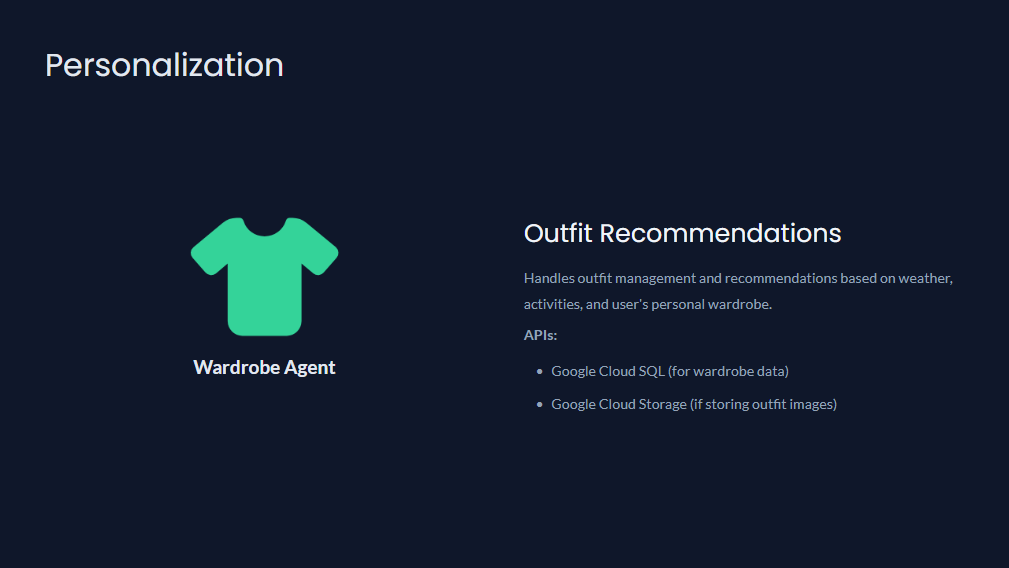
- 👗 Wardrobe – Recommends travel outfits based on weather, event type, and destination culture.
- 🔎 Search – Retrieves relevant travel info, articles, and local insights via Google Search.
🏗️ How We Built It
- Built on Google’s Agent Development Kit (ADK) for structured multi-agent collaboration.
- Integrated Google Maps, Air Quality, Weather, Translation, and Search APIs.
- Implemented real-time voice I/O using Google Cloud Speech-to-Text and Text-to-Speech.
- Designed a PostgreSQL-backed wardrobe system for outfit storage and personalization.
- Developed modular CRUD tools and utilities for cleaner database management.
- Used async orchestration to synchronize multiple agent responses for natural conversation flow.
⚙️ Challenges We Ran Into
API & Infrastructure
- Inconsistent documentation across ADK and Google APIs.
- Undocumented runtime errors during multi-tool chaining.
- Managing authentication and rate limits across multiple services simultaneously.
Asynchronous Voice Handling
- Async conflicts on Windows slowed voice streaming integration.
- Handling overlapping sub-agent voice responses.
- Avoiding repeated waiting prompts in synthesized speech outputs.
Database & Schema
- Authentication issues and connection limits during multi-agent access.
- Redesigning wardrobe schema to support flexible recommendations.
- Efficient connection pooling for voice queries that trigger DB reads.
Multi-Agent Coordination
- Synchronizing responses between Navigator, Weather, and Wardrobe agents.
- Maintaining natural conversation flow across multiple active tools.
- Preventing redundant database calls or repeated search requests.
🧩 Accomplishments We’re Proud Of
- Fully voice-enabled multi-agent ecosystem built on ADK.
- Modularized tools for clarity — database utils, CRUD layers, and sub-agent orchestration.
- Optimized async behavior for smooth real-time responses.
- Seamlessly combined multiple Google APIs under a single conversational interface.
- Achieved natural back-and-forth dialogue across multiple agents without manual switching.
📚 What We Learned
- Voice-first design changes everything — agents must sound helpful, not robotic.
- Structuring prompts and tool outputs is crucial for clean conversation flow.
- The ADK’s modular model is powerful but demands strong architectural discipline.
- Travel is a context-rich domain where AI empathy (tone + timing) matters as much as information.
🚀 What’s Next for Locus
- AR Travel Lens – Combine camera input with maps for real-time scene understanding.
- Smart Itinerary Builder – Generate adaptive travel plans based on preferences and live conditions.
- Community Sharing – Allow travelers to add local tips and custom outfit ideas.
- Offline Mode – Cache essential data, translations, and maps for low-connectivity regions.
- Locus API & SDK – Enable other developers to build plugins or integrate Locus agents into their apps.
Built With
- airquality-api
- cloudrun
- cloudsql
- google-adk
- google-maps
- python
- weather-api

Log in or sign up for Devpost to join the conversation.