-
-
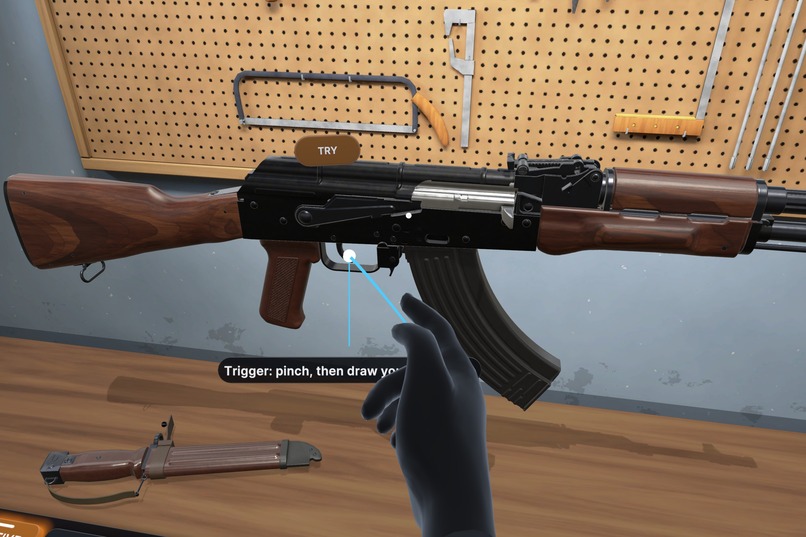
Rifle close up
-
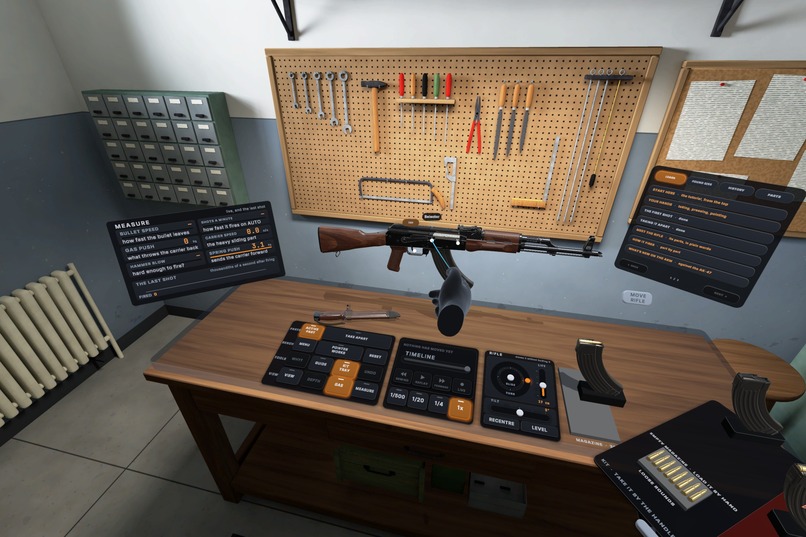
Overview
-
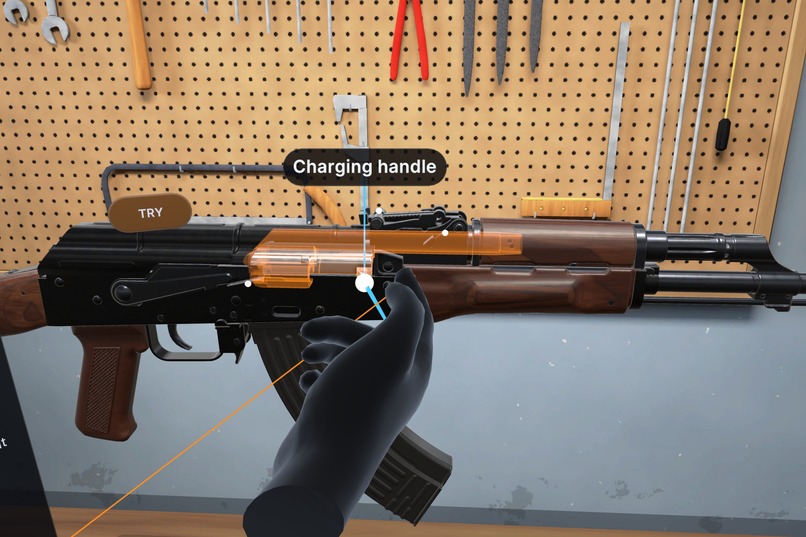
Rifle manipulation
-
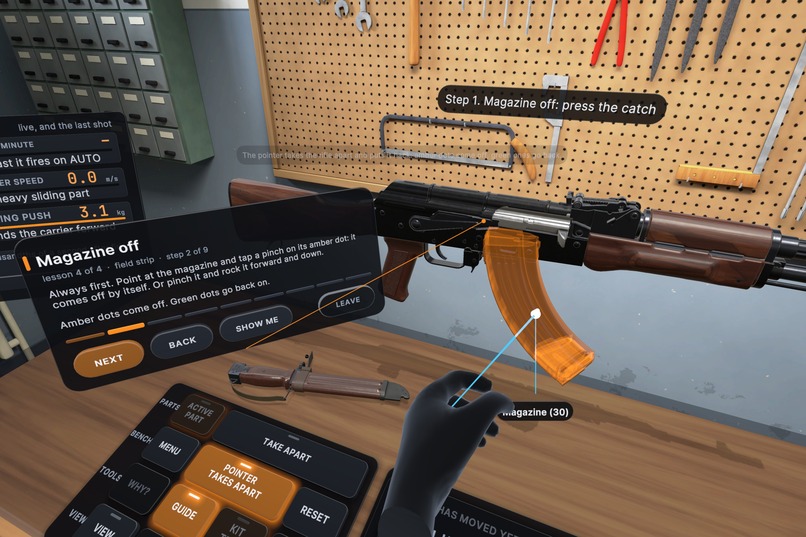
Guiding instructions
-
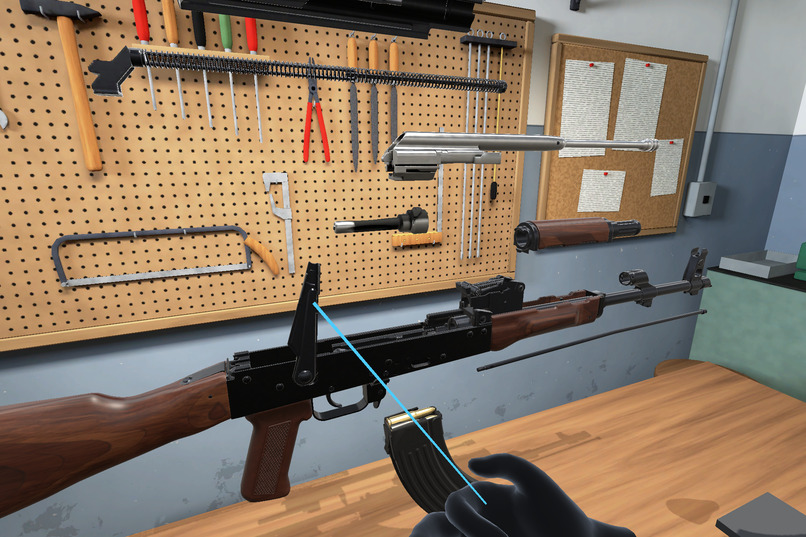
Disassembly
-
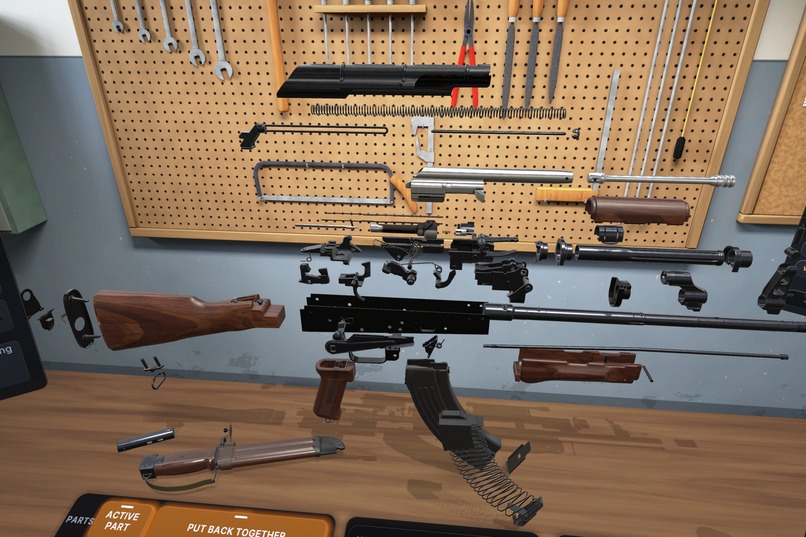
Disassembled
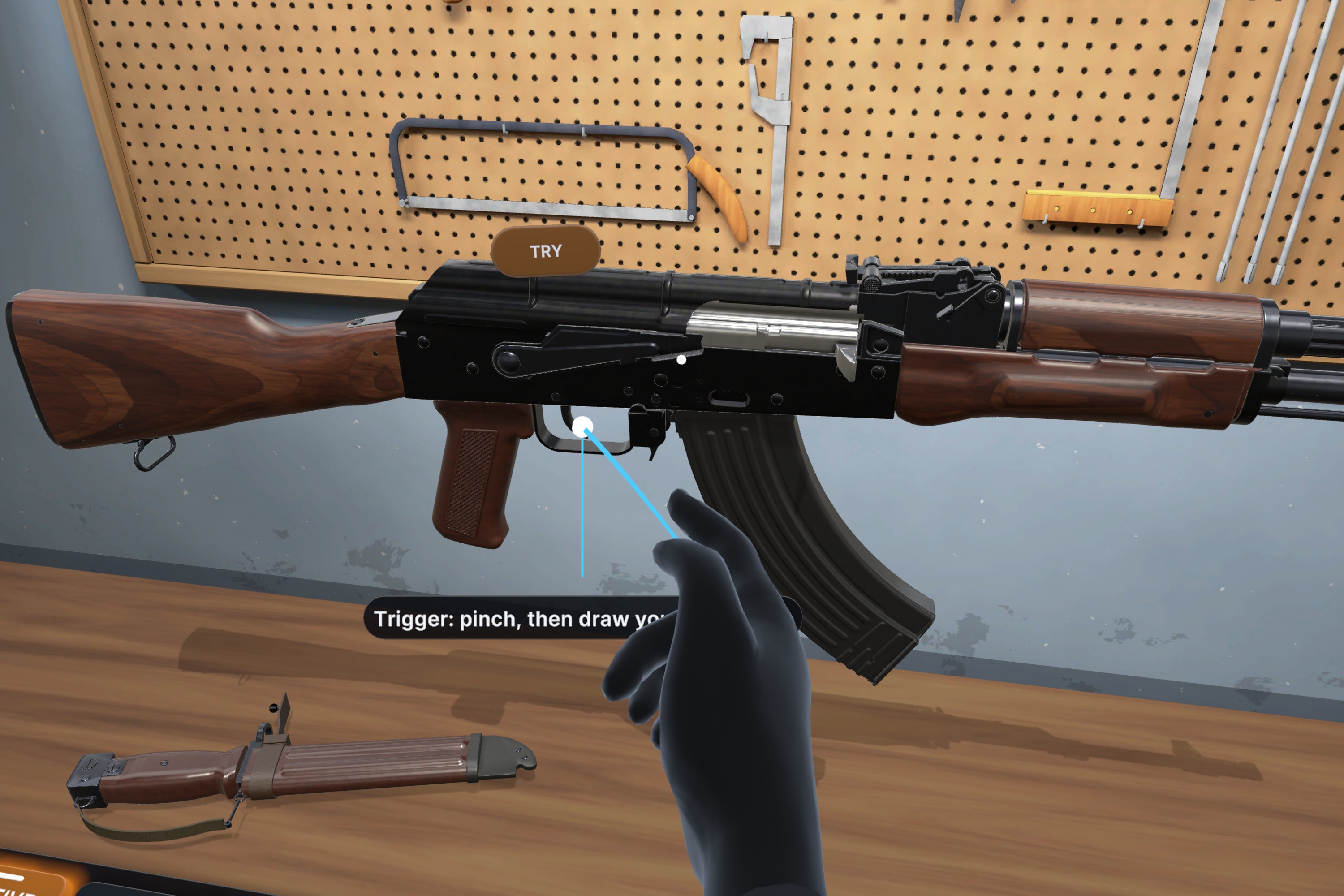
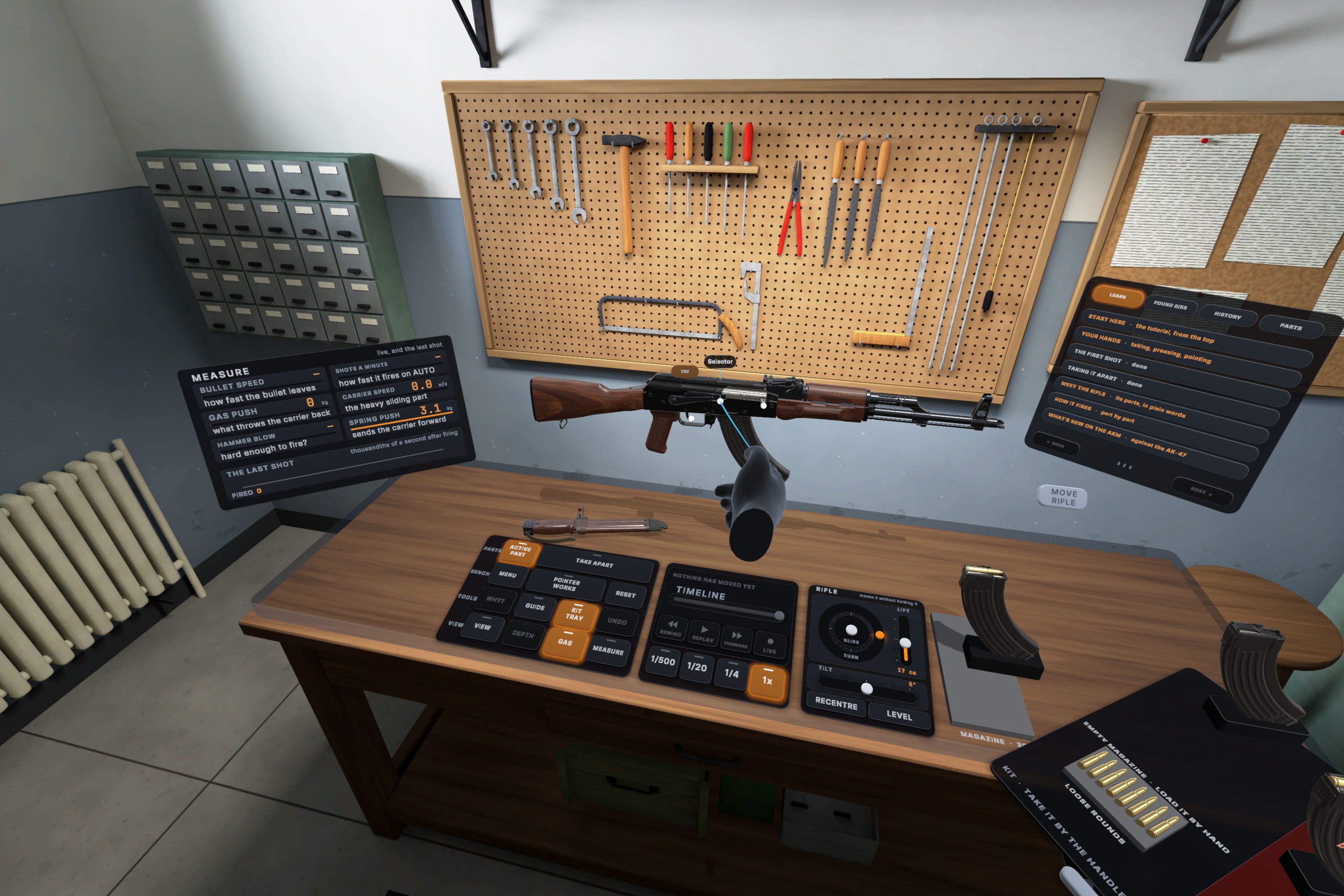
Lockwork VR
Inspiration
I was inspired by World of Guns, a game that lets you disassemble firearms and explore their internal mechanisms. However, it barely explains how anything works, making it difficult for beginners to understand what they're looking at.
I wanted to create a more educational and accessible experience, with guided lessons, optional explanations, and historical trivia. VR and hand tracking also offered the opportunity to go beyond clicking on parts and let players examine the mechanisms more closely.
What it does
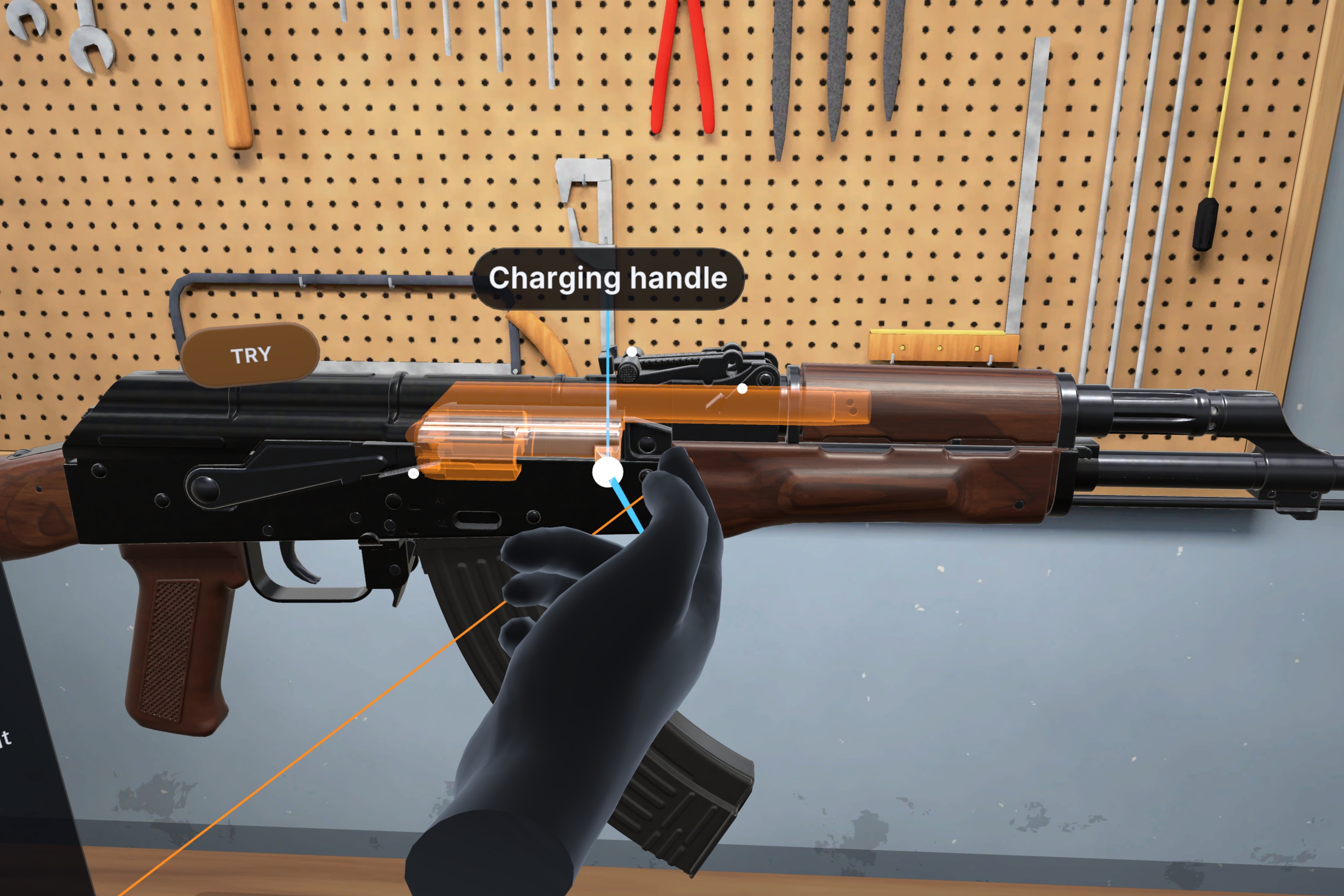
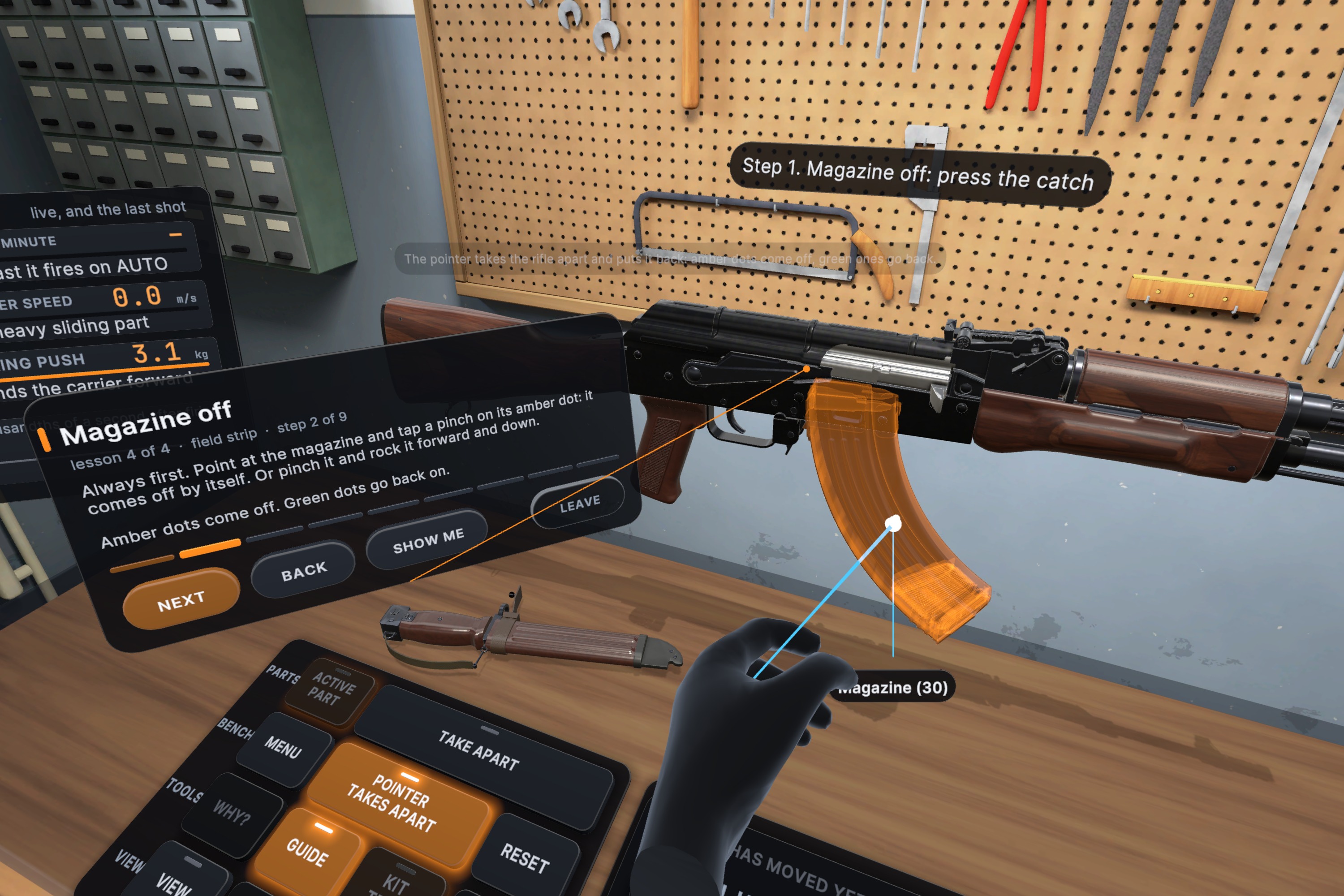
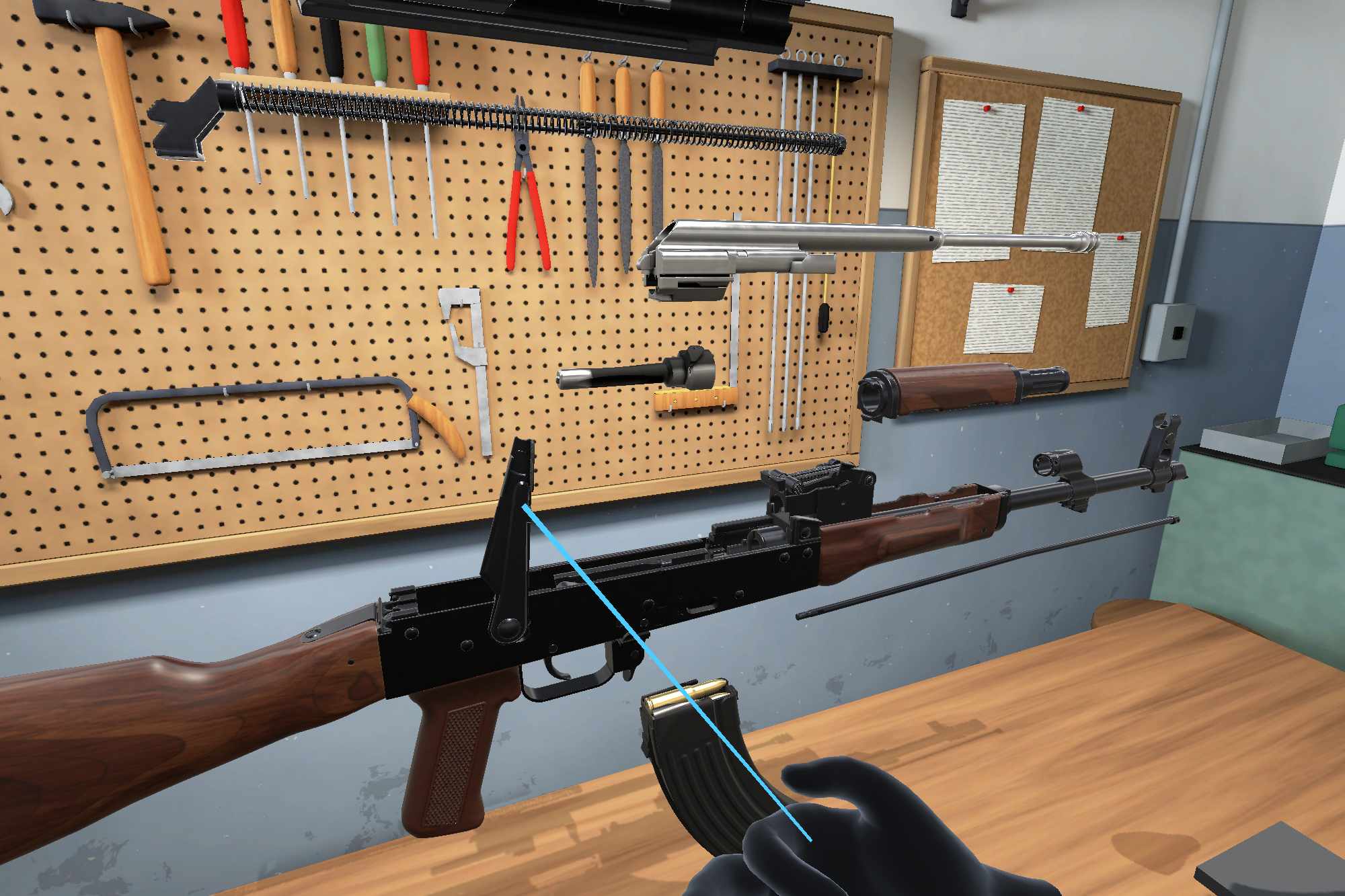
Lockwork VR is an educational VR experience where you can explore, disassemble, and learn how an AKM rifle works using hand tracking.
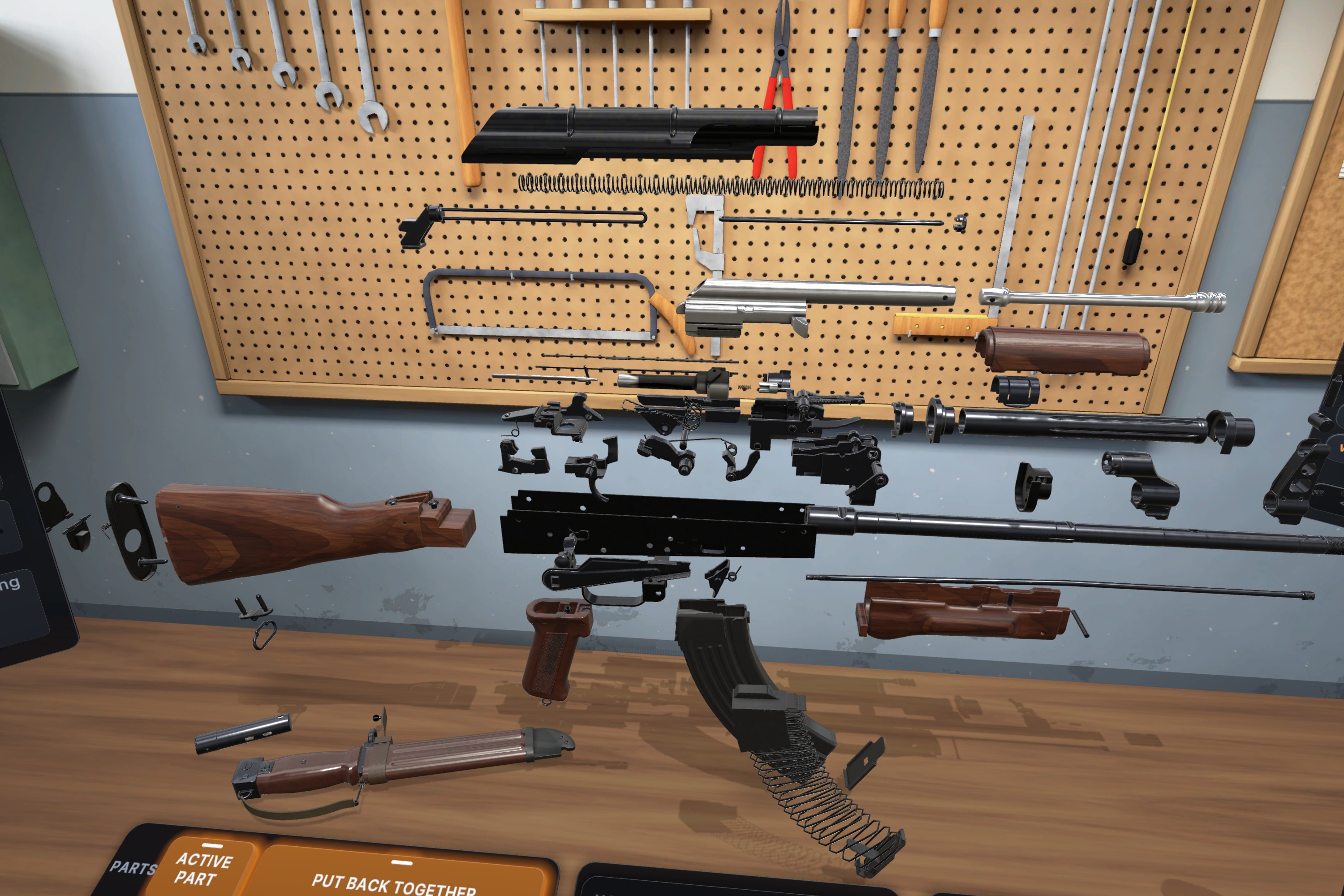
- Complete disassembly: Take the rifle apart and reassemble it in 121 steps, with parts following their actual removal paths and mechanical constraints.
- Mechanical simulation: Watch the internal mechanisms operate in real time, slow down the firing cycle, and explore mechanical malfunctions.
- Guided learning: Narrated lessons explain how components work, with optional technical explanations and historical trivia.
- Hands-on interactions: Grab and examine components, manipulate mechanisms, and switch between assembled and exploded views.
How I built it
I developed the project in Unity 6 for Meta Quest 3, using hand tracking for all interactions.
The AKM was recreated in Blender using various online references, with each component modeled individually and checked against the original dimensions.
I implemented a mechanical simulation where components interact with each other rather than following predefined animations, along with a material-based sound system for different surfaces and components.
I also built an automated testing system that runs on the headset using simulated hand interactions, performing 81 checks to catch issues with disassembly, reassembly, and component positioning.
AI-assisted coding tools helped me throughout development, particularly with implementation, debugging, and testing.
Challenges
- Engineering drawings: Interpreting old russian drawings with unusual projections, cross-sections, and difficult-to-read measurements.
- Hand tracking: Making tiny components easy to interact with despite the lack of haptic feedback and the limitations of finger tracking.
- Reassembly accuracy: Fixing positioning errors that left 15 of the rifle's 284 transforms incorrectly placed after reassembly.
- Mechanical simulation: Making all the moving parts interact correctly, where a small error in one component could affect the entire mechanism.
What I learned
- Hand tracking requires designing interactions differently from traditional VR controllers, especially when handling small objects.
- Occlusion can easily cause tracking loss, and the smaller tracking area means objects and interactions need to stay within the headset's cameras' field of view.
- Simulating a working mechanism is much more complicated than animating one, but makes the experience more realistic and flexible.
- Automated testing on the actual headset is essential, since interactions that work in the Unity Editor don't always behave the same way in VR.
- Working from original engineering drawings taught me a lot about mechanical design and how much thought goes into even the smallest components.
What's next
I plan to release Lockwork VR on the Meta Horizon Store, add more firearms with the same level of detail, and introduce a workshop mode where players can diagnose and fix mechanical malfunctions on their own.

