Inspiration
In today's digital age, we often lose track of just how much time slips away while we’re glued to our devices. A quick check of social media can turn into hours of scrolling without us even realizing it. The more time we spend in front of screens, the more it deteriorates our productivity and focus. At the same time, sitting hunched over our screens for hours takes a toll on our posture and long-term physical health. The costs add up in ways we don’t always notice until it’s too late.
That’s why we set out to create a solution that not only helps people take control of their screen time but also promotes healthier habits for both the mind and body. Instead of simply tracking behavior, we aimed to create something that actively motivates users through gamification, helping them stay productive, build sustainable habits, and feel the benefits of a healthier relationship with technology.
What it does
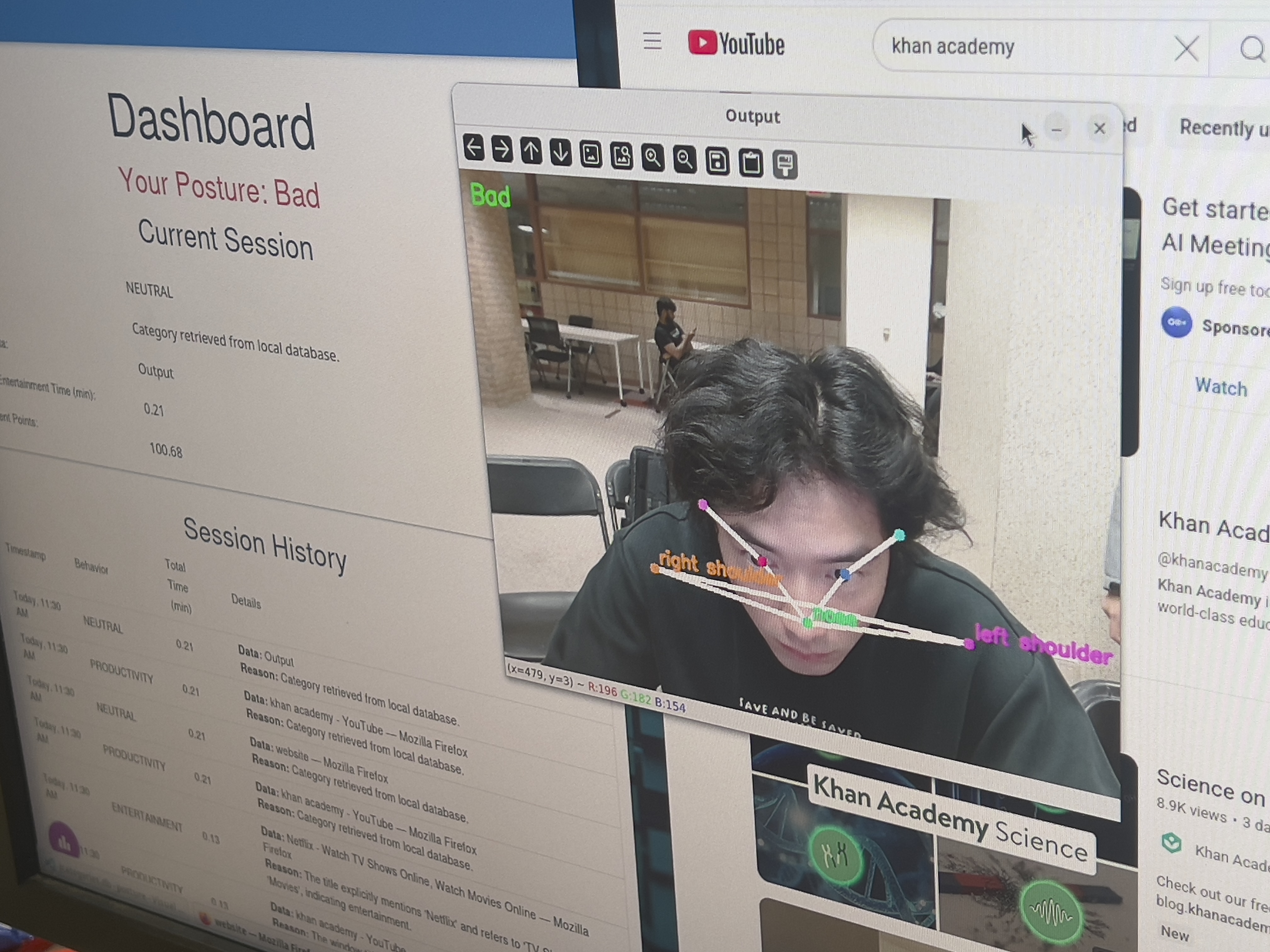
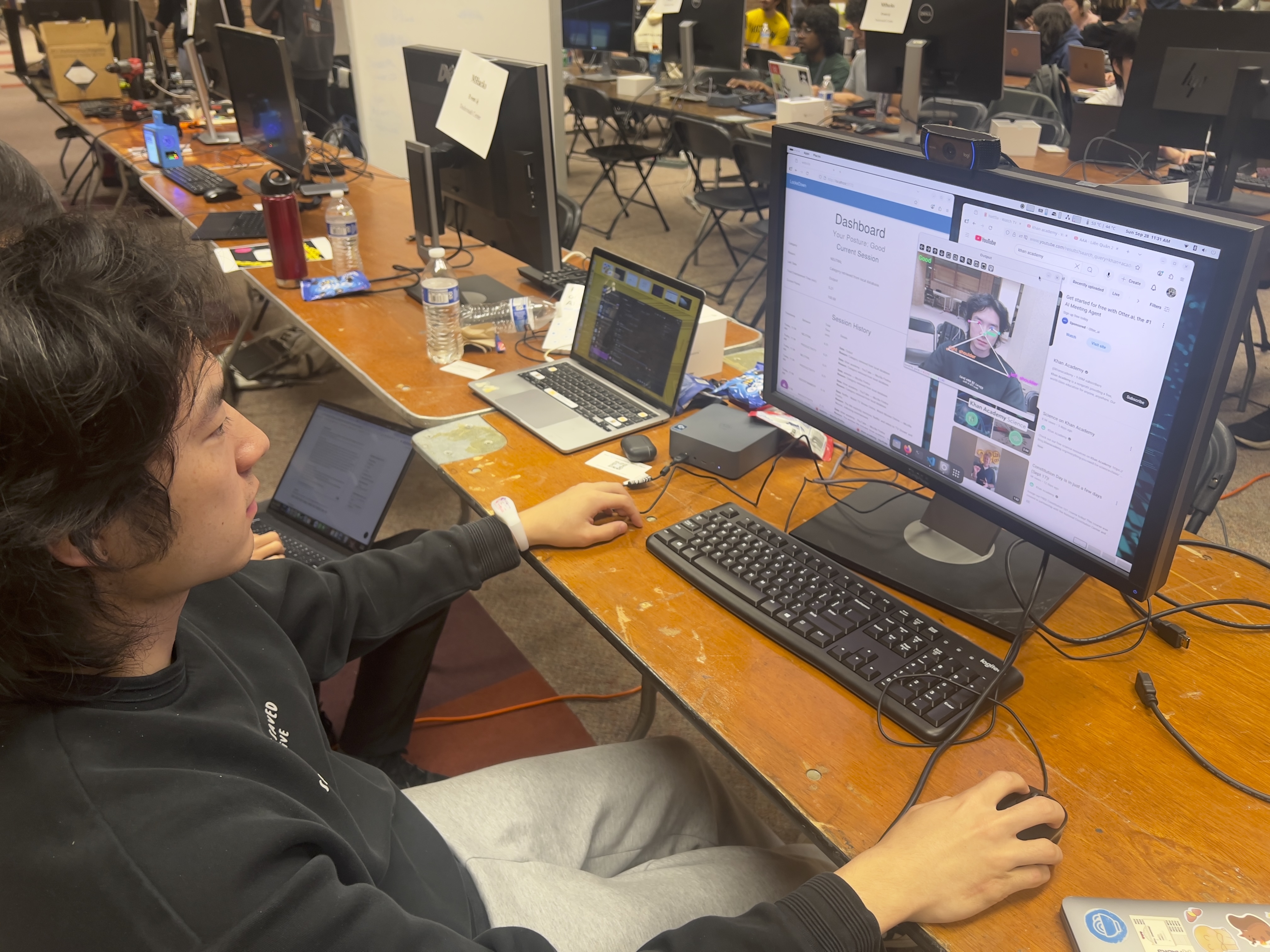
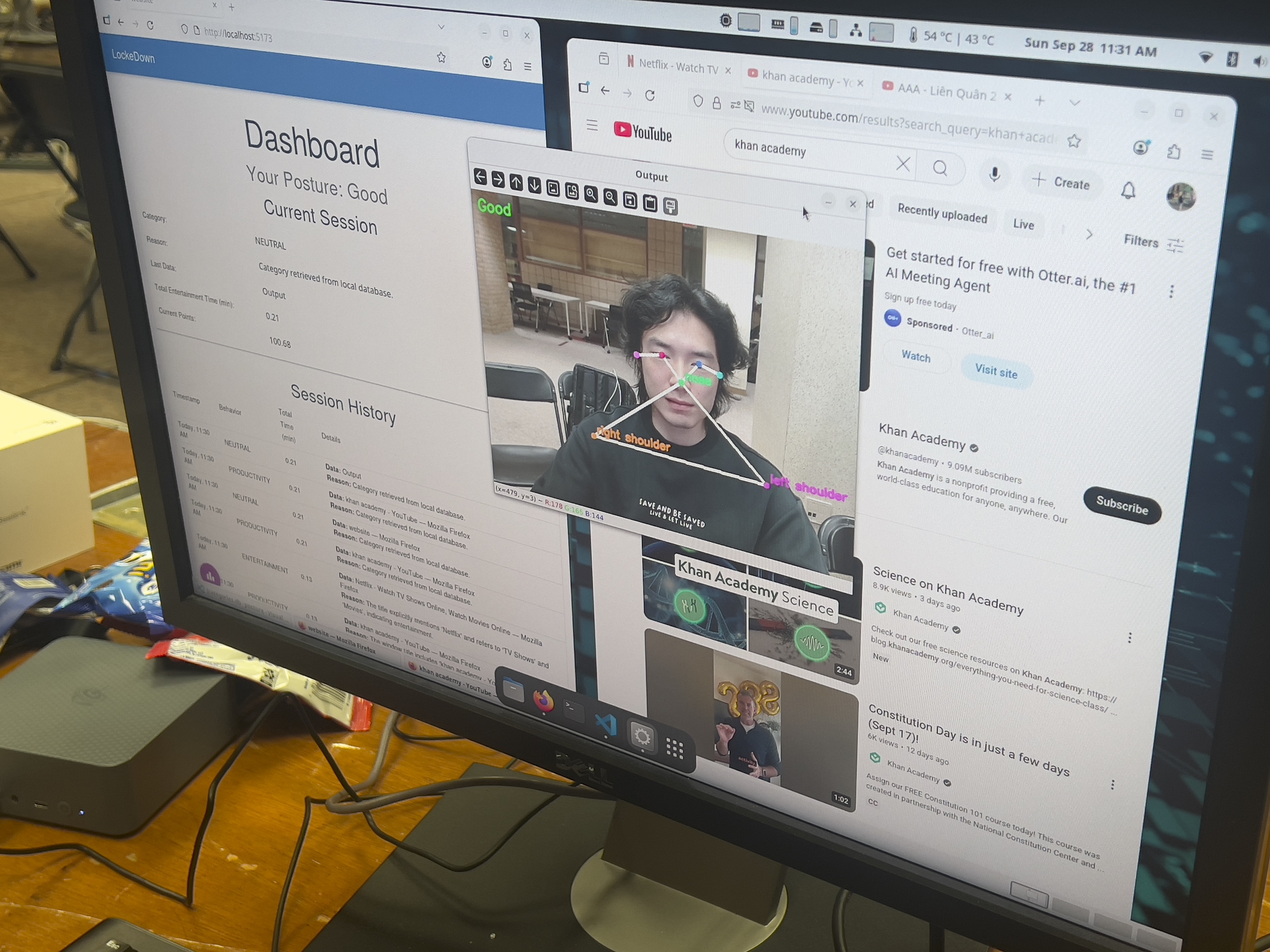
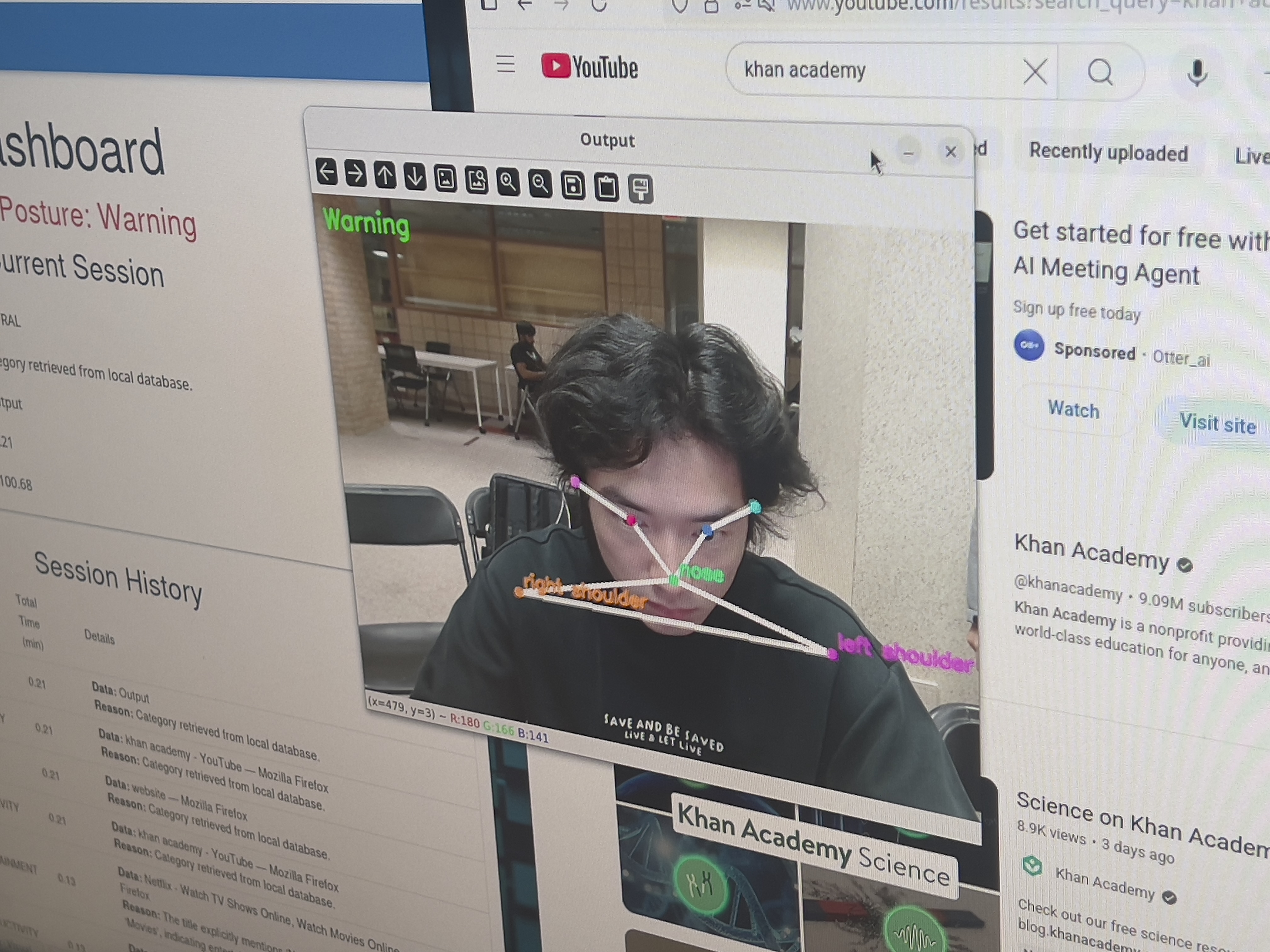
LockeDown helps users build healthier digital habits by combining productivity tracking with real-time posture monitoring. It tracks app usage sessions to measure focus and screen time, while also leveraging device sensors to detect posture. If it notices slouching, it provides gentle feedback and actionable tips to encourage better alignment. To keep users motivated, LockeDown uses a gamified scoring system, awarding points for productive behavior and good posture, while deducting for distractions or poor habits. A built-in leaderboard adds a competitive edge, letting users compete with their friends while staying consistent and encouraging productive routines.
How we built it
We combined hardware, software, and gamification to bring our idea to life. For posture tracking, we integrated MemoryX hardware sensors that can detect and log user posture in real time. The backend was developed in Python, handling data processing, scoring logic, and integration with the Gemini API to classify user activity and determine whether time spent on specific apps or tasks should count as productive or distracting. On the frontend, we built an interactive interface using HTML, CSS, JavaScript, TypeScript, and React, allowing users to view their progress, leaderboards, and productivity stats. To ensure scalability, all user data, including screen time records and points, is stored and managed in a SQL database. Together, these pieces form a smooth platform that blends posture awareness, productivity tracking, and gamified motivation into a single experience.
Challenges we ran into
We faced several challenges while building the system. Designing a posture detection model that could accurately read and interpret human posture while filtering out noise proved to be complex. Ensuring app-session tracking remained precise and updated in real time added another layer of difficulty. On the frontend, we had to create a user-friendly interface that could fetch and display data from multiple sources without overwhelming the user. Capturing and interpreting the user’s active window also presented challenges, especially on Linux systems using Wayland, which initially did not support retrieving this data. Additionally, excessive Gemini API calls threatened performance, so we implemented a SQL database to cache queries and reduce redundant requests.
Accomplishments that we're proud of
We successfully combined screen-time analytics and posture detection into a single, seamless app. Our team implemented a clean, interactive frontend featuring a scoring system and leaderboard to motivate users. Using MemoryX hardware and mathematical derivations, we were able to accurately identify poor posture in real time. Along the way, we researched and integrated unfamiliar Python libraries to boost functionality and performance.
What we learned
We learned how to accurately analyze posture with MemoryX hardware, even when working in a Linux environment where capturing OS-level data presented unique challenges. We also built FastAPI services to securely and efficiently handle communication between the frontend and backend. In addition, we explored detecting local app usage at the OS level and leveraging AI to perform real-time analytics on productivity patterns. Along the way, we gained hands-on experience with databases, React, HTML/CSS, and the Gemini API, integrating these tools into a cohesive system. This project significantly advanced our skills in web development, backend integration, applied AI, and data-driven design.
What's next for LockeDown
We plan to expand LockeDown with personalized posture exercises, including stretches and movement reminders tailored to each user. A Lockdown Mode will dynamically restrict app usage based on productivity, helping users stay focused during work sessions. Users will also have personal profiles that display detailed statistics, such as their most-used apps and overall productivity trends, which can optionally be shared publicly. To further motivate users, we aim to introduce achievements, daily streaks, and progress bars, giving visual feedback on their habits and progress. Finally, we will continue to polish the UI, making the interface even more intuitive, engaging, and enjoyable to use.


Log in or sign up for Devpost to join the conversation.