-
-
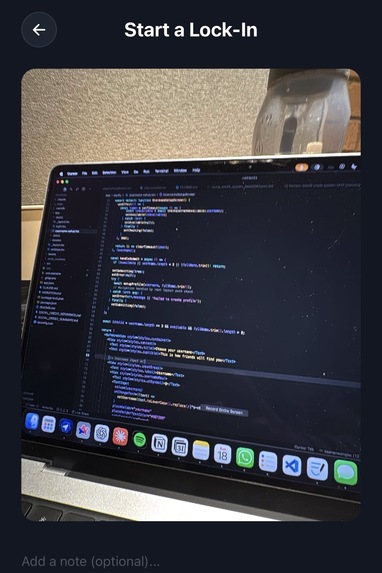
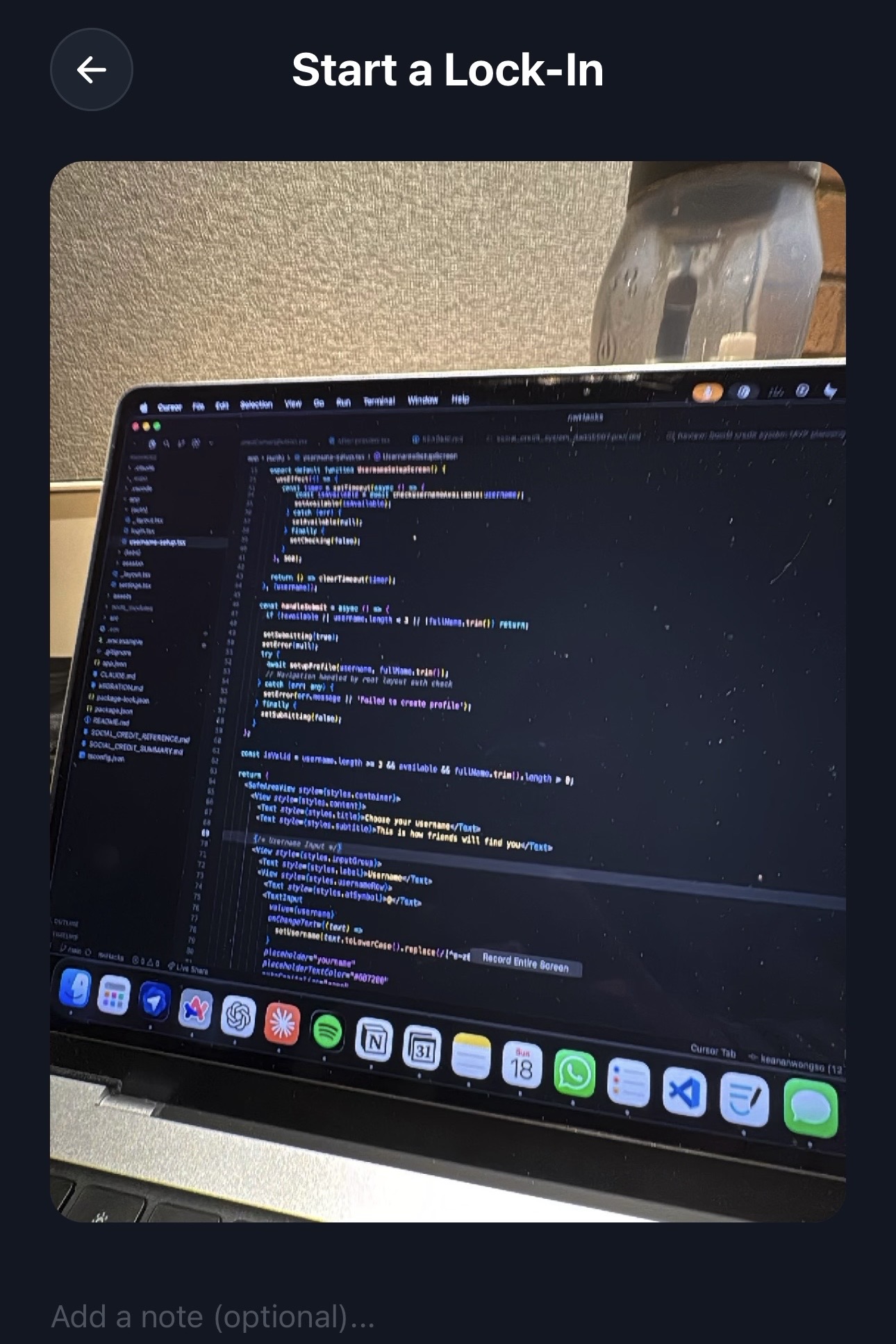
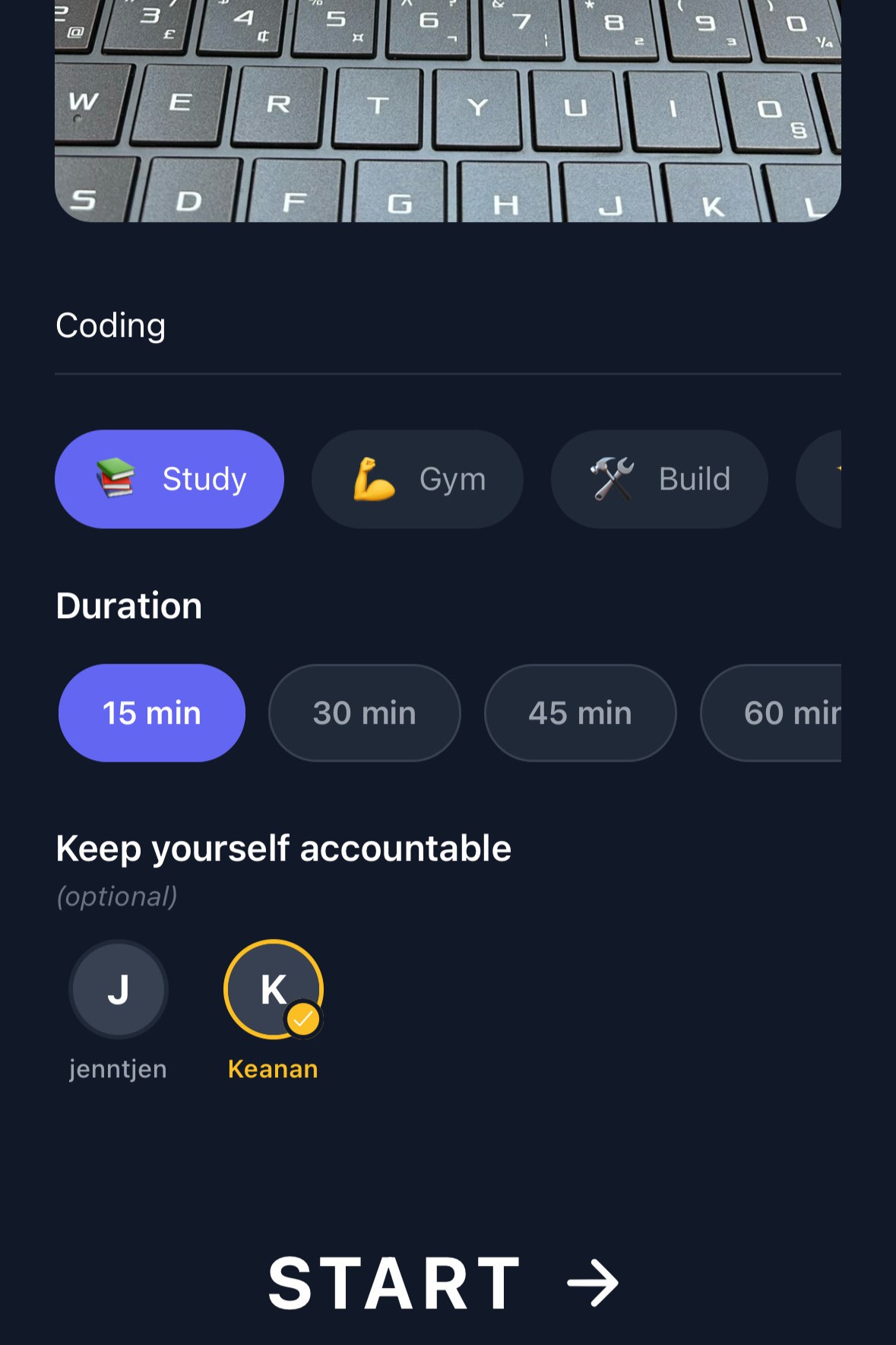
Start a Lock-In Session
-
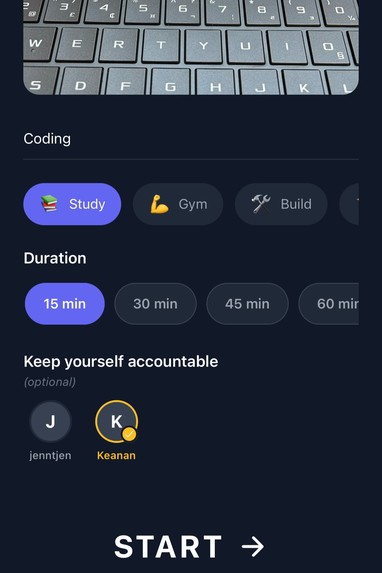
Add a note, pick a category and duration, and choose a friend to keep you accountable
-
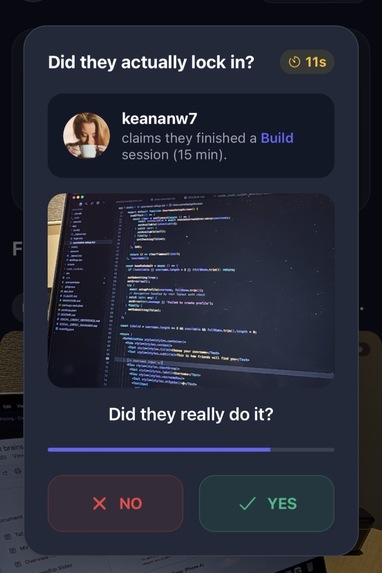
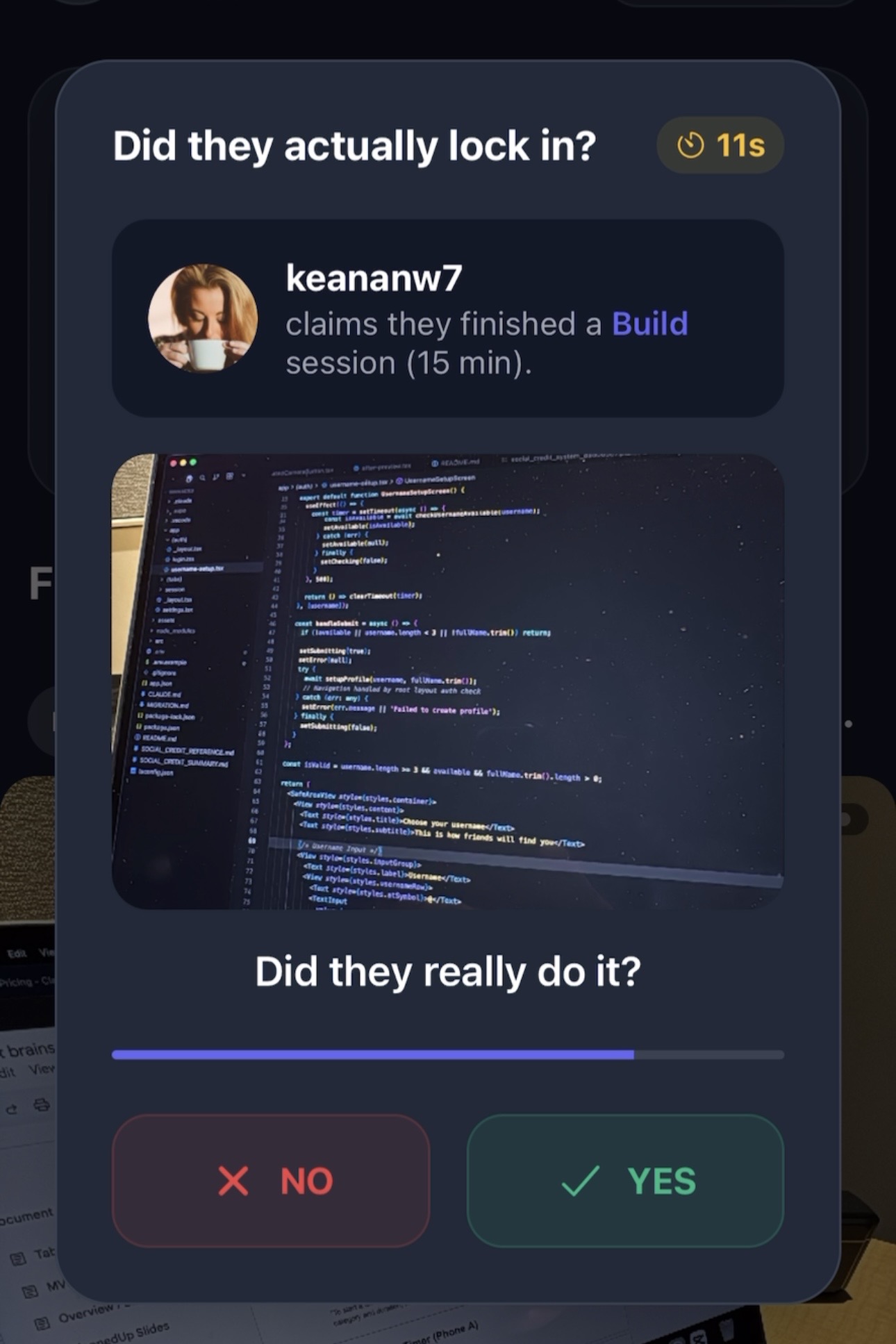
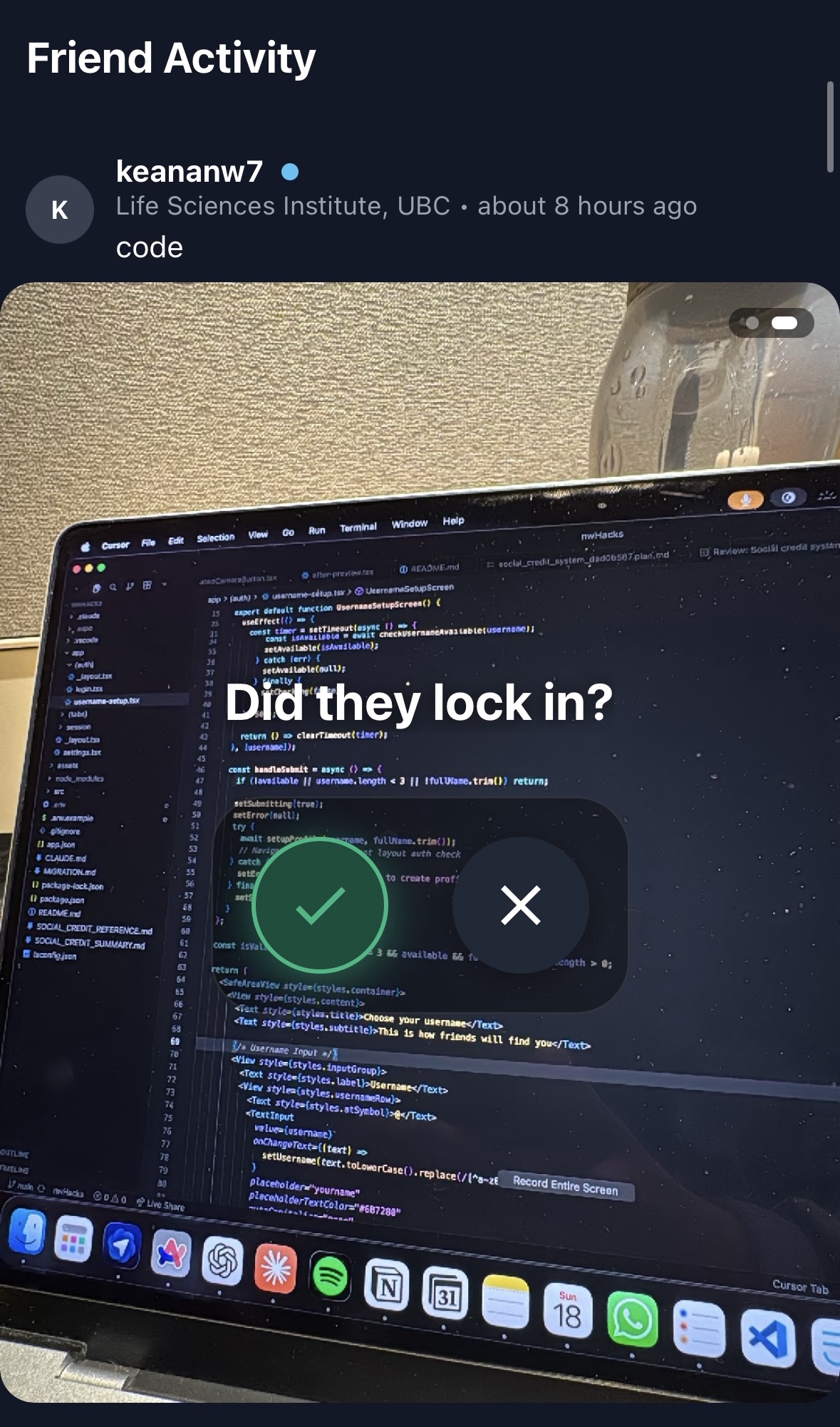
When you end your session, your accountable friend receives a yes-or-no notification asking if you actually locked in.
-
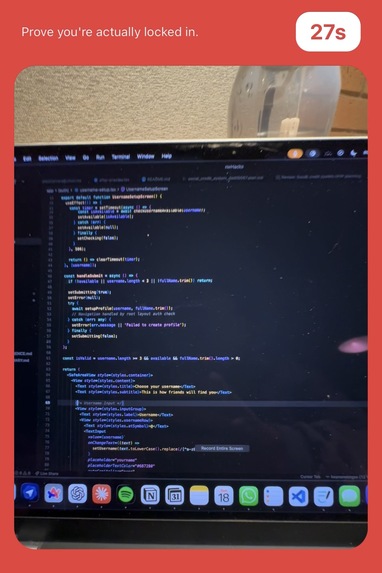
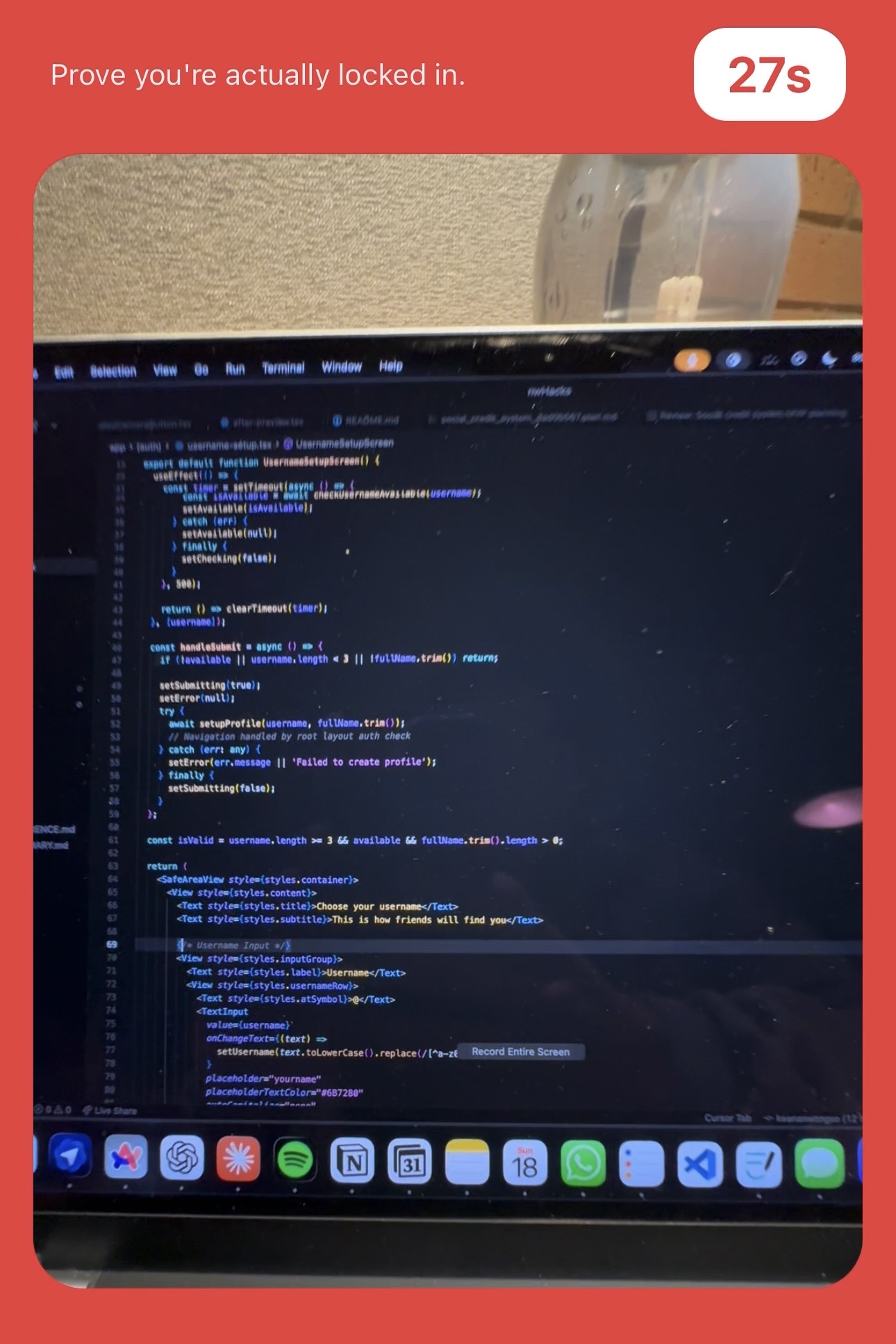
If “No” is selected, the user is prompted to submit additional proof.
-
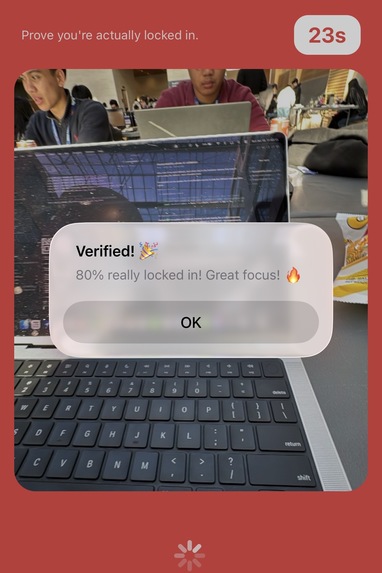
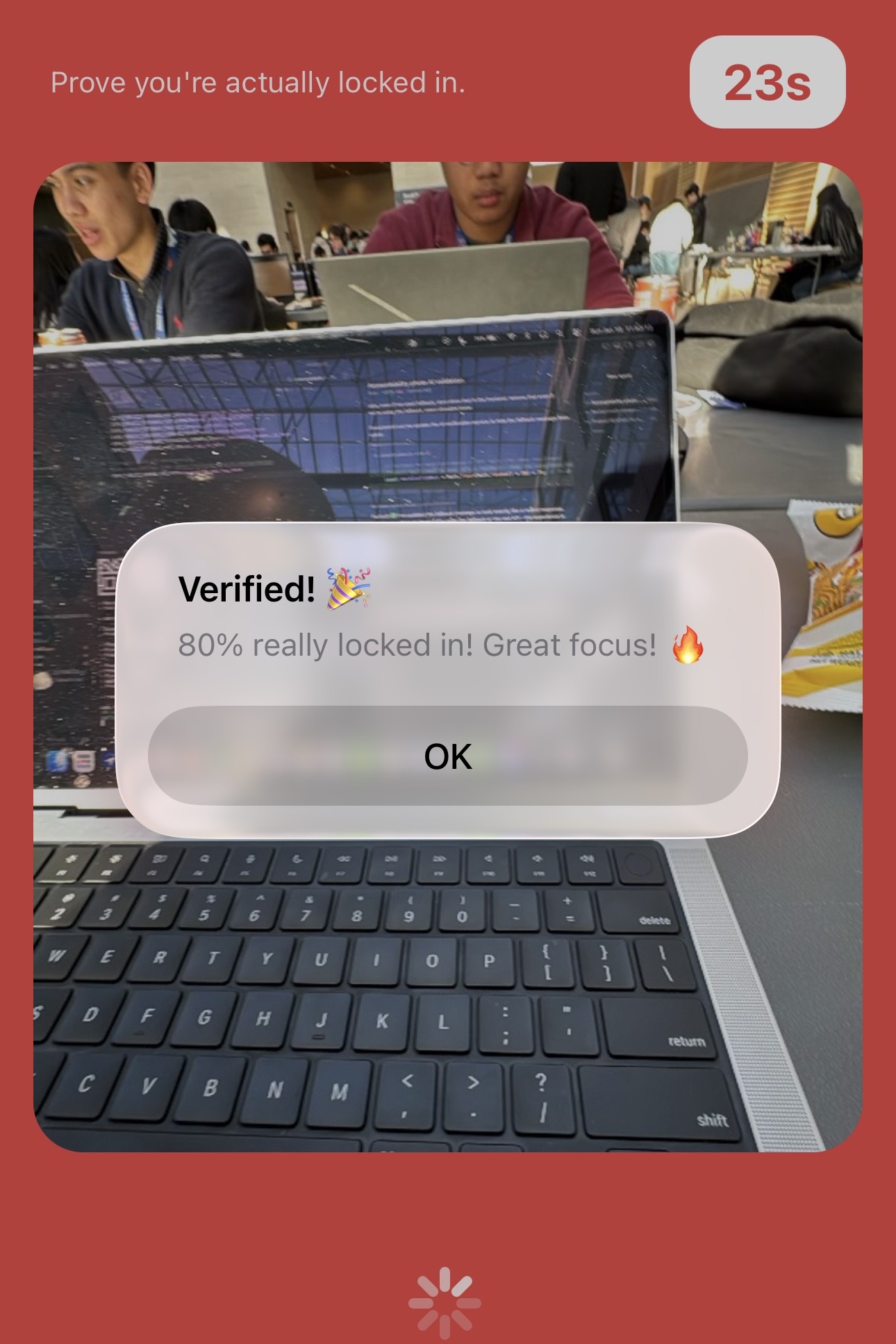
Notification showing the user that their submitted proof has been verified by AI
-
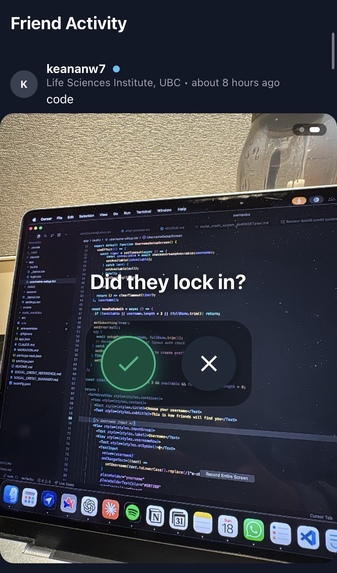
Feed page where you can vote on whether your friend actually locked in.
-
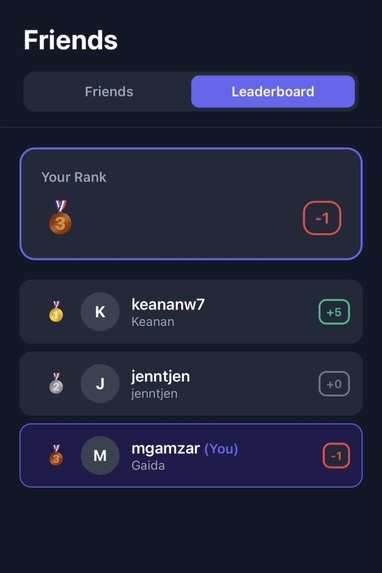
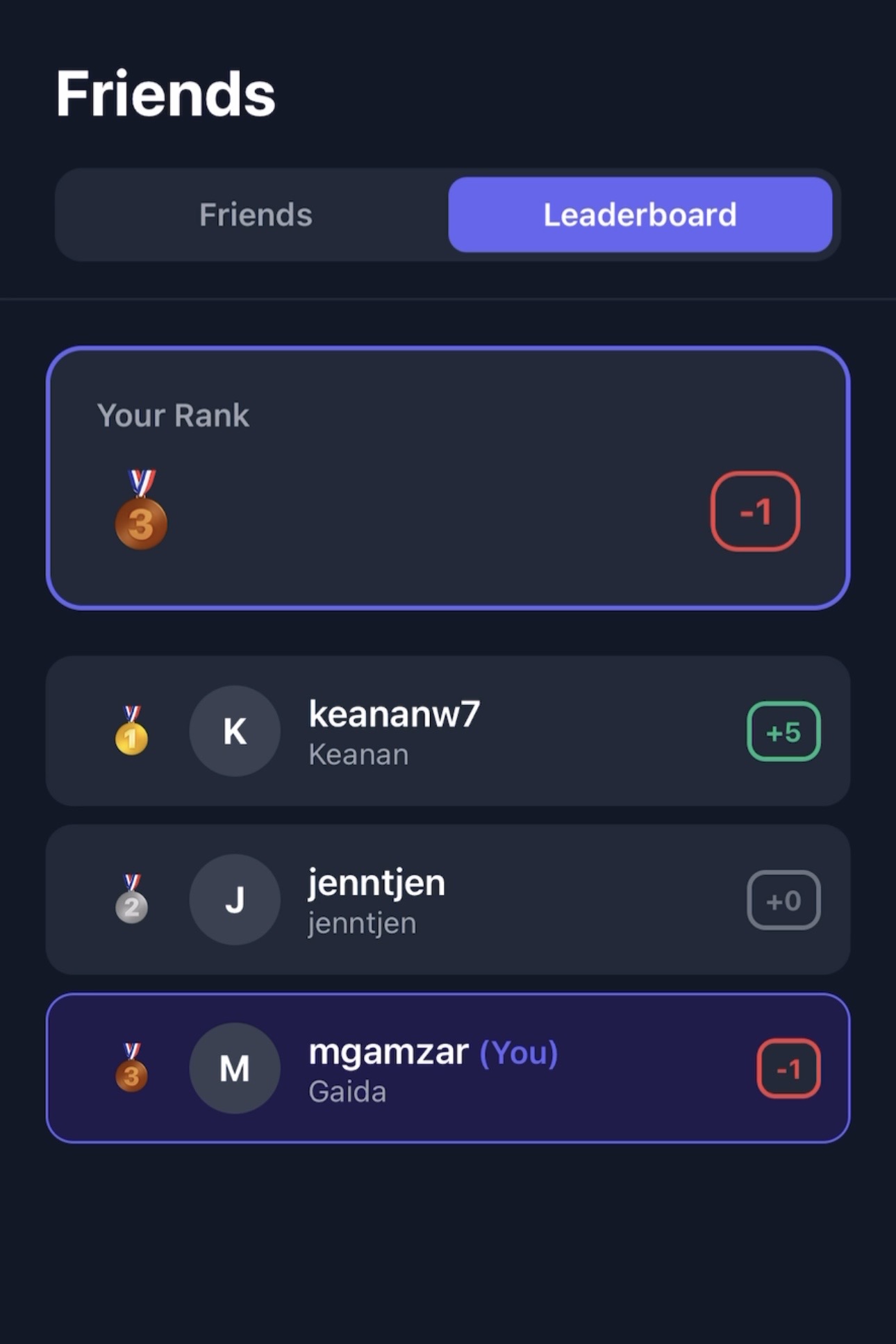
Leaderboard showing social credibility based on friends’ reactions to completed lock-ins.
Inspiration
By natural laws, humans are wired to seek social presence and validation. But anything in excess can turn destructive.
Today, that instinct is constantly exploited through doomscrolling and endless digital stimulation. The problem isn’t that students want validation, it’s that modern platforms redirect it toward distraction instead of focus and well-being.
We approached this as a student well-being problem, not a productivity one.
Instead of fighting this natural instinct, we asked a different question: What if social validation could be redirected toward doing the things that actually matter?
That question led to Lockout.
What it does
Lockout is a social accountability app that turns focus into a shared experience.
Users start a lock-in session by taking a quick photo as proof, adding what they’re working on, choosing a category and duration, and optionally selecting one friend as an accountability witness. A timer then runs during the session, creating a clear boundary between focus and distraction.
At the end of the session, users submit a second photo as proof of consistency. The completed lock-in appears in a shared feed, not for chatting or flexing, but for visibility and validation.
If a user selects an accountability friend, that friend receives a simple yes-or-no notification to verify the session. If the session is challenged, the user must provide instant proof, which is then verified using AI (through Gemini Vision) to ensure it matches their claim.
Why it matters for wellbeing
Lockout is not about proving productivity. It’s about reducing friction, isolation, and guilt around starting work.
By reframing focus as something social but non-competitive, Lockout supports mental wellbeing by helping users act on their intentions.
Instead of letting unfinished tasks linger mentally, Lockout externalizes commitment into a short, bounded session. This clears cognitive load, reduces avoidance, and replaces guilt with visible effort.
In short, Lockout doesn’t optimize productivity. It helps people do the things they already know they need to do.
As we like to say: Lockout doesn’t prove productivity. It makes lying more effort than working.
How we built it
Lockout was designed mobile-first to match how students actually work.
- Frontend: React + Expo
- Backend: Firebase
- Language: TypeScript
Every interaction was designed to be fast and low-pressure. Our focus wasn’t feature density, but clarity, speed, and emotional comfort.
Challenges we faced
The hardest challenge was more philosophical than it was technical.
Designing accountability without stress required us to question many common productivity patterns. Several familiar mechanics were deliberately excluded because they harm long-term wellbeing. Every feature had to answer one question: does this reduce pressure, or add to it?
What we learned
We learned that small, well-designed social signals can meaningfully change behavior without overwhelming users.
More importantly, we learned that people don’t need more motivation tools. They need systems that make starting feel lighter and less lonely. In general, people know what they need to do. The real challenge is actually doing it.
What’s next
Our next step is to test Lockout in a real university setting.
We plan to pilot the app with students to observe how it fits into day-to-day academic life, gather feedback on social accountability dynamics, and refine the experience around wellbeing rather than pressure.
From there, our goal is to iterate based on real usage and work toward a broader campus launch. Lockout is meant to grow slowly and intentionally, shaped by how students actually use it, not by assumptions about productivity.


Log in or sign up for Devpost to join the conversation.