-
-

Logo
-
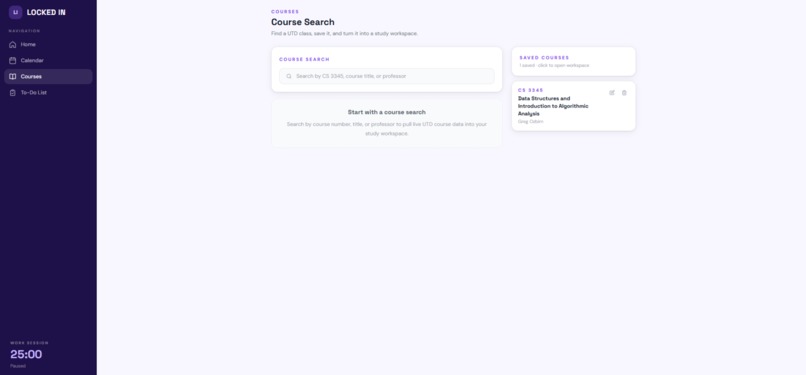
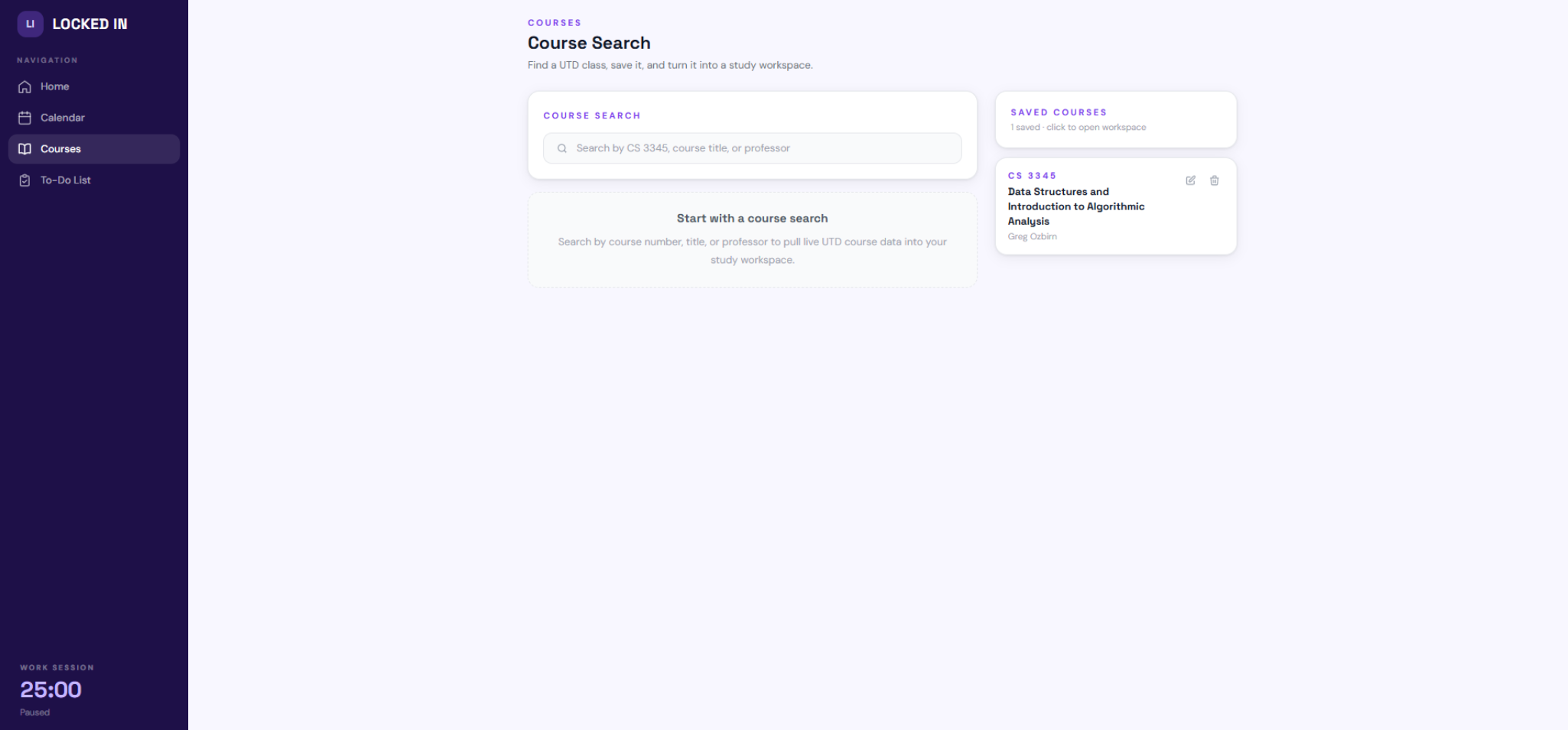
Course Search
-
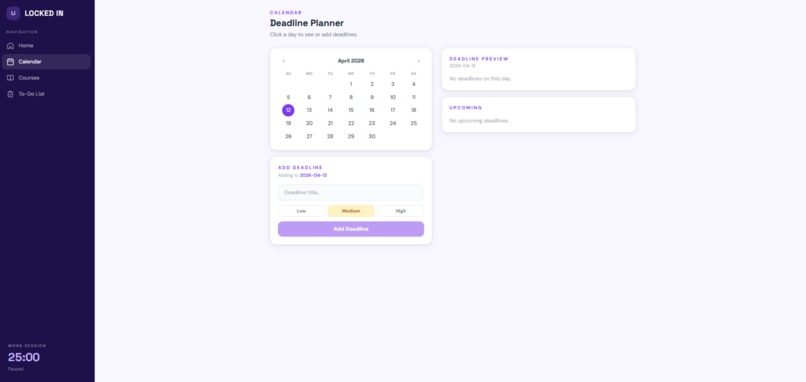
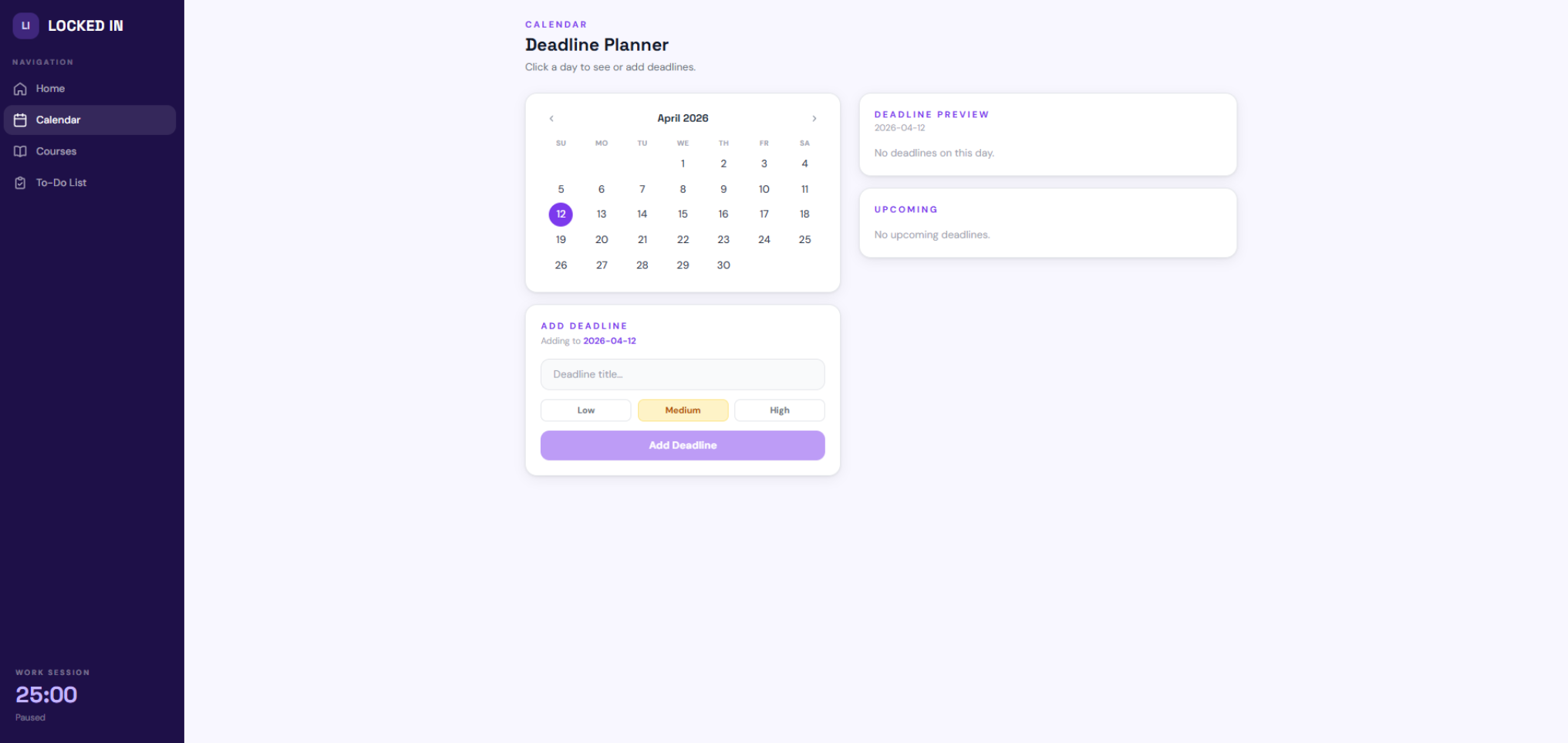
Calendar
-
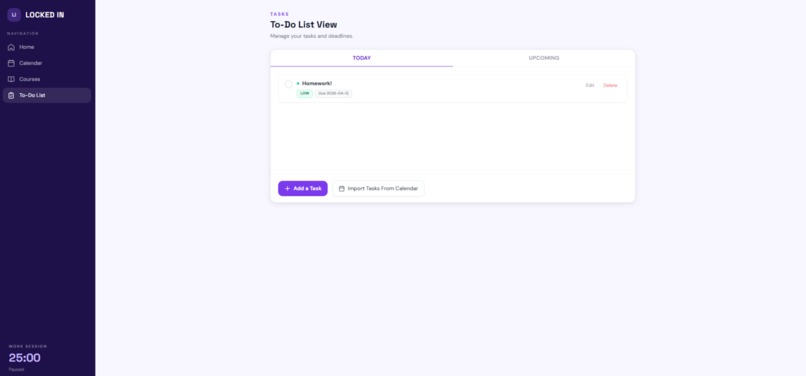
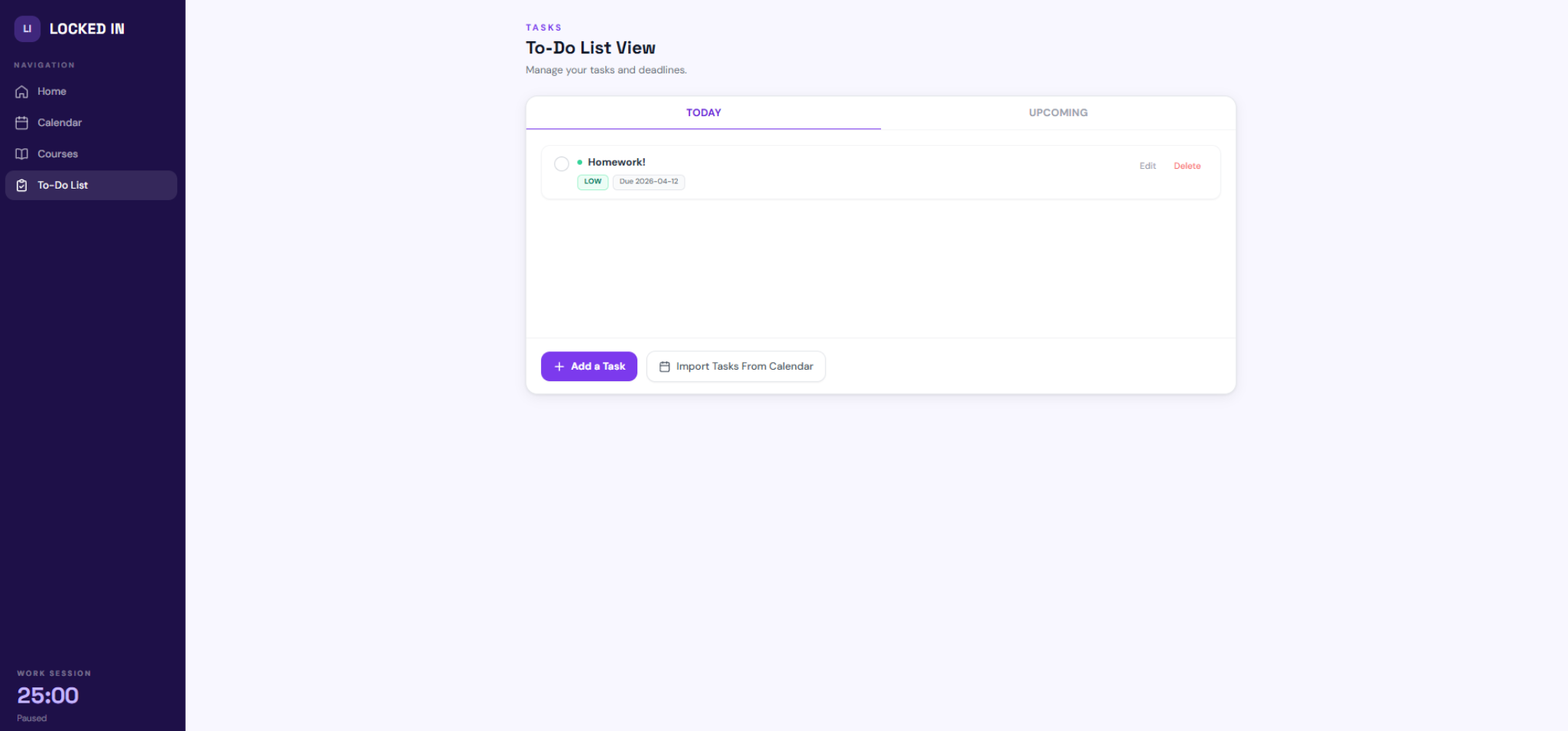
To-do List
-
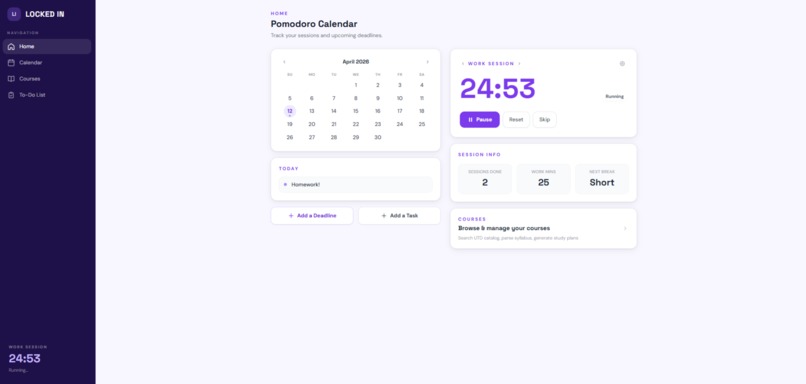
Homepage
-
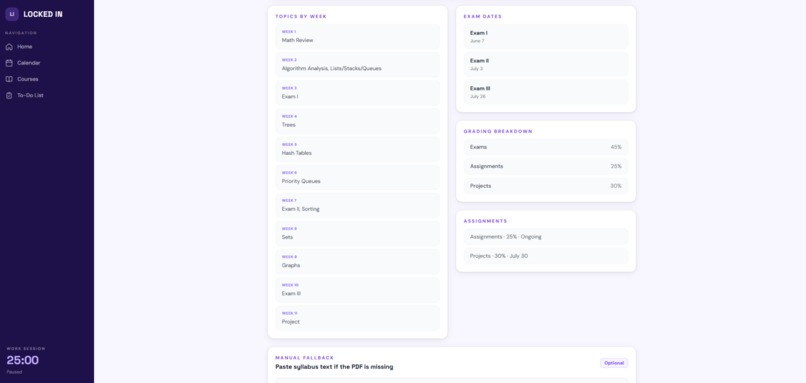
Syllabus Parser

Inspiration
LockedIn is a centralized academic intelligence system for students that transforms syllabi and course data into personalized study plans, calendars, and resources, which is powered by AI, enhanced by real student insights, and designed to connect past experiences with future success, helping students stay organized and truly lock in.
Students spend a large amount of time at the start of every semester manually organizing syllabi, tracking deadlines, and searching for study resources. Even when everything is written down, it is often scattered across different apps and easy to lose track of. We also realized something deeper: every semester creates a hidden layer of academic history, such as past student experiences, course insights, and study strategies, that is rarely preserved or reused effectively. We wanted to build something that turns this fragmented system into a centralized academic intelligence system for students.
That’s how LockedIn was created.
What it does
LockedIn is an AI-powered academic assistant that:
- Scans syllabi or course data
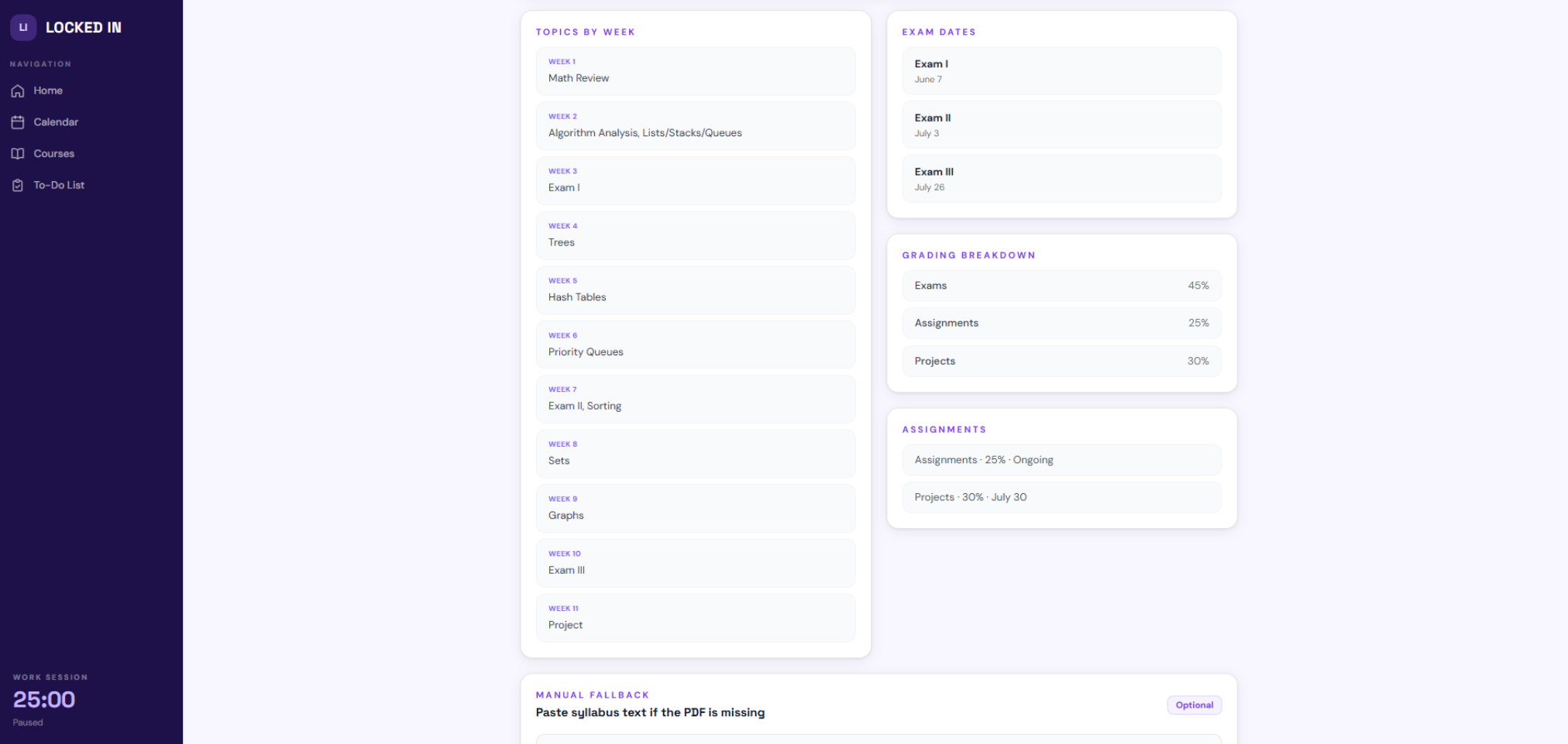
- Extracts deadlines, topics, and exam dates
- Generates personalized academic calendars
- Recommends curated resources like videos, student-submitted notes, and websites
- Integrates real student-submitted tips and advice
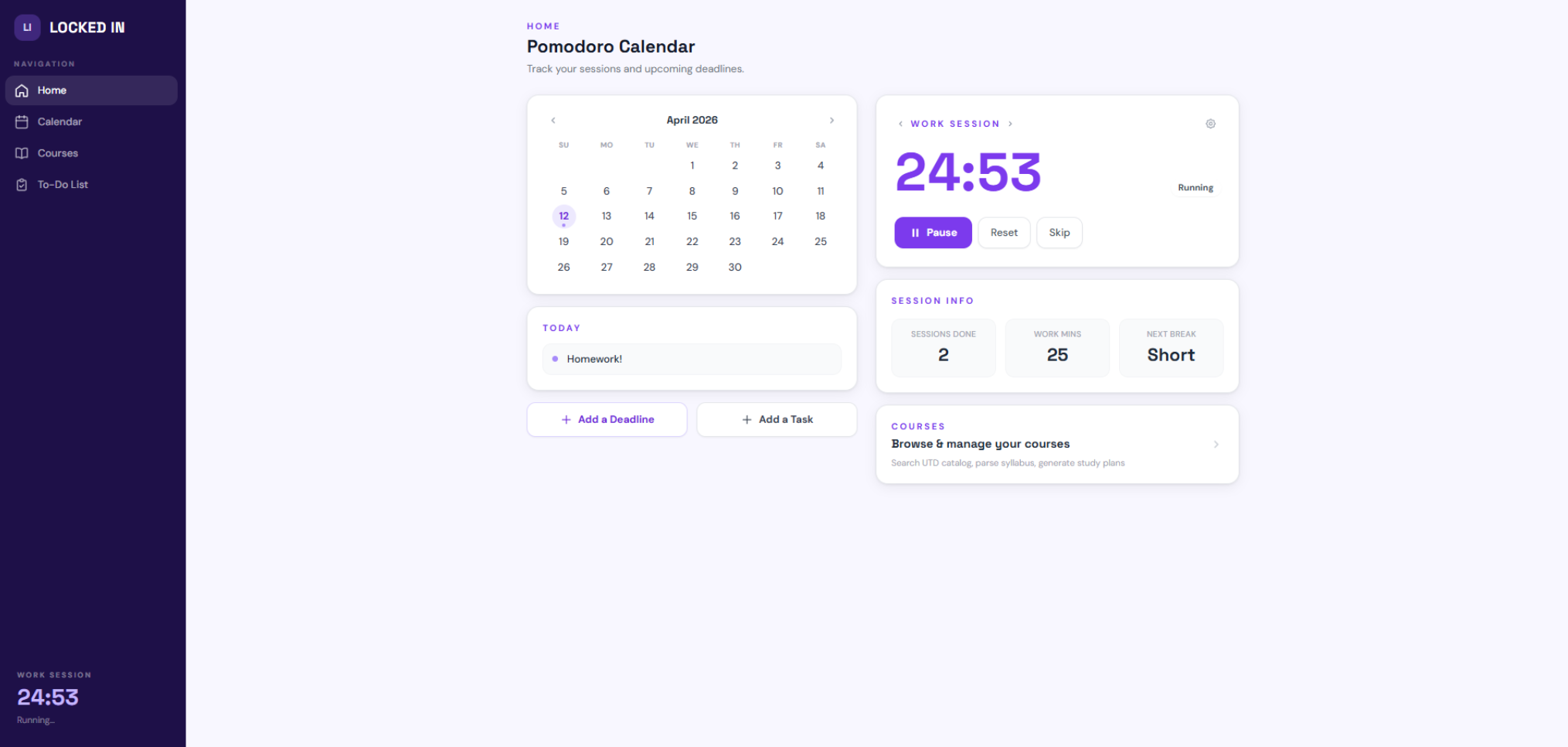
- Includes productivity tools like a Pomodoro timer and task tracker It combines planning + studying + focus tools into one platform. This creates a living academic knowledge system, where student experience continuously improves future learning.
How we built it
We started with brainstorming and Figma prototypes, designing key pages like a homepage with a preview calendar, a full calendar view, and a course dashboard, which is complete with study aids, alerts, and to-do lists, so we could refine the experience before writing a single line of code. On the frontend, we used React to bring those designs to life, while FastAPI powered our backend logic, organized into clean, modular services for syllabus parsing, study planning, task management, and course data integration. Our AI layer ran on the Gemini API, handling everything from extracting topics out of syllabi to generating personalized study plans and recommending resources, while the Nebula API connected us to real UTD course data. Firebase and Supabase kept user data, tasks, and notes in sync across the platform. Together, these pieces formed a cohesive, end-to-end system built to feel less like a tool and more like a smart academic buddy.
Challenges we ran into
We started with big ambitions, such as an AI tutor, a social feed, a grading system, but quickly realized we needed to narrow our scope and focus on delivering a solid MVP instead of spreading ourselves thin. Even after simplifying, we still had to resist the pull of feature overload, ultimately centering our efforts on one clear core flow: from syllabus to plan to resources to execution. At the same time, our team had to rapidly get up to speed with tools and frameworks we hadn't worked with before, including FastAPI, the Gemini and Nebula APIs, and the nuances of AI prompt engineering, all under a tight deadline. One of our trickiest technical hurdles was structuring AI outputs in a way that was consistent and usable enough to actually populate calendars and study plans, which took careful prompt design and plenty of iteration. We also ran into a frustrating limitation with AI-assisted development, which was when we leaned on AI to help generate UI code, it defaulted to its own generic component structures and couldn't accurately replicate the custom designs we had carefully crafted in Figma, meaning much of the frontend work still required hands-on human attention to get right.
Accomplishments that we're proud of
Over the course of this project, we accomplished far more than we initially anticipated. We successfully transformed raw syllabus text into structured, actionable academic plans using AI, which was a technically nuanced challenge that required us to rapidly learn and apply new technologies, including FastAPI, AI APIs, and external data integration, all within a compressed timeline. Rather than building a single isolated feature, we designed a full end-to-end academic system that bridges the gap between AI automation and the real, day-to-day needs of students. Perhaps most importantly, we built with the future in mind: our architecture is scalable and adaptable, laying a foundation that could realistically extend across multiple universities and serve a much broader academic community.
What we learned
Building this project was as much an education as it was an engineering challenge. We gained firsthand experience designing and iterating on an MVP under tight time constraints, learning to make decisive trade-offs and ship working solutions rather than perfect ones. We deepened our understanding of prompt engineering, which was discovering how thoughtful structure and specificity are essential to producing consistent, reliable AI outputs. On the technical side, we saw how frontend, backend, and AI systems must work in concert to form a cohesive real-world product, not just a collection of independent parts. Along the way, we were reminded of one of the most valuable lessons in software development: that simplicity wins, and overbuilding is a trap. Most of all, we came to appreciate that the most meaningful systems aren't built by humans or AI alone, they emerge from the collaboration between the two, each amplifying what the other does best.
What's next for LockedIn
The foundation we've built is just the beginning. Our most immediate priority is integrating Google Calendar, so students can sync their academic plans directly into their daily lives without any extra friction. We're also focused on strengthening our student knowledge system by introducing reputation-based contributions, ensuring the content students rely on is trustworthy and community-vetted. On the AI side, we envision a smarter tutor that adapts dynamically to each user's performance over time, moving from a one-size-fits-all experience to something genuinely personalized. Beyond UTD, we see real potential to expand our platform to universities across the country, bringing structured academic planning to a much wider student population. To meet students wherever they are, a mobile app is on the roadmap, making on-the-go planning and studying seamless. And as our community grows, an improved moderation system for student-submitted resources remains a key part of our vision forward.
Built With
- css
- fastapi
- geminiapi
- google-calendar
- html
- javascript
- nebulaapi
- pypdf
- python
- react
- supabase
- tailwindcss
- typescript
- vite
- zustand


Log in or sign up for Devpost to join the conversation.