-
-

LockedIn App Icon Logo
-
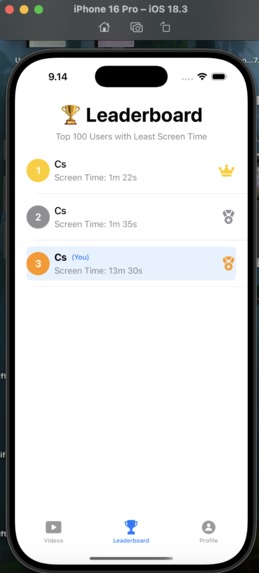
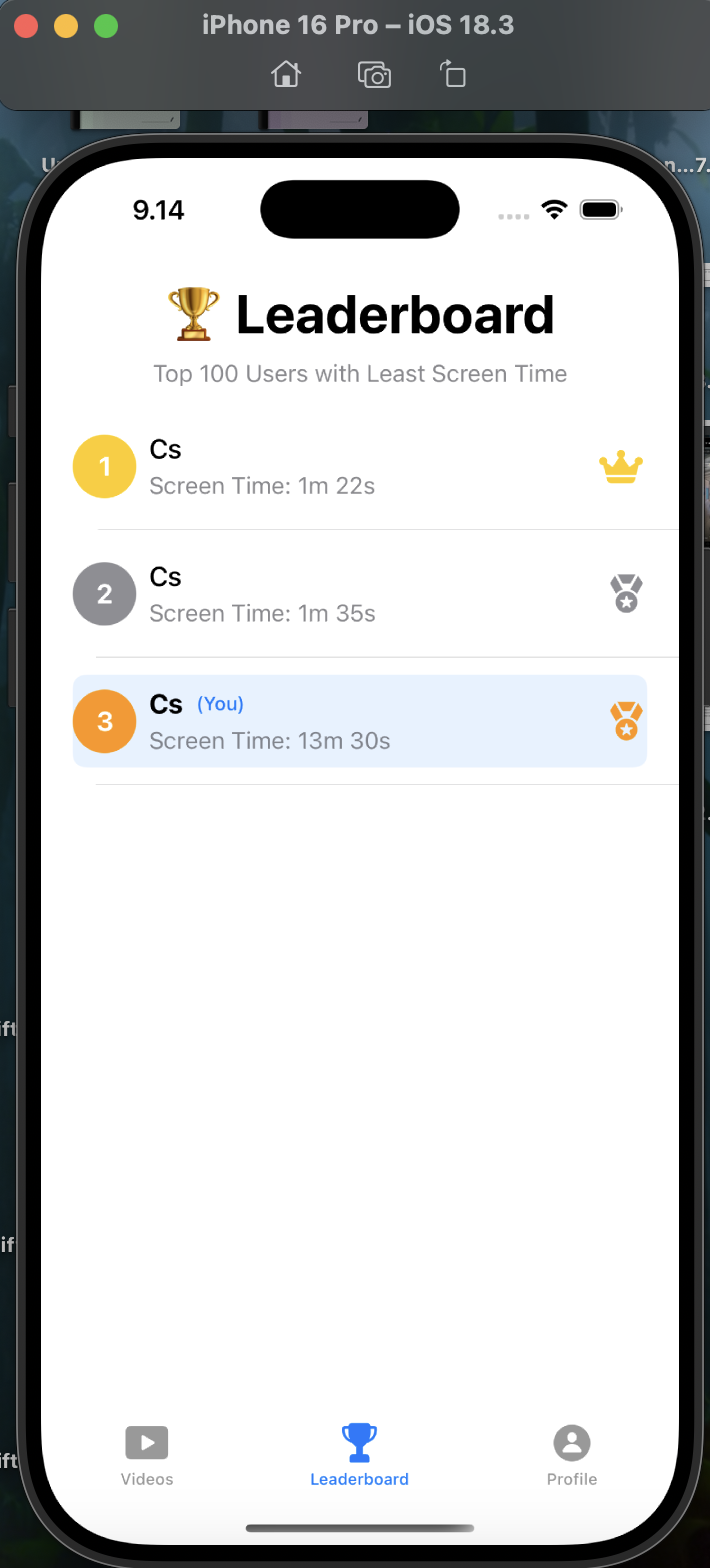
Leaderboard Page
-
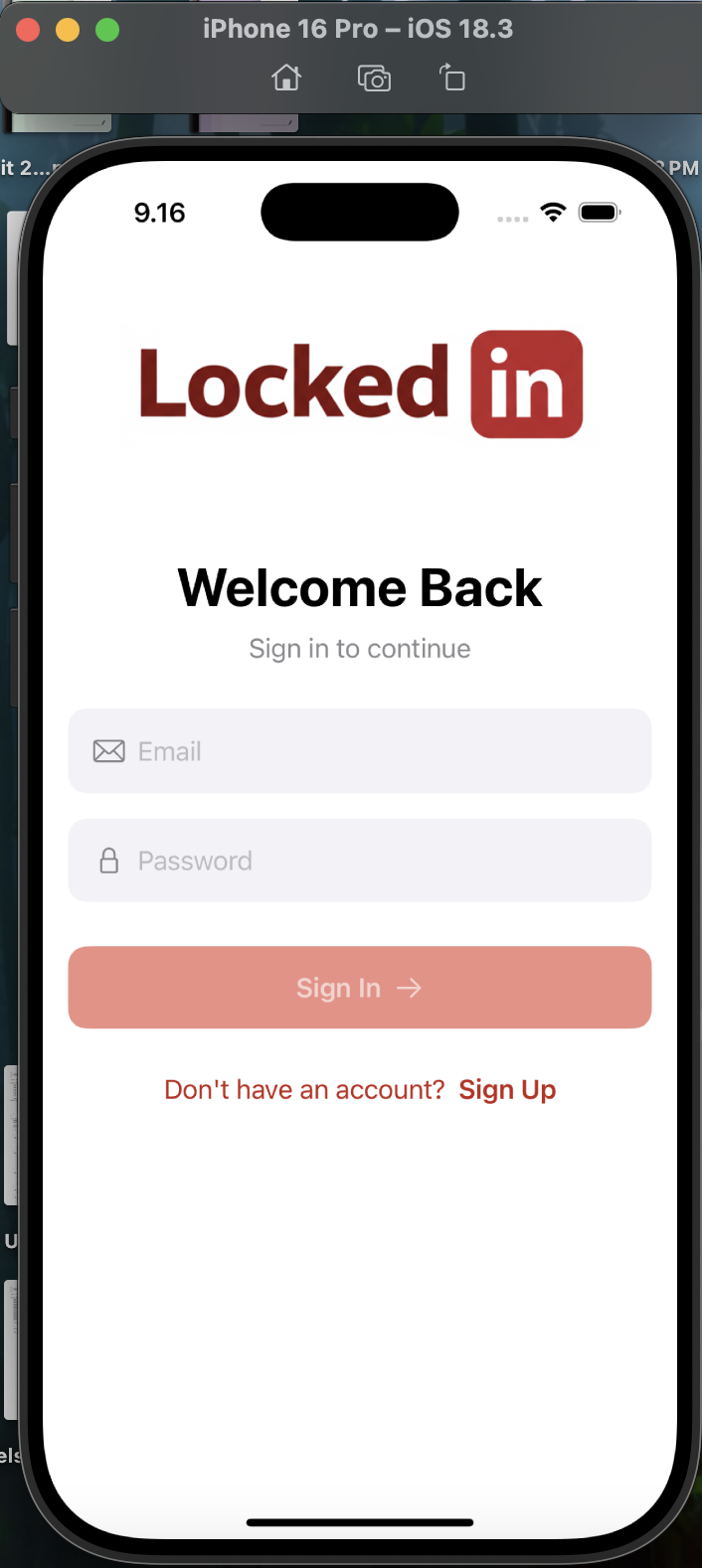
Log In Page
-
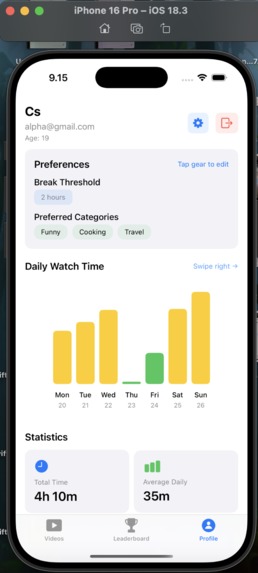
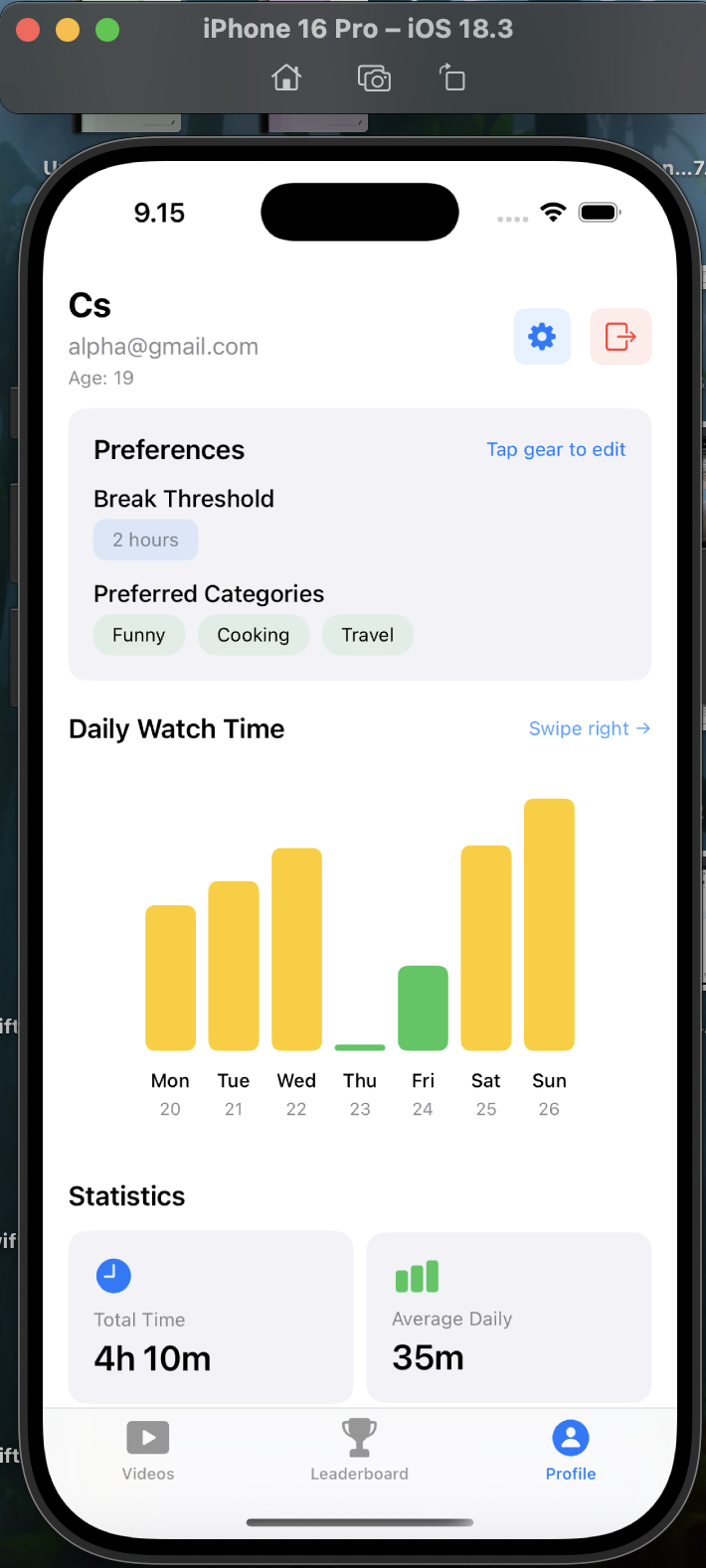
Profile Page
-
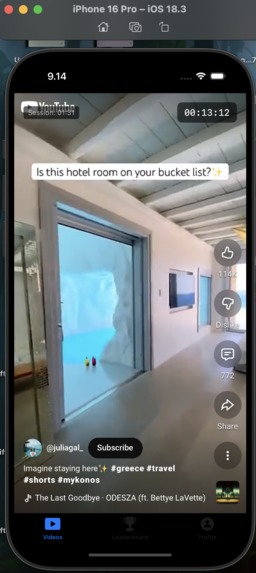
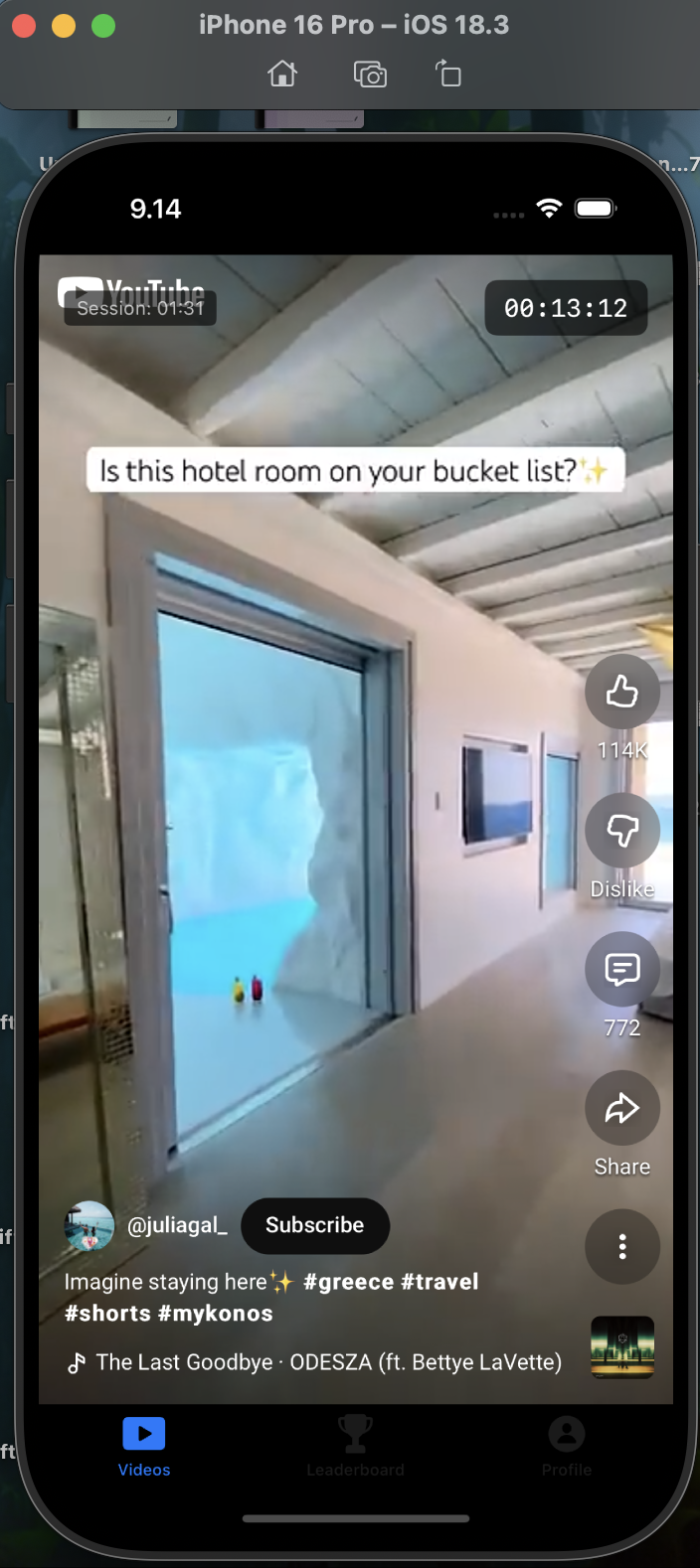
Reels/Youtube Shorts Page

LockedIn: Breaking the Autopilot Scroll
Inspiration
We were inspired by our own struggles with endless YouTube Shorts scrolling sessions, where we'd often lose 30+ minutes in an autopilot state. We wanted to build something that didn't just track screen time, but actively helped break the compulsive scrolling cycle.
What it does
LockedIn is a mindful YouTube Shorts viewer that transforms passive consumption into intentional engagement. It uses personalized break thresholds (30-150 minutes) that trigger gentle interruptions at 0.6 x fixed time, leveraging loss aversion through streak protection and progressive difficulty scaling. The app provides AI-powered weekly insights about scrolling habits and delivers content tailored to user-selected categories, creating a more conscious relationship with short-form video.
How we built it
We built LockedIn using SwiftUI with a modular architecture separating authentication, content management, behavioral tracking, and AI insights layers. The YouTube Data API v3 powers content discovery through targeted searches for Shorts content, while local UserDefaults handle user data persistence. We implemented a sophisticated timer system that manages state across tab switches, app backgrounding, and authentication changes. The break system is used for interruptions.
Challenges we ran into
The YouTube API presented significant hurdles since there's no dedicated Shorts endpoint - we had to creatively use search queries with duration filters. State management became complex with timers needing to persist across multiple app states and user sessions. Designing the break system to feel helpful rather than punitive required extensive iteration on timing and animations. We also faced API rate limiting and error handling challenges that necessitated robust fallback systems.
Accomplishments that we're proud of
We're particularly proud of creating a break system that genuinely interrupts autopilot behavior that causes some frustration. Successfully integrating behavioral psychology principles into functional features - like streak protection leveraging loss aversion - represents a meaningful innovation in digital wellness tools. Building a complete iOS app with authentication, API integration, and AI features in a weekend was a significant technical achievement.
What we learned
We discovered that effective digital wellness tools can't rely on willpower alone - they must redesign interaction patterns at a fundamental level. Technical lessons included mastering SwiftUI's reactive programming paradigm, handling complex state management across multiple systems, and implementing graceful degradation when APIs fail. We learned that subtle UX details, like animation timing and wording, dramatically impact how features are perceived and adopted.
What's next for LockedIn
We plan to expand the AI insights with more habit analysis and predictive break timing. Social features allowing friends to form accountability groups are in development. We're exploring integration with more content platforms beyond YouTube and developing advanced customization options for break experiences. Longer-term, we aim to build a web platform with detailed analytics dashboards and implement machine learning to adapt break patterns to individual user behavior.
Built With
- swiftui
- xcode
- youtubeapi


Log in or sign up for Devpost to join the conversation.