-
-
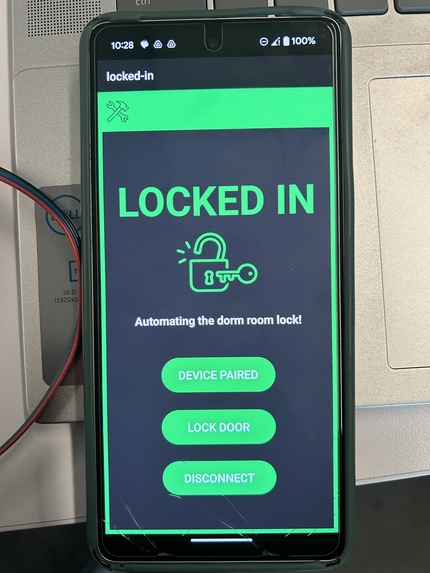
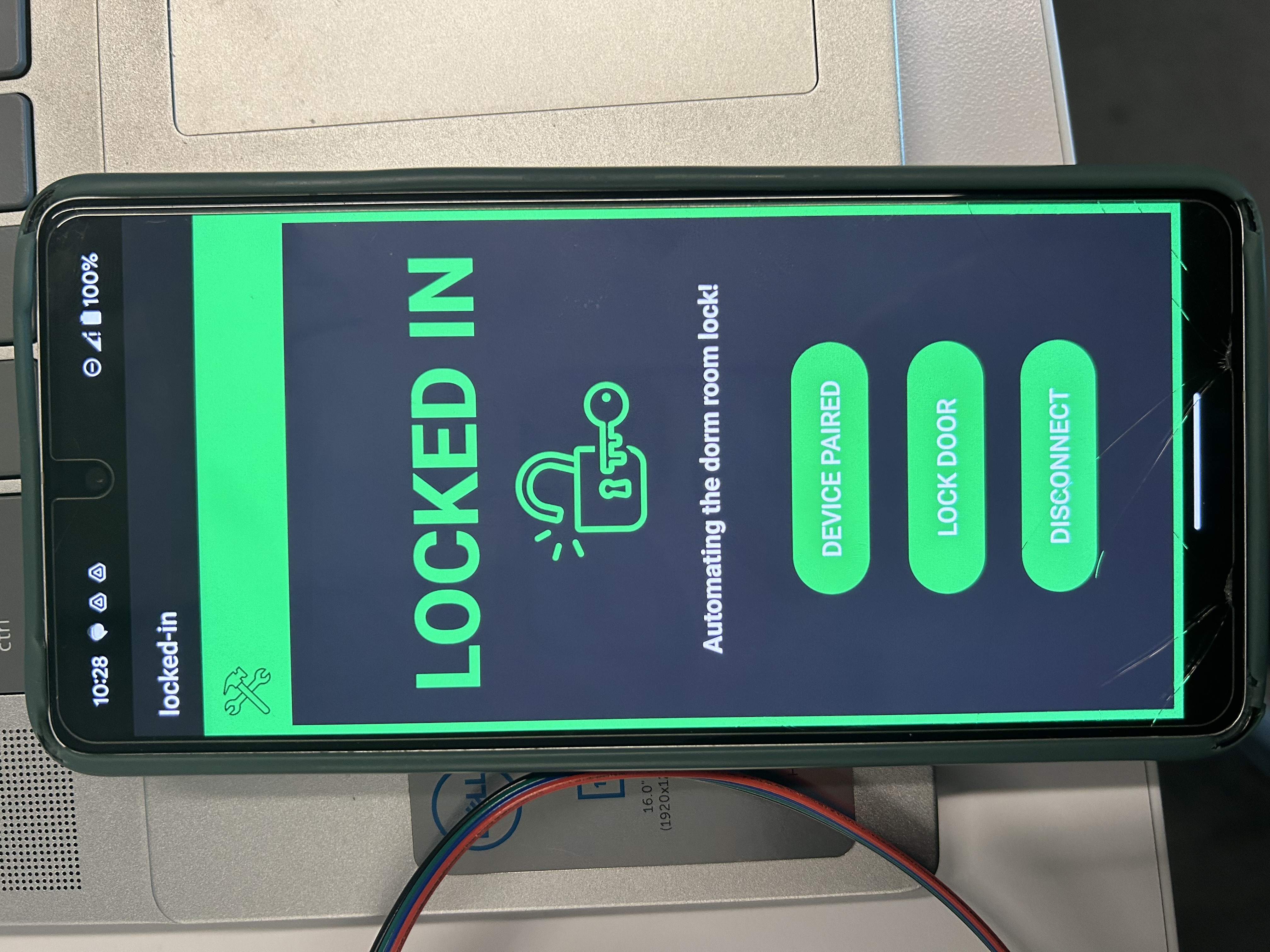
Main page of the user interface
-
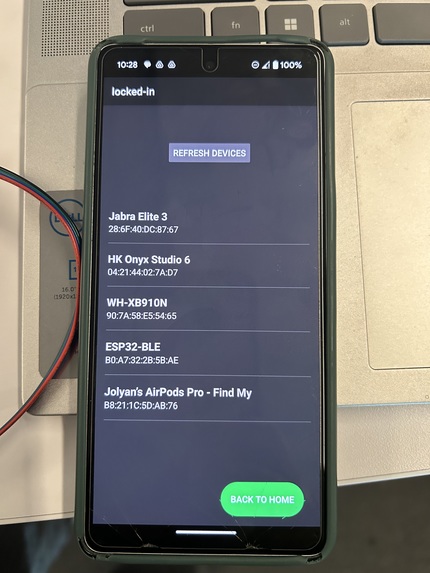
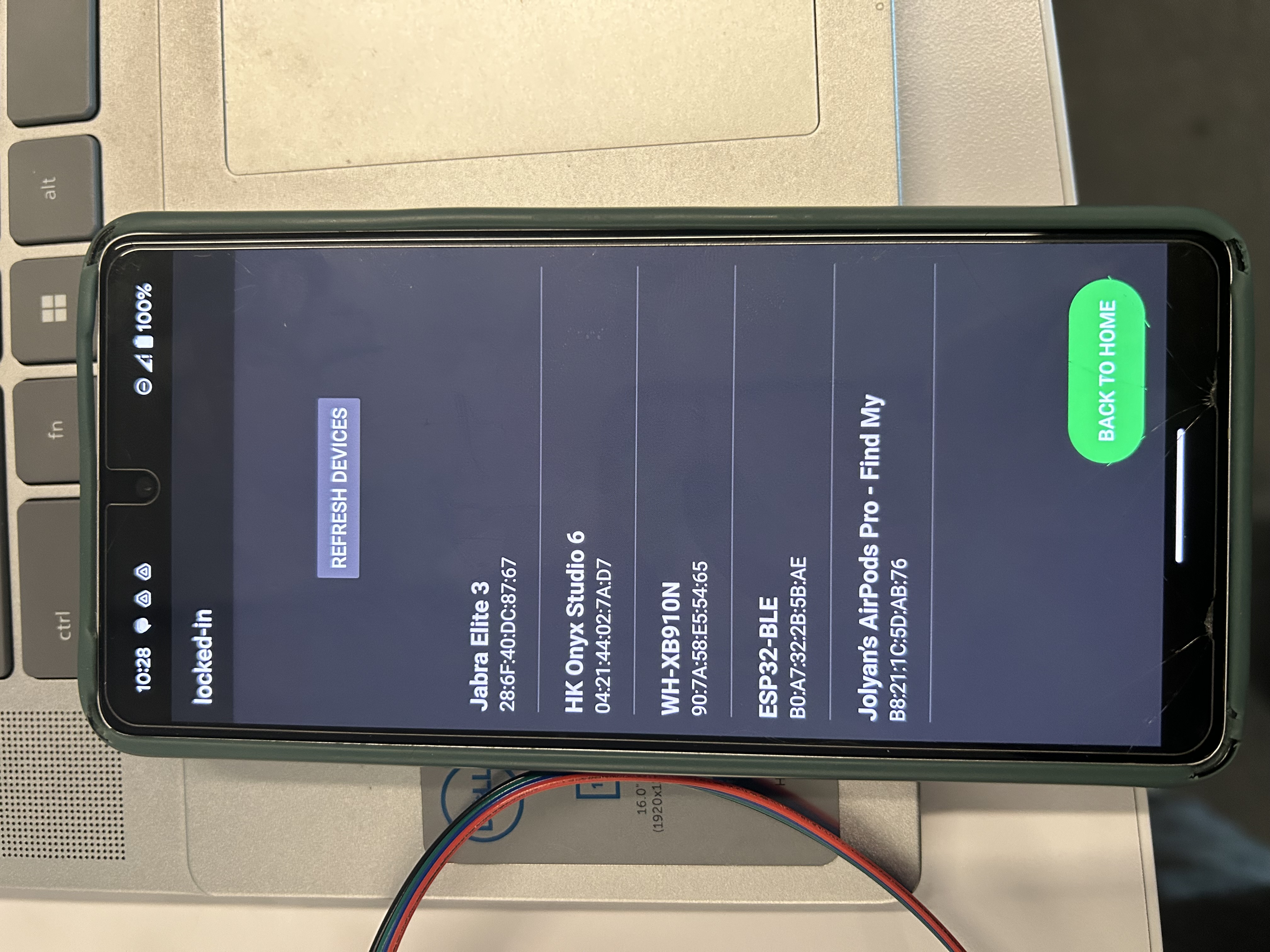
Bluetooth pairing page
-
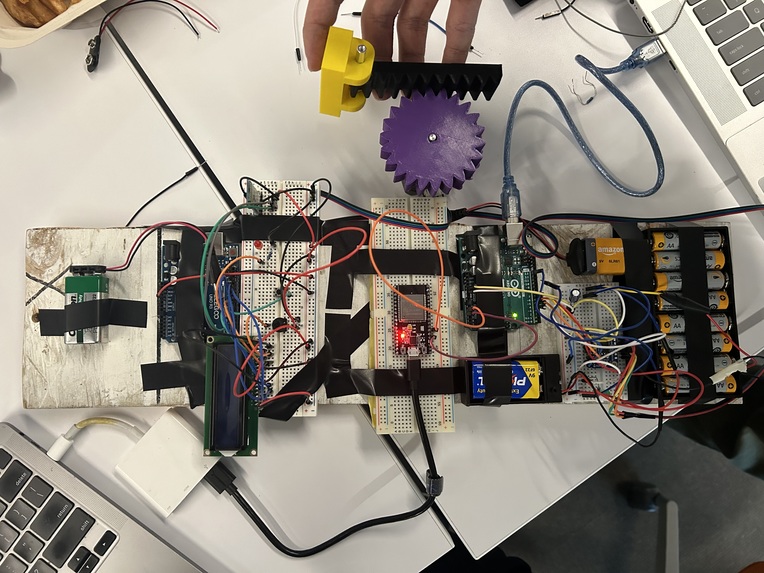
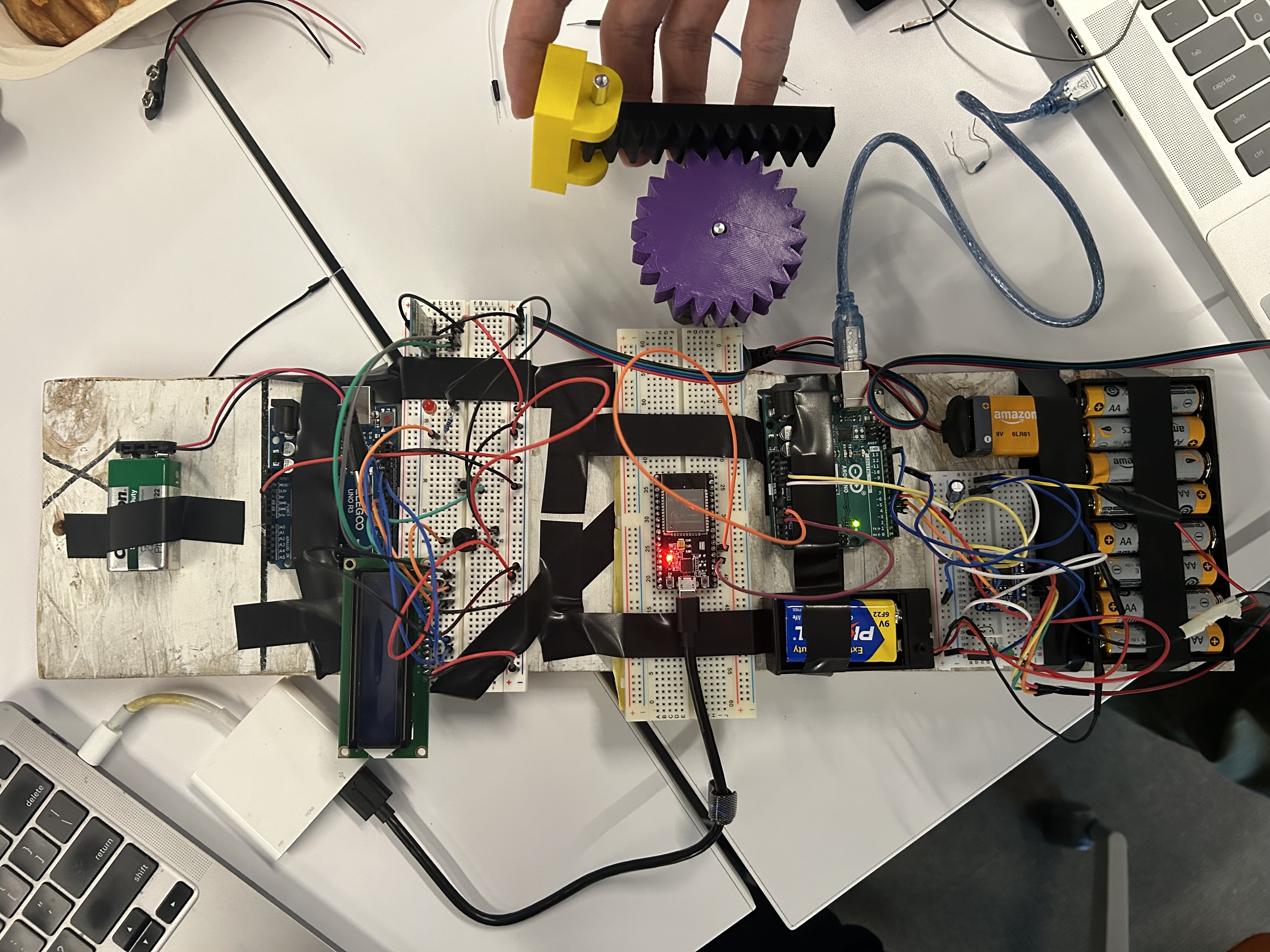
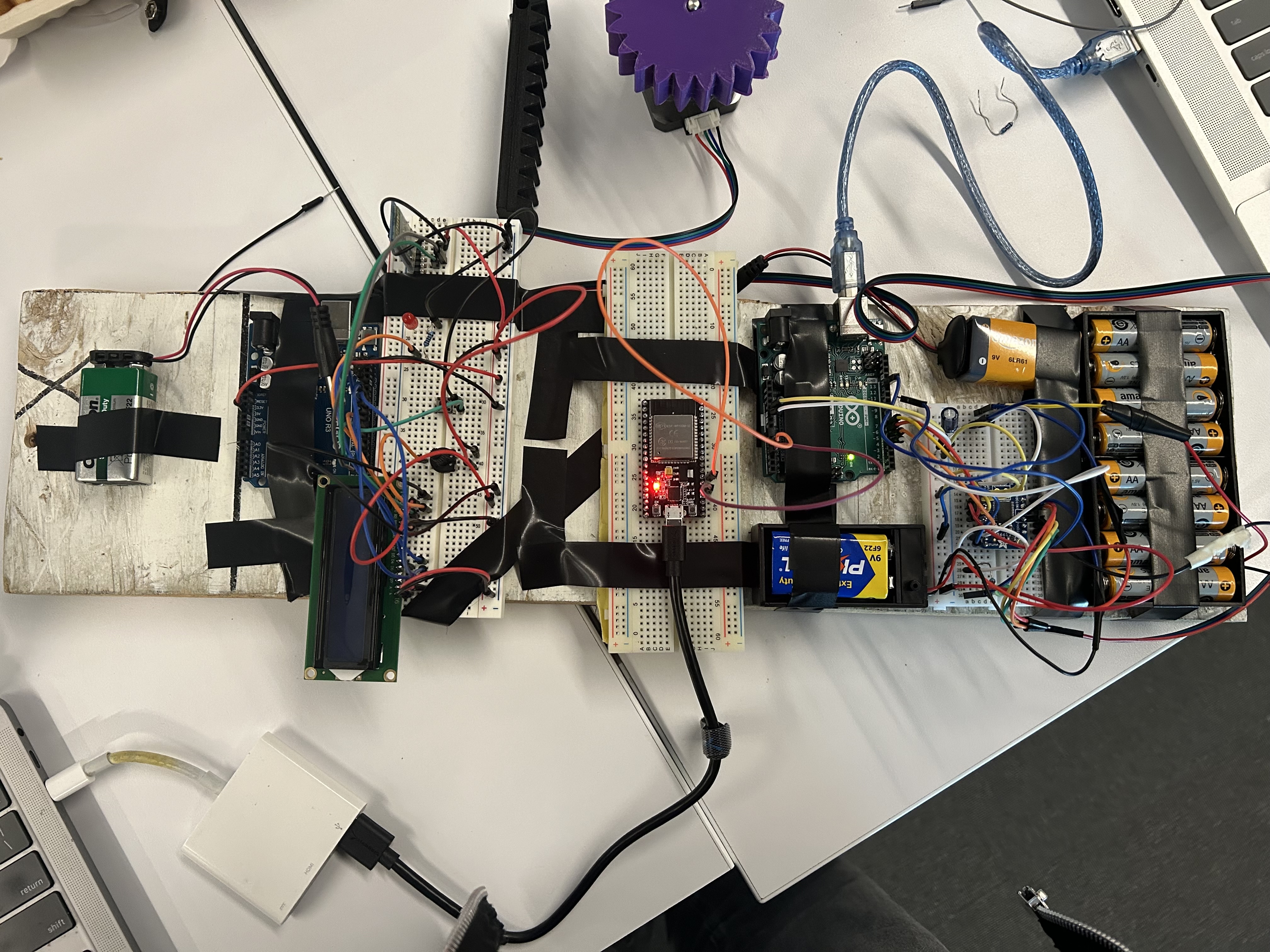
Full Set-up
-
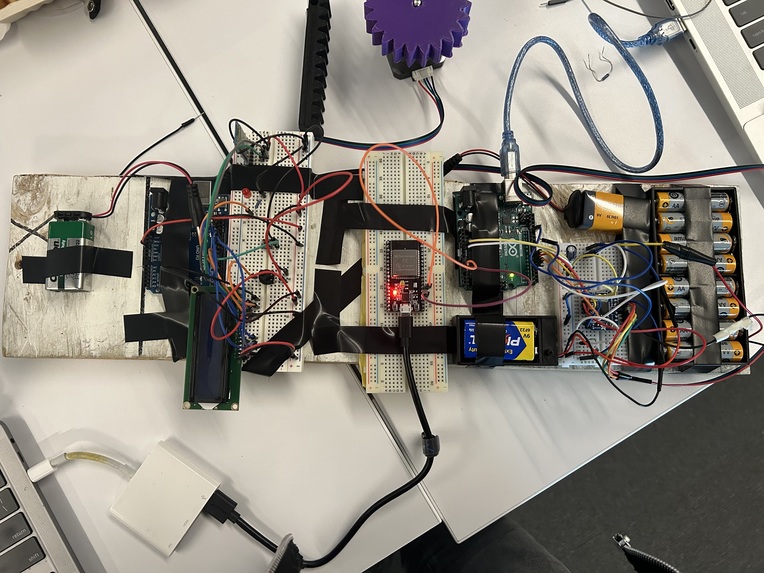
The Tetris board
-
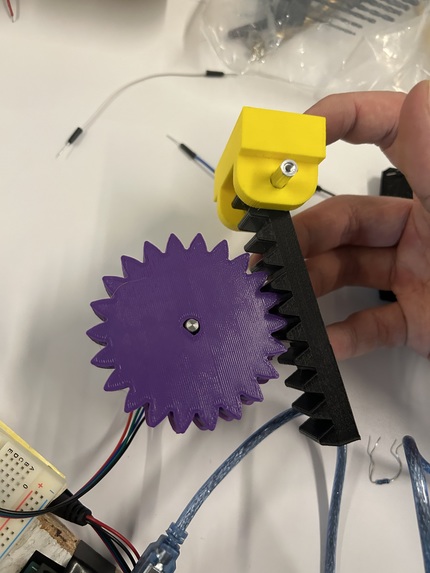
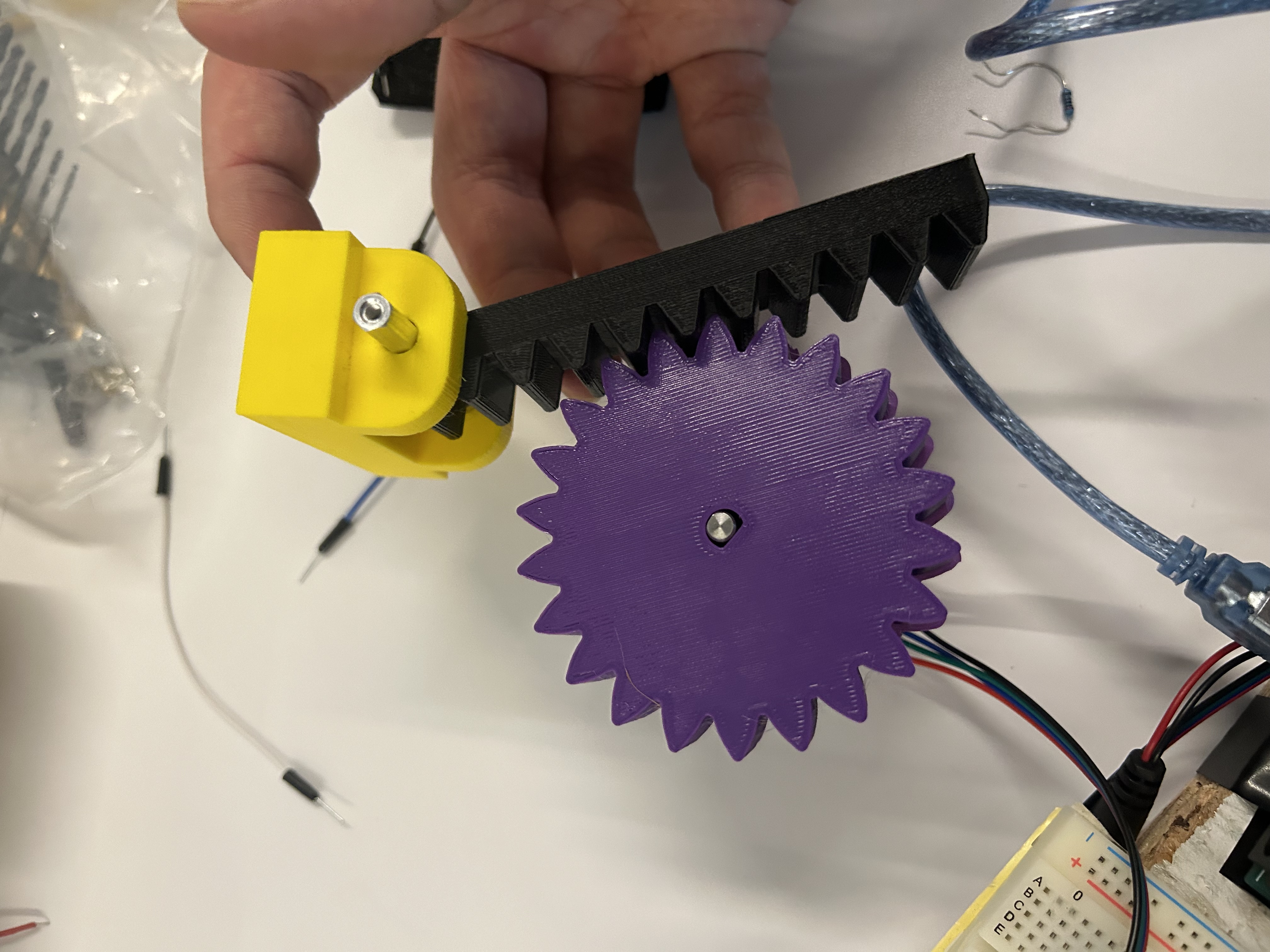
Motor, gear, and bar
Inspiration
This project was inspired by a personal anecdote. Two of the teammates, A and B, were hanging out in friend C’s dorm room. When it was time to leave, teammate B needed to grab his bag from teammate A’s dorm room. However, to their dismay, teammate A accidentally left her keycard in friend C’s dorm room, who left to go to a party. This caused A and B to wait for hours for C to return. This event planted a seed for this project in the back of teammates A and B’s minds, hoping to bring convenience to students’ lives and eliminate the annoyance of forgetting their keycards and being unable to enter their dorm rooms.
What it does
This device aims to automate the dorm room lock by allowing users to control the lock using a mobile application. The door lock’s movement is facilitated by a 3D-printed gear on a bar, and the gear is attached to a motor, controlled by an Arduino board. There are two simple steps to follow to enter the dorm. First, a phone needs to be paired with the device through Bluetooth. Both the “Pair with Device” button in the app and the button on the Bluetooth Arduino board are clicked. This only needs to be done for the first time the user is using this device. Once a connection is established between the Bluetooth board and the mobile app, the user can simply click the “Unlock door” button on the app, facilitating the communication between the Bluetooth board and the Motor board, causing the gear to rotate and subsequently causing the rod to bring down the door handle, unlocking the door.
How we built it
We used Android Studio to develop the mobile application in Java. The gear and bar were designed using Fusion360 and 3D-printed. Two separate Arduino boards were attached to the ESP32-S Bluetooth module and the motor attached to the gear, respectively, and the boards are controlled by the software part of an Arduino program programmed in C++. PlatformIO was used to automate the compilation and linking of code between hardware and software components.
Challenges we ran into
Throughout the build process, we encountered countless challenges, with a few of the greatest being understanding how the two Arduino boards communicate, figuring out the deployment mechanism of the ESP32-S module when our HC-05 was dysfunctional, and maintaining the correct circuit structure for our motor and LCD.
Accomplishments that we're proud of
Many of our greatest accomplishments stemmed from overcoming the challenges that we faced. For example, the wiring of the motor circuit was a major concern in the initial circuit setup process: following online schematics on how to wire the Nema17 motor, the motor did not perform full rotations, and thus would not have the capability to be integrated with other hardware components. This motor is a vital component for the workings of our mechanism, and with further research and diligence, we discovered that the issue was related to our core understanding of how the circuit performs and obtaining the related drivers needed to perform our tasks. This was one of our most prominent hardware accomplishments as it functions as the backbone for our mechanism. A more lengthy, software achievement we experienced was making the ESP32-S microcontroller functional.
What we learned
For several members of our group, this marked their initial exposure to GitHub within a collaborative environment. Given that becoming acquainted with this platform is crucial in many professional settings, this served as an immensely beneficial experience for our novice hackers. Additionally, for the entire team, this was the first experience operating with Bluetooth technology. This presented a massive learning curve, challenging us to delve into the intricacies of Bluetooth, understand its protocols, and navigate the complexities of integrating it into our project. Despite the initial hurdles, the process of overcoming this learning curve fostered a deeper understanding of wireless communication and added a valuable skill set to our collective expertise. Most importantly, however, we learned that with hard work and perseverance, even the most daunting challenges can be overcome. Our journey with GitHub collaboration and Bluetooth integration served as a testament to the power of persistence and the rewards of pushing beyond our comfort zones. Through this experience, we gained not only technical skills but also the confidence to tackle future projects with resilience and determination.
What's next for Locked In
Some future steps for Locked In would hopefully be to create a more robust authentication system through Firebase. This would allow users to sign in via other account credentials, such as Email, Facebook, and Google, and permit recognized accounts to be stored and managed by a centralized host. This objective would not only enhance security but also streamline user management, ensuring a seamless and user-friendly experience across various platforms and authentication methods. Another objective of Locked In is to enhance the speed of Bluetooth connections, enabling users to fully leverage the convenience of not needing a physical key or card to access their room. This enhancement would offer users a faster and smoother experience, simplifying the process of unlocking doors and ensuring swift entry. One feature that we did not finish implementing was the gyroscope, which automatically detects when the door is open and
Built With
- android-studio
- arduino
- autodesk-fusion-360
- c++
- canva
- java
- platformio
- xml


Log in or sign up for Devpost to join the conversation.