-
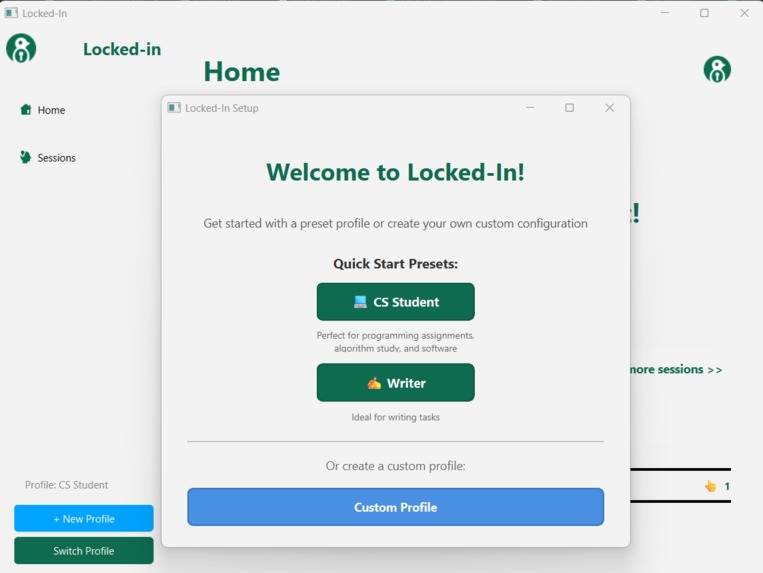
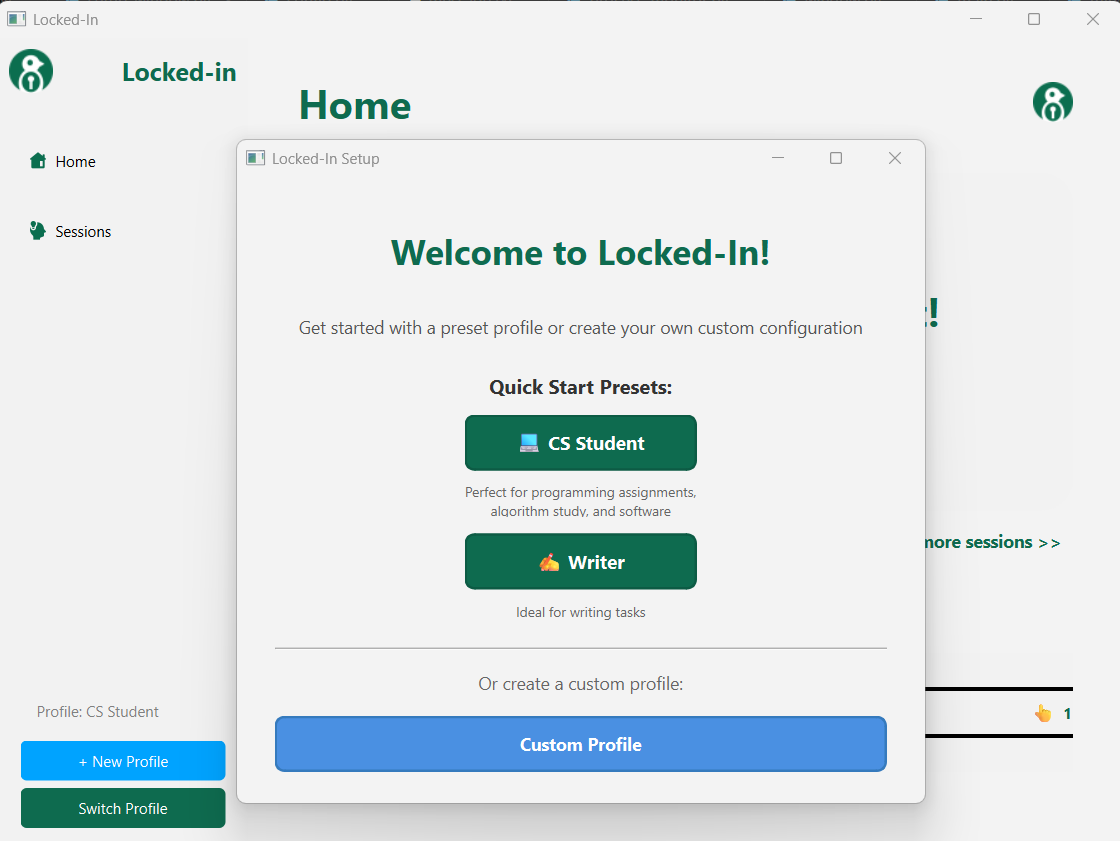
Welcome Screen
-
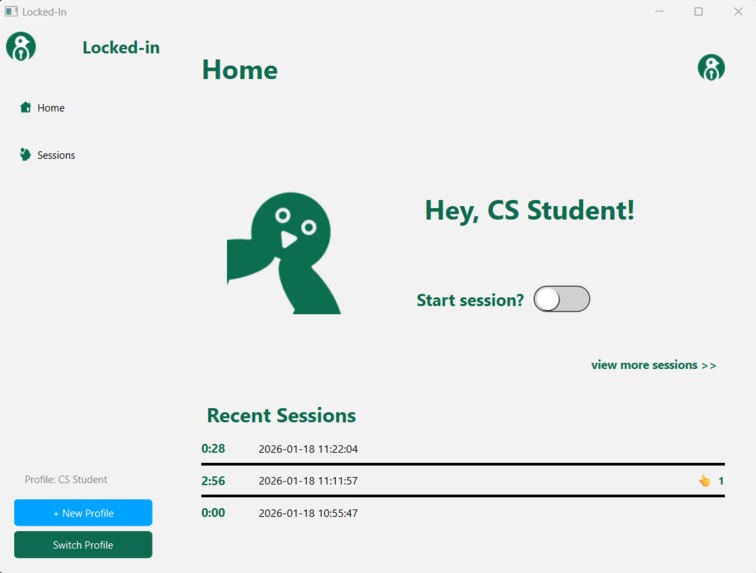
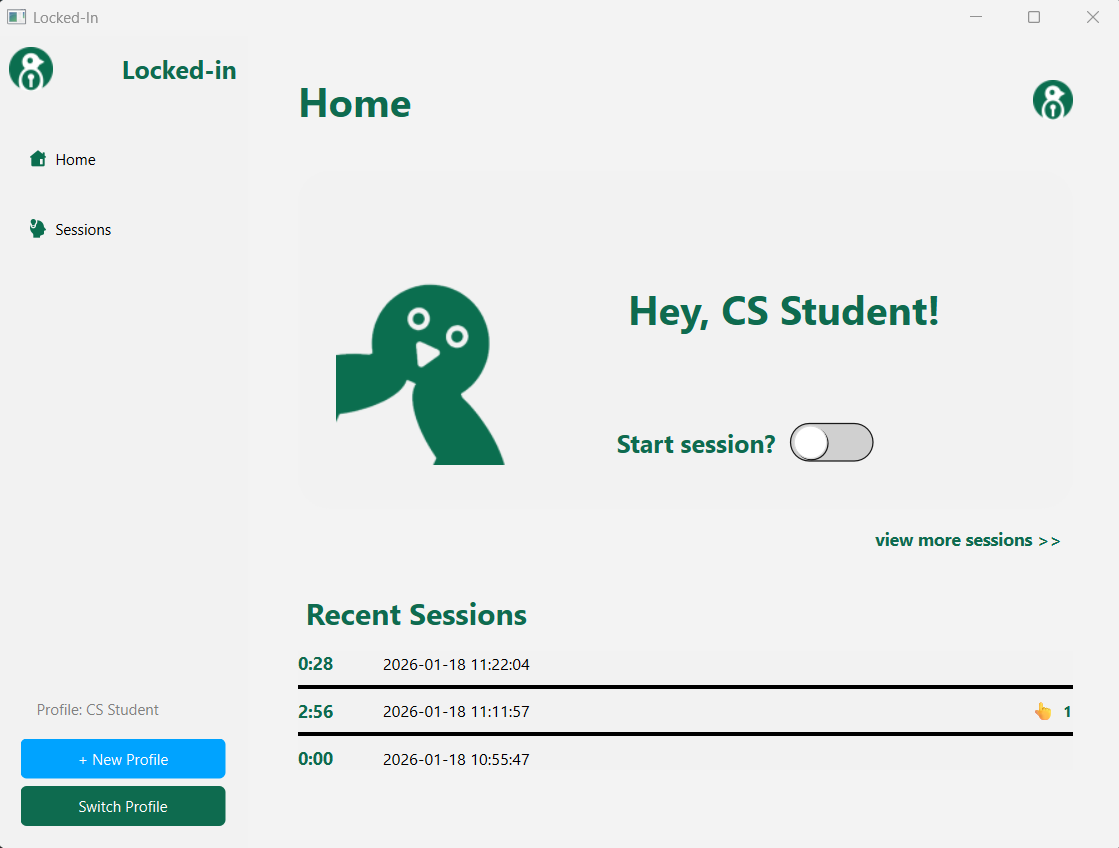
Home Page
-
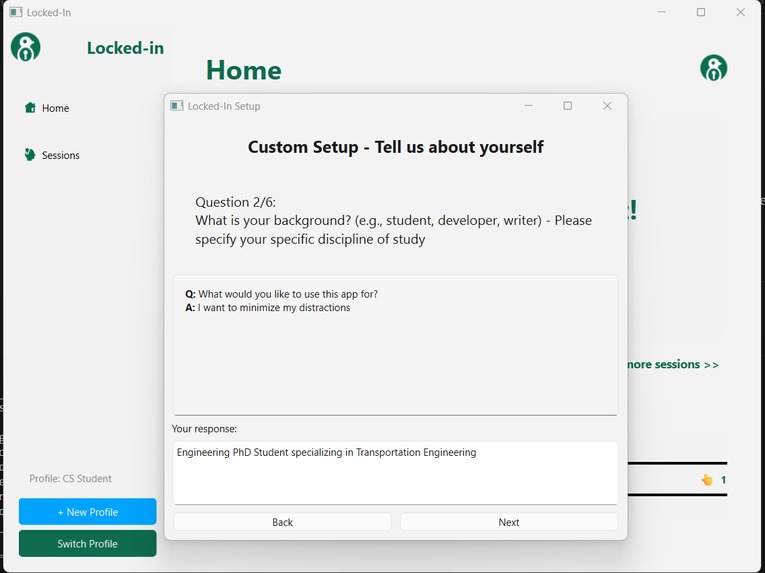
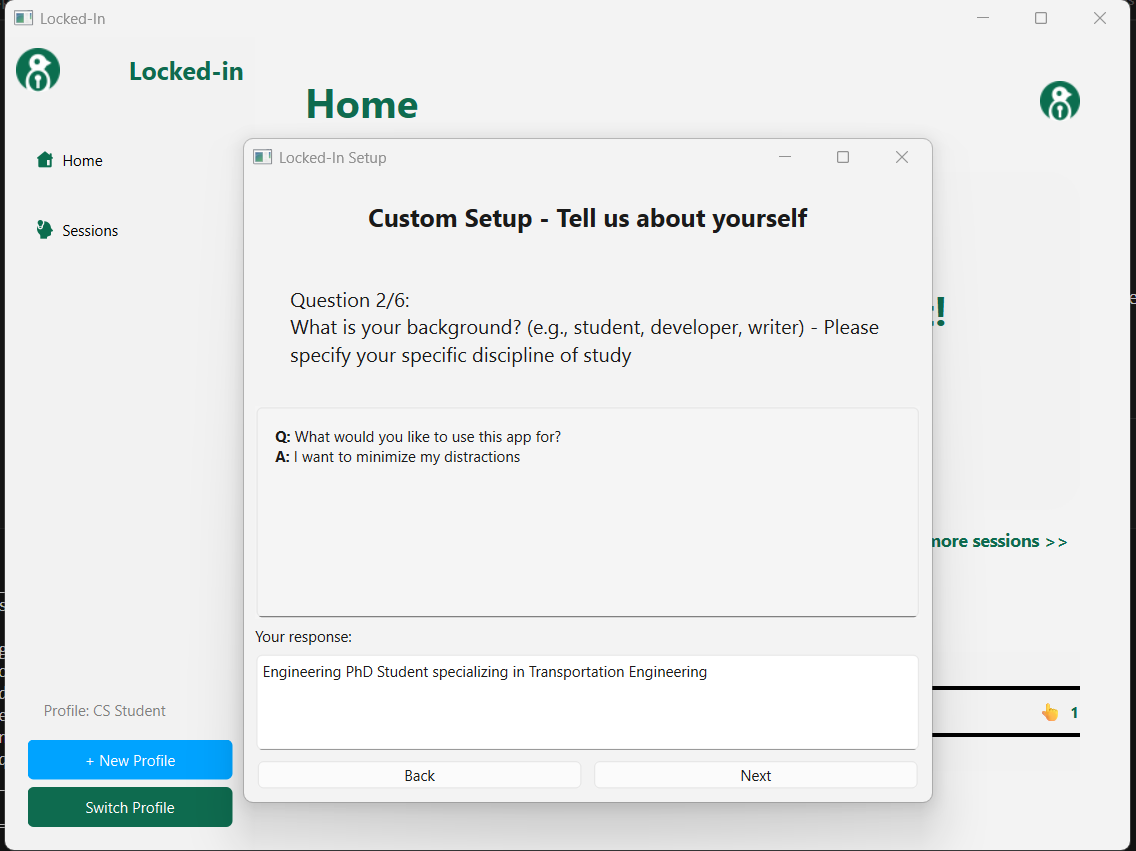
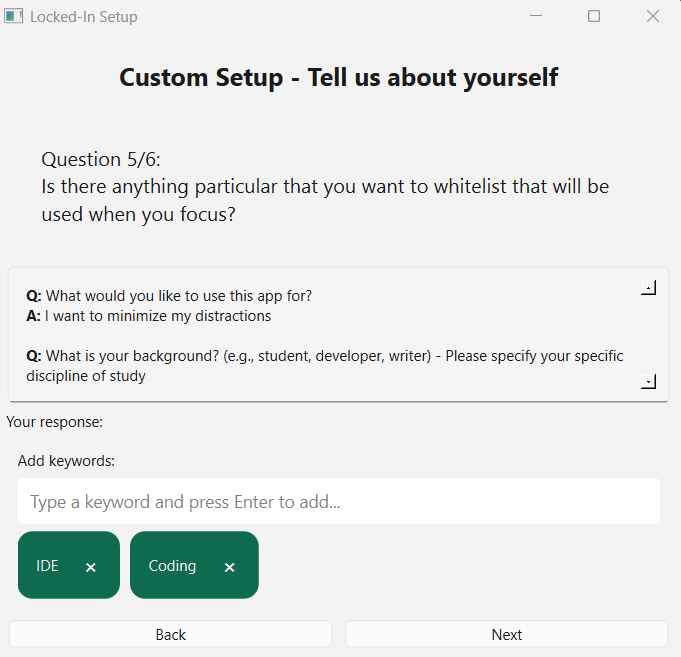
Custom Setup
-
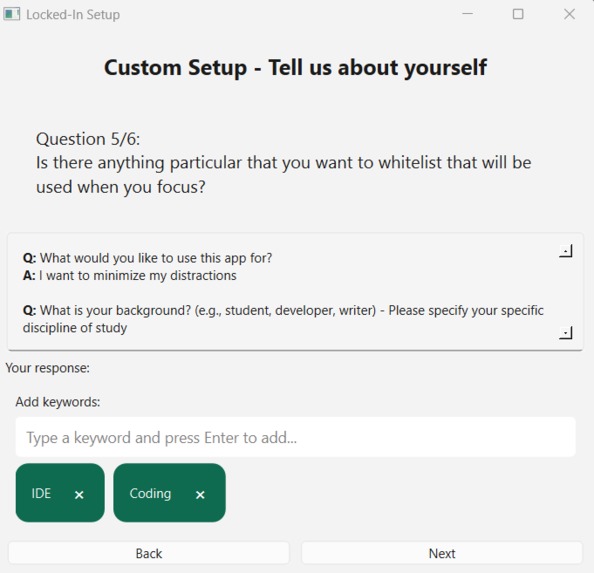
Custom Setup
-
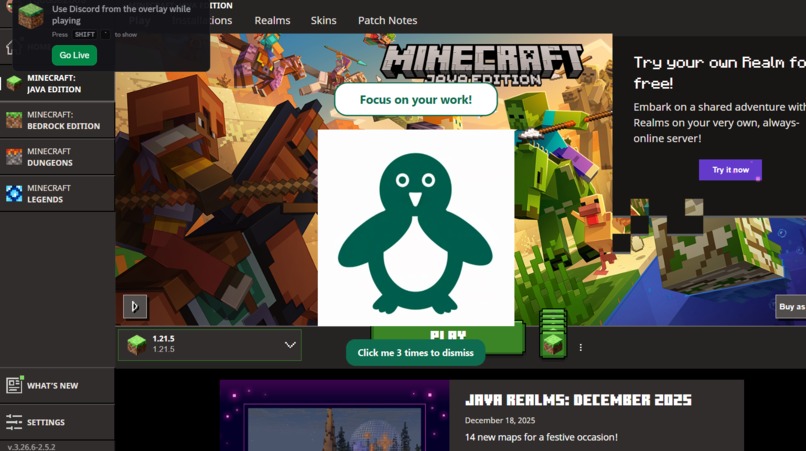
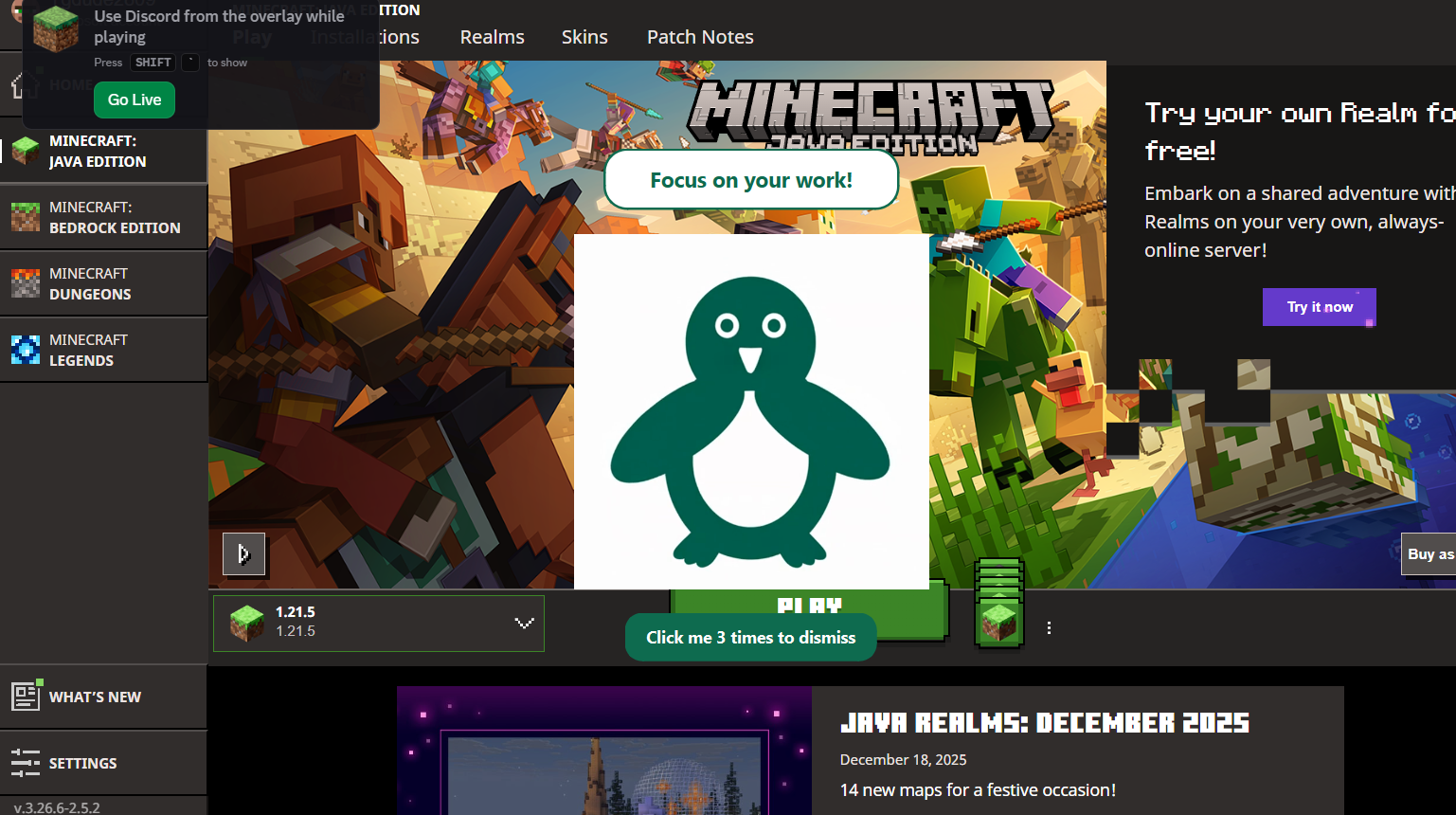
Pop-up Reminder
-
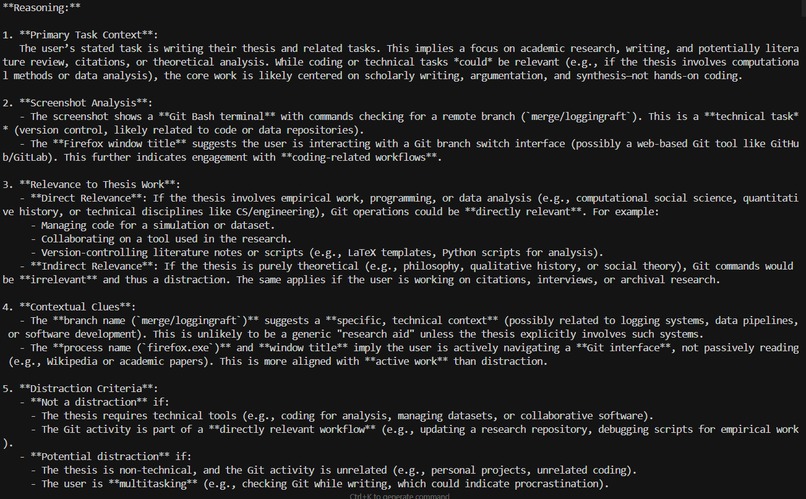
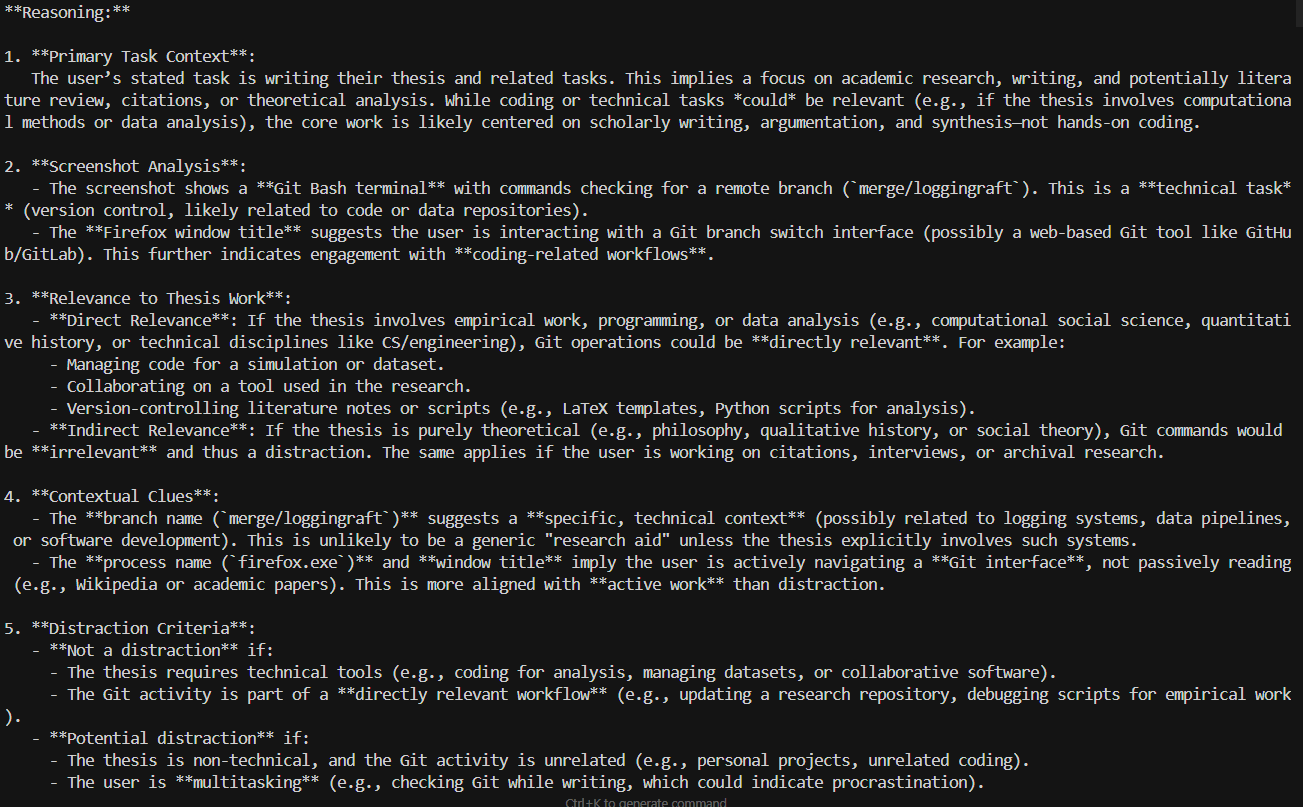
Reasoning
Inspiration
We’ve all been there: you sit down for a "quick" working session, and two hours later, you’re deep in a rabbit hole browsing reddit. The problem isn't a lack of tools. It's that current productivity tools aren't customed made to you. They block apps based on static lists, not context. We wanted to build something that actually understands what you are doing.
What it does
Locked-in is an AI-powered productivity companion that acts as a personal trainer for your focus. It monitors your active workspace through tab names and system processes, using a local Vison Language Model to categorize your behavior. Instead of just a timer or a full lockdown system, it’s a context-aware guardian that knows the difference between "YouTube for a Python tutorial" and "YouTube for distraction," producing a nudge when it detects your focus is the latter. This system identifies user profiles based on natural language and decides on when to send alerts based on a multi-step artificial intelligence process.
How we built it
- Frontend: We used the PyQt6 library to style the GUI, deciding on a penguin theme.
- The intelligence: We integrated the Ministral 8B language model to run completely locally. This ensures user privacy.
- Activity Tracking: Using psutil, pywin32 and mss we built a background engine that captures active window titles, system processes and screenshots to feed into our model.
Challenges we ran into
A large challenge we had was choosing the correct language model that was able to achieve strong accuracy while not sacrificing on performance. Many models we considered were to demanding, and even in our design process with our current model we had to find ways to reduce runtime. We also spent a significant amount of time "context engineering" to ensure the model was objective and didn't detect false positives.
Accomplishments that we're proud of
We successfully bridged the gap between low-level OS tracking and high-level AI reasoning. Maintaining strictly local data collection was a fundamental design principle we wanted to and were able to maintain especially with demanding models. Our app is privacy compliant, with no cloud-based data logging.
What we learned
We learned the power of "Small Language Models." You don't need a massive cloud API to have a smart app. Ministral 8B is incredibly capable of understanding human intent when prompted correctly. A major takeaway was the ethical advantage of Local-First AI. We learned that users are far more willing to trust an app with deep system access if the data never touches a cloud server.
What's next for Locked-In
We really only brushed the surface in terms of features. We would like to include functional insights whereby users can see in what situations they were more "Locked-In", to optimize their habits. Another potential feature to be implemented in the future would be an eye tracking feature whereby a laptop's webcam is used to determine if a user is operating a cellphone or is distracted by something else in view.


Log in or sign up for Devpost to join the conversation.