-
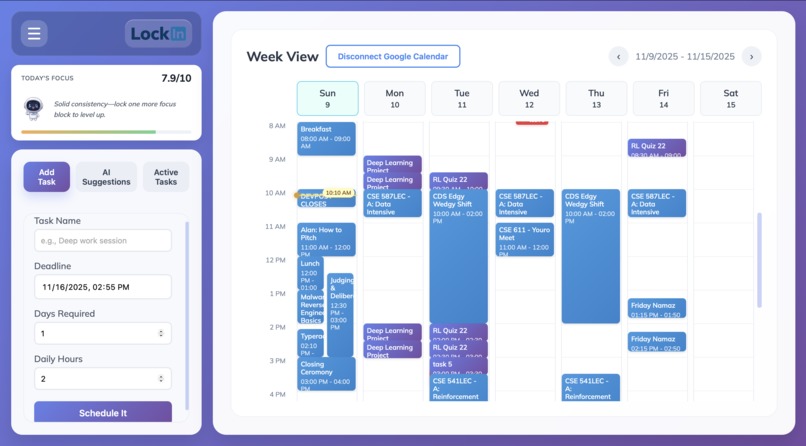
Weekly Calendar View
-
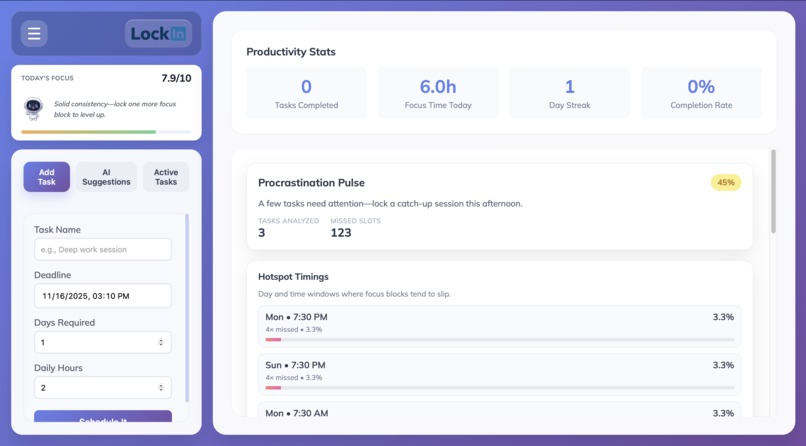
Stats1
-
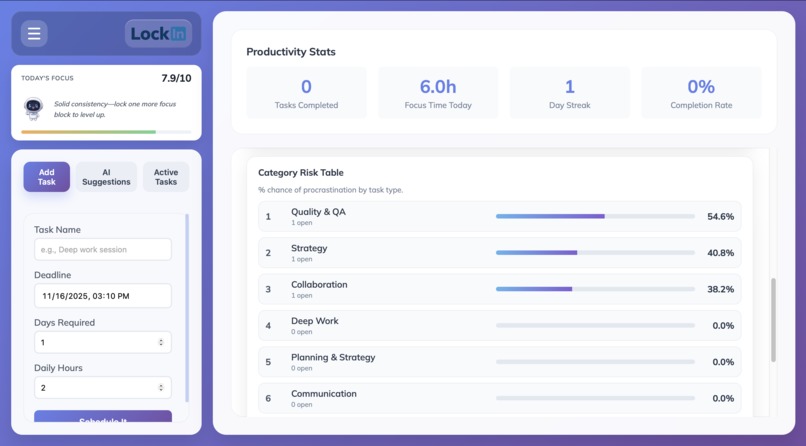
Stats2
Inspiration
It quite easy to miss deadlines when you are overwhelmed or have procreates despite calendar apps, we realized students need AI that predicts procrastination patterns and not just reminders. Lock-IN became our intervention tool.
What it does
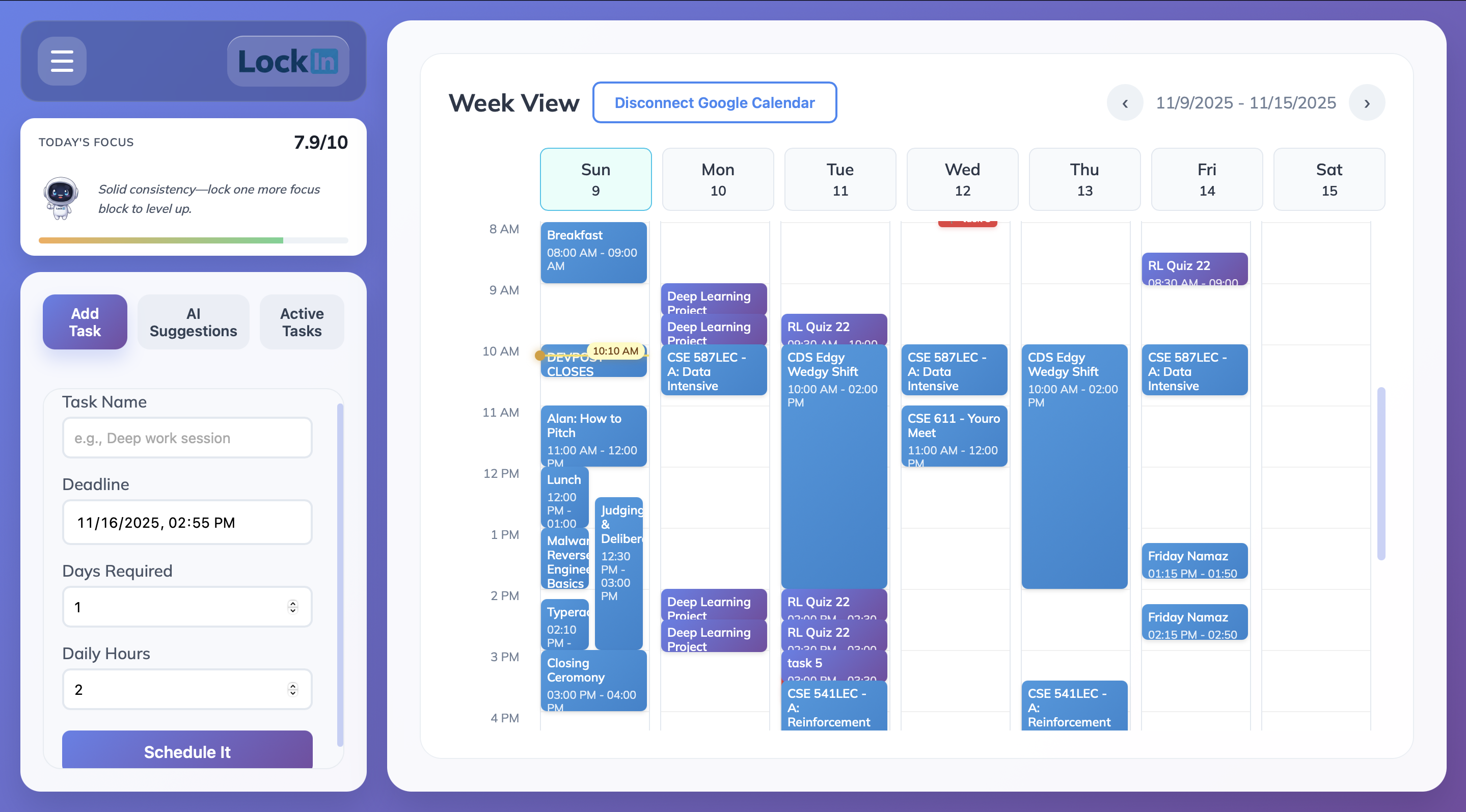
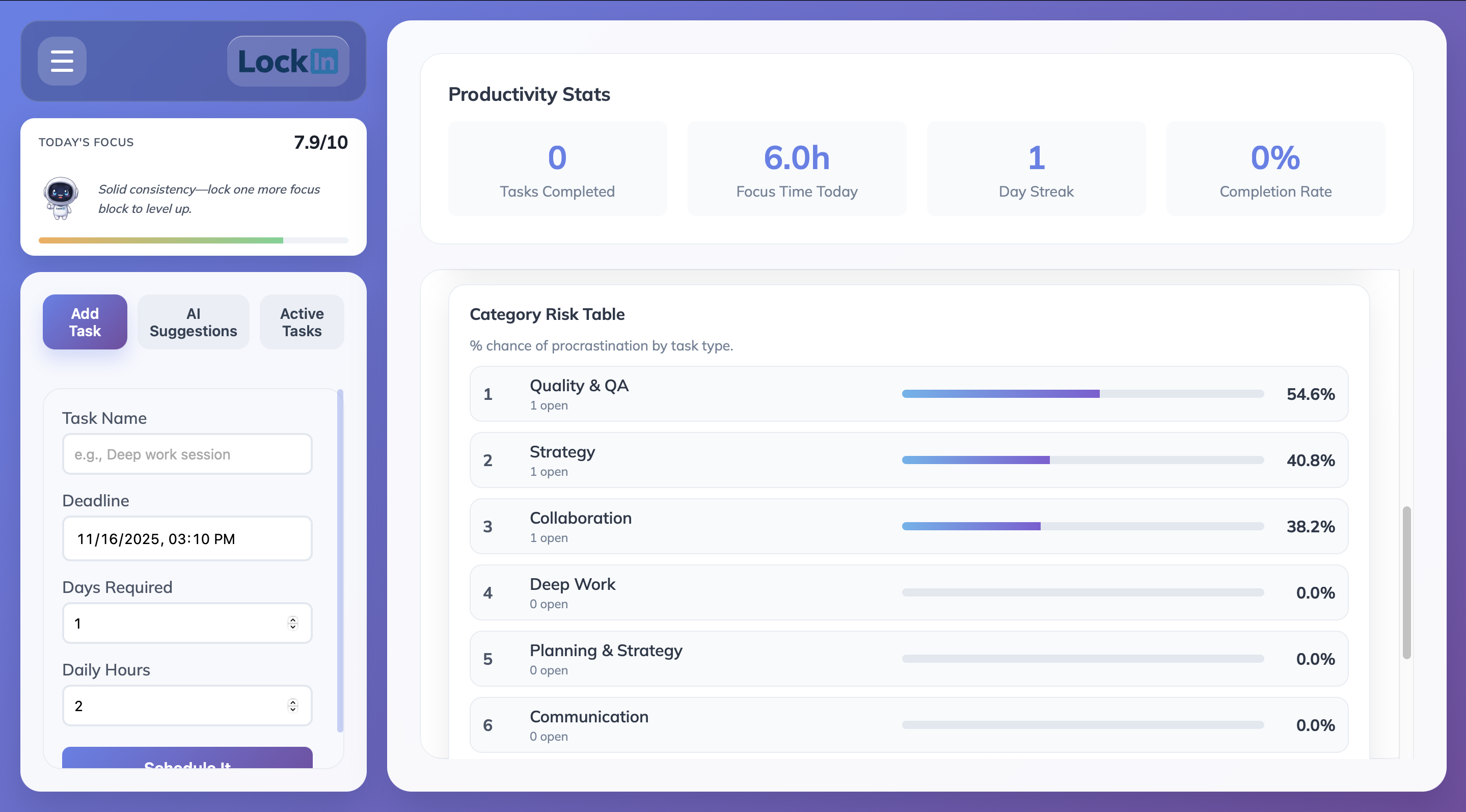
LockIN uses Gemini AI to schedule Pomodoro blocks around Google Calendar, then tracks missed sessions to build behavioral patterns. It coaches users away from procrastination before deadlines slip.
How we built it
Flask backend with SQLite stores task metrics; Gemini classifies work types and risk scores. Frontend uses vanilla JavaScript for drag-drop scheduling and live productivity scoring.
Challenges we ran into
Balancing AI suggestions without overwhelming users required iterating through five different scoring algorithms and some Google OAuth and calendar API issues.
Accomplishments that we're proud of
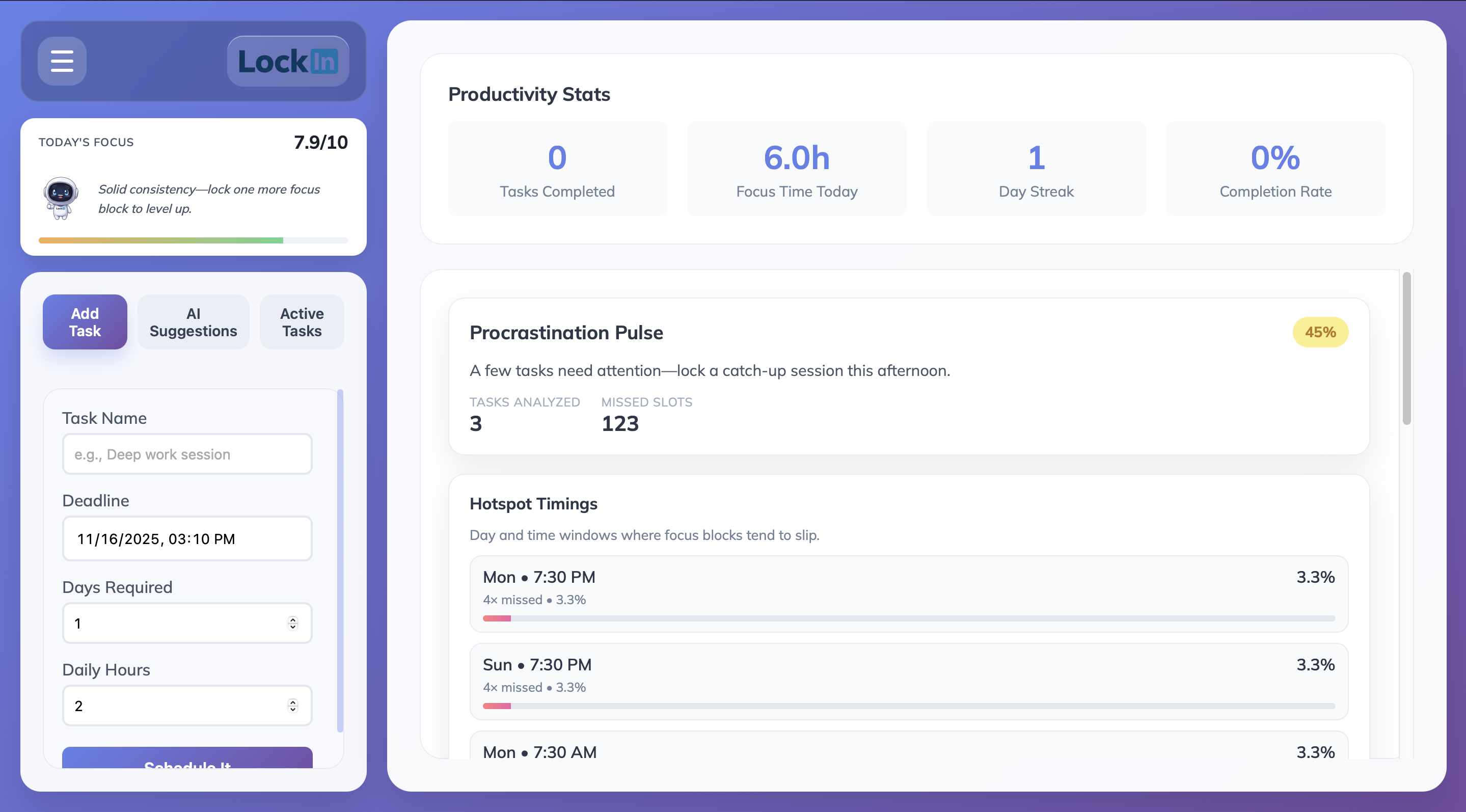
Our hotspot detector groups 120 days of session data into day-of-week + hour buckets, surfacing patterns like "40% of skipped work happens Thursday afternoons" from just two weeks.
What we learned
Behavioral analytics need gentle coaching, not alarms. Students responded better to "momentum" language than guilt. e.g. rewording notifications from "You're procrastinating!" to "Schedule recovery blocks."
What's next for Lock-IN
Training a custom LSTM model on our session database to predict energy dips. Adding Spotify/focus.app integrations to auto-block distractions during high-risk procrastination windows.
Built With
- flask
- gemini
- google-calendar-api
- javascript
- python
- sqlite


Log in or sign up for Devpost to join the conversation.