Inspiration
I'm a physiotherapist. Every day I treat stroke and orthopedic patients (alot of patients in different specialties) and help them return to their social life and community. Weeks or months after discharge, many come back needing the same care we already gave them. The treatment worked. The follow-up didn't. Once someone leaves the clinic or hospital, nobody checks daily whether the plan is being followed, whether a warning sign is appearing, or whether the person still feels motivated. Follow-up is one of the biggest unsolved problems in clinical practice, across every specialty from maternity to surgery to cardiac care to elder care. I wanted to build what I wish I had for my own patients.
What it does
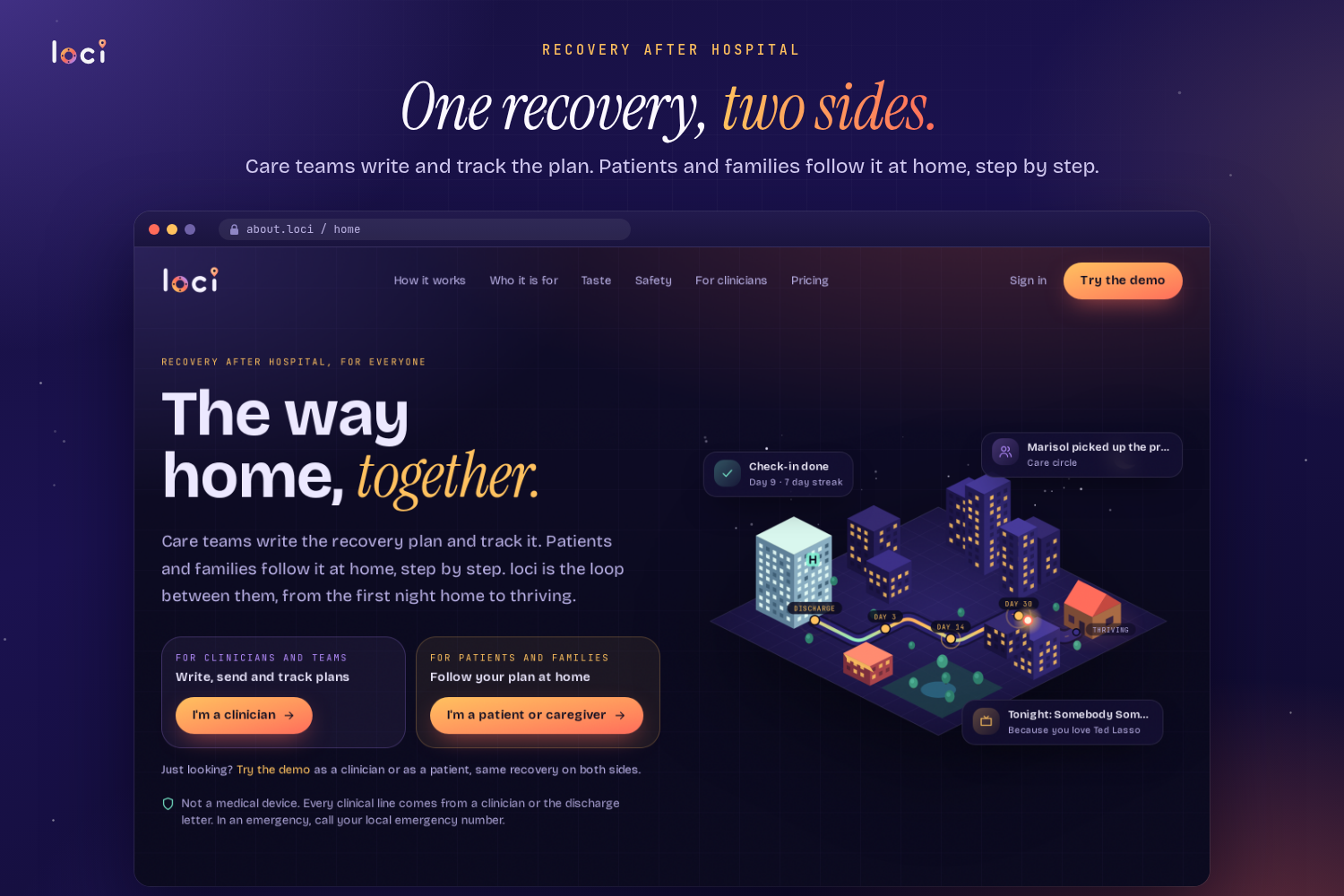
loci is the way home after hospital, built as two connected sides.
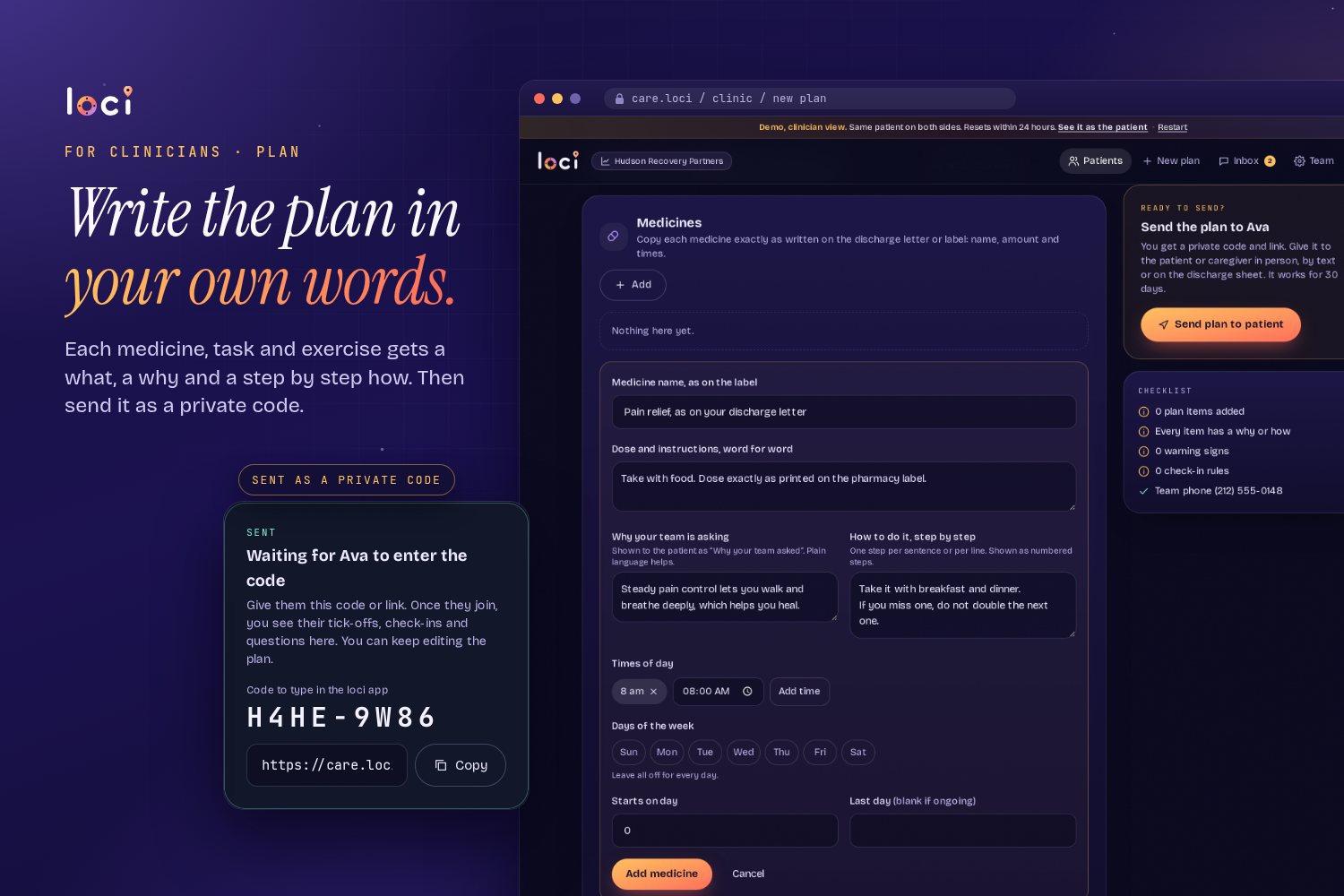
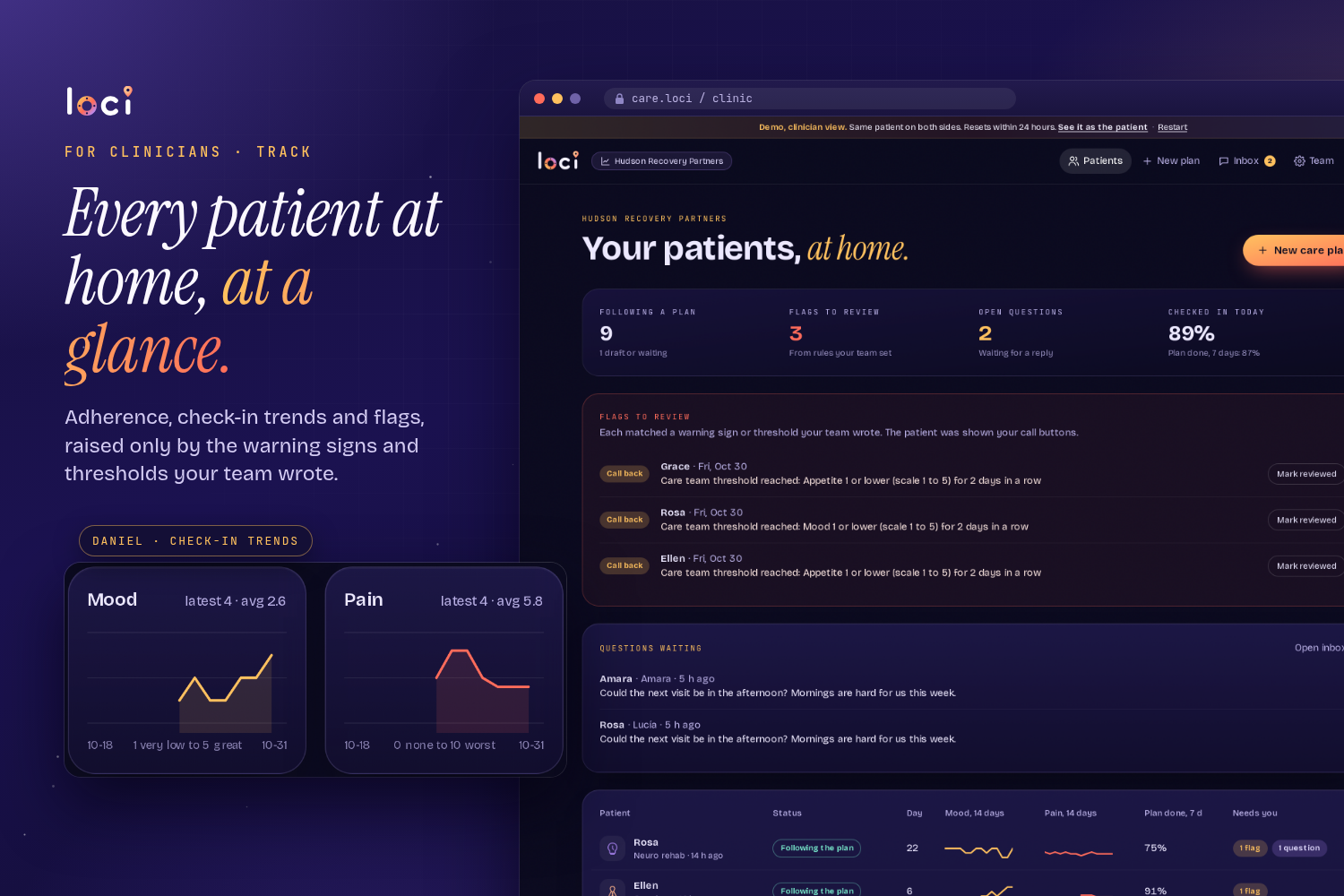
- Clinicians create the care plan from a specialty template and send it to the patient with an invite. It covers medications, exercises, appointments, plain-language instructions, warning signs and milestones. They then track every patient in one place: adherence, check-in trends, and flags that match the rules they set. If they update the plan, the patient sees the change.
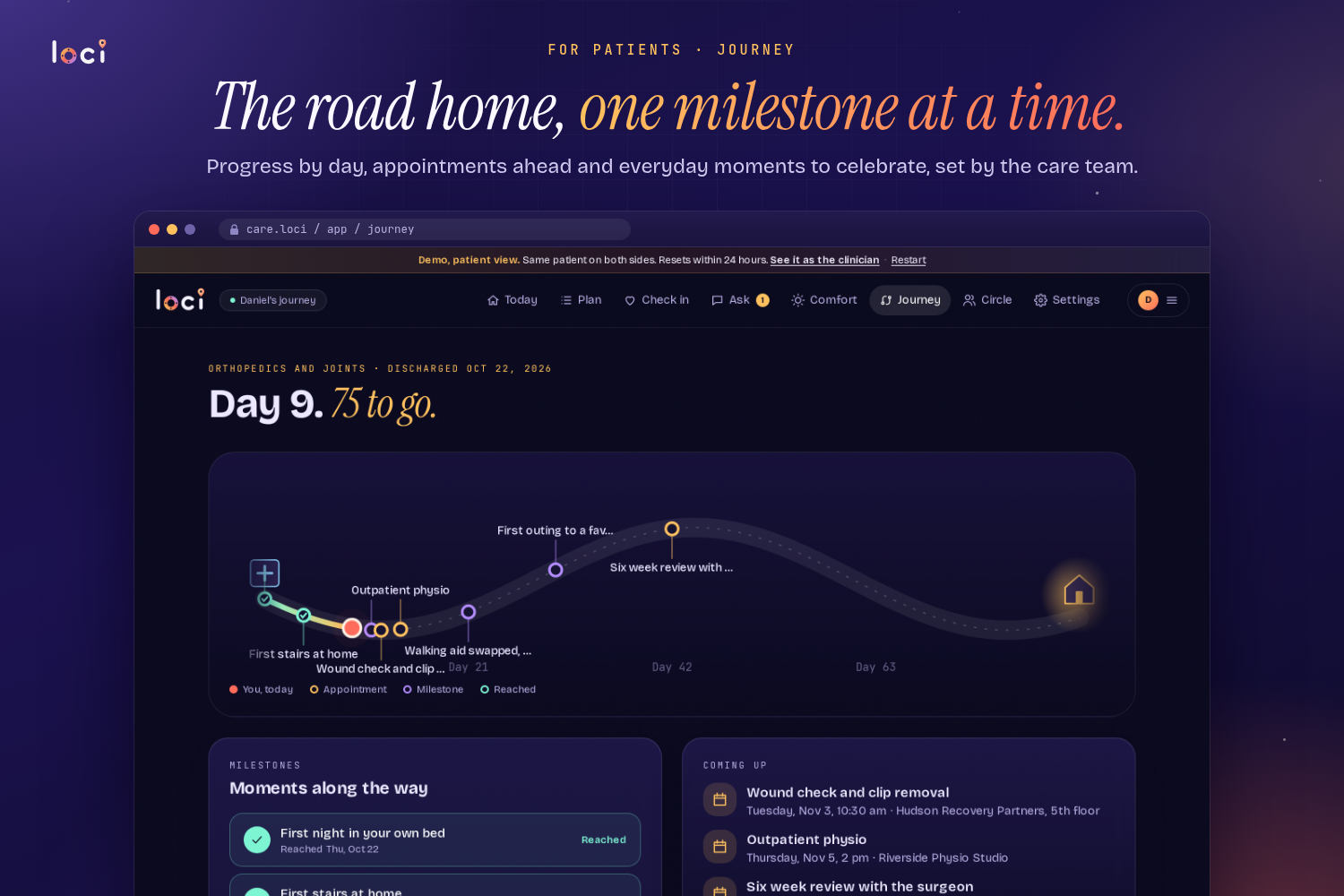
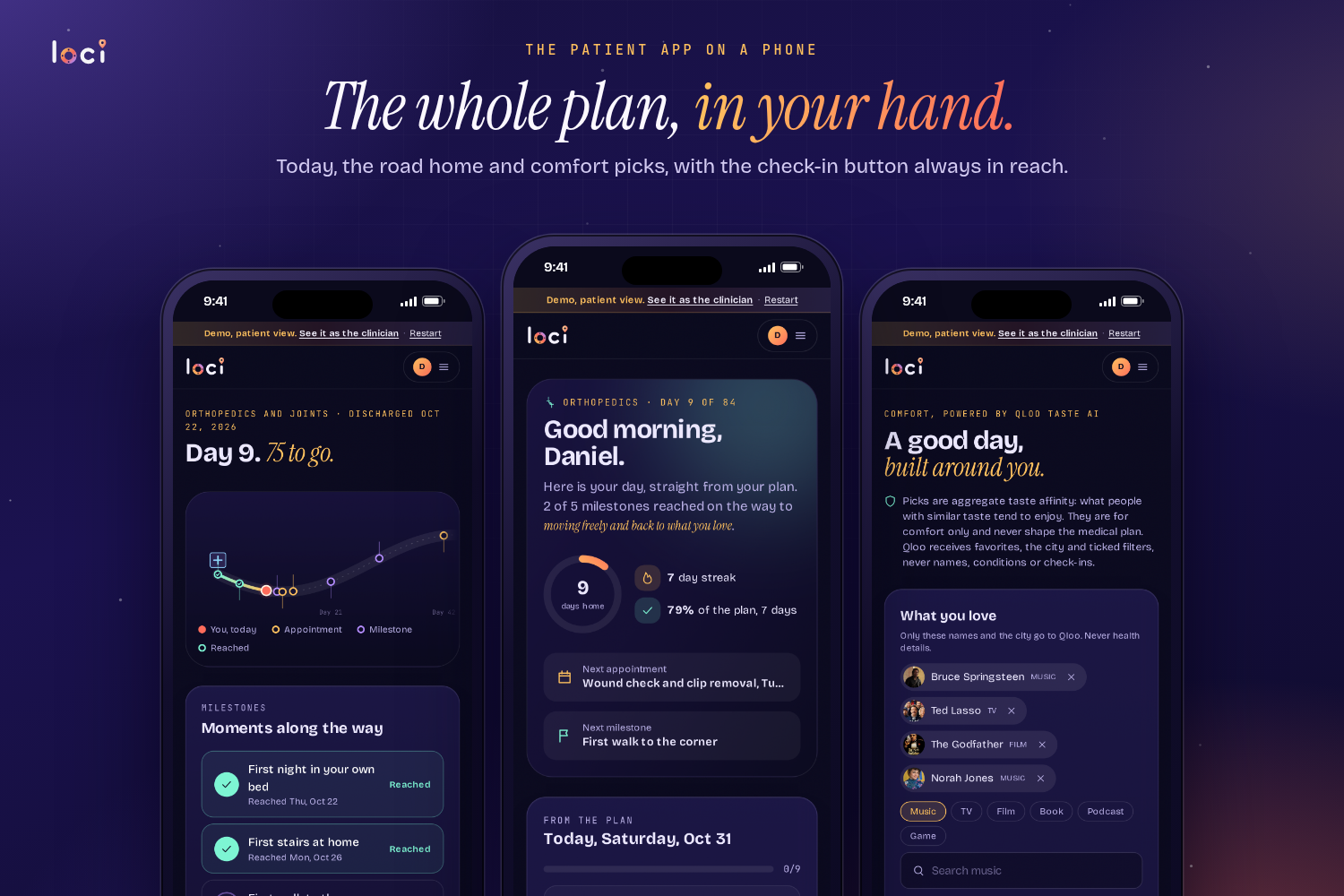
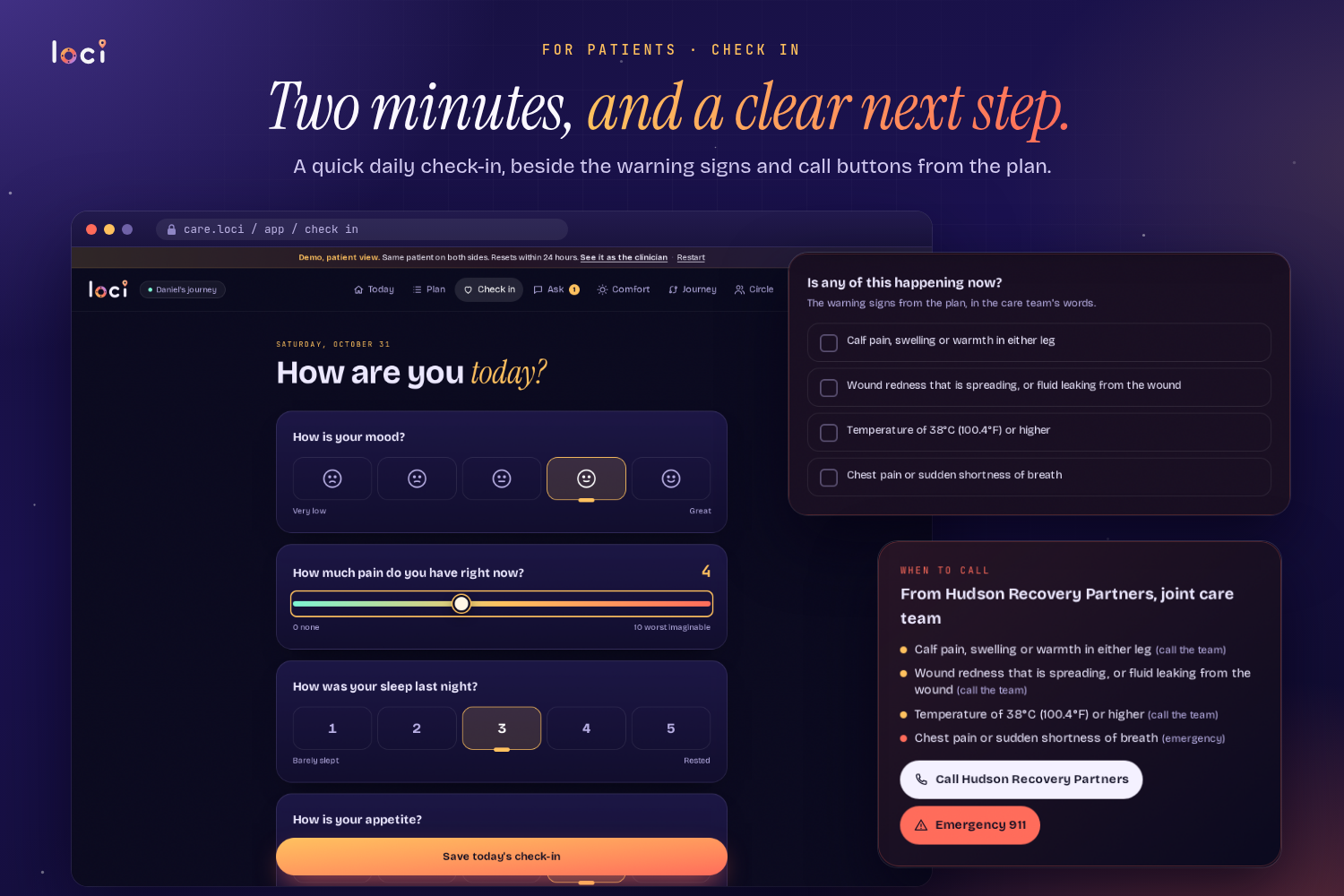
- Patients and families get the plan as step-by-step instructions, with tick-offs, a two-minute daily check-in and a road home with milestones. If an answer matches a warning sign the clinician wrote, loci repeats the clinician's words and offers one-tap buttons to call the team or the emergency number. Family and carers join by private link and share errands.
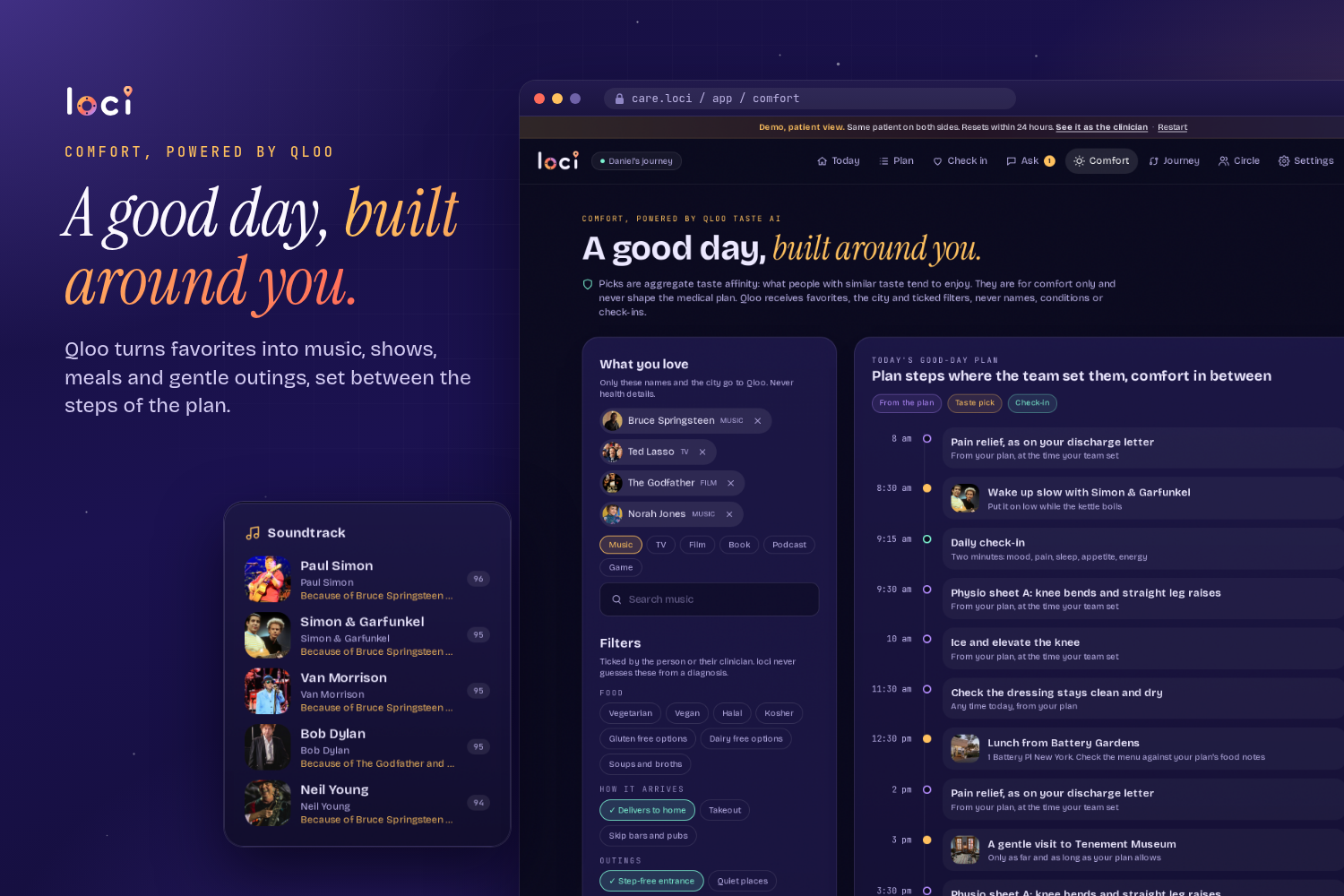
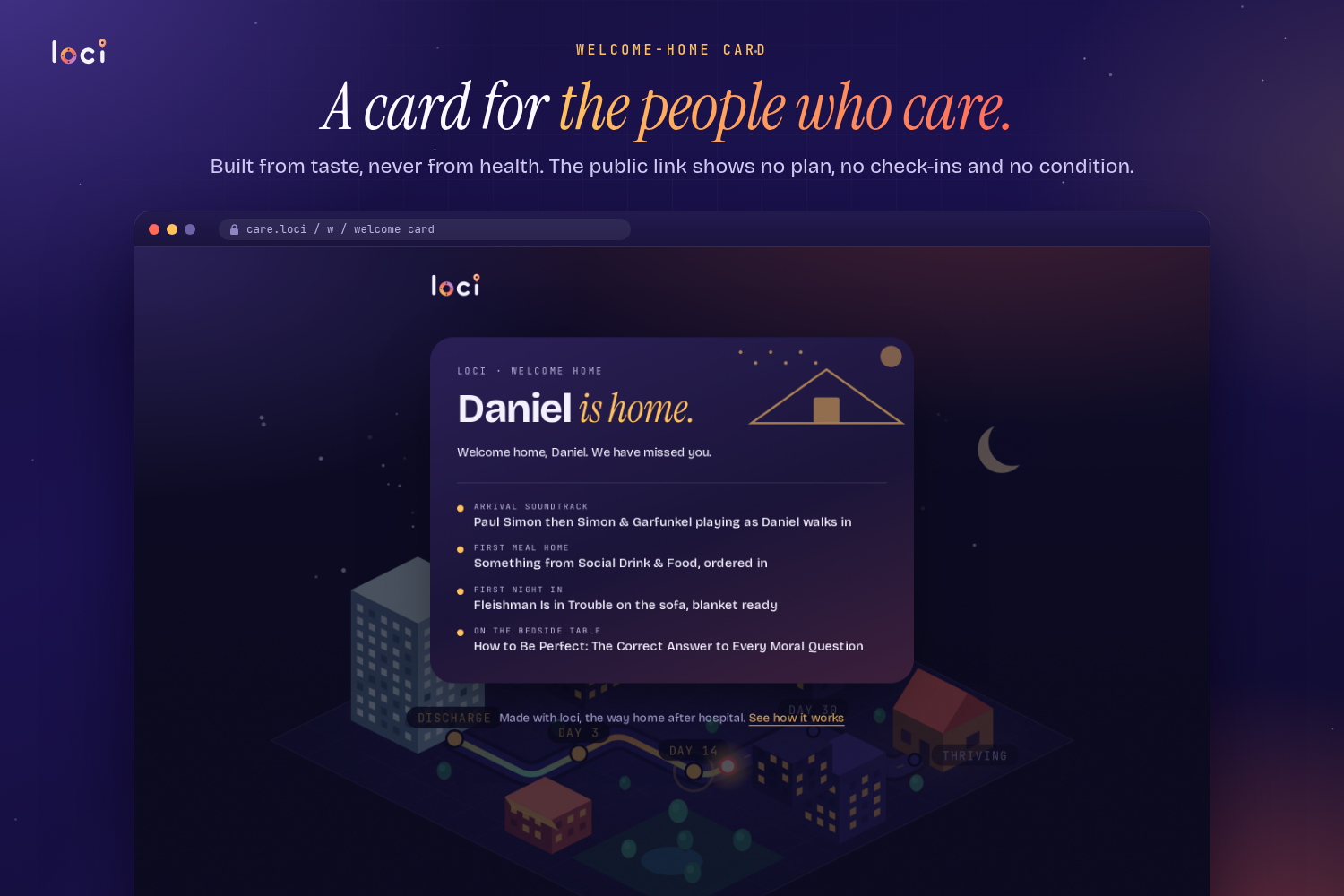
- Taste, powered by Qloo. From a few favorites and a home city, loci builds a good-day plan: music, shows, books, meals near home that fit the person's own filters, and gentle outings. A stroke patient gets a walk to a place they would actually like, not a generic "exercise more" reminder, and it keeps them connected to their community after discharge.
How we built it
Next.js, TypeScript, Tailwind and Motion on Postgres, with a custom animated SVG city scene. Qloo's API (search, entities, insights, heatmaps and tags) powers the comfort layer. Places are scoped to the person's city, there are graceful fallbacks when a city has little data, and every pick is labeled as aggregate affinity. The clinician rules are plain thresholds, not AI. The app has consent logs, data export, account deletion, and tests at desktop and phone sizes.
Challenges we ran into
- Keeping the clinician and patient sides in sync in real time.
- Drawing a firm line between taste and health, so taste is never used to infer a condition.
- Making warning signs clear without causing alarm.
- Building a two-sided product in one hackathon weekend.
Accomplishments that we're proud of
- A working two-sided product, live, that covers 12 specialties.
- Clinical safety by design: loci invents no medical content, and every instruction, dose and warning sign comes from the clinician.
- Real Qloo data across New York, London, Tokyo, Paris, Mexico City and Berlin.
- An experience that feels calm and human, not like a hospital form.
- A patient mobile app for iPhone and Android, built on the same plan, check-ins and care-team line.
What we learned
Recovery depends as much on the days between appointments as on the appointments themselves. People follow plans that fit their life, and taste data is a strong way to make a plan feel personal. We also learned how much trust depends on keeping health decisions with clinicians and keeping taste separate from health.
What's next for Loci: the way home
-- Specialty templates written with clinicians, starting with stroke rehab and orthopedic physiotherapy, then every other specialty.
Outcome tracking, so clinicians and clinics can measure recovery, adherence and readmission-free days over time.
Research: with each patient's explicit consent, de-identified and aggregate data can help future research on what makes follow-up work.
More notifications: Reminders by SMS and WhatsApp.
More to come: wearable and device connections, multi-language support, and integrations with clinic record systems.
Built With
- docker
- expo.io
- let's-encrypt
- motion
- next.js
- nginx
- node.js
- playwright
- pm2
- postgresql
- qloo-api
- react
- react-native
- rest-api
- svg
- tailwind-css
- twilio
- typescript
- vitest
- zod

Log in or sign up for Devpost to join the conversation.