-
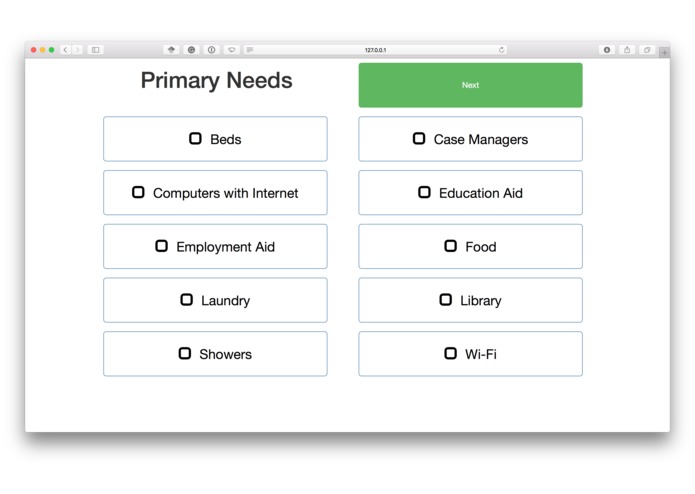
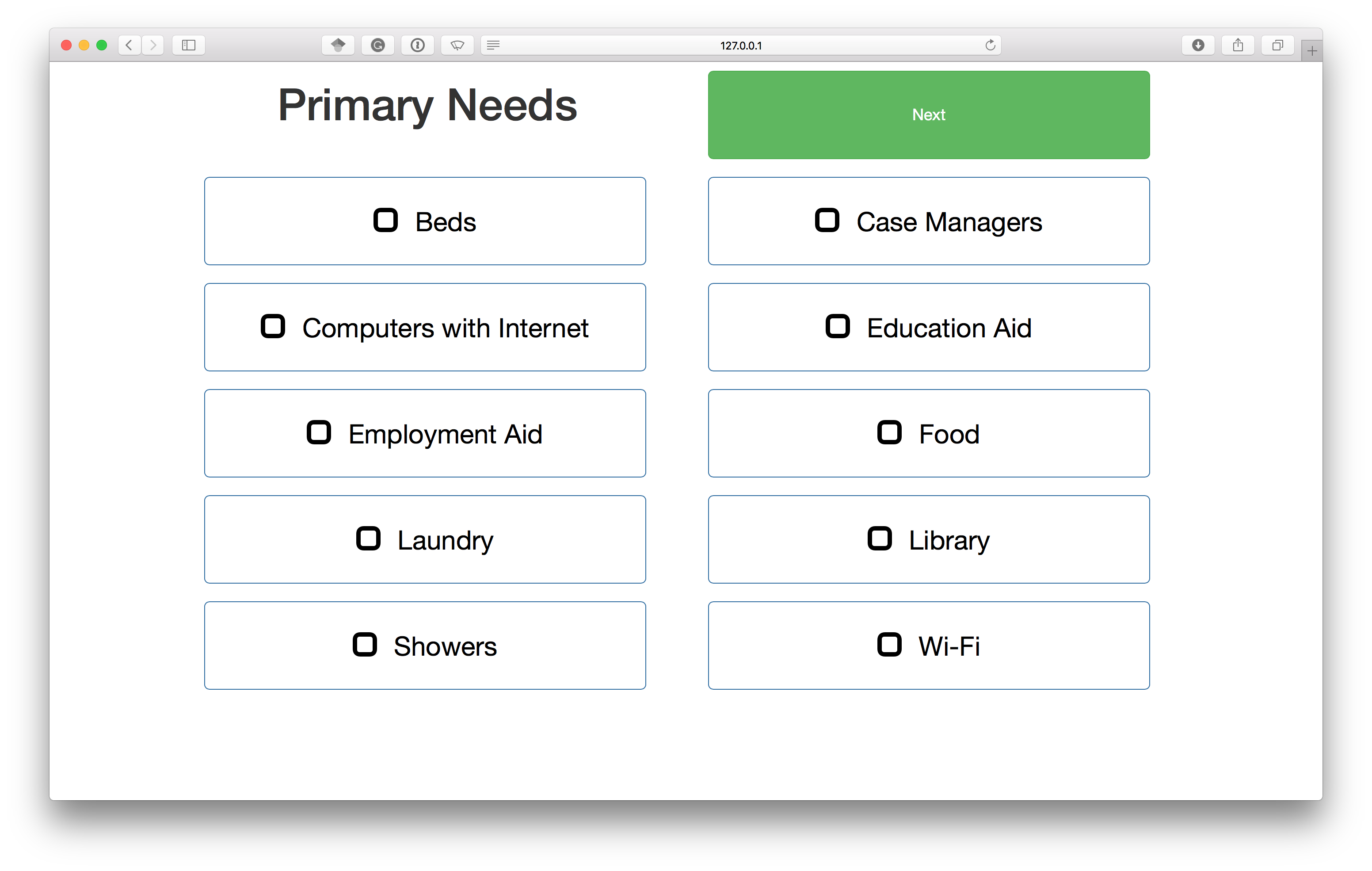
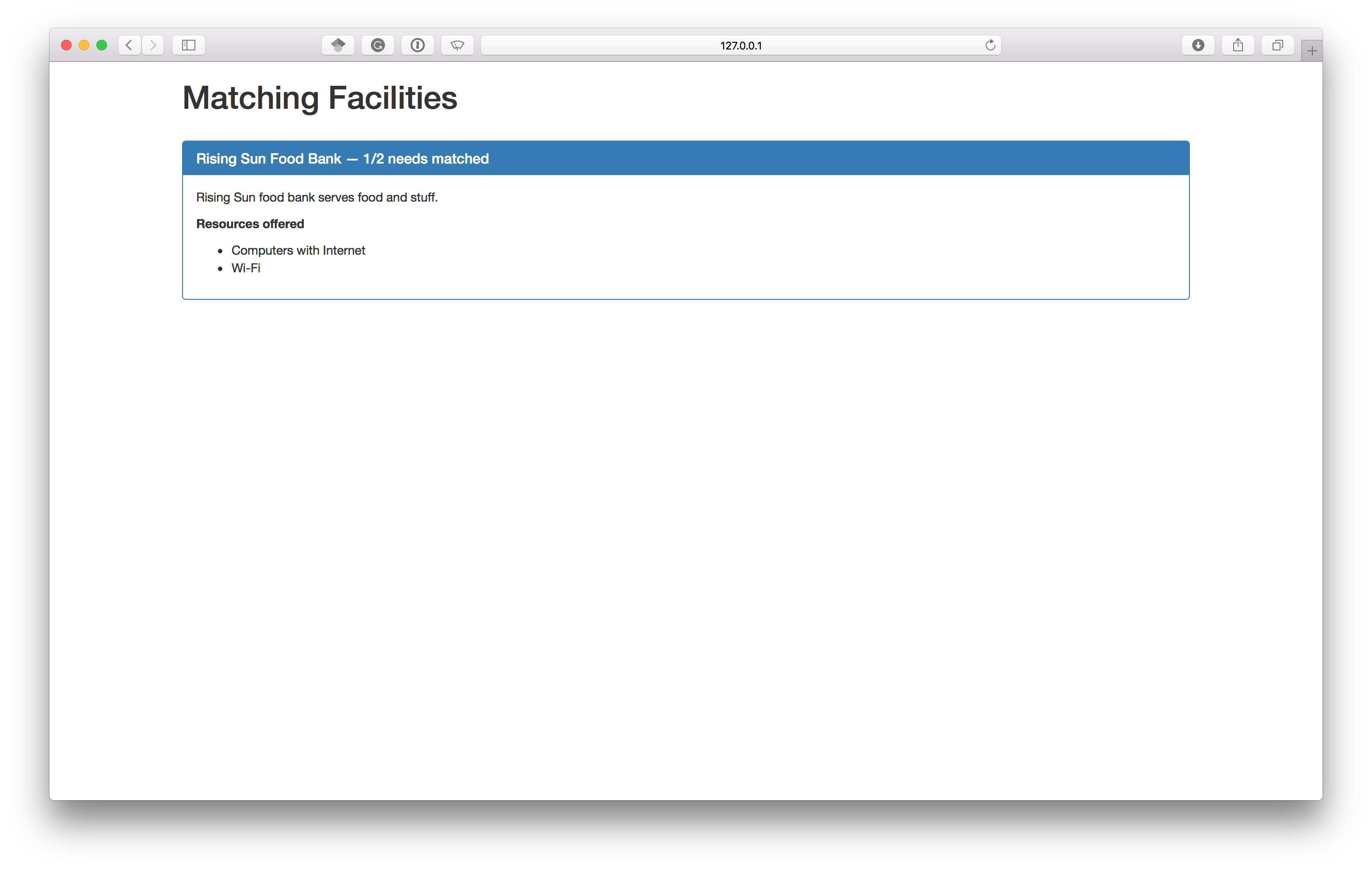
Those in need can filter what their primary needs are, and be matched with facilities accordingly.
-
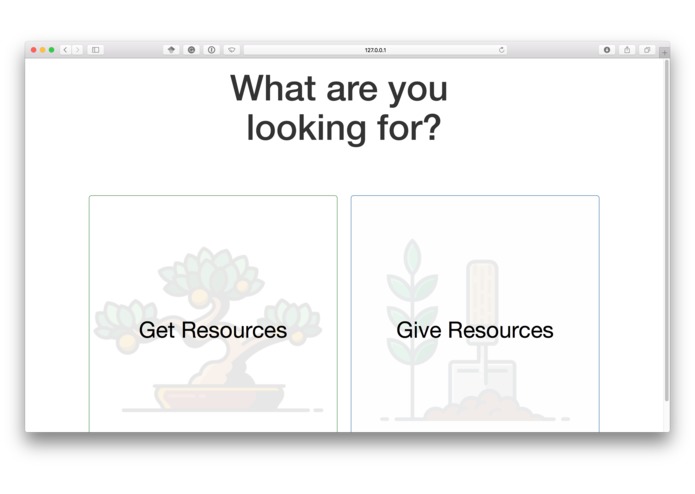
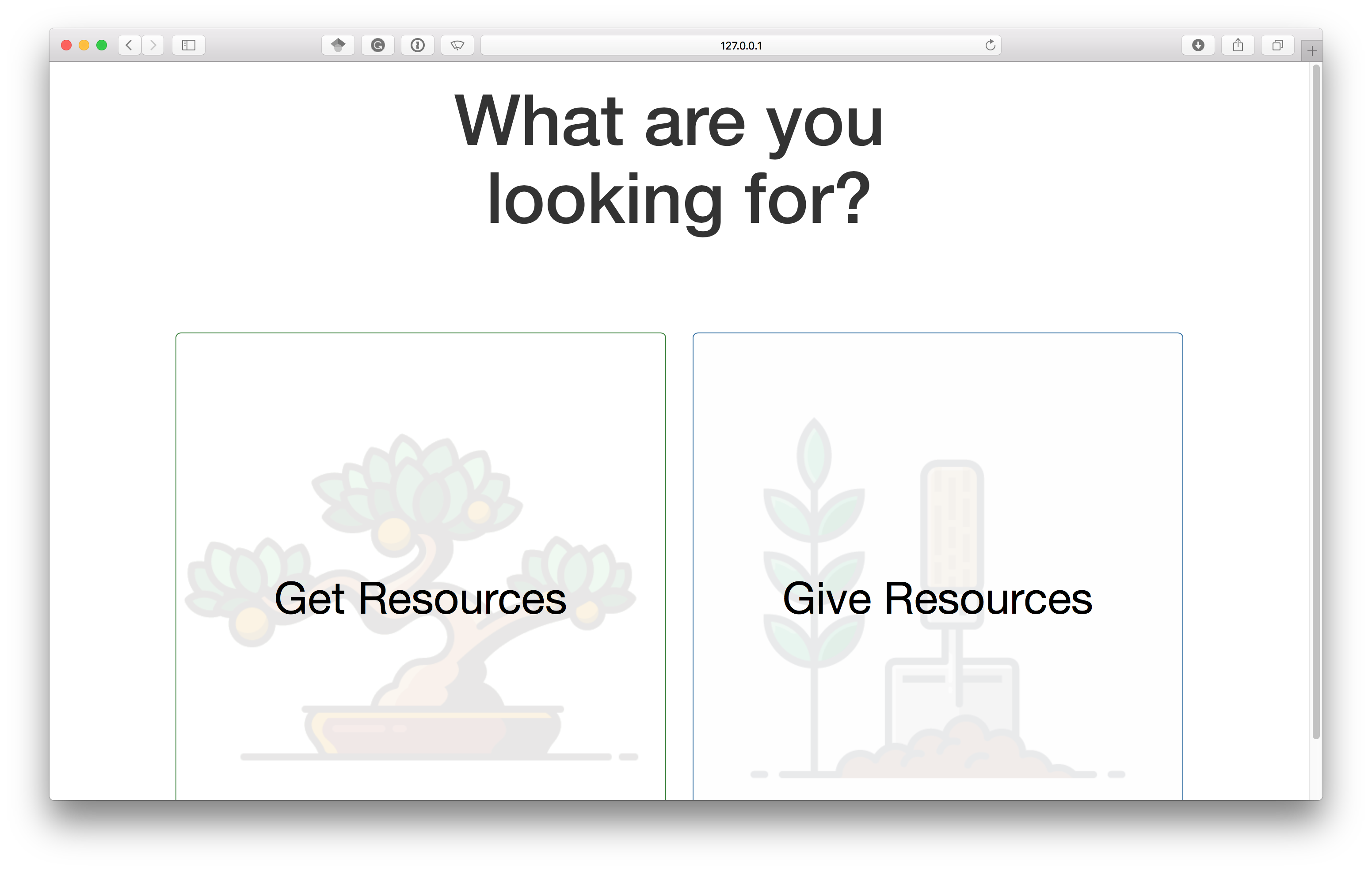
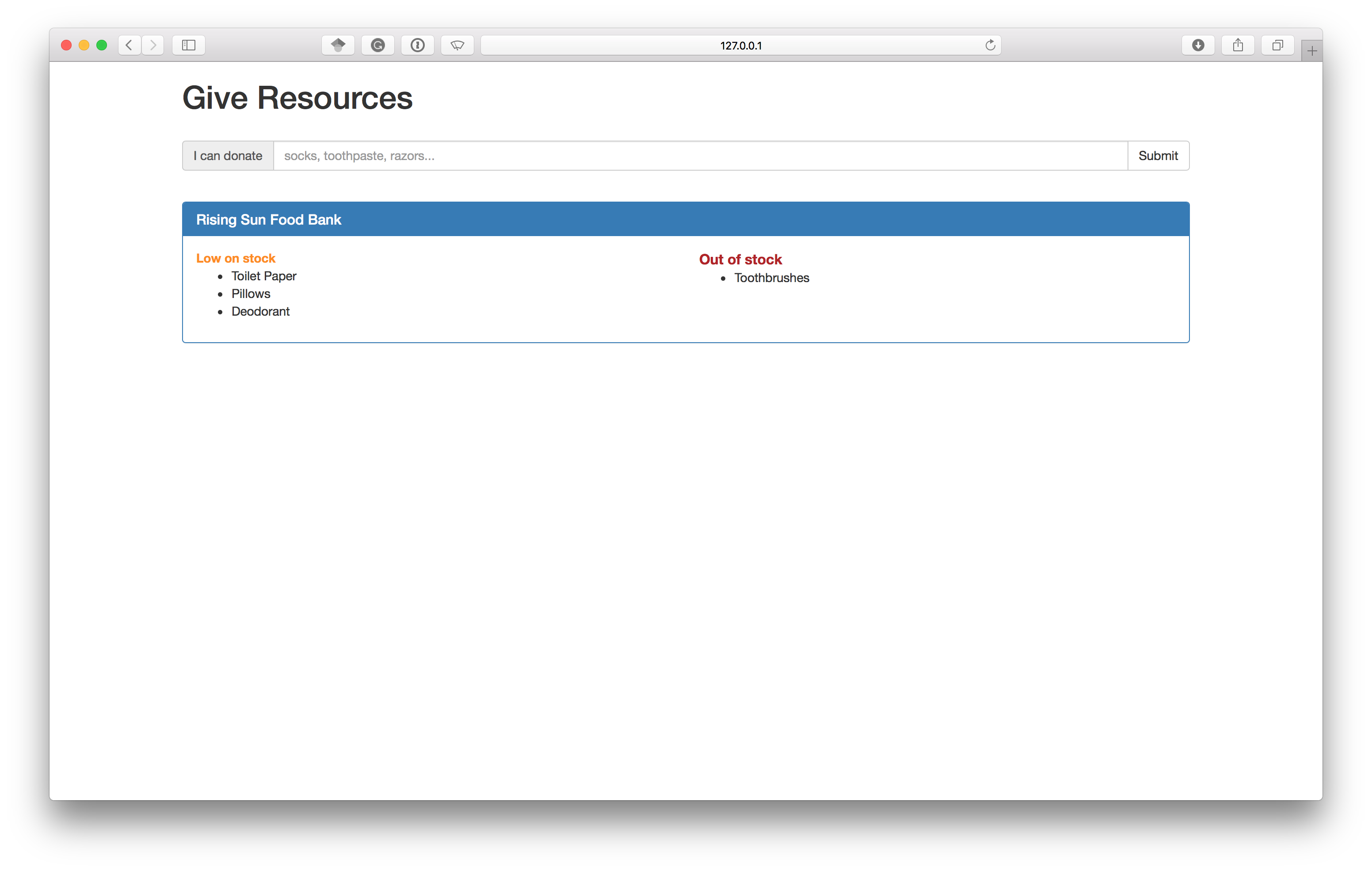
Community members can see what to donate, or can see what resources are available
-
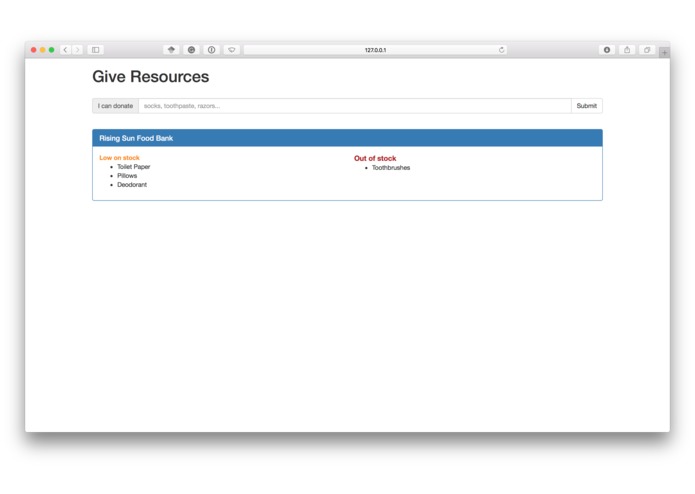
Community members can also see what commodities are needed by facilities, and search to see where they can donate their goods.
-
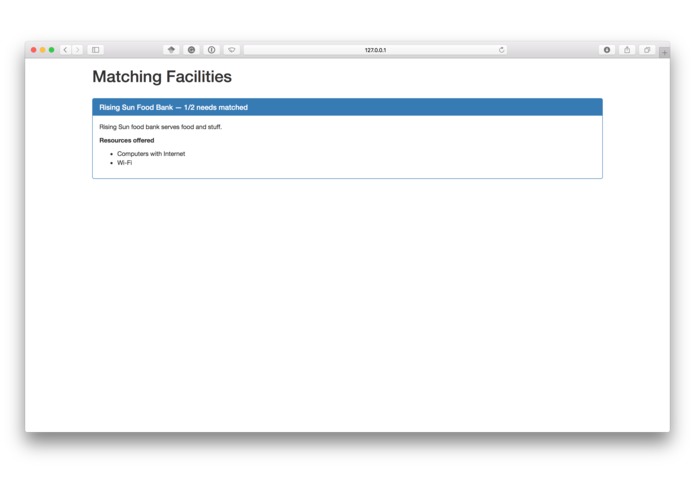
A list of matching facilities shows how many needs were met.
-
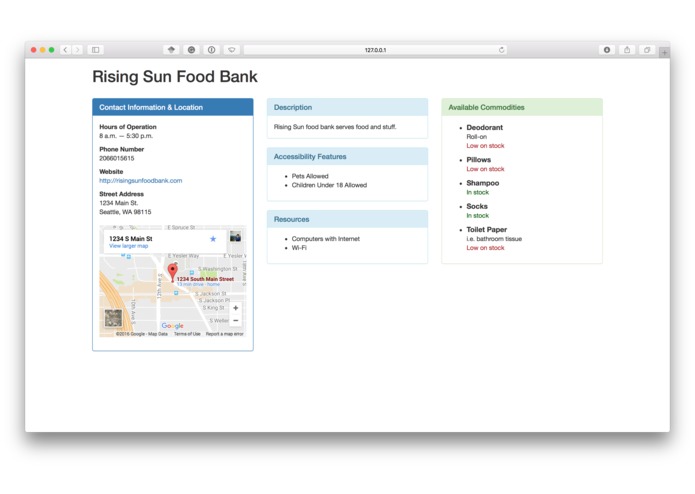
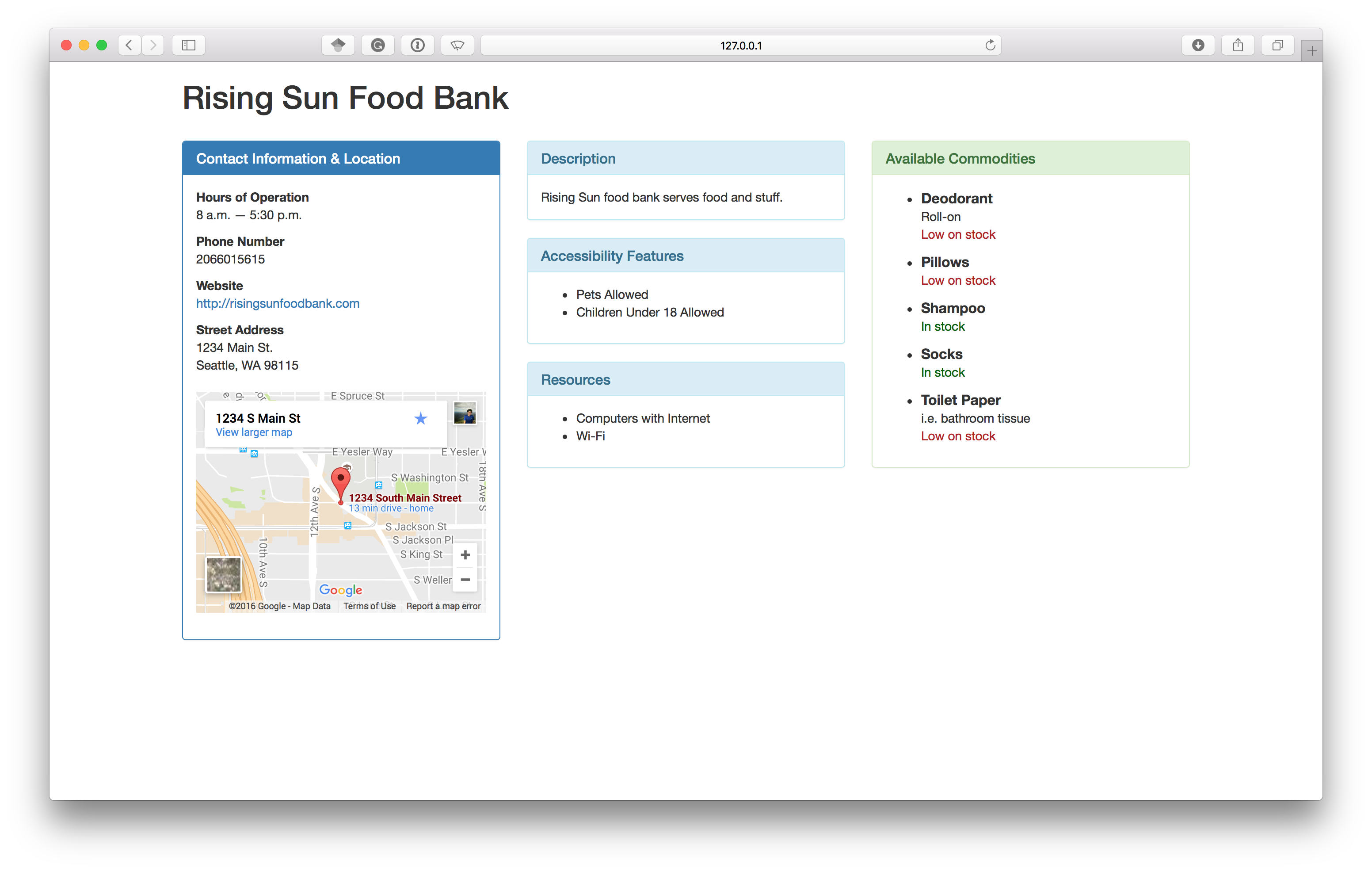
Facilities each have their own page with more information about what they offer, in terms of resources, consumable goods, and specialties.
-
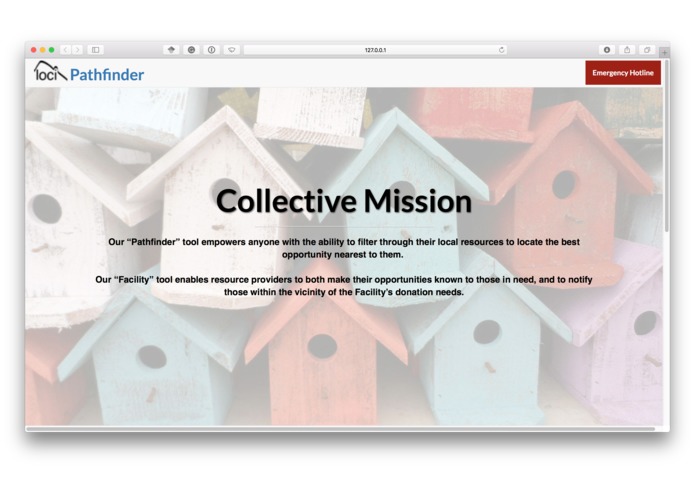
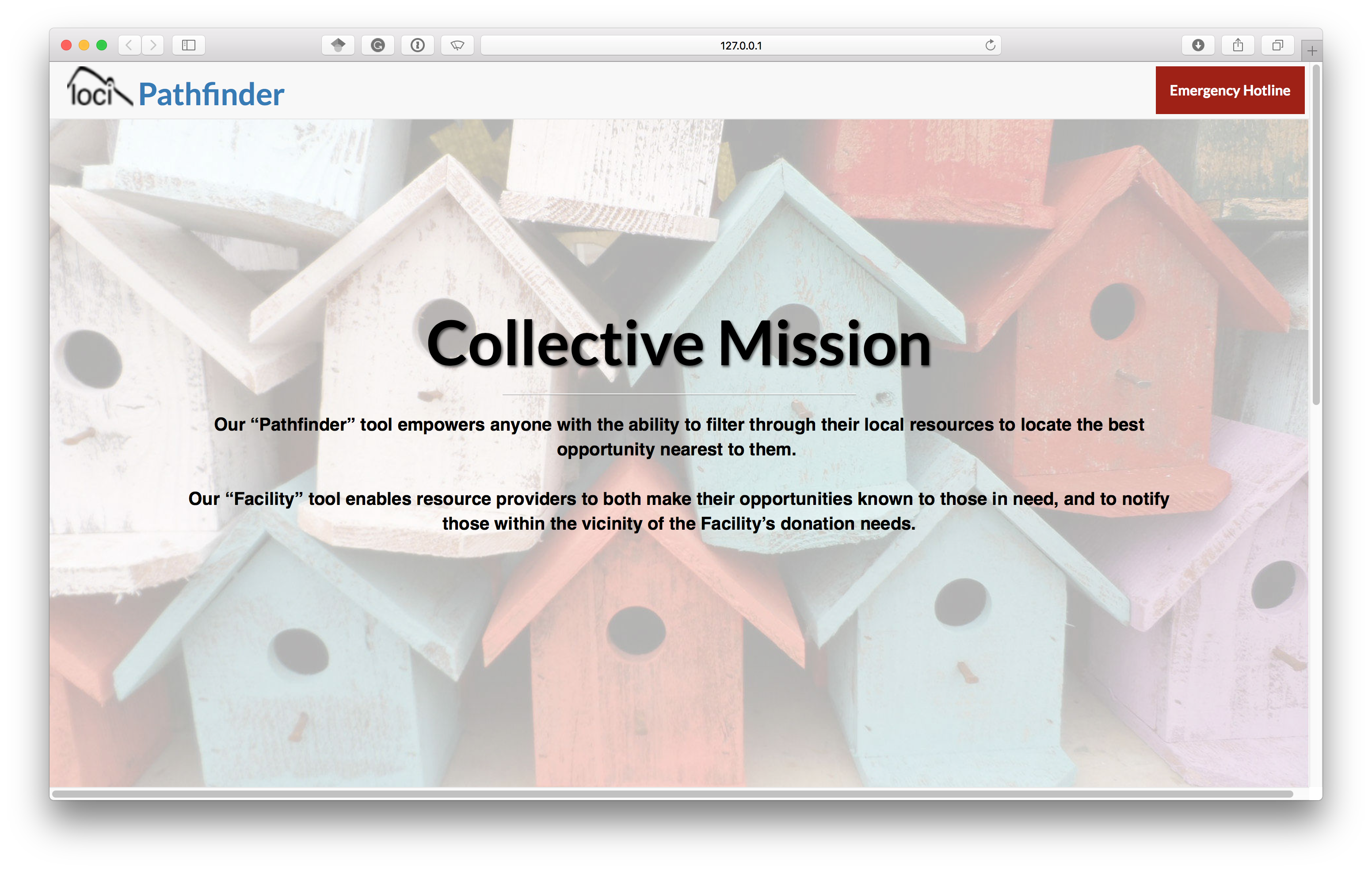
Homepage offers other resources as well
Inspiration
One of our team members spent a significant portion of the summer volunteering at The Roots young adult homeless shelter. He noticed that, while there are sufficient resources for the homeless population, it is often difficult for one to know where to go for the specific type of aid that they require.
What it does
It allows facilities that aid the homeless the ability to "advertise" their services and specialties such that the homeless can better understand what resources are available to them. Furthermore, it allows other community members to provide relevant supplies and aid to homeless shelters.
How we built it
We decided that a web app was the most universally accessible way to build our application. We used Django as a back-end and HTML/CSS/JS for a front-end.
Challenges we ran into
Filtering individualized relevant resources for a diverse population with varying needs was very difficult because, in a structured database, it's challenging to anticipate how categories may not remain static in the future. Furthermore, building an intuitive way for users to find only relevant resources was much more challenging than we anticipated.
Accomplishments that we're proud of
Although we were unable to accomplish all of our initial goals, we successfully narrowed the scope of our project from something very amorphous and abstract to a concrete idea with real-world implications. We're also proud that this project can provide a starting point for a larger ideation that integrates the application's current abilities with other ways to provide resources: for instance, allowing people to volunteer at facilities, and adding the ability for facilities to advertise classes and other learning resources.
What we learned
Filtering is hard. Anticipating people's needs and then matching them to relevant services, is hard, particularly in a such a large and diverse population.
What's next for Loci
UX improvements to make the app easier to use, better filtering for resources, and additional features like allowing facilities to offer learning resources.


Log in or sign up for Devpost to join the conversation.