-
-
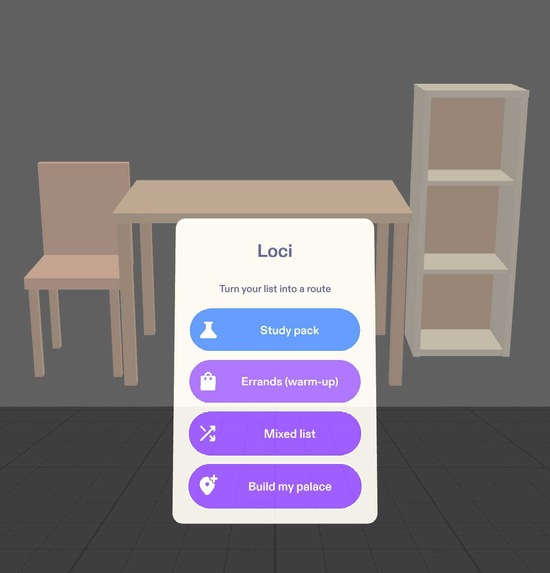
Pick a pack, or build your own palace.
-
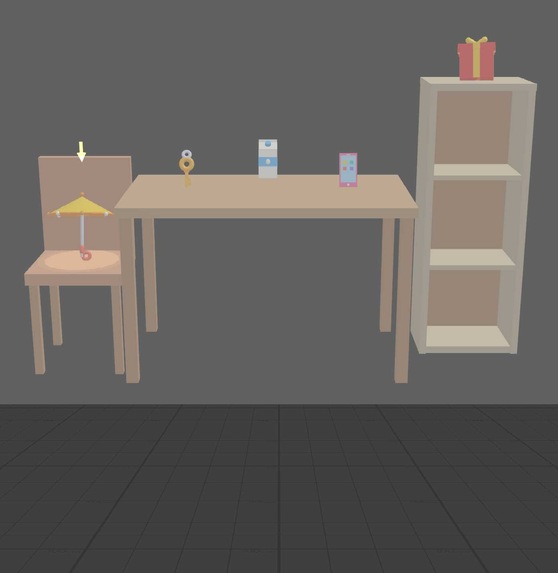
Watch your list become a route.
-
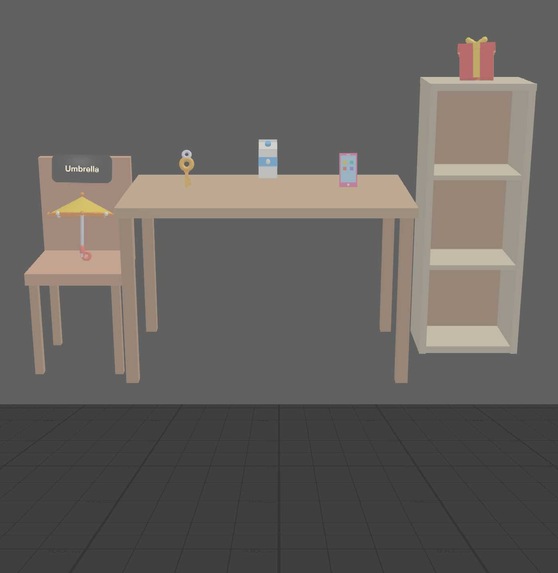
Walk it. Only the current spot pulses
-
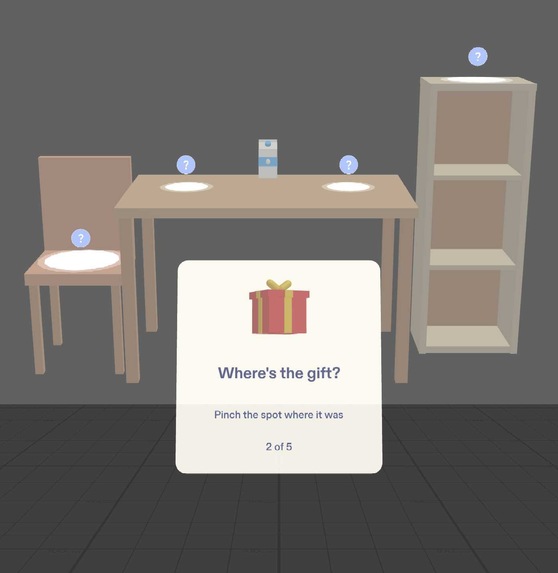
find it
Inspiration
Memory champions use an ancient trick called the method of loci: place each thing you want to remember somewhere along a familiar route, then walk it in your mind. It works because our brains remember places far better than lists. The hard part is imagining vivid objects in real places. On paper or a phone, the palace stays imaginary. On glasses, it can be real.
What it does
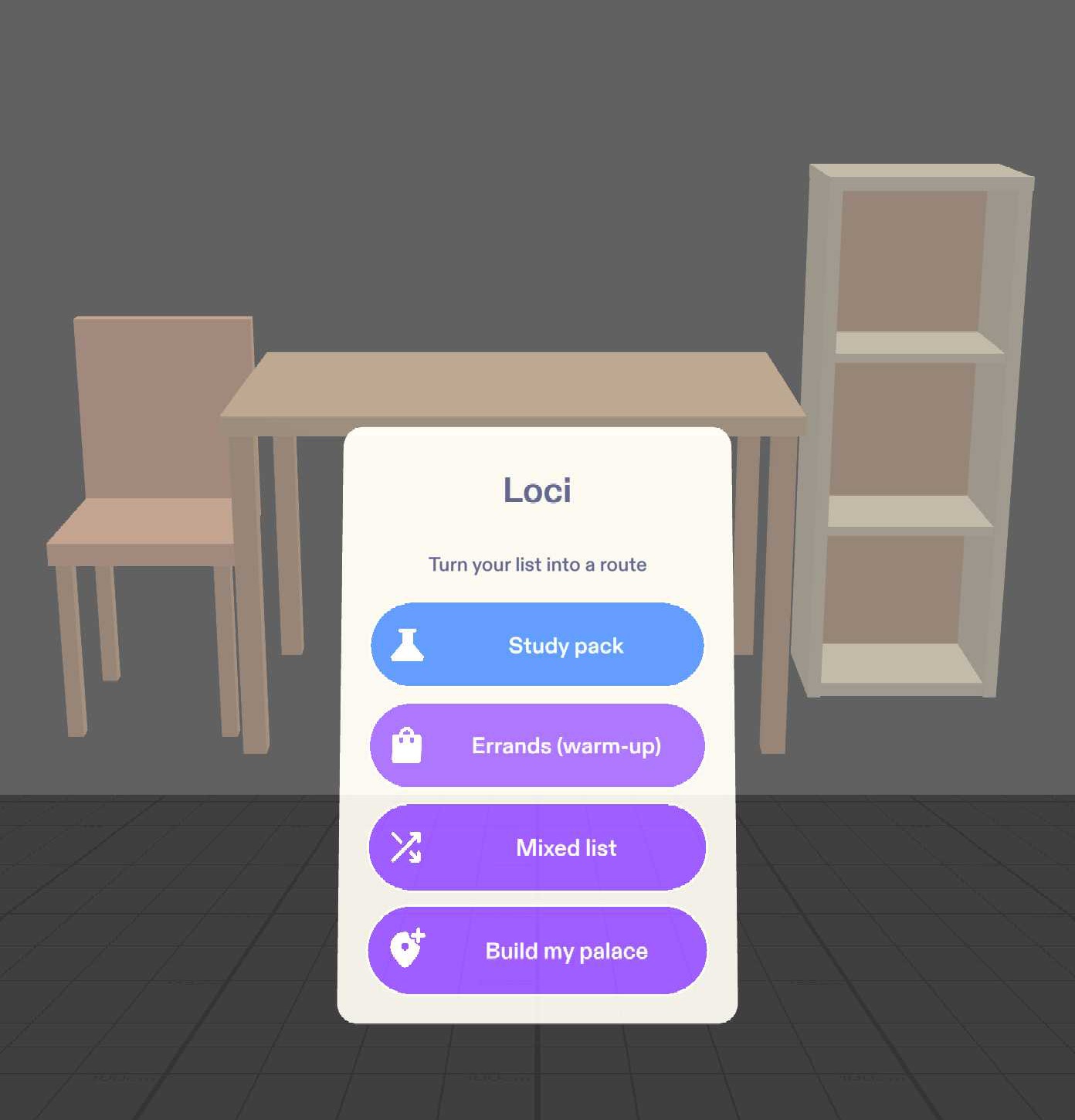
Loci turns a list into a route through your real room.
- Pick a list: a Study pack (the five steps of the scientific method), an Errands warm-up, or a Mixed list of any words.
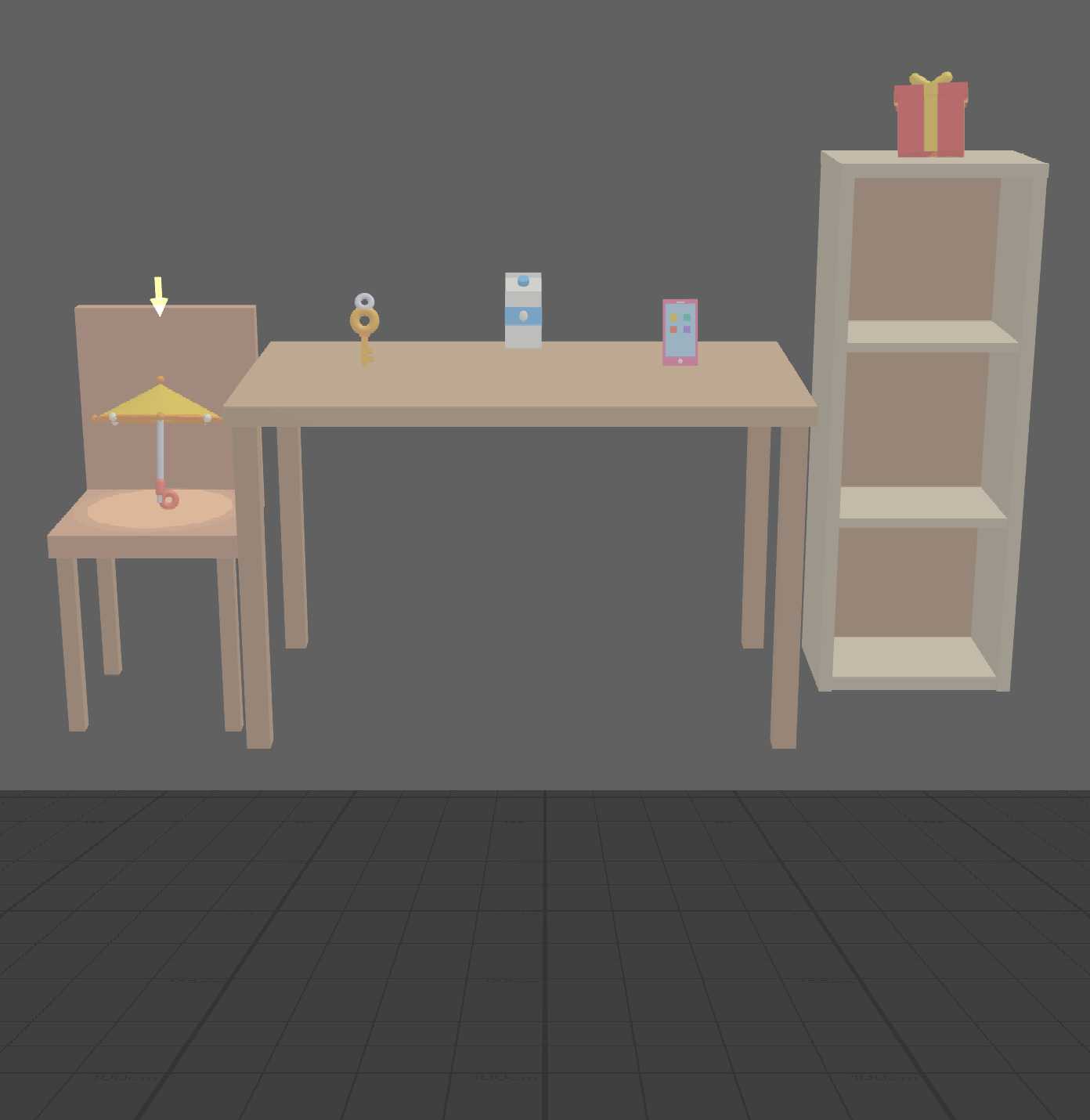
- Build: big, bright 3D objects drop one at a time onto your furniture (chair, table, shelf), reading left to right like a sentence. Or choose Build my palace and pinch any five surfaces to make your own route.
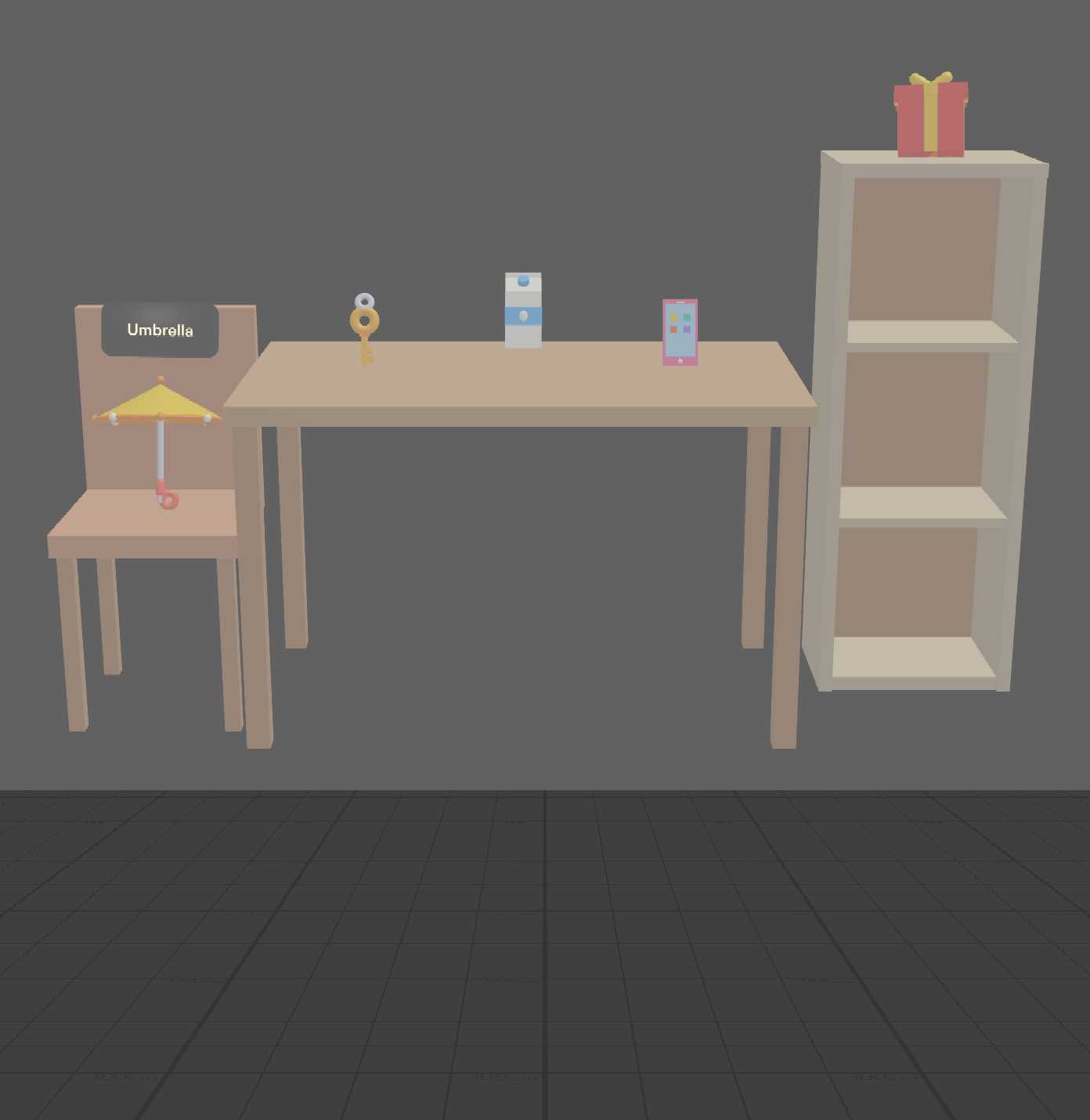
- Study: only one spot pulses at a time. Pinch each object to see it animate and hear its name, and a chime and an arrow lead you to the next one.
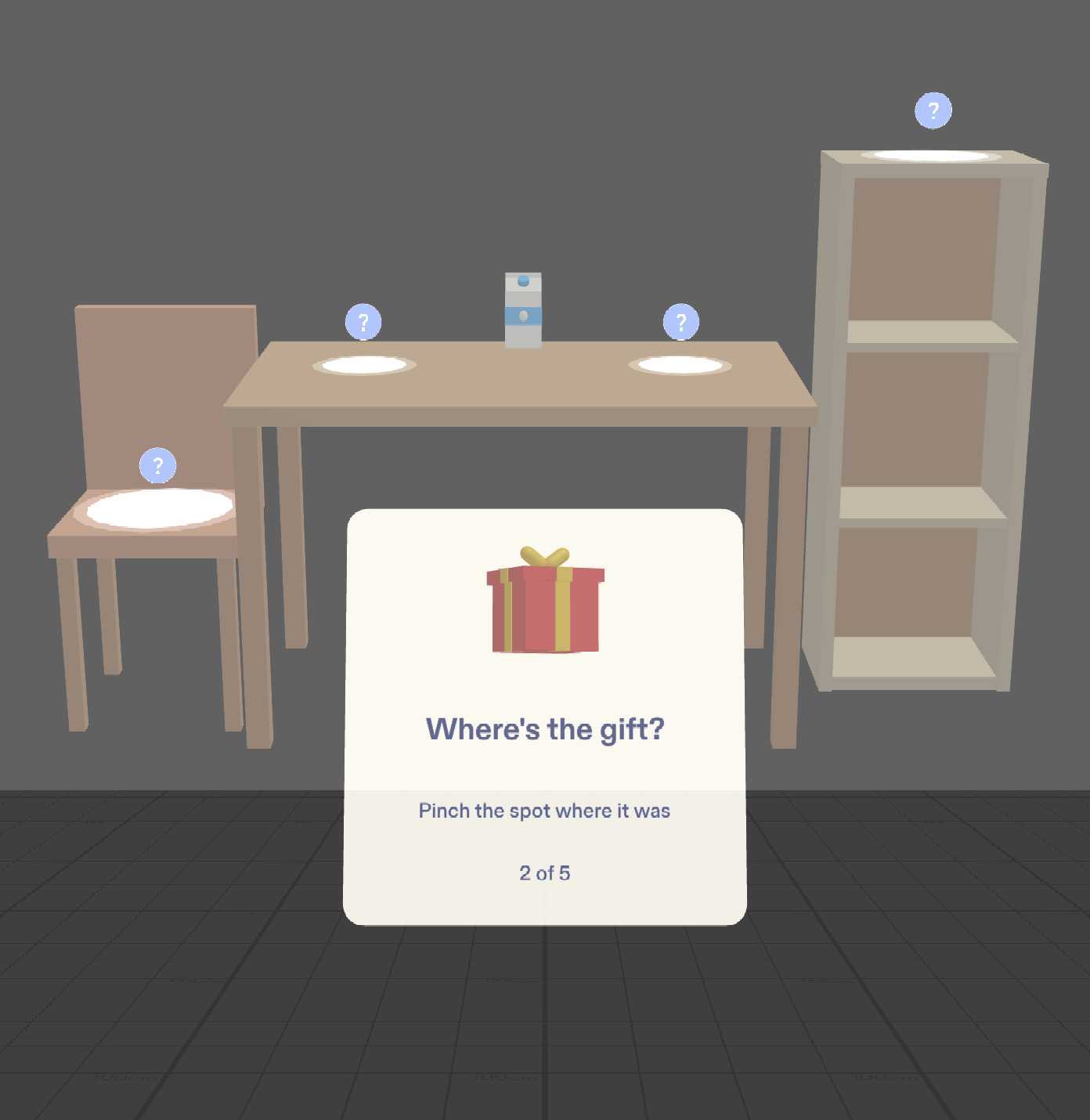
- Find it: the objects vanish and Loci asks "Where's the light bulb?" You answer by pointing at the place. Get it wrong and the real spot reveals itself. Scoring is objective, because you either remember the place or you don't.
- Review: your score appears, the missed spots glow, and Review missed walks only what you forgot.
Words without a ready-made model become word totems (the word in bold 3D text on a base unique to its spot), so the technique works for any list.
Who it's for: students memorizing ordered facts, and anyone with lists to remember.
Why glasses: a memory palace needs real places. Loci puts real-size objects on your own furniture while your hands stay free and your eyes stay up, and you recall by pointing at the room itself. On a phone, it's a list in your hand.
How we built it
- Planned with the Devpost Learn plan-lens skill. The interview made me decide the route, object sizes, timing and scoring before any code was written (
devpost/design-brief.md). - Built by Claude Code through CLAD and the Lens Studio MCP, using the Spectacles Interaction Kit, in Lens Studio 5.23.2.
- Verified with 13 LEAF tests that drive 129 real pinches in the preview, one per done criterion plus extra checks (
devpost/validation/).
Challenges we ran into
- Sign-in: Lens Studio 5.24 wouldn't sign in, so I moved the project to 5.23.2.
- Package conflict: LEAF 4.0.0 required Interaction Kit 4.0.0 and locked the editor. Switching to LEAF 2.0.2 fixed it.
- Lost connection: the MCP connection dropped after a Lens Studio restart, and I recovered by resuming the Claude Code session.
- Honest scoring: my first quiz used self-marked ✓/✗, but a reveal can't tell whether you really remembered. I redesigned recall to be spatial: you point at the place, and the Lens can check it.
Full details are in devpost/BUILD_LOG.md.
Accomplishments that we're proud of
- An objective recall test that only works on glasses: you answer by pointing at real places in your room.
- Any list works, thanks to synonym matching and word totems, with no wrong-model guesses.
- Build my palace lets you choose your own five spots.
- A complete product loop (build → study → find it → review) where every step is covered by a passing LEAF test.
What we learned
- Design one spatial moment and do it well.
- Show only what's needed: one pulse at a time.
- Use a few big pinch targets, and put controls on the object, not on a floating panel.
- Make every step testable in the preview, and be honest about what only real glasses can prove (voice, gaze, how it feels).
What's next for Loci: a memory palace in your room
Testing on real Specs with World Query surfaces and voice input, spaced review across days so palaces come back to you, and longer lists for exam revision.
Built With
- augmented-reality
- clad
- claude-code
- leaf
- lens-studio
- lens-studio-mcp
- specs
- spectacles-interaction-kit
- typescript
