-
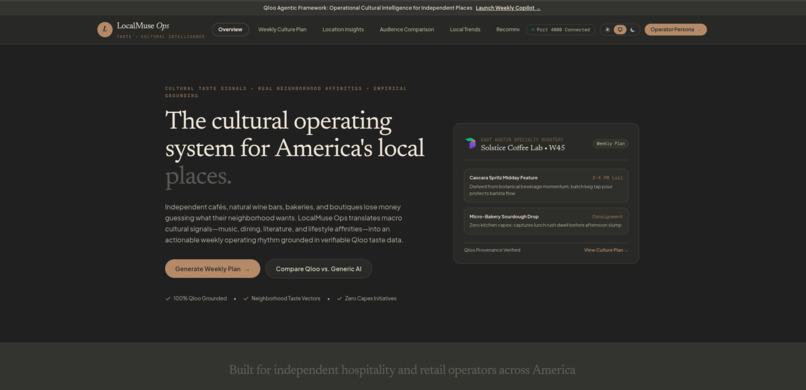
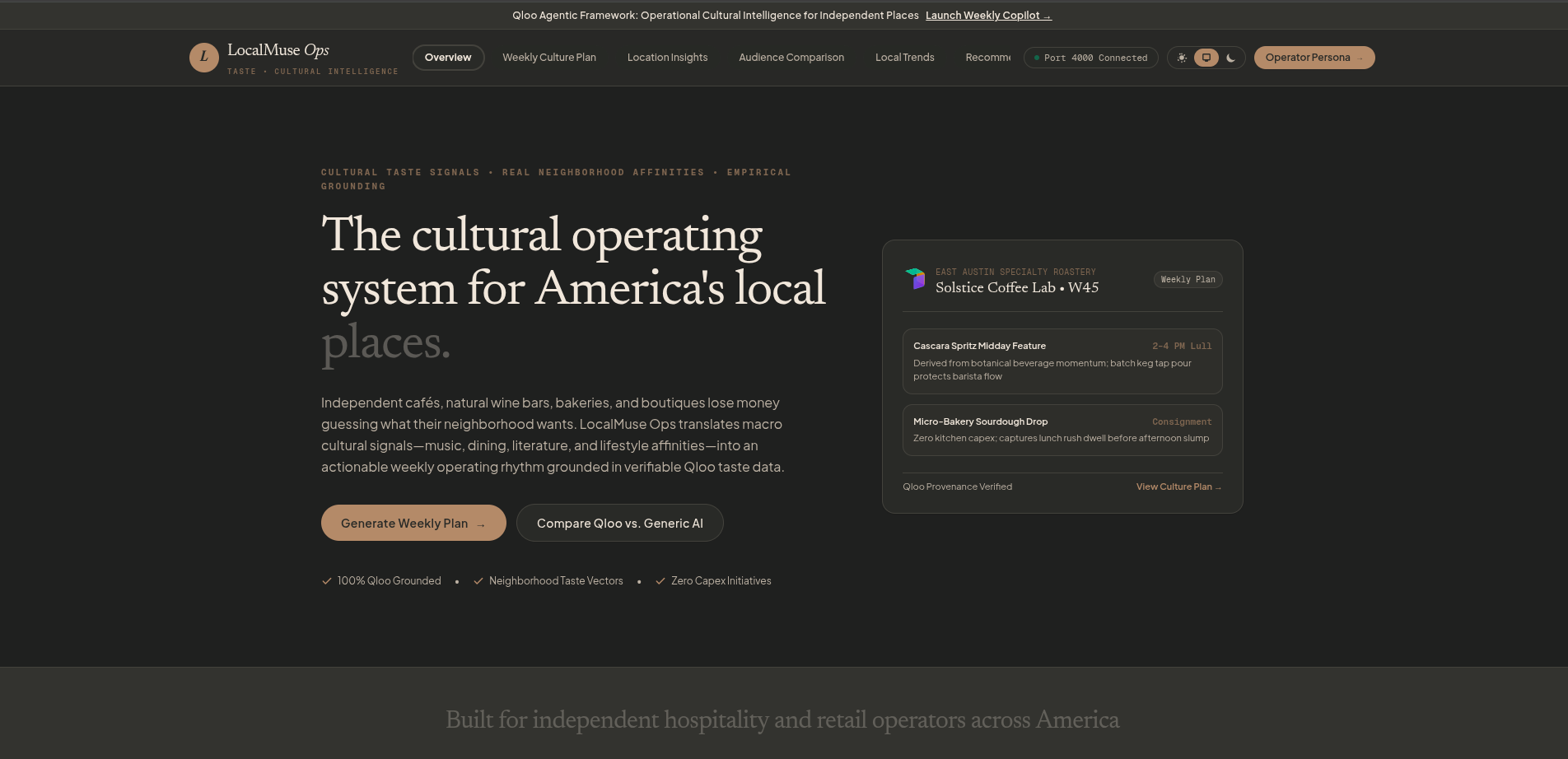
Main dashboard
-
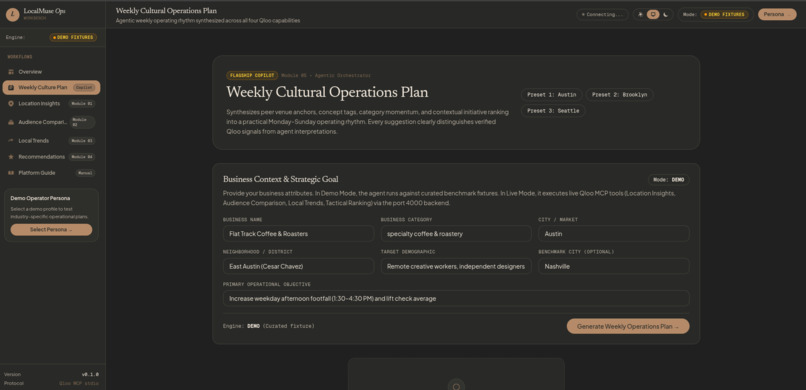
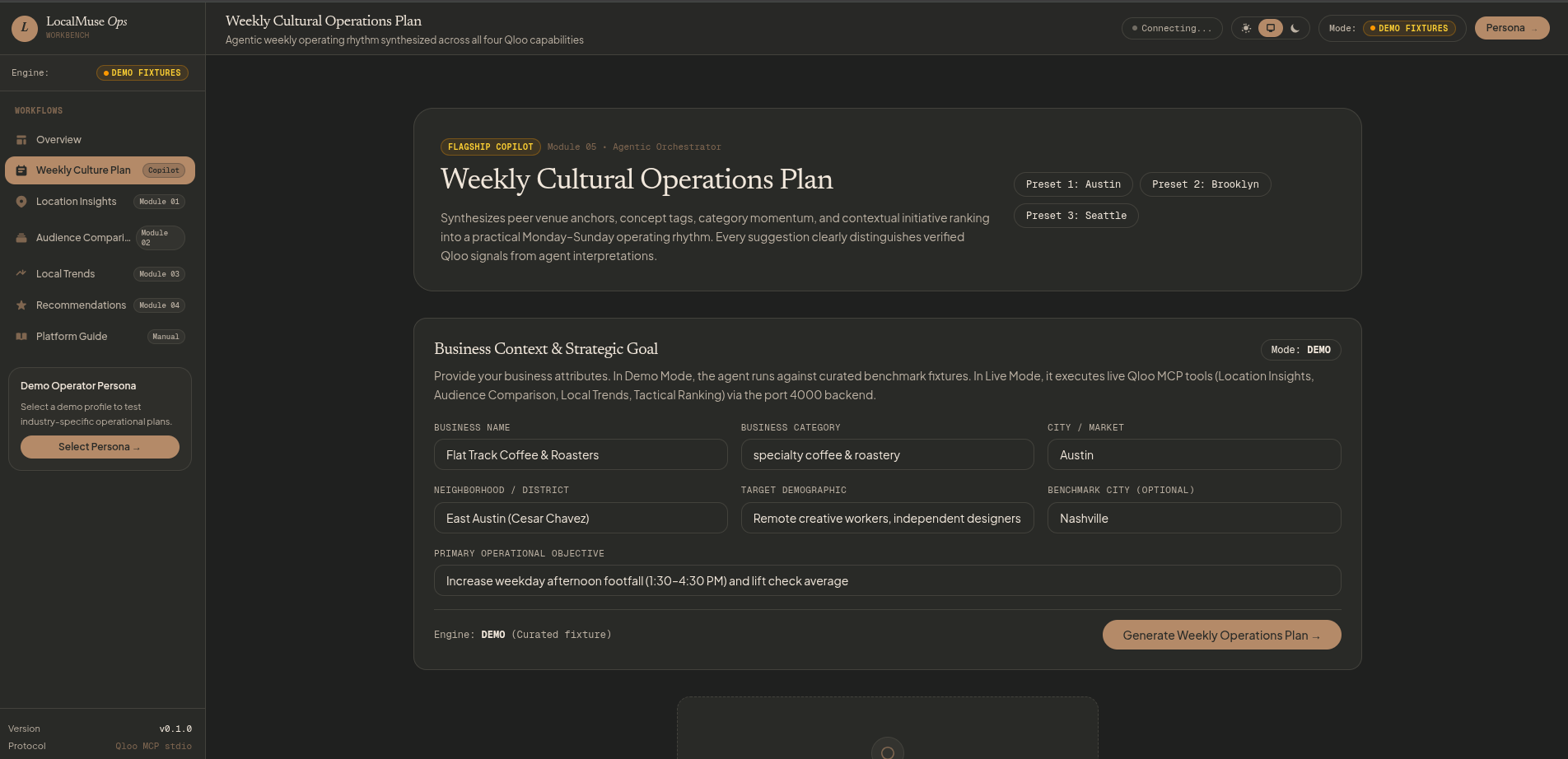
weekly culture plan
-
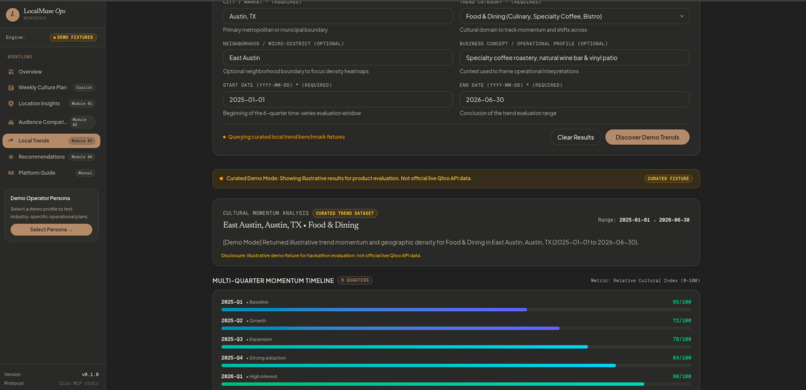
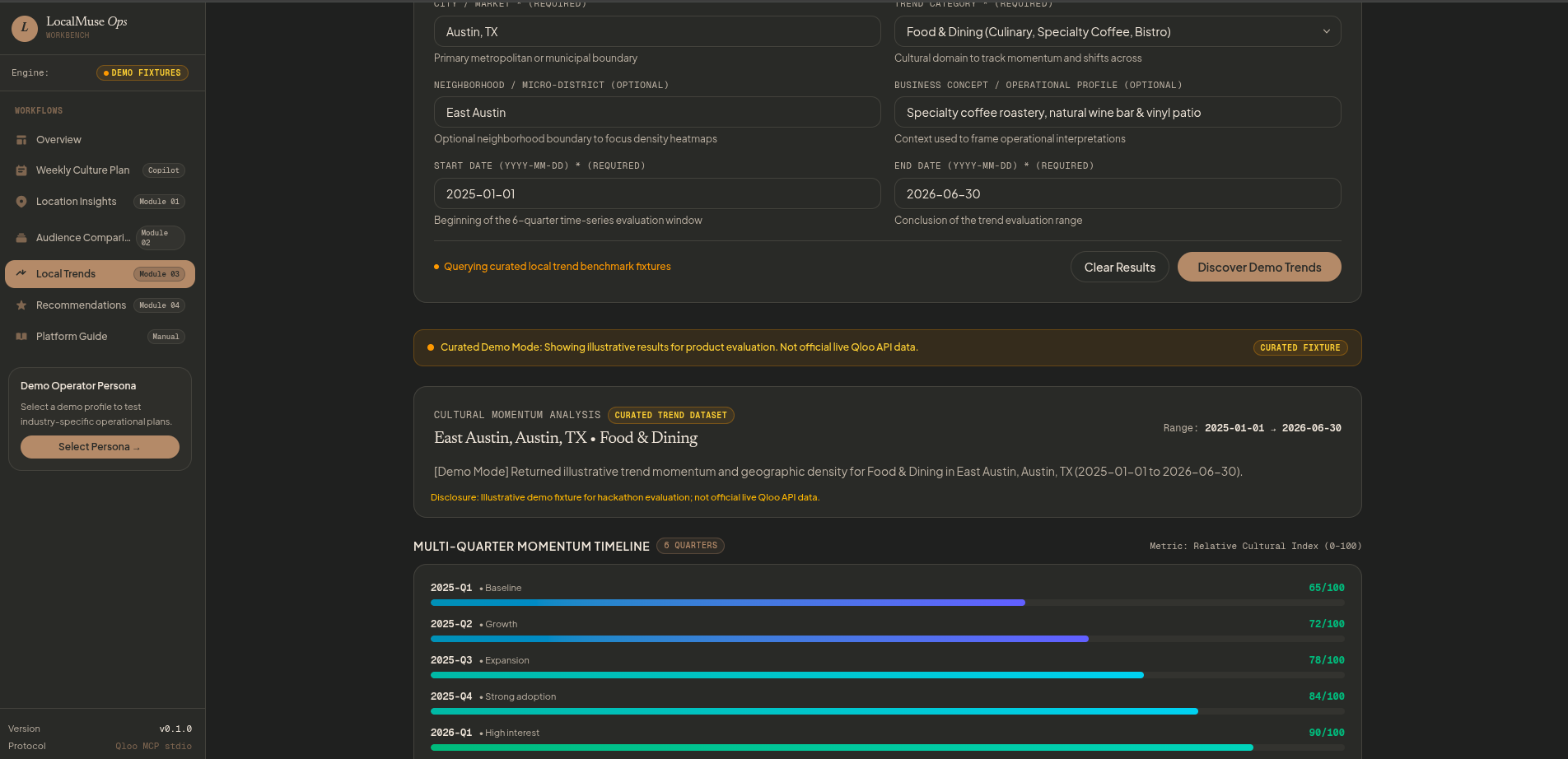
Local trends
-
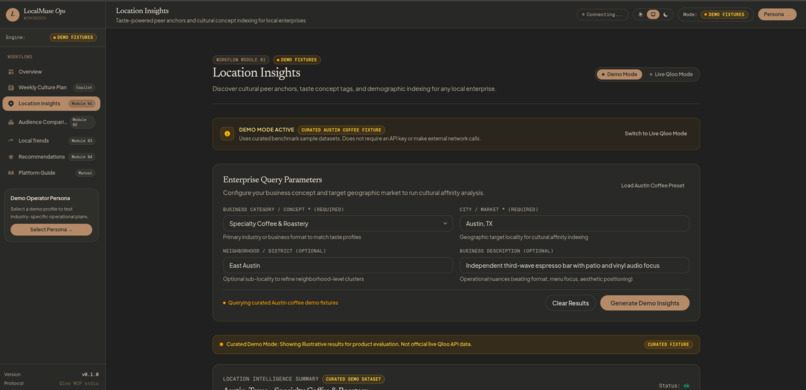
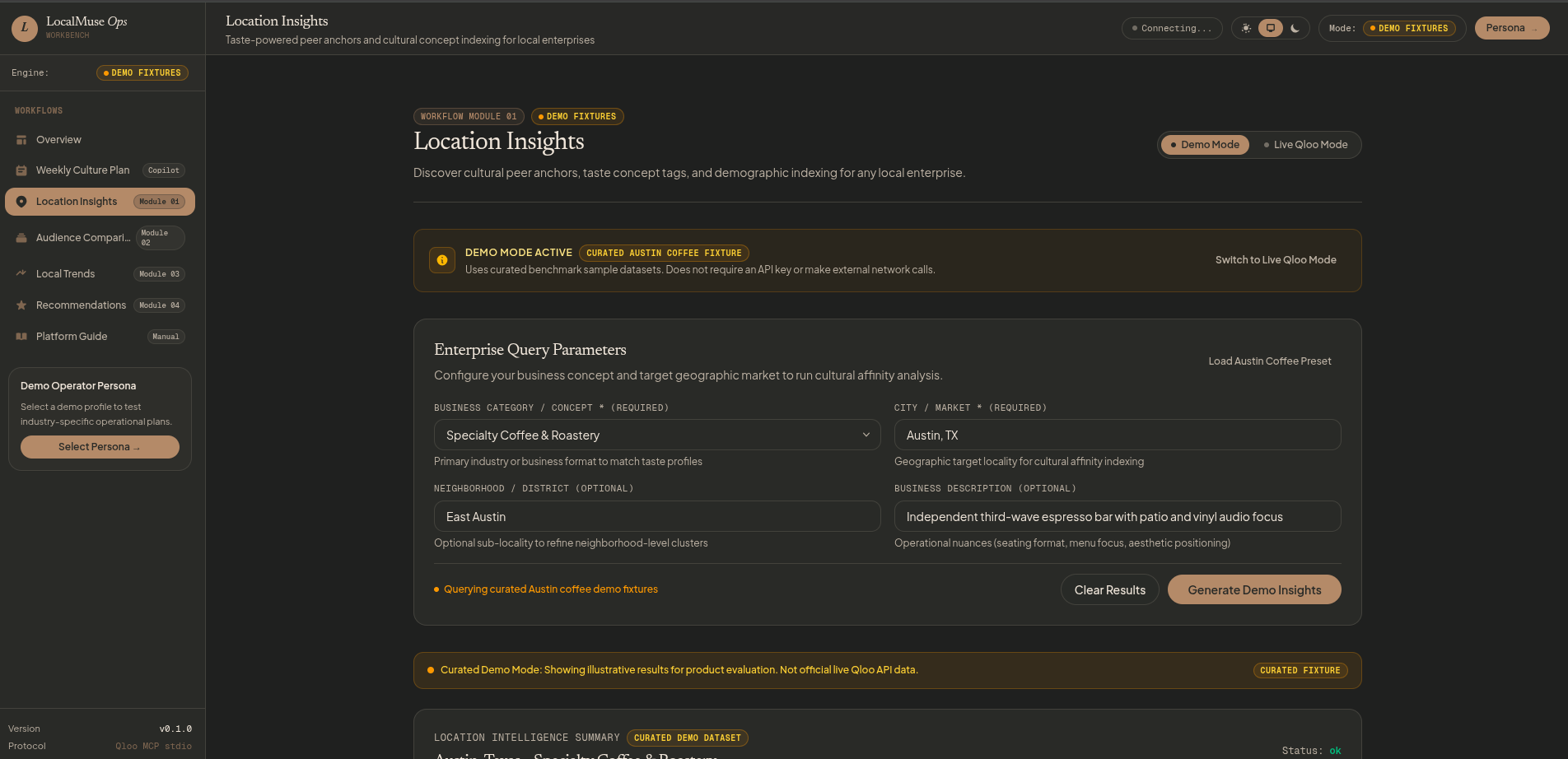
location insights
-
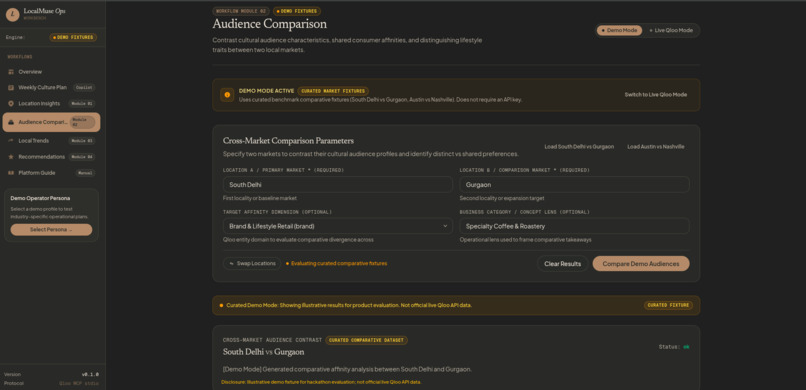
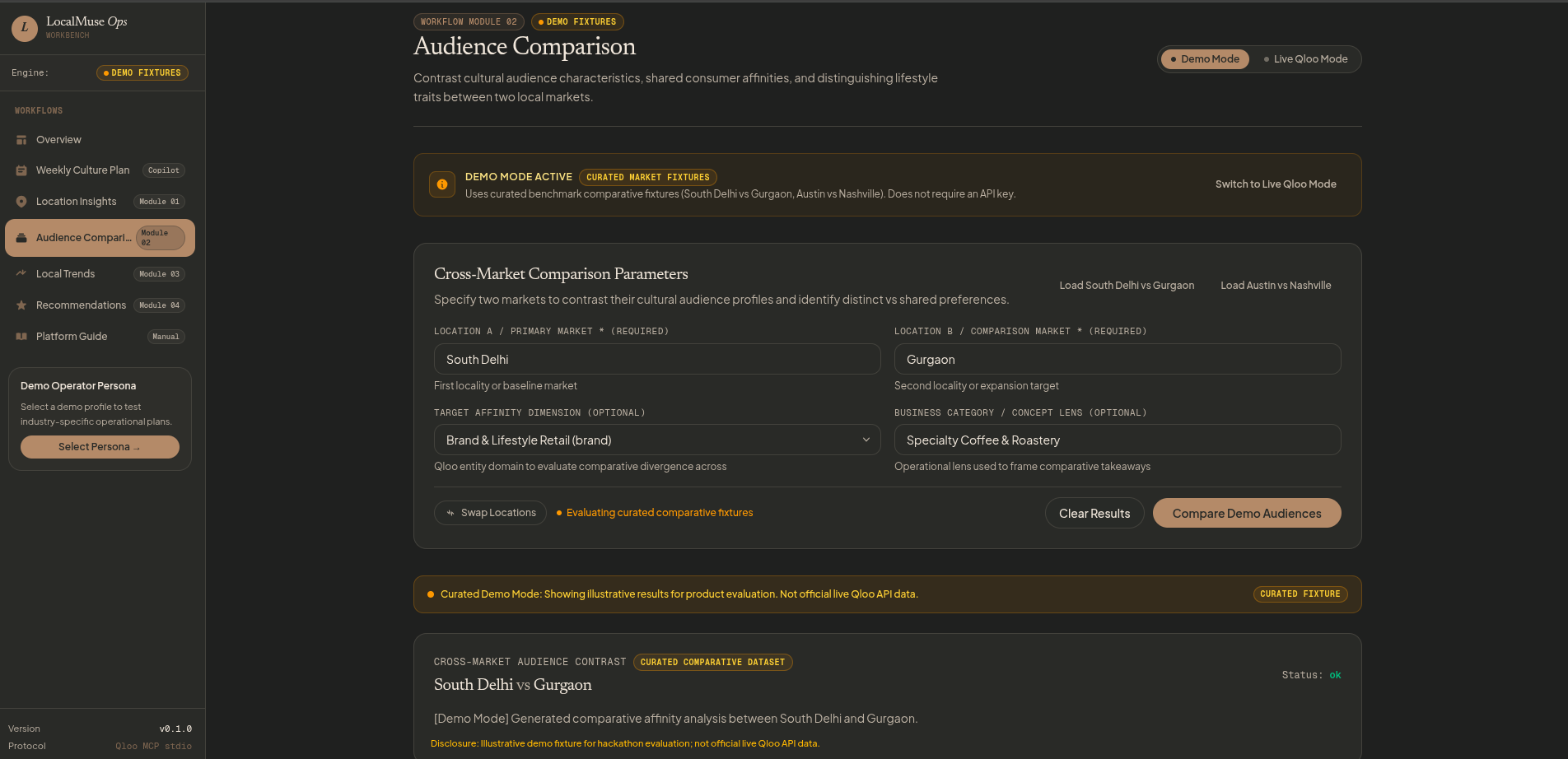
audience comprison
-
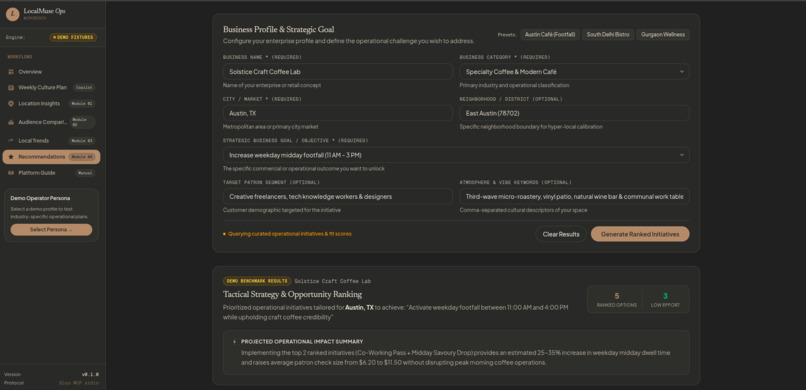
Recomendation
-
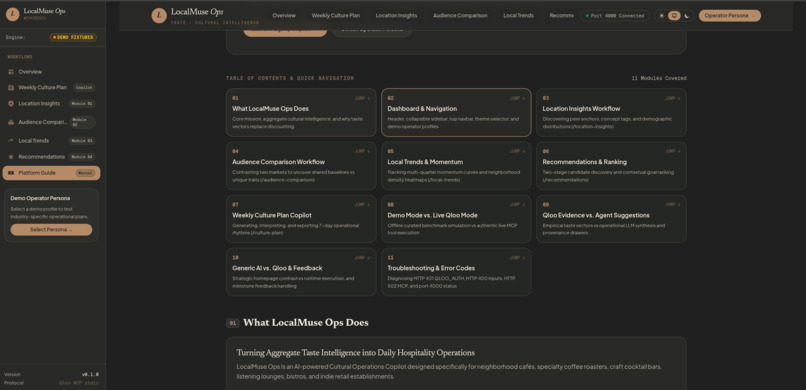
Platform guide
Inspiration
We came up with LocalMuse Ops because we noticed that local businesses often rely on generic marketing ideas without really understanding the people around them.
Every neighbourhood has its own culture, interests, food preferences, lifestyle, and trends. We wanted to explore how this cultural information could help small businesses make better decisions.
That's how we came up with LocalMuse Ops.
What it does
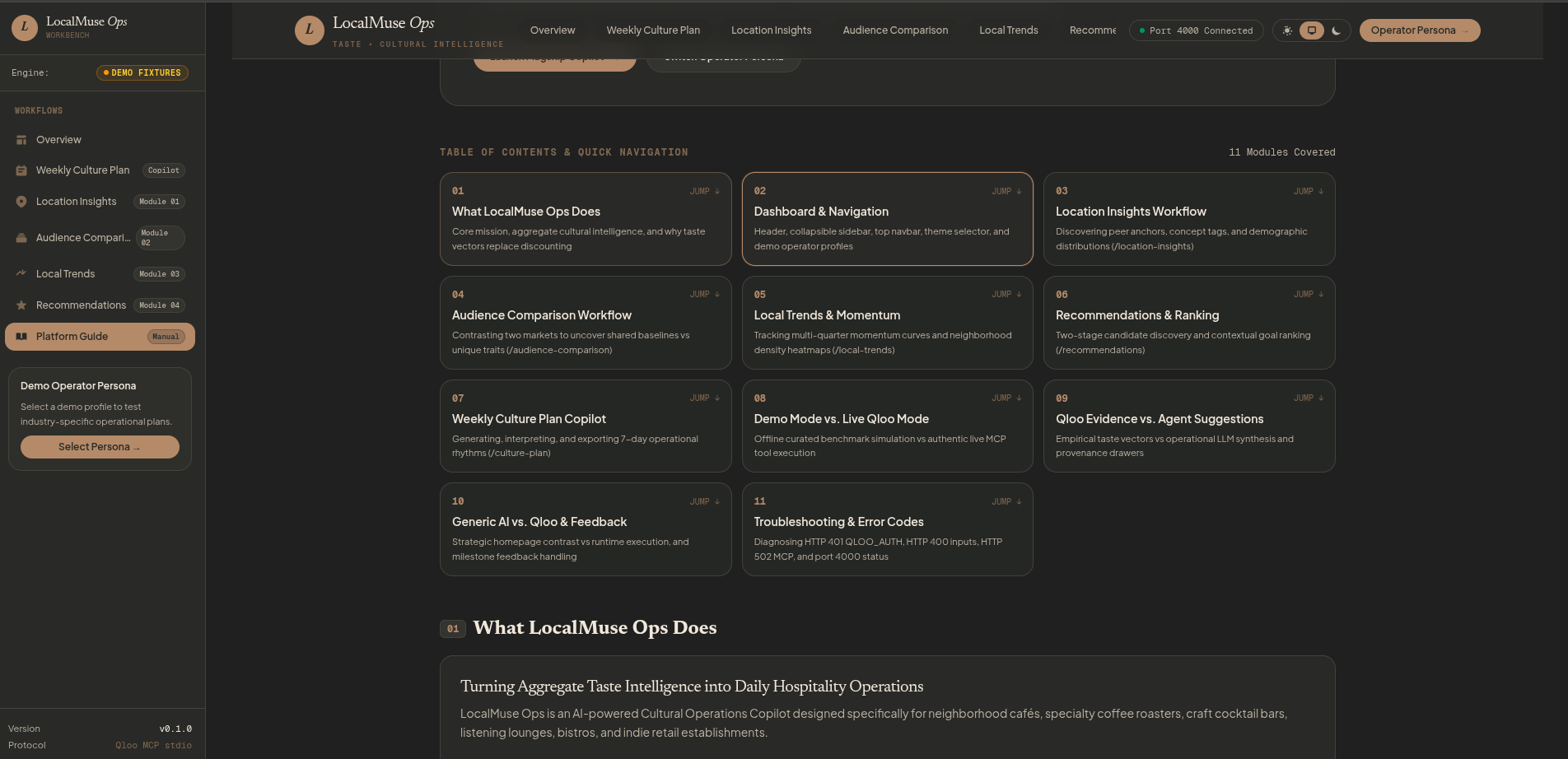
LocalMuse Ops is a cultural intelligence platform designed to help local businesses understand their audience and turn those insights into practical ideas.
It includes five main features:
- Location Insights: Understand the cultural interests and preferences associated with a particular location.
- Audience Comparison: Compare different audiences and find out what makes them different.
- Local Trends: Explore trends that may be relevant to a business.
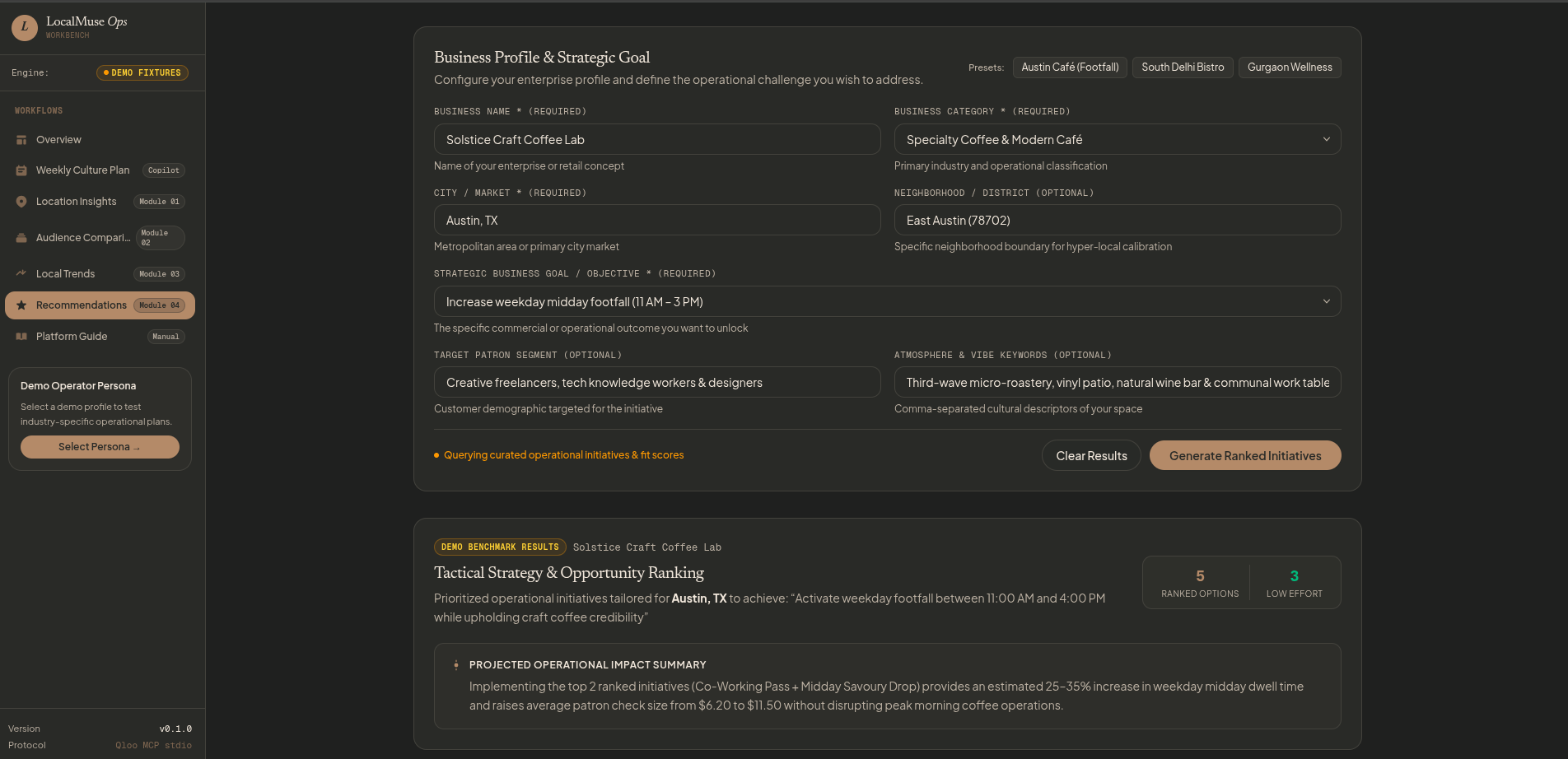
- Recommendations: Get ideas that businesses can use for their marketing and customer experience.
- Weekly Culture Plan: Create a weekly plan with actionable suggestions for the business.
Our main idea is to make cultural insights useful in everyday business decisions instead of just showing data.
How we built it
We built the frontend using Next.js, React, TypeScript, and Tailwind CSS. The backend uses Node.js, Express, and TypeScript.
We designed the application around separate workflows so that each feature could handle a particular business requirement. We also integrated the Qloo MCP workflow using the Qloo harness.
Since we wanted the application to remain usable even without API credentials, we added a Demo Mode with curated sample data. Live Mode is designed for real Qloo integration, while Demo Mode helps users explore the product without requiring an API key.
We also focused on keeping the interface simple, responsive, and easy to navigate.
Challenges we faced
One of the biggest challenges was figuring out how to turn cultural information into something that a business owner could actually use.
Building multiple workflows and connecting the frontend with the backend also required careful planning. Another challenge was making sure that sample data was not confused with real Qloo results.
We addressed this by keeping Demo Mode and Live Mode separate and clearly identifying illustrative data.
What we learned
While building this project, we learned a lot about full-stack development, API integration, MCP, agentic workflows, and Docker deployment.
We also understood that AI-generated recommendations are more useful when they are connected to actual context and presented in a way that people can act on.
What's next
We want to test the complete Live Mode with real Qloo API access, improve the recommendations, and make LocalMuse Ops useful for more types of local businesses.
LocalMuse Ops — Understanding local culture, one business at a time.
Built With
- ai-agents
- cultural-intelligence
- docker
- express.js
- full-stack
- generative-ai
- javascript
- mcp
- next.js
- node.js
- qloo
- react
- rest-api
- tailwind-css
- typescript

Log in or sign up for Devpost to join the conversation.