LocalLoop
**Skip to 3:23 to see product demo
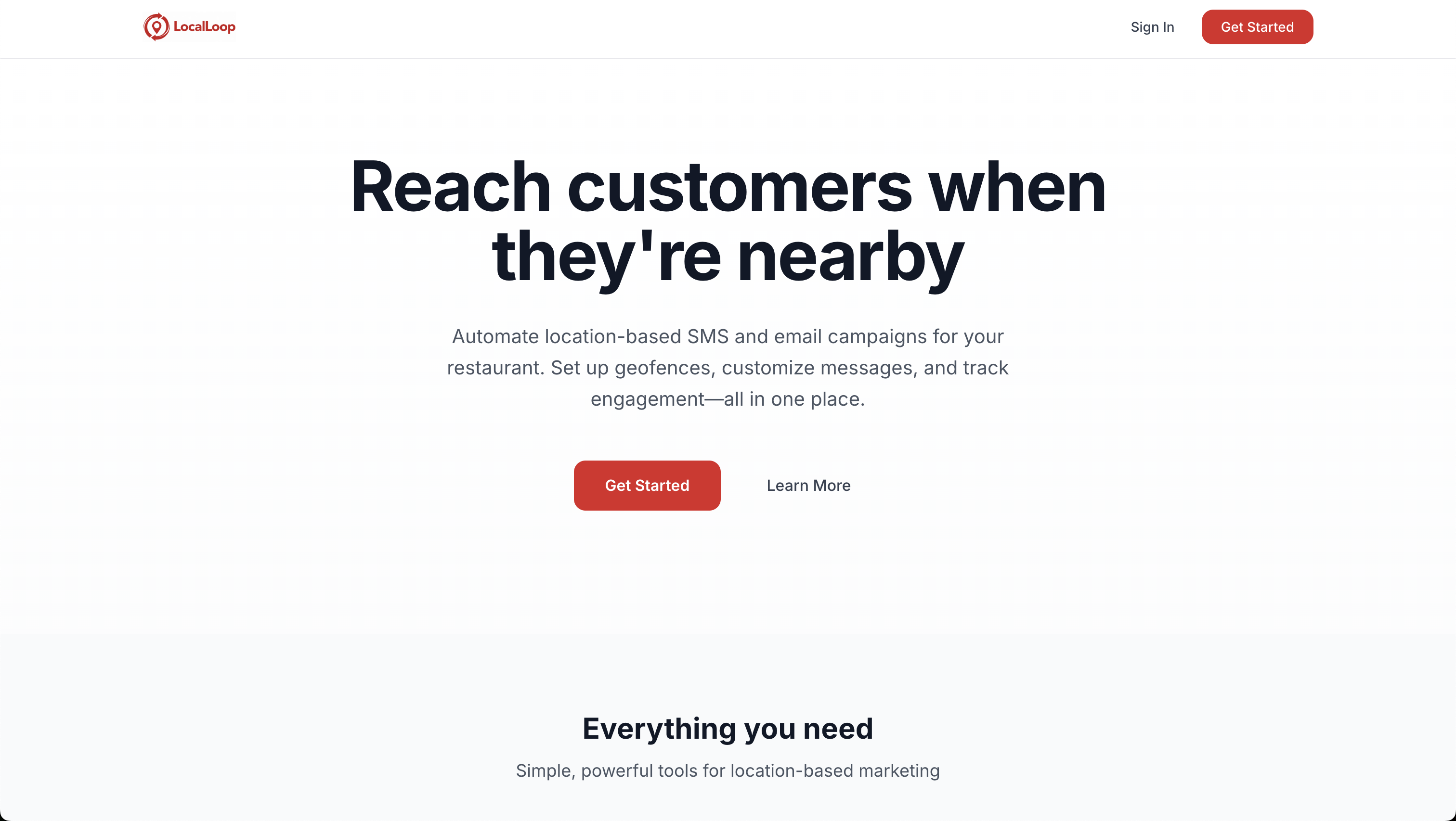
LocalLoop is a location‑based marketing platform for restaurants that drives more visits and higher check sizes with automated, personalized rewards and time‑sensitive offers.
Inspiration
Restaurants already live and die by location, but most tools they use (email, generic SMS, social) ignore where the customer actually is.
We wanted something that feels like a real‑time, geofenced CRM:
- Notify customers at the right moment – when they’re actually near the restaurant.
- Reward loyalty automatically – without staff needing to remember punch cards or promos.
- Give operators control – so they can configure zones, messages, and timing without engineering help.
LocalLoop is our attempt to package that into a clean, modern product that feels enterprise‑ready but is simple enough for a single‑location operator to use.
What it does
LocalLoop has two main pieces:
Consumer mobile experience
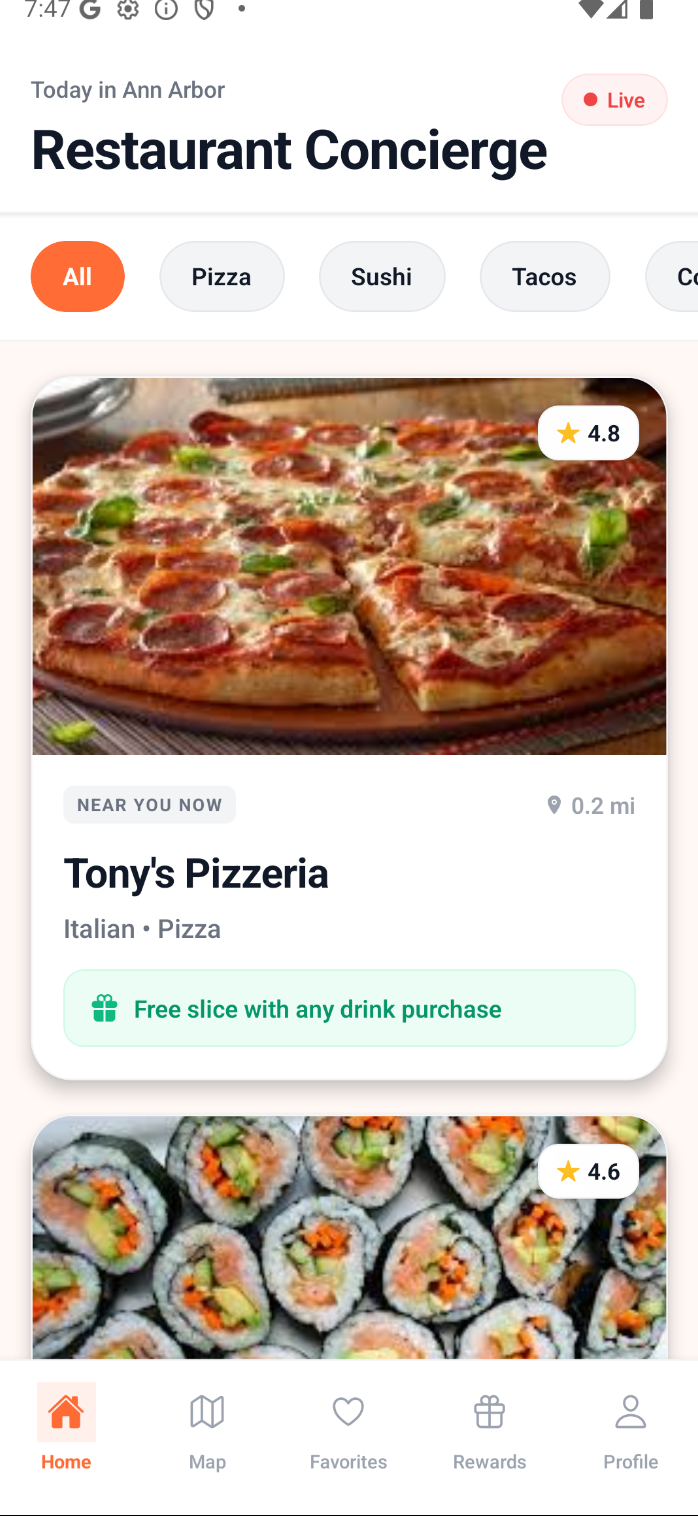
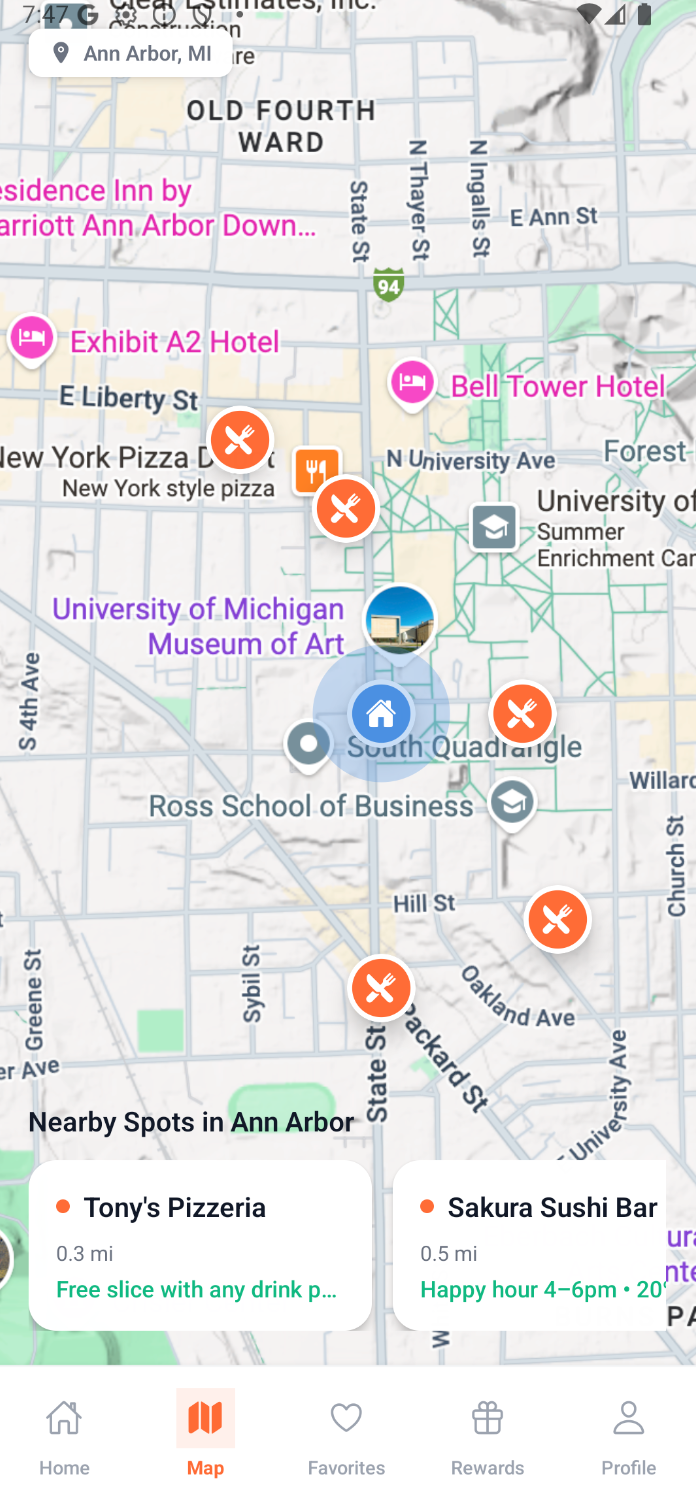
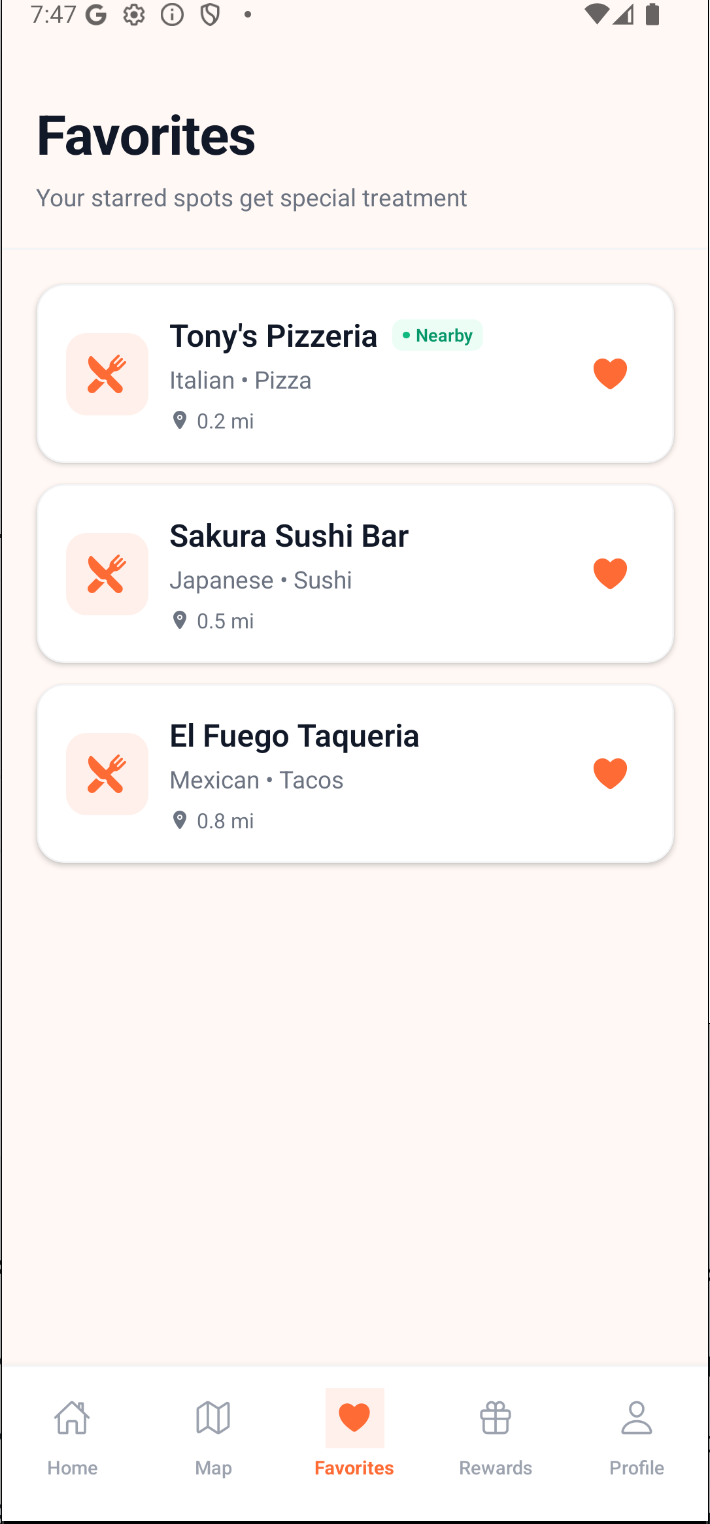
- Beautiful, map‑driven home screen showing nearby restaurants and perks.
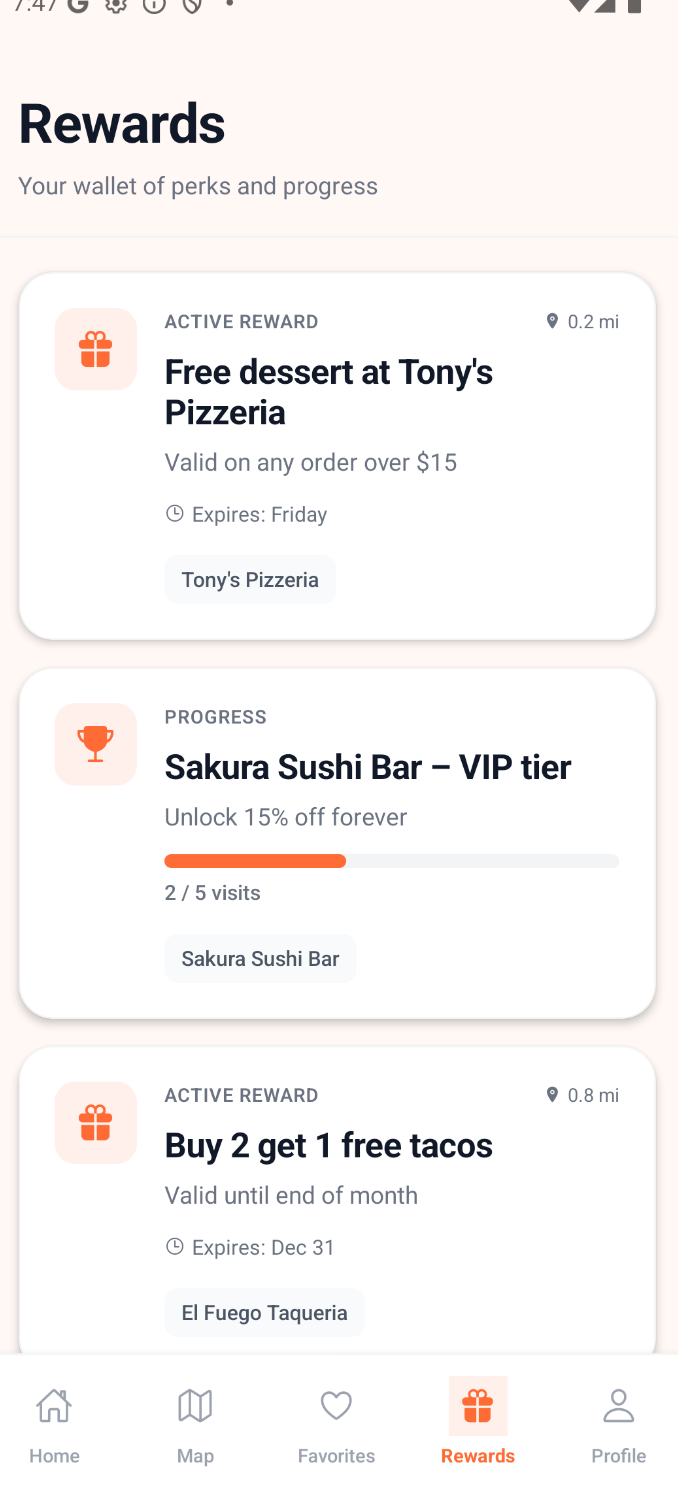
- Tabs for Home, Map, Favorites, Rewards, and Profile.
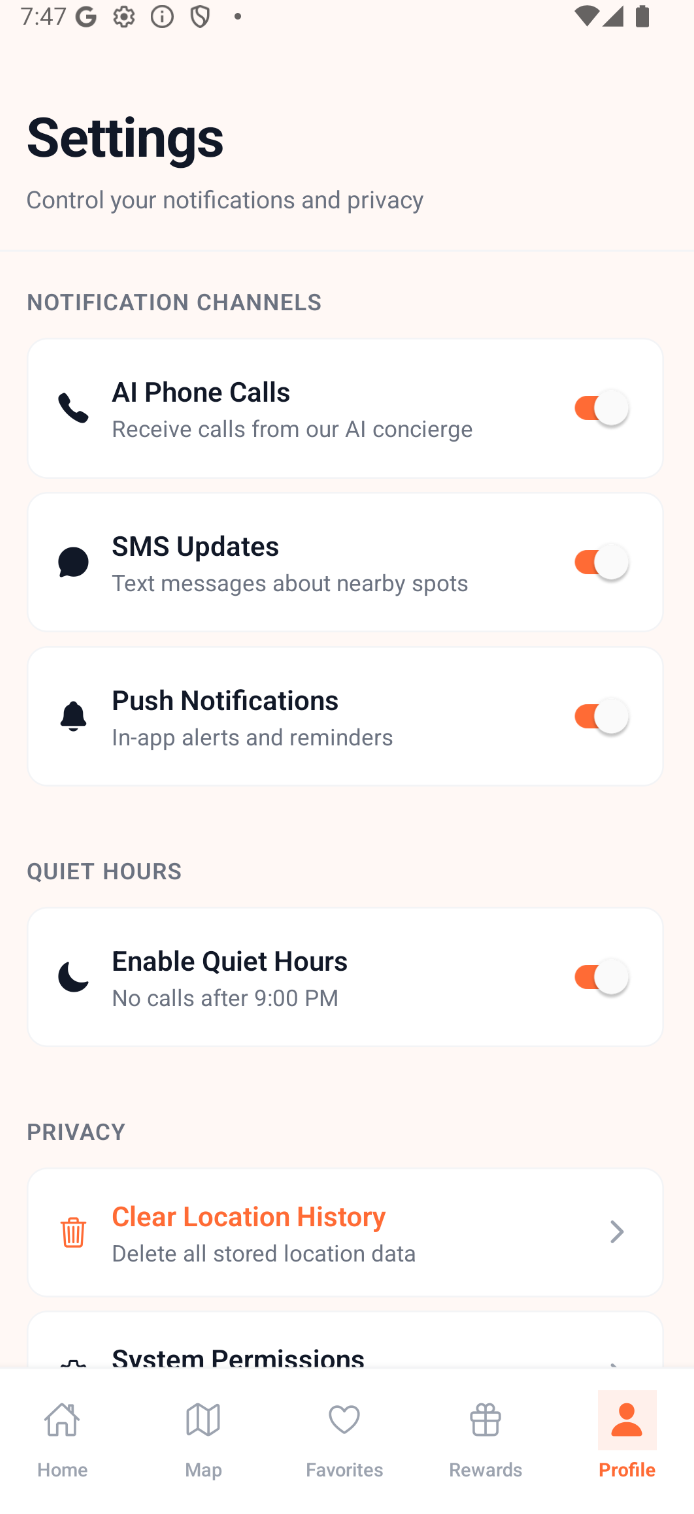
- Background location to power geofenced engagement.
Voice & local discovery (Yelp integration)
- Use the Yelp API to return nearby restaurants based on the user’s real-time location.
- Feed Yelp restaurant data (name, rating, reviews, categories, hours) into an ElevenLabs voice agent.
- Enable natural, spoken responses like recommending nearby restaurants or describing why a place is popular.
Restaurant admin web app
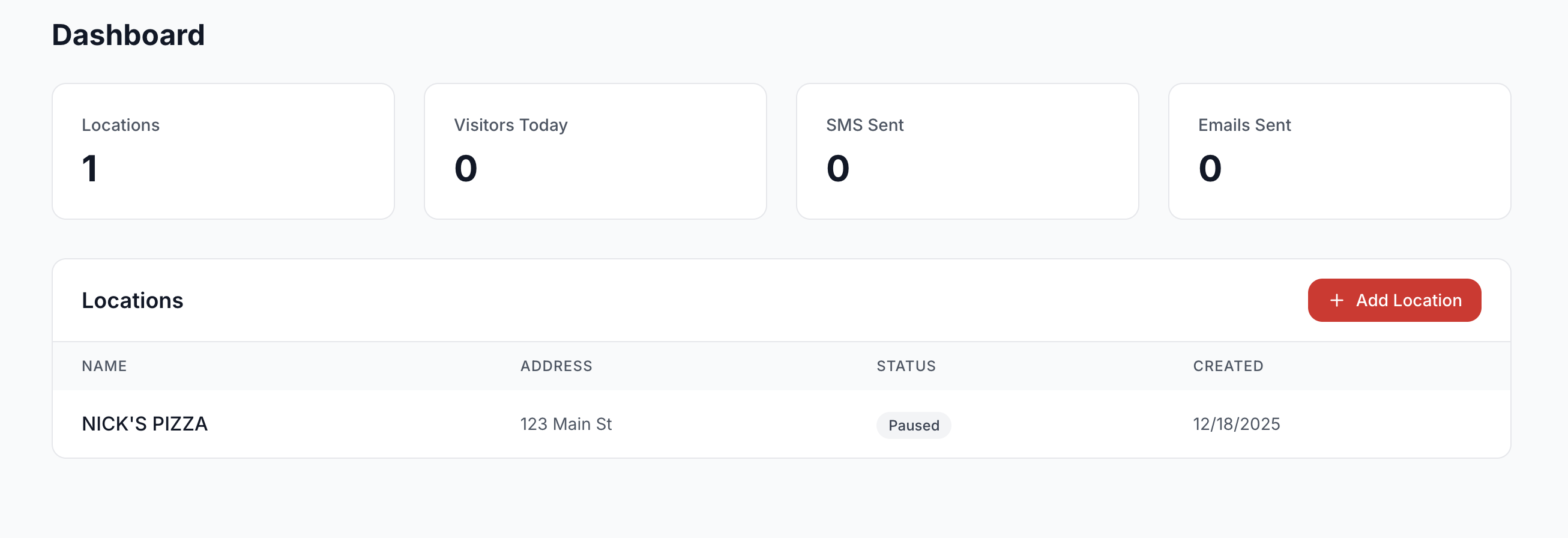
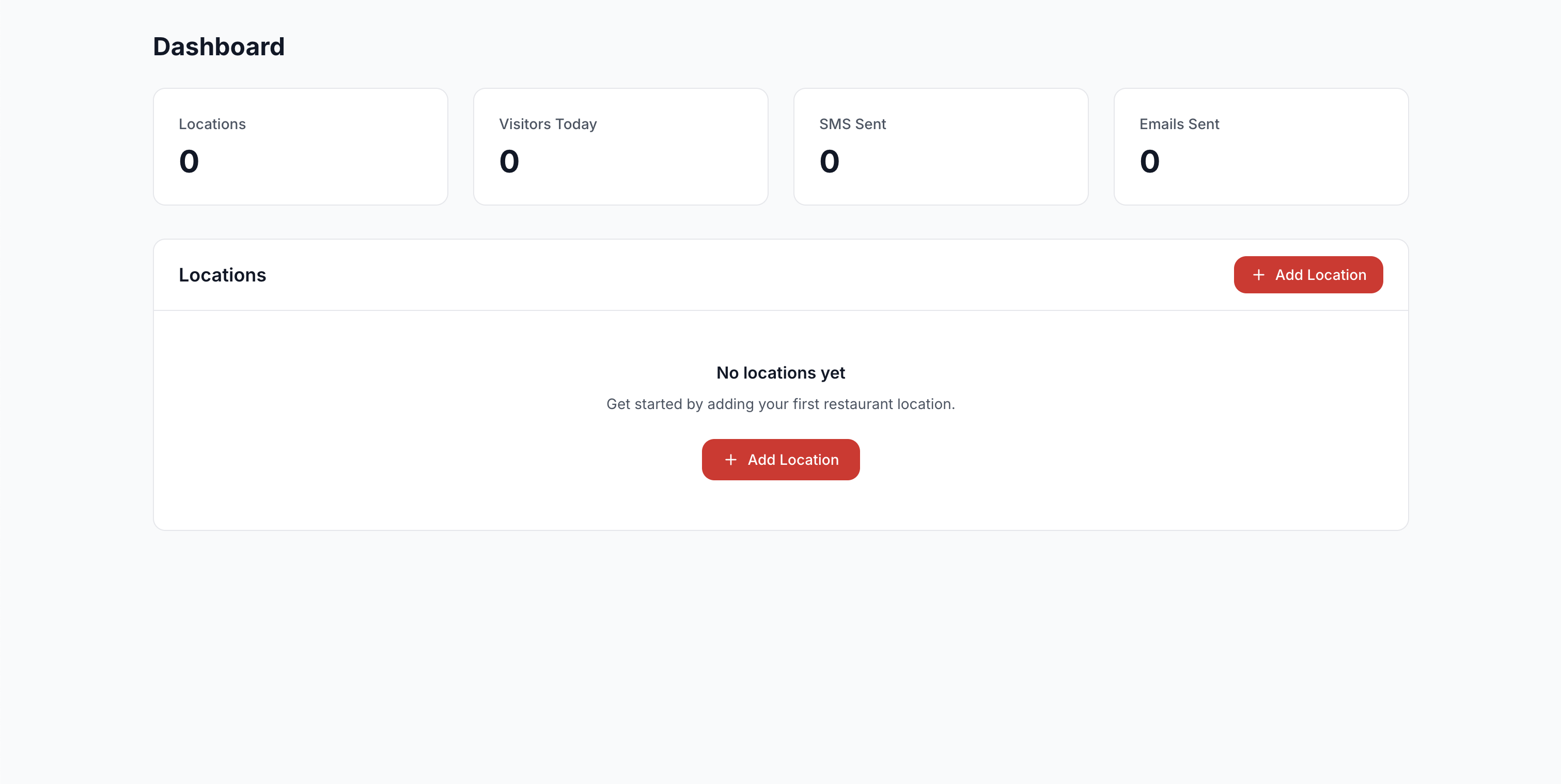
- Location management
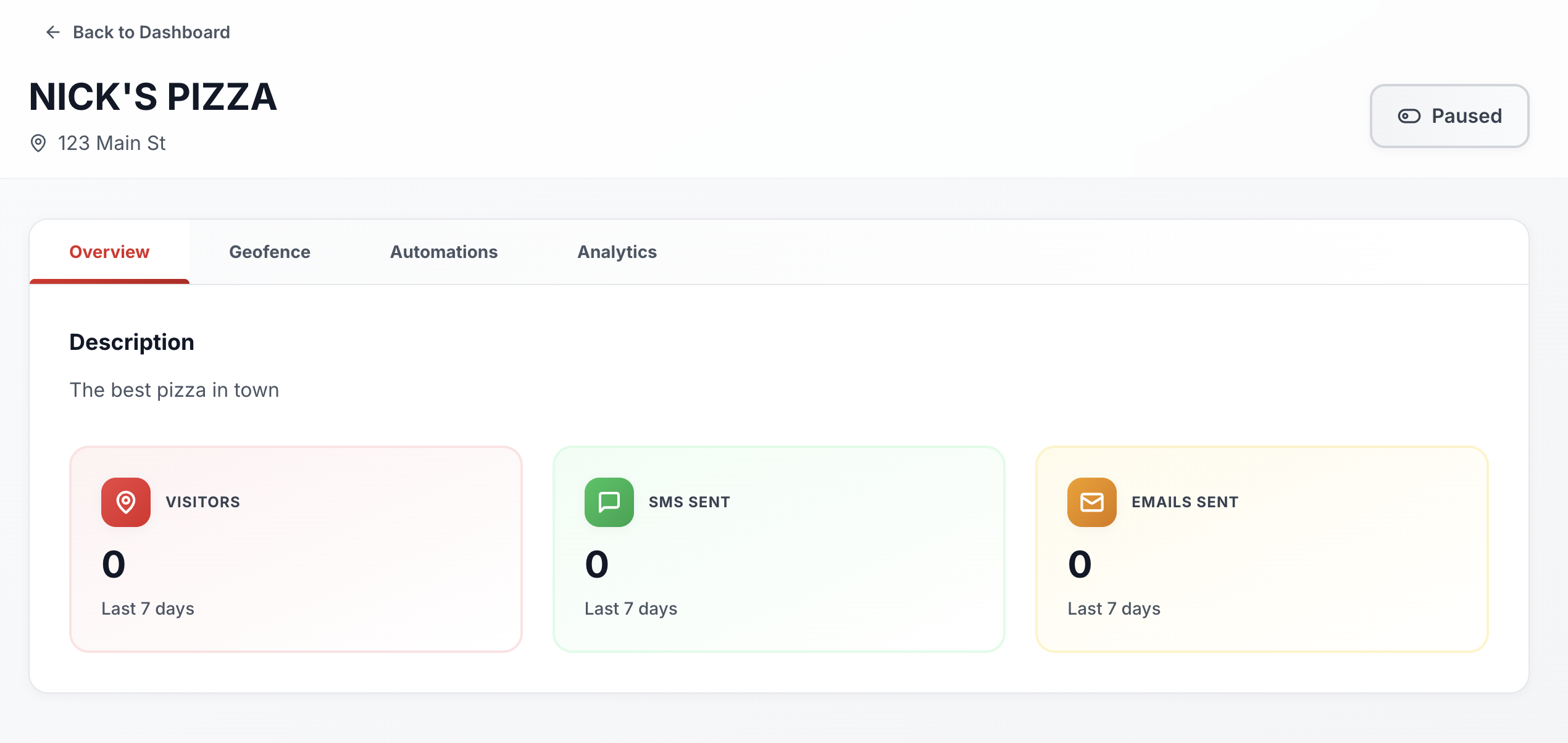
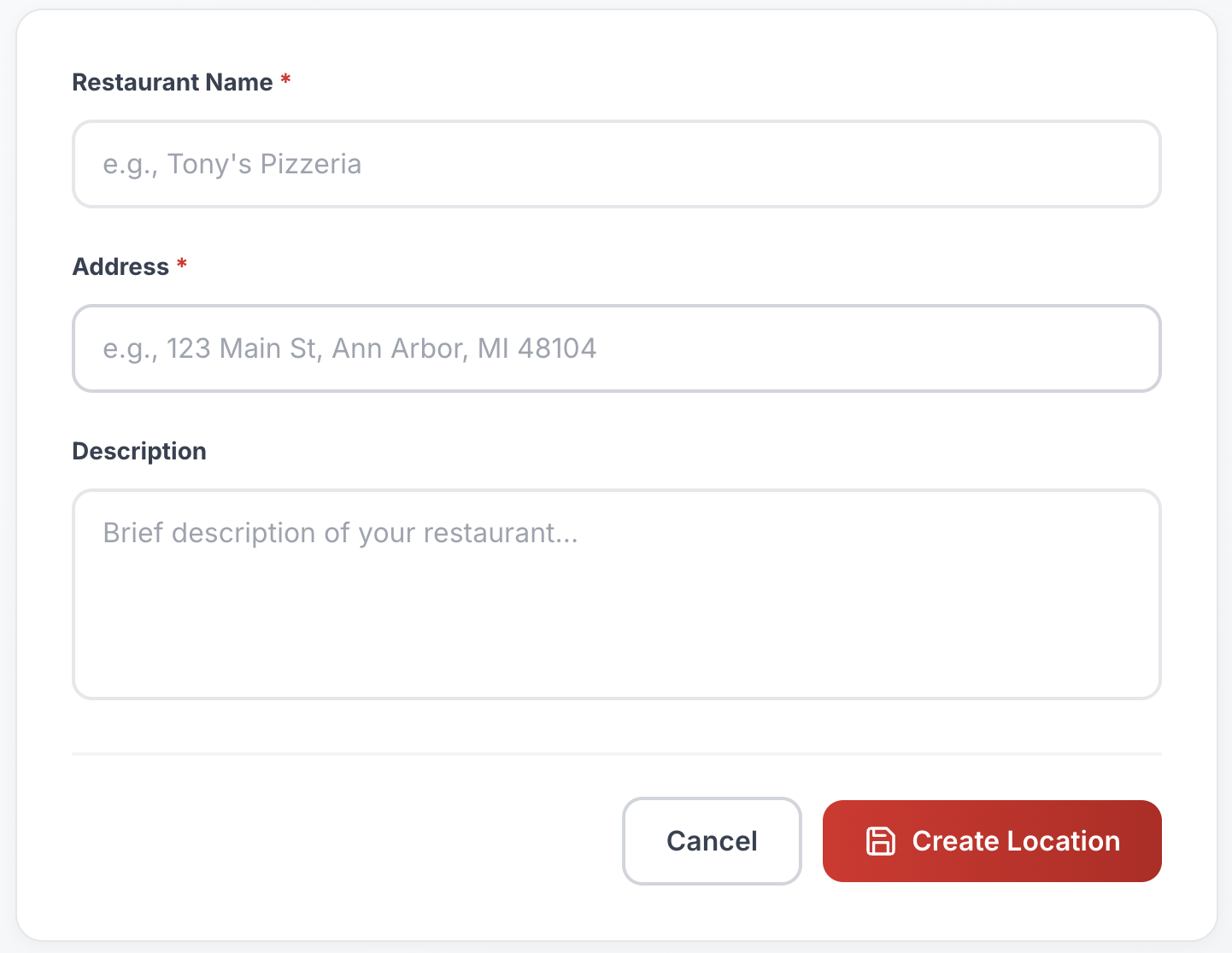
- Add restaurant locations with name, address, and description.
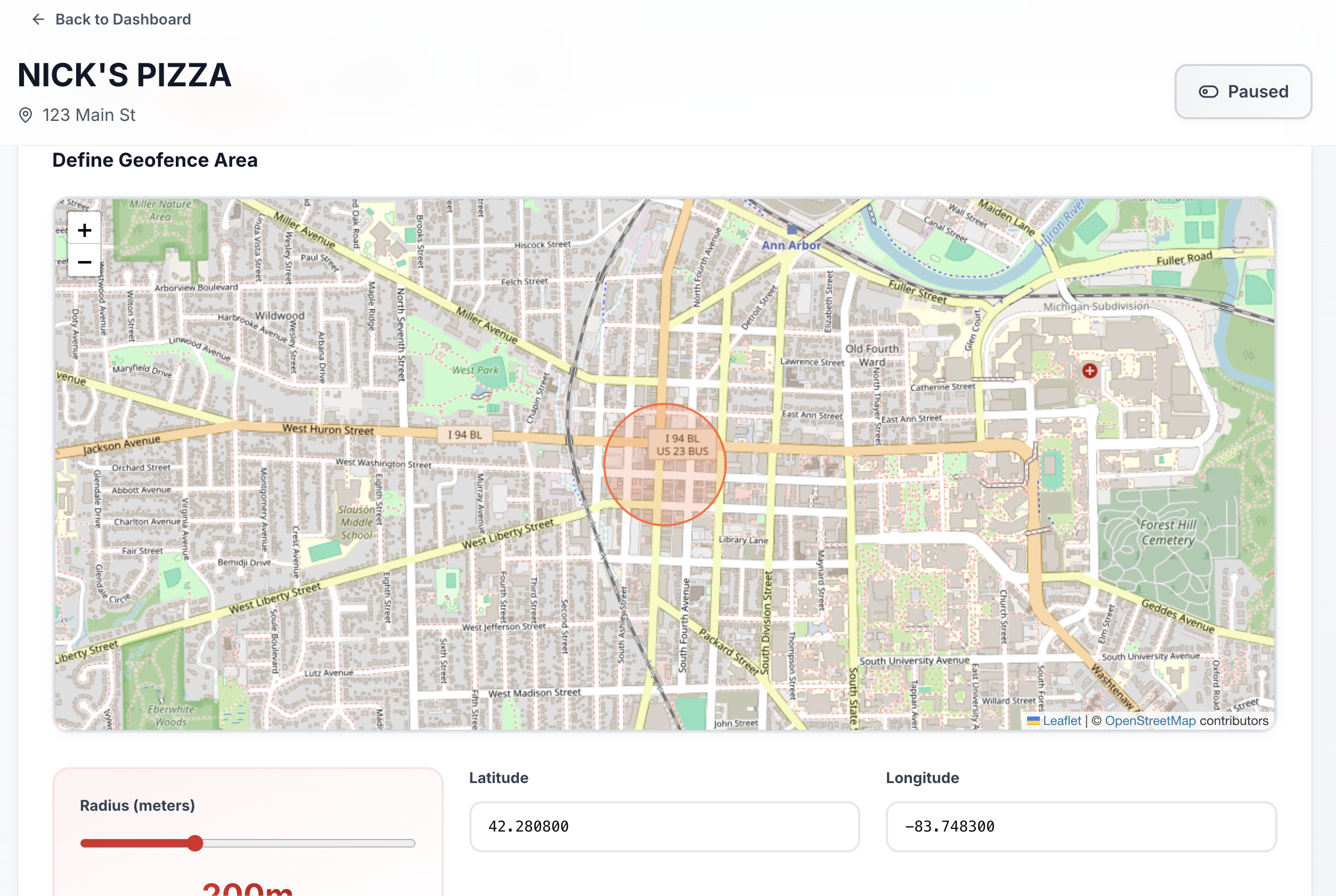
- Each location gets its own detail page with status (active/paused).
- Geofence configuration
- Interactive Leaflet map to draw a circular geofence around each location.
- Control radius, center coordinates, and see the impact visually.
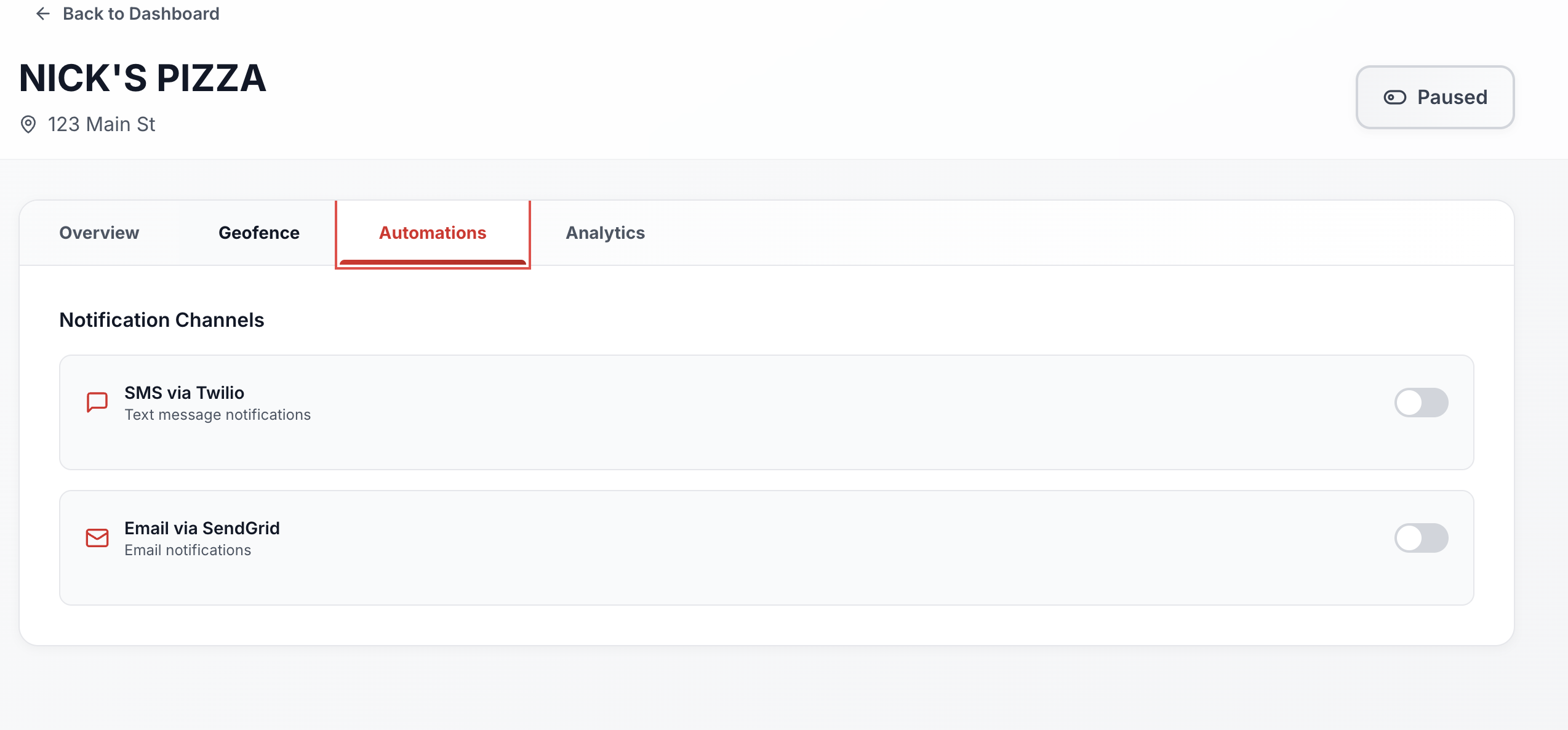
- Automations
- Configure SMS/Voice and Email campaigns triggered when customers enter a geofence.
- Set cooldown windows, active hours, and fully‑customizable message templates.
- Auth & accounts
- Email/password auth backed by Supabase.
- Auto‑created user profiles with RLS‑protected data per account.
- Analytics scaffolding
- Events schema for visits, sends, deliveries, and failures.
- Dashboard UI showing KPIs and ready to be wired to real event streams.
How we built it
Frontend (Admin)
- Next.js (App Router) with TypeScript for the admin dashboard.
- Tailwind CSS + a small design system (glass effects, gradients, soft shadows) in a red/white/black brand palette.
- Leaflet + React‑Leaflet for map and geofence drawing.
- Supabase JS client for auth and data access.
Frontend (Mobile demo)
- Expo / React Native for the iOS/Android demo app.
- Custom tab navigation and fully custom UI (no stock templates).
- Realistic restaurant cards with images, ratings, perks, and filters.
Backend & Data
- Supabase Postgres for structured data:
users,locations,geofences,automations,events.- Row Level Security (RLS) on all tables so each account only sees its own data.
- Trigger functions that automatically create a
public.usersprofile row when a new auth user signs up. - Policies that allow users to insert and manage only their own records.
DevOps / Tooling
- Next.js app built and linted with strict TypeScript + ESLint rules.
- Vercel‑friendly build (fixed React hook dependencies, unescaped characters, and TS issues).
- Supabase SQL scripts (
supabase-schema.sql, fixes for RLS and auth triggers) checked into the repo for reproducibility.
Challenges we ran into
Mobile maps inside Expo Go
Android build & Gradle issues
- Supabase RLS & auth edge cases
Accomplishments that we're proud of
- A consumer mobile experience and an operator dashboard that look like parts of the same brand, not two separate projects.
- Production‑ready data model
- Proper normalized schema for locations, geofences, automations, and events.
- RLS policies and triggers that would be acceptable in a real multi‑tenant SaaS.
- Polished, investor‑ready UI
- The app looks like something you could pitch to a restaurant group tomorrow.
- Clean branding and logo, consistent color system, and carefully tuned spacing/typography.
- Resilient engineering decisions
- When native map integrations and Android builds became time sinks, we found paths that preserved the experience without blocking on infrastructure.
What we learned
- Anchoring on “what a restaurant operator and customer should see” made it easier to cut or change tech decisions without losing product quality.
- RLS and auth deserve early attention
- It’s much easier to design your schema and app flow around RLS from day one than bolt it on later.
- Maps are deceptively complex on mobile
- Even “simple” features like showing a user on a map can trigger a long tail of native dependencies, especially in managed environments like Expo Go.
- Good UI changes the perceived scope
- With the same backend, a more thoughtful interface dramatically increases how “real” and valuable the product feels.
What's next for LocalLoop
- Deliverability & campaign analytics
- Wire up the
eventstable to real SMS/email providers and visualize: - Sends, deliveries, failures, CTR, and incremental visits.
- Wire up the
- Segmented & behavioral targeting
- Add audience definitions (first‑time vs. returning, visit frequency, time of day) to refine who receives which campaign.
- Multi‑tenant restaurant groups
- Support organizations with multiple locations, roles (owner/manager/marketer), and shared templates across stores.
Built With
- expo.io
- javascript
- leaflet.js
- node.js
- react-native
- supabase
- typescript
- vercel


Log in or sign up for Devpost to join the conversation.