-
-
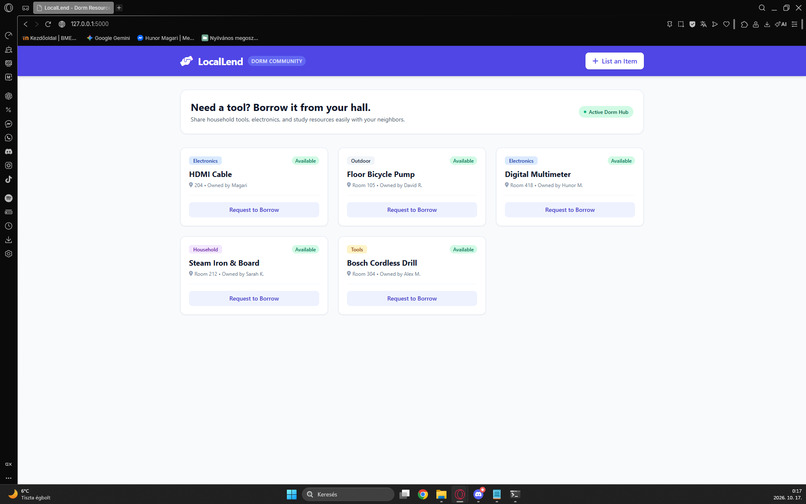
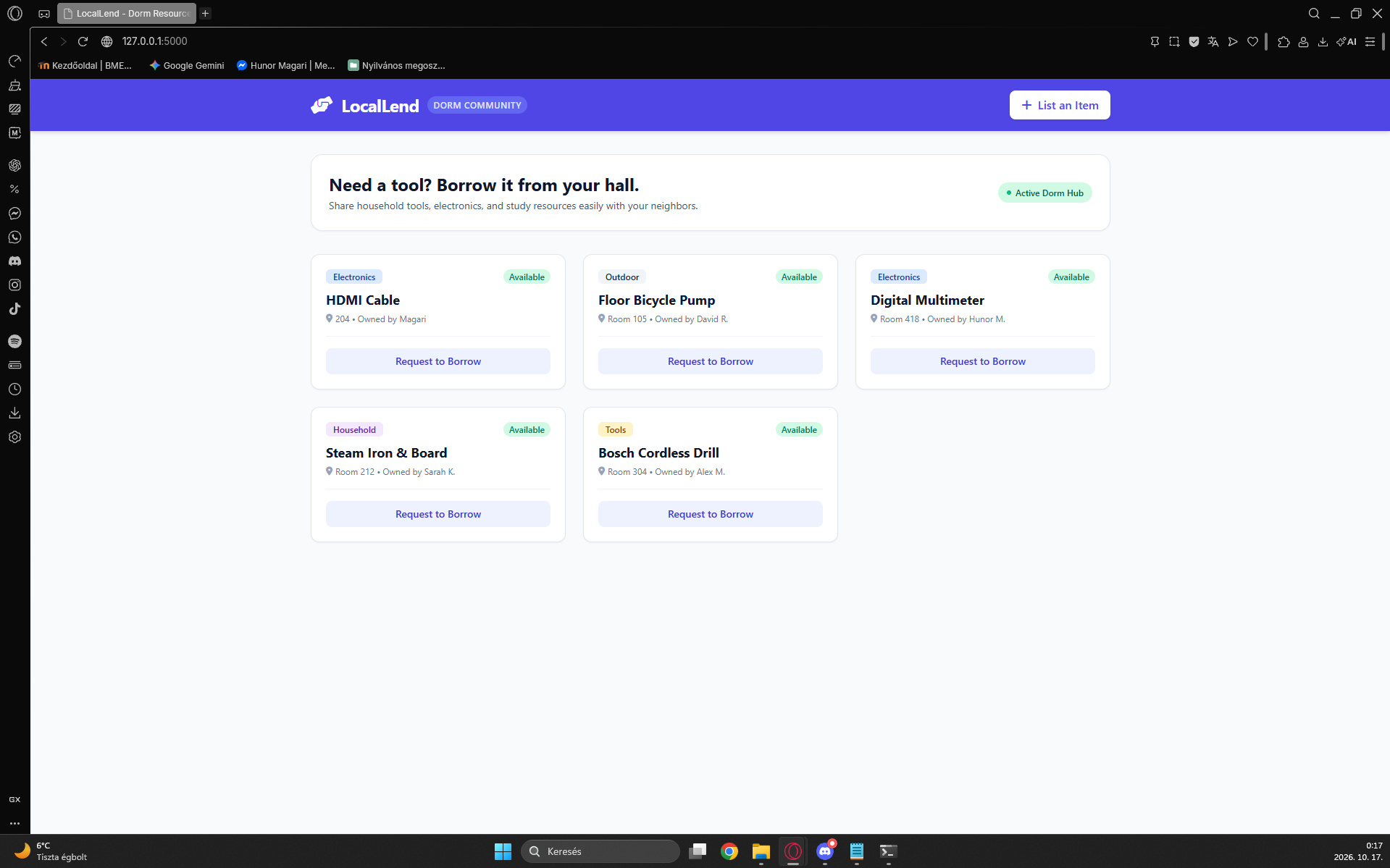
LocalLend main dashboard
-
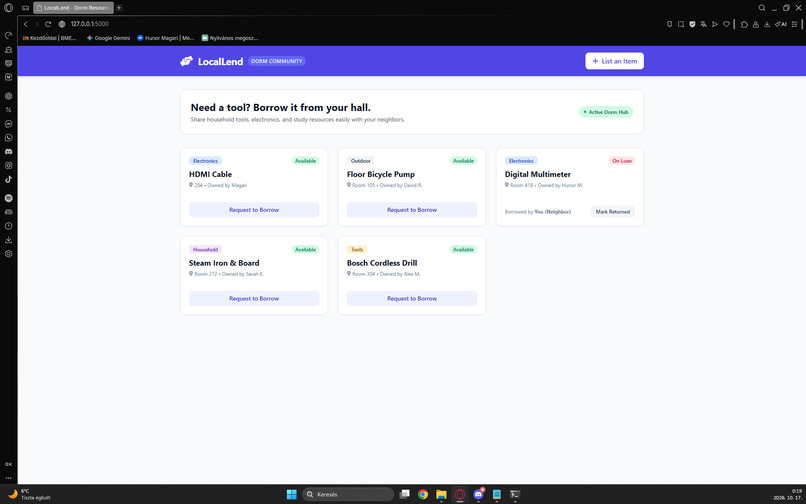
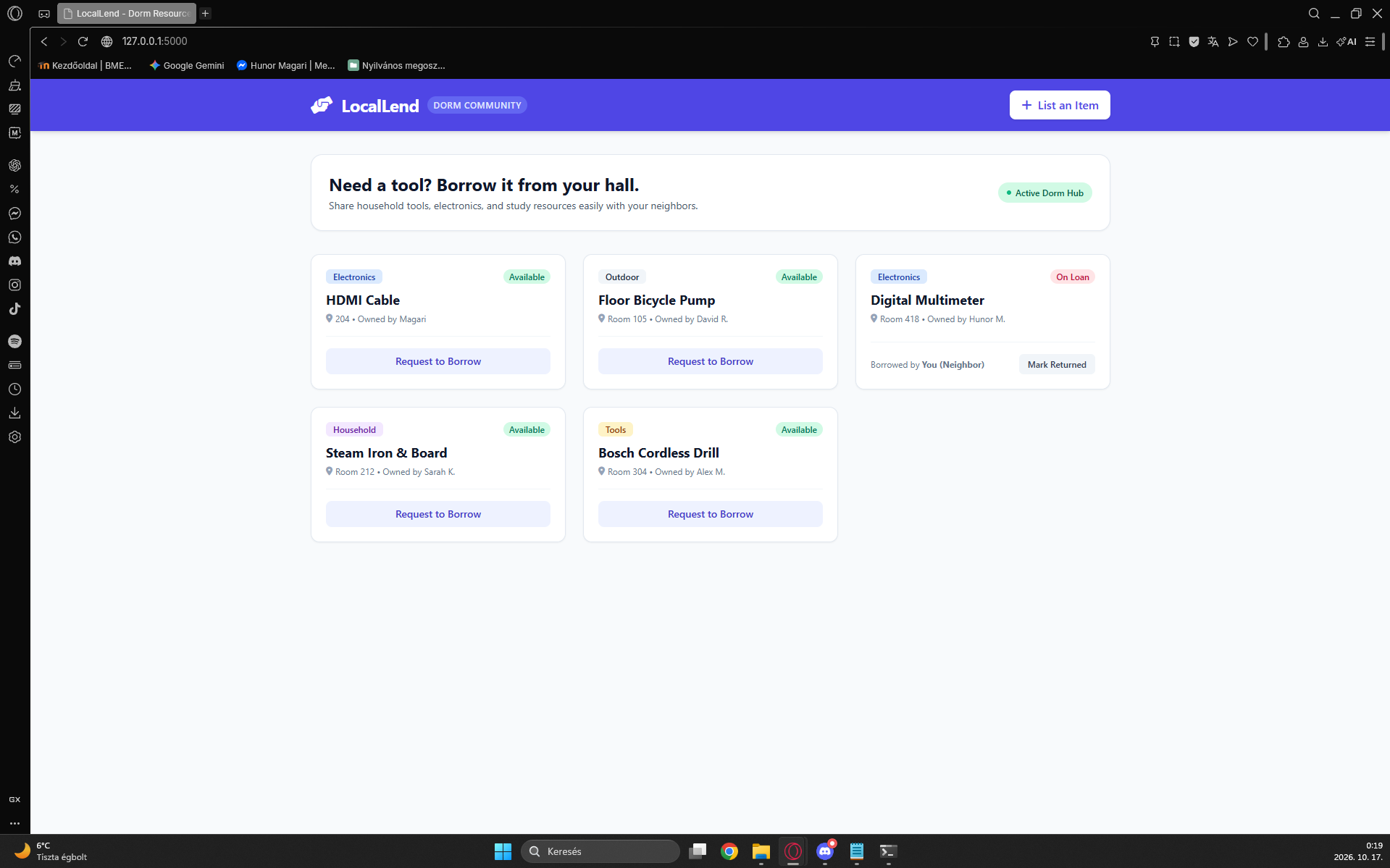
LocalLend main dashboard - (Active Request)
-
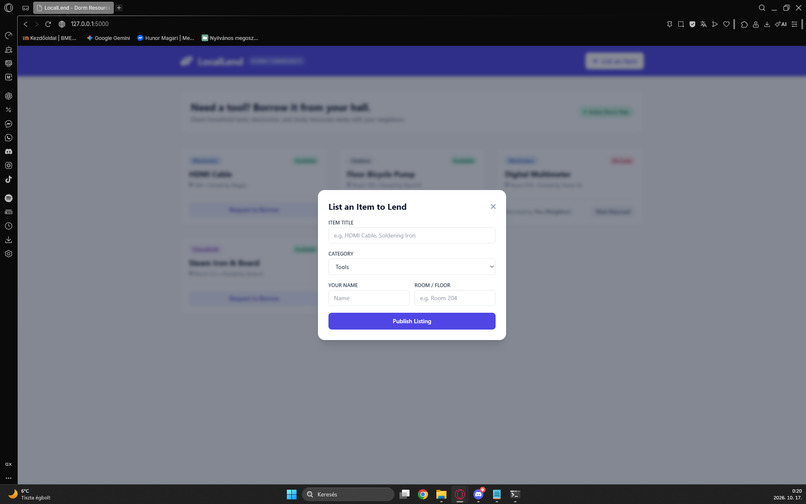
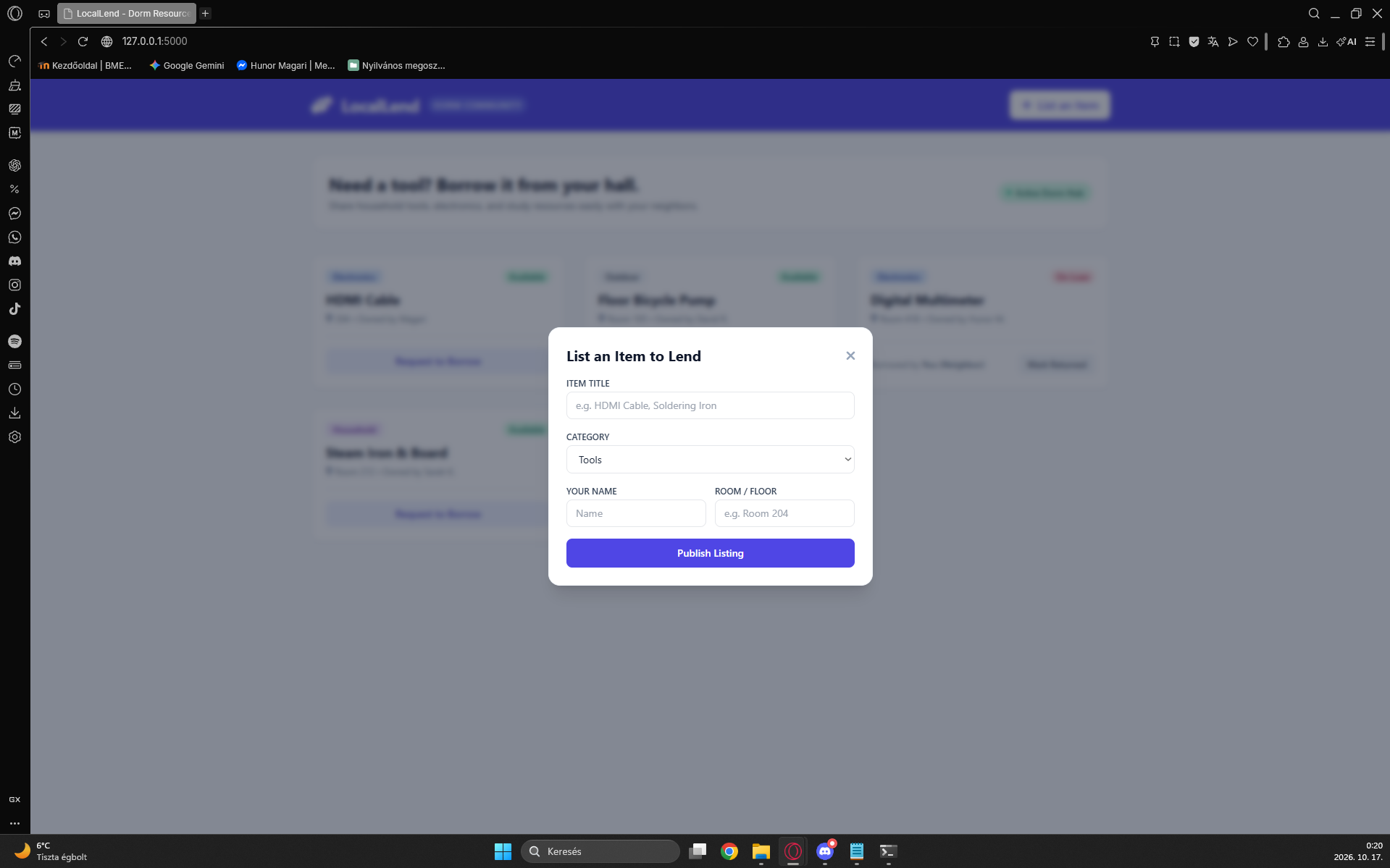
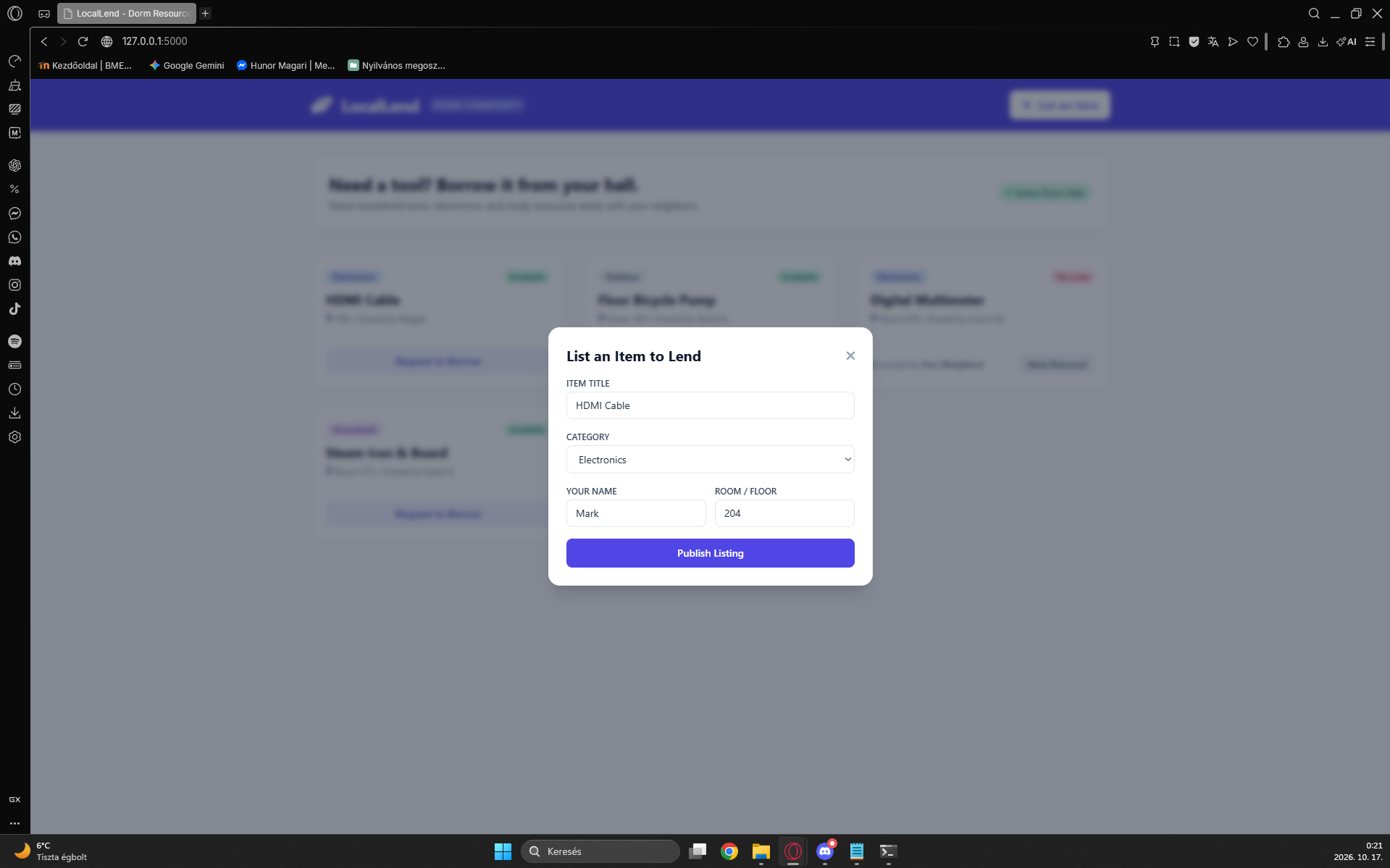
List an Item to Lend
-
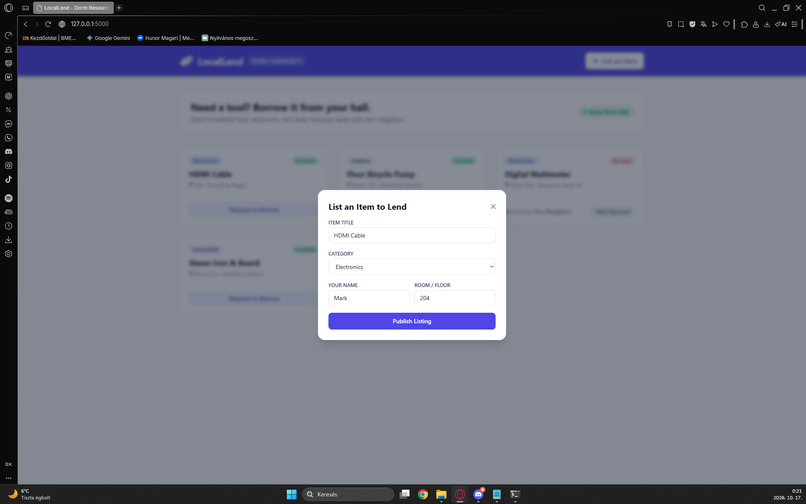
List an Item to Lend - (Example)
-
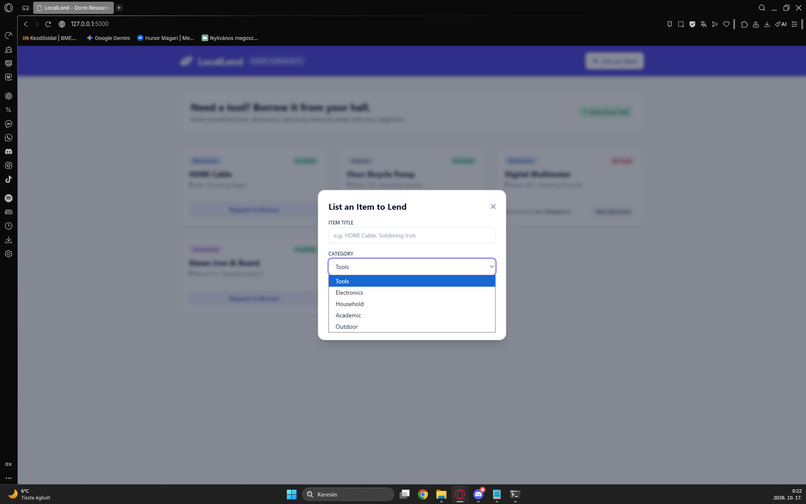
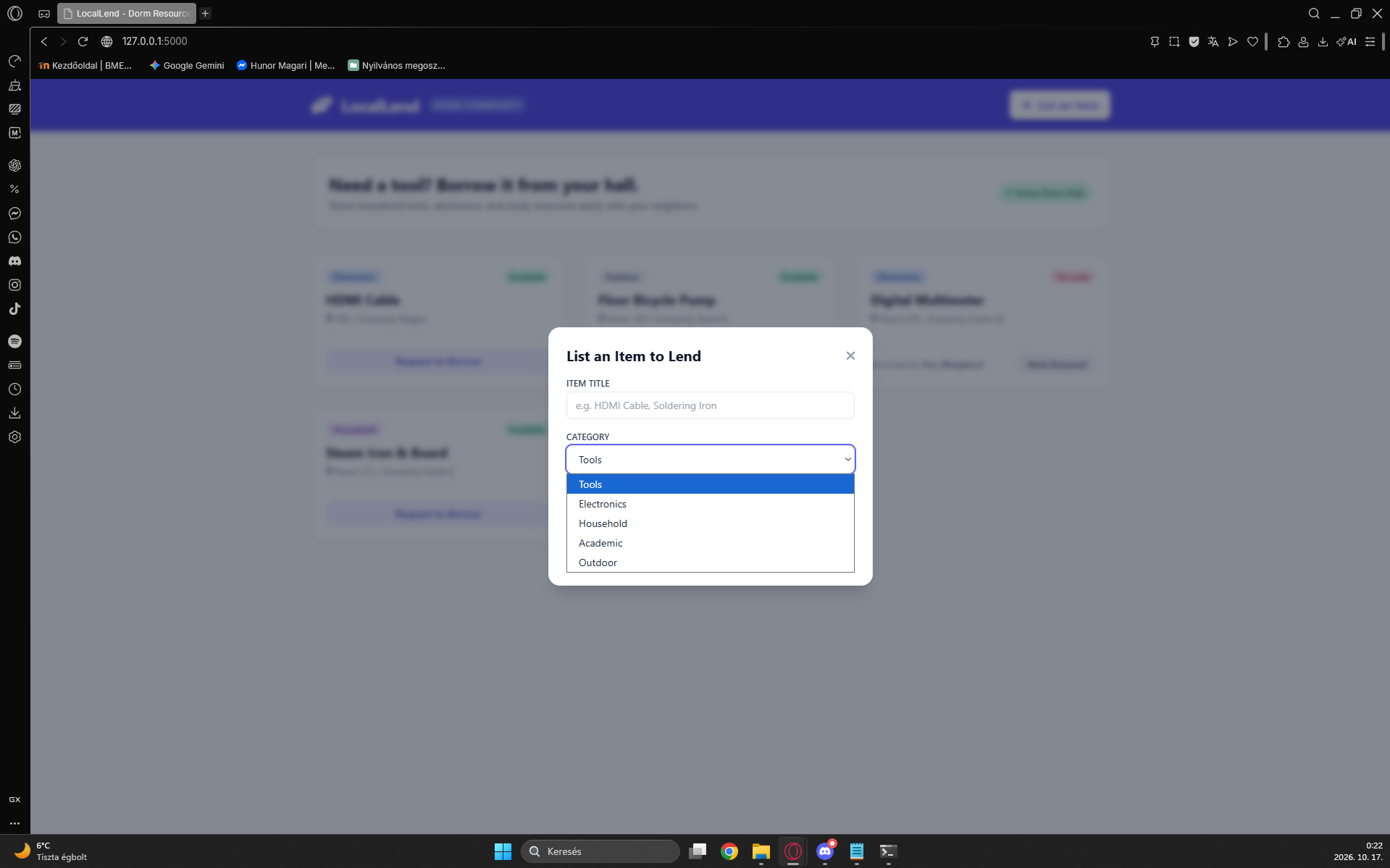
List an Item to Lend - (Category Options)
Inspiration & The Real Problem
Living in a university dormitory community, you quickly notice an absurd daily friction: dozens of students in the same building frequently need specific, temporary tools or equipment—such as an iron, a screwdriver set, an HDMI adapter, a bicycle pump, or specialized lab equipment like a multimeter.
At the same time, someone just two doors down usually owns that exact item, but it sits idle in a drawer. Currently, residents resort to chaotic social media feeds or group chats where requests are instantly buried under memes and casual talk. Most students end up either buying cheap duplicate tools that clutter small dorm rooms or simply going without what they need. We observed this exact frustration firsthand in student halls and decided to build LocalLend—a dedicated, lightweight peer-to-peer resource-sharing platform specifically tailored for dorms and close-knit student communities.
What It Does & How It Works
LocalLend transforms an isolated dormitory into an interconnected, collaborative micro-economy:
- Instant Item Listing & Tagging: Residents can quickly list items they are willing to lend, set availability status, category (Electronics, Tools, Household, Academic), and specify pickup instructions (e.g., room/floor number).
- One-Click Borrow Requests: Students can search for items by keyword or category and submit direct borrow requests with an estimated return window.
- Trust & Reputation Loop: To address the universal fear of lost or damaged items, LocalLend features a lightweight community reputation score where borrowers earn trust points upon prompt returns.
- Smart Activity Feed: A live community board displaying recent listings, urgent requests, and completed borrows to foster neighborhood transparency.
How We Built It
LocalLend was built from scratch as a clean, responsive full-stack web application designed for fast, frictionless local use:
- Backend: Built with Python and Flask, providing a lightweight RESTful API structure and session management.
- Database: SQLite with clean relational schemas linking Users, Items, Borrow Requests, and Review Logs.
- Frontend: Responsive HTML5, Tailwind CSS, and modern vanilla JavaScript for dynamic UI updates, modal interactions, and instant search filtering without page reloads.
- Assistance & Collaboration: Developed with the support of AI coding assistants for architectural prototyping and rapid UI design, following all official hackathon disclosure guidelines.
Challenges We Ran Into
- Designing for Low Friction: University students abandon apps that require tedious onboarding. Striking the balance between security (knowing who has your tool) and seamless user experience was challenging. We solved this with quick room-based profiles.
- Concurrency & State Transitions: Managing item availability states (Available -> Requested -> On Loan -> Returned) required careful database transaction handling to prevent two neighbors from borrowing the same drill simultaneously.
Accomplishments That We're Proud Of
- Going from an observed real-world dorm frustration to a fully functional, end-to-end working application during the hackathon period.
- Creating an intuitive, modern user interface that feels welcoming and makes borrowing as natural as knocking on a neighbor's door.
What We Learned
We learned how much impact hyper-local software can have. Big social platforms fail at hyperlocal utility because they lack the specific physical context (like shared hallways and common rooms). Tailoring a tool to a tight physical community completely changes user dynamics.
What's Next for LocalLend
- Automated Telegram / Discord Bot Integration: Sending automated DM notifications to lenders when a borrow request is submitted.
- QR Code Door Stickers: Allowing students to scan an item's QR code with their phone to instantly log a borrow/return.
- Expansion to Shared Amenities: Extending the booking engine to reserve dorm washing machines, communal study rooms, and vacuum cleaners.
Built With
- flask
- html5
- javascript
- python
- sqlite
- tailwindcss

Log in or sign up for Devpost to join the conversation.