Inspiration
Growing up in a small suburban neighborhood, I noticed so many quiet acts of kindness going unrecognized—neighbors who maintained the community garden, delivered meals to seniors, or mentored kids. I wanted to create a space that centered these "everyday heroes" and made it easy for others to join in, give back, or simply say thank you. Community connection felt more important than ever, and I wanted to build something that made it tangible.
What it does
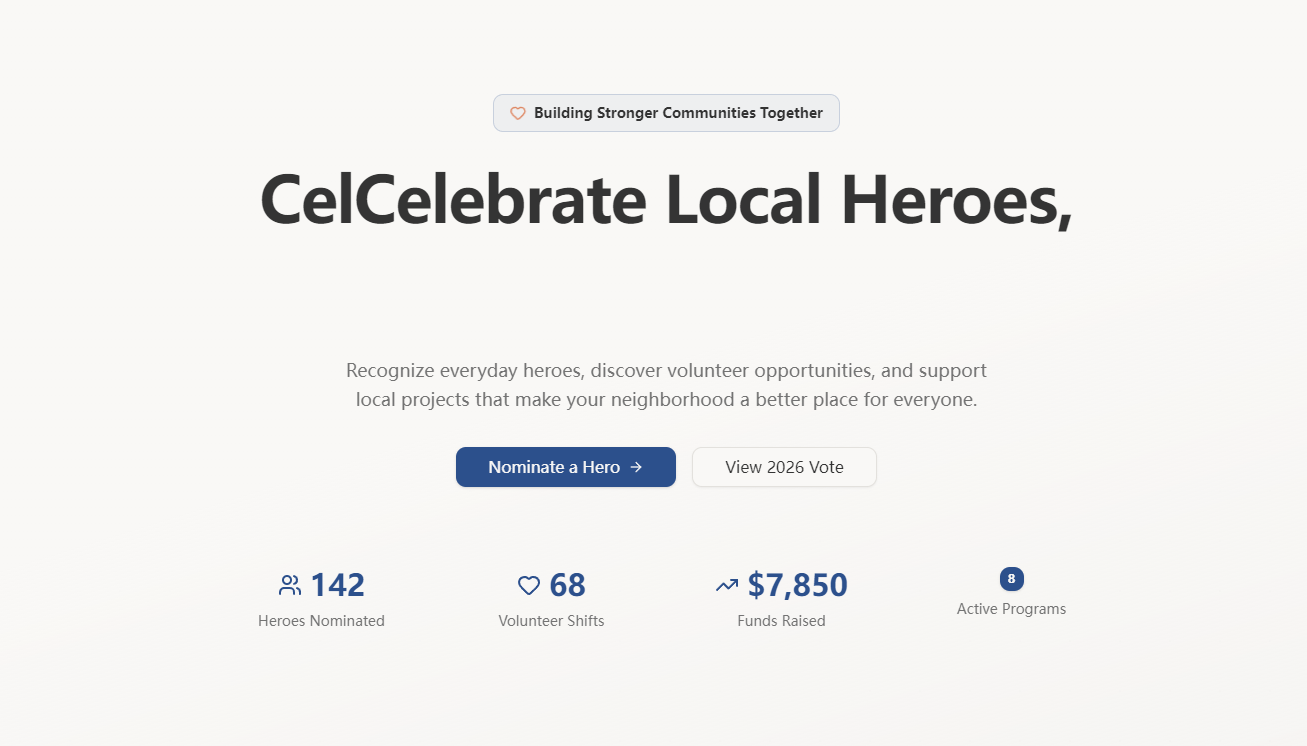
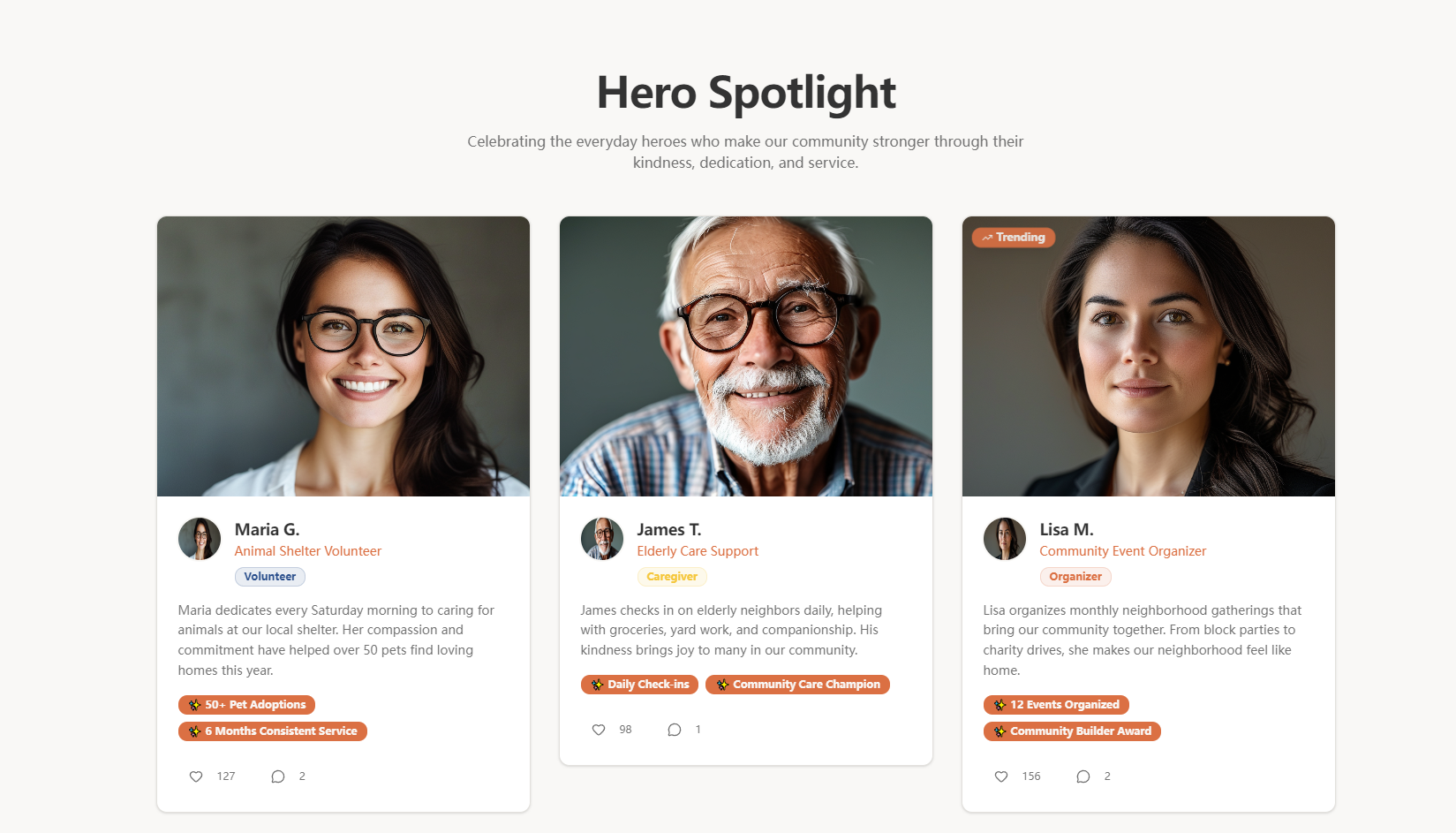
LocalHero is a community-focused platform that spotlights local heroes, shares volunteer opportunities, lets residents support neighborhood projects, tracks collective impact, and hosts annual voting for community hero awards. Every interaction—from liking a hero’s story to donating to a project—strengthens neighborhood bonds.
How we built it
We started with wireframing core pages (Homepage, Voting Page) in Figma, aligning with our warm, approachable brand palette. We built the frontend with HTML/CSS/JavaScript (React for interactivity), used TailwindCSS for responsive design, and integrated Chart.js for the impact dashboard’s visual metrics. We prioritized card-based layouts and soft rounded corners to keep the UI welcoming and easy to navigate.
Challenges we ran into
Balancing interactivity with simplicity was tough—we wanted buttons (like, donate, vote) to feel responsive without overwhelming users. We also struggled to make the impact dashboard dynamic yet easy to read, especially on mobile. Ensuring the design stayed consistent across all sections (hero spotlights, project grids, voting pages) required constant iteration.
Accomplishments that we're proud of
We created a fully intuitive platform that puts community at the center—no complicated logins, just immediate access to ways to engage. The impact dashboard became a standout feature, turning abstract "community good" into visual, actionable metrics. Most importantly, the design feels warm and inclusive, true to the spirit of local connection we wanted to capture.
What we learned
We learned that simplicity is key for community-focused tools—users want to act quickly, not fill out forms or create accounts. We also gained deeper insight into responsive design for mobile-first usage (since most residents access local info on their phones) and how visual feedback (like progress bar updates) makes users feel their actions matter.
What's next for this project
We plan to add local business integration to let small shops sponsor projects directly, expand volunteer opportunity filtering by interest/location, and introduce a "Neighborhood Impact Story" section to share long-term outcomes of funded projects. We also want to partner with local nonprofits to align the platform with on-the-ground community work.

Log in or sign up for Devpost to join the conversation.