-
-
-
settings
-
settings
-
settings
-
-
Inspiration
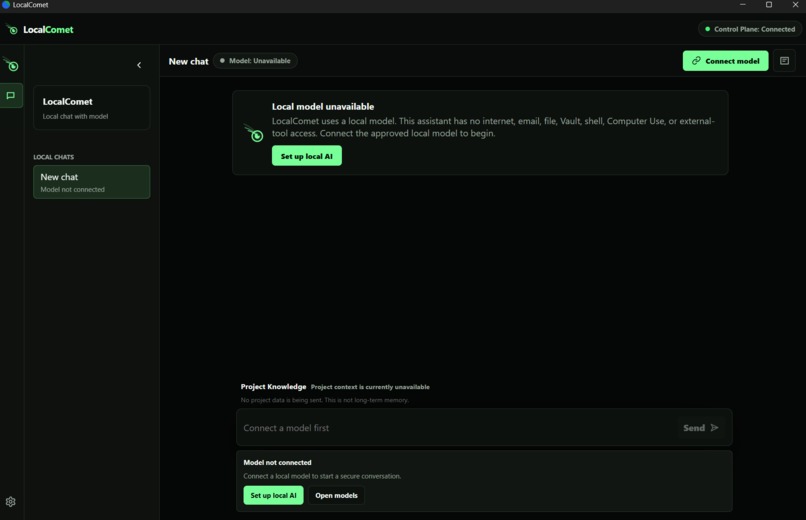
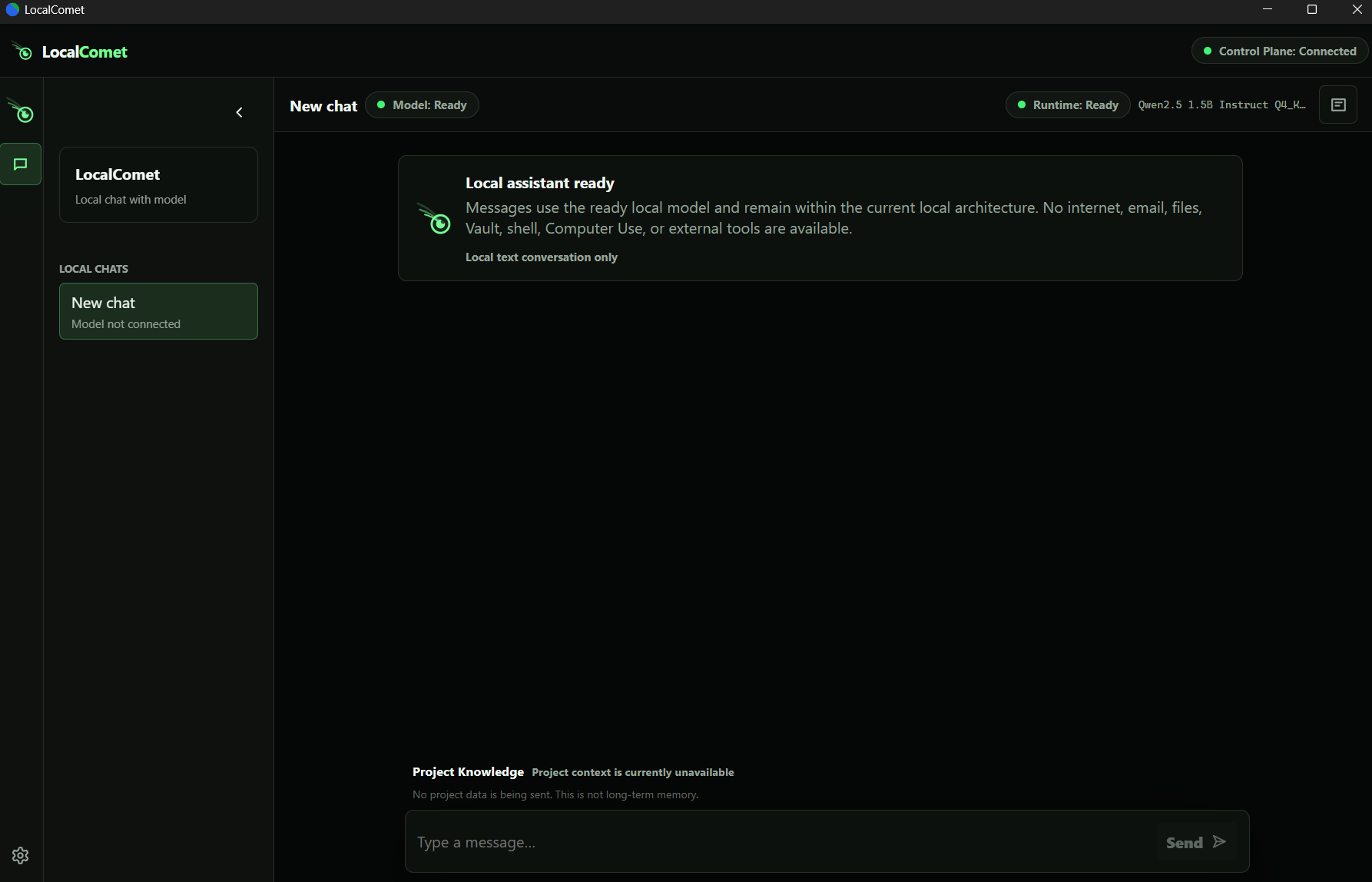
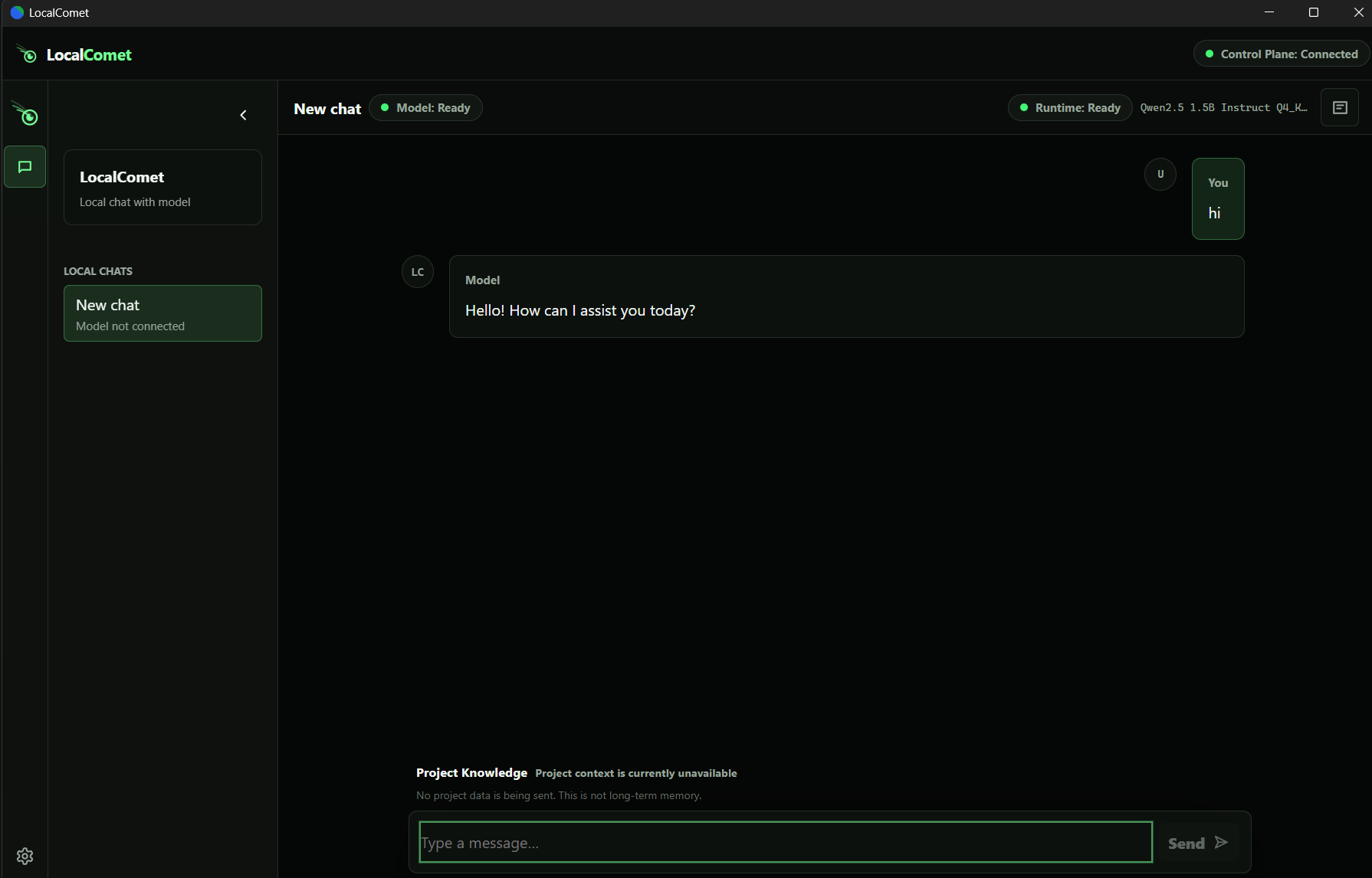
Powerful AI assistants often depend on cloud services or require users to install and configure separate tools such as Ollama or LM Studio. I wanted LocalComet to feel like a normal desktop application: install it, download one approved model, connect, and chat privately on your own computer.
What it does
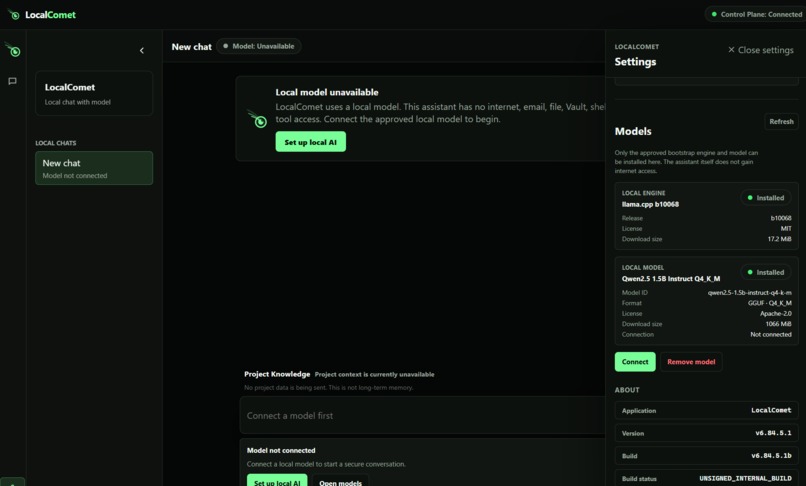
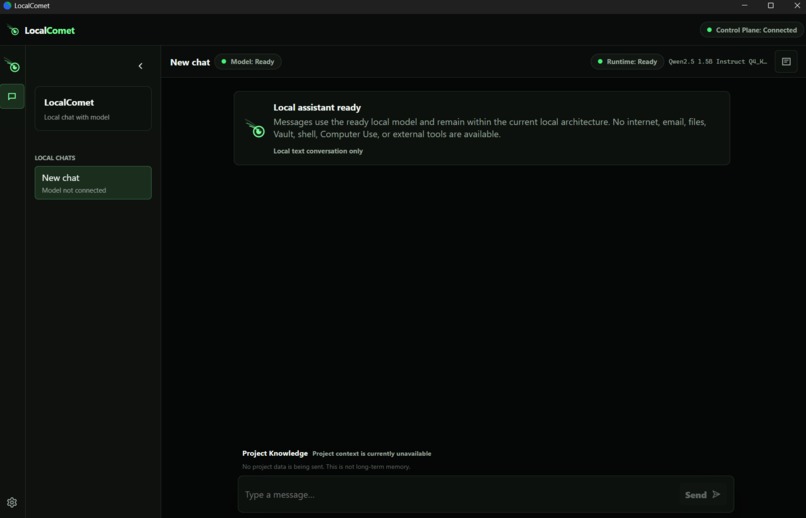
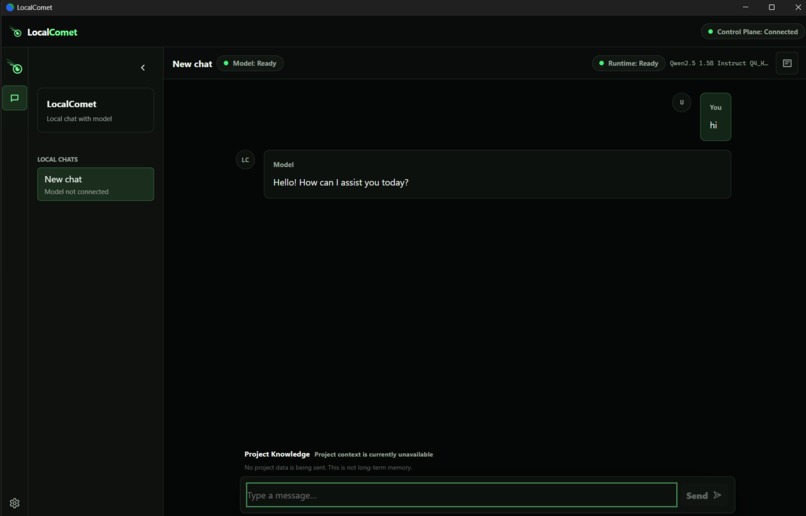
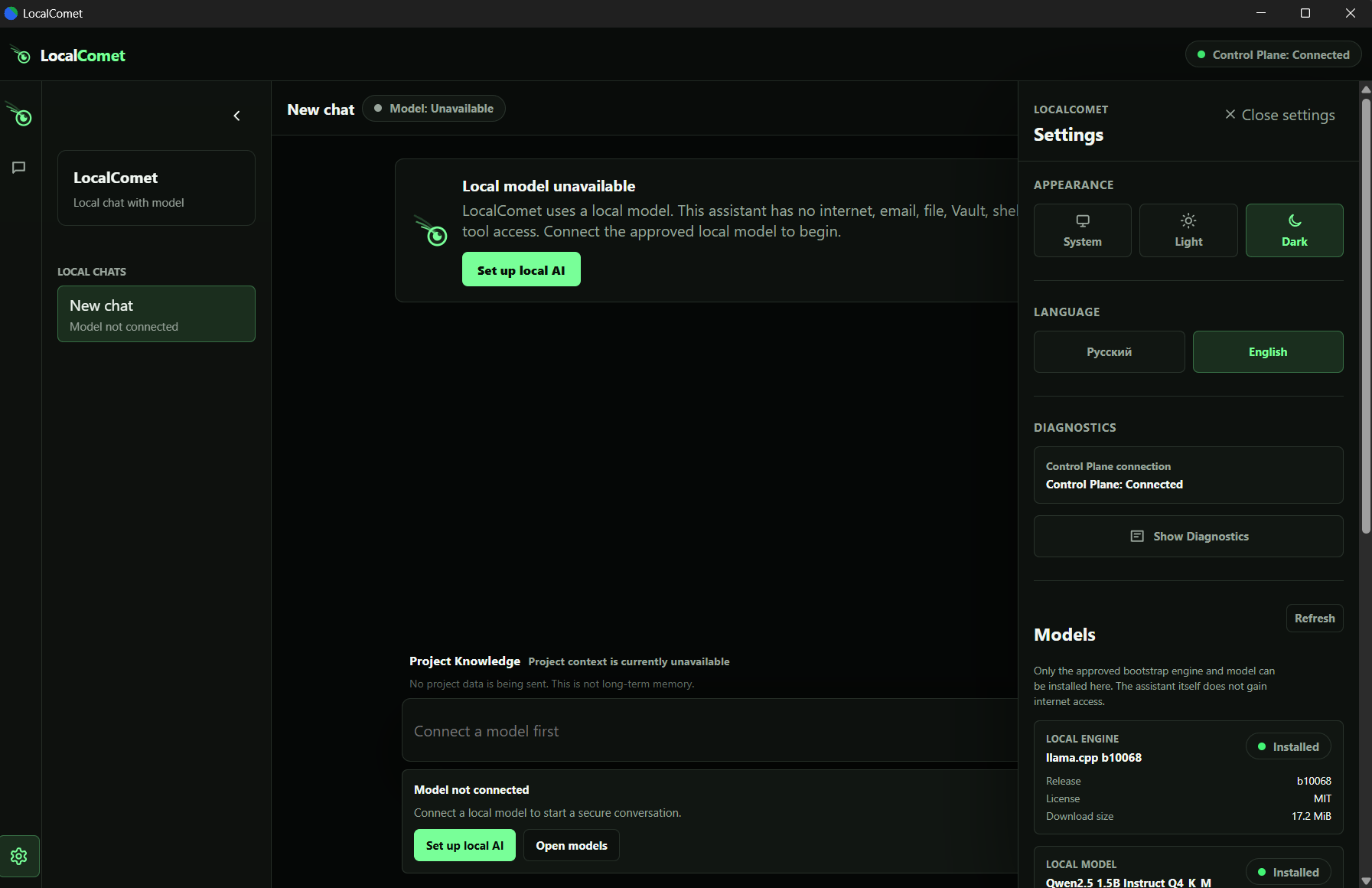
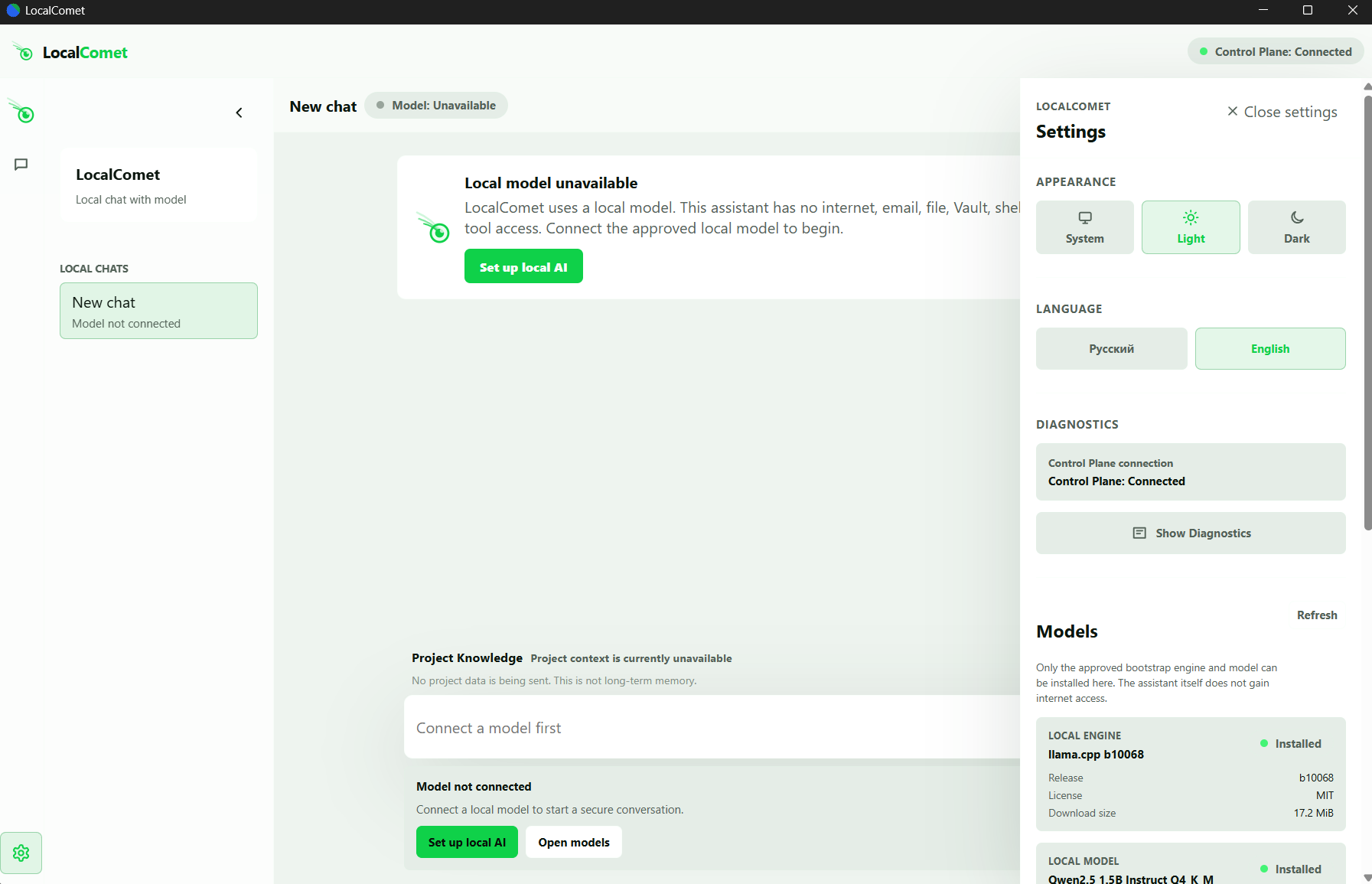
LocalComet is a local-first Windows AI assistant. It securely downloads and installs a verified llama.cpp runtime and a Qwen GGUF model, then runs inference entirely on-device.
The application provides:
- Private local AI chat
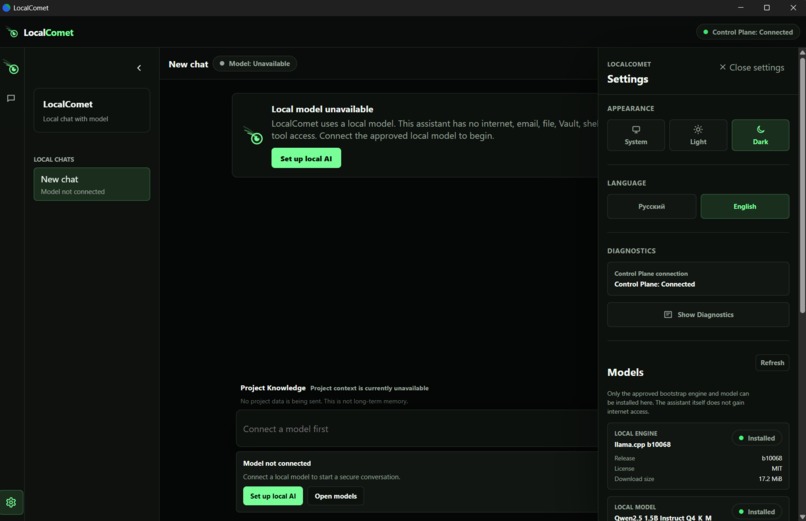
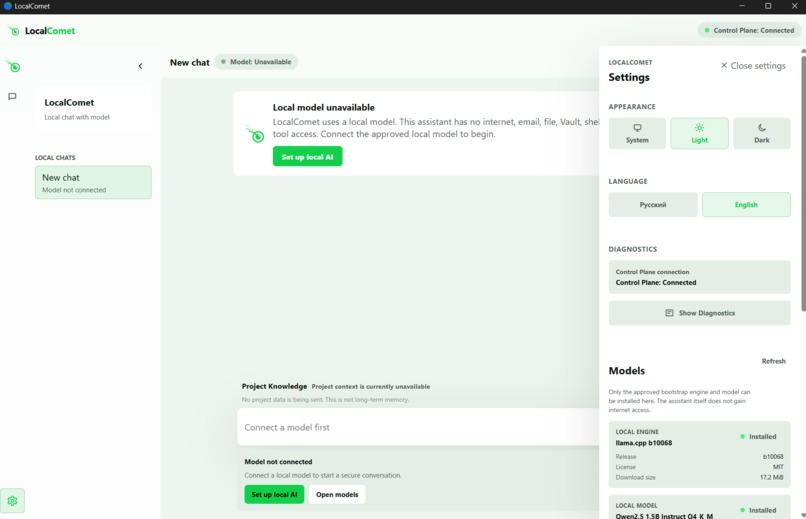
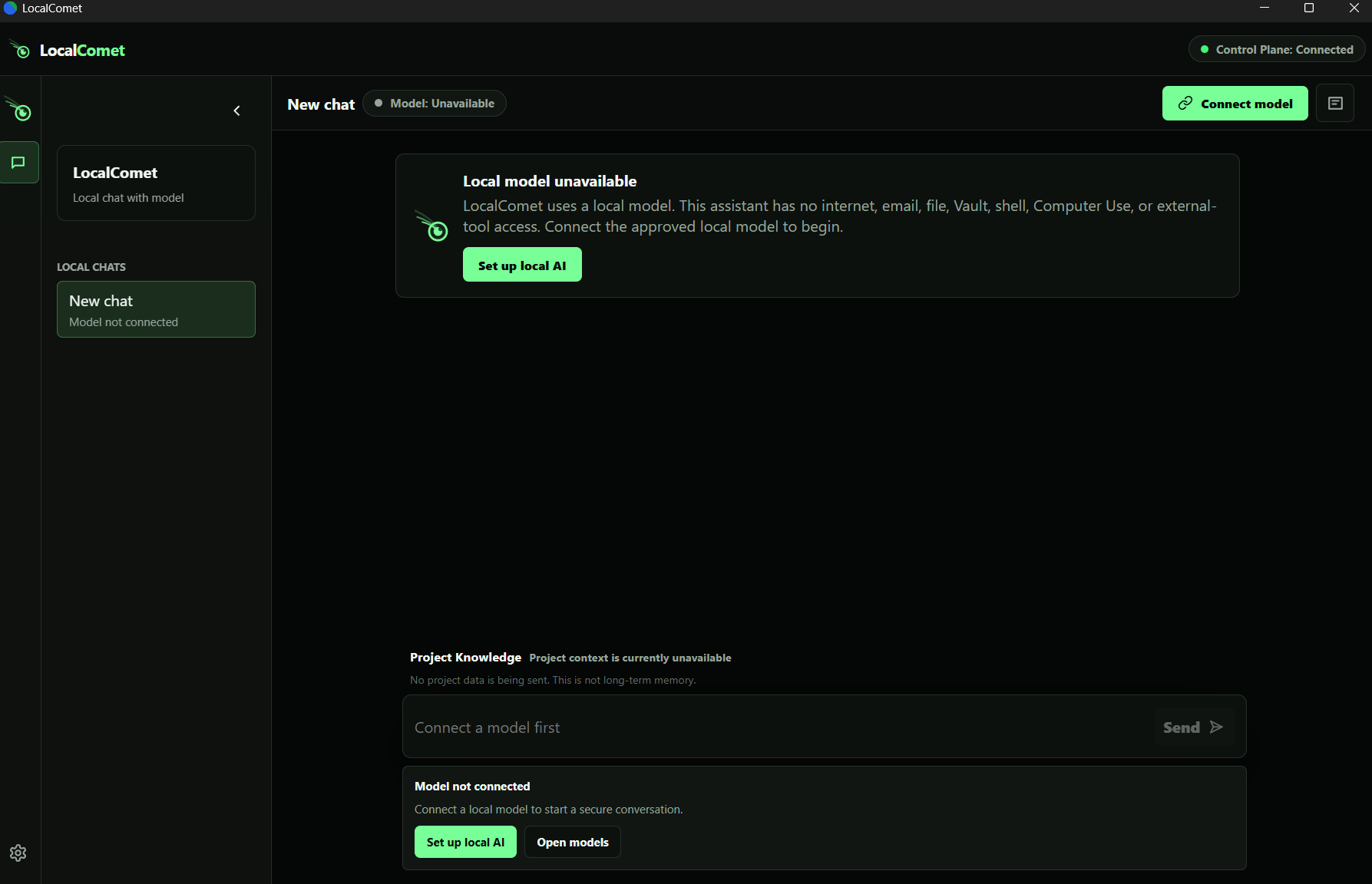
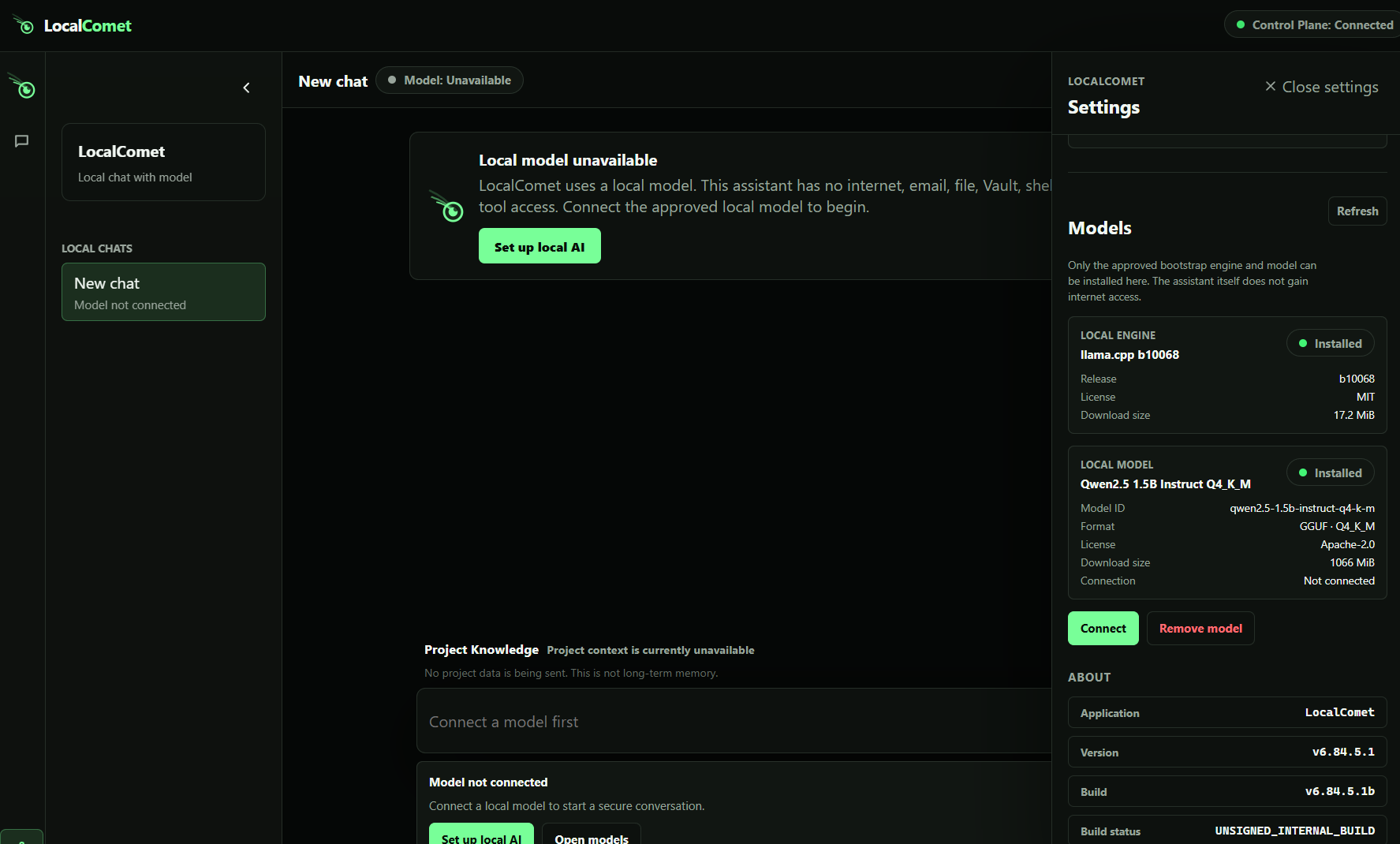
- A built-in model and runtime manager
- Exact URL and redirect-host allowlists
- File-size and SHA-256 verification
- Safe runtime ZIP validation
- Atomic installation and cancellation cleanup
- Model removal and verified redownload
- Isolated application-data profiles
- Installer continuity and rollback validation
After the initial download, LocalComet does not require LM Studio, Ollama, a cloud inference provider, or an OpenAI API key.
How I built it
The desktop application uses Rust and Tauri 2 for the trusted backend, with Svelte, TypeScript, and Vite for the interface. Local inference is provided by a pinned llama.cpp runtime running a verified Qwen2.5-1.5B-Instruct GGUF model.
I used Codex throughout the implementation process in small, bounded engineering missions. Codex helped implement the acquisition pipeline, model manager, runtime packaging, tests, installer validation, diagnostics, and evidence collection. ChatGPT with high reasoning was used for architecture review, blocker classification, and planning the shortest safe next step.
Challenges
The hardest part was making model installation both simple and secure.
Real artifact hosts introduced redirect changes, the upstream llama.cpp archive contained additional executables that LocalComet should not install, and the runtime license file required separate provenance. I solved these issues by pinning exact artifact identities, separating the accepted archive envelope from the installed runtime subset, and verifying every promoted file.
Another challenge was testing the actual packaged Windows application rather than relying only on development builds. The final workflow included real installation, local chat, cancellation, removal, redownload, uninstall/reinstall, and rollback rehearsal.
Accomplishments
The accepted candidate passed:
- 103 Rust tests
- 265 frontend tests
- Offline Cargo check and Clippy
- Production and NSIS builds
- Real packaged local inference
- Download cancellation and cleanup
- Atomic model installation
- Model removal and redownload
- Uninstall/reinstall continuity
- Installer rollback and restoration
The final runtime contains exactly 31 approved files, and the final model matches its expected byte count and SHA-256.
What I learned
I learned that shipping a local AI product requires much more than launching a model. Artifact trust, filesystem ownership, cancellation behavior, archive validation, licensing, process isolation, installer behavior, and rollback all need explicit contracts and real acceptance evidence.
I also learned how effective Codex can be when each task has a narrow scope, clear boundaries, objective tests, and an exact stop condition.
What's next
The next stage is Project Knowledge: allowing users to add selected local documents and project context while preserving LocalComet's privacy-first and local-only architecture.
Built With
- cargo
- chatgpt
- codex
- gguf
- llama.cpp
- nsis
- rust
- svelte
- tauri
- typescript
- vite
- vitest
- windows


Log in or sign up for Devpost to join the conversation.