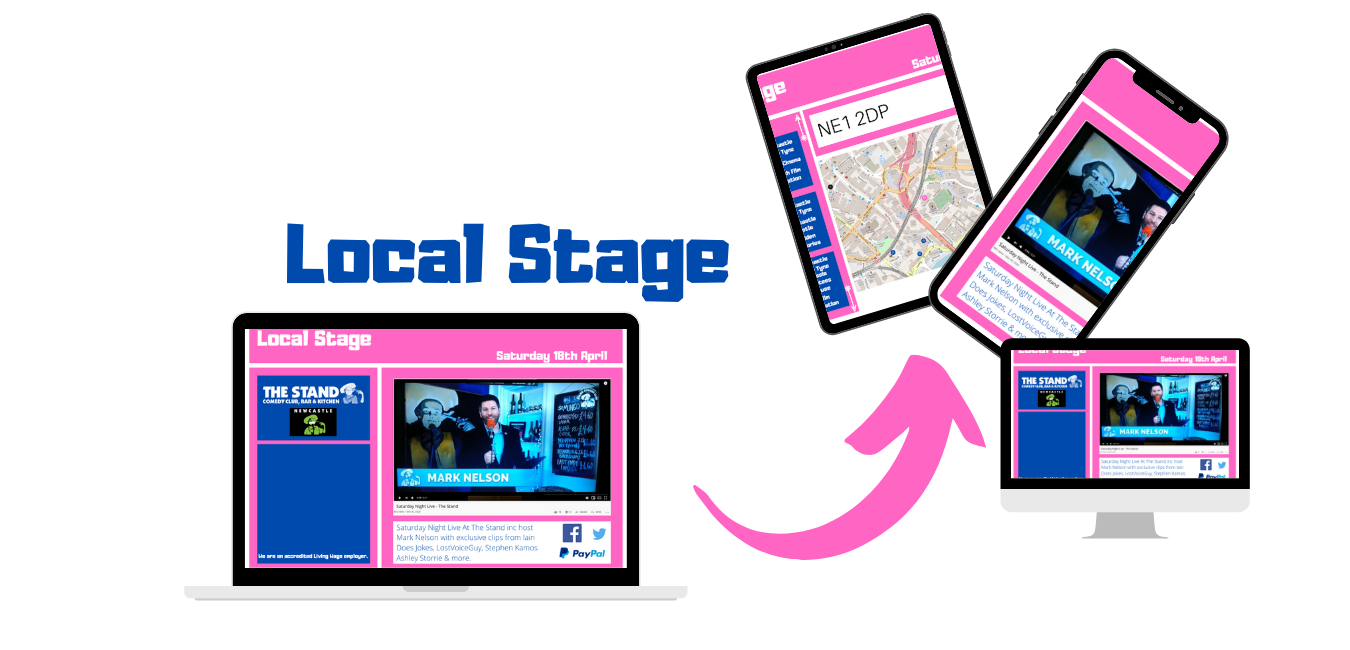
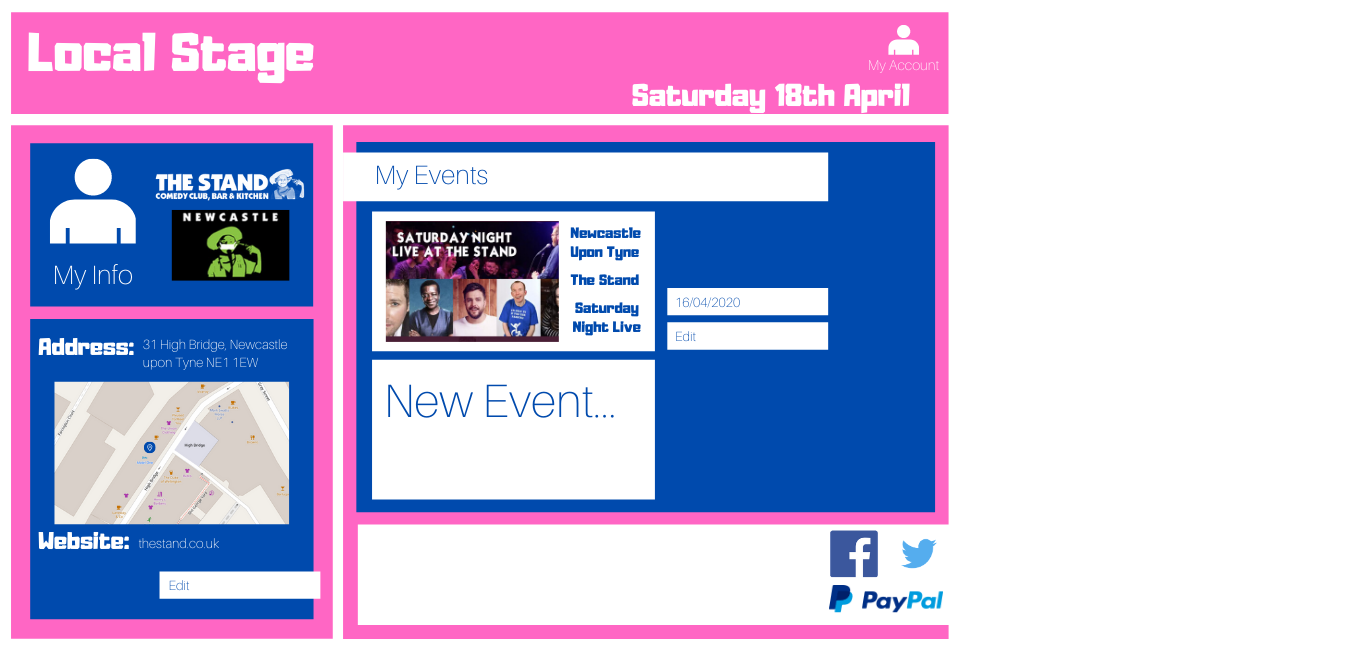
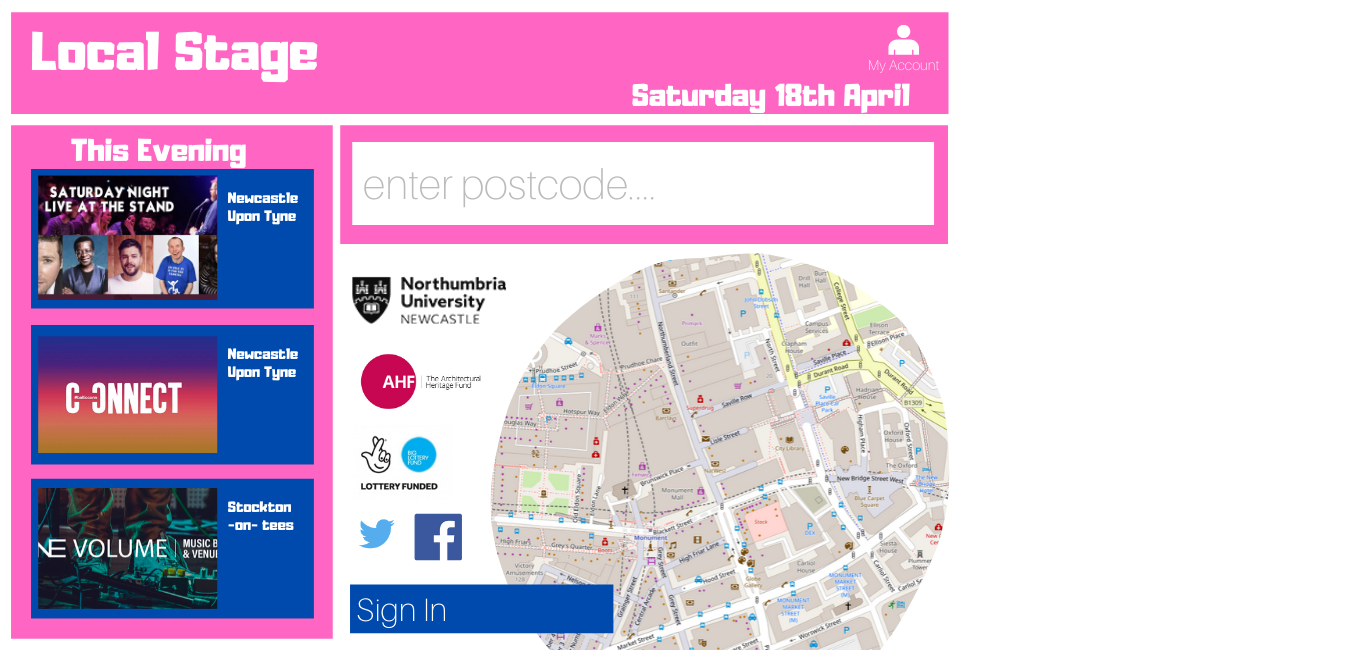
[EDIT: This is just a fun little way I could see technology aiding the situation. Obviously with time constraints I've only just built a wire frame. Enjoy!]
Inspiration:
Create a tool which could aid commercial properties which are resident to grass root entertainers and hold cultural significance in the area, through an application that directly links local patrons to streams through a map dashboard. This will help support gig workers and places of cultural significance which rely on door sales to keep social enterprises economically viable. Using an interactive map, patrons would be able to visualize what is happening in their local area and join in without having to dig through social media platforms. The focus of this hackathon has been looking at the current use of technology in the industry and creating a catch all system which could stimulate the connection between entertainer and e-patron.
What Industries are Impacted with Covid19 that we could work with?
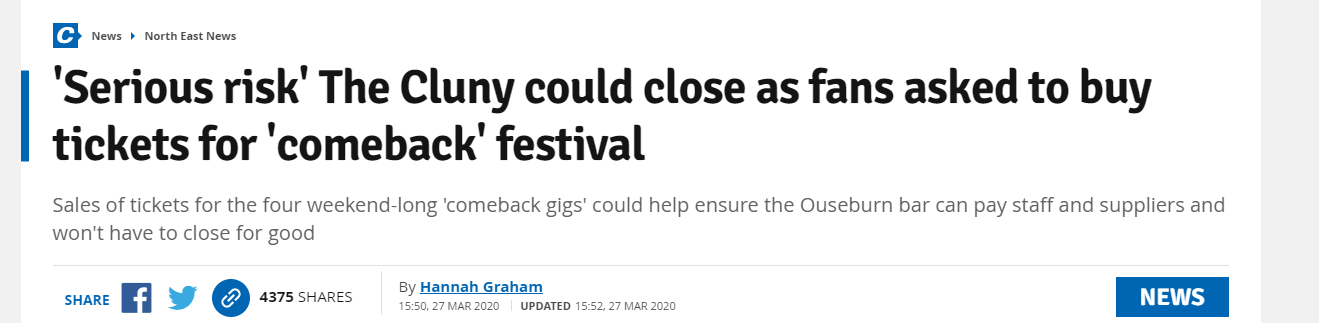
Prior to Covid19, many businesses relied on monthly income to keep open and with the recent lockdown are unable to keep work up as normal. With the cuts to public expenditure at the beginning of the decade, many places relied on innovative storytelling and activities to encourage patronage.
The heritage industry alone took a hit when Councils sold of properties to trusts and charities to keep them open and operational. The estimated employment of the sector in 2018 was around nine 196,000, employees. In Newcastle alone, there is over 200 listed buildings, most in use. In a recent study carried out by Heritage Lottery Fund (HLF), Tom Walters, in charge of Data and research noted that "Around a third of charity/third-sector organisations and around a third of community and voluntary groups said they could not exist beyond July” (https://www.heritagefund.org.uk/blogs/how-coronavirus-covid-19-affecting-heritage-sector.)
Social Enterprises which operate within heritage buildings are at risk of losing the ability to protect these buildings if they lose income to keep themselves afloat. This would create a knock-on effect with leaving heritage buildings across the country which would be left to wear and tear; potentially losing them within the community. Due to stricter policies selling these buildings as so to make sure they can be properly cared for alongside an economic downtown; these buildings might be left abandoned and unused within the community.
The local economy has upheld various representatives of the area for some time now. There has been a reliance on freelance sites to connect gig to gig worker, and the gig economy is estimated to hold around 5 million people within employment. In the UK, the Professional Contractors Group estimates that: the flexibility offered by Britain's freelancers is worth £21 billion to the UK economy in added value. With many freelancers relying on employers having available work, a segment of the economy now faces the unknown especially if their services are needed on premises (entertainers, archaeologists, surveyors etc.)
The lockdown mandated by the Government has affected various areas of the local economy and community, due to businesses shutting doors. As such professional entertainers have found themselves without their usual audiences. Nationally, comedians have taken to using various social media sites to keep up the communities’ spirits by using mobile phones to record short stand-ups. However, as individuals may not use social media for various reasons, they are losing out on finding these creative gems. In many ways much of the population have felt physically distant to their local communities due to the toil of isolationism that will impact single households. In the past, community was united through various local staples (football, music, public houses, history) but now it is beginning hard to capture that through the digital screen.
Concept: Online Local Map of Entertainment
The tool being advocated in this project is a community tool which connects various local live events on an interactive map. Maps are instrumental in place making as they can make sense of the world and create a connection between the symbolic and existent place (Hillier, 2011). While events are being posted on various social media platforms (Youtube, Twitter, Facebook) this does not mean that it’s being seen by past physical patrons who would assist in making these functional businesses. Twitter has 16.7 million UK users in the United Kingdom (Statista, 2020), and this is about 25.056% of the general population. In recent years social media has been touted as conducive to unhealthy behaviour alongside studies which support breaking away from social platforms (Keles, B., McCrae, N., & Grealish, A. (2020.) With people now being more selective of their chosen time on the computer, a tool that might directly connect the public (or e-patrons) and broadcasted local events might be worth considering. The application would look towards tying together the social media outputs of local businesses on a map. This would allow the public (especially if they are not usually users of social media) who usually integrate with the local community to geographically pinpoint businesses, local entertainment and social educational natives (such as museums.)
Who this might help?
In the short term: The entertainment industry across the UK was affected by Covid19 by the government mandate to shutting doors across the Country. This impacted local businesses and social enterprises harder due to their reliance on ticket sales from dedicated patrons and audiences. Through this mapping tool the community can return to the places they love to visit before the lock down lifts.
In the long term: The legacy of this tool will be able to still help the most vulnerable within the community who can’t always attend local events. People who are currently isolated or usually isolated from everyday activity (due to disability, childcare, introvert tendencies) are cut off from the usual local on goings. This can cut people off from having a sense of community and being part of the local ecosystem.
E-patron - someone who finds place through the internet, such as a community or entertainment for leisure.
Bibliography –
Clement, J (2020) ‘Leading countries based on number of Twitter users as of January 2020(in millions)’, Statista. Cited https://www.statista.com/statistics/242606/number-of-active-twitter-users-in-selected-countries/ (accessed 11th April 2020)
Hillier, A. (2011). Transforming communities through mapping: Harnessing the potential of new technologies. In The Paradox of Urban Space (pp. 187-203). Palgrave Macmillan, New York.
Keles, B., McCrae, N., & Grealish, A. (2020). A systematic review: the influence of social media on depression, anxiety and psychological distress in adolescents. International Journal of Adolescence and Youth, 25(1), 79-93.


Log in or sign up for Devpost to join the conversation.