Inspiration
Walk into any kirana store, local vendor stall, or neighborhood shop across India, and you'll find the same three struggles playing out every single day: owners don't always know what's running low until a customer asks for it, they have no time or skill to create marketing content for social media or WhatsApp, and they're constantly interrupted by repetitive customer questions about stock and pricing.
Big businesses have AI-powered tools to solve all of this. Small shop owners — the backbone of India's local economy — don't. We wanted to close that gap. Local Mestri was born from a simple idea: what if every kirana store owner had their own AI-powered growth assistant, built for how they actually work?
What it does
Local Mestri combines three AI-powered tools into one simple app:
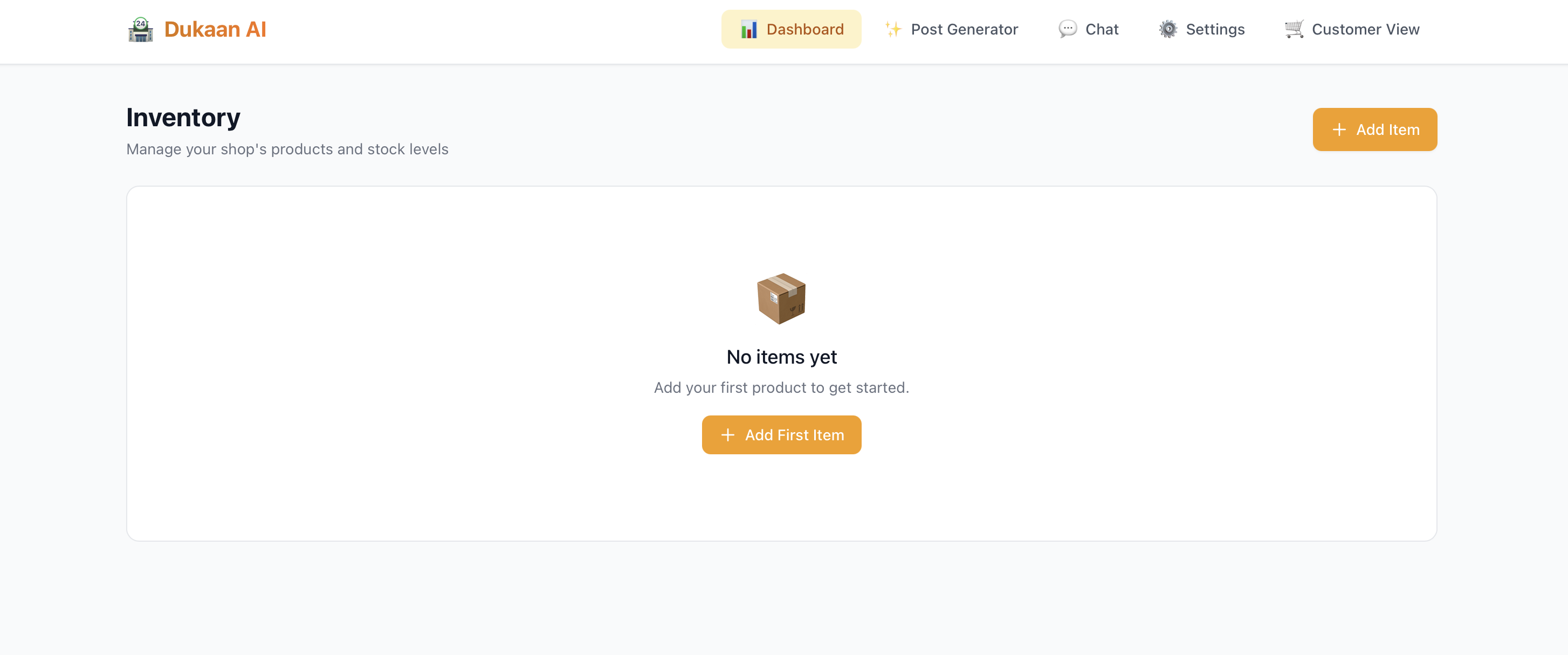
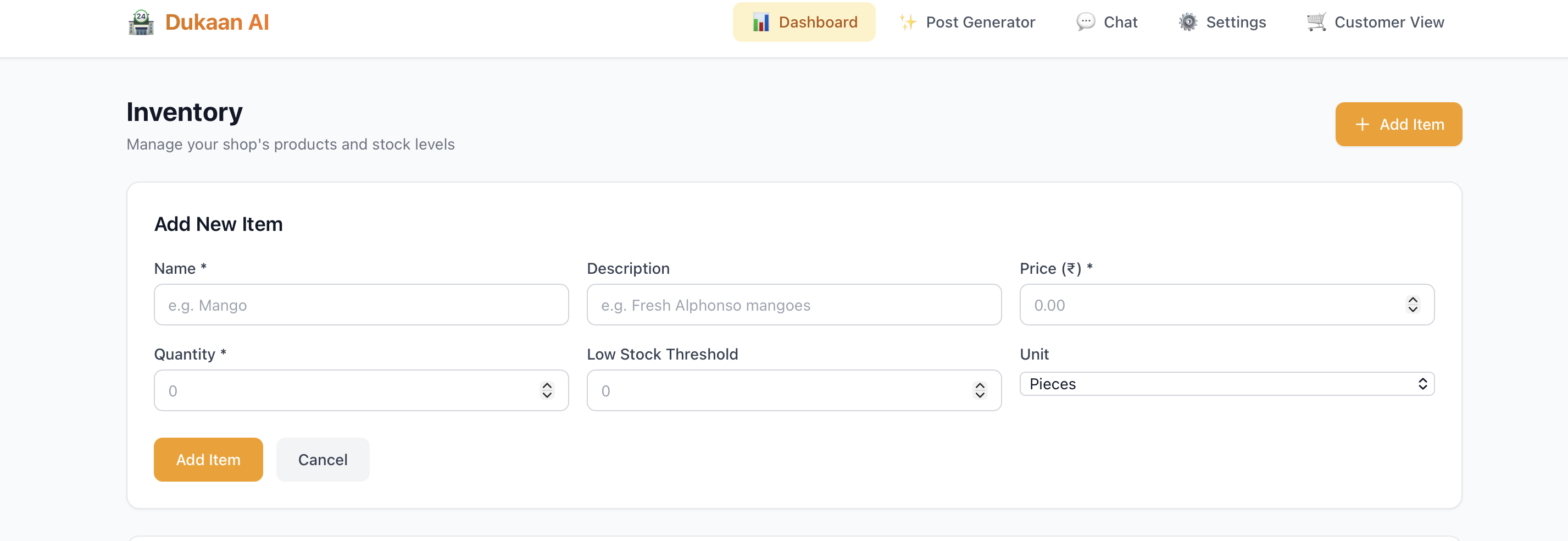
- Smart Inventory Dashboard – Shop owners can add, edit, and track inventory in real time. When stock drops below a set threshold, it's automatically flagged with a low-stock badge, removing the need for manual stock-checking.
- AI Post Generator – Owners type a quick note (e.g. "new mango pickle stock arrived") and instantly get three ready-to-post captions, styled for social media and WhatsApp.
- AI Customer Chat Assistant – Customers can ask questions directly, and the AI replies using live inventory data — not guesswork or hallucinated answers. Owners can view all conversations in a familiar WhatsApp-style chat log.
All three tools are connected to a live backend, so every AI response — whether it's a caption or a customer answer — is grounded in real, current shop data.
How we built it
- Frontend (Web): React
- Backend: Express + SQLite for lightweight, reliable data storage
- AI Layer: Claude API, used for both the post generator and the customer chat assistant
- Mobile: React Native app for on-the-go access, so owners aren't tied to a desktop
The core architecture pulls live inventory data at request time for every AI call. This means the chat assistant and post generator aren't just generating generic text — they're reasoning over the shop's actual current stock, prices, and details.
Challenges we ran into
The biggest challenge was grounding the AI in real data instead of letting it generate generic or hallucinated answers. Early on, the customer chat assistant would produce plausible-sounding but inaccurate responses about stock availability. We solved this by restructuring the backend to fetch live inventory data at the moment of every AI request, feeding it directly into the prompt context — so answers are always tied to what's actually on the shelves.
Balancing simplicity with functionality was another challenge — kirana store owners are busy and not necessarily tech-savvy, so every feature had to be usable with minimal friction: quick inputs, clear visual flags (like the low-stock badge), and instant, ready-to-use outputs rather than tools requiring further editing.
What we learned
- How to design AI features that are grounded and reliable rather than purely generative, which matters enormously when real customers are relying on the answers.
- The importance of designing for a user base that values speed and simplicity over feature complexity — every screen had to answer "does this save the shop owner time?"
- How to architect a system where inventory, marketing, and customer support all pull from a single source of truth in real time.
What's next for Local Mestri
We want to expand Local Mestri with WhatsApp Business API integration for direct customer messaging, multilingual support for regional languages, and predictive restocking suggestions based on sales patterns — bringing India's small businesses even closer to the AI-driven tools that big players already have.
Built With
- anthropic
- claude-api
- css
- express.js
- generative-ai
- html
- javascript
- llm
- mobile-app
- node.js
- react
- react-native
- rest-api
- sqlite

Log in or sign up for Devpost to join the conversation.