-
-
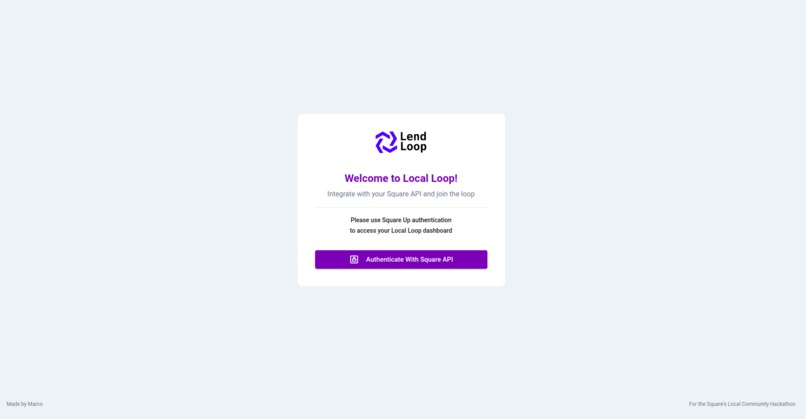
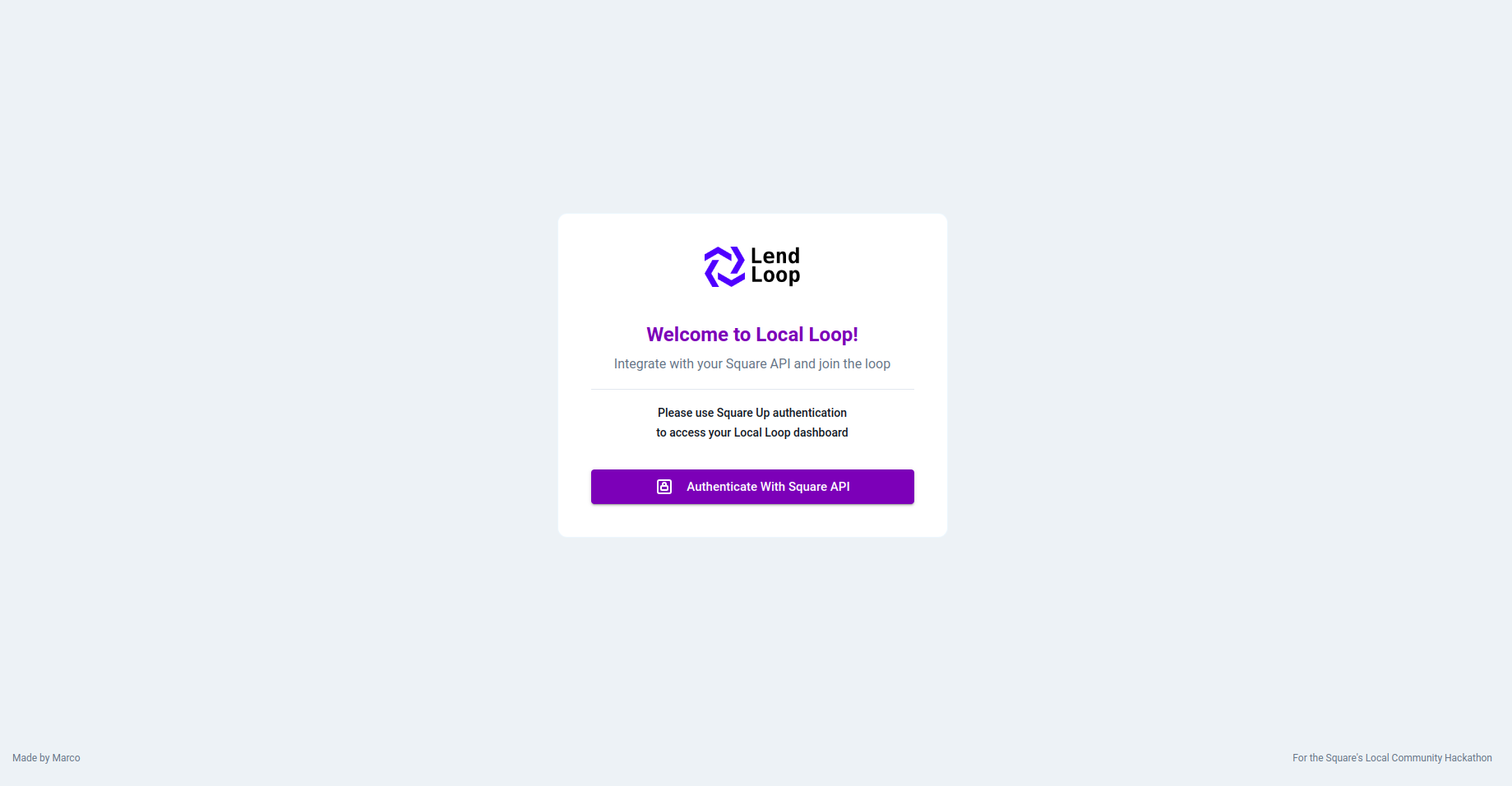
Integrated with Square's OAuth
-
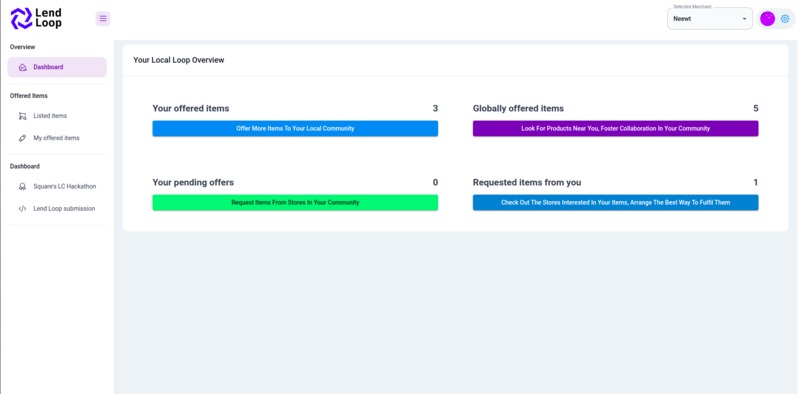
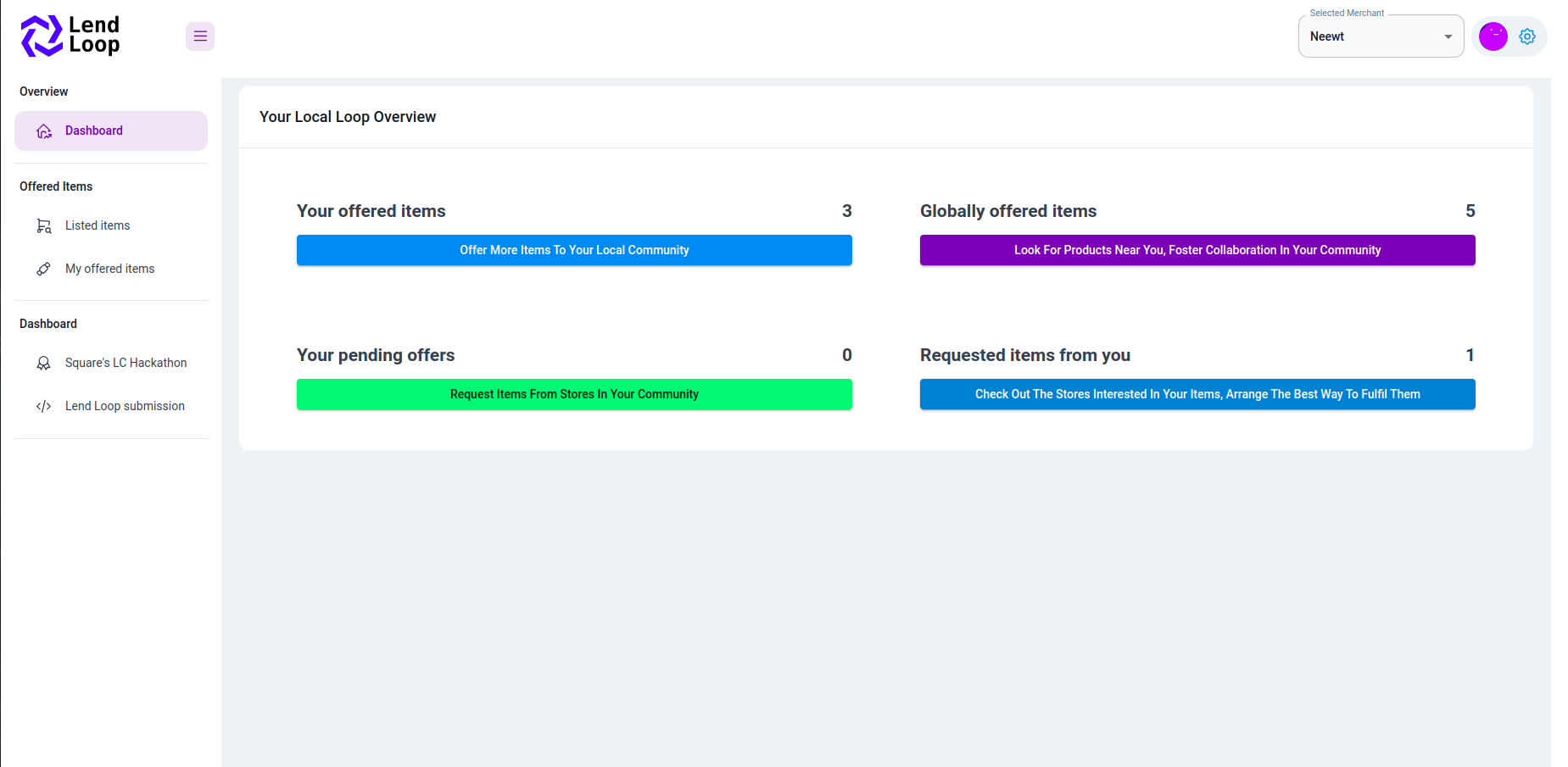
Overlook of the merchant's Local Loop status
-
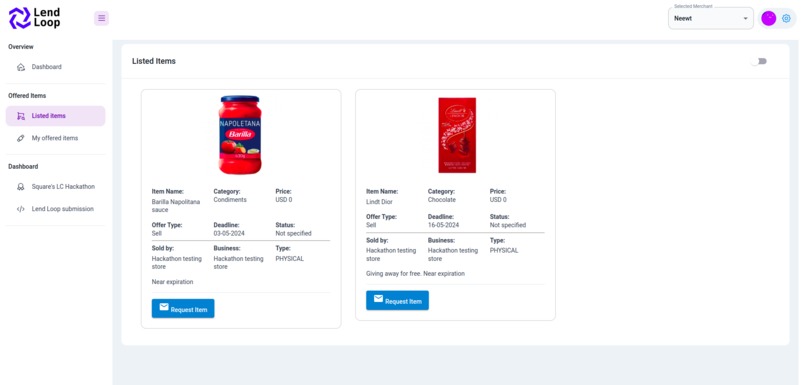
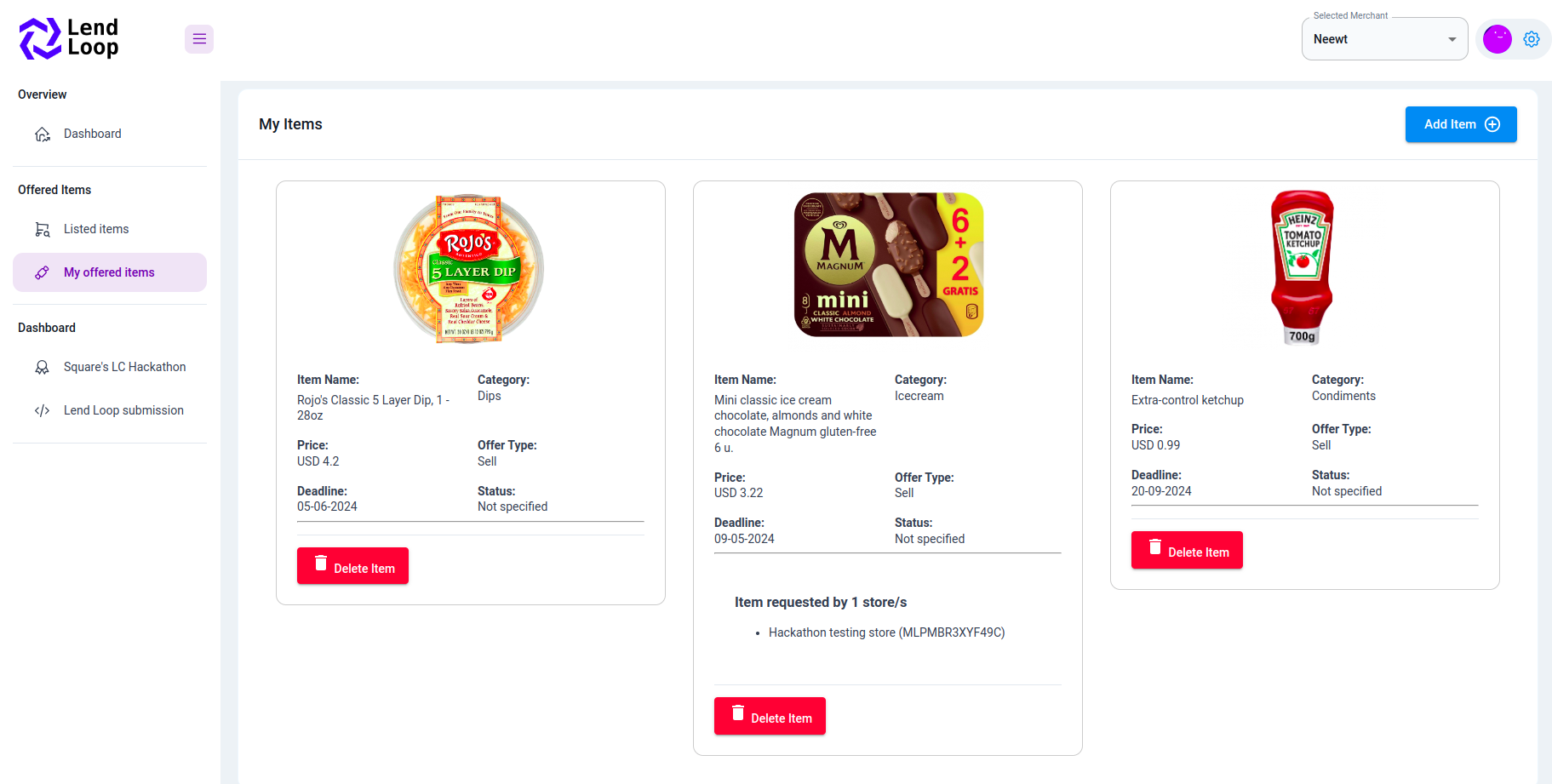
Offer items to your local community
-
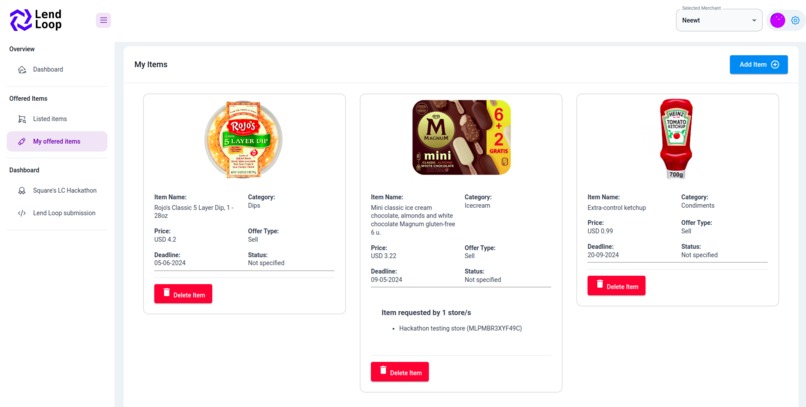
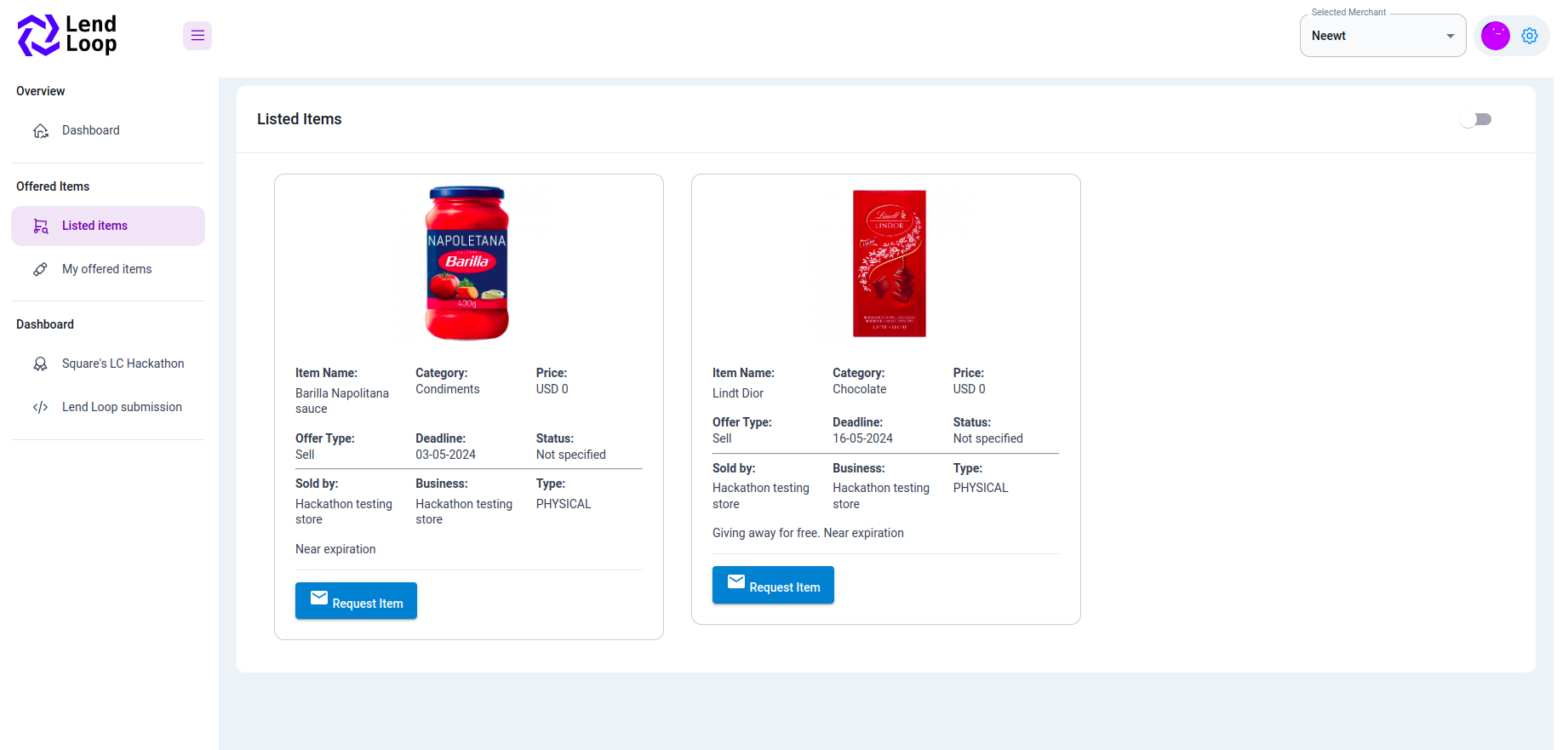
Find offered items near you, request them through Local Loop
✨ Inspiration
Local Loop was inspired by the need for community-driven collaboration among local businesses. I recognized that many businesses have surplus inventory or resources that often go unused, while others face shortages and have to incur additional costs to acquire new items. By creating a platform that allows businesses to share resources, the app aims to foster a sense of community, reduce waste, and promote economic efficiency.
🛠️ What it does
Local Loop is an online platform that connects local businesses to share surplus inventory, equipment, or resources. It allows businesses to list items they are willing to share or lend and enables other businesses to search, browse, and request these items. This network encourages collaboration and helps businesses access the resources they need without extra costs.
The app allows vendors to publish products for a price, for free, or as a loan. It also support categories, descriptions, images, as well as allowing users to indicate the expiration date for the cases where this is relevant. For all actions in Local Loop, users can select the store they want to operate (in case they have more than one), which is used to determine the offered item's locations and contact points.
💻 How I built it
I built the platform using Square's Merchants API for data sharing. The core of the backend is written in Golang, while the frontend is entirely in React using Material UI. This allowed us to create an integrated system where businesses could list their surplus inventory, set terms for sharing, and manage borrowing requests. Local Loop also used OAuth for secure authentication and authorization, ensuring that businesses could connect to the platform safely. The platform's interface was designed to be user-friendly, with advanced search filters to help businesses find the items they need quickly.
The application currently counts with 2 isolated deployments: while the static site is highly available, the back-end is booted on premise (due to infrastructure costs). After the initial redirect from Square's OAuth, the app might take up to a minute to boot. This waiting time is only at the start of the session.
⛰️ Challenges we ran into
One of the primary challenges was ensuring data security and privacy. As businesses share sensitive inventory information, I needed to implement robust security measures to protect this data. Additionally, integrating the Square APIs required careful handling to ensure seamless communication between different components of the platform. I also faced challenges in creating a user-friendly interface that would be easy to navigate for businesses of varying technical skill levels.
🏆 Accomplishments that I'm proud of
I'm proud of creating a platform that fosters collaboration and reduces waste within the local business community. Our team successfully integrated Square's Merchants API to manage inventory and implemented secure OAuth authentication. Designing an intuitive user interface allows businesses to list and request inventory with ease. The positive feedback from early users indicates that our platform has the potential to make a significant impact.
📚 What I learned
I gained valuable experience in API integration and data security, which helped us create a robust and reliable platform. Additionally, I learned that effective time management is crucial for overcoming challenges and achieving project goals.
➡️ What's next for Local Loop
Our next steps involve expanding the platform to include more businesses and regions, allowing for a broader network of resource-sharing. I plan to enhance the search and browsing functionality to improve user experience and introduce additional features such as inventory analytics to help businesses optimize their resources. I also aim to establish partnerships with local business associations to promote the platform and encourage more businesses to join the network.

Log in or sign up for Devpost to join the conversation.