-
-
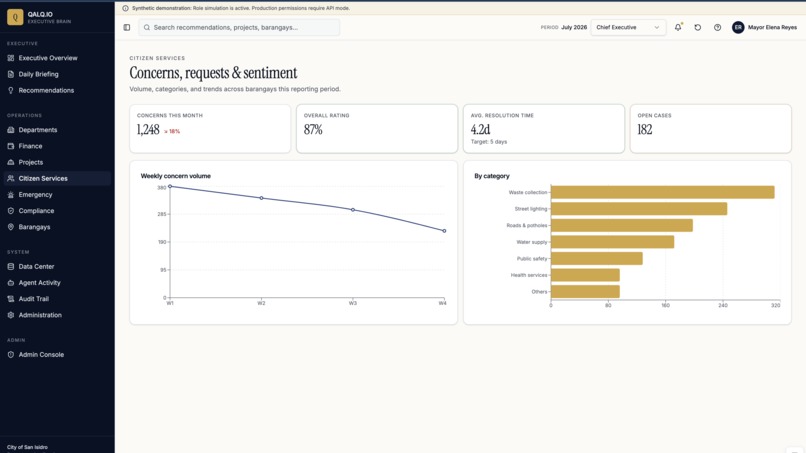
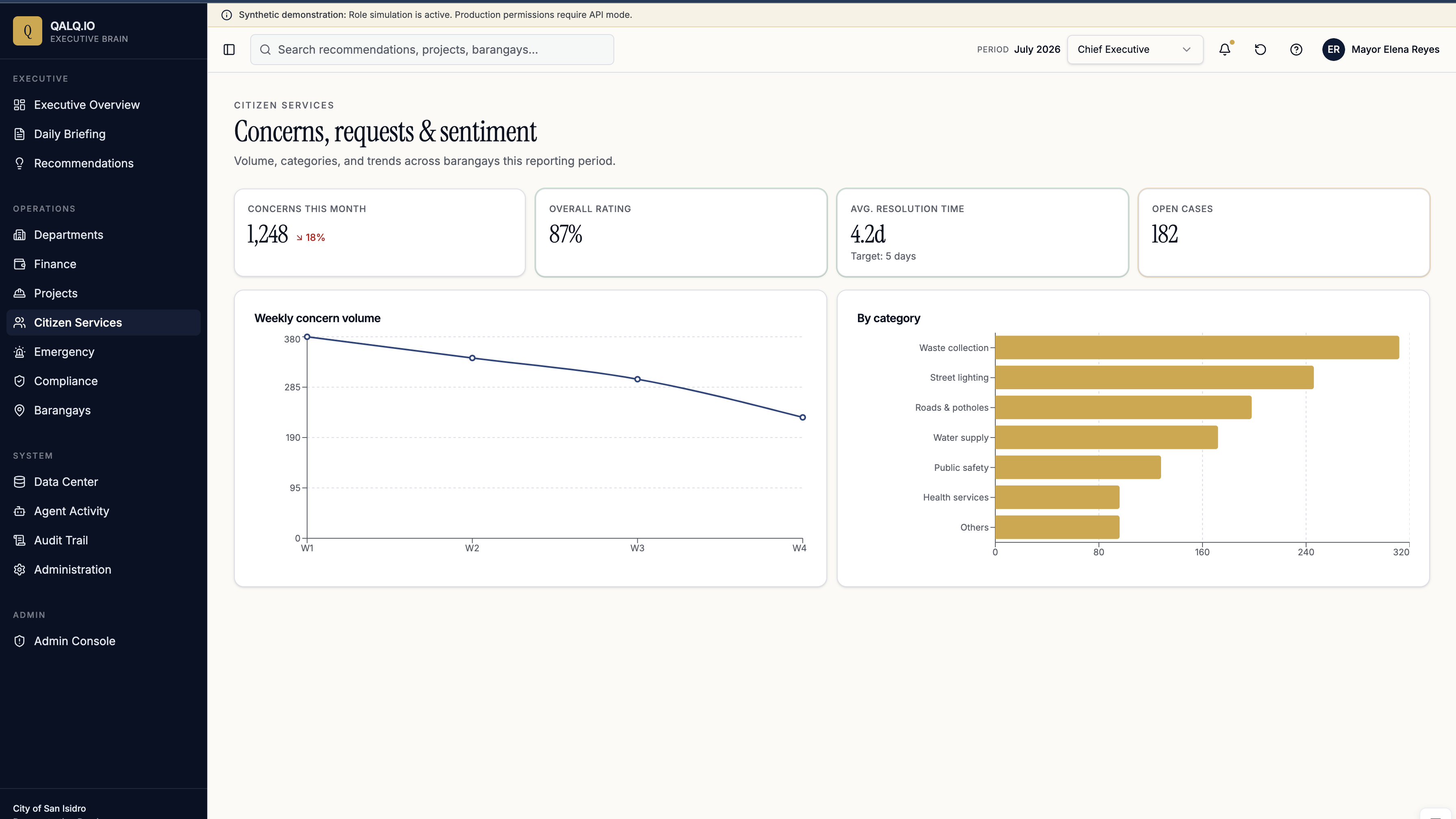
Citizen Services
-
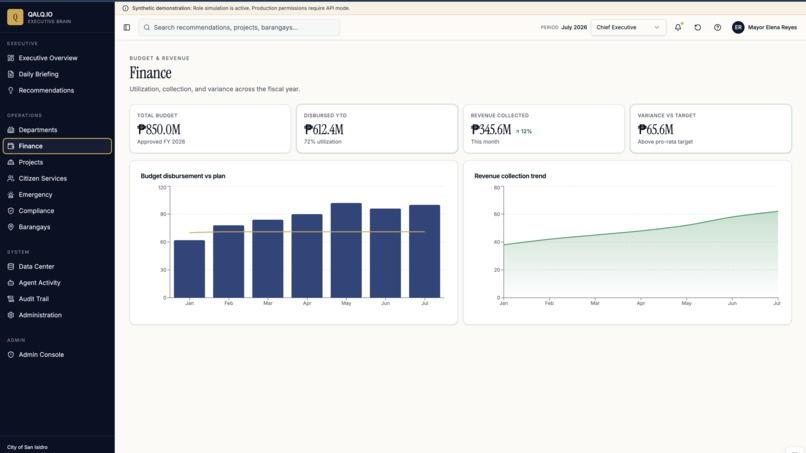
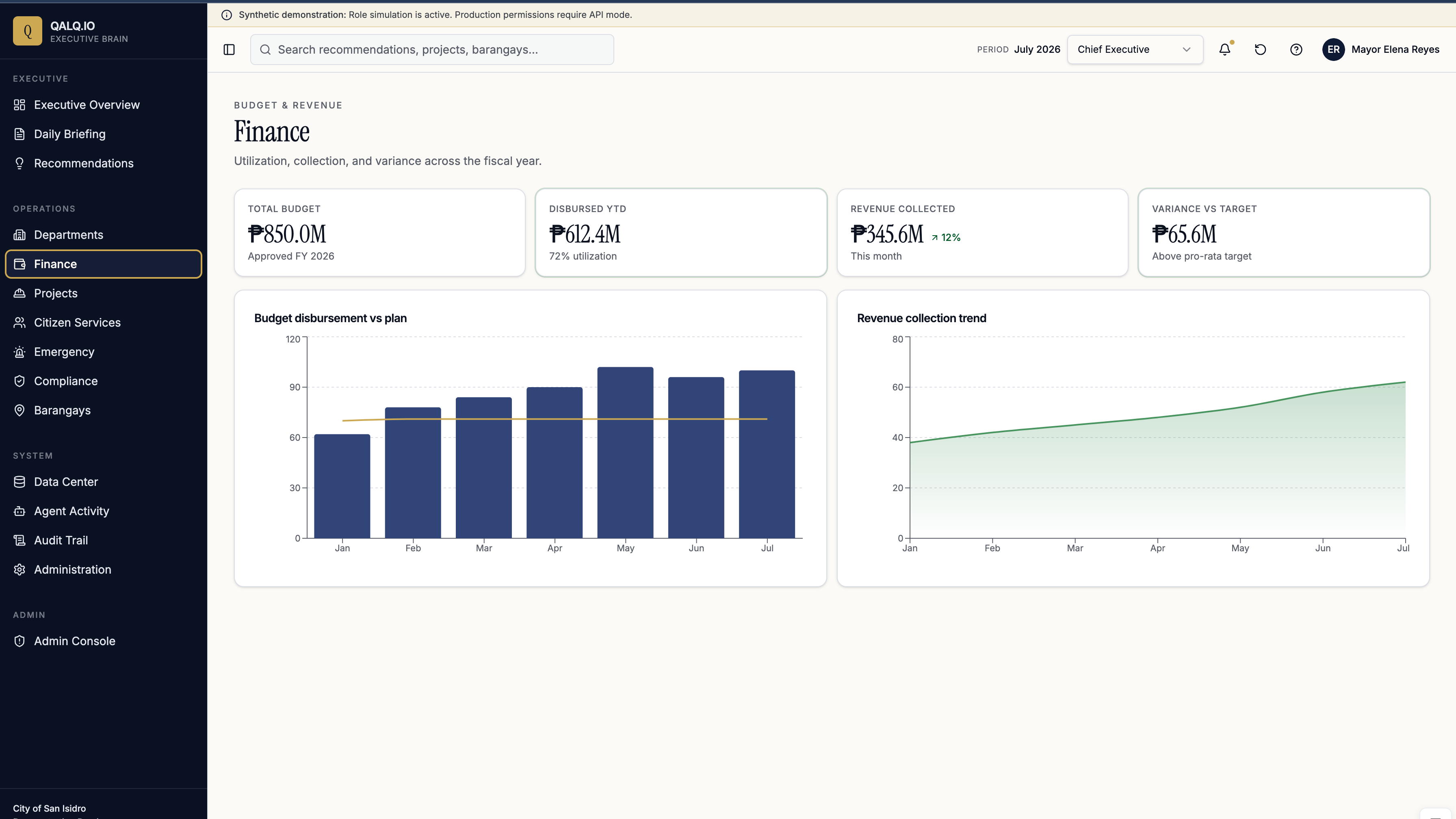
Finance
-
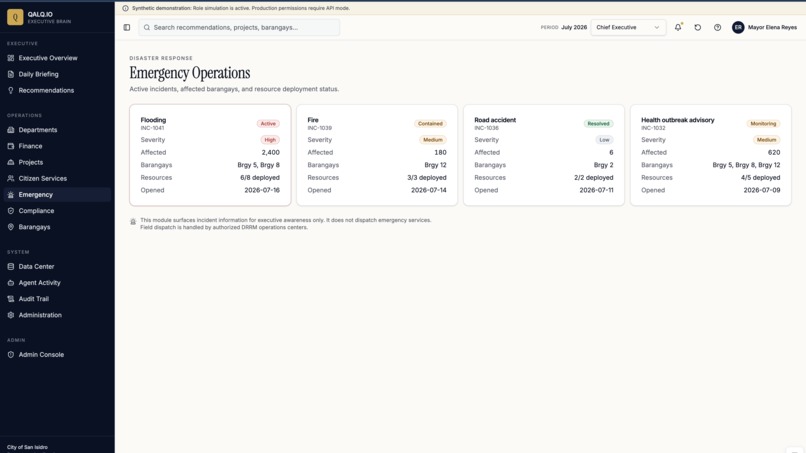
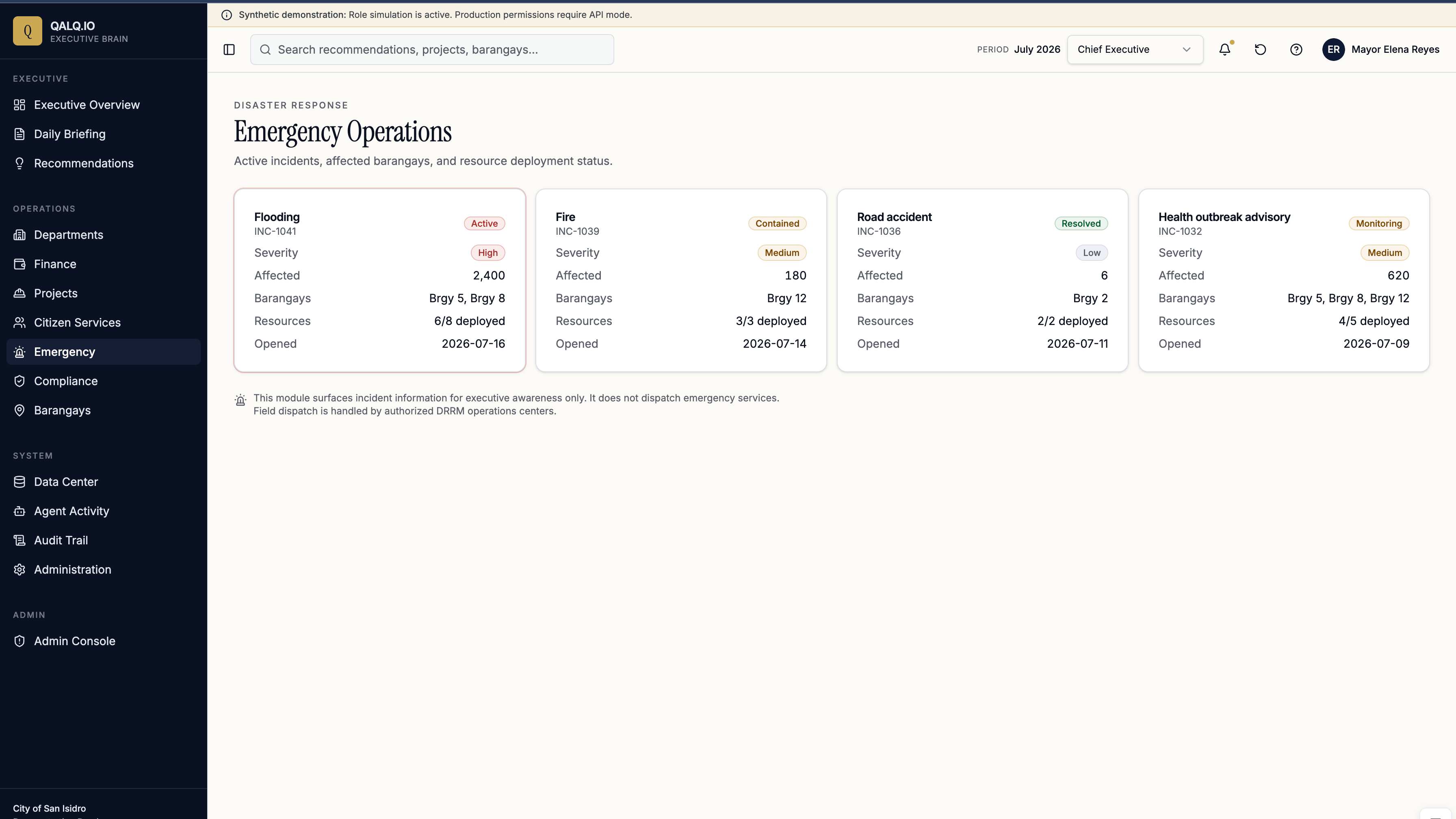
Emergencies
-
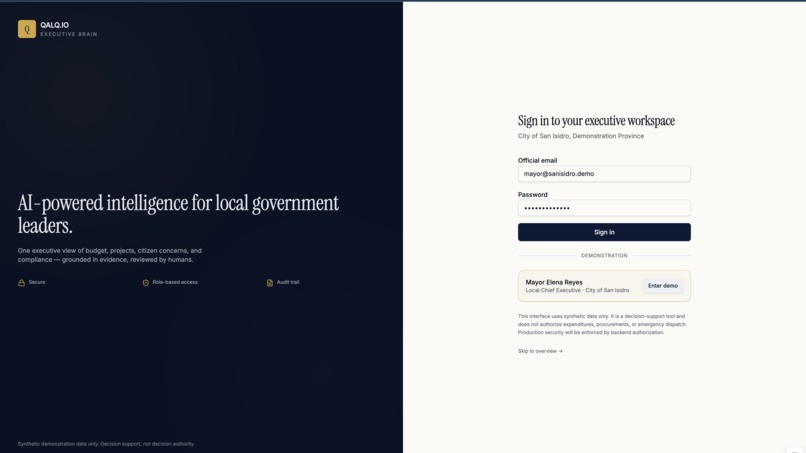
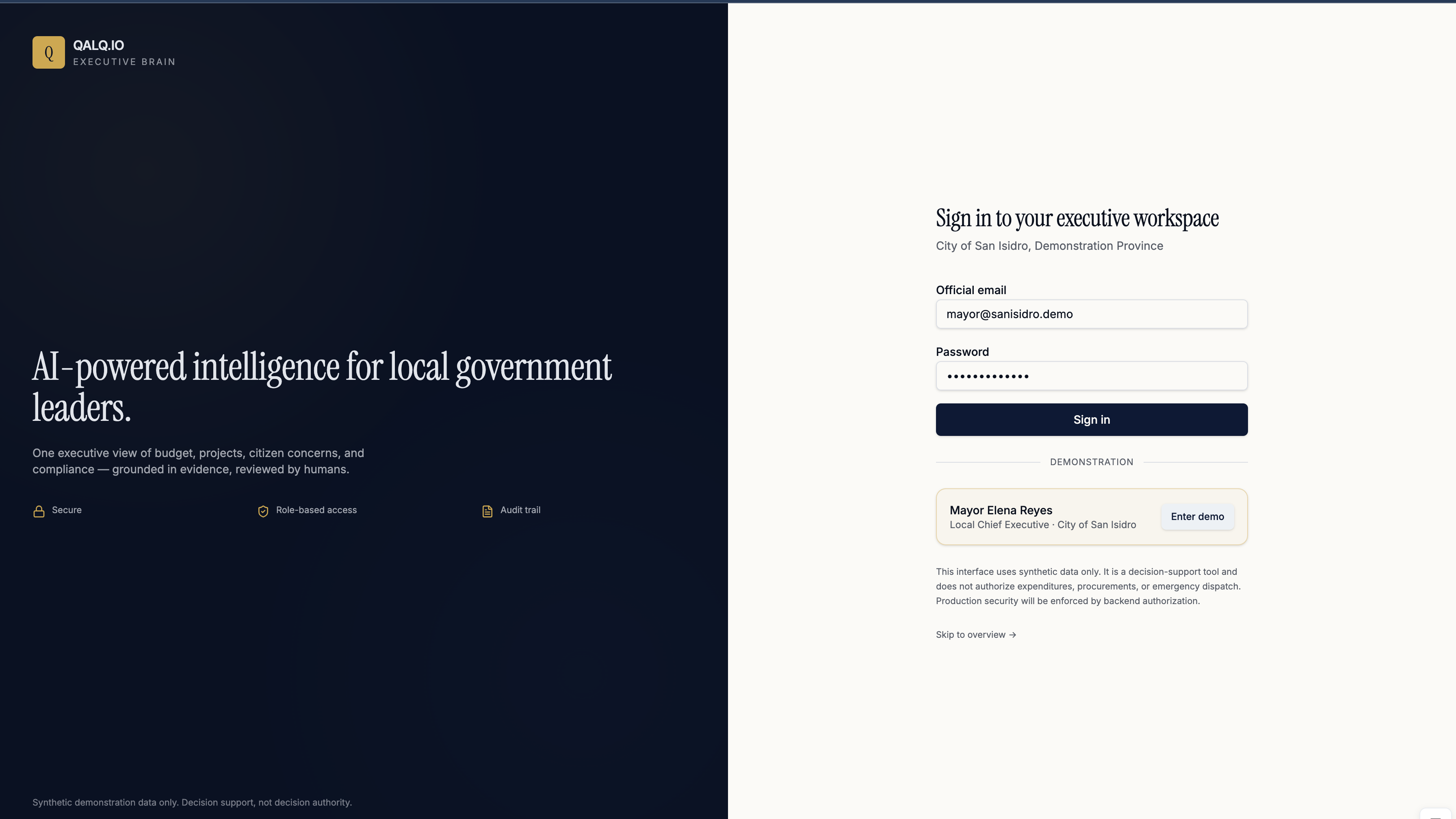
Home/Signon
-
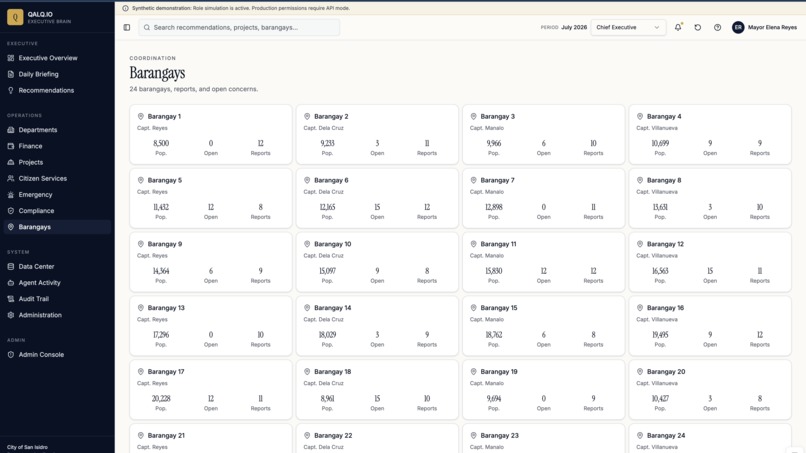
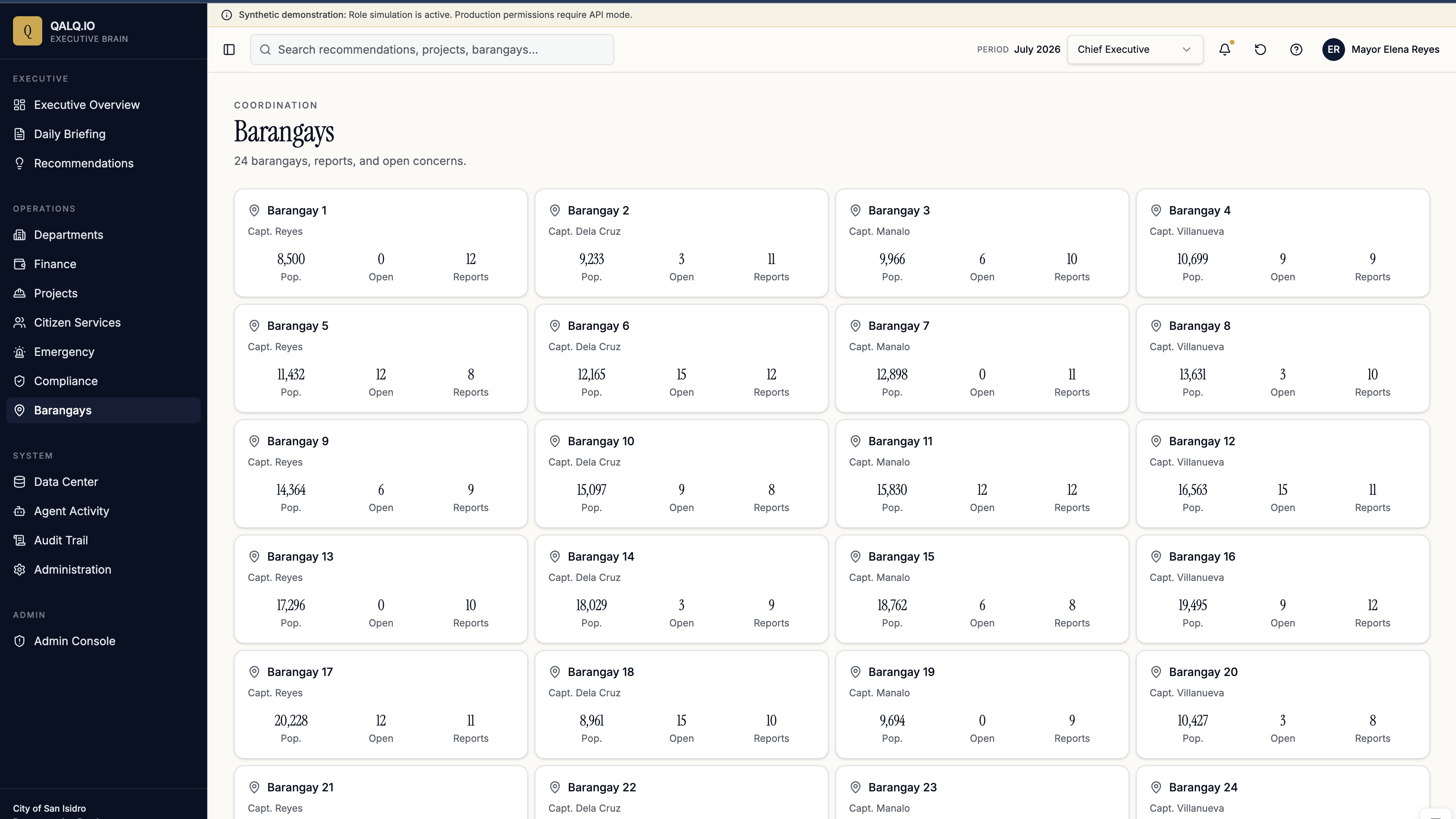
Barangays
-
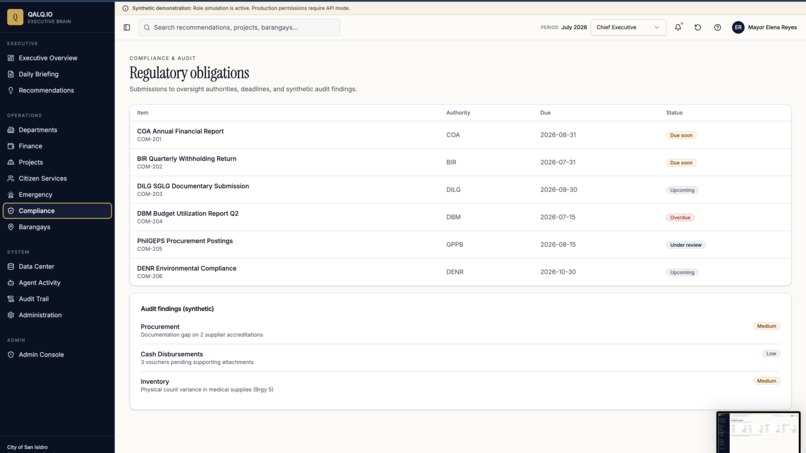
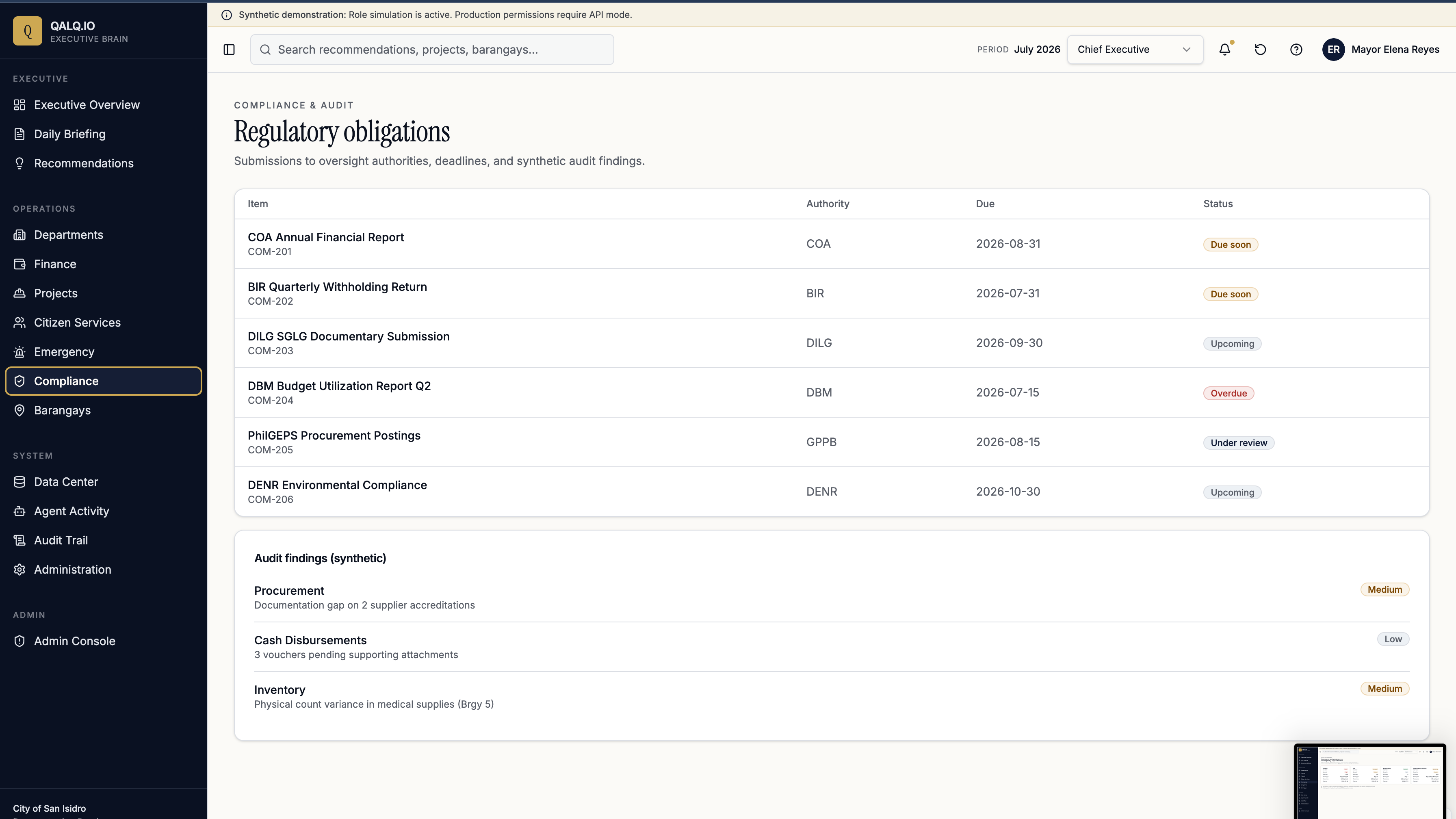
Compliance
-
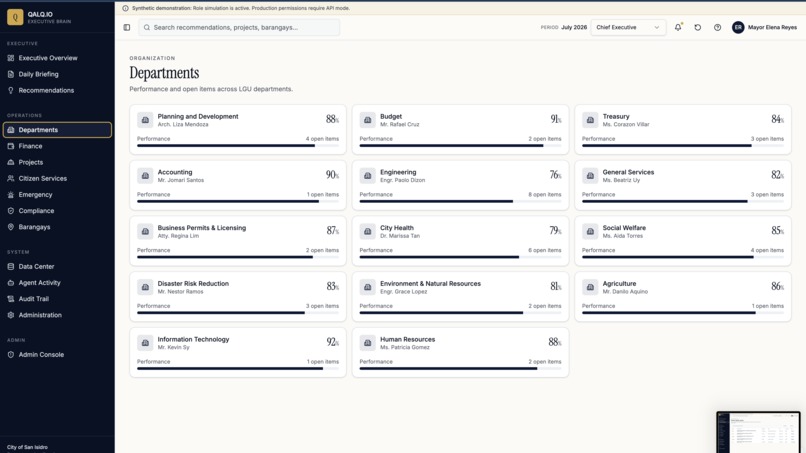
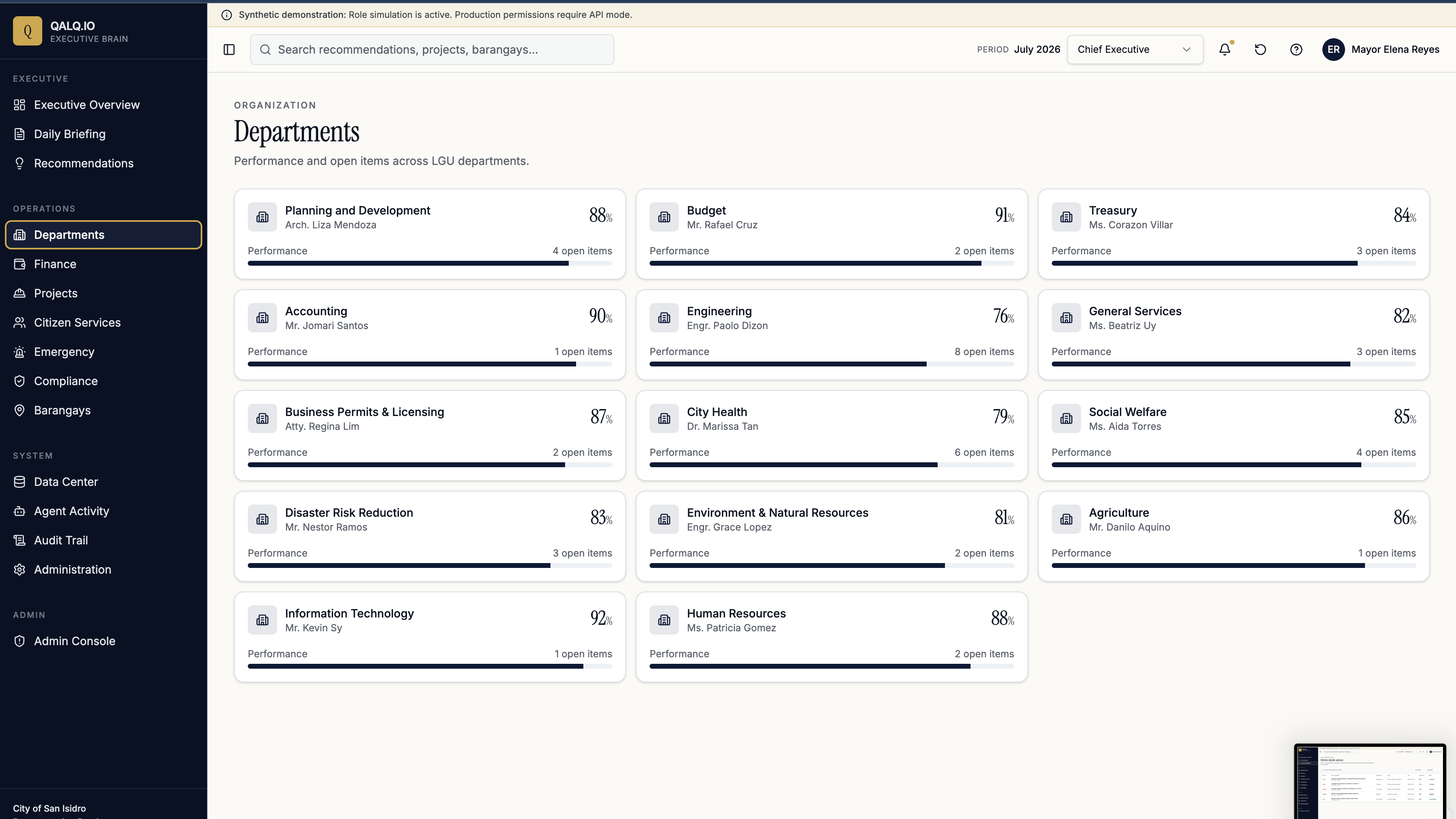
Departments
-
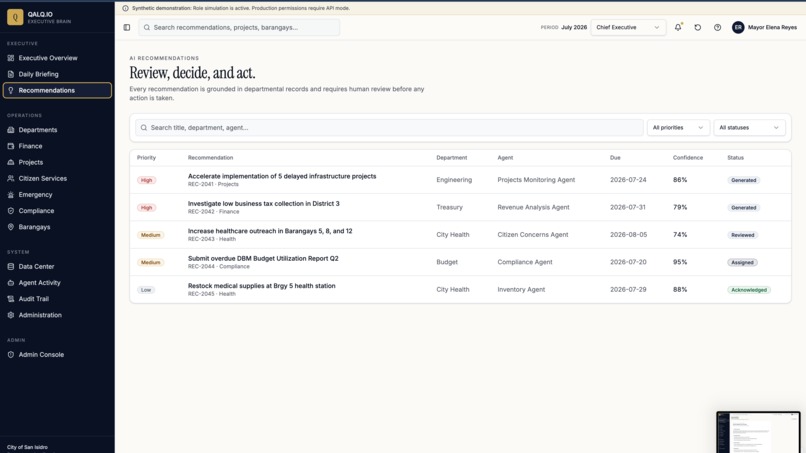
-
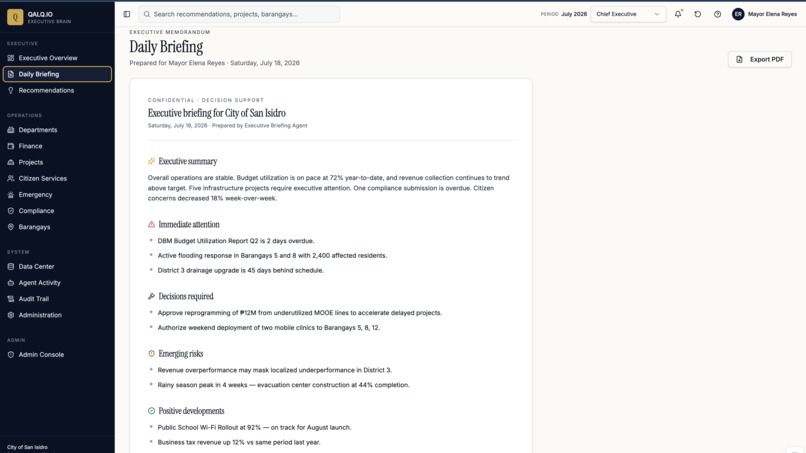
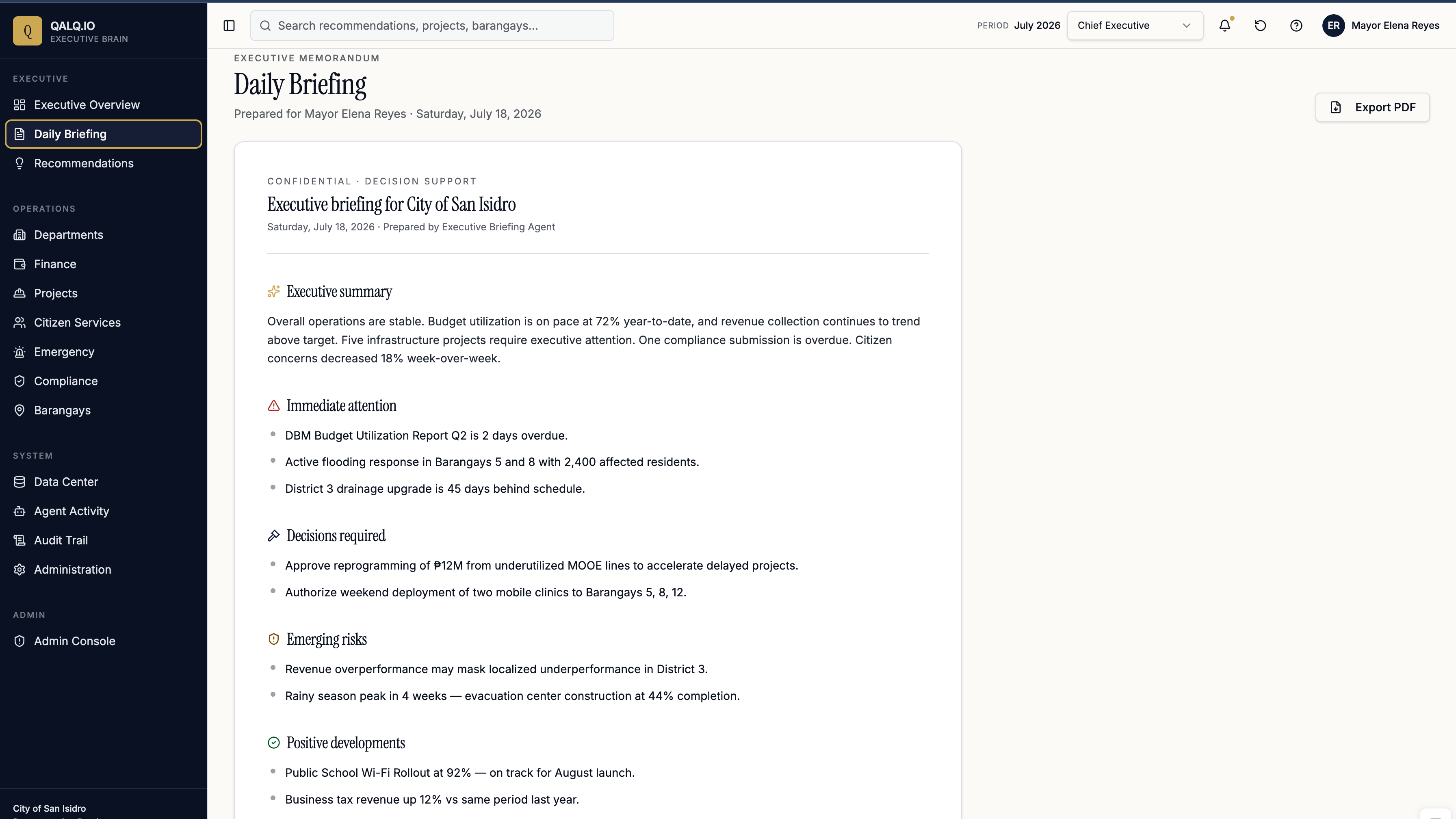
Daily Briefing
-
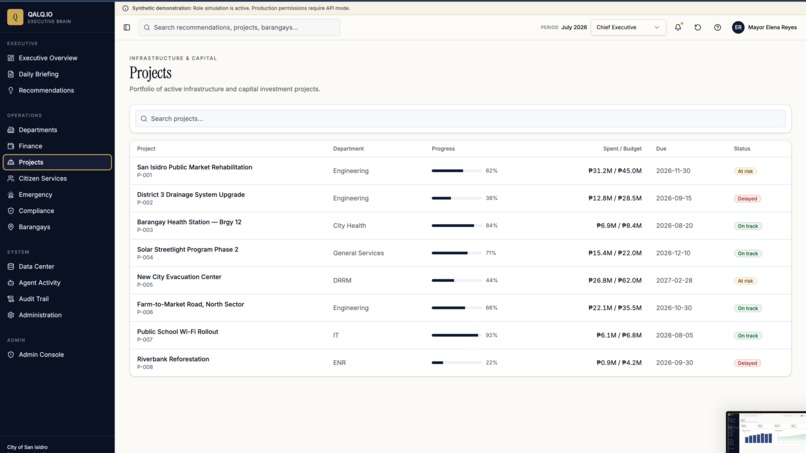
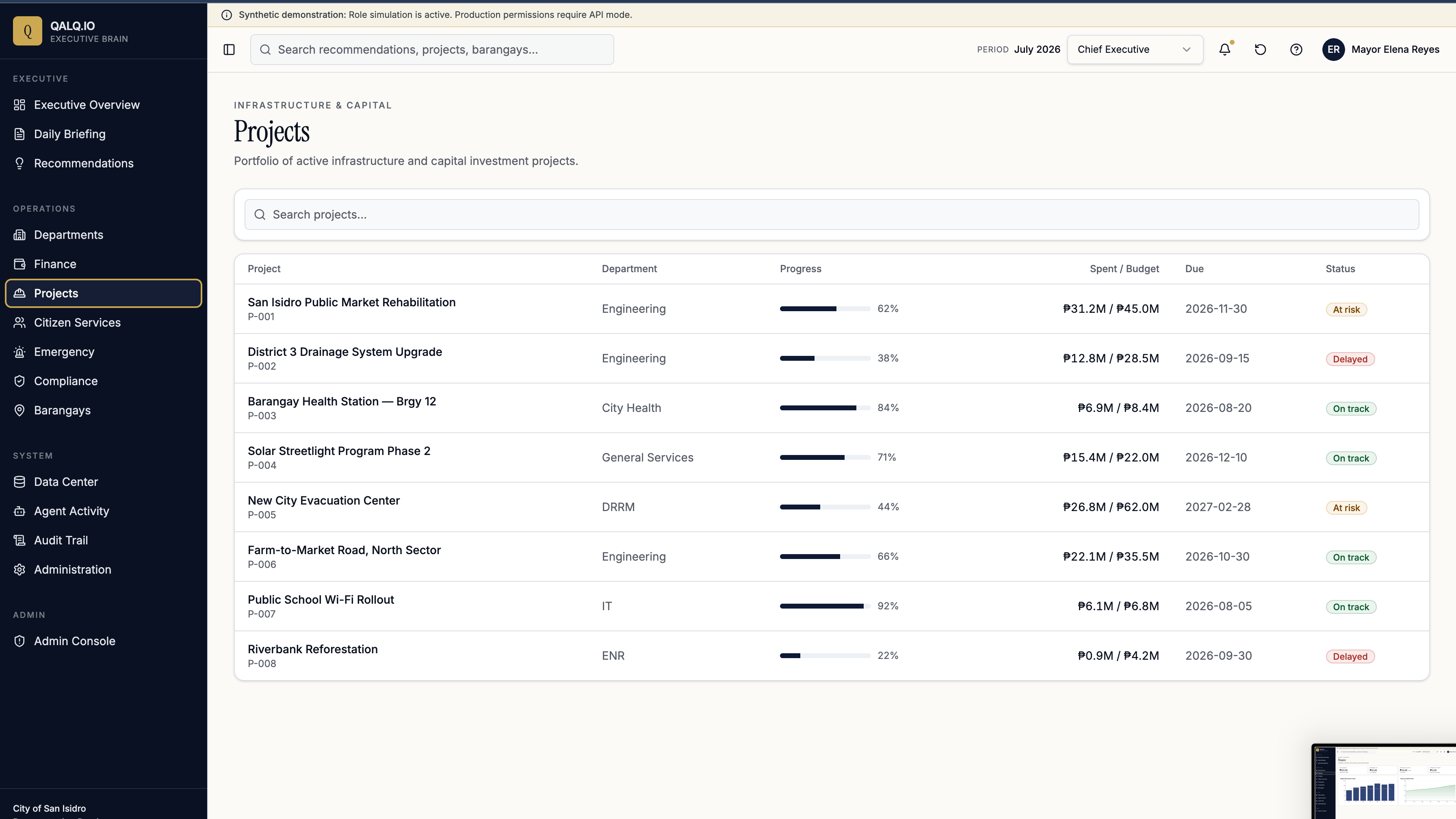
Projects
-
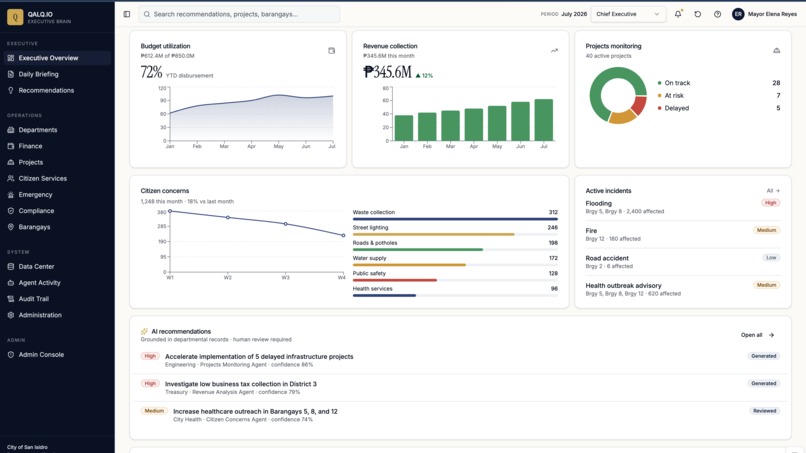
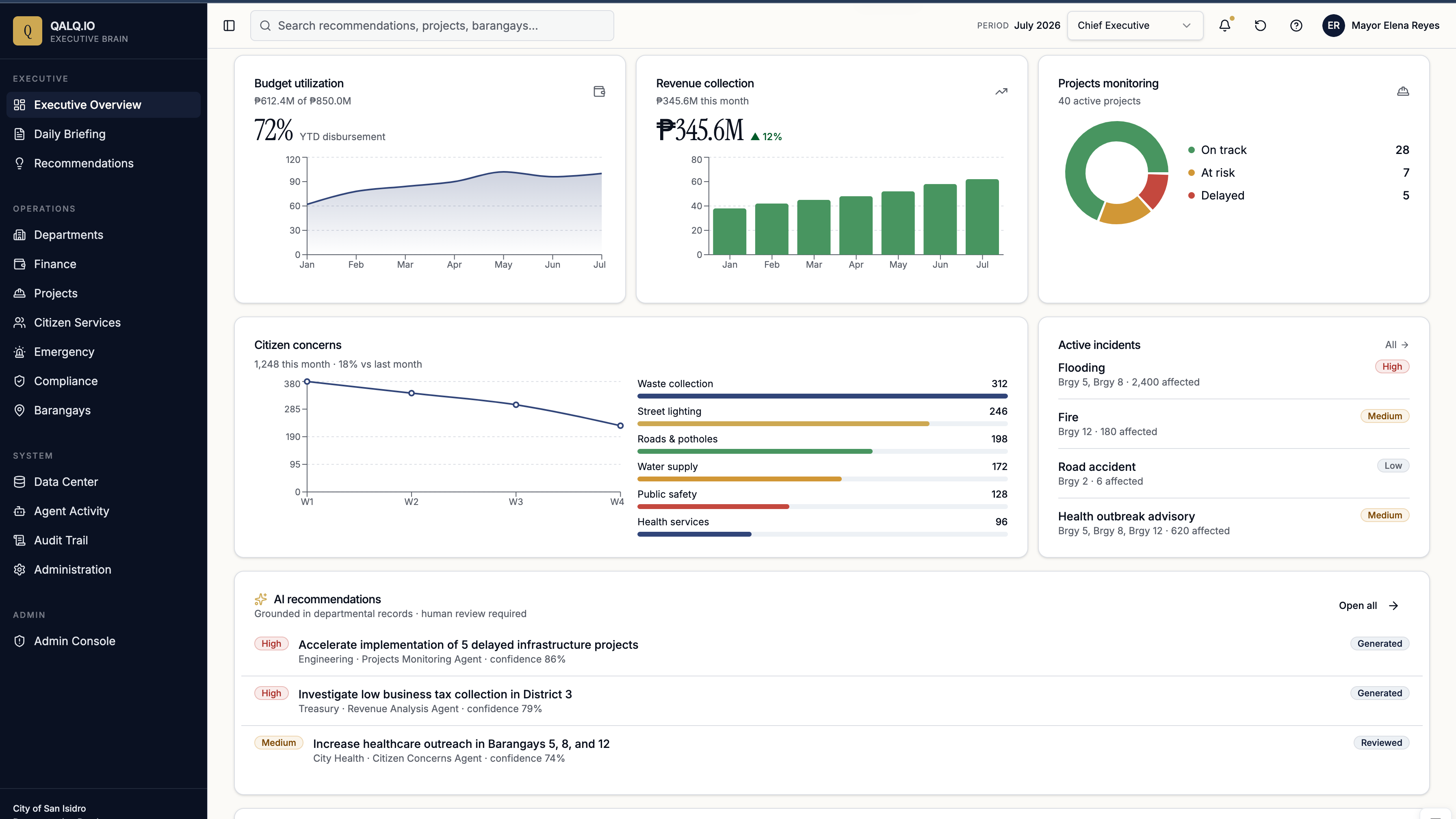
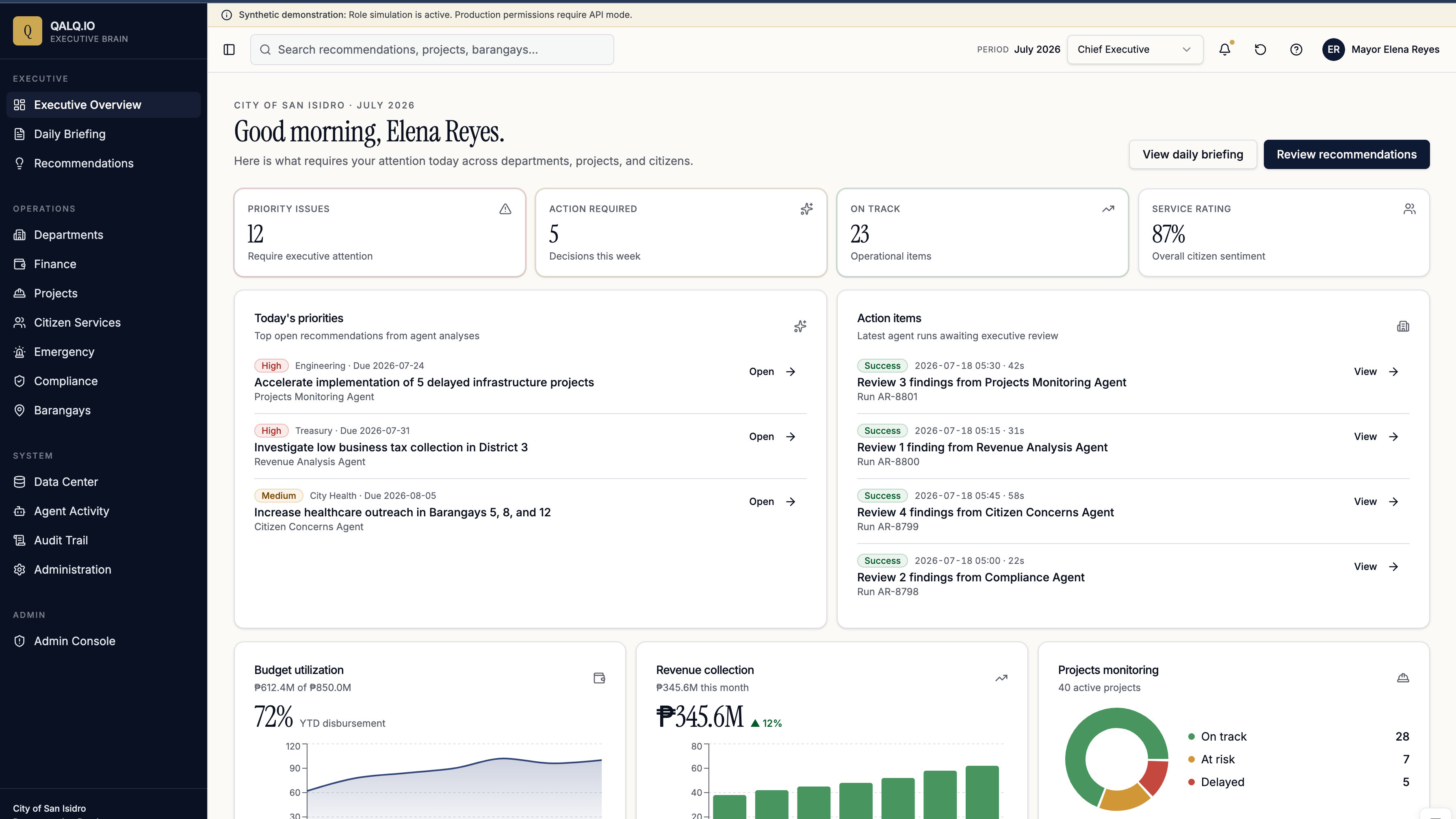
Command Dashboard 2
-
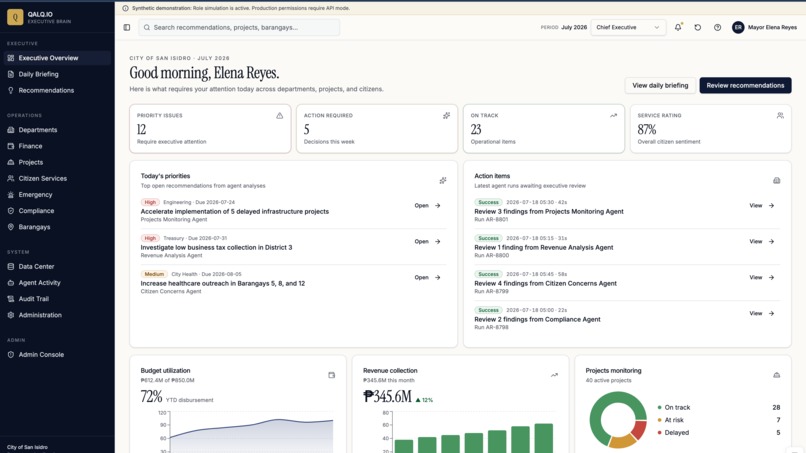
Command Dashboard 1
-
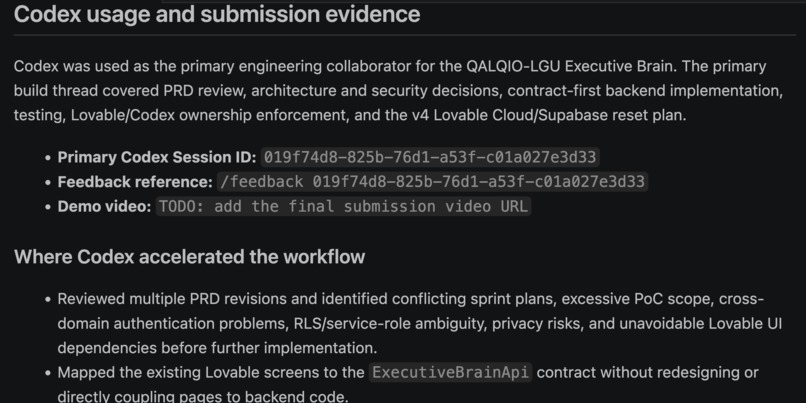
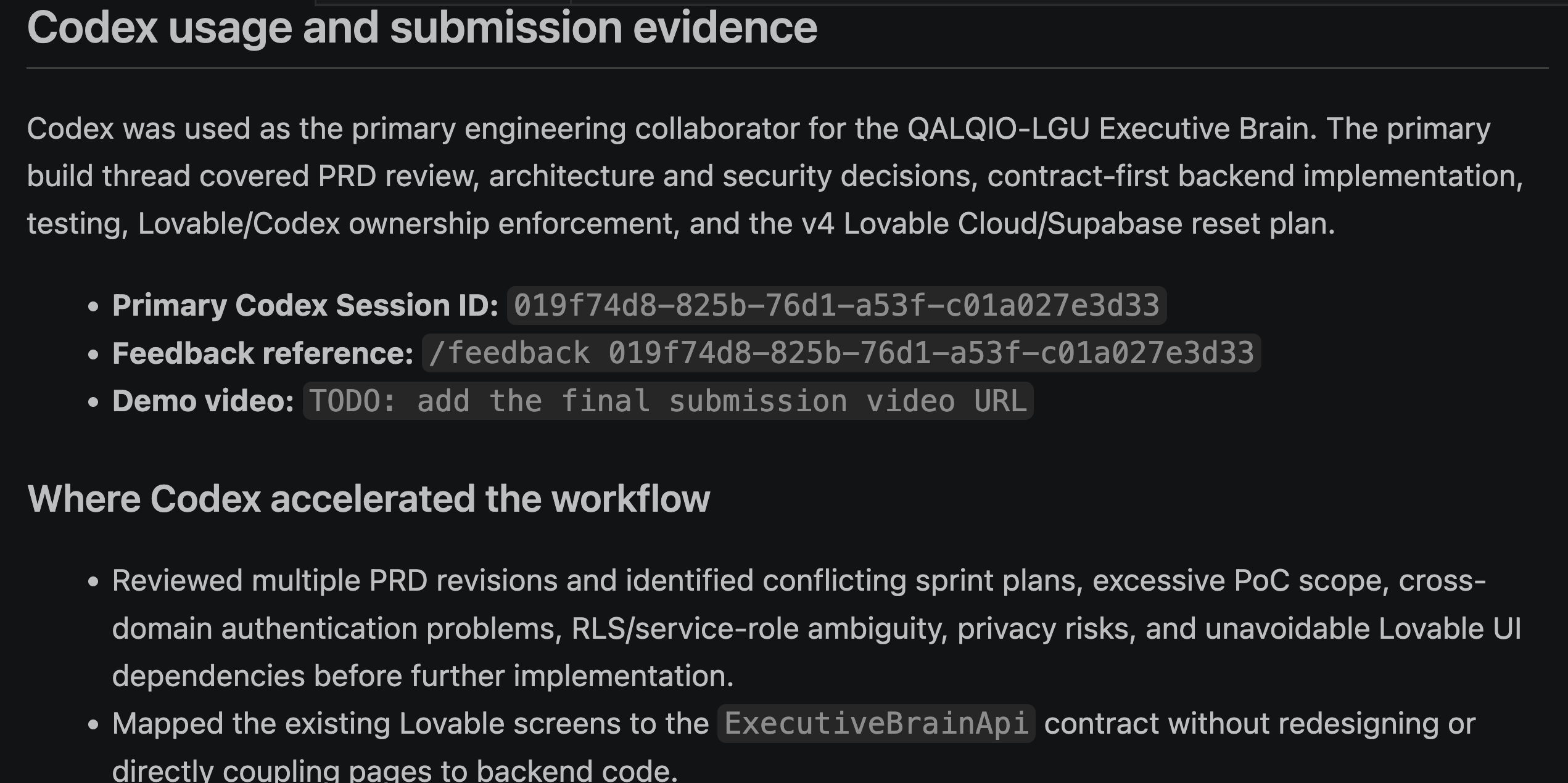
Our Codex declaration
About the Project
Inspiration
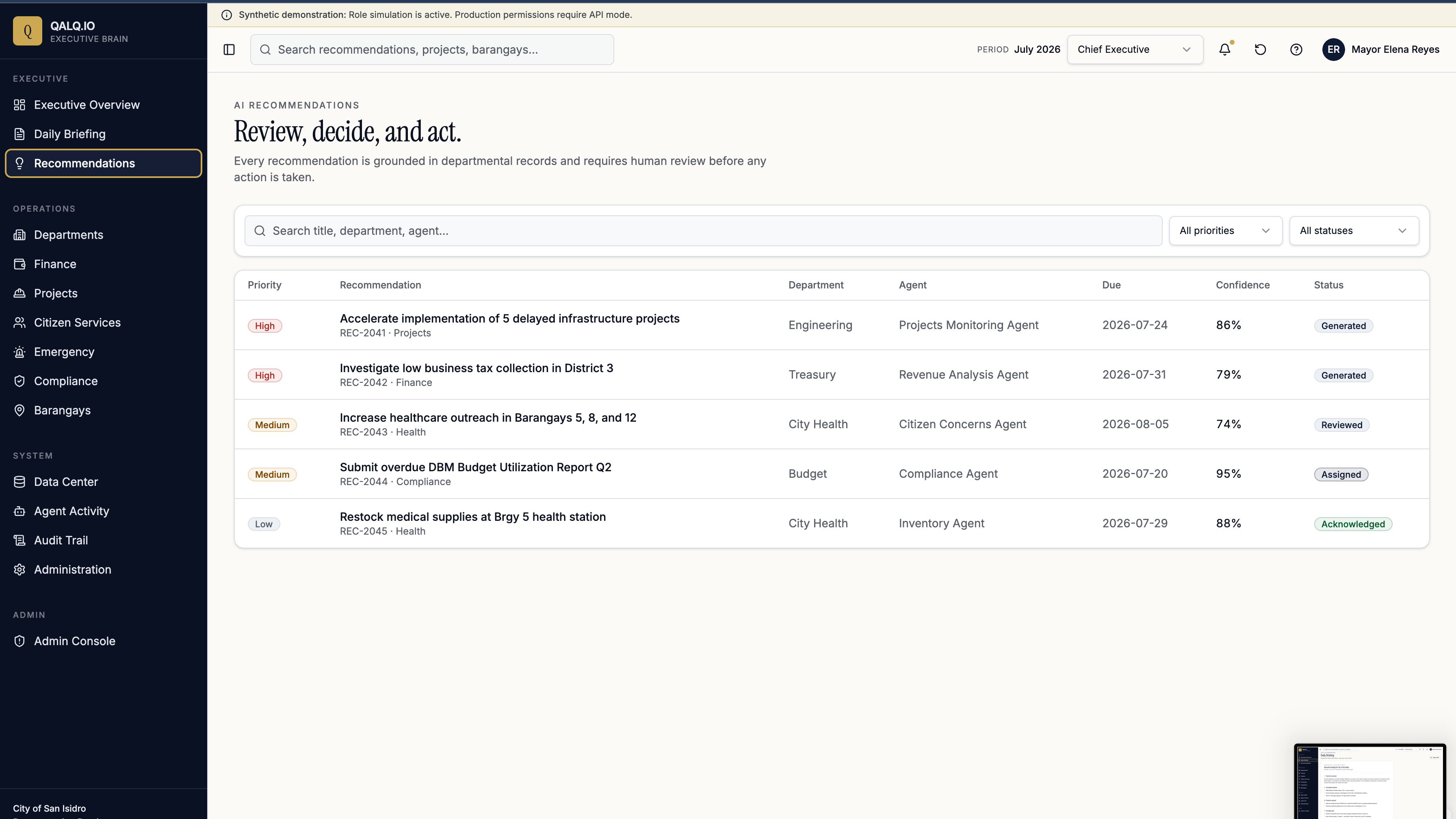
Government leaders are expected to make timely, high-impact decisions while dealing with fragmented information spread across dozens of offices, departments, and reporting systems.
The inspiration for this project came from a simple question:
What if every Local Government Unit (LGU) Chief Executive had an Executive Brain—an AI-powered intelligence platform that continuously understands the entire organization and provides actionable insights instead of static reports?
Having previously envisioned a similar executive intelligence platform for enterprises, it became clear that the same concept could significantly improve public governance. Local governments manage budgets, infrastructure, disaster response, health services, business permits, citizen concerns, and regulatory compliance—all of which generate valuable data that is rarely connected into a single decision-making environment.
What I Learned
Building this concept reinforced several important ideas:
- AI delivers the greatest value when it augments executive decision-making rather than replacing it.
- Multi-agent architectures naturally model the organizational structure of governments, where each department specializes in a different domain.
- High-quality governance depends as much on trustworthy, explainable recommendations as it does on predictive analytics.
- Security, privacy, auditability, and human accountability must be foundational—not afterthoughts—for any public-sector AI system.
Perhaps the biggest lesson was that an AI platform should not merely answer questions. It should proactively identify emerging risks, surface opportunities, and coordinate information across departments before leaders even ask.
How I Built the Project
The platform is designed around an Agentic AI architecture, where specialized AI agents continuously analyze different aspects of local government operations.
Examples include:
- Executive Briefing Agent
- Budget & Revenue Agent
- Infrastructure & Project Monitoring Agent
- Citizen Services Agent
- Disaster Risk & Emergency Response Agent
- Compliance & Governance Agent
- Barangay Coordination Agent
Each agent contributes domain-specific intelligence into a central Executive Brain that produces concise executive briefings, identifies anomalies, prioritizes issues, and recommends actions.
Rather than replacing existing LGU systems, the platform acts as an intelligence layer that integrates information from finance, planning, engineering, health, social welfare, permits, human resources, GIS, and other operational systems into a unified executive view.
Conceptually, the Executive Brain combines specialized agent intelligence, cross-agent reasoning, and human validation:
Executive Intelligence =
  Sum of Domain Agent Intelligence
  + Cross-Agent Reasoning
  + Human Validation
Where:
- Number of agents is the number of specialized AI agents participating in the analysis.
- Domain Agent Intelligence is the intelligence produced by each department-specific agent.
- Cross-Agent Reasoning synthesizes information across departments.
- Human Validation ensures all final decisions remain under executive authority.
The Executive Brain continuously evaluates organizational health through a weighted operational score:
Executive Score =
  Sum of (KPI Importance × KPI Result)
  - Sum of (Risk Penalty × Operational Risk)
Where:
- KPI Result represents a strategic performance indicator.
- KPI Importance is the weight assigned to each KPI.
- Operational Risk represents an identified organizational risk.
- Risk Penalty is the corresponding penalty assigned to that risk.
This allows the AI to prioritize recommendations based on both organizational performance and emerging threats.
Challenges
The primary challenge was designing an architecture that remains both powerful and practical for government use.
Key considerations included:
- Integrating heterogeneous government information systems.
- Ensuring cybersecurity and data privacy.
- Maintaining complete audit trails for every AI-generated recommendation.
- Preventing hallucinations by grounding outputs in verified operational data.
- Building explainable AI that public officials can trust.
- Supporting LGUs with varying levels of digital maturity.
Another significant challenge was balancing automation with accountability. Every recommendation generated by the Executive Brain is intended to support—not replace—the judgment and legal authority of elected officials and department heads.
Looking Ahead
The vision is to evolve this into a comprehensive AI Operating System for Local Governments that enables evidence-based governance, faster interdepartmental coordination, proactive public service delivery, and improved transparency.
Future enhancements include:
- Predictive budgeting
- Disaster forecasting
- Digital twin simulations of city operations
- Autonomous policy impact analysis
- Citizen sentiment intelligence
- AI-assisted legislative drafting
- Provincial and national inter-LGU intelligence sharing
Ultimately, the goal is simple:
Give every LGU Chief Executive a trusted AI Executive Brain that transforms fragmented data into intelligent governance, faster decisions, and stronger communities.
Built With
- agentic-ai
- artificial-intelligence
- cloud
- cybersecurity
- data-visualization
- decision-support
- digital-government
- enterprise-ai
- executive-dashboard
- government-tech
- gpt-5
- knowledge-graph
- large-language-models
- local-government
- multi-agent-systems
- openai
- predictive-analytics
- public-sector
- react
- retrieval-augmented-generation
- smart-city
- tailwindcss
- typescript
- vite
- workflow-automation


Log in or sign up for Devpost to join the conversation.