Inspiration
Growing up in a neighborhood full of amazing small eateries, I noticed how hard it was to find them amid generic chain spots. I wanted to build something that celebrates local food businesses—something that feels personal, like a friend sharing their favorite spots. The goal? Make it easy to discover authentic, community-driven dining without the noise.
What it does
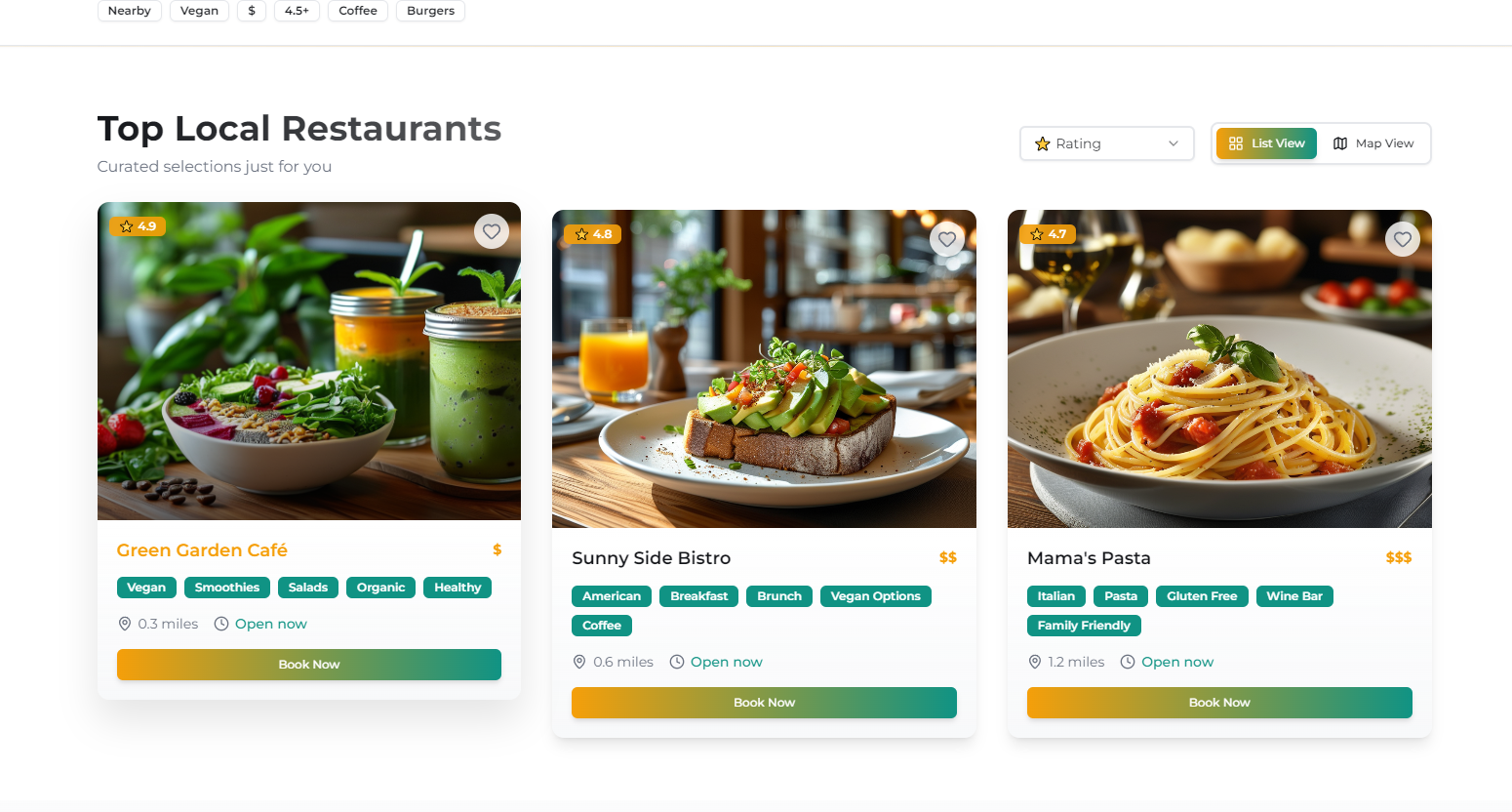
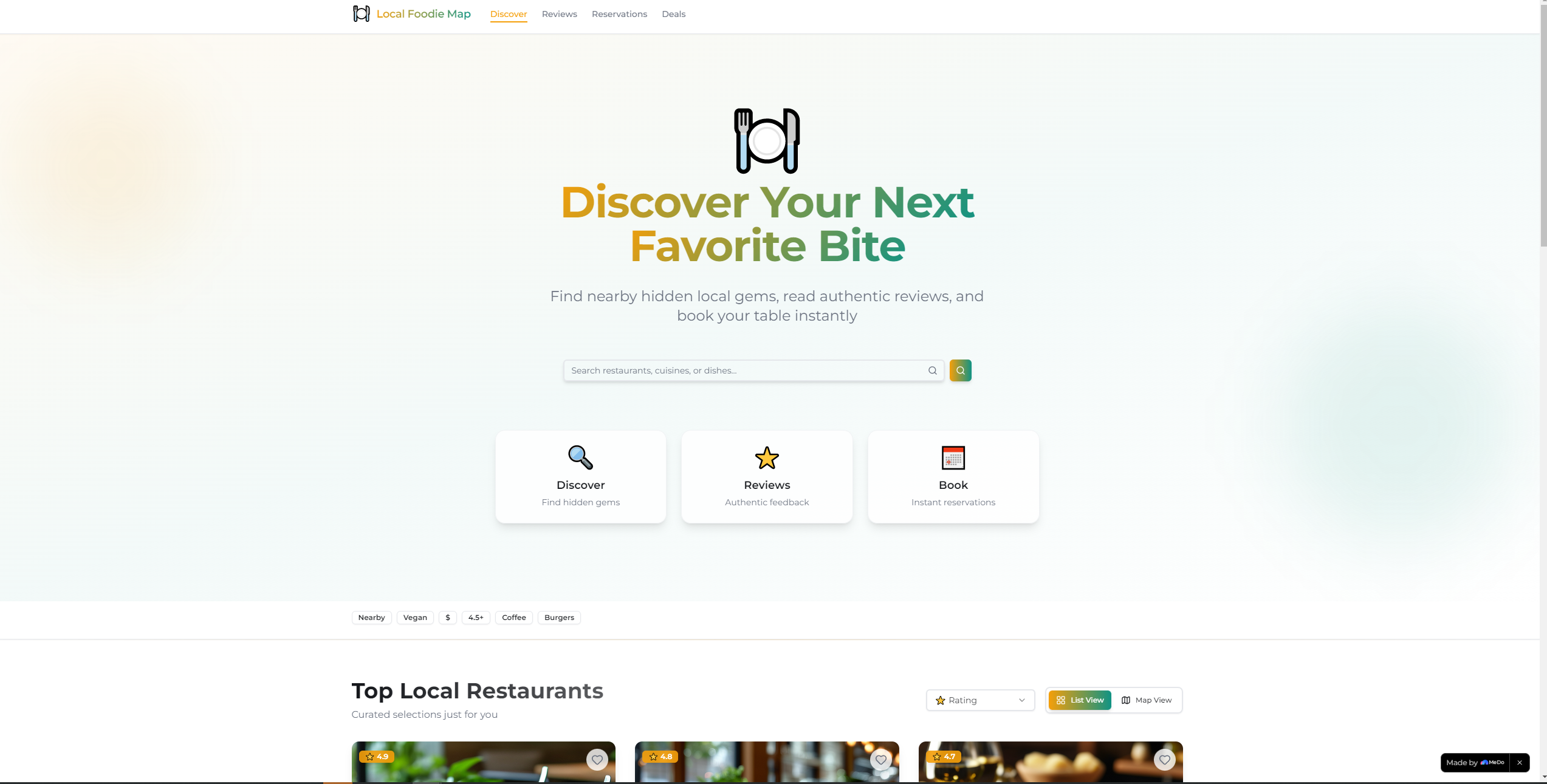
Local Foodie Map lets users explore nearby restaurants filtered by cuisine, diet, price, or rating. It features real user reviews, instant table booking (including group reservations), and a curated feed of local food deals & events. Every detail—from open status to dietary tags—keeps focus on what matters: great food and supporting local owners.
How we built it
I started with wireframing in Figma, mapping out user flows (like booking a table or filtering spots) to keep the experience intuitive. Using React and Tailwind CSS, I built a responsive interface that works seamlessly on mobile and desktop. I prioritized core features first: the discovery grid, filter logic, reservation modal, and reviews section—testing each component to ensure it felt natural, not clunky.
Challenges we ran into
The biggest hurdle was perfecting the filter logic—making sure multiple filters (e.g., vegan + $ + 4.5+ rating) worked together smoothly and updated results in real time. I also struggled with the mobile navigation: balancing visibility (sticky bottom bar) with not cluttering the screen for smaller devices. Debugging the reservation waitlist logic (showing reminders for fully booked slots) also took trial-and-error to feel helpful, not frustrating.
Accomplishments that we're proud of
We created a fully responsive design that feels polished on every device—no awkward scaling or broken layouts. The booking flow is intuitive (even for group reservations of 6+ guests), and the filter system feels seamless, not overwhelming. Most importantly, the platform centers local businesses—something that aligns with the core vision of celebrating community.
What we learned
I deepened my understanding of user-centric design: small details (like open status badges or saved restaurant icons) make a huge difference in how users interact with the app. I also learned to prioritize features—cutting "nice-to-haves" (like social sharing) to nail the core experience first. Debugging filter logic taught me to break down complex problems into small, testable parts.
What's next for this project
First, we’ll add real geolocation to let users see exact restaurant distances (no more manual inputs). We want to integrate a real map API to show pins for each spot, and build a backend to save reservations/reviews long-term. Down the line, we’ll add multi-cuisine filters, push notifications for deal alerts, and a restaurant owner portal to let small businesses update their own deals and availability. Ultimately, we want to grow it into a community hub—where locals share their favorite spots and small food businesses thrive.
Built With
- css
- figma
- html
- javascript
- react
- tailwind-css

Log in or sign up for Devpost to join the conversation.