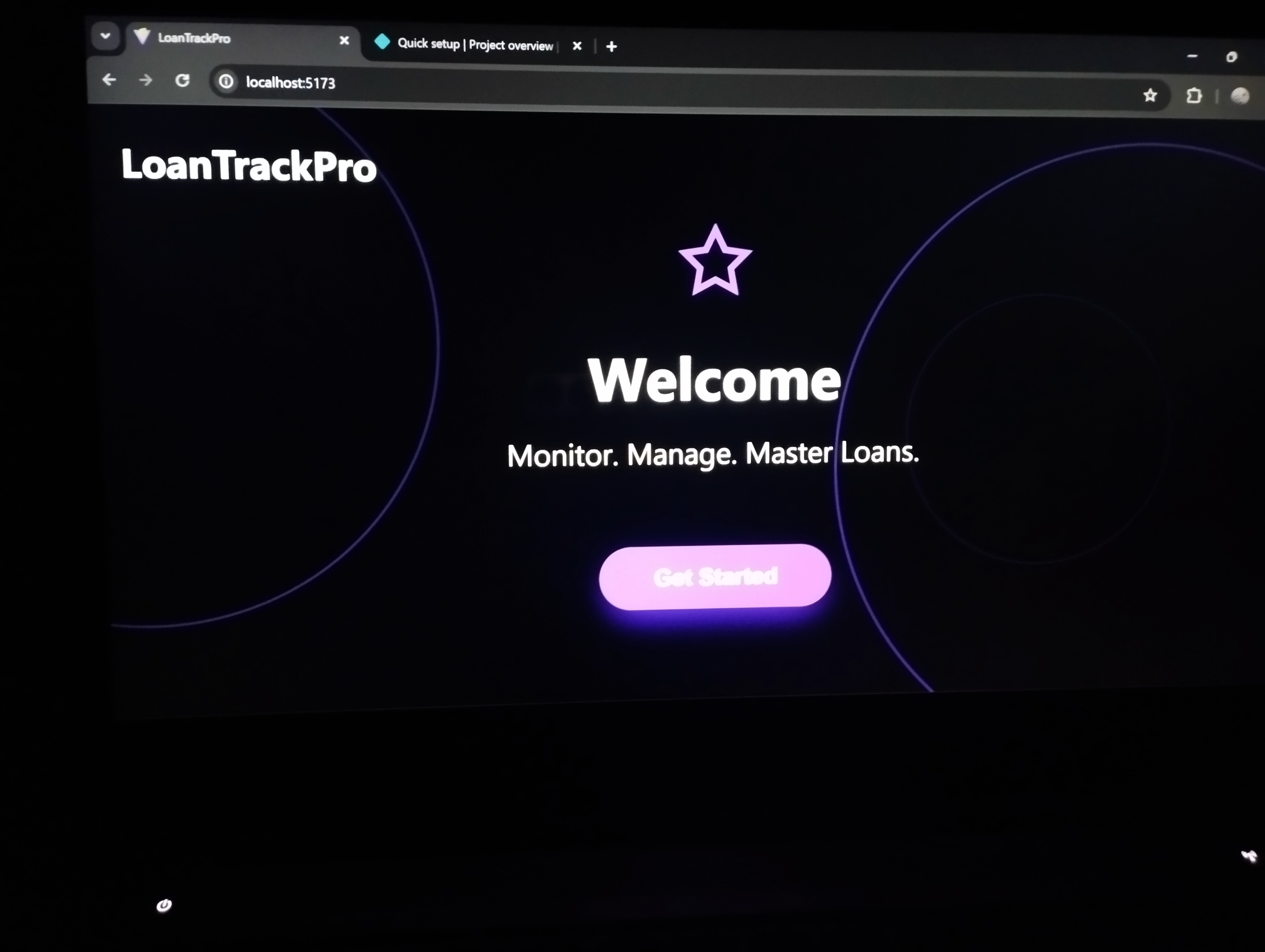
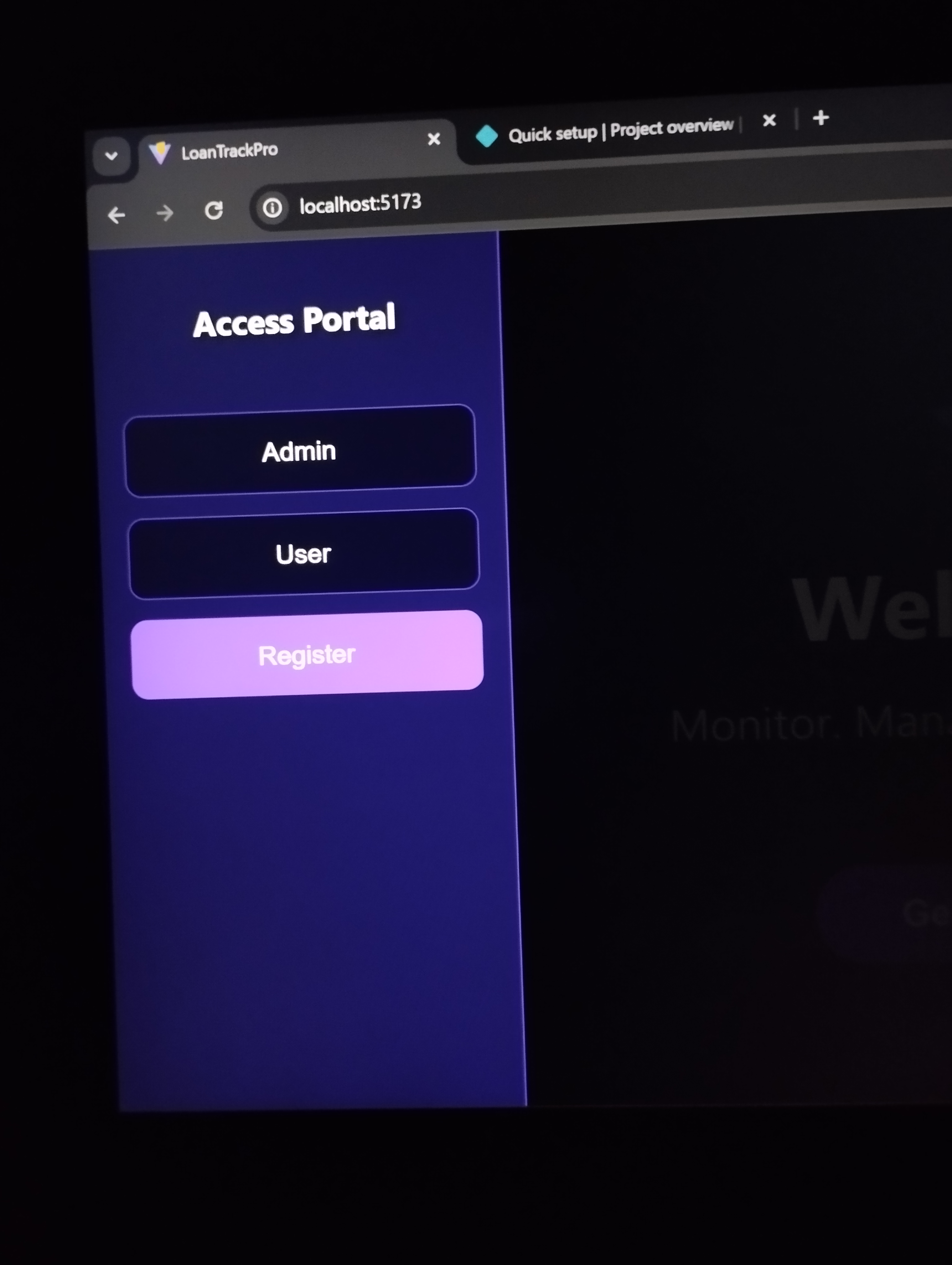
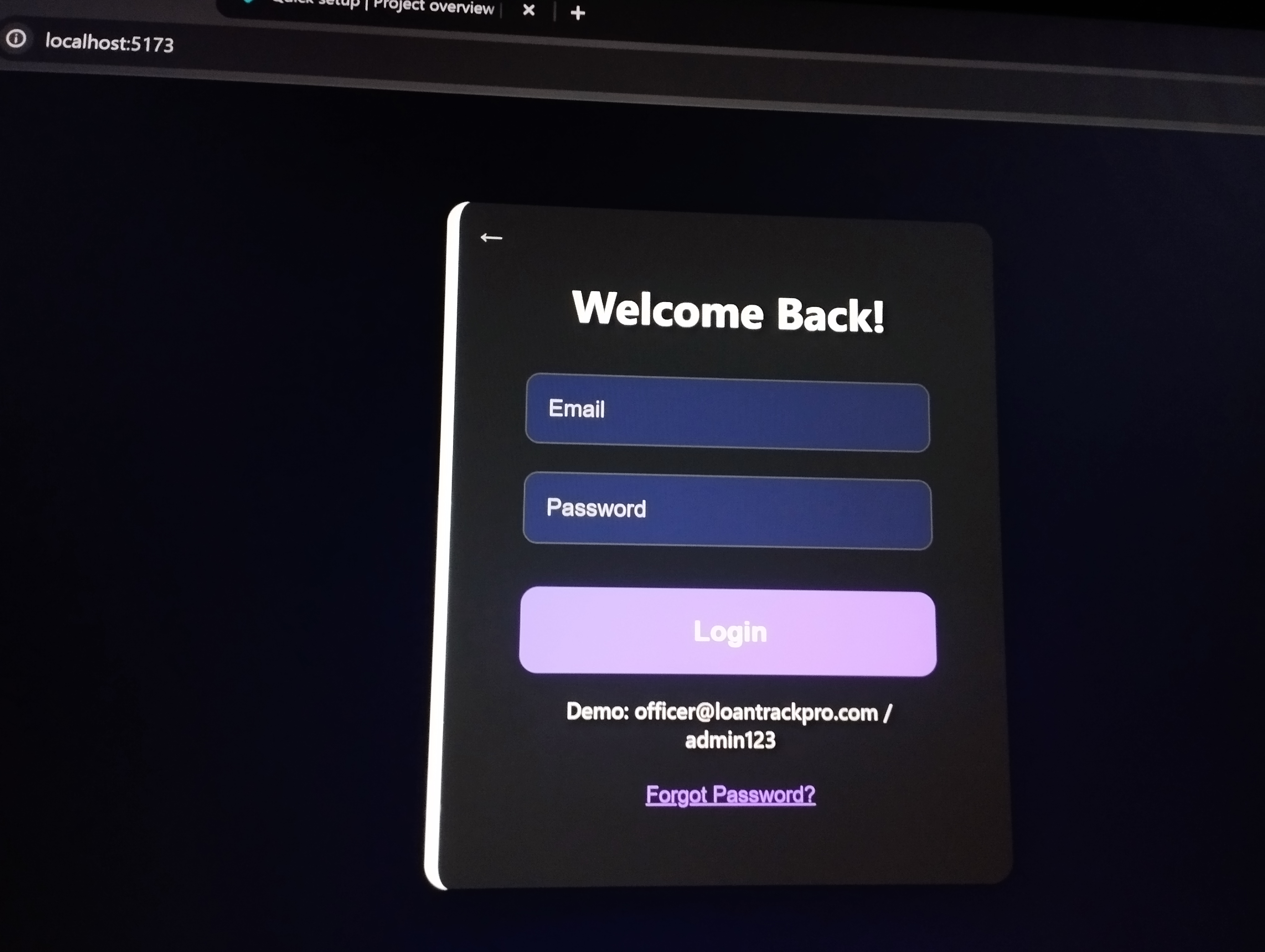
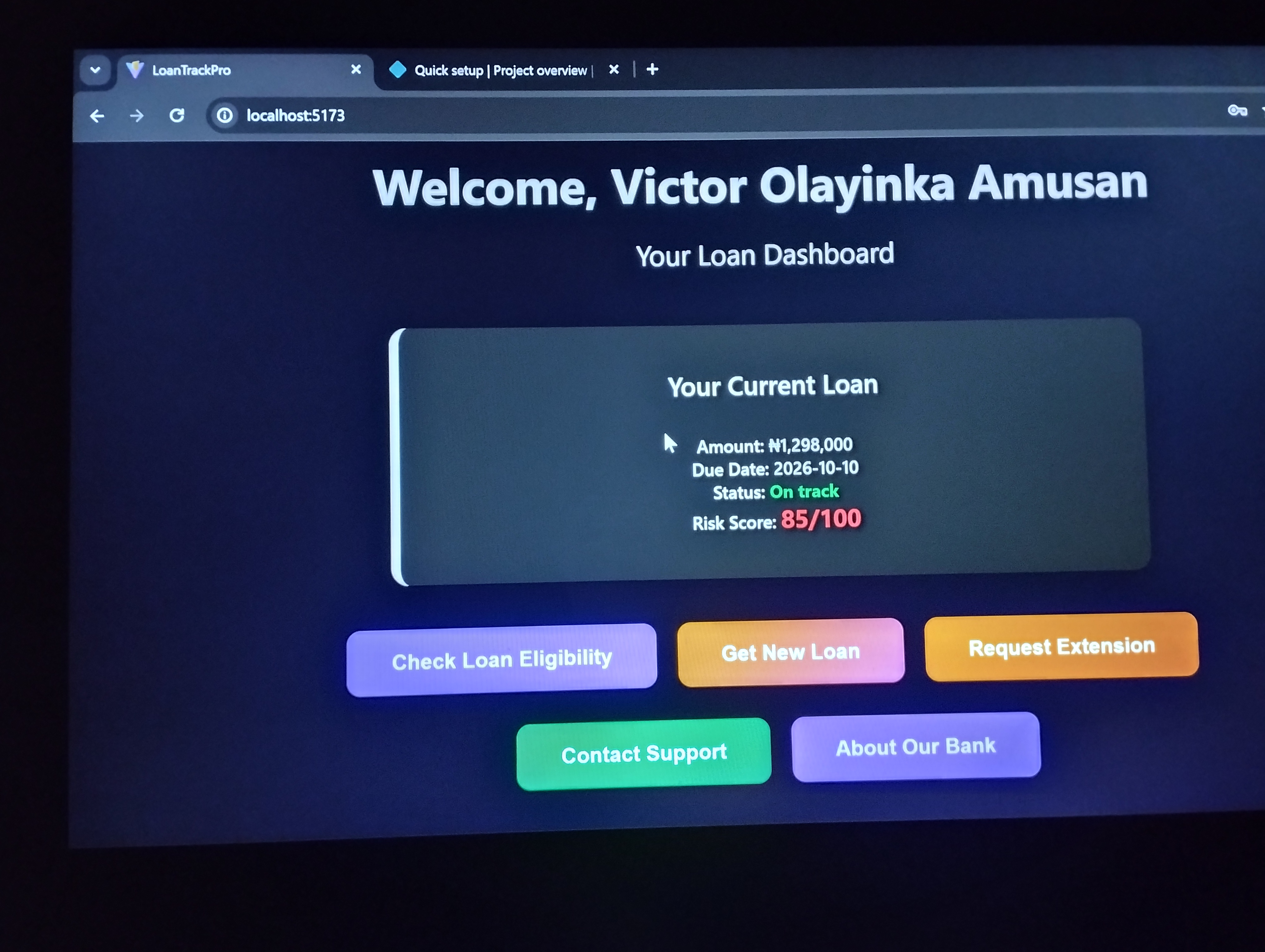
Inspiration Our team loves to engage themselves in what solves feasible problems, we saw it as something that could make us gain real world experience with the real world practical project which was more than Our classroom world and to also widen our horizon We noticed how small banks and credit unions struggle to manage loan portfolios efficiently. Officers often juggle spreadsheets and sticky notes to track repayments, while borrowers feel left in the dark about their loan status. We wanted to build something that brings clarity to both sides—giving officers a dashboard to monitor risk and giving borrowers transparency into their repayment journey.
What it does
LoanTrack Pro is a dual-portal loan management system.
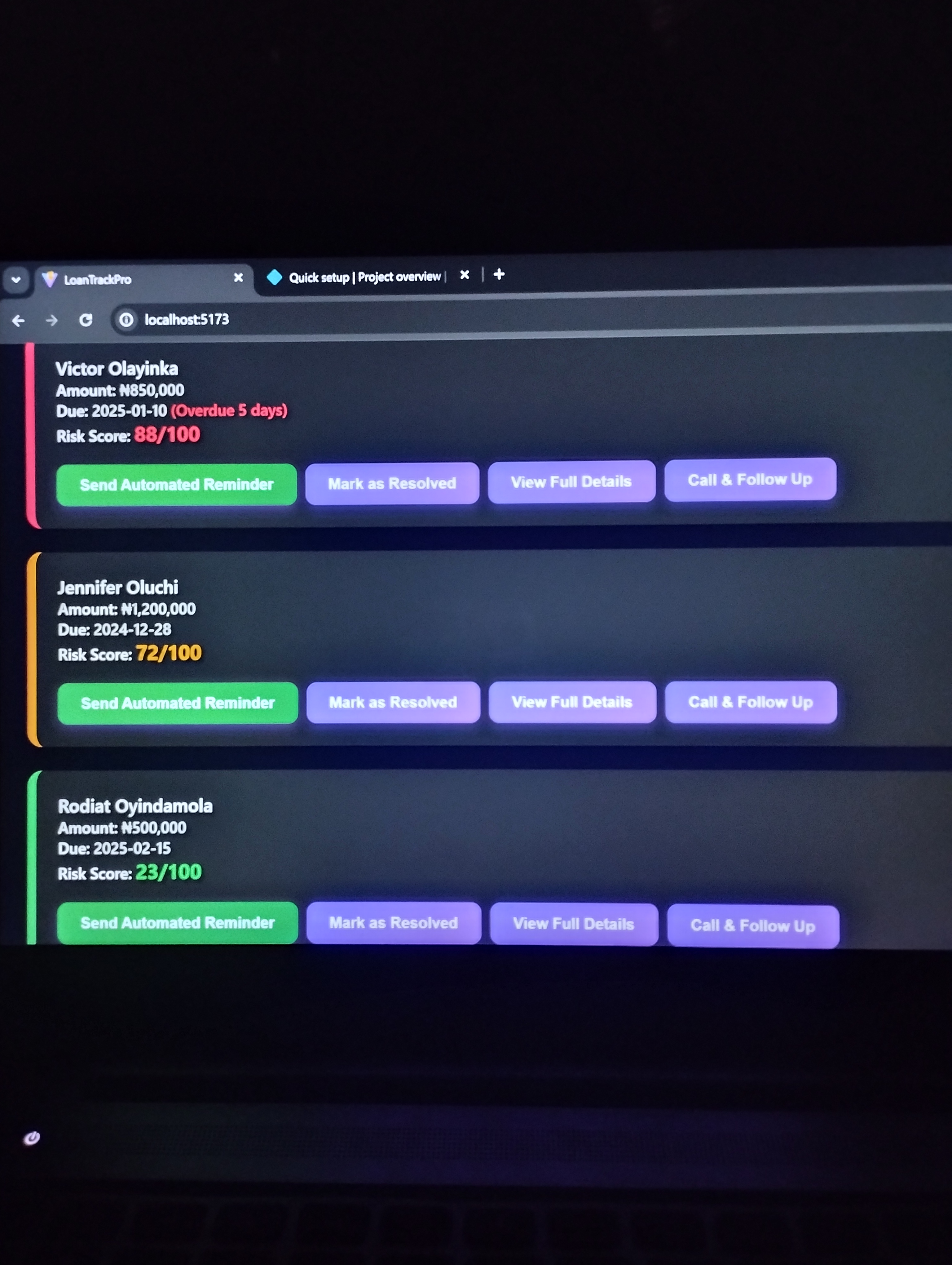
· For Bank Officers: A real-time dashboard showing all active loans with risk scoring (0–100), automated reminders, borrower profiles, and overdue alerts. · For Borrowers: A self-service portal to view their loan details, check eligibility, apply for new loans, request extensions, and see a dynamic repayment schedule tailored to their chosen tenure.
It’s like giving the bank a control tower and giving borrowers a window into their financial commitment.
How we built it
We built it as a single-page React application with a focus on:
· State management using React Hooks (useState, useEffect) · Local storage to simulate a backend—saving user data, loans, and passwords between sessions · Dynamic calculations for risk scores, repayment schedules, and due dates · Dark-themed UI with gradient accents for a modern, professional feel · Role-based views—completely different experiences for officers vs. borrowers
Everything runs in the browser, no server needed for the demo.
Challenges we ran into
· Data persistence: Making sure user data (like loan history and profile changes) survived page refreshes and logouts. · Dynamic scheduling: Calculating repayment dates that changed based on loan tenure—not just a static 12-month plan. · Risk algorithm tuning: Balancing the risk score factors so they felt realistic without being too punitive. · UI consistency: Keeping the dark theme readable and accessible while making it feel premium.
Accomplishments that we're proud of
· The risk score system—it’s simple but smart, and officers immediately “get” how to use it. · Dynamic repayment scheduler that actually adapts to the borrower’s chosen loan term. · Forgot password flow with security questions—a small touch that makes it feel real. · Building a fully functional demo that works without a backend. · Creating two completely different experiences in one app—one for officers, one for borrowers—that both feel intuitive.
What we learned
· How to structure a React app for multiple user roles without overcomplicating the code. · The importance of simulating real-world logic—like calculating due dates and risk—even in a demo. · That localStorage can go a long way in prototyping before you need a real database. · How UX changes everything—small things like moving the “back” button or color-coding risk scores make the app feel polished and trustworthy.
What's next for LoanTrack Pro
· Real backend integration with a database (MongoDB/Firebase) and user authentication. · Email/SMS notifications for payment reminders and approval updates. · Admin panel for adding new officers and viewing audit logs. · Mobile app version so officers can check loans on the go. · Advanced analytics for predicting default risk using more data points.
We’d love to see this used by community banks and credit unions to make loan management simpler, smarter, and more transparent for everyone.

Log in or sign up for Devpost to join the conversation.