-
-
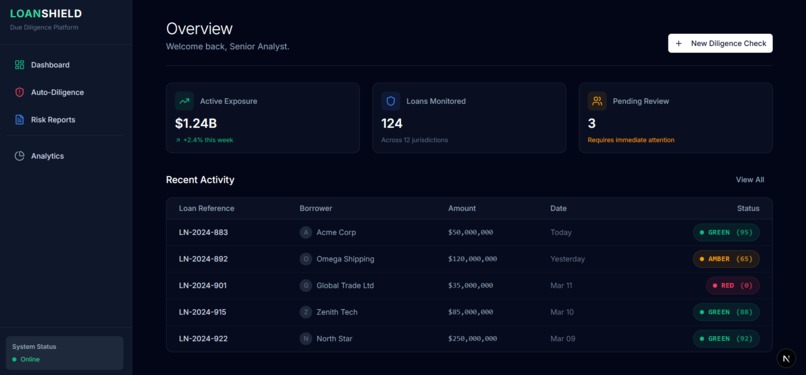
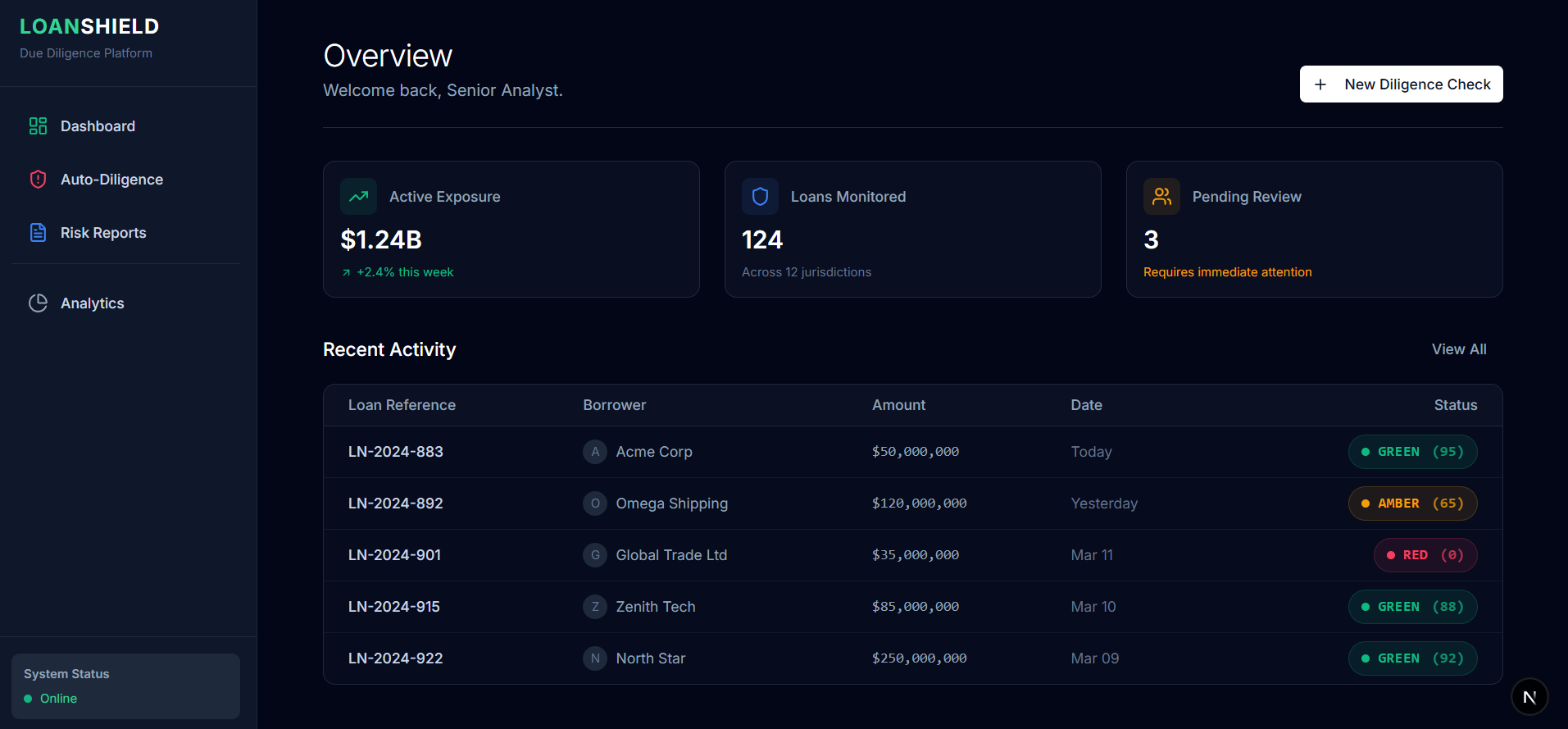
The Dashboard/Overview
-
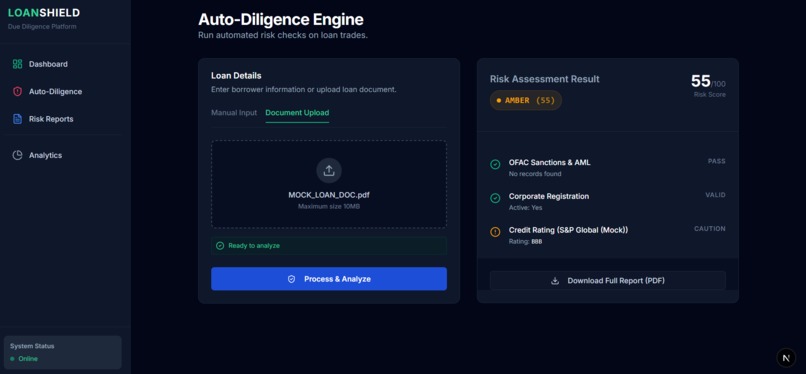
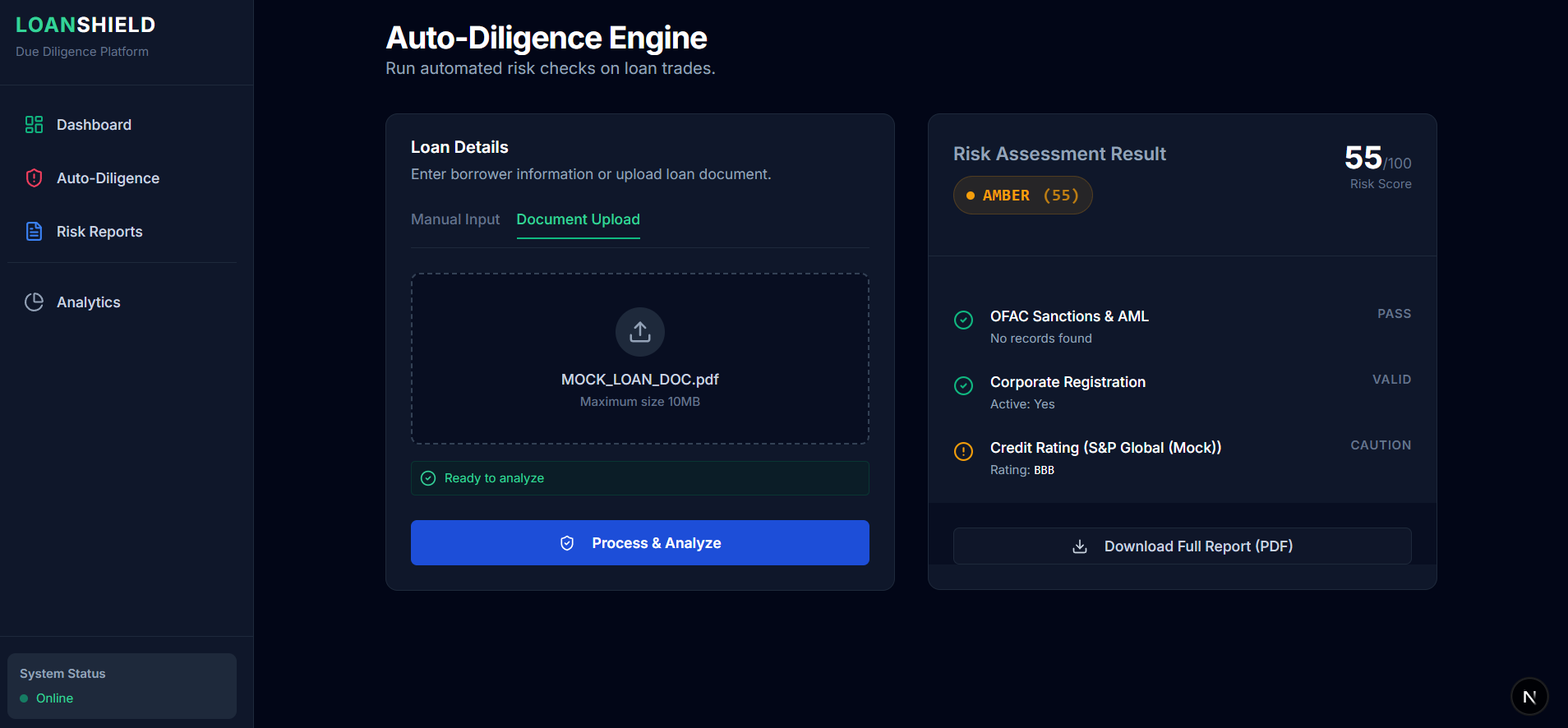
The Document Upload screen
-
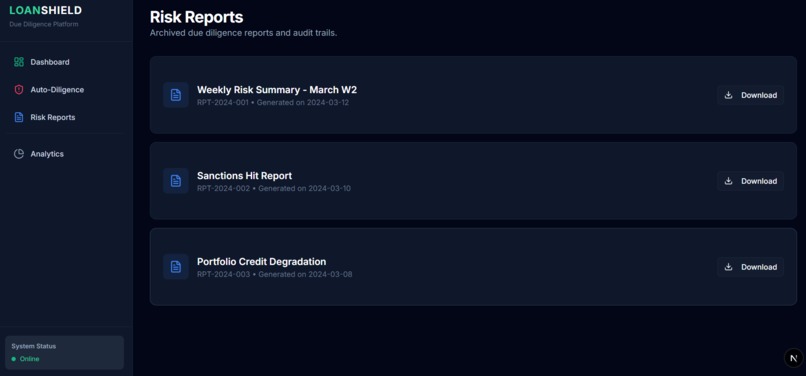
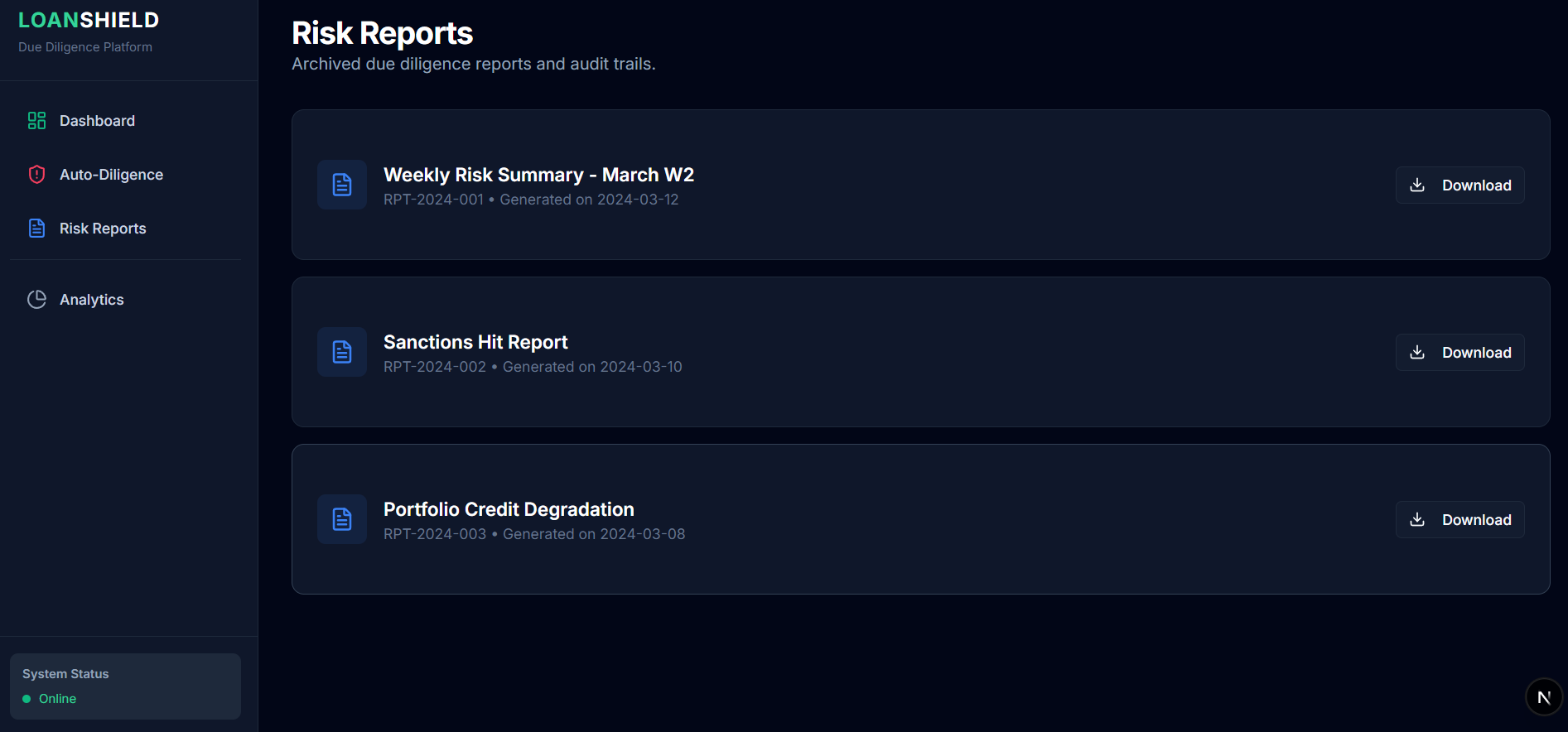
Risk report
-
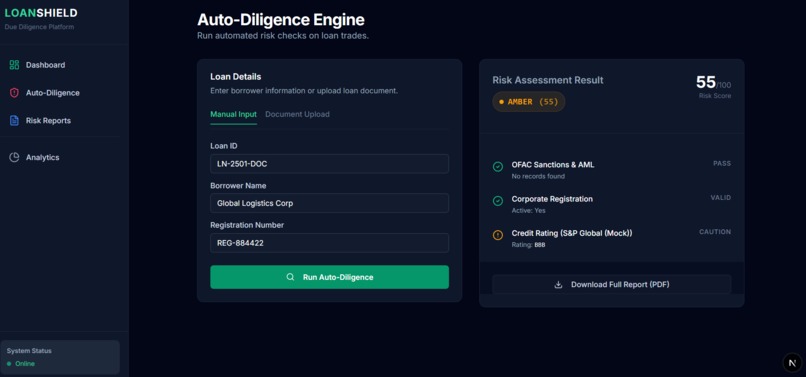
Analysis
-
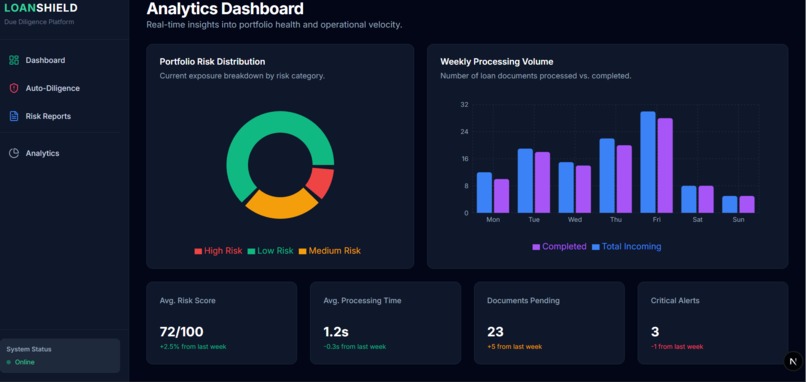
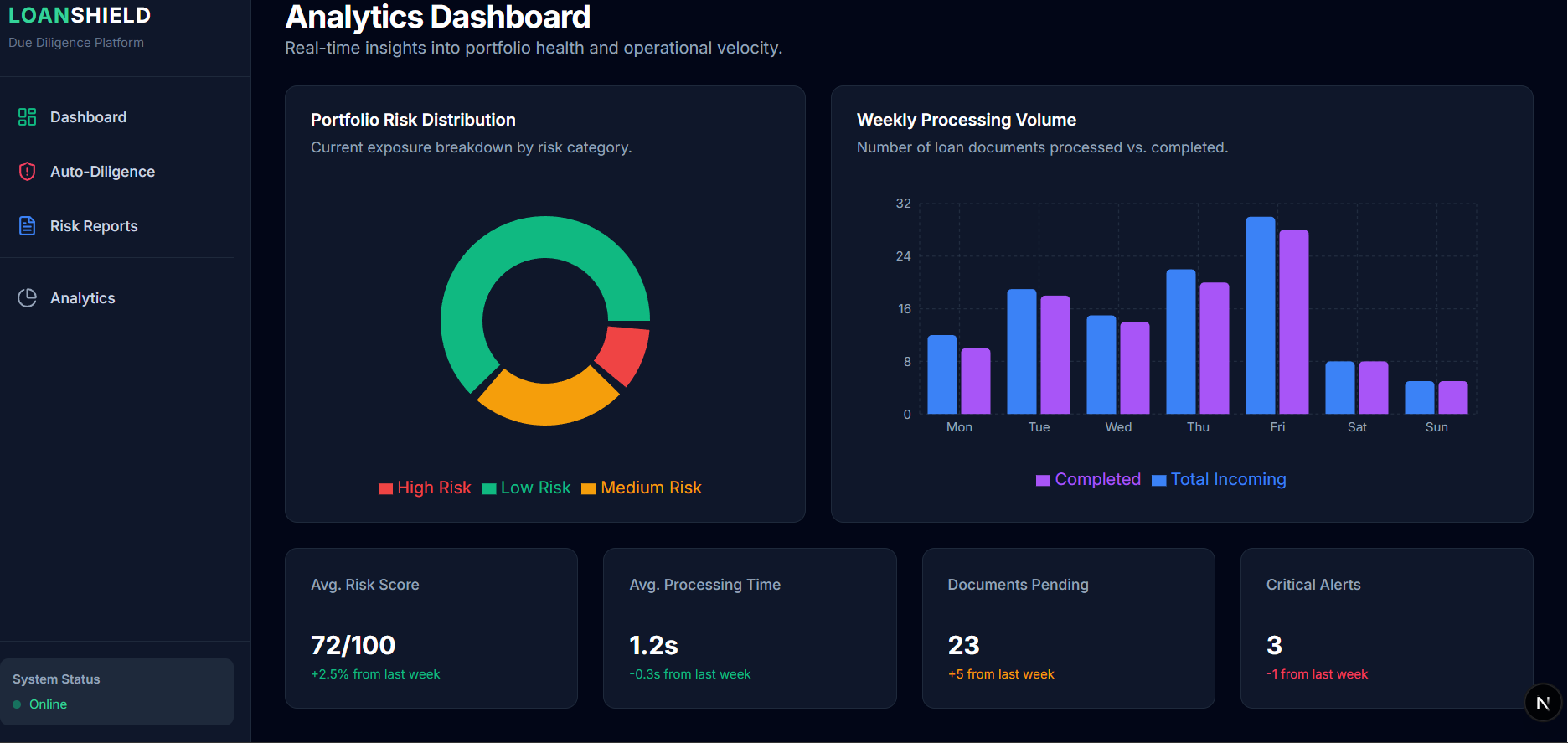
Analytics Dashboard
Inspiration
The secondary loan market moves trillions of dollars, yet the operational "plumbing" is often surprisingly manual. We realized that Due Diligence—the critical process of verifying borrowers, checking sanctions, and assessing credit health—is still largely conducted via disparate emails, PDF attachments, and spreadsheets.
This friction slows down trade settlement and traps liquidity. We wanted to build a "Bloomberg-style" solution: a desktop-grade platform that centralizes and automates these checks, turning hours of manual review into a sub-second "Go/No-Go" decision.
What it does
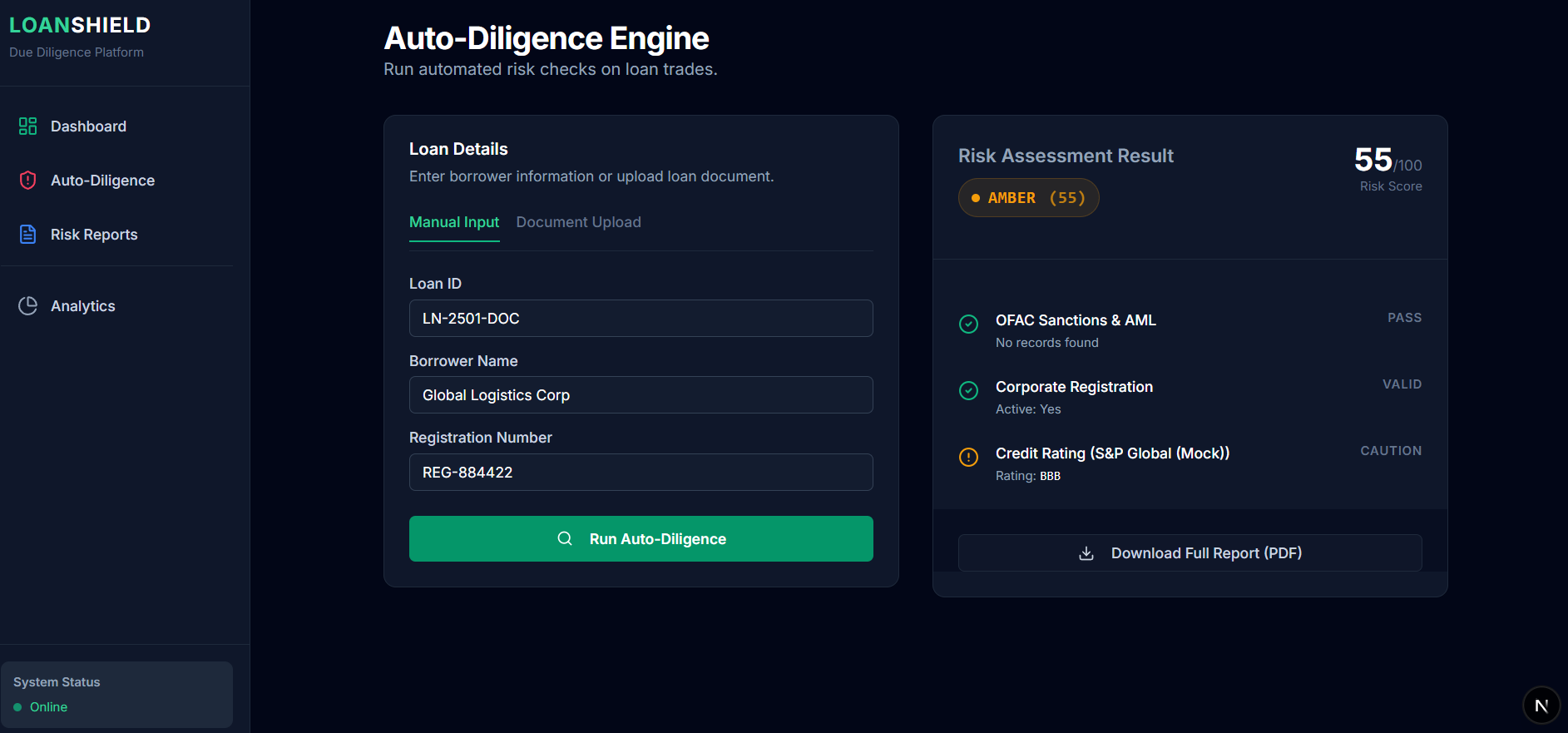
LoanShield is a commercially focused due diligence engine designed for the Loan Market Association (LMA) ecosystem. It automates the risk assessment workflow:
- Automated Compliance: The system instantly screens Loan IDs against (mock) OFAC Sanctions and AML watchlists.
- Document Digitization: Traders can upload raw Loan Agreement PDFs. The system parses the file to extract key entities (Borrower Name, Registration Number) automatically.
- Real-Time Risk Scoring: Instead of a static report, LoanShield aggregates data into a dynamic Trade Confidence Score.
The risk algorithm is visualized as:
$$TradeScore = \left( 100 - \sum (Penalty_{Sanctions} + Penalty_{Credit} + Penalty_{Registry}) \right)$$
How we built it
We prioritized a "Commercial Viability" architecture, focusing on speed, security, and a professional user experience.
- Frontend: Built with Next.js 14 and TypeScript. We utilized ShadCN UI and Tailwind CSS to create a high-contrast, "Dark Mode" interface that resembles professional trading terminals.
- Backend: Powered by Python FastAPI. This handles the business logic, API routing, and document processing.
- Data Simulation: To demonstrate the architecture without incurring costs for live financial feeds (like S&P or Moody's), we built a custom "Mock Engine" that simulates realistic API responses for credit ratings and corporate registry checks.
Challenges we ran into
The biggest challenge was UI/UX design for financial data. In a trading environment, clarity is safety. We iterated on the "Risk Scorecard" multiple times. Initially, it was too cluttered. We simplified it to a clear "Green/Amber/Red" signal system that allows a trader to understand the risk profile in under 2 seconds while still retaining the ability to drill down into the details.
Accomplishments that we're proud of
We are particularly proud of the PDF-to-Data workflow. Successfully implementing a drag-and-drop interface that accepts a loan document and immediately triggers the validation pipeline was a major technical milestone. It demonstrates a tangible efficiency gain that banks could implement today.
What's next for LoanShield
To take LoanShield from a hackathon prototype to a market-ready product, we plan to:
- Live API Integration: Replace the mock engine with live connectors to Moody’s Analytics and official government sanction lists.
- Predictive Settlement AI: Implement a Deep Learning module (leveraging historical settlement data) to predict which trades are likely to fail before they happen.
- Audit Trails: Integrate a simple blockchain ledger to store the generated "Risk Reports" for immutable compliance auditing.
Built With
- fastapi
- fintech
- next.js
- python
- react
- shadcn-ui
- tailwind-css
- typescript

Log in or sign up for Devpost to join the conversation.