-
-
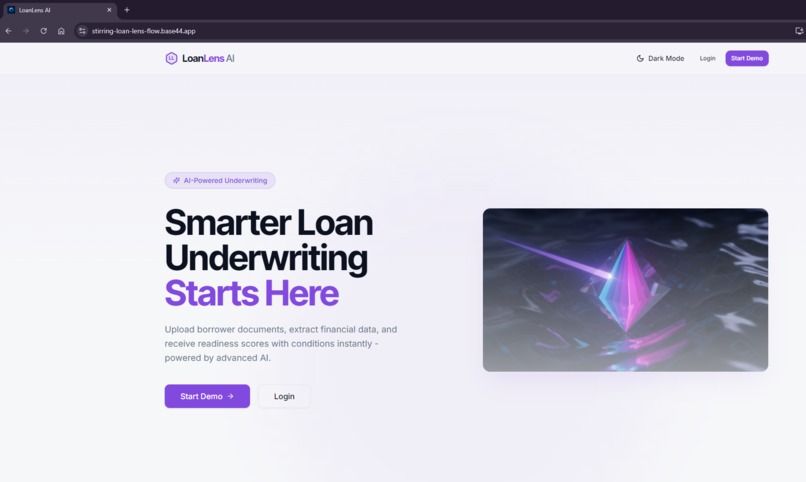
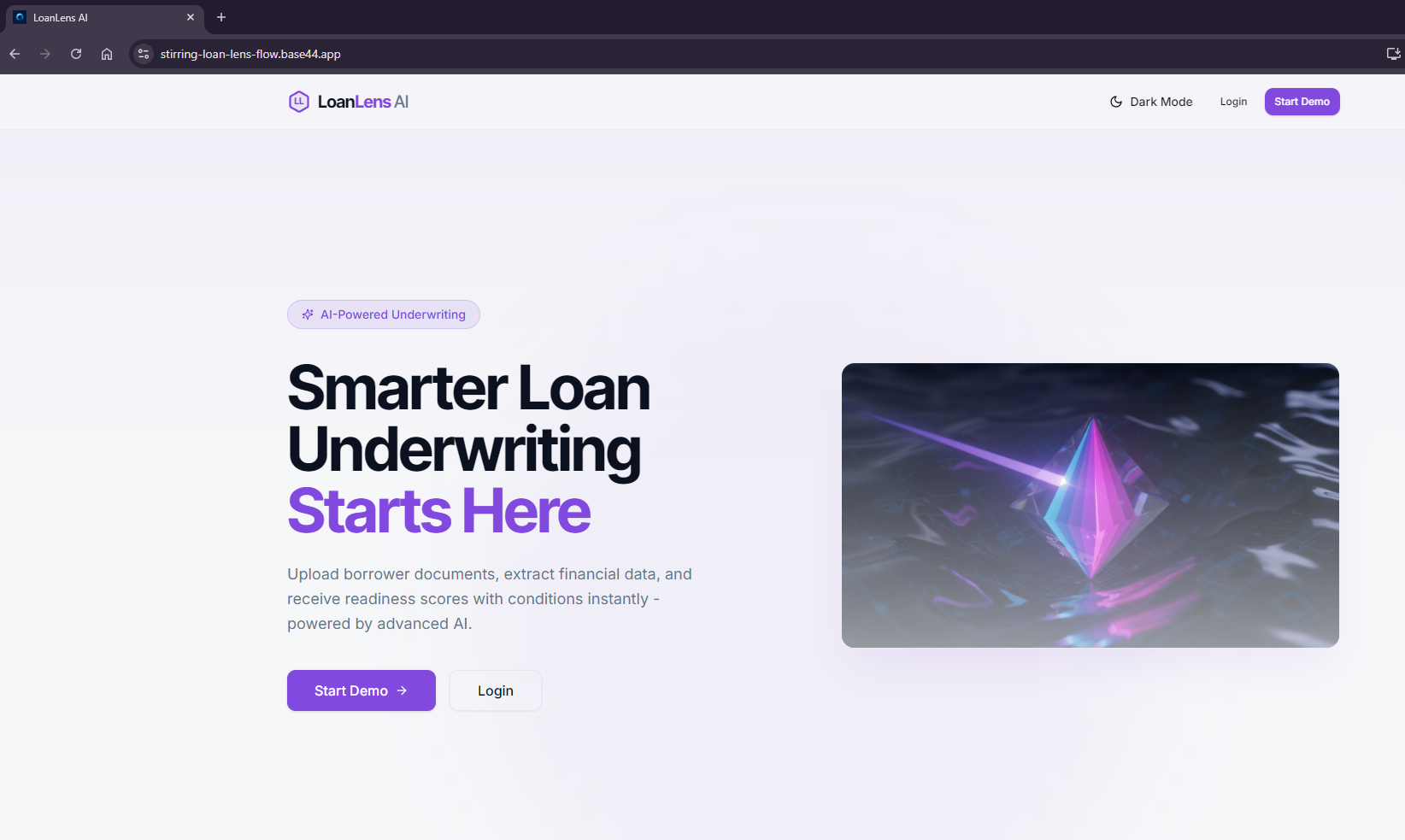
Landing Page : AI-powered loan underwriting platform with a clean, modern interface and guided demo experience.
-
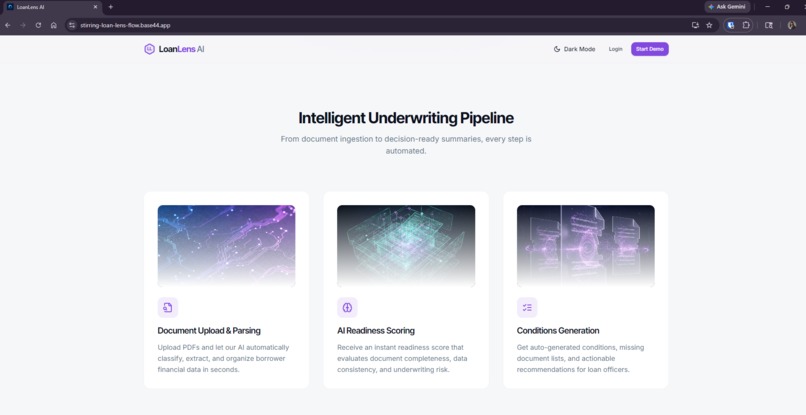
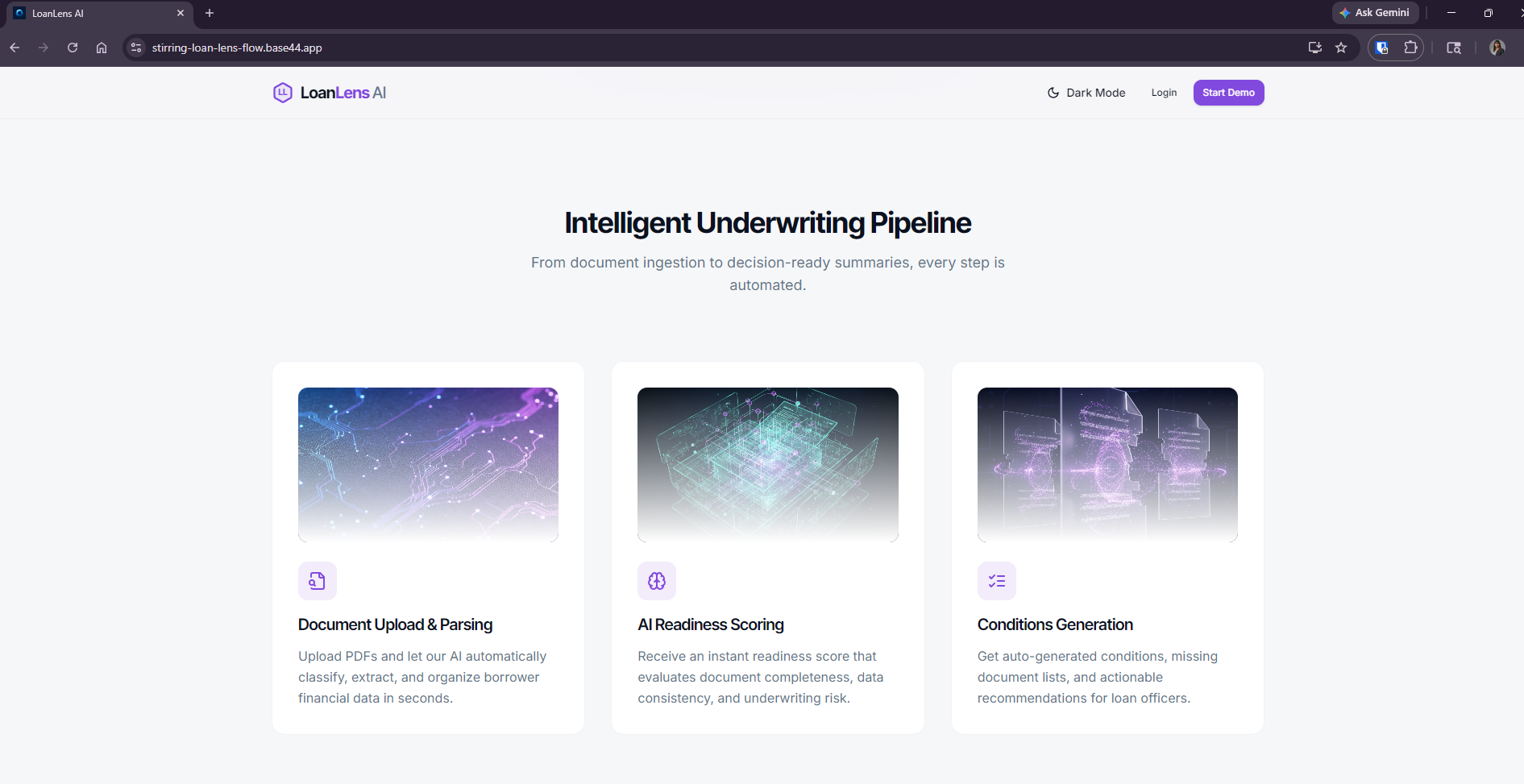
Pipeline / Features Section : End-to-end underwriting pipeline covering document parsing, AI scoring, and condition generation.
-
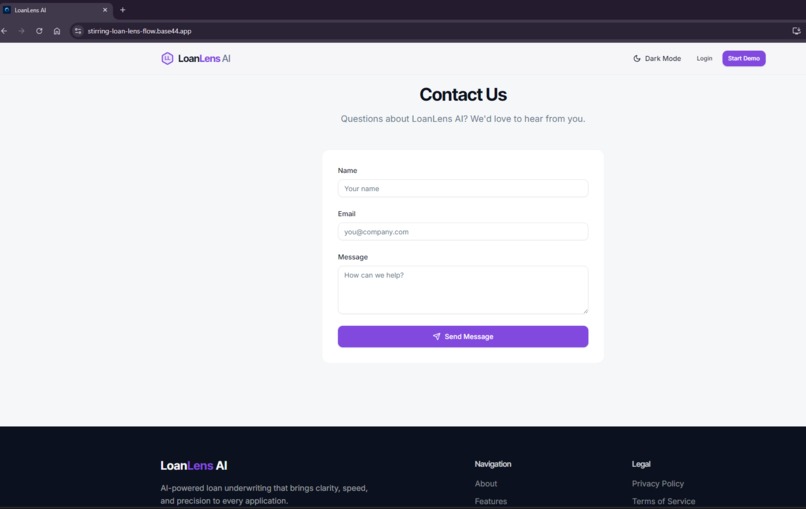
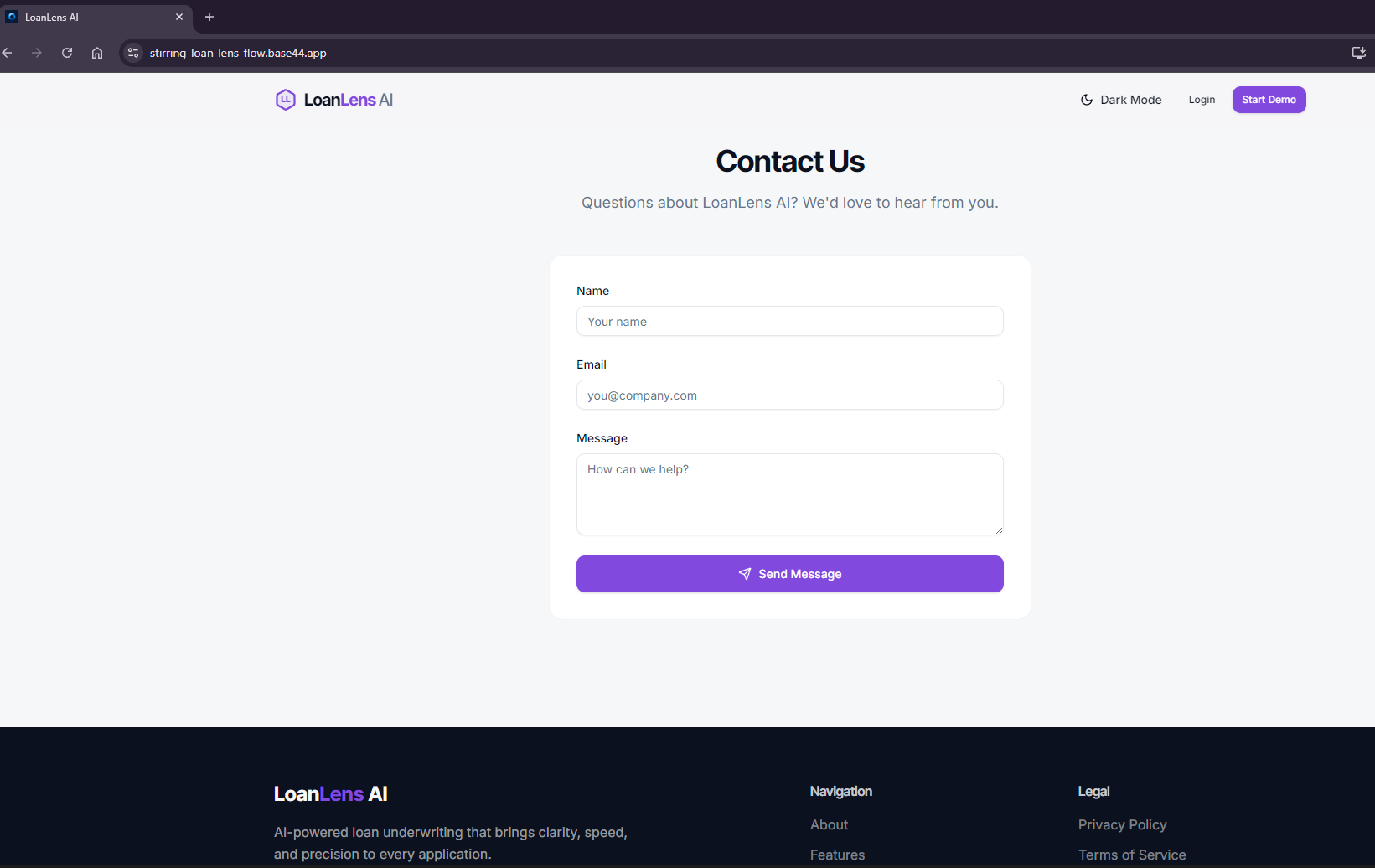
Contact Page : Simple contact interface for user feedback and product inquiries within LoanLens AI.
-
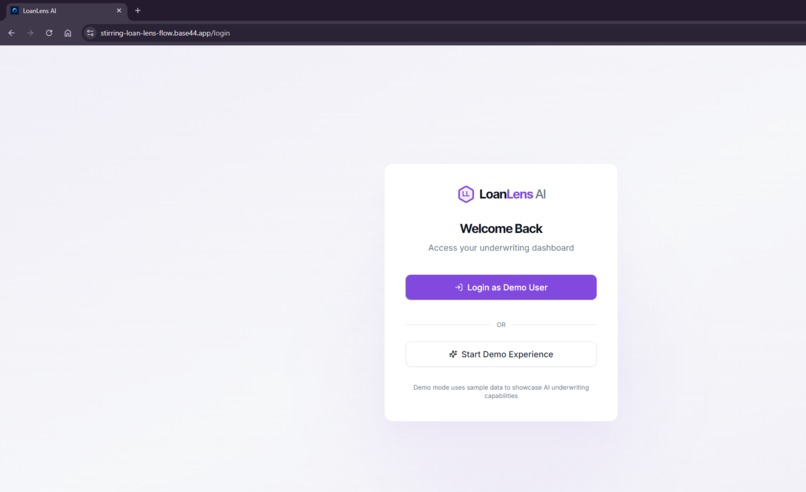
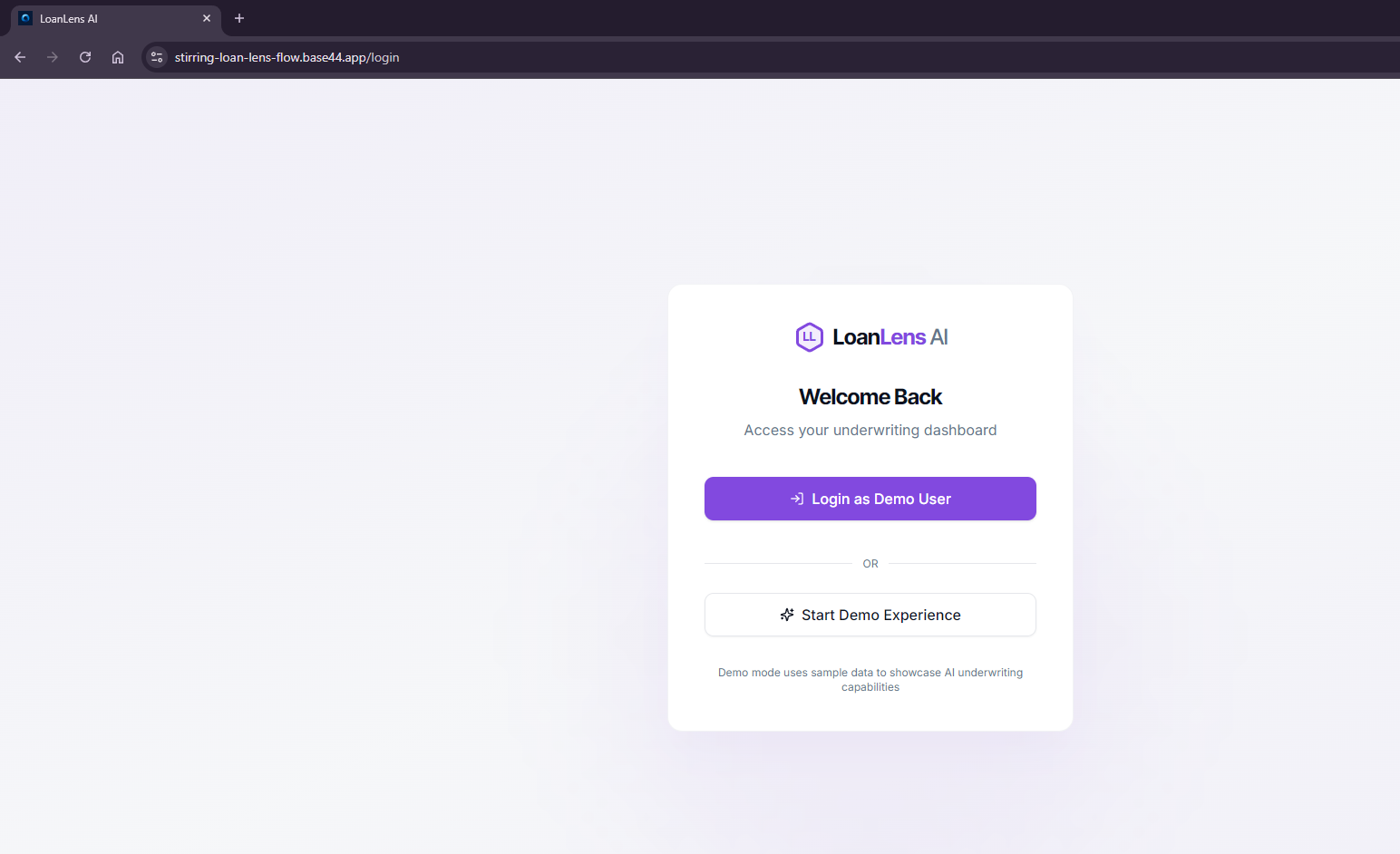
Login / Demo Access : Instant demo access with preloaded applications to explore the underwriting workflow.
-
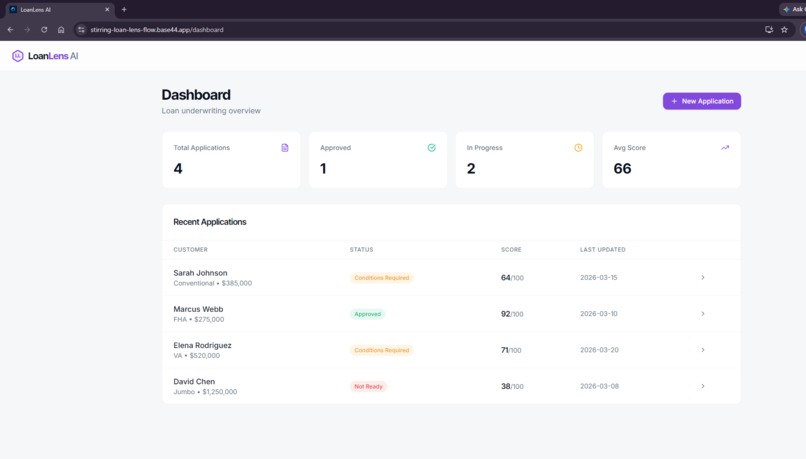
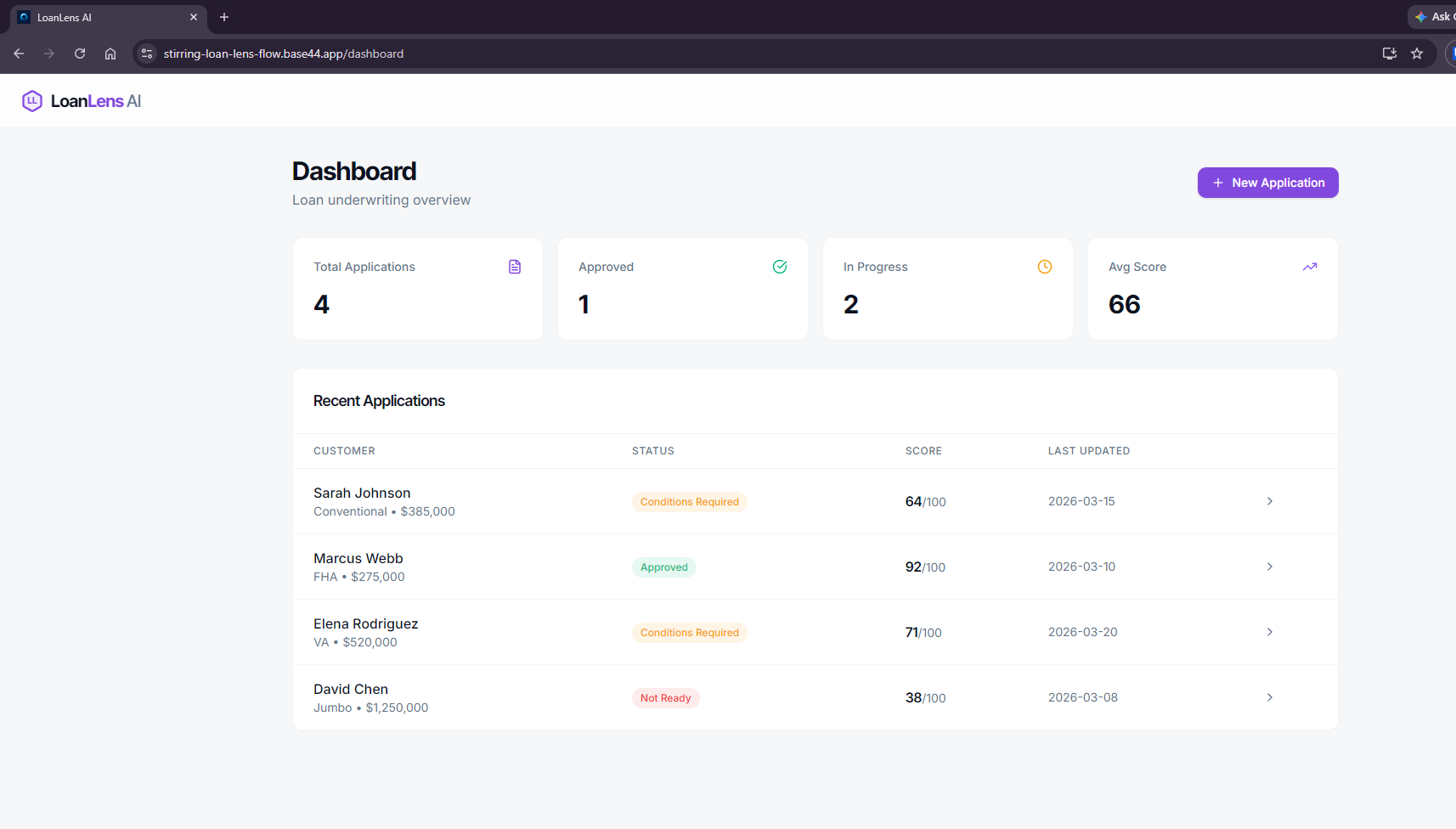
Dashboard : Central dashboard showing application statuses, readiness scores, and underwriting progress.
-
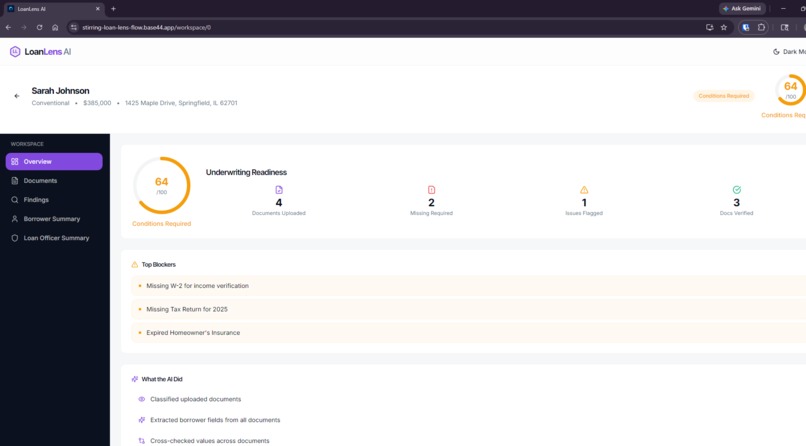
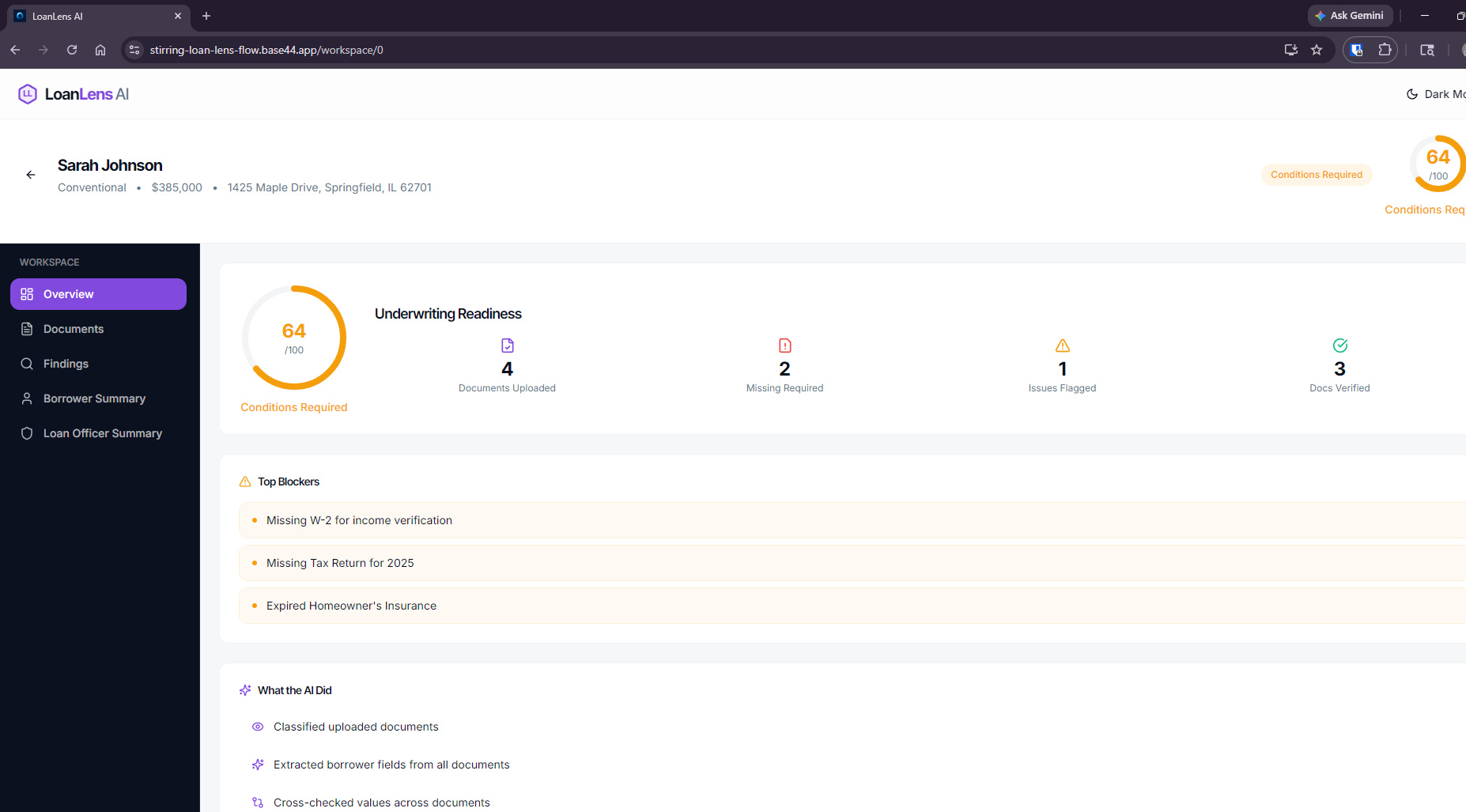
Overview (Score + Blockers) : Application overview with readiness score, missing documents, and key underwriting blockers.
-
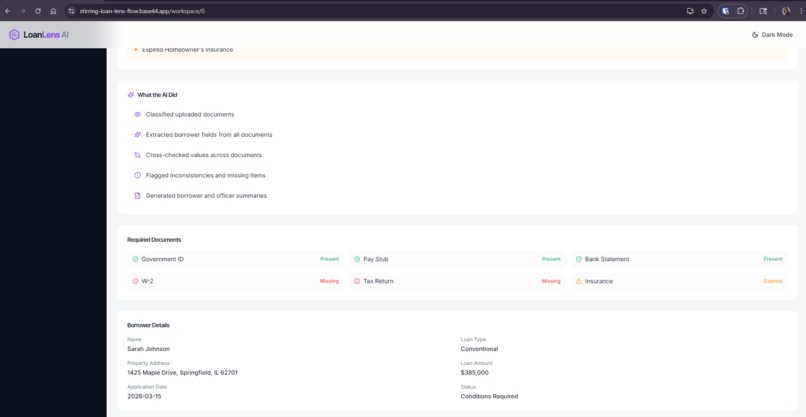
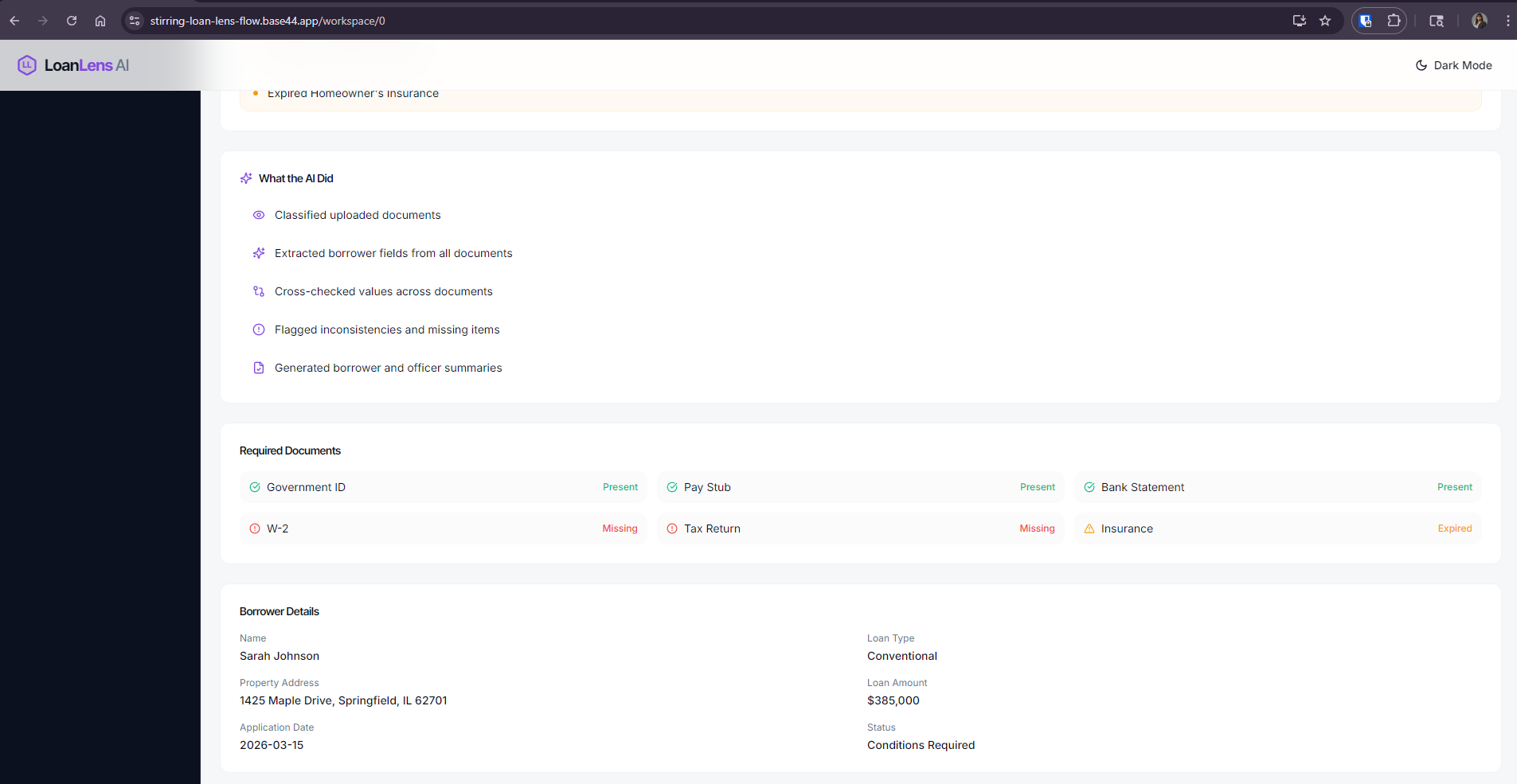
Insights : AI processing overview all document classification, extracted data, required documents, and borrower details in one unified view.
-
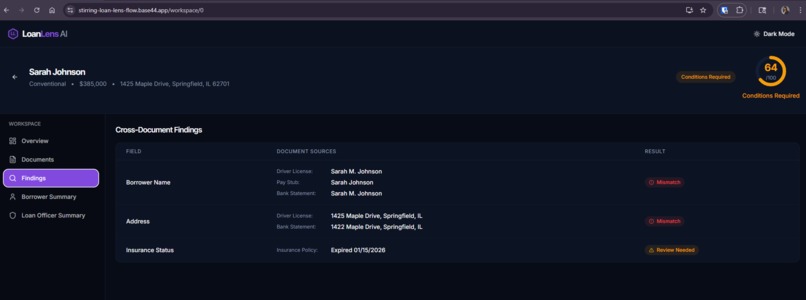
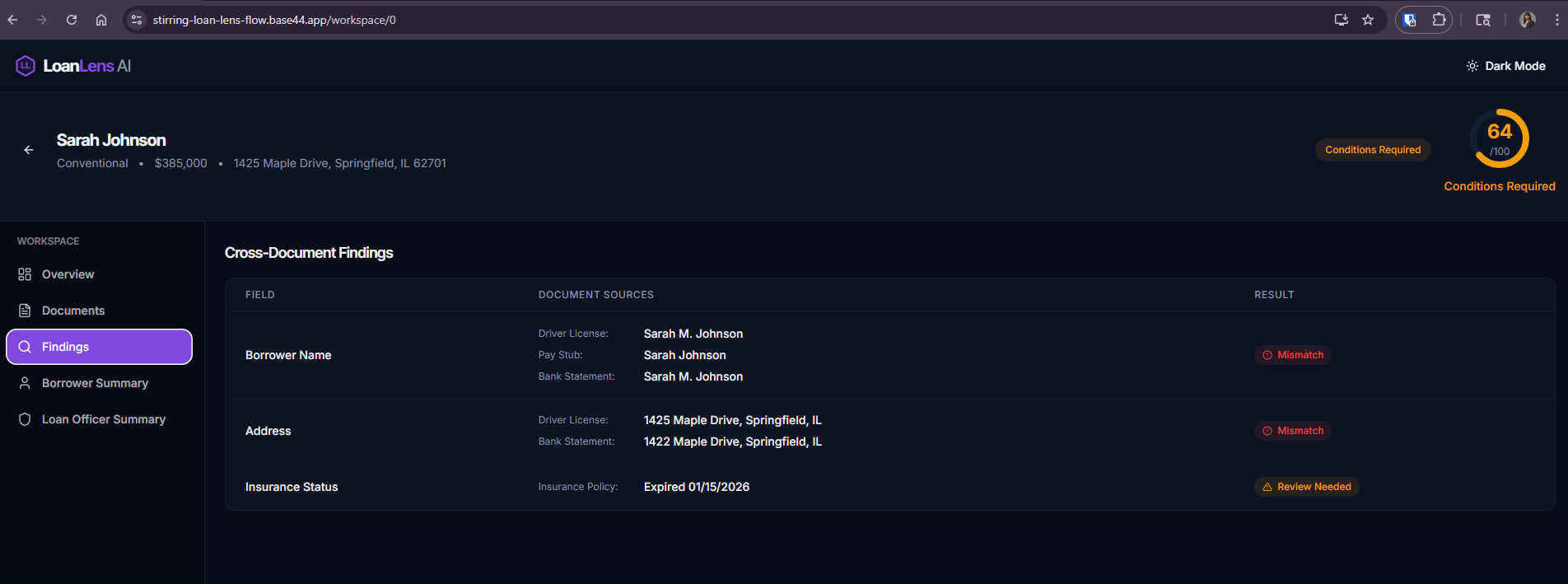
Findings (Dark UI mismatches) : AI detects cross-document inconsistencies such as name and address mismatches in real time.
-
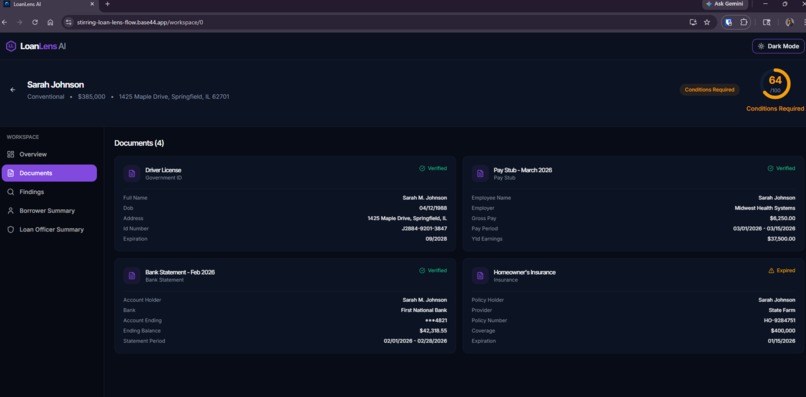
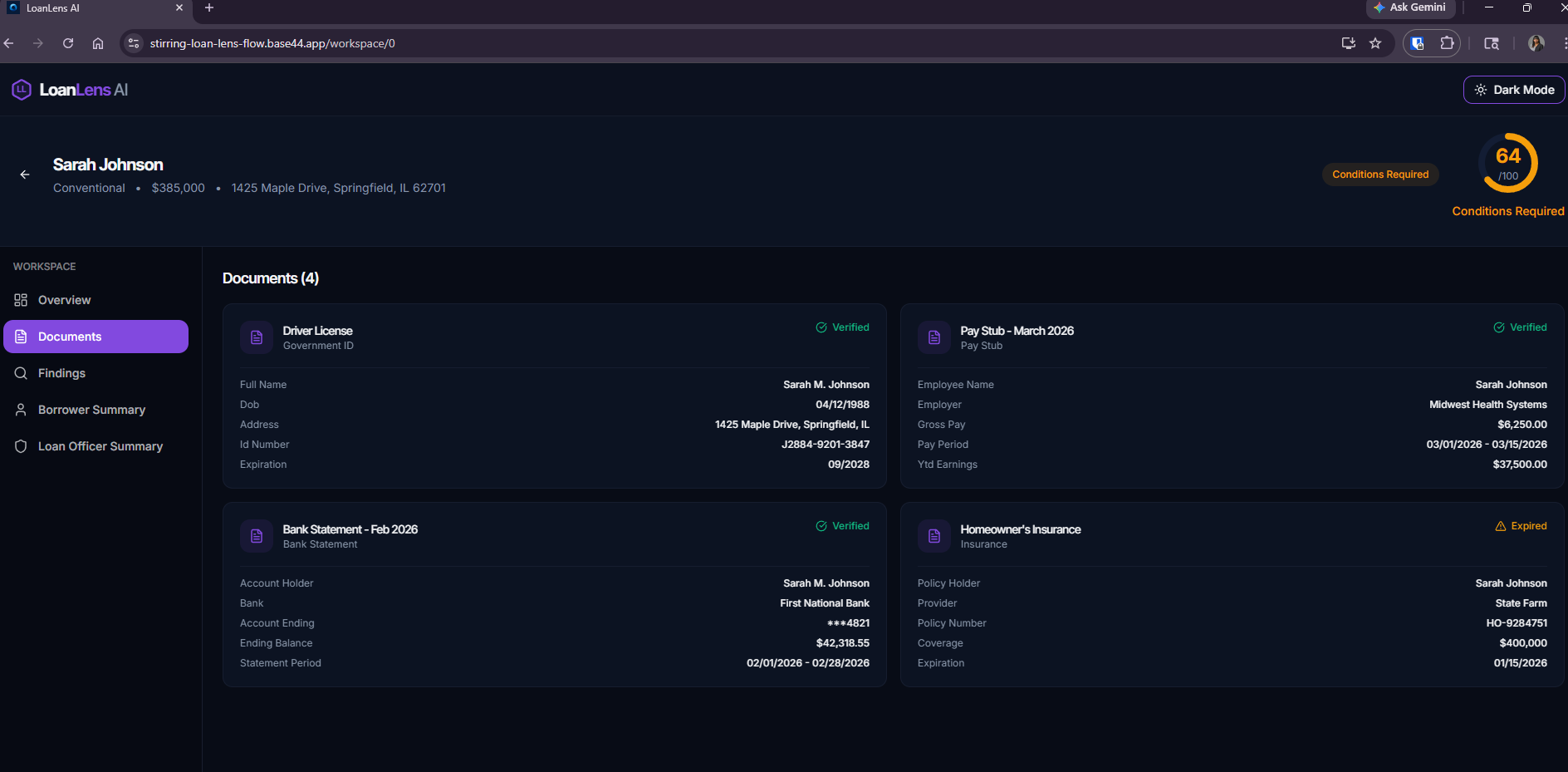
Documents Page : Structured document view with extracted borrower data and real-time verification status.
-
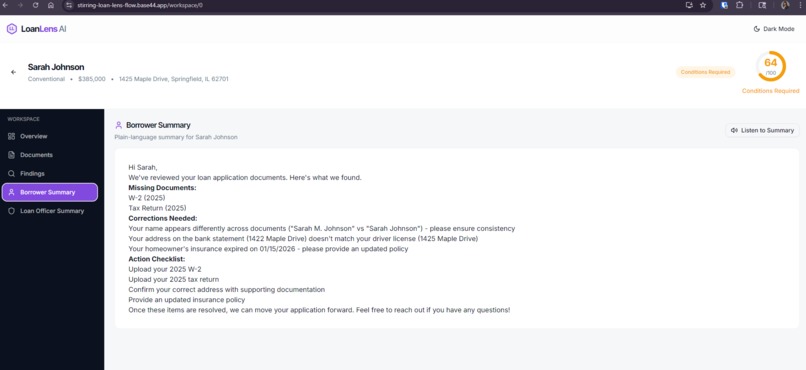
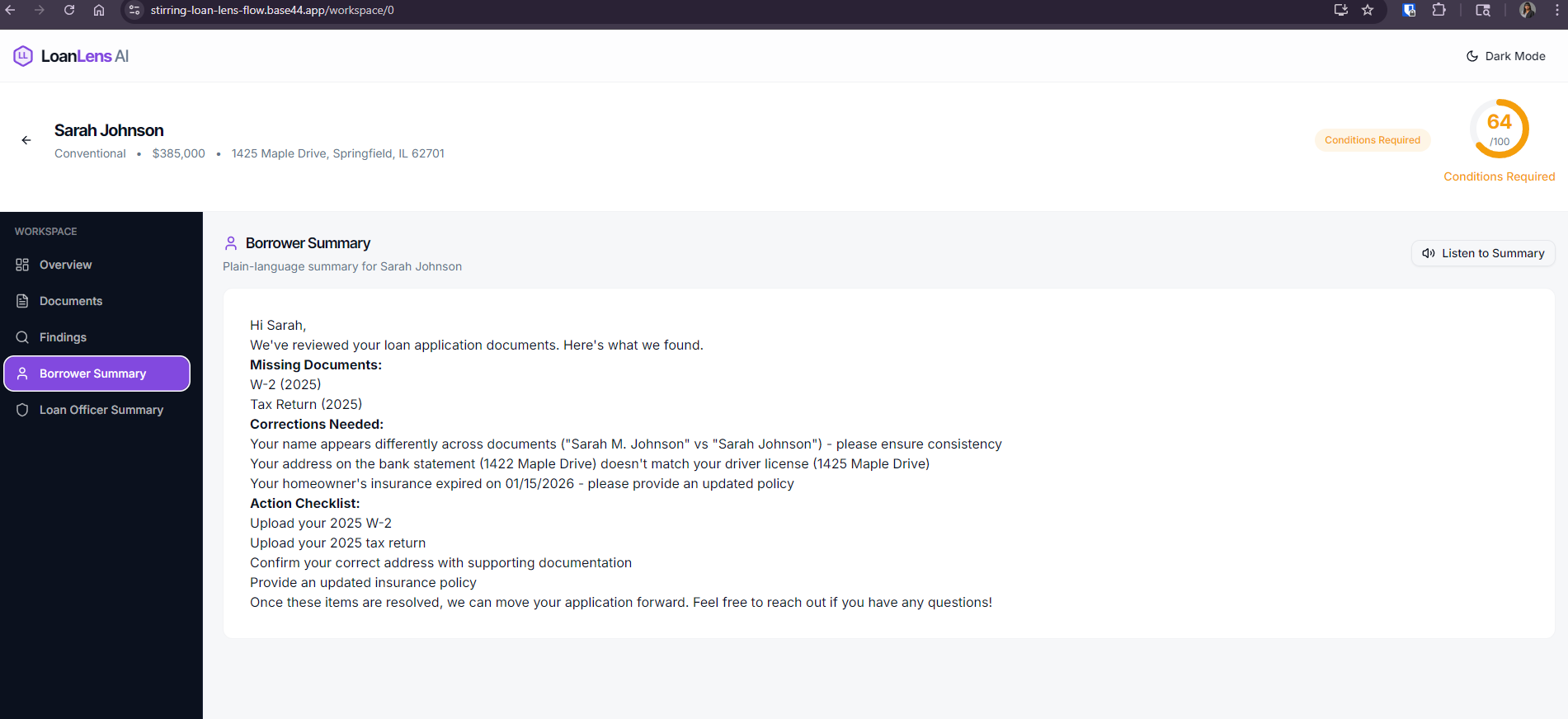
Borrower Summary : Borrower-friendly summary with clear explanations and actionable steps to complete the application.
-
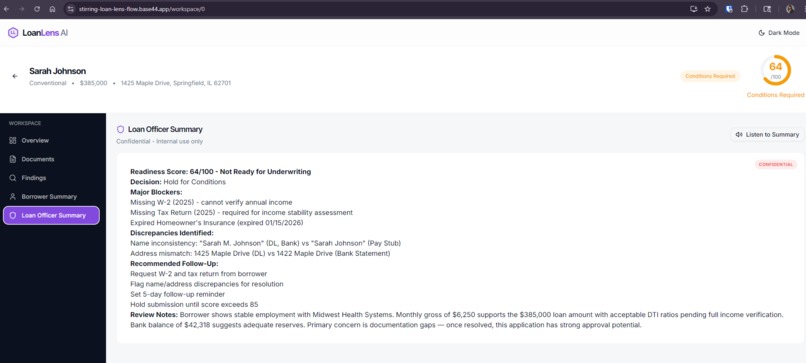
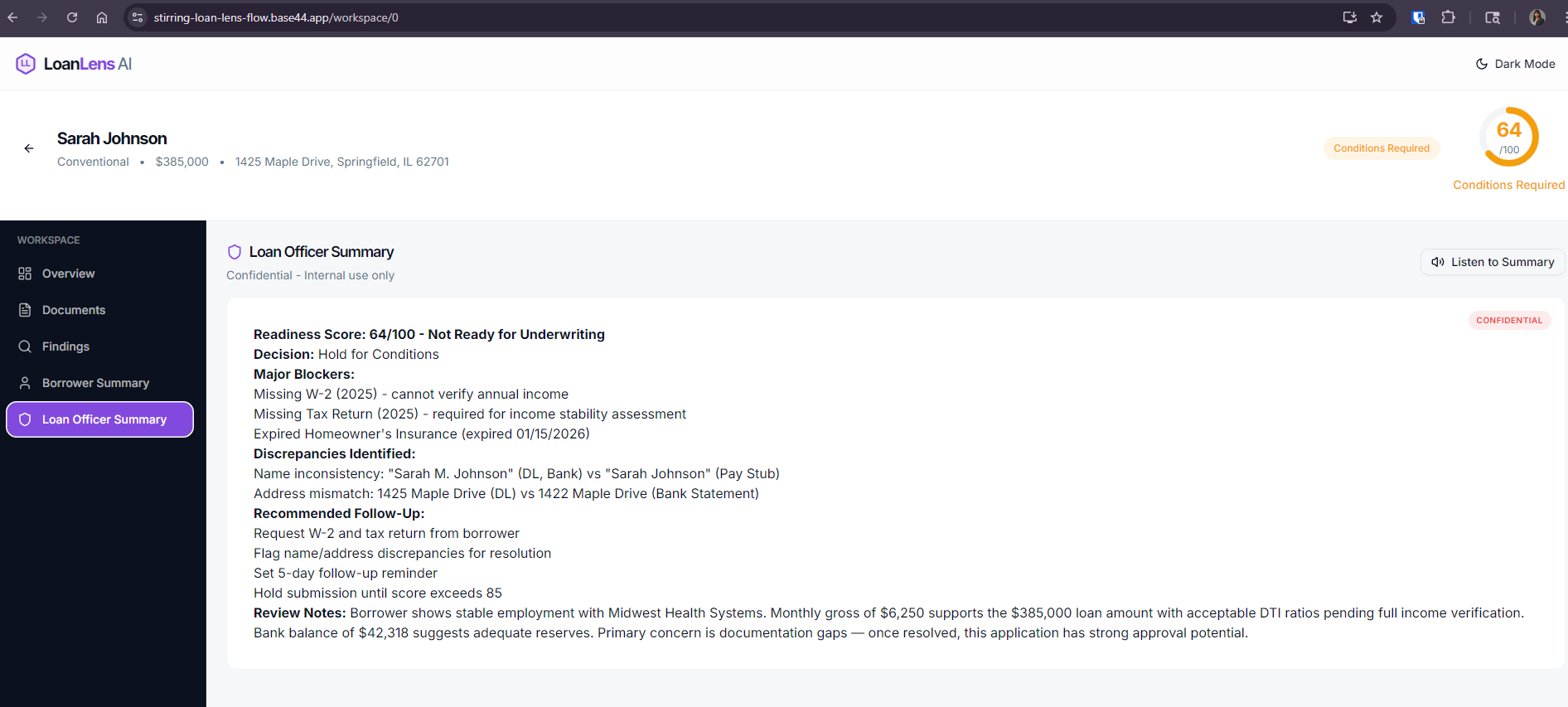
Loan Officer Summary : Internal underwriting summary with decision guidance, risk signals, and recommended next steps.
Inspiration
Loan underwriting today is still heavily manual, slow, and error-prone. Loan officers spend hours reviewing documents, verifying data across multiple sources, and identifying missing or inconsistent information before a file can even be submitted.
I wanted to explore: What if an AI system could do this instantly?
LoanLens AI was built to simulate a real-world underwriting assistant that:
- Reads borrower documents
- Cross-checks data across files
- Flags discrepancies and missing requirements
- Produces both borrower-friendly and underwriter-ready summaries
The goal was not just automation, but decision intelligence - helping users understand what to do next.
What it does
LoanLens AI is an AI-powered underwriting assistant designed to streamline the loan review process.
With LoanLens AI, users can:
- Upload borrower documents (W-2, bank statements, ID, insurance, etc.)
- Automatically extract key financial and identity data
- Detect inconsistencies across documents (name, address, insurance status)
- Identify missing required documents
- Generate a readiness score (0–100)
The system then produces two outputs:
Borrower Summary (external):
- Plain-language explanation of what’s missing or needs correction
- Clear action checklist
- Audio playback for accessibility
Loan Officer Summary (internal):
- Underwriting decision guidance
- Major blockers and discrepancies
- Recommended next steps before submission
How I built it
I built LoanLens AI as a full-stack web application using:
- Base44 for rapid application development and UI generation
- Structured prompt engineering to define application architecture and workflows
- Simulated AI pipelines for:
- Document classification
- Field extraction
- Cross-document validation
- Risk scoring and condition generation
The system is designed around a realistic underwriting workflow:
Landing → Login → Dashboard → Customer Workspace
Each customer workspace includes:
- Overview (readiness score, blockers)
- Documents (parsed data)
- Findings (cross-document validation)
- Borrower Summary (user-facing AI)
- Loan Officer Summary (internal AI)
Challenges I ran into
One of the biggest challenges was ensuring data consistency across the system.
Since multiple views (Documents, Findings, Summaries) rely on the same underlying data, we had to carefully structure the logic so that:
- Missing documents appear everywhere consistently
- Discrepancies are reflected across all sections
- Scores and statuses align with the same rules
Another challenge was balancing:
- Clean UI/UX (to feel like a real SaaS product)
- Deep underwriting logic (to feel useful, not just visual)
I also designed two different AI outputs:
- A borrower-facing summary written in simple, clear language
- A loan officer summary structured for internal review and decision-making
What I learned
- Building AI products is not just about models - it's about workflow design
- Clear data flow and consistency matter more than visual complexity
- Dual-output systems (user vs internal) add significant real-world value
- Even simulated AI can feel powerful when integrated into the right product experience
What's next for LoanLens AI
- Real document parsing using OCR and LLMs
- Integration with underwriting guidelines (Fannie Mae / Freddie Mac)
- Real-time collaboration between loan officers and borrowers
- Automated condition letter generation
- Audit trails and compliance tracking
My vision is to turn LoanLens AI into a true AI co-pilot for lending teams.
Built With
- ai
- api
- base44
- design
- engineering
- javascript
- prompt
- react
- text-to-speech
- ui/ux

Log in or sign up for Devpost to join the conversation.