-
-
-
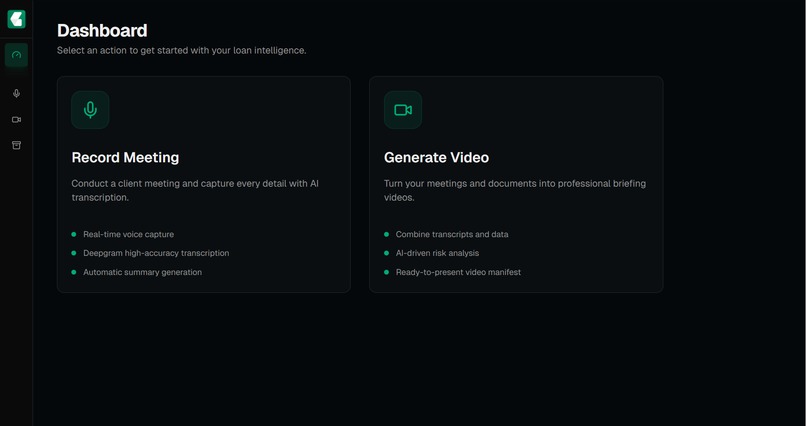
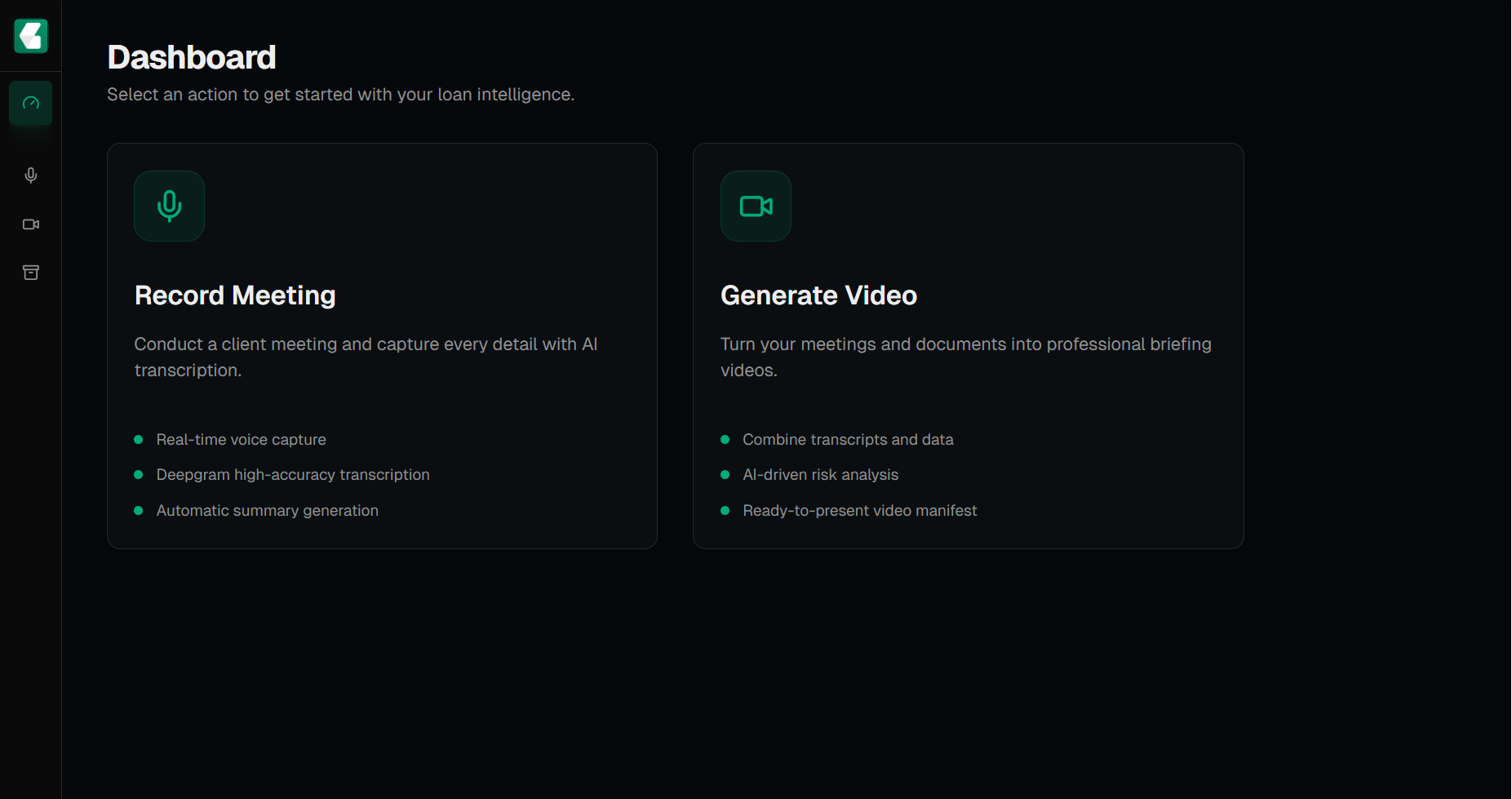
Dashboard
-
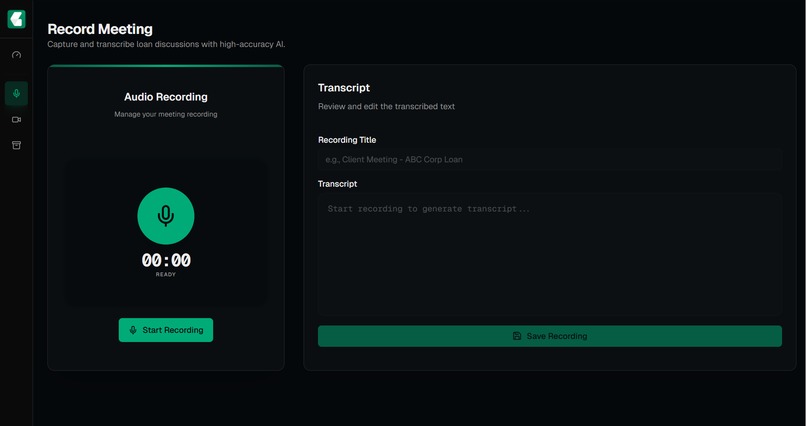
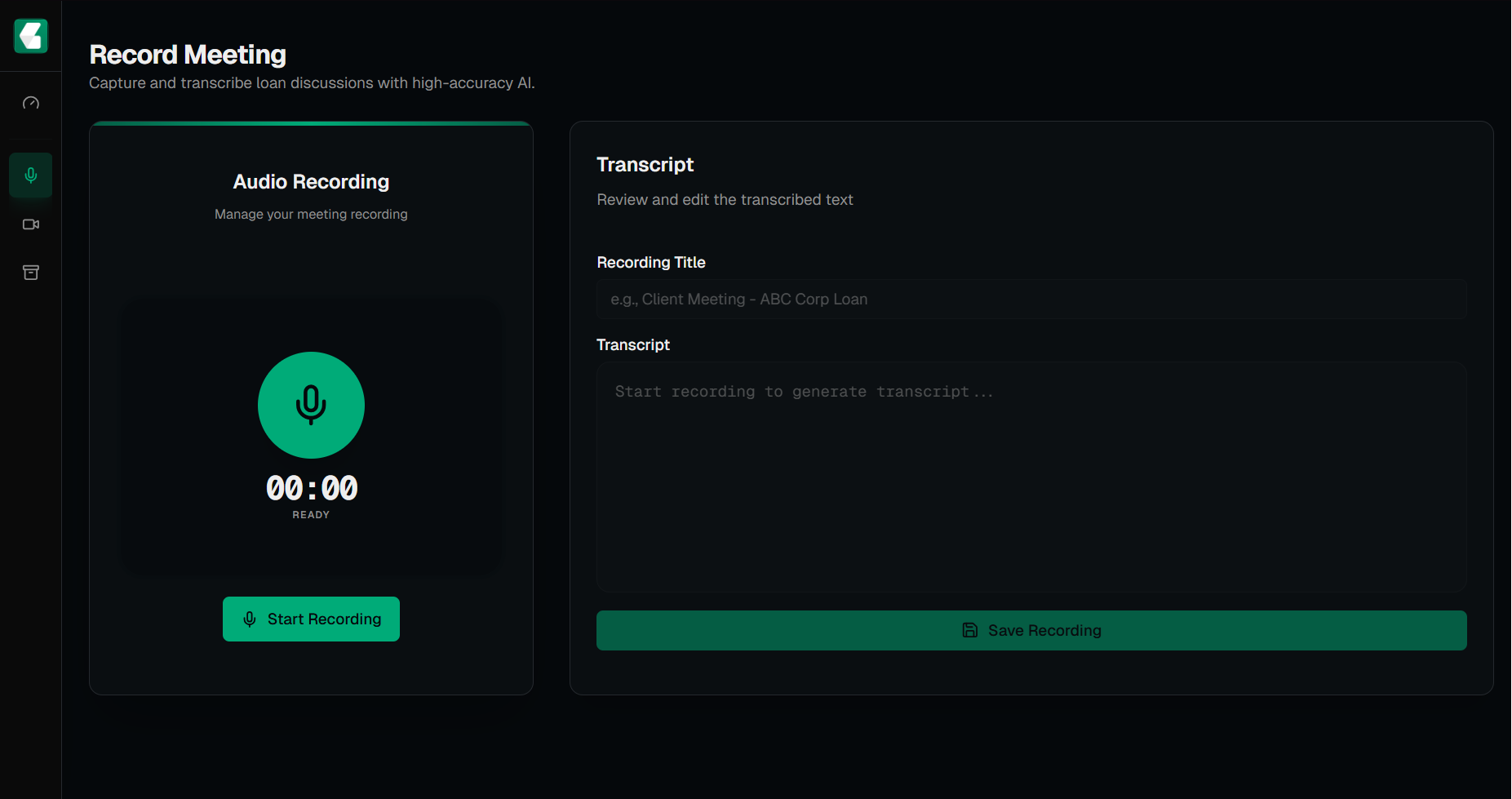
Meeting note taker
-
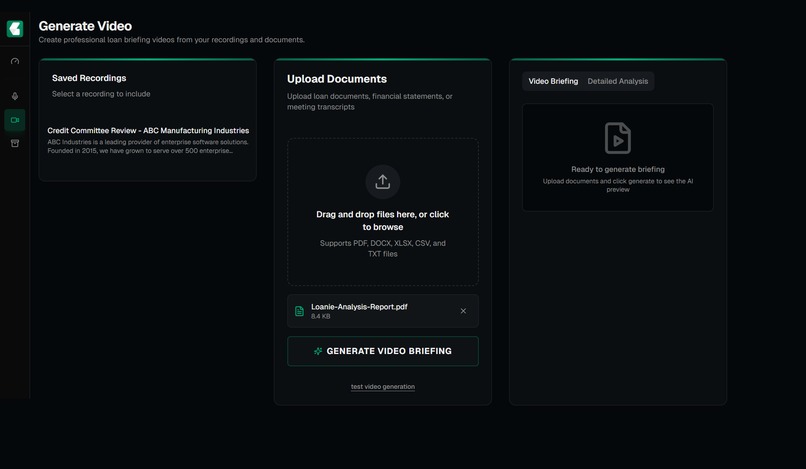
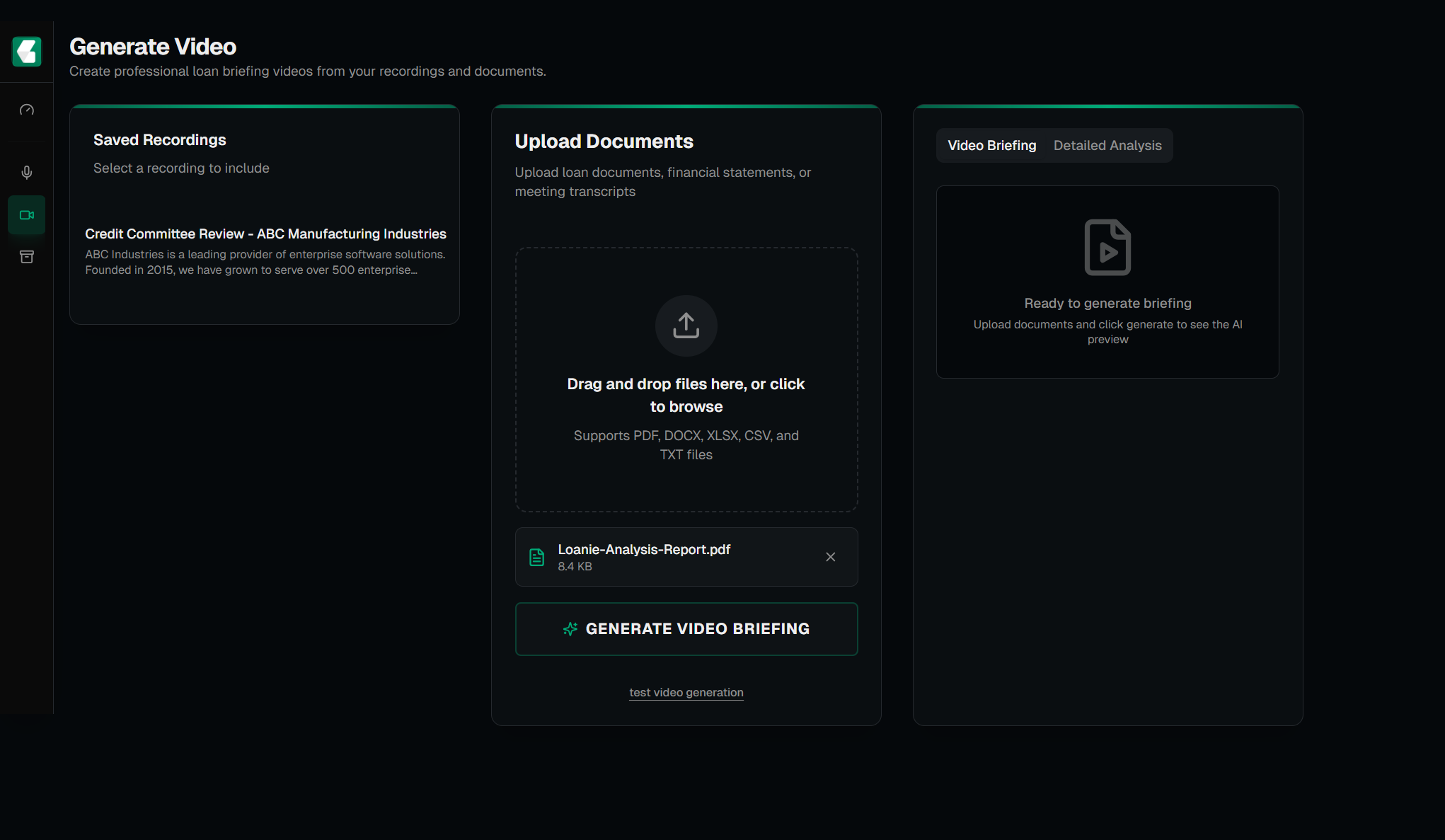
Video generator page
-
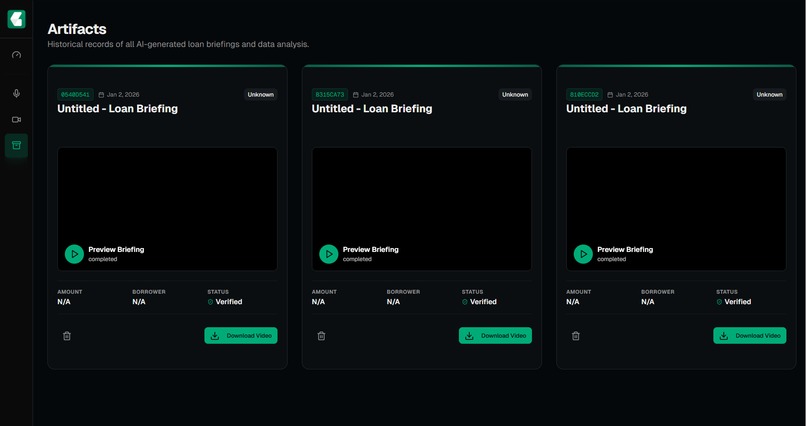
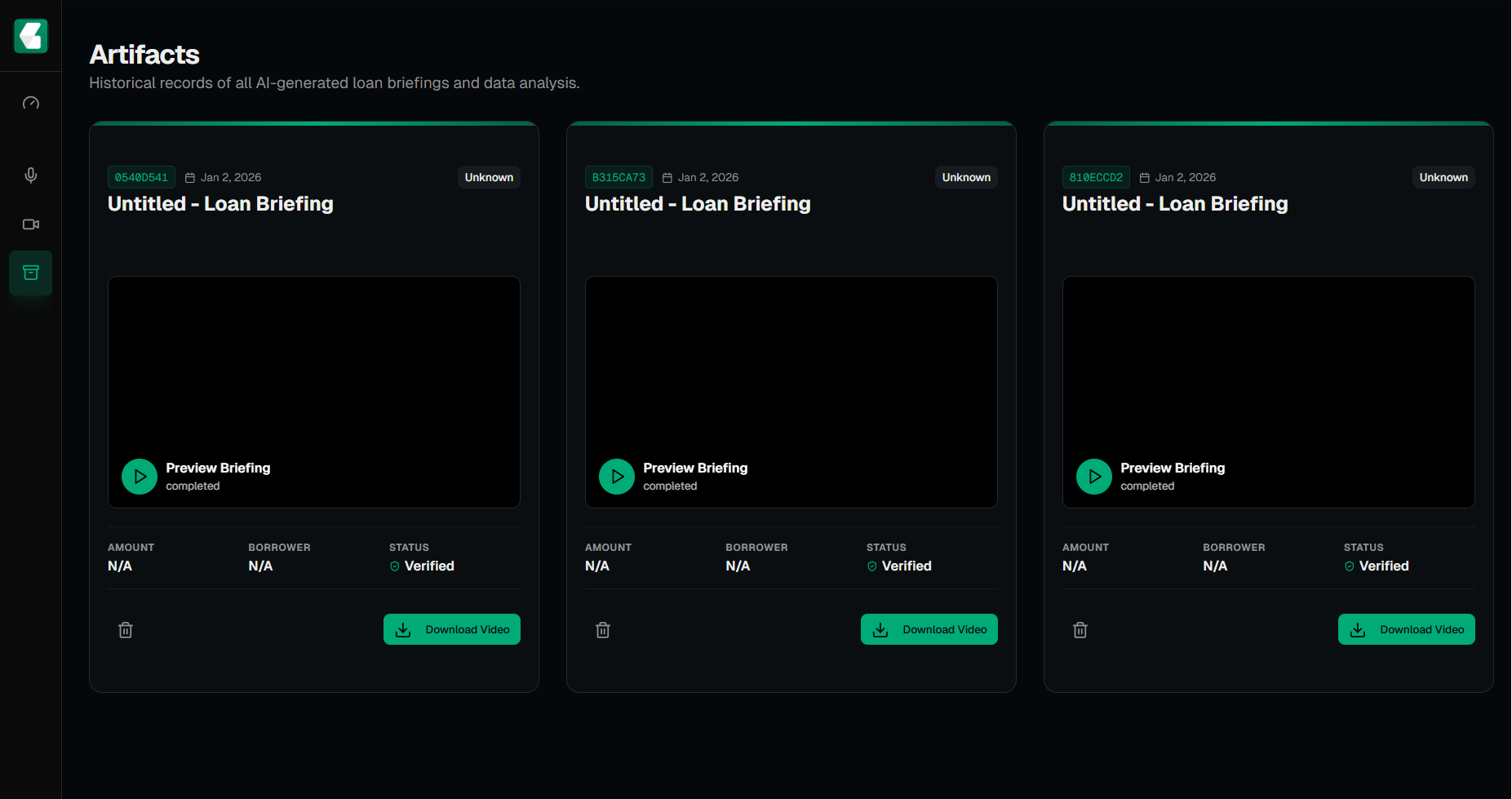
Generated artifacts page
-
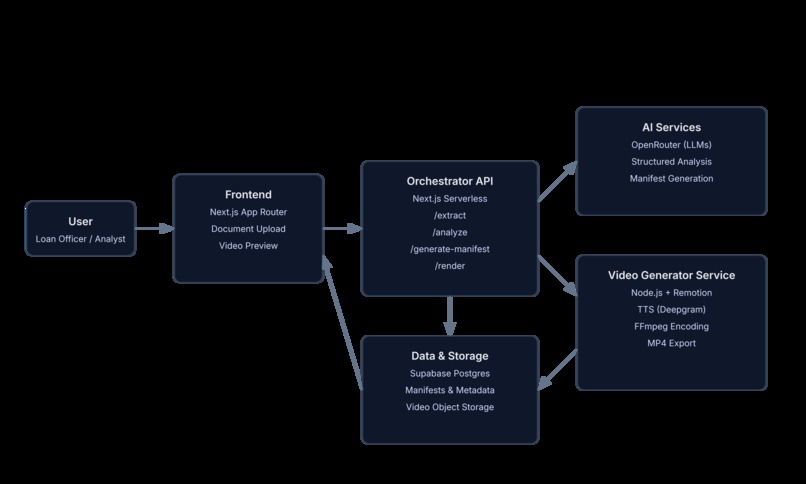
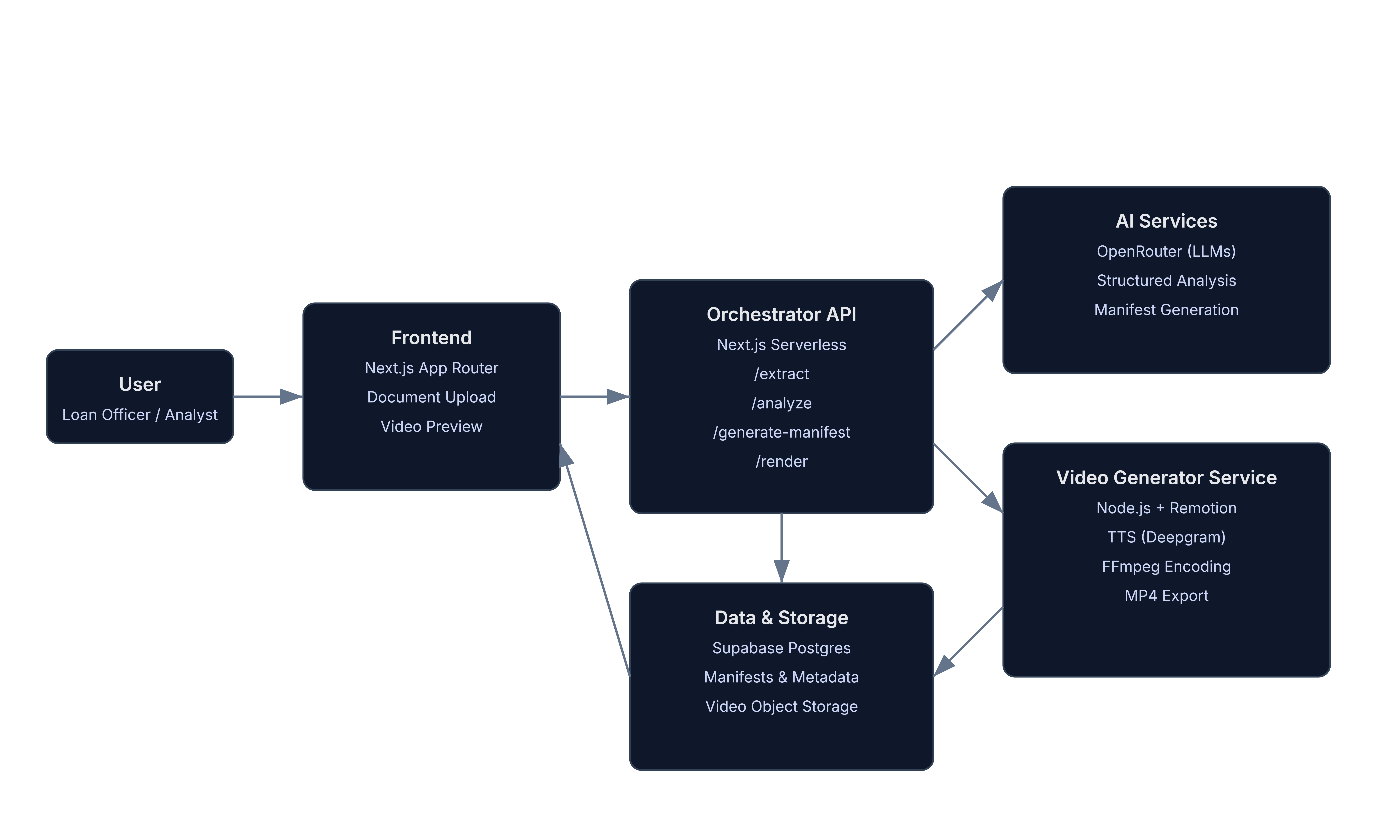
Architecture diagram
Inspiration
Modern loan decisions are still driven by long PDFs, scattered spreadsheets, and verbal explanations that change depending on who is presenting. During research into credit workflows, one thing became obvious: the bottleneck isn’t data — it’s communication.
Credit committees, risk teams, and secondary market buyers all consume the same loan information differently, often leading to delays, rework, and misalignment. I was inspired to build Loanie after realizing there is no standardized, human-friendly way to brief a loan — especially in a world where speed, transparency, and auditability matter.
Loanie started with a simple question:
What if loan intelligence could be compiled into a clear, consistent briefing the same way software is compiled into binaries?
What it does
Loanie is an AI-assisted loan intelligence platform that converts complex loan information into standardized, institution-grade video briefings.
Users upload loan documents and notes, and Loanie:
- Analyzes and structures financials, risks, covenants, and ESG factors
- Generates a deterministic Video Manifest (JSON) as a single source of truth
- Compiles that manifest into a concise, professional video briefing
The result is a clear, explainable loan summary that can be consumed in minutes instead of hours — without replacing human judgment or hiding logic behind black-box AI.
How we built it
Loanie was built as a compiler-style system, separating intelligence from execution.
- Frontend: Next.js + React for the loan workspace and video generation UI
- Backend: Serverless APIs to orchestrate document parsing, analysis, and manifest generation
- AI Layer: LLMs are used only to structure information — not to improvise visuals
- Video Engine: Remotion + FFmpeg render videos from a deterministic JSON manifest
- TTS: High-quality narration generated programmatically
- Storage: Structured data, manifests, and rendered videos stored with full traceability
Once the Video Manifest is generated, AI stops. The same JSON will always produce the same video — making the system explainable, auditable, and compliance-friendly.
Challenges we ran into
The biggest technical challenge was running a heavy video rendering pipeline in a serverless environment. Remotion relies on a full Chromium instance, and after multiple attempts, I couldn’t get stable multi-minute renders running on Cloud Run without hitting memory limits and upstream timeouts.
Instead of blocking on infrastructure, I pivoted. I turned a spare computer at home into a dedicated rendering server and securely exposed it to the internet using ngrok. This allowed me to run Chromium, FFmpeg, and Remotion without artificial constraints, while keeping the rest of the application fully cloud-based.
Beyond infrastructure, I also had to solve how to coordinate long-running, asynchronous video renders with a live Next.js frontend. I built a resilient status-tracking flow using Supabase so users could see real-time progress instead of waiting on a static loading screen. Finally, I designed a strict validation layer that converts probabilistic AI output into a fully deterministic JSON video manifest — ensuring every scene, metric, and animation renders predictably with no hallucination at render time.
Accomplishments that we’re proud of
- Designing a unified Video Manifest that acts as executable loan intelligence
- Building a fully deterministic AI-to-video pipeline
- Shipping a working end-to-end system as a solo builder
- Successfully deploying the app and rendering real loan briefing videos
- Creating something that feels institutional, not experimental
What we learned
- In financial systems, explainability beats cleverness
- AI is most powerful when it structures decisions — not when it makes them
- Treating outputs as “code” creates trust, auditability, and scale
- Clear constraints lead to better products
Most importantly, I learned that speed and safety don’t have to be trade-offs if the system is designed correctly.
What’s next for Loanie
Next steps for Loanie include:
- Source-level traceability for every metric and statement
- Branded institutional video templates
- Support for secondary loan trading and portfolio reviews
- Deeper ESG and covenant monitoring
Long term, Loanie aims to become the standard way loans are explained.
Built With
- gemini
- next.js
- ngrok
- remotion
- supabase


Log in or sign up for Devpost to join the conversation.