-
-
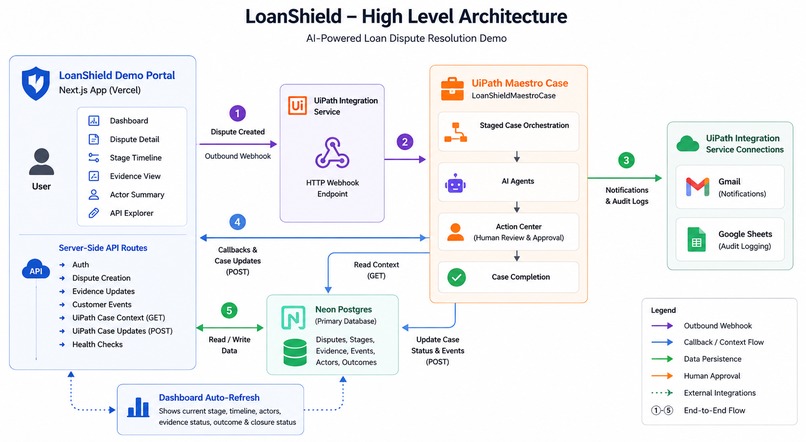
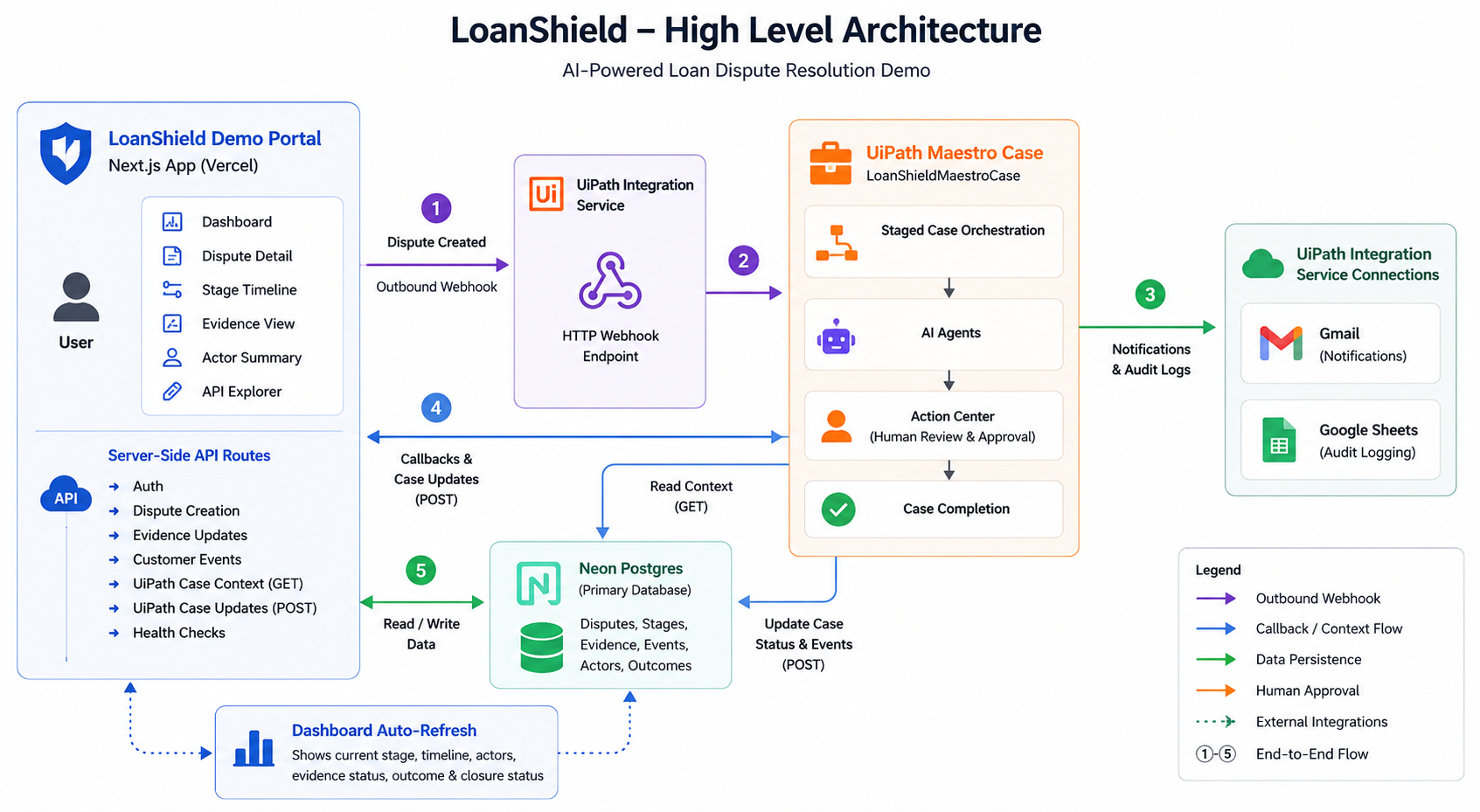
High level Architecture
-
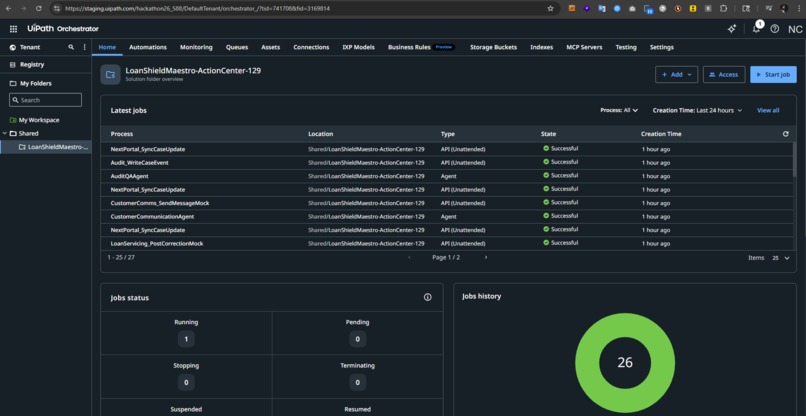
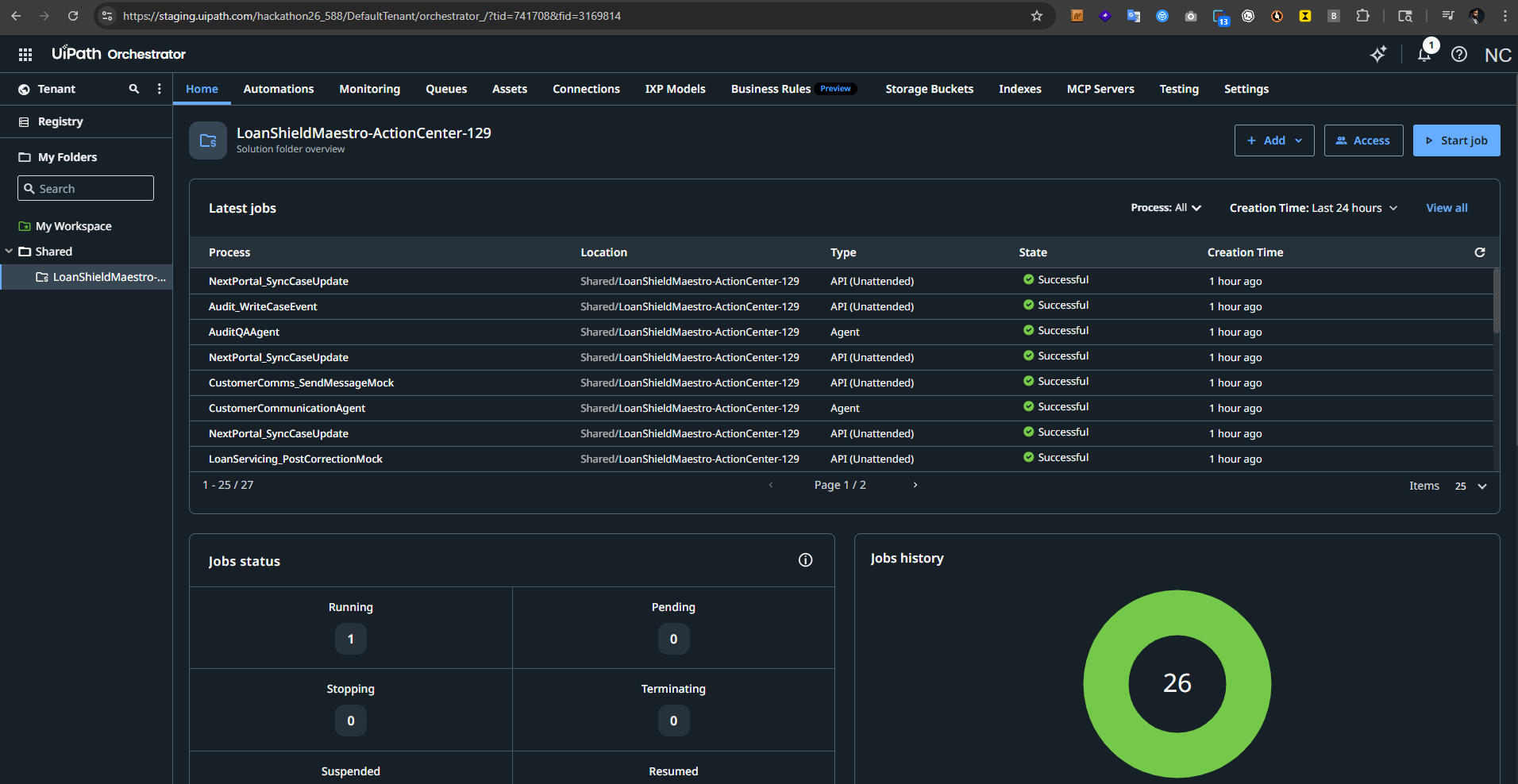
Folder level processes
-
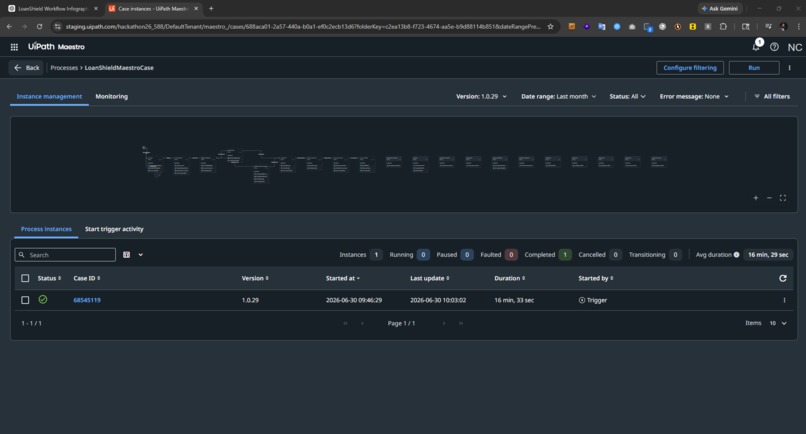
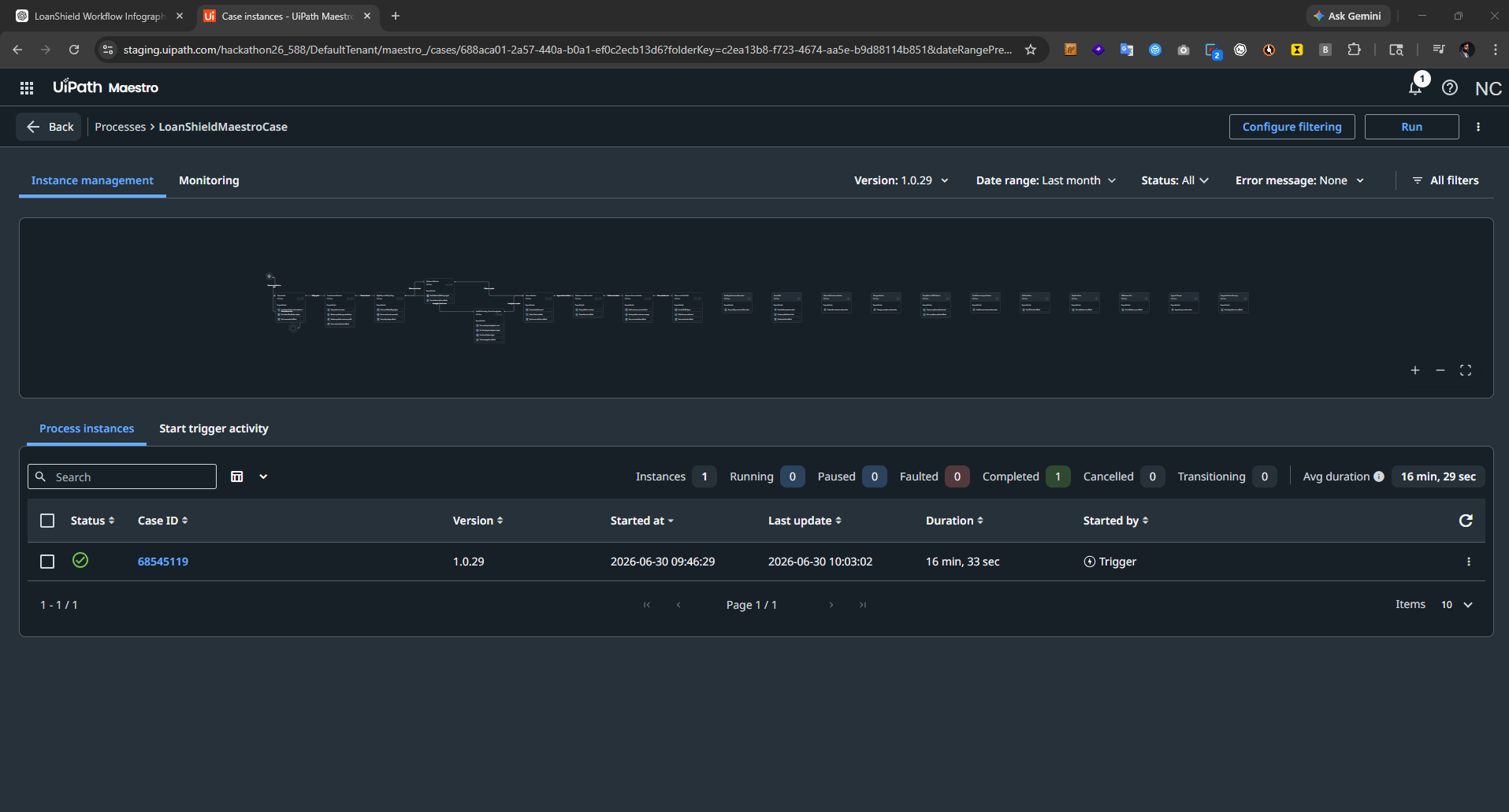
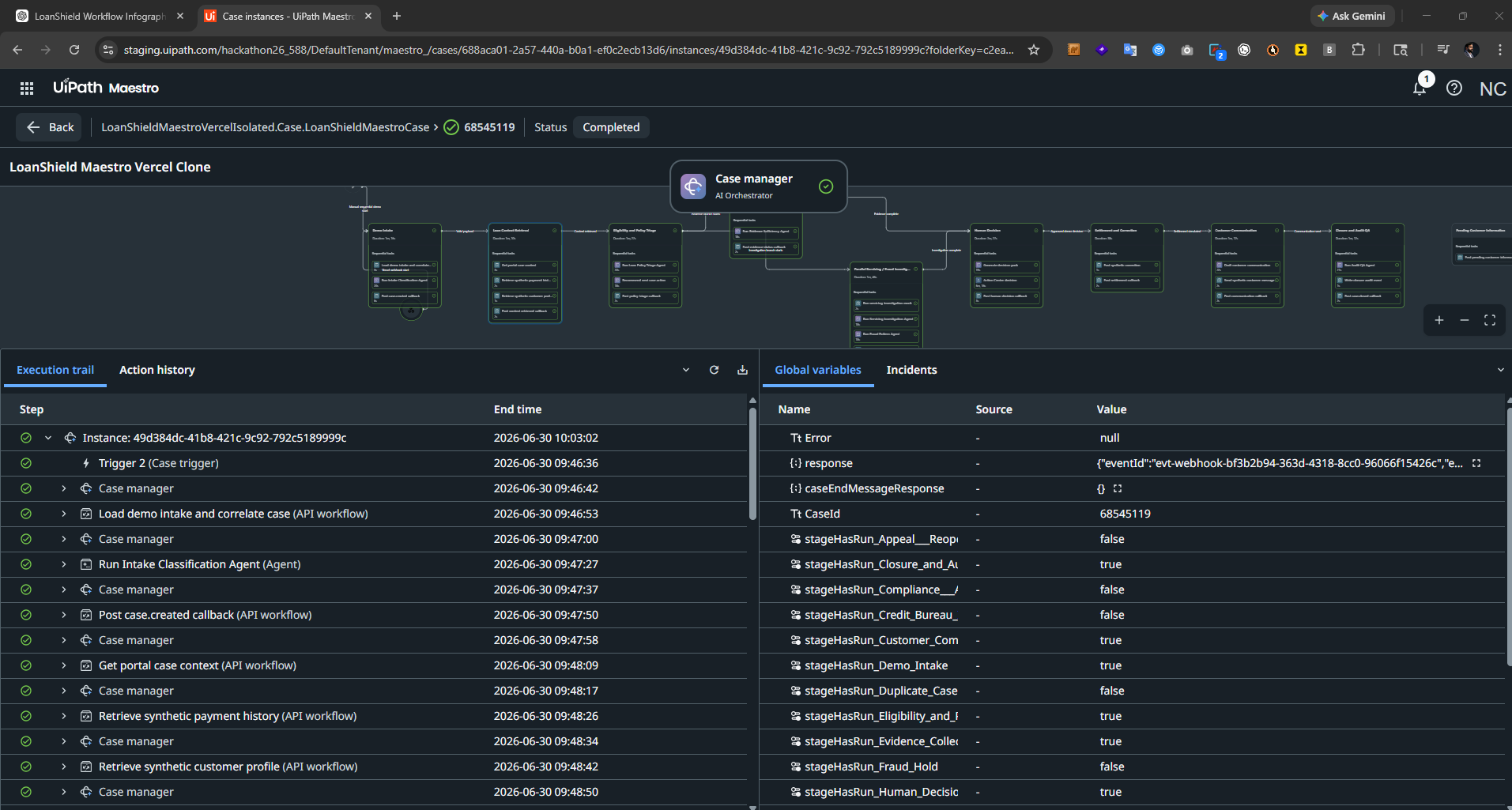
Maestro Case Instance
-
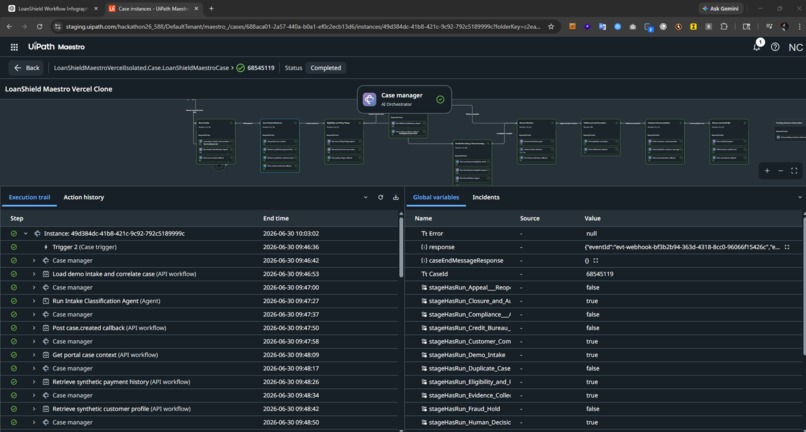
Successful Run from External trigger
-
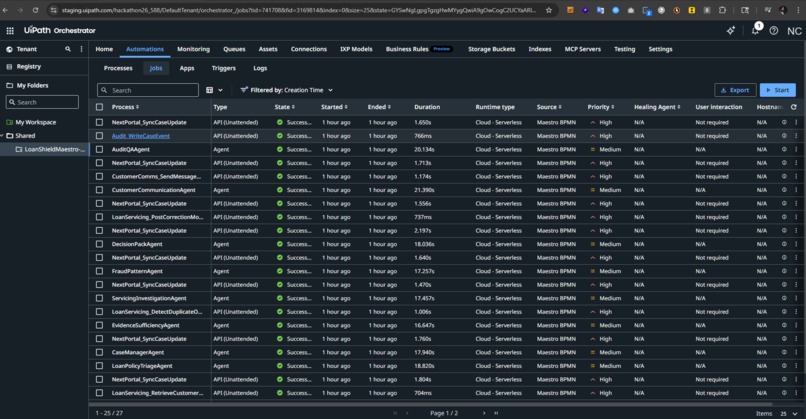
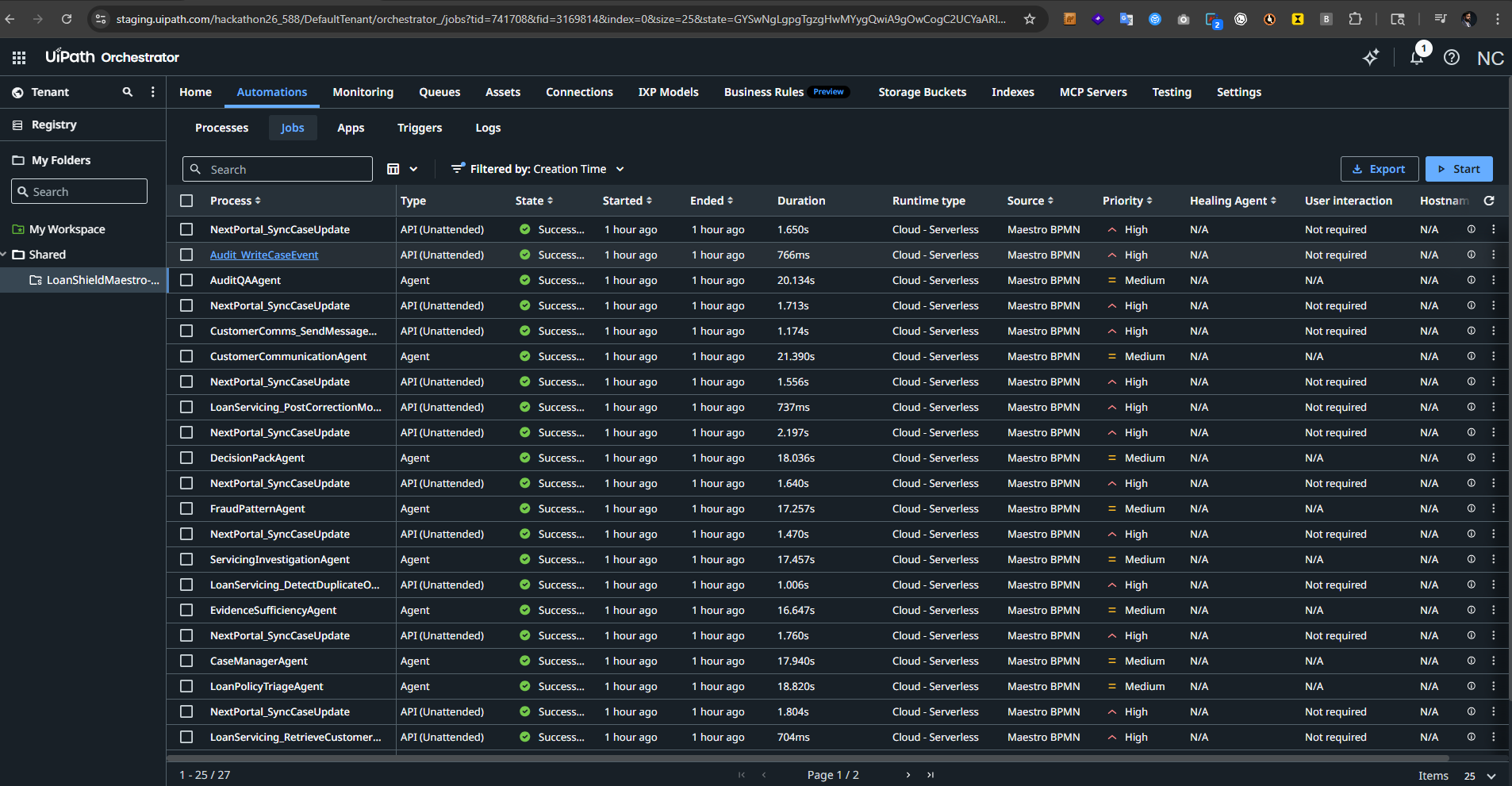
Orchestrator Package deployed
Inspiration
Loan disputes are stressful for customers and operationally messy for lenders. A single dispute can involve payment history, servicing notes, customer evidence, policy checks, fraud signals, human approvals, customer notifications, and audit records. I wanted to build LoanShield to show how AI agents and UiPath case management can turn that fragmented process into one clear, auditable, end-to-end workflow.
What It Does
LoanShield is an AI-powered loan dispute resolution demo. A customer dispute starts in a Next.js web portal, gets stored in Neon PostgreSQL, and triggers a UiPath workflow through a secure webhook. UiPath Maestro Case Management then orchestrates the full case through intake, context retrieval, policy triage, evidence review, investigation, human decision, settlement, communication, audit QA, and closure.
The portal updates as UiPath progresses through each stage, so the user can see the case status, timeline, actors, evidence, and final outcome. The solution also includes Gmail notifications, Google Sheets audit logging, and an Action Center decision gate where a human reviewer can approve the recommended path.
How I Built It
The project combines a modern web app with UiPath automation and orchestration:
- Frontend and API layer: Next.js app hosted on Vercel
- Database: Neon PostgreSQL for disputes, stages, events, evidence, actors, and outcomes
- Automation orchestration: UiPath Maestro Case Management
- Triggering: Secure webhook from the LoanShield portal into UiPath
- UiPath API workflows: Case creation, callback updates, mock policy/context retrieval, and integration calls
- AI agents: UiPath Agent Builder projects for intake classification, policy triage, evidence sufficiency, fraud pattern review, servicing investigation, decision pack generation, customer communication, audit QA, and case management
- Human-in-the-loop: UiPath Action Center approval at the decision stage
- Notifications and audit: Gmail HTML emails and Google Sheets logging
- Build support: OpenAI Codex, UiPath coding agents, and UiPath CLI
At a high level, the flow is:
- LoanShield creates a dispute in the web app.
- The app saves the dispute in Neon.
- The app sends a secure webhook to UiPath.
- UiPath starts or correlates the Maestro case.
- Agents and workflows process each stage.
- Action Center captures the human approval.
- UiPath posts status updates back to the LoanShield API.
- The portal updates the dashboard and timeline.
- Gmail and Google Sheets capture communication and audit outputs.
- The case closes with a detailed resolution summary.
What I Learned
I learned a lot about designing a real case-management automation instead of just a simple task trigger. The biggest lesson was that a strong automation demo needs a clear story: what starts the case, what happens next, where AI helps, where a human decision is needed, and how the system proves the final outcome.
I also learned how important correlation IDs, callback APIs, and stage-level state updates are when connecting an external app to UiPath. The automation is only convincing when the web portal, database, UiPath case, notifications, and audit logs all agree on the same case state.
Challenges I Faced
One challenge was connecting the Vercel web app and UiPath case flow cleanly. The project needed secure webhook authentication, callback authentication, case correlation, and reliable updates back into Neon.
Another challenge was making the UiPath case feel sequential and explainable while still showing realistic parallel AI-assisted work. I had to separate the trigger from the actual case stages, then make the stages run in a way that a demo audience could understand.
The Action Center integration was also important because the demo needed to show that AI is not making every final decision alone. Adding a human approval point made the workflow more realistic and enterprise-ready.
Finally, keeping the portal synchronized with the completed UiPath run required careful callback design. The web app had to show the stage gates, timeline, evidence, and closure status accurately after UiPath completed the case.
Accomplishments
I am proud that LoanShield is not just a static prototype. It demonstrates a complete end-to-end pattern: web app to webhook, webhook to UiPath, UiPath to case orchestration, AI agents to decision support, Action Center to approval, and callbacks back to the customer-facing dashboard.
The project also shows how UiPath Maestro, Agent Builder, Action Center, Integration Service, Gmail, Google Sheets, and a modern web stack can work together as one cohesive automation experience.
What's Next
Next, I would expand LoanShield with real lender servicing APIs, richer document evidence extraction, more detailed policy reasoning, fraud scoring, escalation paths for rejected approvals, and analytics for dispute trends. I would also add role-based views for customers, agents, reviewers, and compliance teams.
Built With
- drizzle-orm
- gmail
- google-sheets
- neon-postgresql
- next.js
- openai-codex
- react
- secure-webhooks
- tailwind-css
- typescript
- uipath-action-center
- uipath-agent-builder
- uipath-api-workflows
- uipath-cli
- uipath-coding-agents
- uipath-integration-service
- uipath-maestro-case-management
- uipath-orchestrator
- uipath-studio-web
- vercel



Log in or sign up for Devpost to join the conversation.