
Inspiration
Inspiration:
The inspiration behind the Loan Prediction project was to leverage data science and machine learning to make the lending process more efficient and fair. Access to loans can be a life-changing opportunity for individuals and businesses, and we wanted to create a tool that helps financial institutions make data-driven decisions while also ensuring that deserving applicants are not denied loans unjustly.
What We Learned:
Throughout the project, we learned valuable insights about data preprocessing, feature engineering, and machine learning model selection. We discovered that the quality of data plays a critical role in model accuracy and fairness. We also gained a deeper understanding of the ethical considerations surrounding lending decisions and the importance of avoiding bias in machine learning models.
What it does
The Loan Prediction project is a comprehensive system that performs several key functions to streamline the loan approval process, promote fairness, and enhance transparency. Here's a breakdown of what the project does:
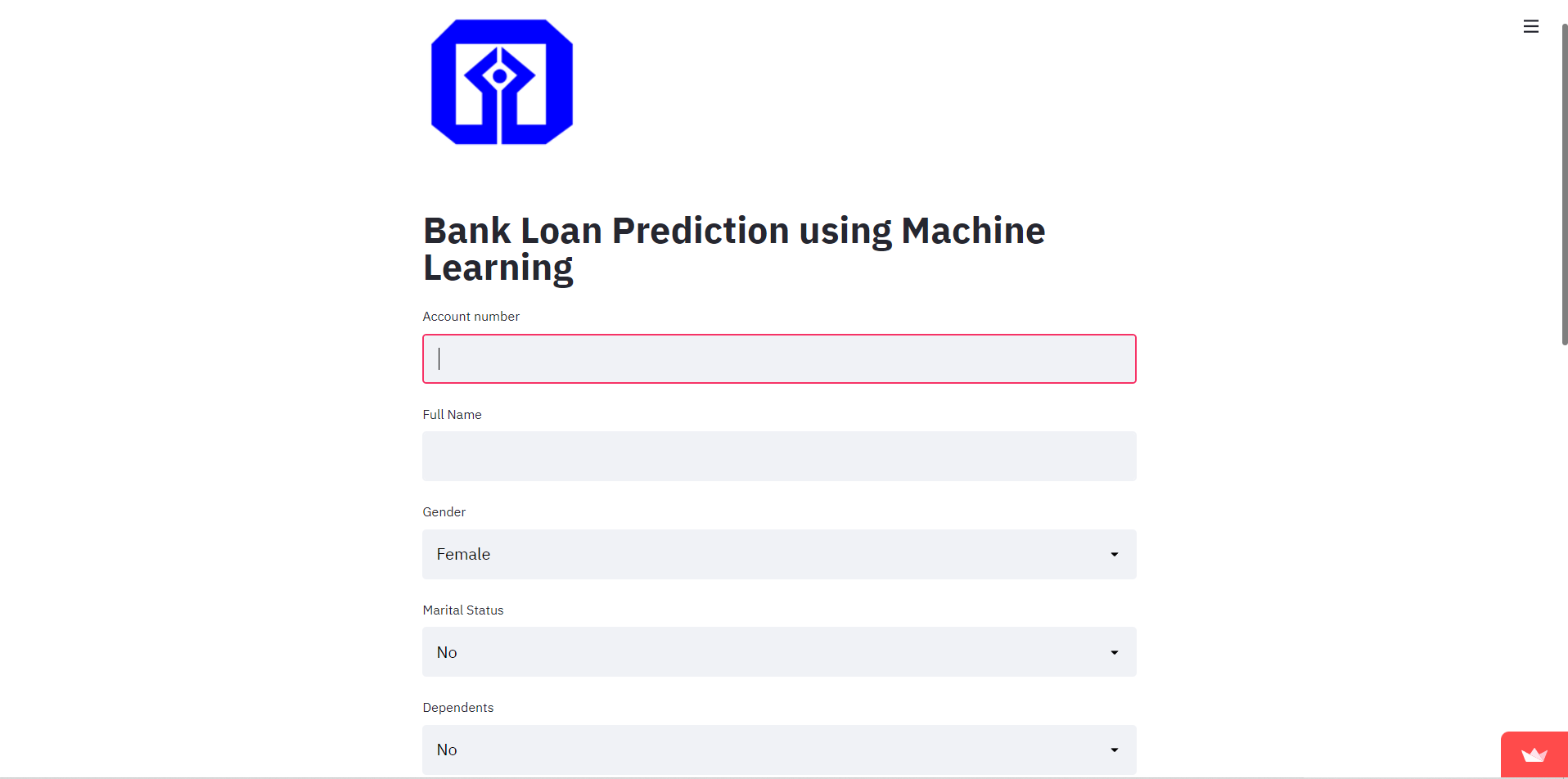
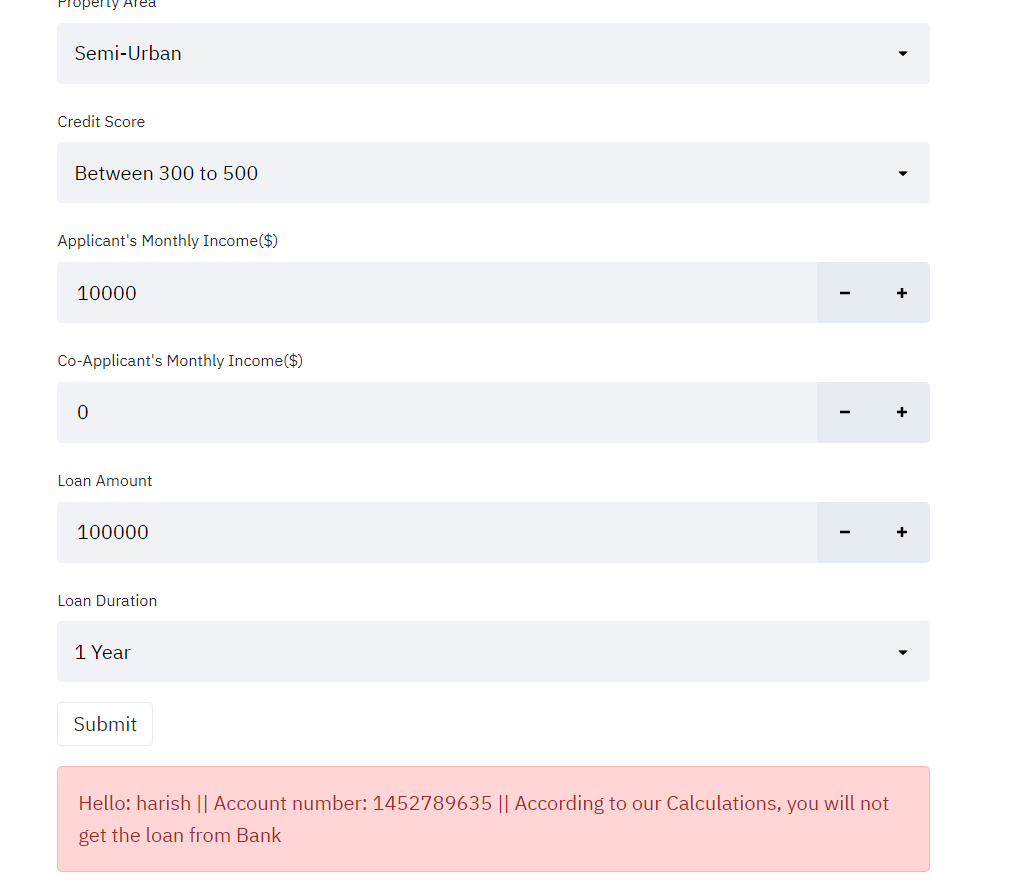
Loan Application Input: Users, including loan applicants, access the project through an interactive web application built with Streamlit. They provide their loan application details, including personal information, financial history, and loan specifics.
How we built it
Data Collection: We gathered historical loan application data, including information about applicants, their financial history, and loan approval outcomes. This dataset formed the foundation of our project.
Data Preprocessing: One of the initial challenges we faced was dealing with missing data, outliers, and data inconsistencies. We applied data preprocessing techniques like imputation, scaling, and encoding to prepare the data for modeling.
Feature Engineering: We engineered new features to improve the predictive power of our models. This involved creating variables like debt-to-income ratio and loan-to-income ratio, which provided more meaningful insights into an applicant's financial situation.
Model Selection: We experimented with various machine learning algorithms, including logistic regression, random forests, and gradient boosting, to predict loan approval outcomes. We evaluated model performance using metrics such as accuracy, precision, recall, and F1-score.
Ethical Considerations: Ensuring fairness in lending decisions was a top priority. We implemented techniques like re-weighting, re-sampling, and model explainability to reduce bias and make the model fairer.
Streamlit App: We used the Streamlit library in Python to build an interactive web application that allows users to input their loan application details and receive instant predictions. The app provides explanations for the approval or rejection decision, enhancing transparency.
Challenges we ran into
Data Quality: Dealing with missing and inconsistent data required careful handling and decision-making about imputation strategies. Bias Mitigation: Addressing bias in lending decisions and ensuring fairness was a complex challenge that required ongoing evaluation and refinement. Model Deployment: Deploying the machine learning model as an interactive Streamlit web app required learning about web development and deployment best practices. In conclusion, the Loan Prediction project not only allowed us to apply data science and machine learning skills but also raised awareness about the ethical considerations and responsibilities associated with automated decision-making, especially in domains with significant real-world consequences like finance. We are excited about the potential impact this project can have in improving access to loans while maintaining fairness and transparency.
Accomplishments that we're proud of
High Model Accuracy: We achieved a commendable level of accuracy in predicting loan approvals, ensuring that our model can make reliable decisions.
Fairness and Bias Mitigation: We successfully implemented measures to reduce bias in our lending decisions, making sure that the model is fair and does not discriminate against any group.
Interactive Streamlit App: Building an interactive and user-friendly Streamlit application that allows applicants to receive instant predictions and explanations was a significant achievement.
Transparency: We prioritized transparency by providing detailed explanations for each loan approval or rejection, helping users understand the reasoning behind the decision.
Ethical Awareness: We raised awareness about the ethical considerations surrounding AI in lending and took steps to address these concerns responsibly.
What we learned
Data Quality Matters: We learned that the quality of data is paramount in machine learning projects. Careful preprocessing and feature engineering can significantly impact model performance.
Fairness Challenges: Addressing bias in machine learning models is an ongoing process. We learned that fairness considerations must be an integral part of the model development lifecycle.
Model Explainability: The importance of model explainability became evident as we aimed to provide transparent decisions to users. We learned techniques for making complex models more interpretable.
Streamlit Proficiency: We acquired valuable skills in web app development using Streamlit, which can be applied to future projects.
What's next for Loan Prediction
Real-World Deployment: We plan to collaborate with financial institutions and regulatory bodies to deploy our loan prediction system in real-world scenarios, improving access to loans while maintaining fairness and transparency.
Continuous Improvement: We will continuously collect data and update our models to adapt to changing trends and regulations in the lending industry.
User Feedback Integration: Gathering feedback from users of the Streamlit app will be crucial. We aim to refine the user experience and make improvements based on user input.
Education and Advocacy: We will engage in educational initiatives and advocate for responsible AI in lending by sharing our experiences and insights with the wider community.
Research and Innovation: We will explore advanced AI techniques, such as federated learning and privacy-preserving AI, to further enhance fairness and privacy in lending decisions.
Expansion to Other Domains: The principles and technologies we developed for loan prediction can be extended to other domains where automated decision-making has societal impact, such as healthcare and hiring.
The Loan Prediction project is not just a standalone effort; it's a stepping stone toward a future where AI-driven decisions are both ethical and beneficial to society. We are excited about the potential for positive change and innovation in this space.

Log in or sign up for Devpost to join the conversation.