-
-
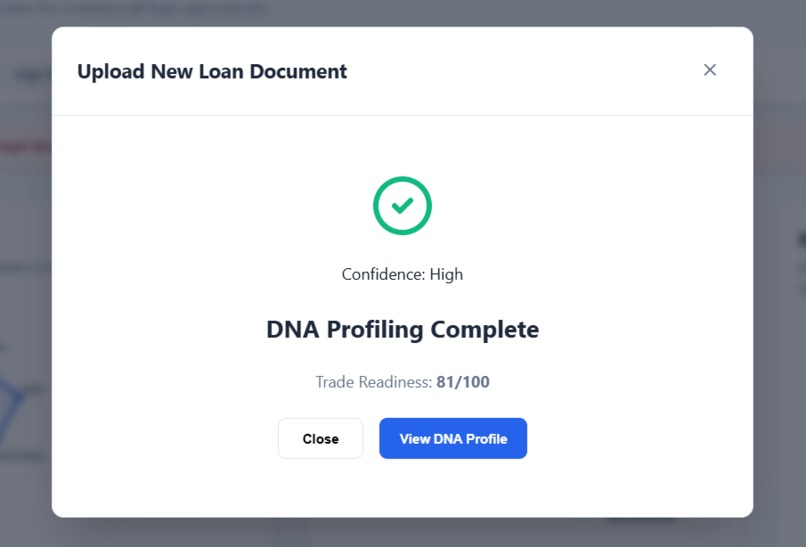
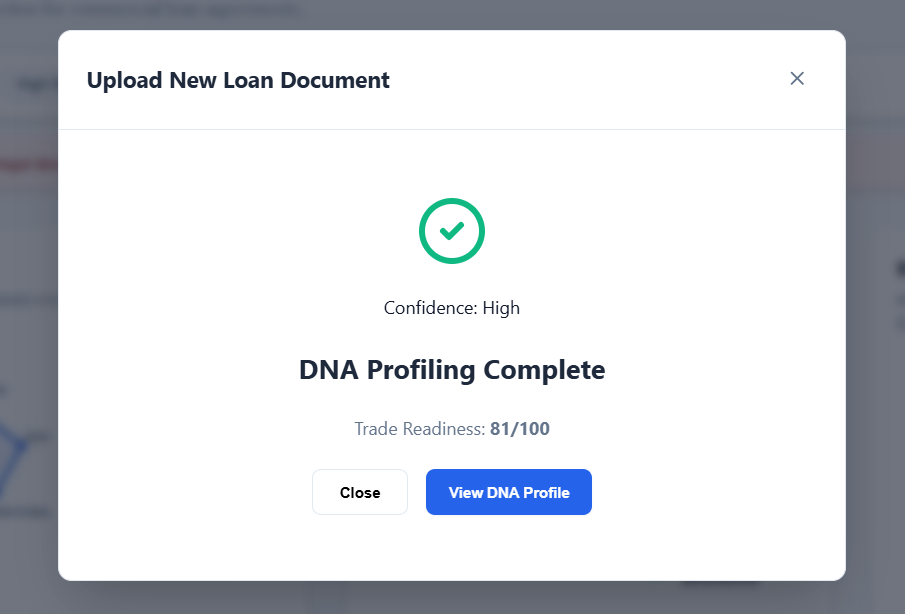
This is after the profiling of the uploaded document is done with document's rating/score
-
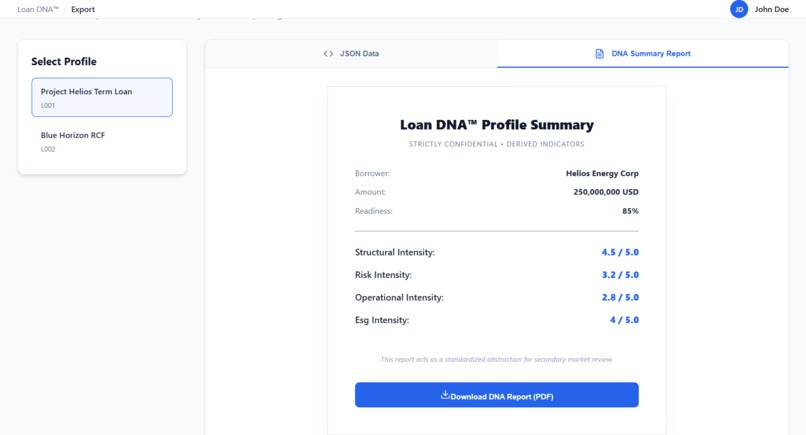
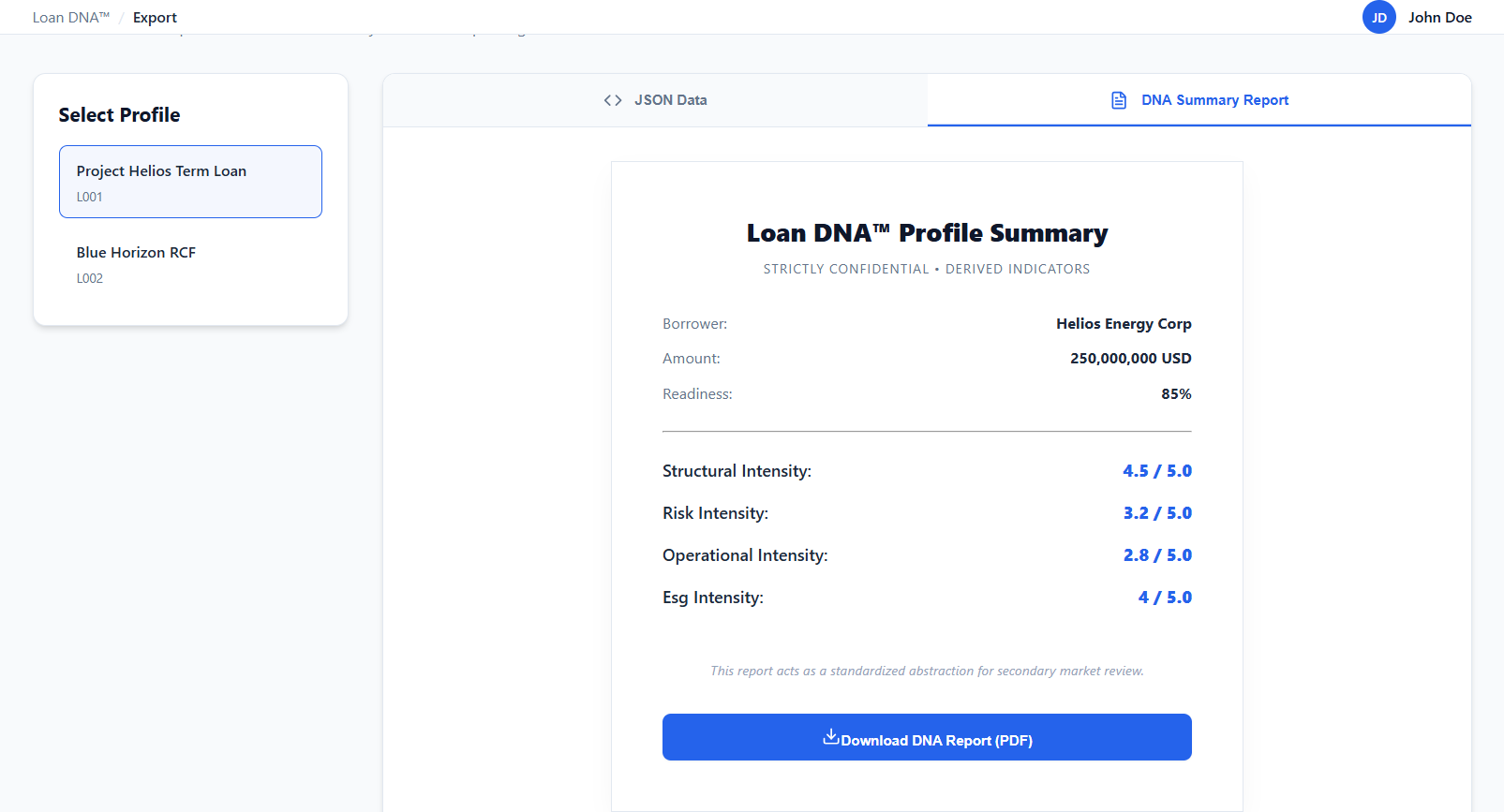
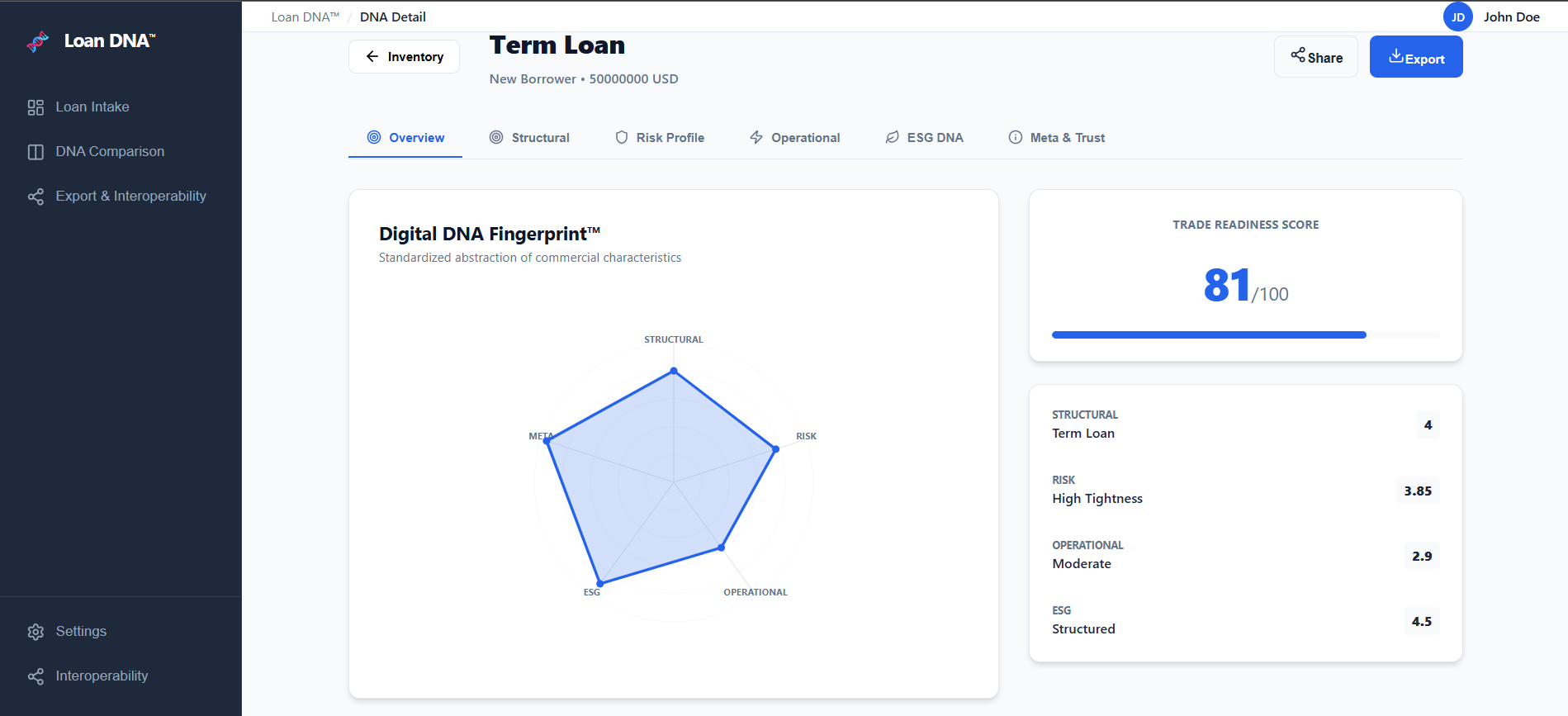
This is a summary of loan DNA profile of a loan document
-
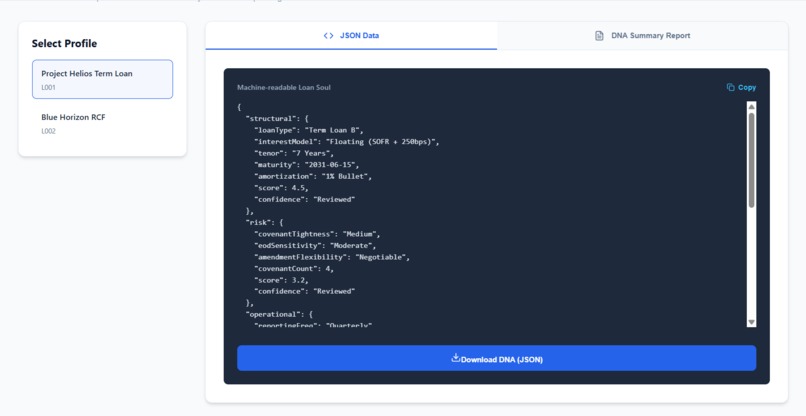
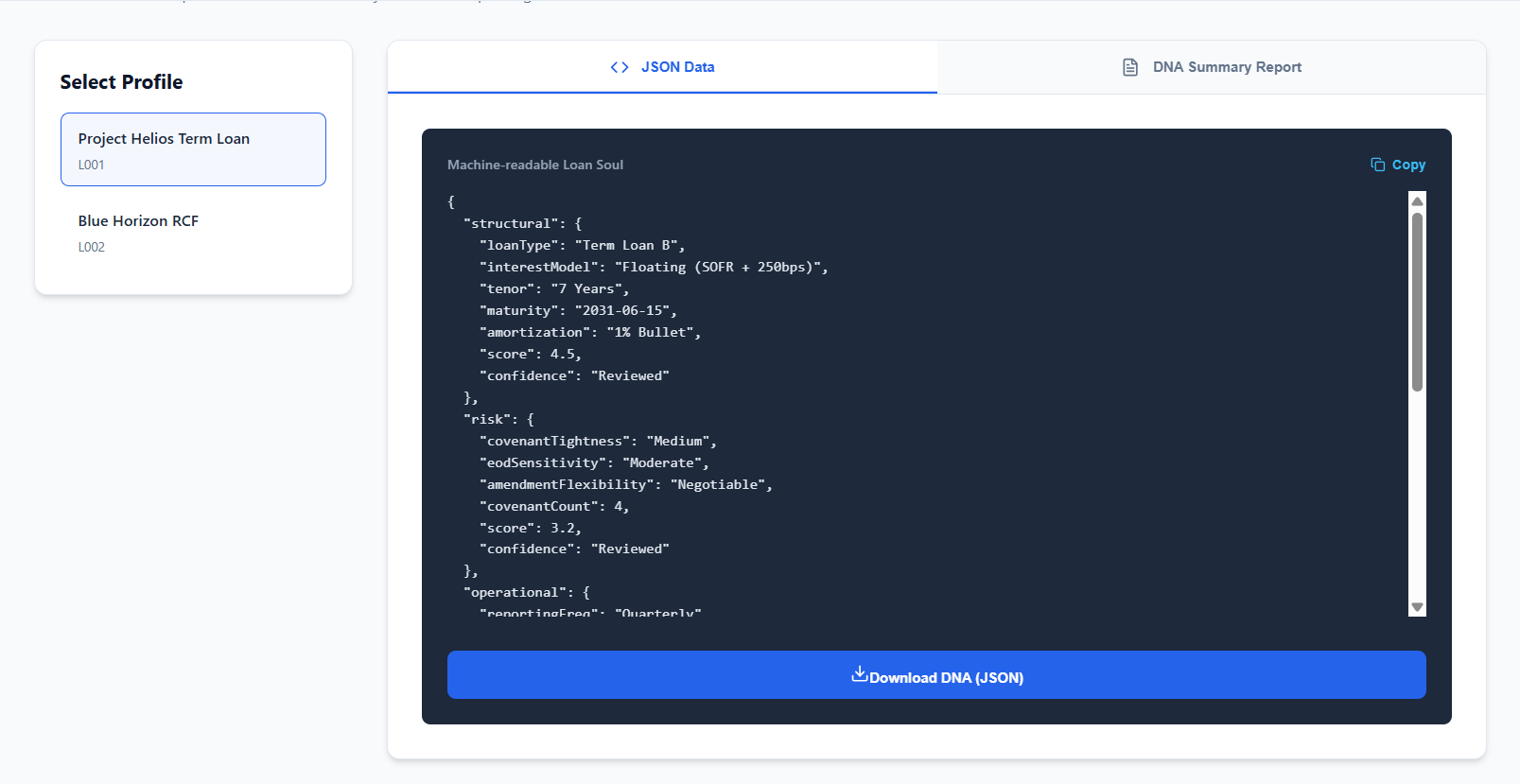
The is the original, machine readable DNA of loan document which can also be downloaded in a 'json' format
-
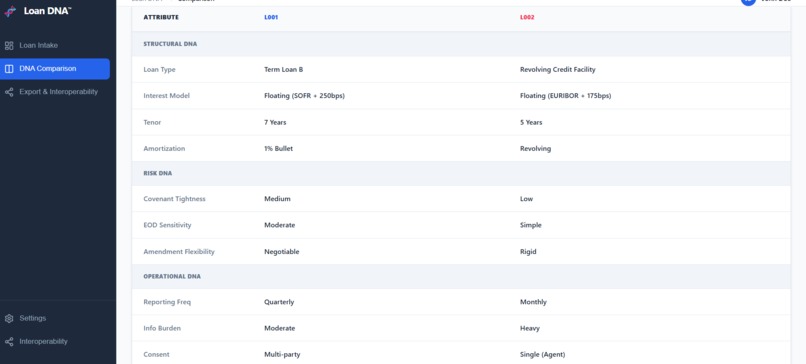
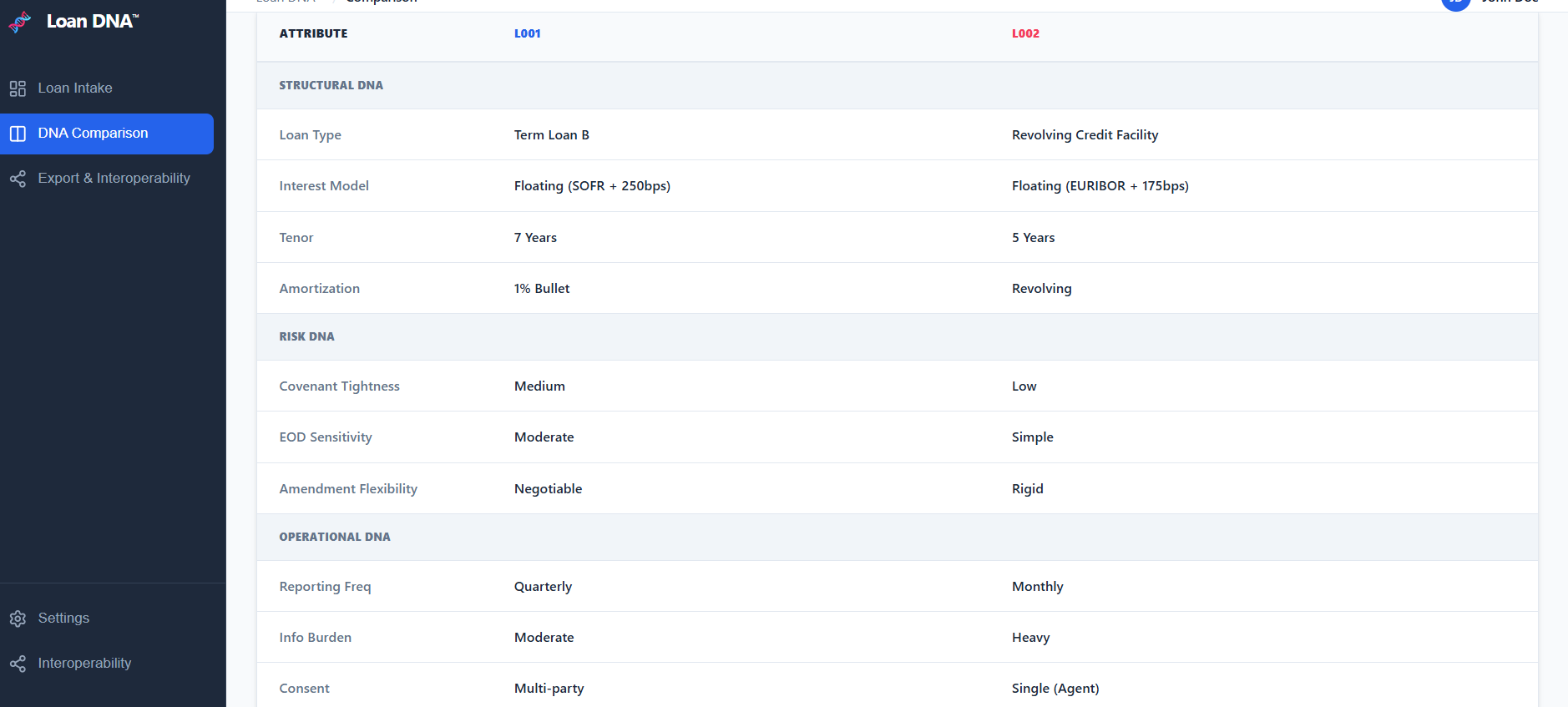
This is the detail comparison of two loan documents
-
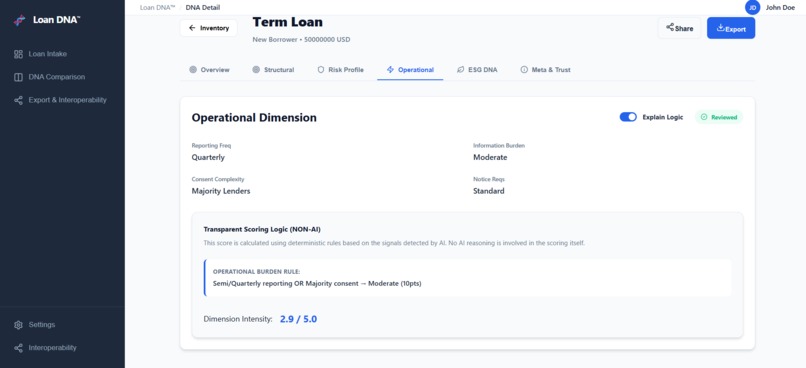
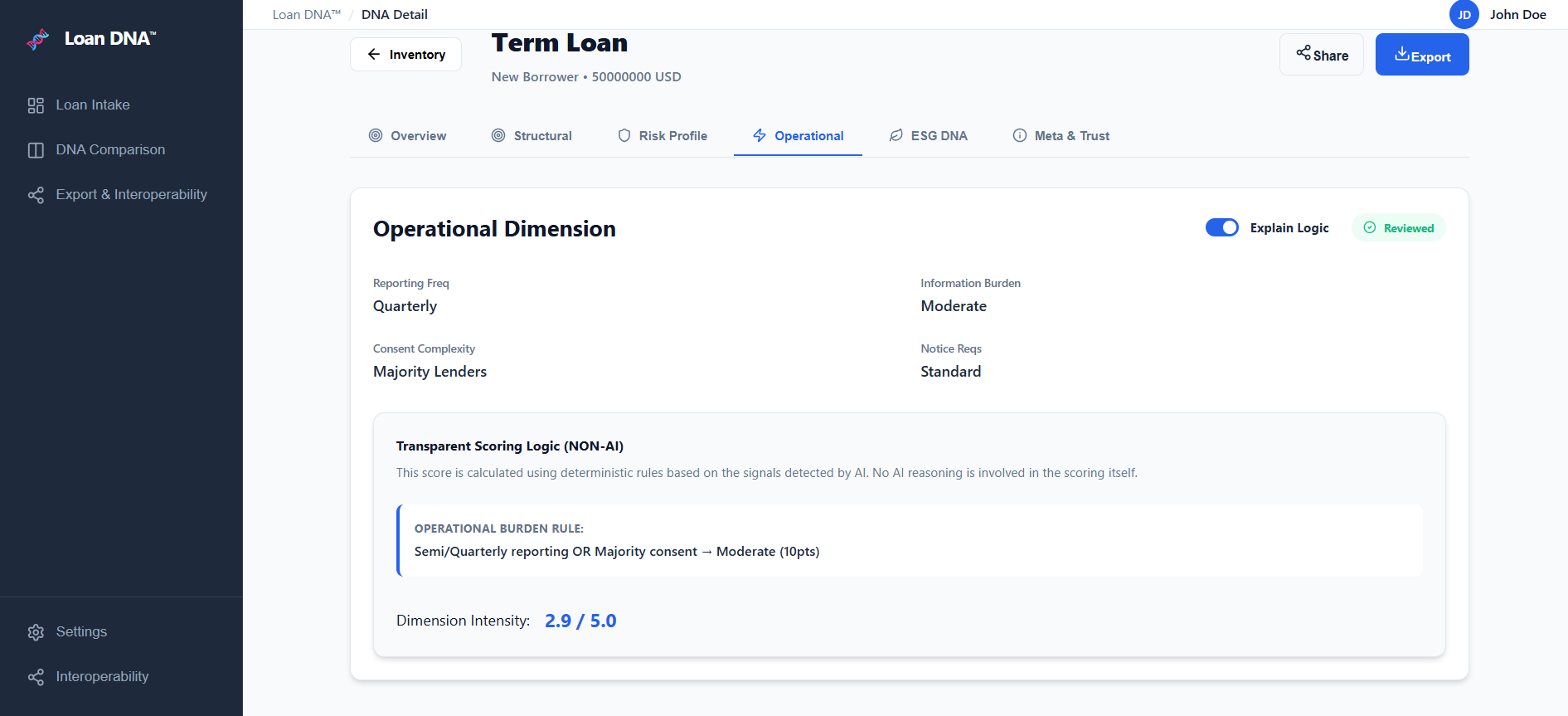
This is the Operational dimension and score of the loan document
-
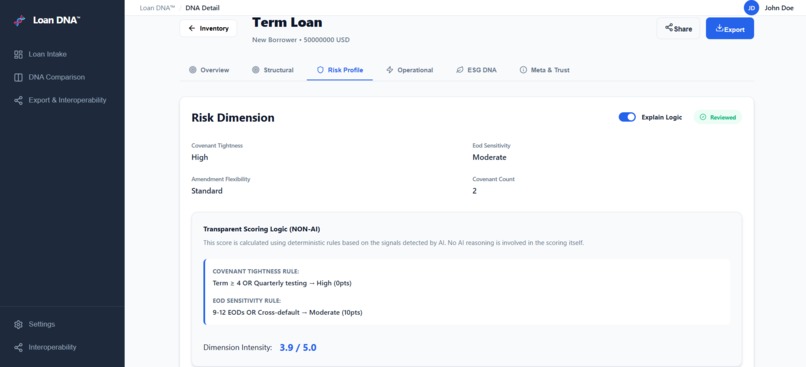
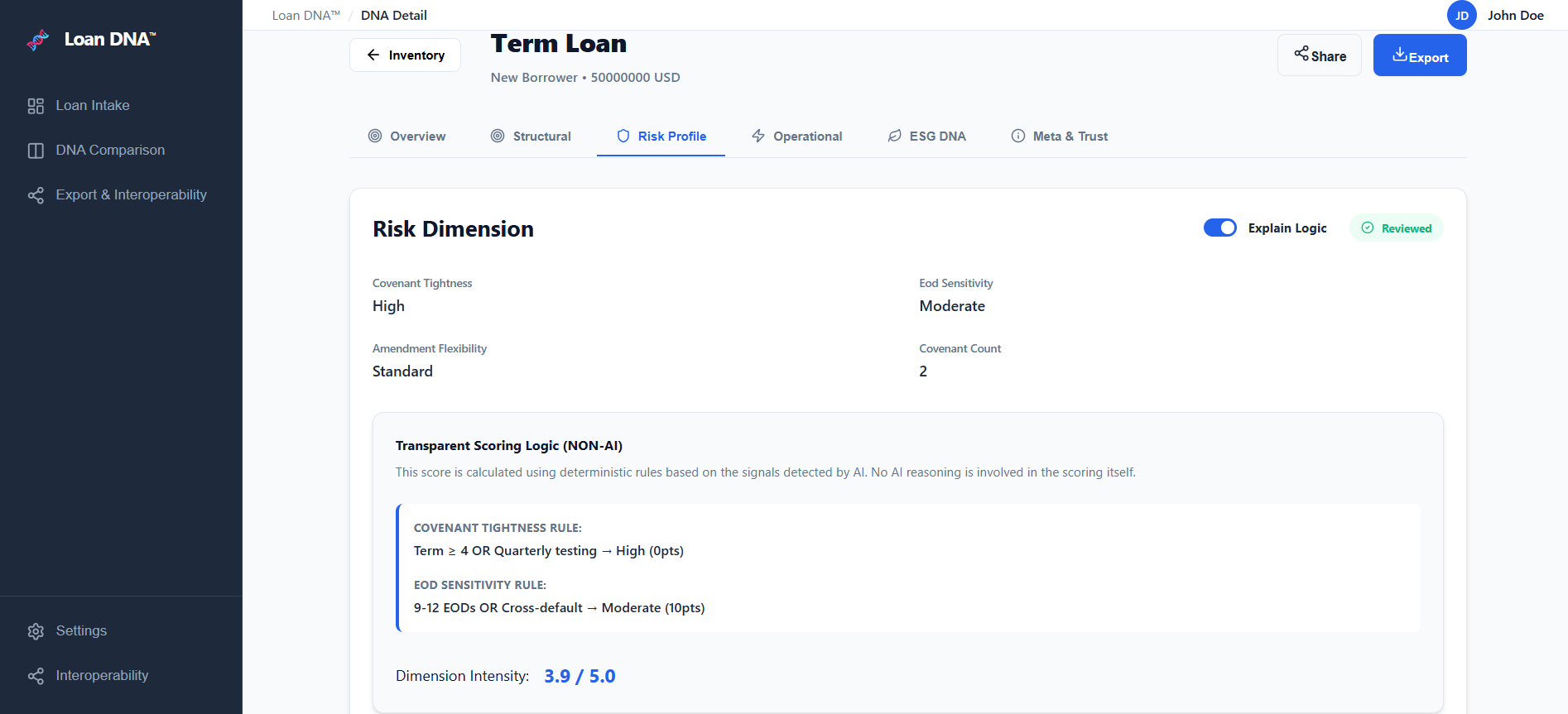
This is the Risk profile and the score of the loan document
-
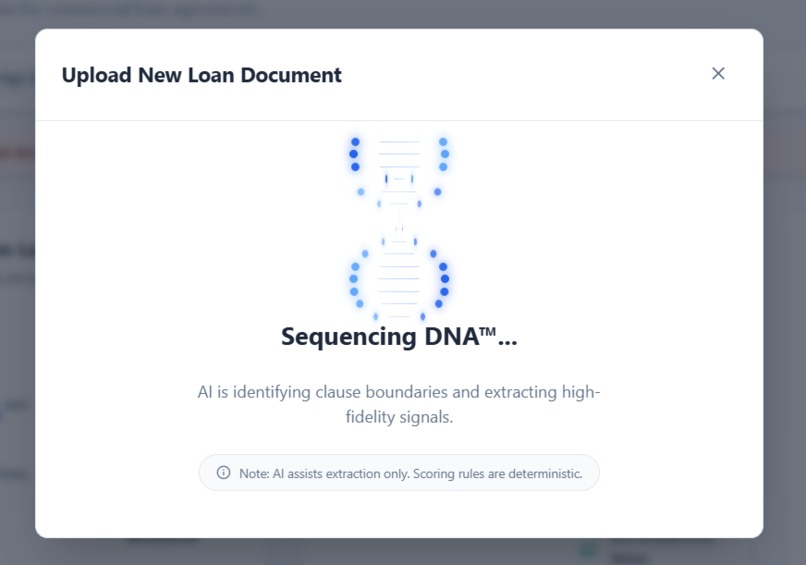
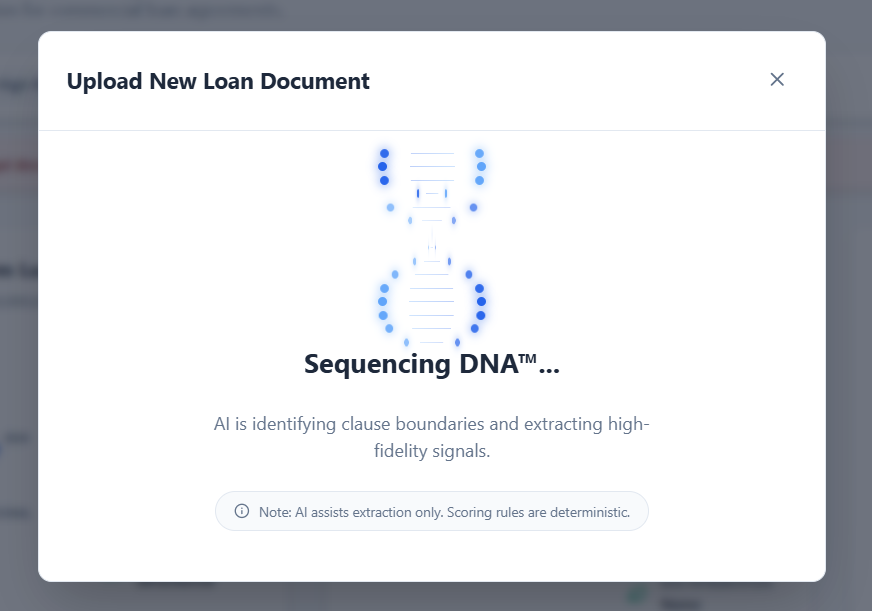
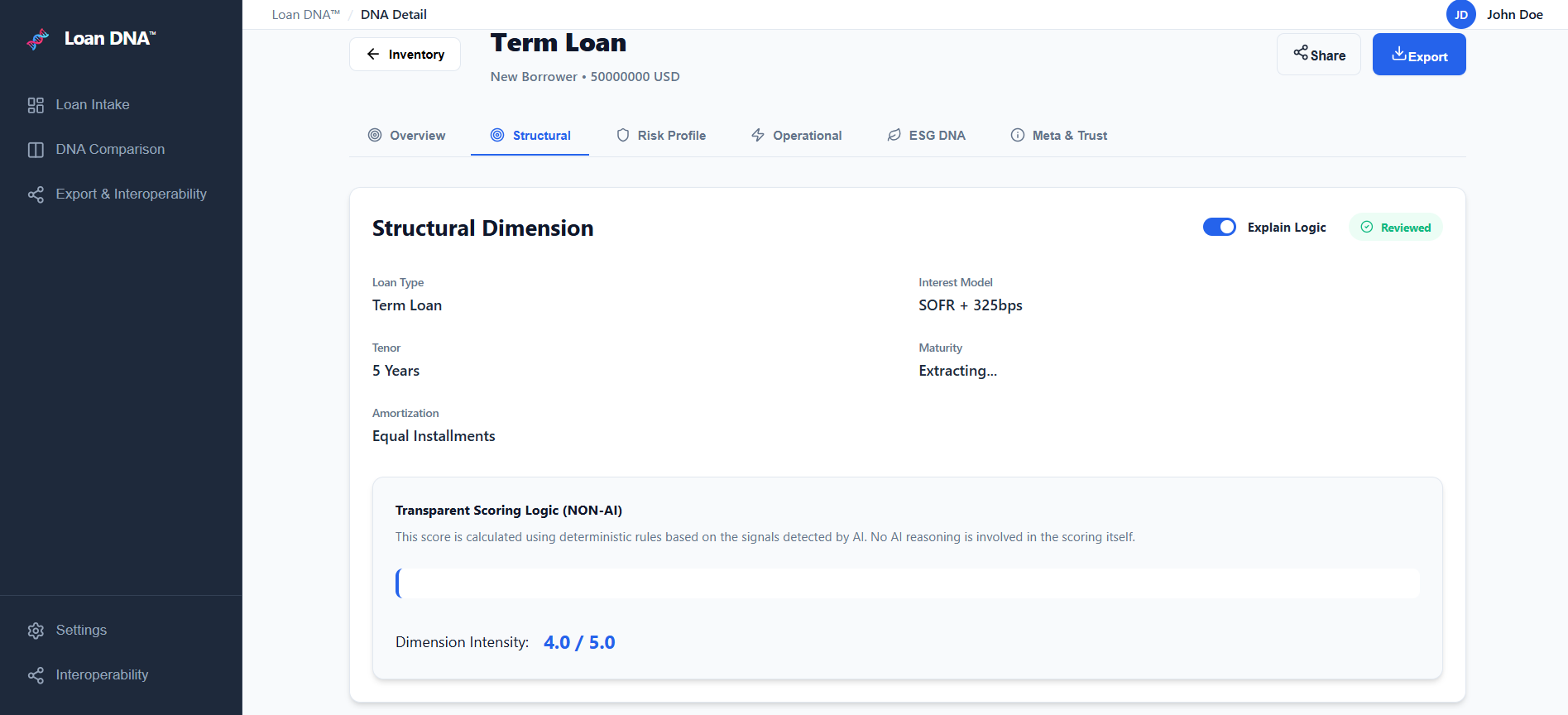
Here we can see while the system is extracting and scoring the loan document
-
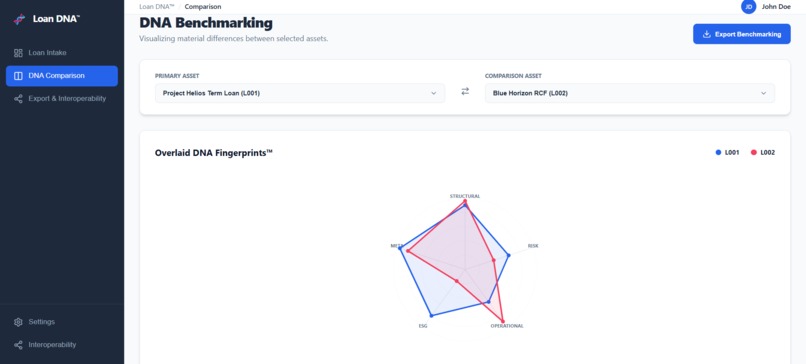
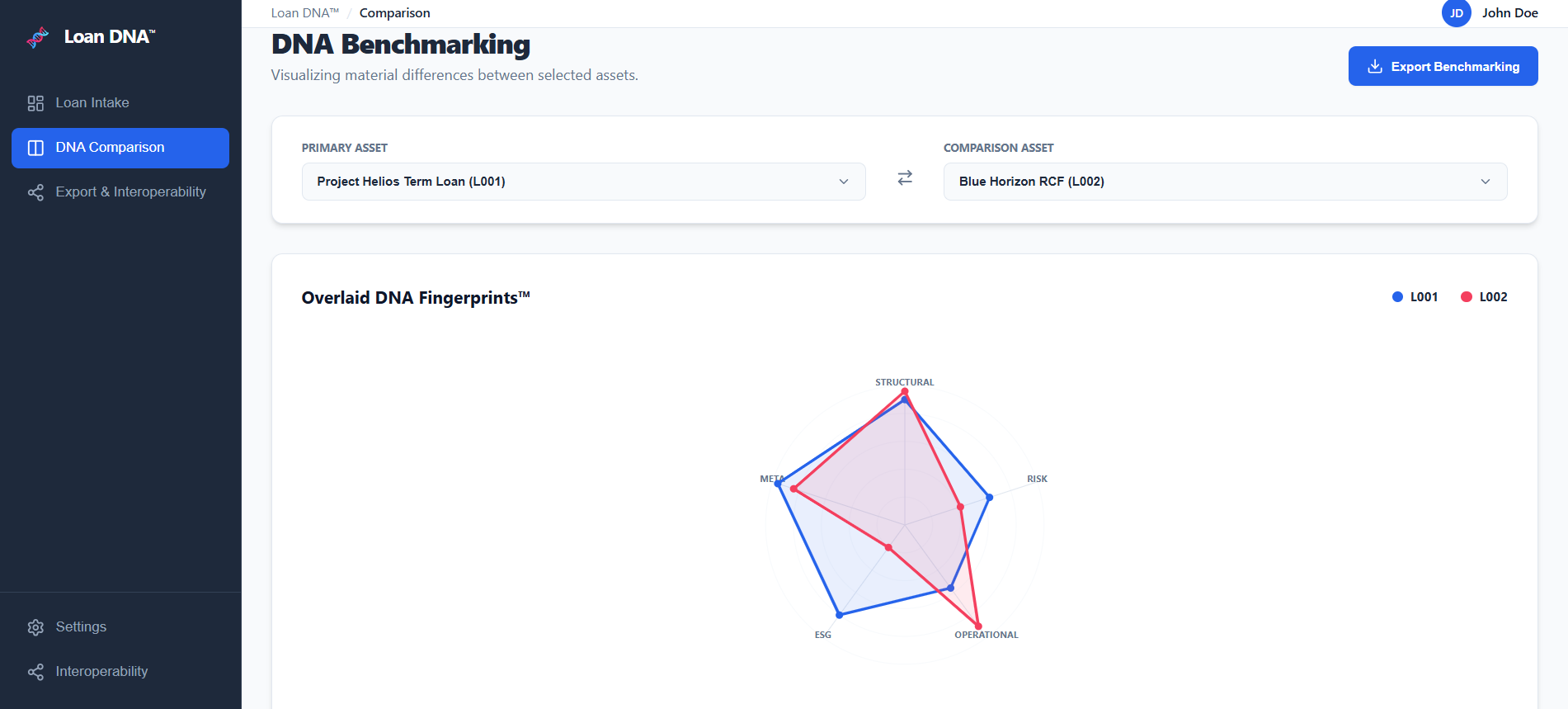
Here is a radar comparison of two loan documents
-
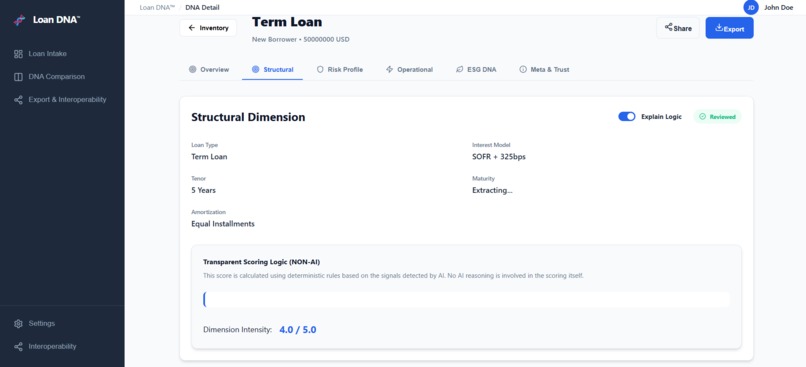
This is the Structural dimension and score of the loan document
-
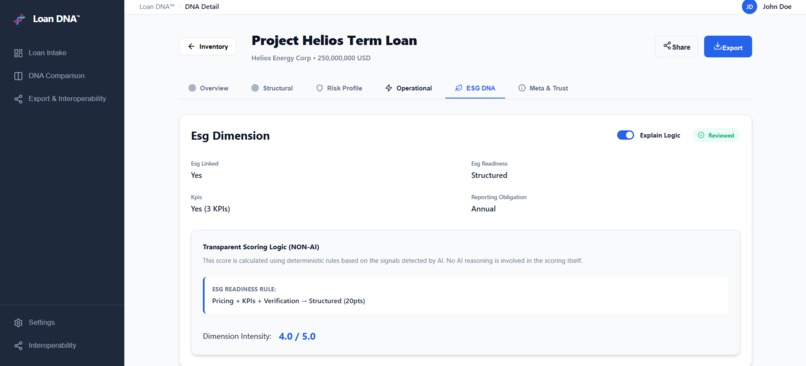
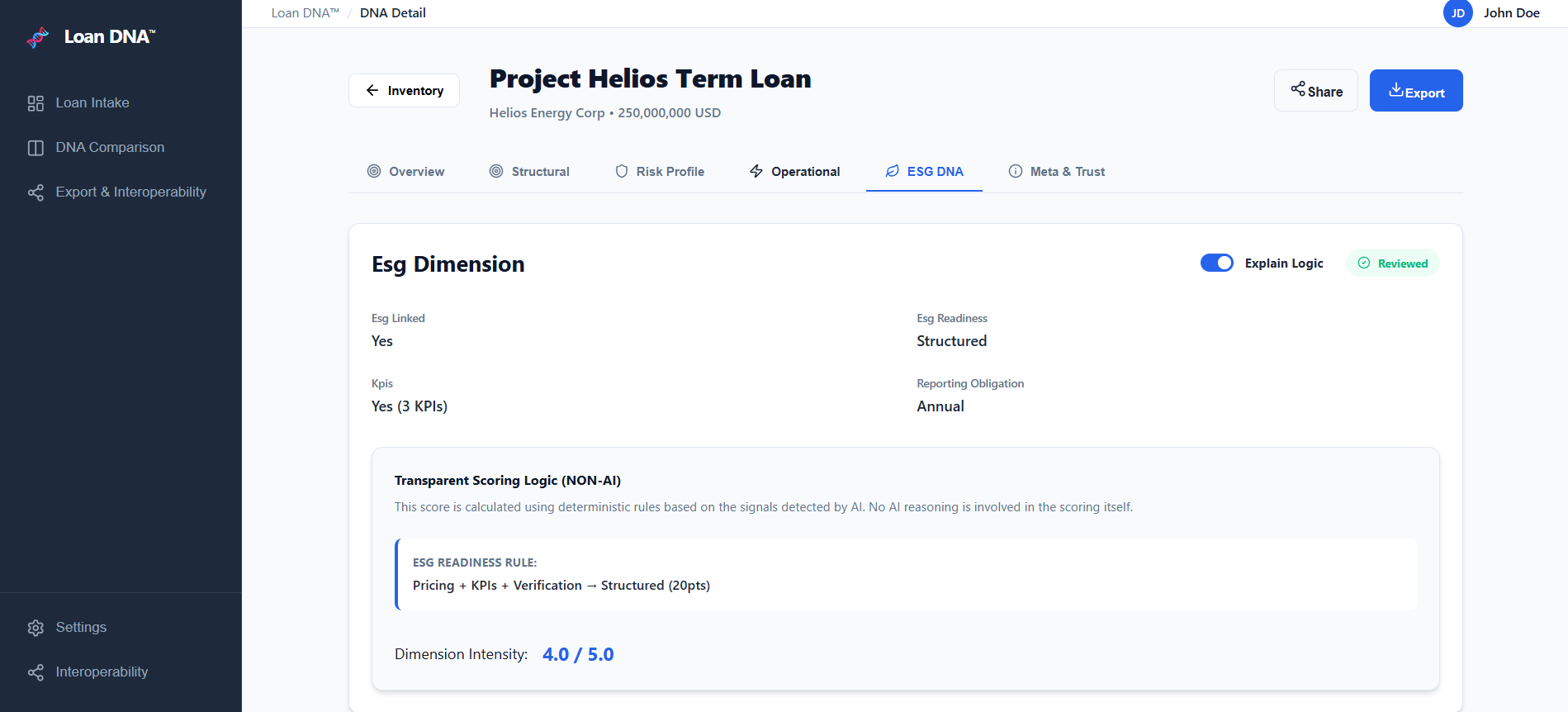
This is the ESG(Environmental, Social, and Governance) dimension and score of the loan document
-
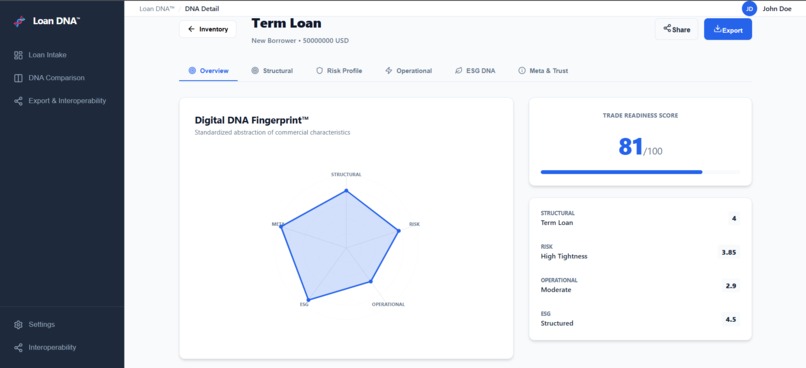
Here we can see the overview of a loan document
-
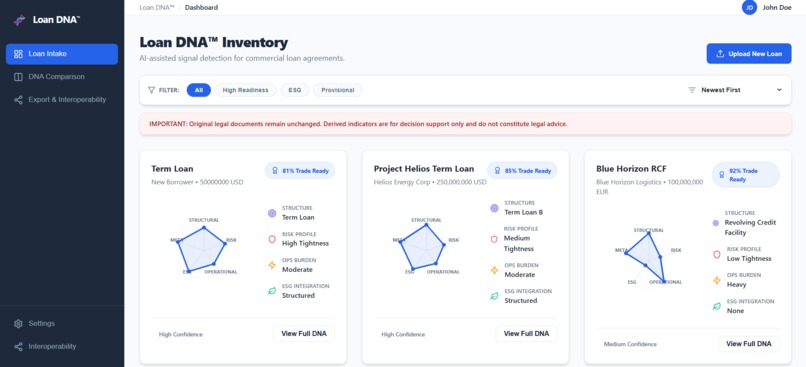
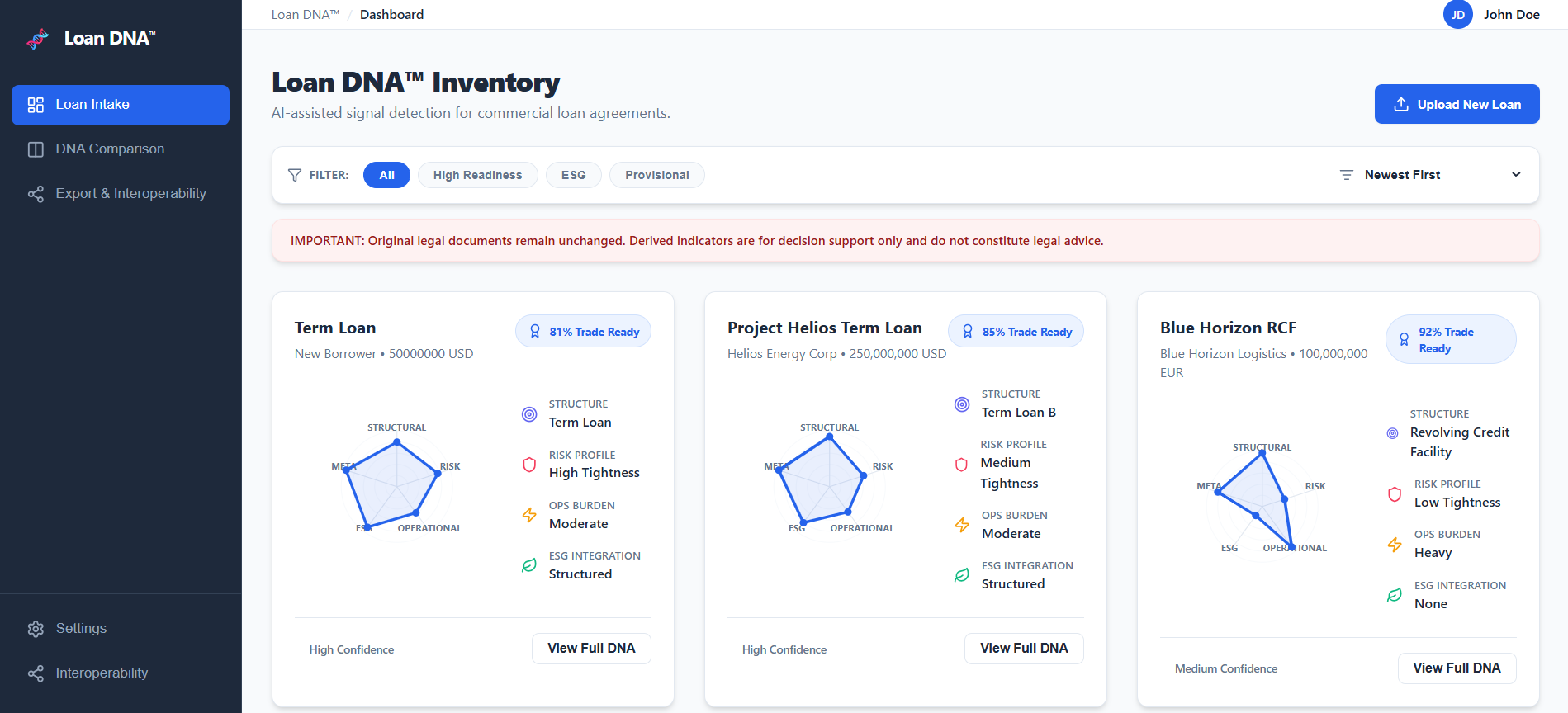
This the portfolio page where all the loans can be seen.
Inspiration
Commercial loan agreements sit at the core of the global financial system, yet they exist primarily as long, complex legal documents rather than structured data. Across origination, monitoring, and secondary trading, teams repeatedly re-read hundreds of pages to answer the same fundamental questions: How does this loan behave? How risky is it? How hard is it to manage or trade?
The inspiration for Loan DNA™ came from the observation that while loan documents vary widely in language and structure, the behavioral characteristics they define are remarkably consistent. If those characteristics could be standardized without replacing or reinterpreting the legal agreement it could unlock significant efficiency, transparency, and comparability across the loan market.
This approach strongly aligns with the Loan Market Association’s mission to advance liquidity, efficiency, transparency, and sustainability.
What it does
Loan DNA™ converts complex loan agreements into standardized digital “DNA” profiles. Each loan is represented by a five-dimensional fingerprint that captures how the loan behaves rather than how it is written:
Structural DNA — how the loan is constructed
Risk DNA — how tightly the borrower is constrained
Operational DNA — the ongoing reporting and compliance burden
ESG DNA — whether sustainability obligations are contractual and measurable
Meta DNA — trade readiness and data confidence
These DNA profiles allow loans to be quickly understood, compared, and assessed across portfolios, while preserving the authority of the original legal documentation.
How we built it
Loan agreements are ingested via document upload (PDF or Word). Key clauses are identified using transparent, rule-based patterns, augmented by AI for initial signal detection only. All indicators and scores are then calculated deterministically using explainable rules aligned with market practice.
LMA standard templates are treated as the “base sequence,” with deviations and bespoke complexity surfaced as part of the DNA profile. A canonical Loan DNA record serves as the source of truth, from which visual fingerprints, dashboards, comparison views, and exportable reports are generated.
AI is used strictly to assist with extraction not scoring ensuring transparency, auditability, and regulatory comfort.
Challenges we ran into
One of the main challenges was balancing simplicity with contractual nuance. Loan agreements are inherently complex, and over-simplification risks losing important context. To address this, we focused on abstracting behavioral signals rather than attempting full legal interpretation.
Another challenge was designing a visualization that felt professional and “desktop-grade,” while remaining intuitive for non-technical users. Iterating on the DNA fingerprint and comparison views helped strike that balance.
Accomplishments that we're proud of
Designing a neutral, standardized abstraction for loan behavior
Creating a clear separation between AI-assisted extraction and rule-based scoring
Building a visual DNA fingerprint that makes loans instantly comparable
Demonstrating how loans can move from document-centric to data-centric representation
What we learned
We learned that much of the friction in the loan market comes not from complexity itself, but from inconsistency. Small variations in drafting can significantly impact risk, operational burden, and tradability.
We also learned that in regulated financial environments, explainability and trust matter more than automation. A transparent, rule-based system that professionals can understand is more valuable than a black-box model.
What's next for Loan DNA™
Future iterations of Loan DNA could include deeper alignment with LMA standards, API-based integration with loan management and secondary trading platforms, and expanded support for ESG verification and reporting.
At scale, Loan DNA could serve as a shared digital standard that improves transparency, efficiency, and sustainability across the global loan market.
Disclaimer
All indicators shown are derived for decision-support purposes only and do not constitute legal or financial advice. Original loan documentation remains the authoritative source.
Built With
- ai-assisted-document-extraction
- antigravity
- html5
- javascript
- json
- node.js
- react
- rule-based-scoring
- svg
- vanilla-css
- vercel
- vite

Log in or sign up for Devpost to join the conversation.