Inspiration
The primary motivation for this project is to mitigate financial risk for lending institutions by leveraging historical borrower data to predict the likelihood of default. By identifying "early warning signs" in credit behavior—such as high debt-to-income ratios or previous derogatory reports—the system aims to provide a data-driven basis for credit scoring and risk assessment.
Structure and Working
The project follows a standard machine learning pipeline:
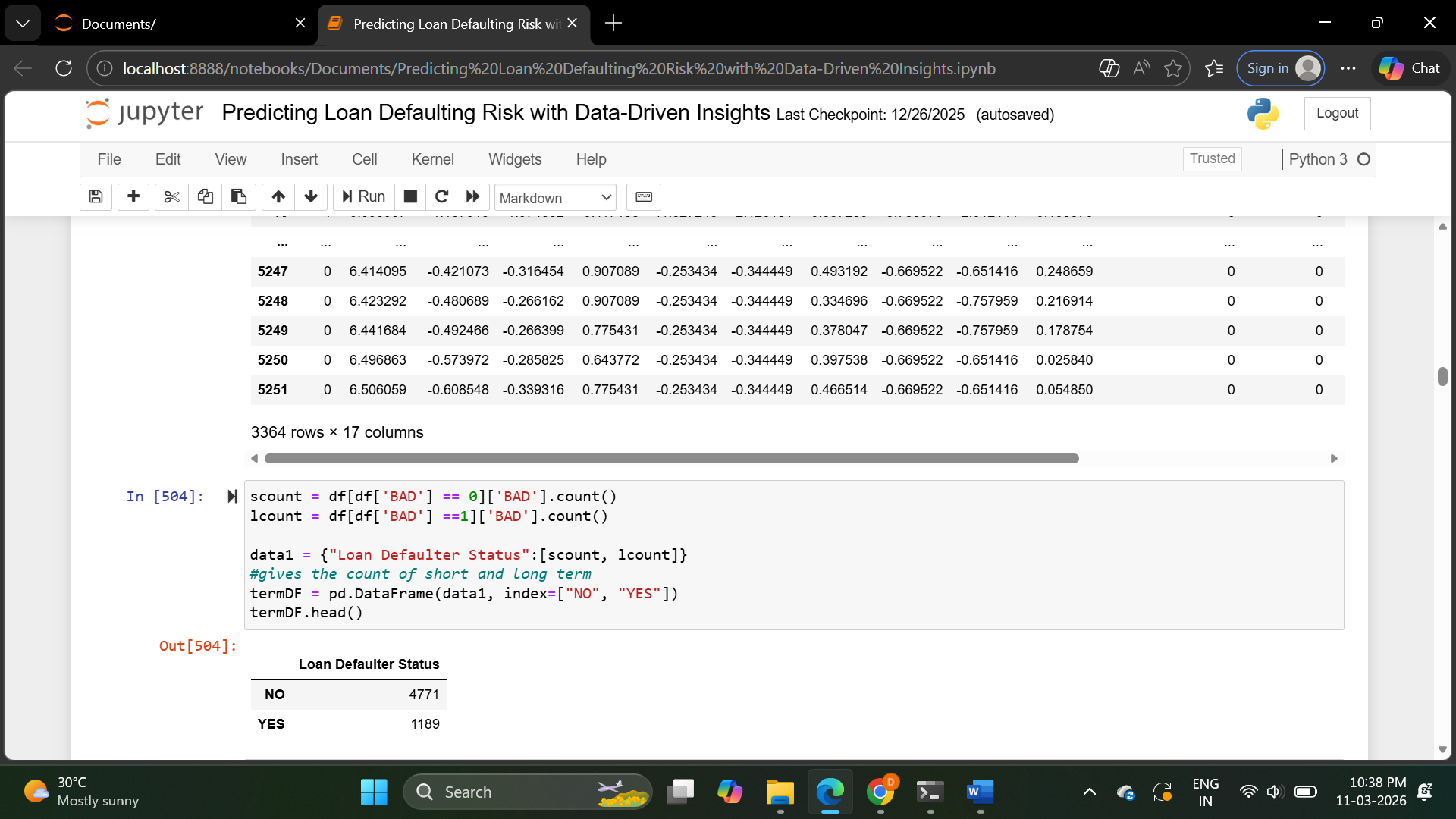
- Data Ingestion: Loading a dataset containing 3,364 observations with 13 features, including loan amount (LOAN), mortgage due (MORTDUE), value of the property (VALUE), and debt-to-income ratio (DEBTINC).
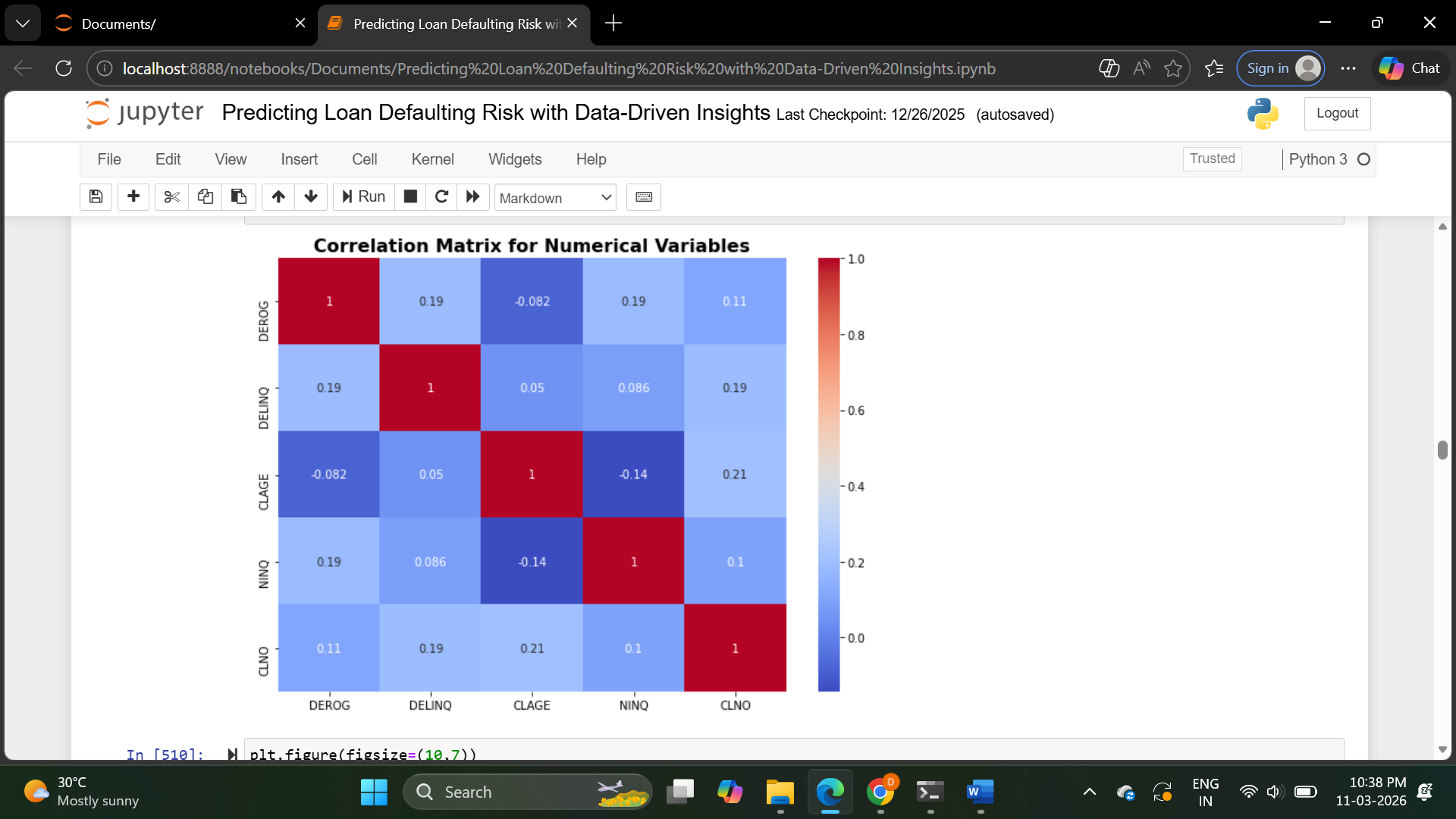
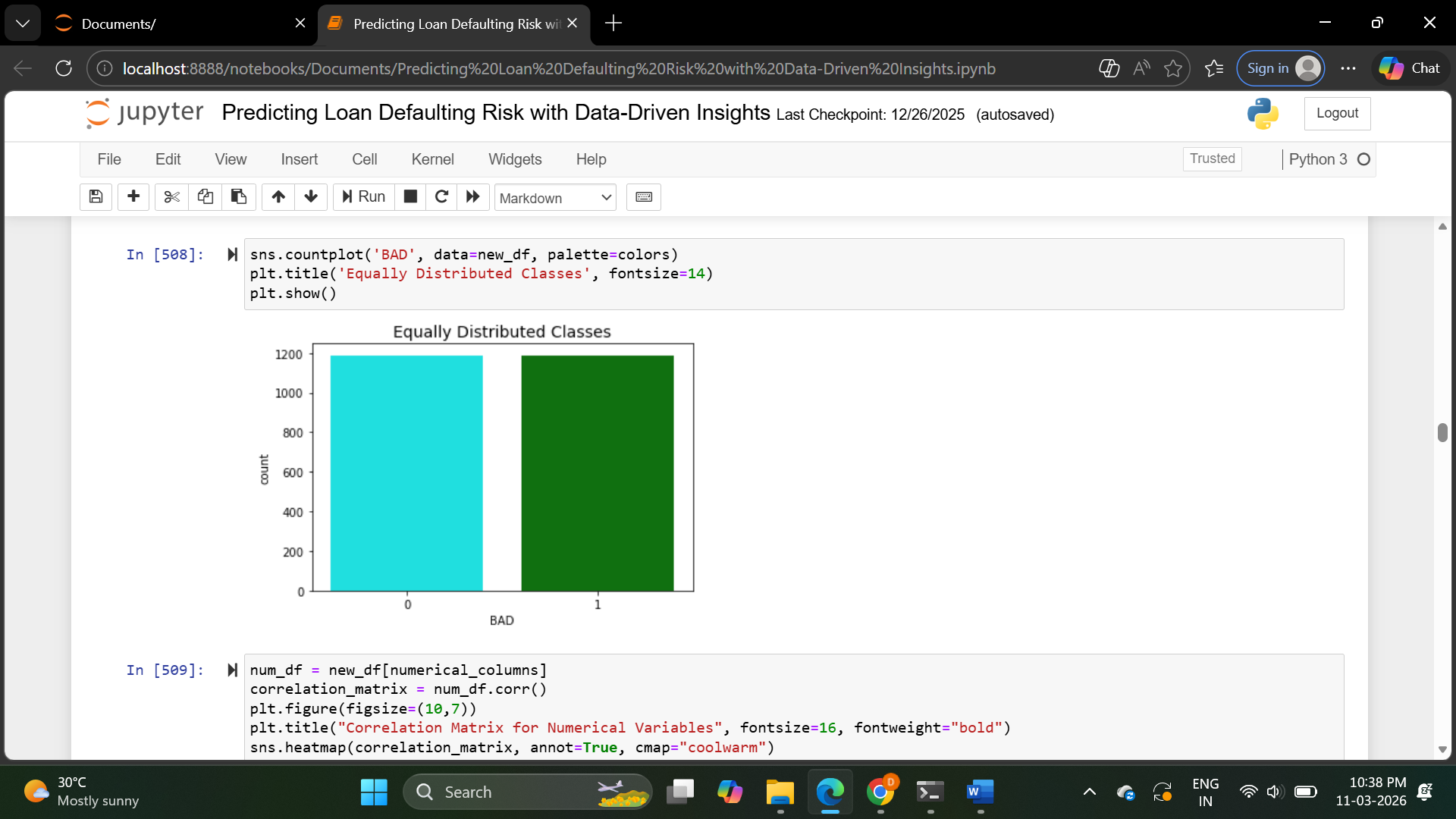
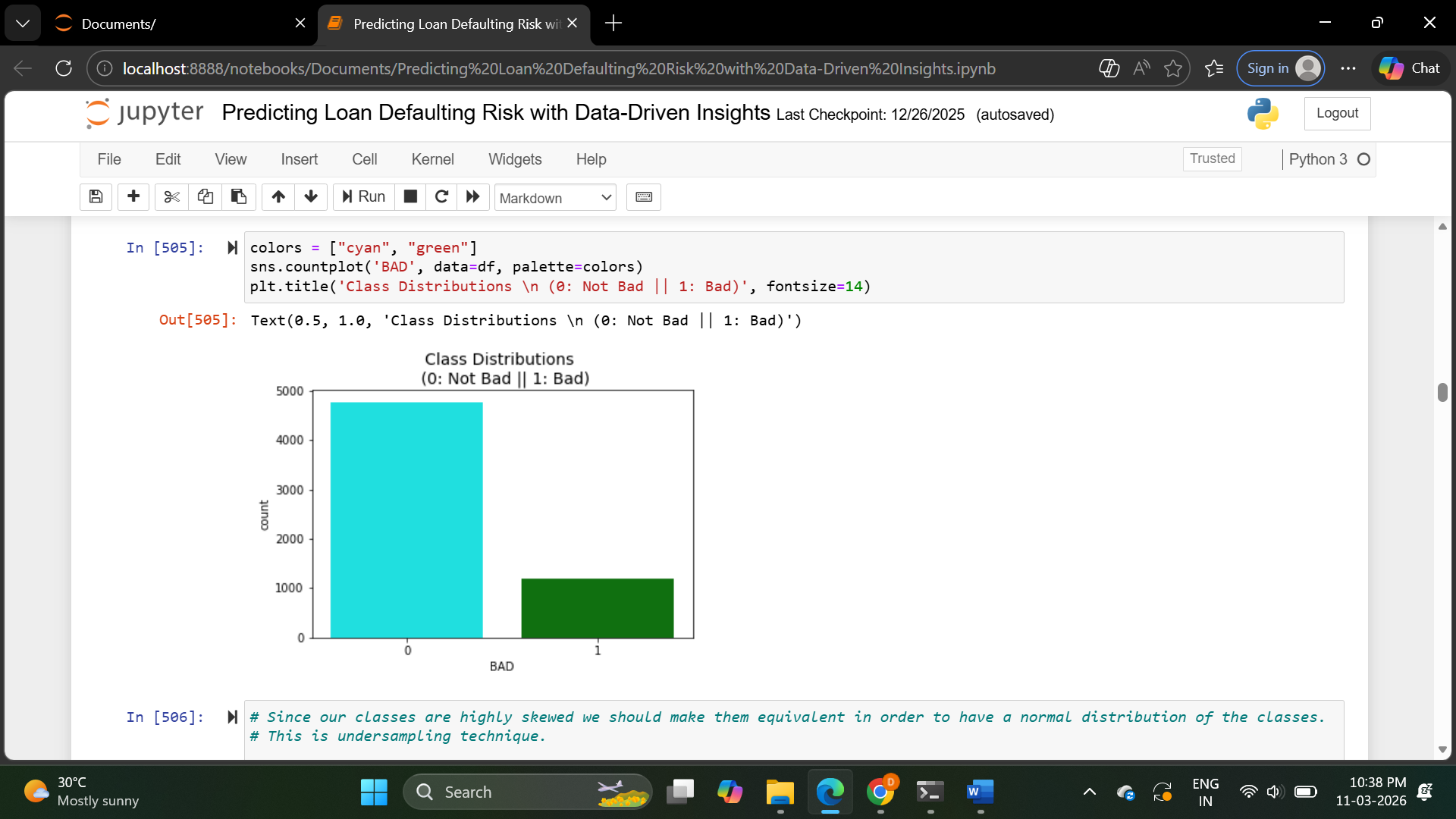
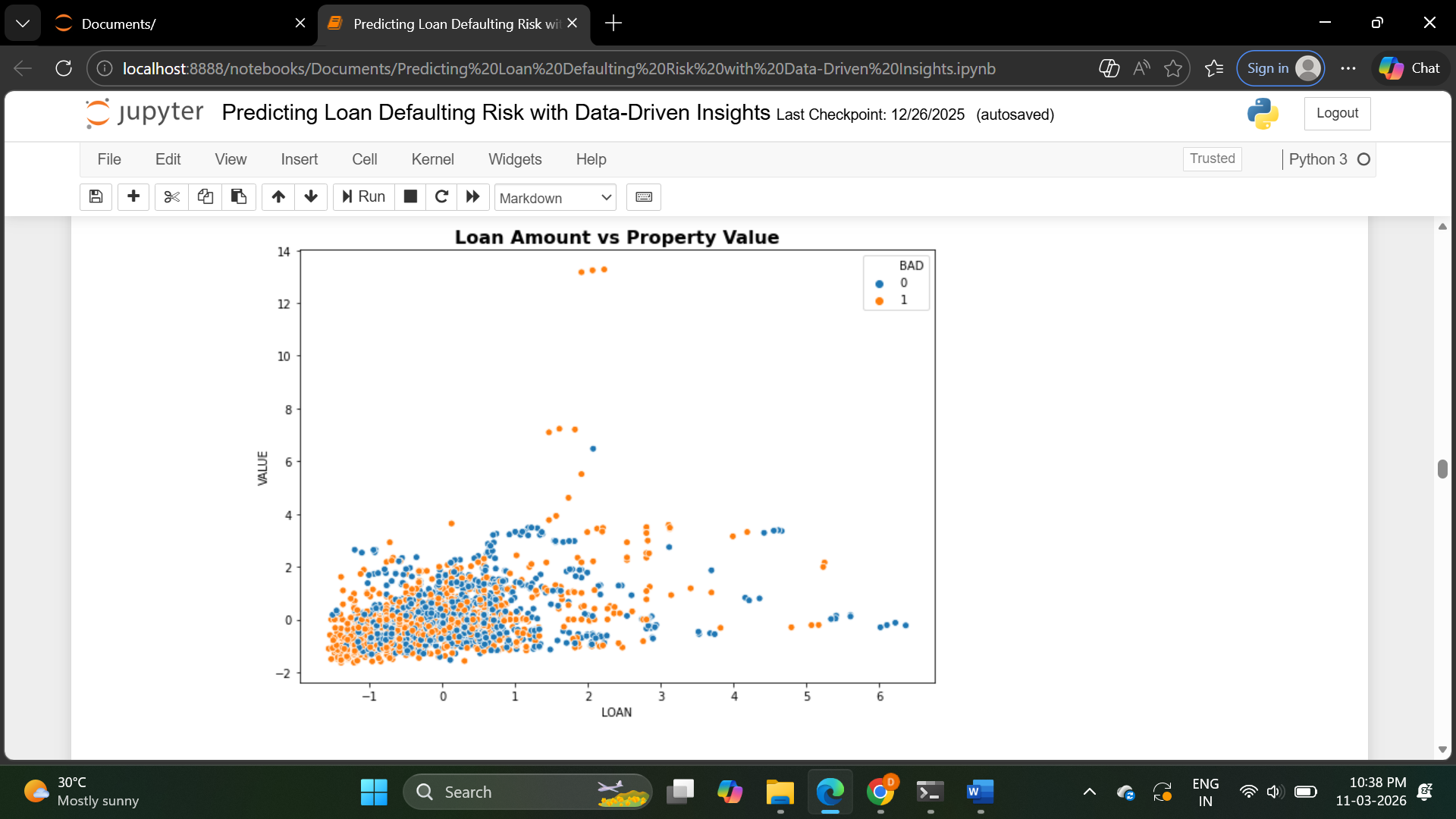
- Exploratory Data Analysis (EDA): Utilizing descriptive statistics and visualizations to understand feature distributions and identify patterns in borrower behavior.
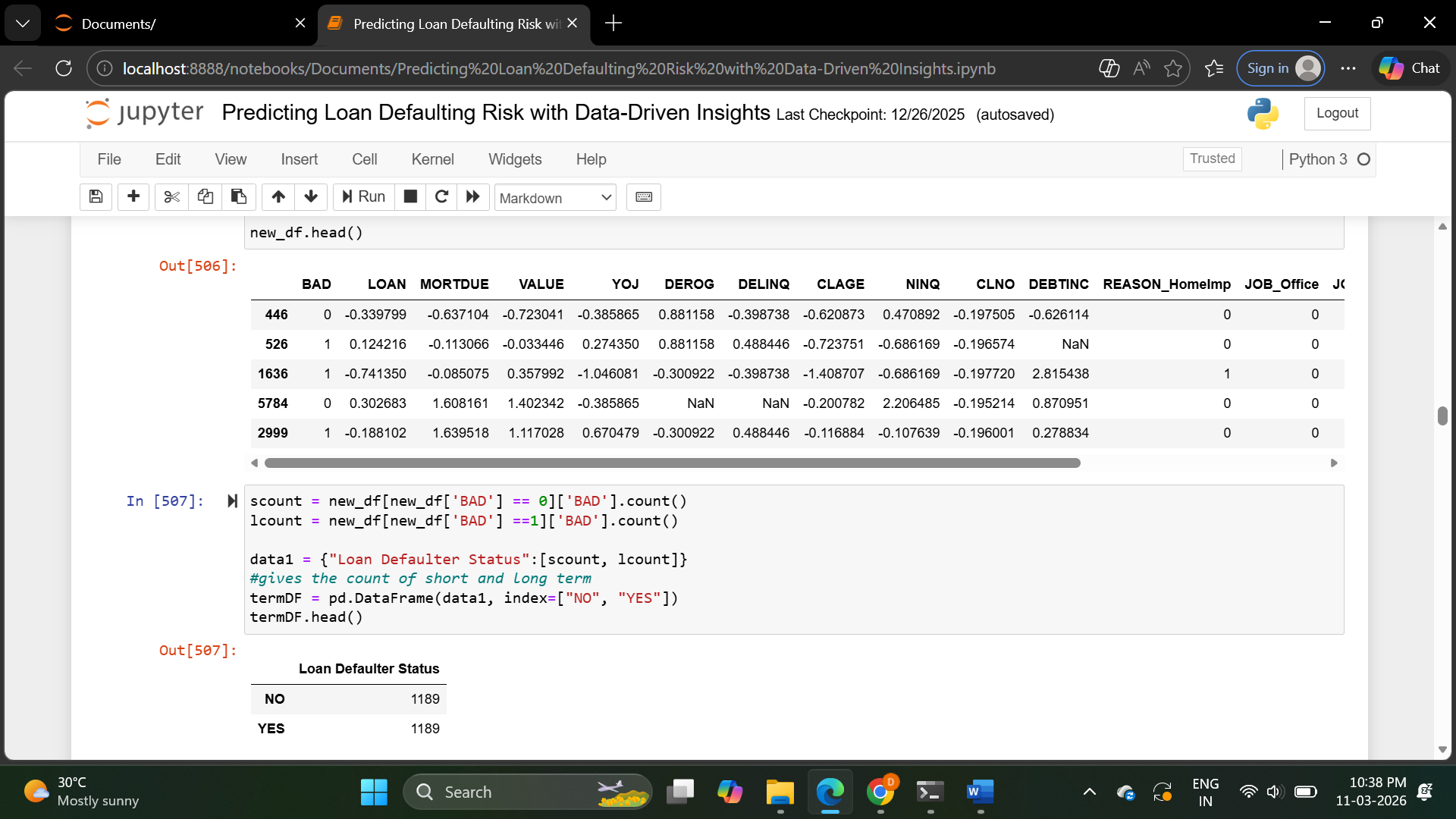
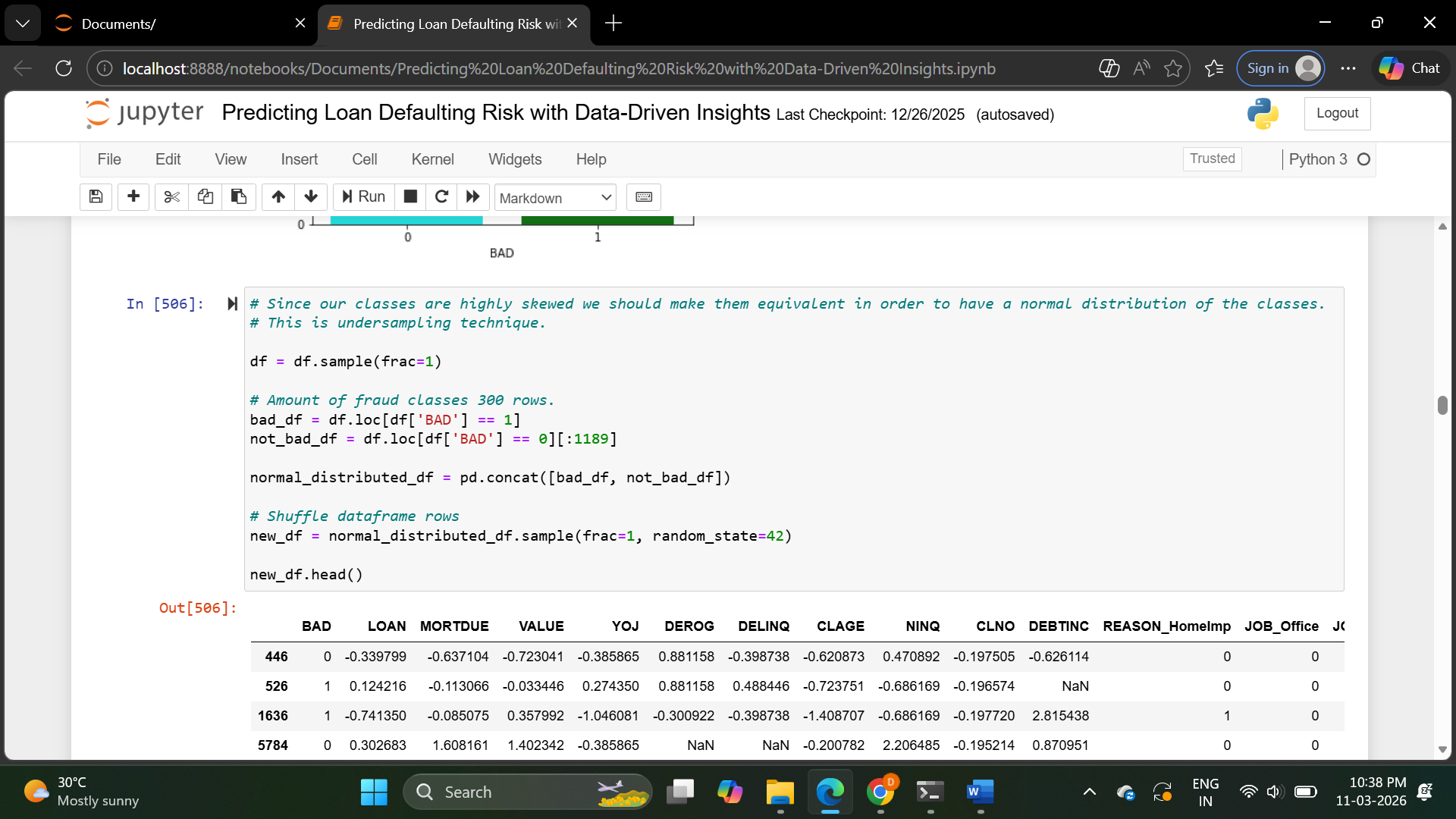
- Preprocessing: Handling missing values through a combination of dropping rows and imputing with the mean or mode (e.g., filling MORTDUE and VALUE with mean values). Encoding categorical variables like JOB and REASON (Debt Consolidation vs. Home Improvement). Feature scaling and normalization to prepare the data for distance-based algorithms.
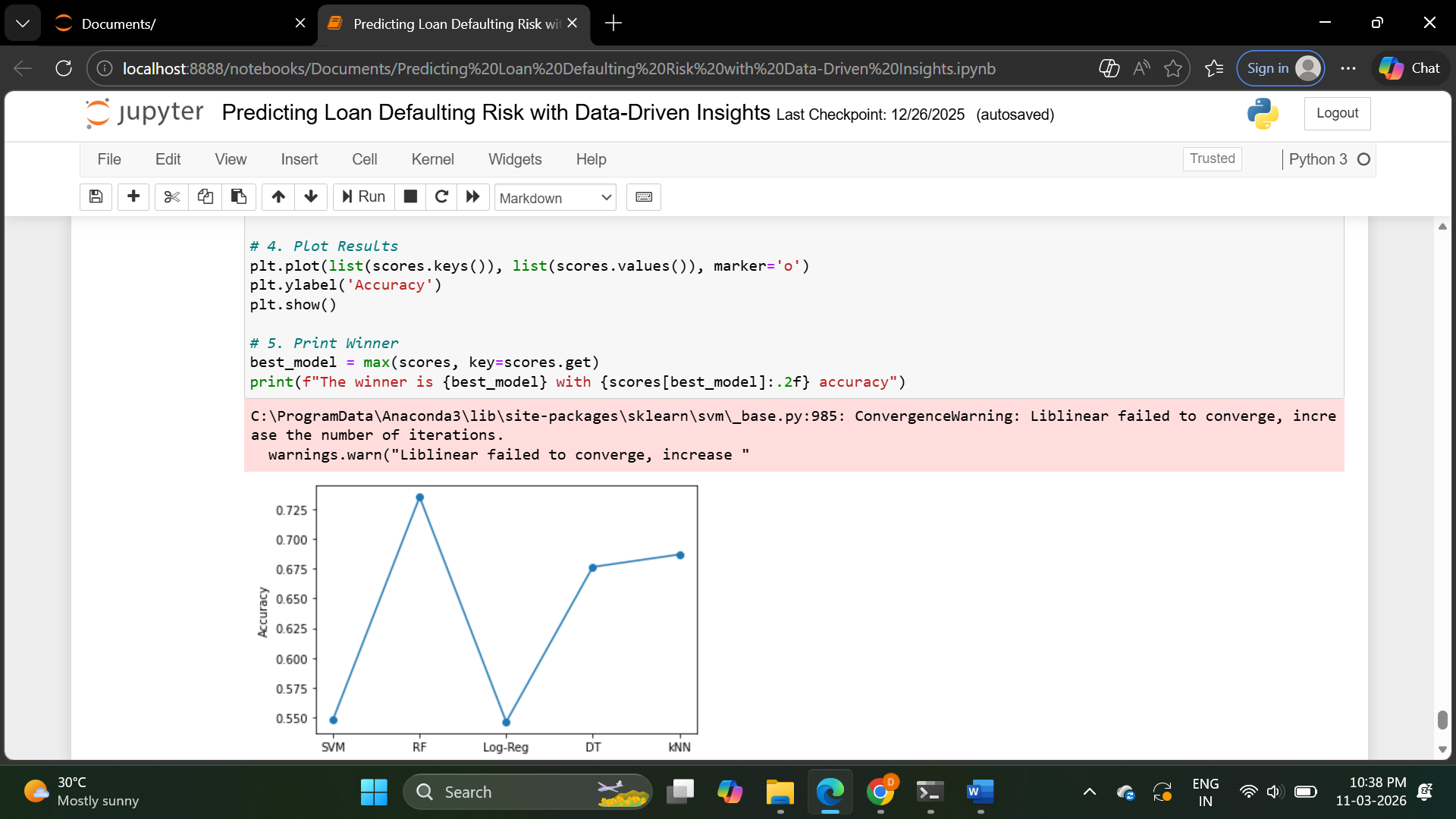
- Modeling: A comparative "model tournament" approach involving five different algorithms: Support Vector Machines (SVM), Random Forest (RF), Logistic Regression, Decision Trees (DT), and k-Nearest Neighbors (kNN).
- Evaluation: Comparing accuracy scores across all models and visualizing the results using performance plots to identify the "winner".
Accomplishments of the Project
- Successful Pipeline Integration: Developed a complete end-to-end data science workflow, from raw data cleaning to final model evaluation.
- Comparative Analysis: Effectively benchmarked five distinct ML algorithms to determine which is the most robust predictor for this specific financial dataset.
- Data Integrity: Implemented robust handling of sparse financial data, managing a significant number of null values across various features to maintain a clean training set.
What We Learned:
- Preprocessing Impact: Handling missing values in financial datasets is critical, as variables like DEBTINC and DEROG are often missing but highly predictive.
- Algorithm Suitability: Discovered how different models (e.g., ensemble methods like Random Forest versus linear models like Logistic Regression) handle the complexities of credit risk data.
Project Scope
Deployment & Interpretability: Utilizing tools like SHAP or LIME to explain why a certain loan was flagged as "High Risk," providing transparency for financial decisions. Hyperparameter Tuning: Implementing GridSearchCV or RandomizedSearchCV to further optimize the performance of the winning model.

Log in or sign up for Devpost to join the conversation.