-
-
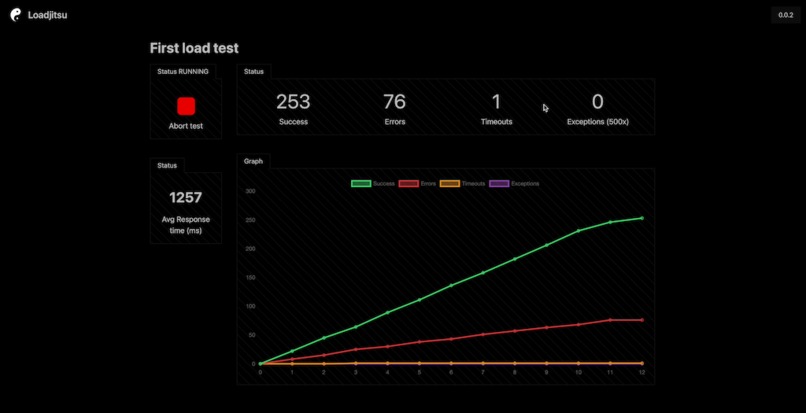
Loadjitsu a modern jmeter alternative
Inspiration
The inspiration for Loadjitsu arose from the need for a powerful yet user-friendly load testing tool that could run directly on a developer's desktop. Existing tools, particularly cloud-dependent ones like JMeter, felt overly complex and cumbersome for modern development needs. We envisioned a tool that not only provides robust performance testing capabilities but is also lightweight, easy to use, and free from the constraints of cloud infrastructure. This led to the creation of Loadjitsu—a desktop-based solution that integrates seamlessly into development workflows.
What it does
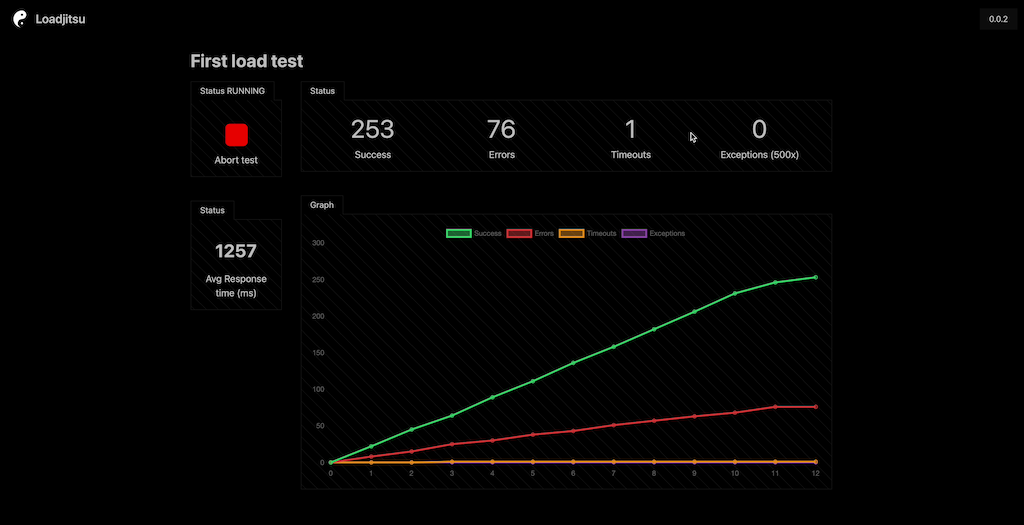
Loadjitsu is a desktop load testing tool built to help developers stress-test their applications with ease. It combines the power of Rust for high-performance load generation with the flexibility of React for an intuitive and responsive user interface. With Loadjitsu, developers can simulate thousands of concurrent requests to identify performance bottlenecks, all from the comfort of their local machine. The tool offers both CLI and GUI options, allowing users to choose the interface that best suits their workflow. Loadjitsu is designed to be a one-time purchase, with no ongoing fees, giving users full control over their load testing process.
How I built it
Loadjitsu was built using Tauri, a framework that enables the creation of desktop applications with a modern web frontend and a native backend. The UI is developed in React, leveraging its component-based architecture to create a smooth and dynamic user experience. On the backend, Rust was chosen for its performance and concurrency capabilities, making it ideal for generating high volumes of traffic during load testing. Tauri was instrumental in bridging the gap between the web-based UI and the native Rust backend, allowing us to deliver a powerful, cross-platform desktop application.
Challenges I ran into
One of the key challenges was ensuring that the Tauri framework could handle the demands of both the React UI and the Rust backend efficiently. Integrating these technologies required careful consideration of how data would be passed between the frontend and backend, especially during high-load scenarios. Another challenge was optimizing the Rust engine to handle thousands of concurrent requests without overloading the user's system. Ensuring a smooth and responsive UI while running intensive load tests in the background was another technical hurdle that required extensive testing and fine-tuning.
Accomplishments that I'm proud of
I'm particularly proud of successfully creating a desktop load testing tool that is both powerful and easy to use. The seamless integration of Rust and React through Tauri has resulted in a fast, efficient, and user-friendly application that meets the needs of modern developers. The positive feedback from early users regarding the tool's performance and usability has been incredibly rewarding. Additionally, the fact that Loadjitsu runs natively on Windows, macOS, and Linux without requiring any cloud infrastructure is a significant achievement.
What I learned
Building Loadjitsu provided valuable insights into the intricacies of desktop application development, particularly when using Tauri to combine web technologies with native code. I gained a deeper understanding of Rust's concurrency model and its performance benefits, as well as the importance of optimizing UI responsiveness in resource-intensive applications. The project also reinforced the importance of a seamless user experience, particularly in tools designed for developers.
What's next for Loadjitsu
The next steps for Loadjitsu include expanding its capabilities to support distributed load testing, allowing users to simulate traffic from multiple geographic locations. We're also working on deeper integration with popular CI/CD pipelines to streamline the testing process further. Additionally, we plan to enhance the community support around Loadjitsu by providing more tutorials, resources, and documentation to help developers maximize the tool's potential. Our long-term vision is to make Loadjitsu the preferred choice for desktop-based load testing, trusted by developers across various industries.

Log in or sign up for Devpost to join the conversation.