Inspiration
Most games still treat dialogue like a vending machine: pick a line, get a line. Or a very curated dialogue tree that you have to follow. We wanted the opposite; we wanted to provide a nearly infinite dialogue forest based on the player's conversation and a place where talking is the game, and everyone you talk to is a little bit broken.
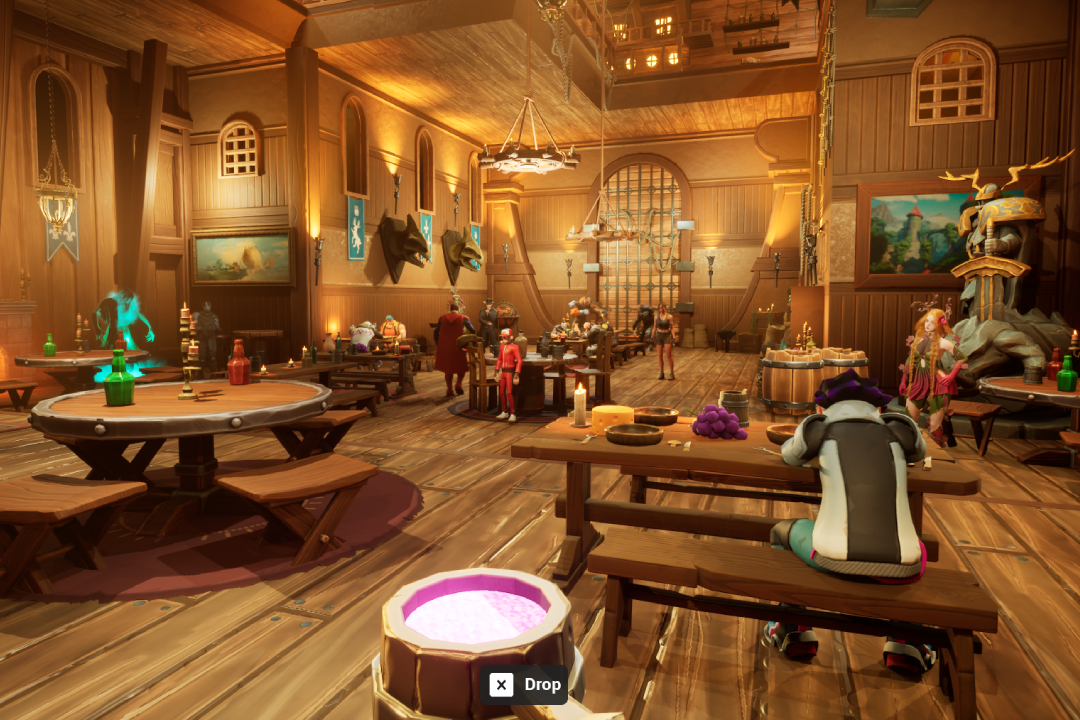
The "Loading Bar" asks: what happens to game characters after their franchises get canceled, rebooted, or “rebalanced” into oblivion? Our answer is a liminal dive bar at the edge of the save file, staffed by you as the bartender and filled with doppelgängers and off-brand echoes of famous franchises and genre clichés. Tonally, it’s “Cheers” meets “Wreck-It Ralph,” with the dark self-loathing of BoJack Horseman and the chaotic selfishness of It’s Always Sunny in Philadelphia.
What It Does
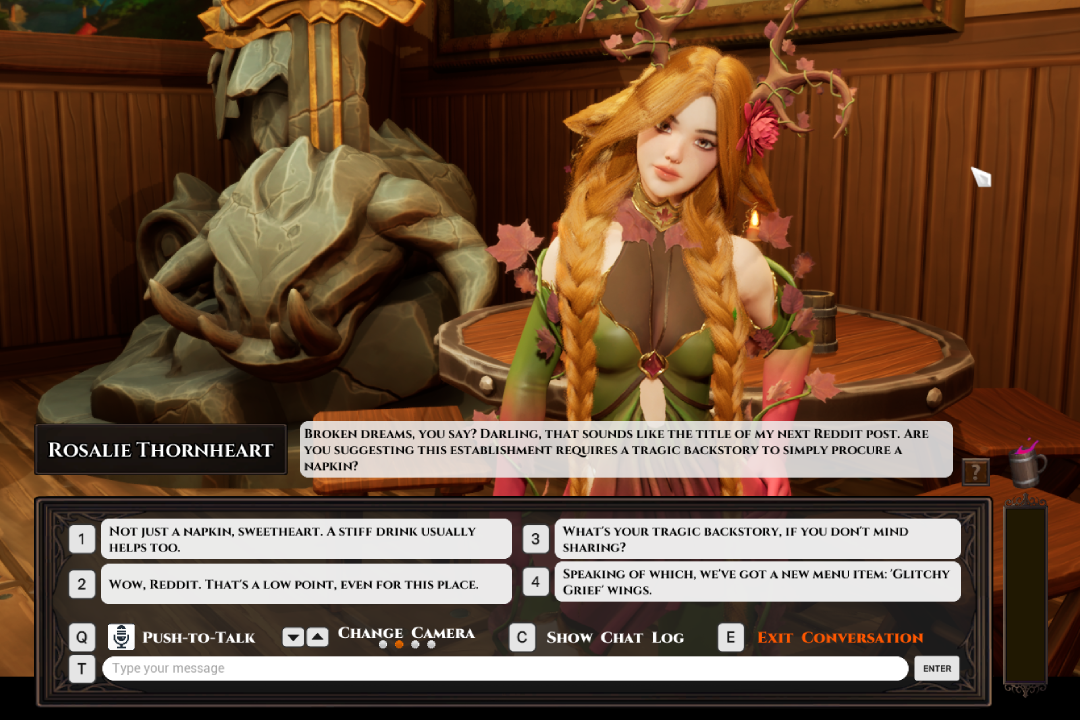
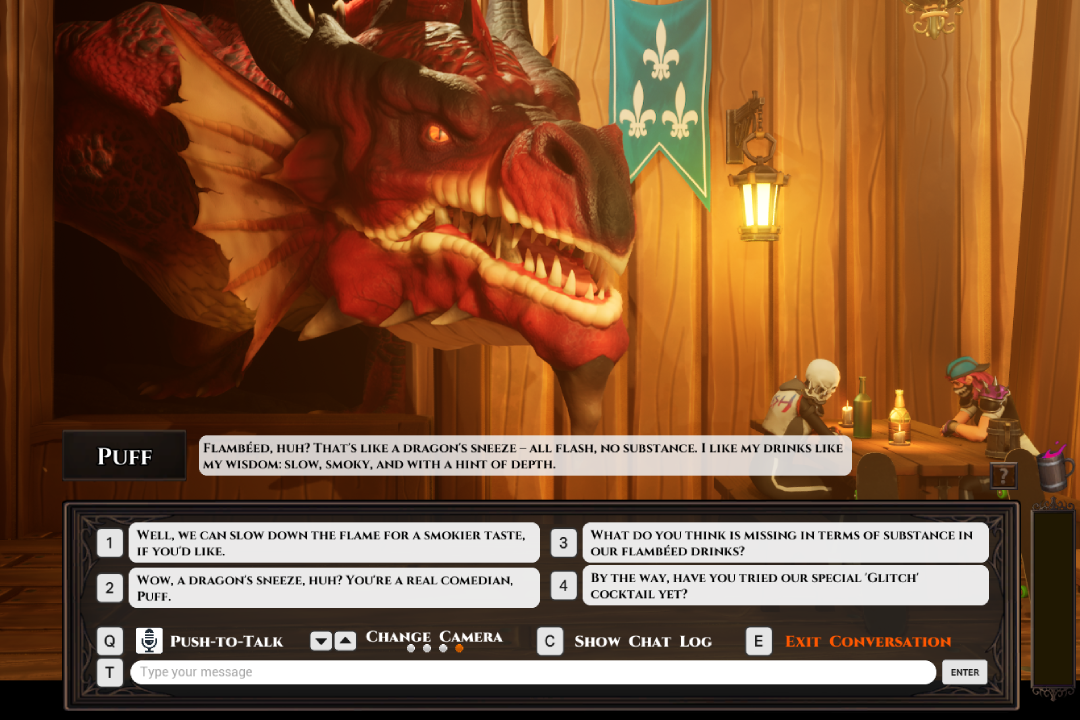
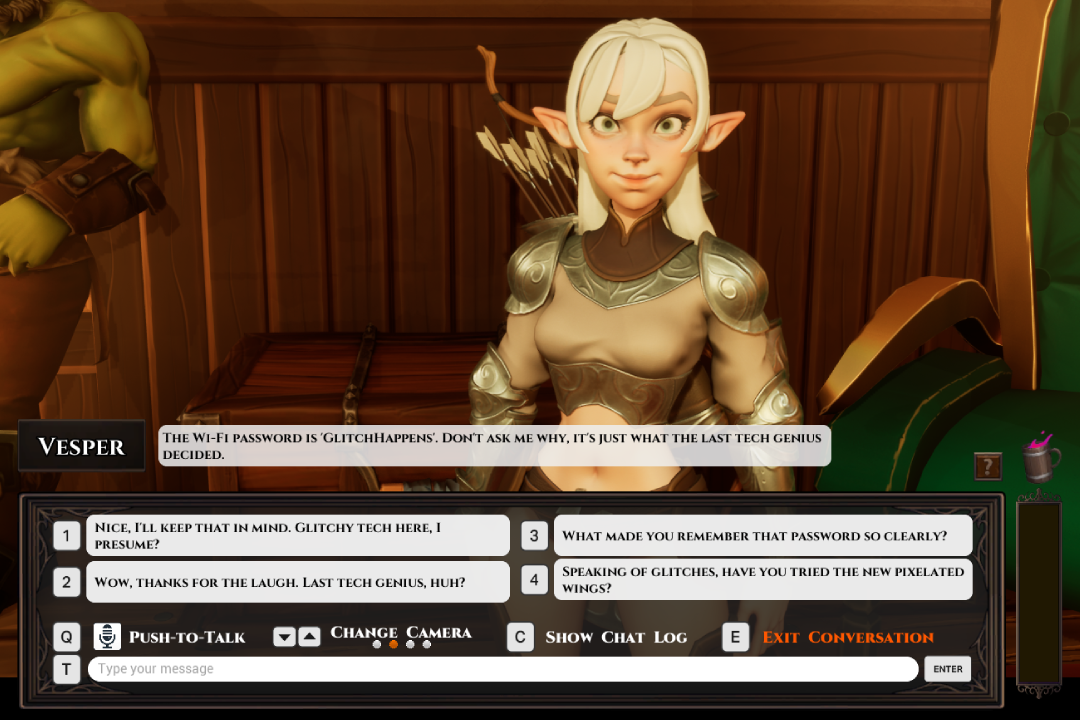
The "Loading Bar" is a 3D AI-driven narrative game where you talk to NPCs in real time, by voice or text, and they dynamically respond back with their own voices in character.
You play the bartender in a digital purgatory dive bar for retired, cut, or “patched” video game characters, some of which have not-so-subtle nods to famous real counterparts, and some are very unique.
- Chat freely (no dialogue wheel) via real-time path, and let them riff off what you actually say.
- Serve emotion-themed “Elixirs” (Sweet Revenge, Bitter Regret, etc.) that change how they feel, what they reveal, and how the room behaves.
- Watch the bar’s mood—and your own intoxication—twist conversations, topics, and outcomes.
The goal isn’t to win; it’s to survive a night of digital midlife crises and keep this dysfunctional cast from emotionally imploding.
How We Built It
We built a vertical slice in Unreal Engine focused on one detailed bar and a small core cast. Behind the scenes, a custom AI framework coordinates three things:
- A “Director” that tracks recent conversations and steers toward interesting beats (confessions, arguments, callbacks).
- Individual character logic that protects each persona’s voice, history, and boundaries while still letting them improvise.
- A memory journal that condenses past sessions so characters can remember players, grudges, and running jokes without drowning the system in logs.
Voice input and output are wired into Unreal, so players can talk naturally by using a microphone and hear responses as distinct performances—not just text boxes.
Challenges We Ran Into
- Keeping characters consistent while they improvise. Early tests either felt like generic chatbots or lore dumps.
- Making memory feel human, not mechanical. We had to decide which moments—insults, secrets, promises—actually deserve to be remembered.
- Latency breaking the illusion. Even small pauses feel huge in a “conversation game,” so we had to hide them with timing and audio.
- Controlled chaos. A room full of unsupervised AI characters quickly turns to noise; giving an invisible “director” just enough power was tricky.
Accomplishments That We’re Proud Of
- NPCs that actually remember you. Characters recall previous drinks, jokes, and emotional moments in ways that feel like real relationships, not quest flags.
- Doppelgängers with depth. Our cast riffs on familiar archetypes and big franchises, then twists them, turning mascots, bosses, and heroes into washed-up regulars with oddly sincere problems.
- Emotional drinks that drive story, not stats. Elixirs don’t just buff numbers; they change how people frame their stories and what they’re willing to say.
- AI as performer, not content hose. We use AI for timing, memory, and improvisation—on top of tightly designed characters and tone, not instead of them.
What We Learned
Simple direction beats complex rules. Treating AI like a real actor with clear goals works better than over-engineering logic in the prompt.
- Memory needs a narrative. A diary-style journal is far more usable than raw transcripts—for both the AI and the player’s sense of continuity.
- Players push emotional limits fast. People flirt, trauma-dump, and troll these characters; we had to think seriously about tone, safety, and where to draw lines while staying funny.
- Voice and sound sell the fantasy. The right delivery can turn a decent line into a moment that feels like a scene from a show.
What’s Next for "Loading Bar"?
- Expand from a demo into a multi-night bar loop, where relationships, grudges, and running bits persist across sessions.
- Deepen each NPC’s long-form arc so you can slowly peel back who they were in their old games—and who they’re becoming now.
- Add content and comfort settings so players can tune how dark or heavy things get while keeping the sharp humor.
- Experiment with a UGC side room where players can design their own “lost” NPCs within
Built With
- elevenlabs
- gemini
- unreal-engine

Log in or sign up for Devpost to join the conversation.