Inspiration
Our inspiration for this project was experiencing the inconvenience of forgetting our keys and having to call a friend or family to help us. In addition, having to carry around multiple keys and fumble through them to open a specific door was also an issue we wanted to address. After seeing how useful Apple Pay was and how it solved a similar issue of either forgetting your wallet or having it stolen, we believed that Lo-Key would also make a positive impact by lessening the burden of either forgetting your keys or losing them.
What it does
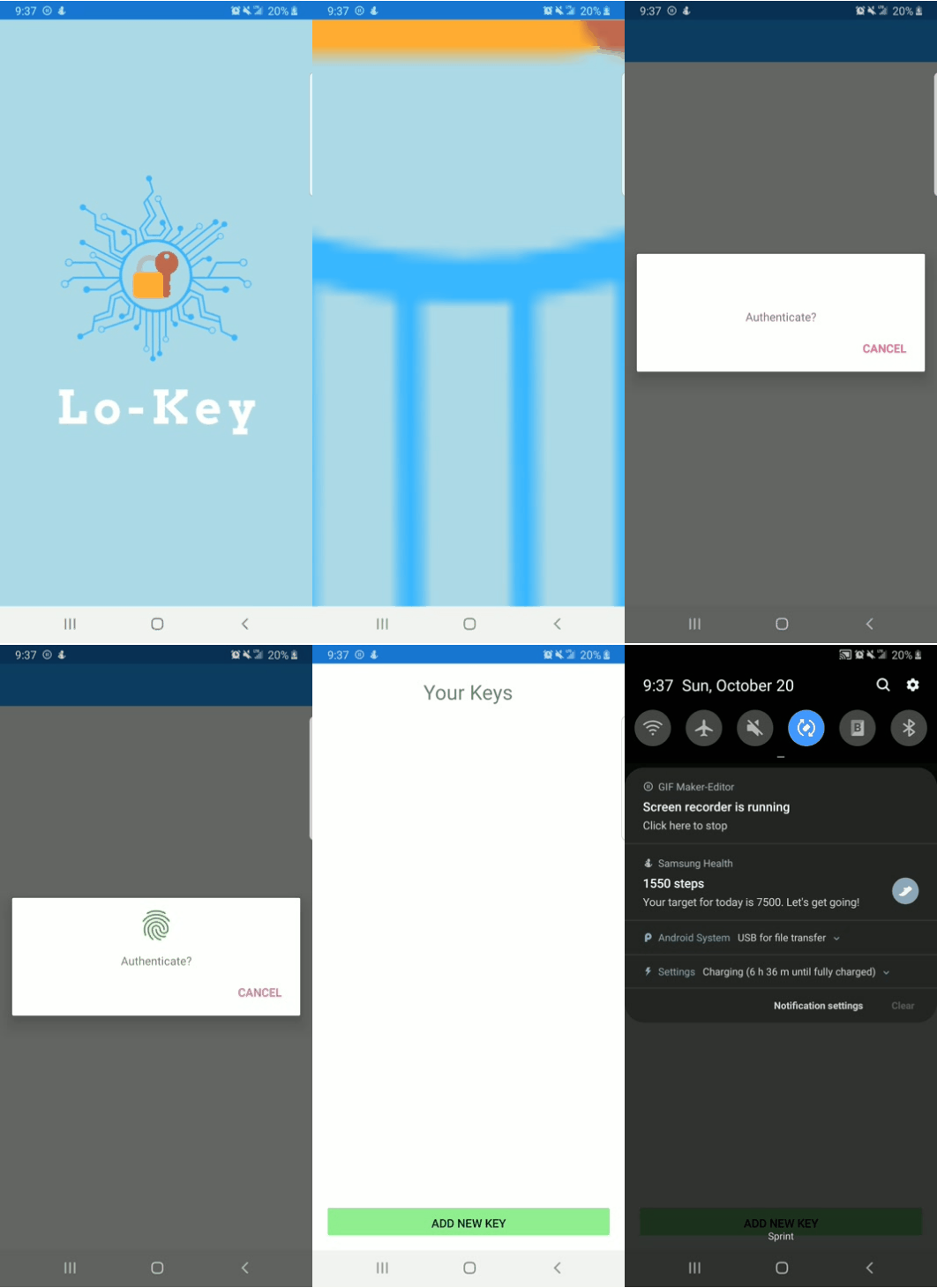
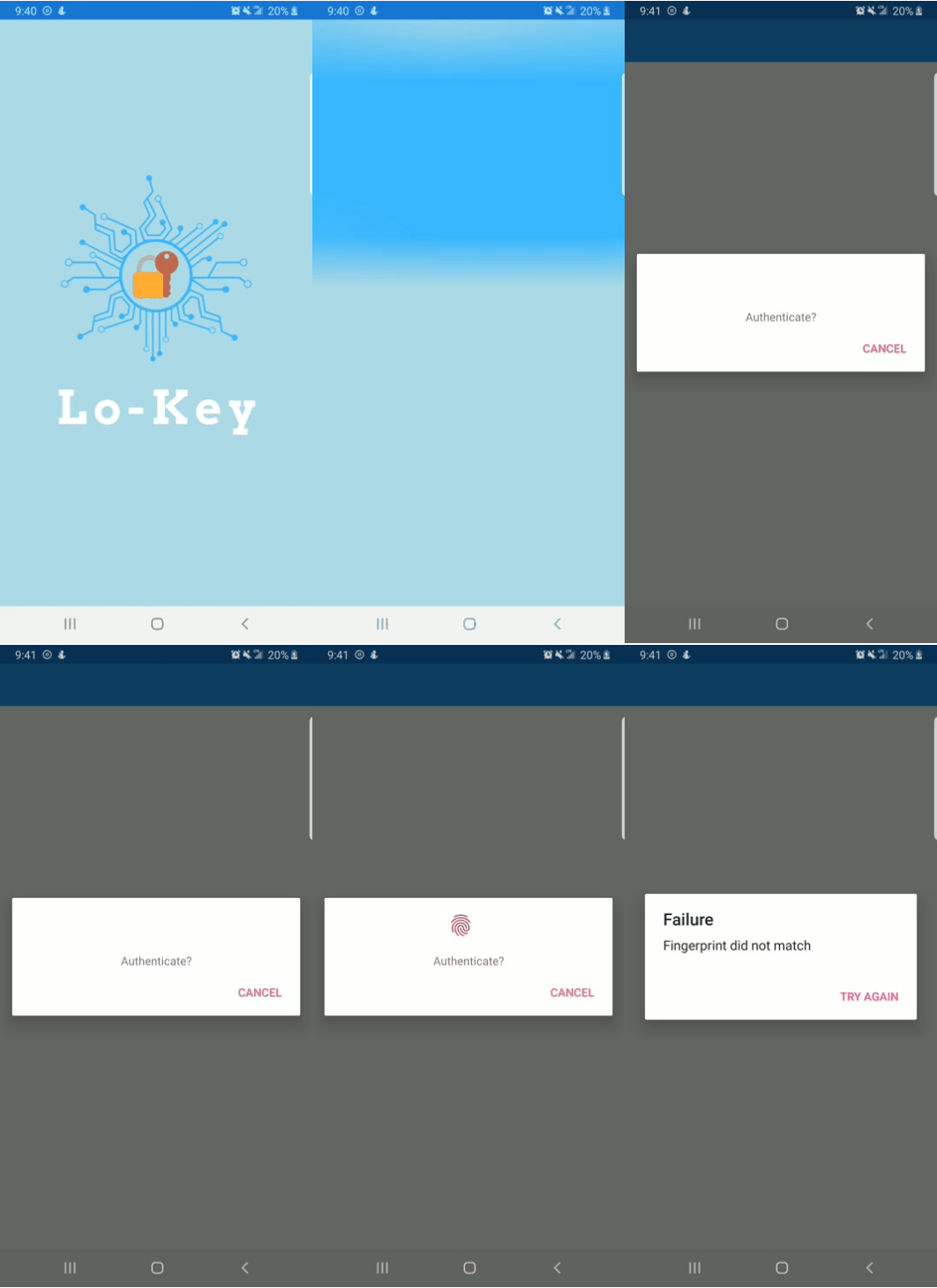
Lo-Key is a mobile application that allows users to register themselves as a unique user through Touch ID. After doing so, users can later authenticate themselves with this ID and gives them the ability to create digital keys which they can use to pair to a door with Near Field Communication (NFC) capabilities. From this, users can search through their keys easily and make opening a door as simple as choosing a key from the interface and holding it near the door.
How we built it
Lo-Key was made using the Xamarin platform and programmed in C# and XAML. At first, we solidified our idea by establishing which use cases and user stories we considered to be a top priority to implement. From there, we constructed an architecture diagram to give us a better idea on the flow of the system. After extensive research on the subject, especially regarding Touch ID, we successfully designed the software.
Challenges we ran into
Challenges we ran into were choosing the appropriate tools to work with. We initially considered having users authenticate themselves using facial recognition and considered making a mobile app with React Native. However, we ran into issues regarding the implementation of said facial recognition and decided to use Touch ID instead. A key component of Lo-Key is the utilization of NFC hardware to allow us to pair digital keys to a door and we lack the means of demonstrating this ability.
Accomplishments that we're proud of
We are proud of successfully completing this project! Regardless of how many projects we have already done, fully seeing through the completion of a project is something we're proud of especially when it has to be done within a small time frame. It is also because this is a project that we are passionate about and believe that it can impact people's lives in a positive manner that we are proud of completing it. In addition, we are also proud of implementing Touch ID to our application because this is something that we have done in the past and are unfamiliar with.
What we learned
We learned that pair programming is truly effective because we analyzed and discussed our code as a group and addressed issues as a group which improved our efficiency greatly. We also learned that it is not enough to just be a master of a programming language and that extensive knowledge of the libraries and APIs offered within a language will only benefit us.
What's next for Lo-Key
Though we have only set up the core feature of our software, there are still many ideas we have that have not been implemented yet. For example, Lo-Key could offer functionality such as giving someone you know temporary access to a key in the event that you need them to help you pick something up from your home. As such, we plan on continuing to work on this project and hopefully deploy it onto App Stores to allow users to experience the benefits of not having to carry around a physical key chain.


Log in or sign up for Devpost to join the conversation.