Our Inspiration
Artificial intelligence and cloud computing have become part of everyday life. We use AI chatbots, search engines, websites, and online services without thinking about the physical infrastructure that makes them possible.
Behind every request are servers, data centers, electricity, cooling systems, and network infrastructure. While there is growing awareness of sustainability in transportation and manufacturing, the environmental impact of digital activity often remains invisible.
We wanted to build a tool that would make these hidden costs easier to understand.
What It Does
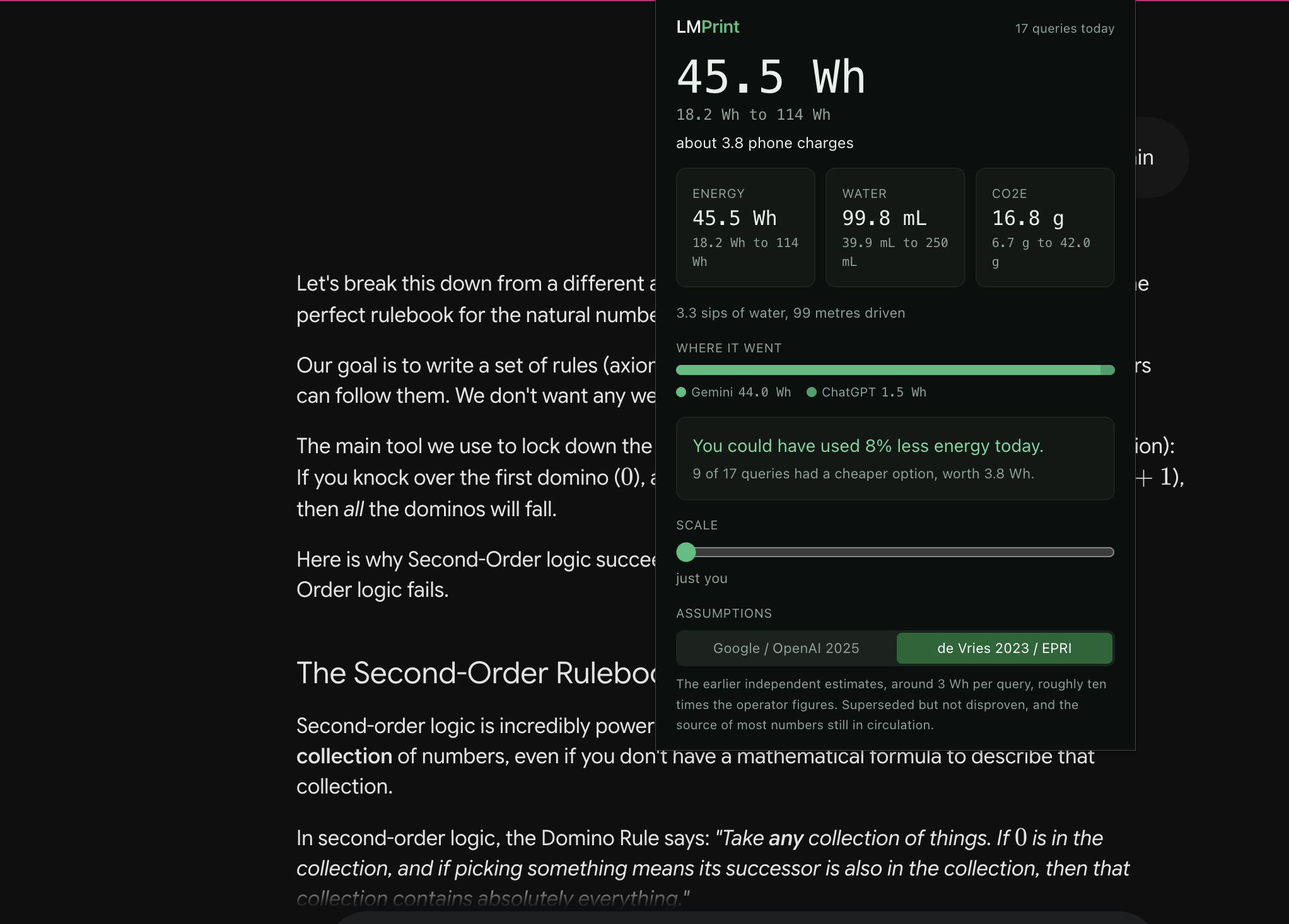
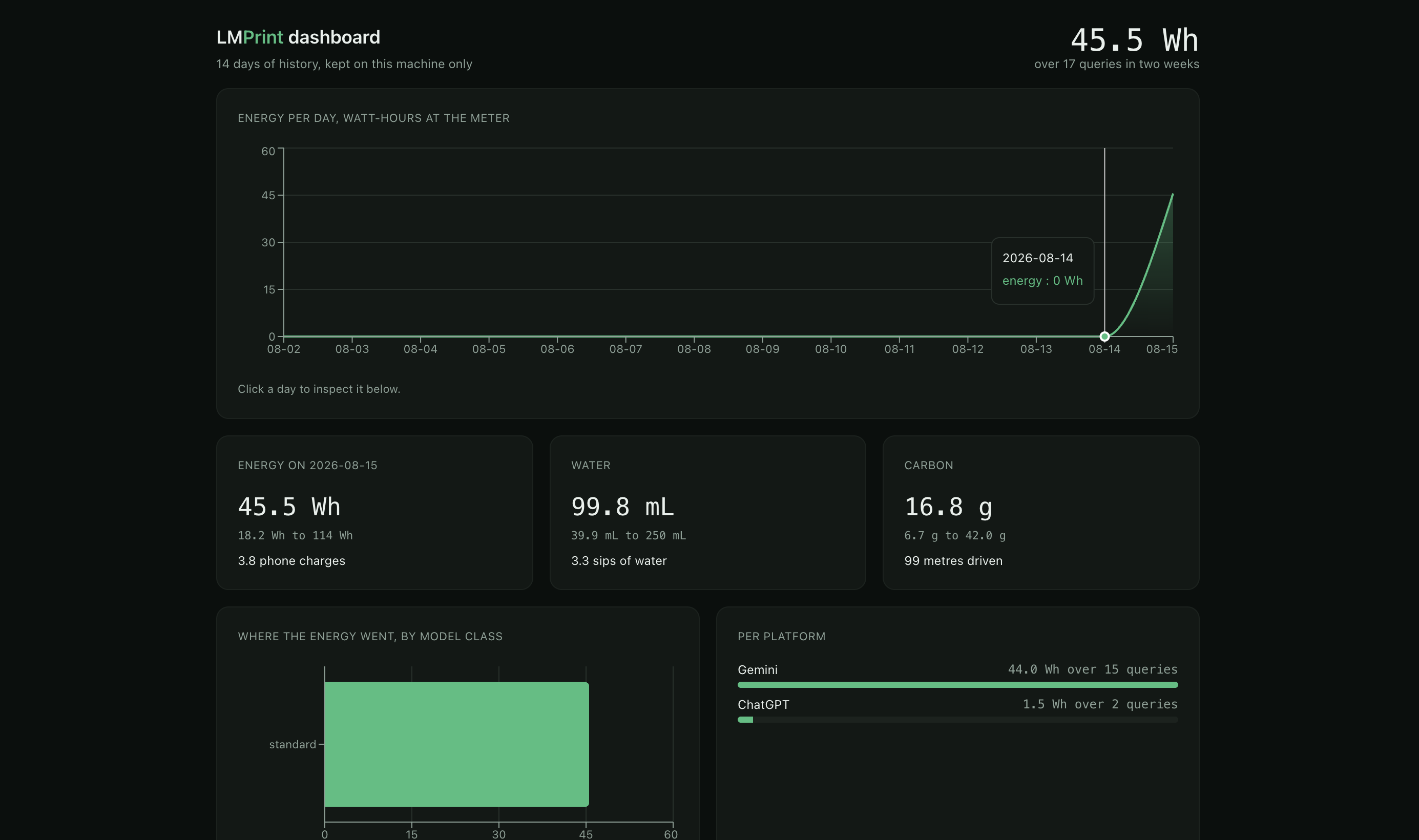
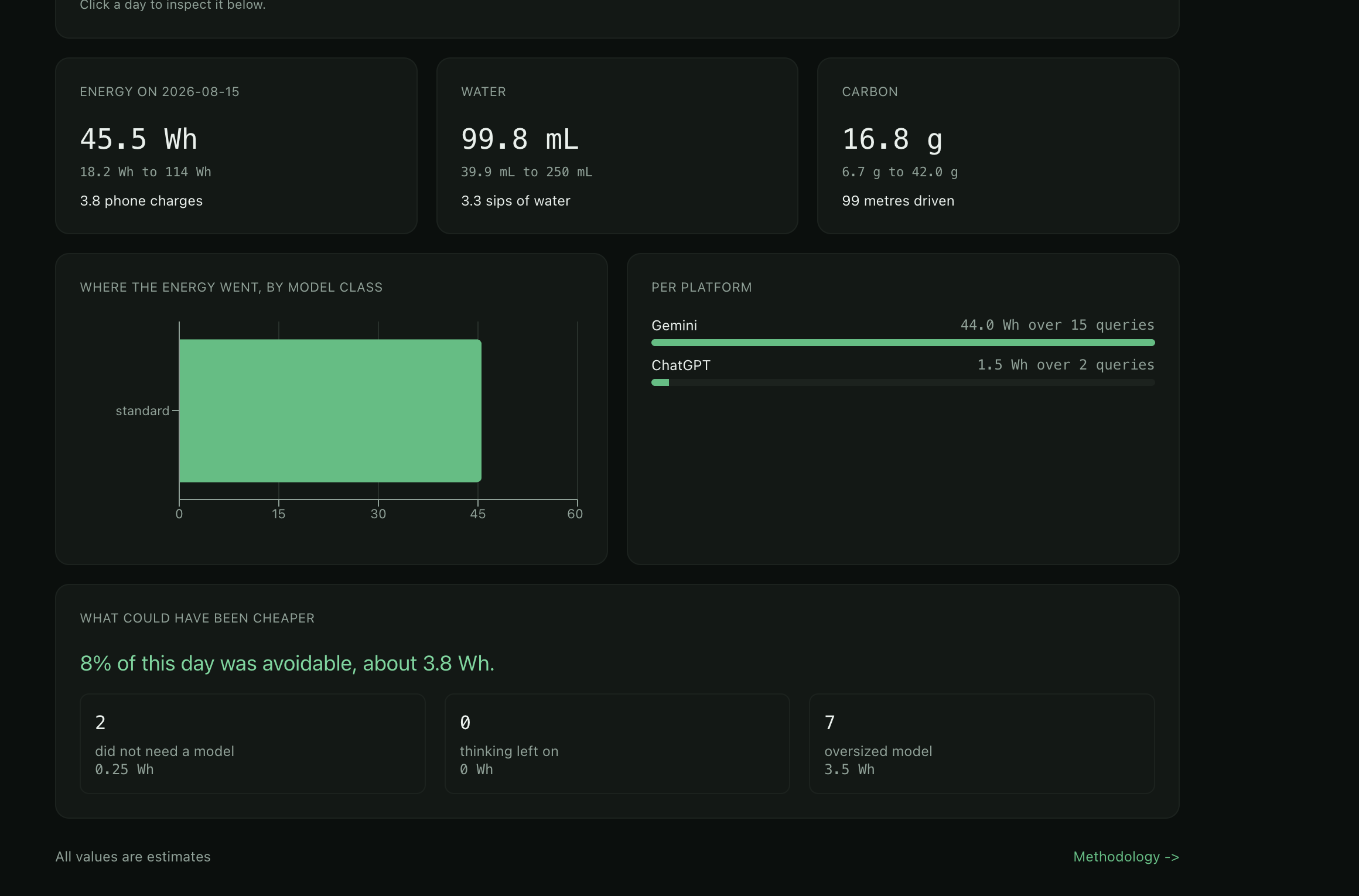
Our project is a Chrome extension and web dashboard that estimates the environmental impact of digital activity and AI usage.
The extension tracks activity such as interactions with AI tools and converts that information into estimated sustainability metrics, including energy and water consumption.
Instead of presenting users with technical measurements alone, we translate those values into real-world comparisons that are easier to understand.
How We Built It
Our solution combines several technologies:
- A Chrome extension to monitor activity
- A dashboard to visualize trends and insights
- An estimation model based on publicly available research related to energy and water consumption in digital infrastructure
The goal was to create a lightweight system that could provide useful estimates without collecting unnecessary personal information.
Challenges We Faced
One of our biggest challenges was estimating environmental impact accurately.
There is no universal method for calculating the exact energy or water consumption of a single web request or AI interaction. Different models, data centers, and workloads consume different amounts of resources.
Another challenge was balancing functionality and privacy. We wanted to collect enough information to generate meaningful insights while avoiding the collection of sensitive browsing data.
We also had to determine how to present complex sustainability data in a way that was simple, engaging, and understandable.
What We Learned
This project taught us that sustainability extends far beyond the physical world.
We learned more about browser extensions, environmental-impact estimation, data visualization, and the infrastructure that powers modern AI systems.
Most importantly, we learned that awareness is the first step toward change. By making digital consumption visible, we hope to encourage more thoughtful and efficient use of technology.
What's Next
In the future, we would like to improve the accuracy of our estimation model, support additional AI platforms, and introduce personalized recommendations that help users reduce their digital footprint.
Our long-term vision is to create a tool that helps people understand the environmental impact of their digital lives and empowers them to make more sustainable decisions.
Built With
- chrome
- react
- tailwind
- typescript

Log in or sign up for Devpost to join the conversation.